Feed library

The reading room

9to5Google

100 articles/Updated Visit source
Atom feed Refresh

This preview uses the same feed and article caches as your subscriptions.

01Google Home Speaker gets first discount since June launch - 9to5Google
Read on 9to5google.com

Google-Home-Speaker-14.jpg?quality=82&strip=all&resize=1200,628


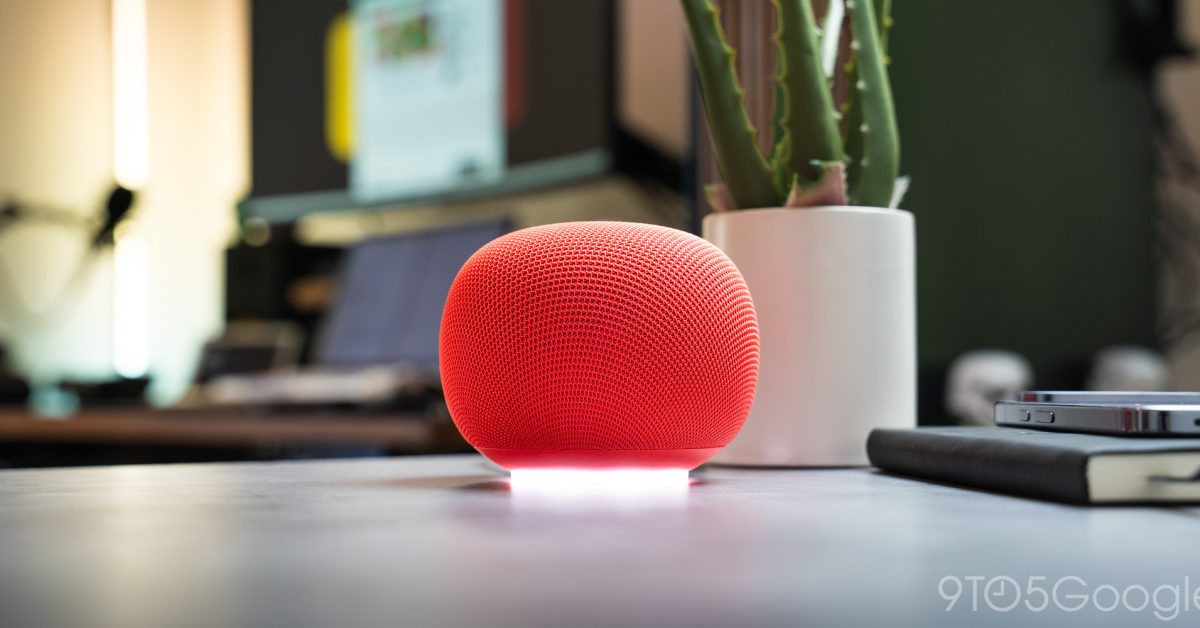
In addition to the Pixel deals that started last week, Google is discounting the Home Speaker for the first time.

The Google Home Speaker finally launched on June 27. For the past four months, the price has remained at $99.99.

The Google Store is running a $20 discount that brings the Gemini device down to $79.99. This sale kicked off today and ends on December 2, which is two days after Cyber Monday. This deal is also available at Best Buy and other retailers.

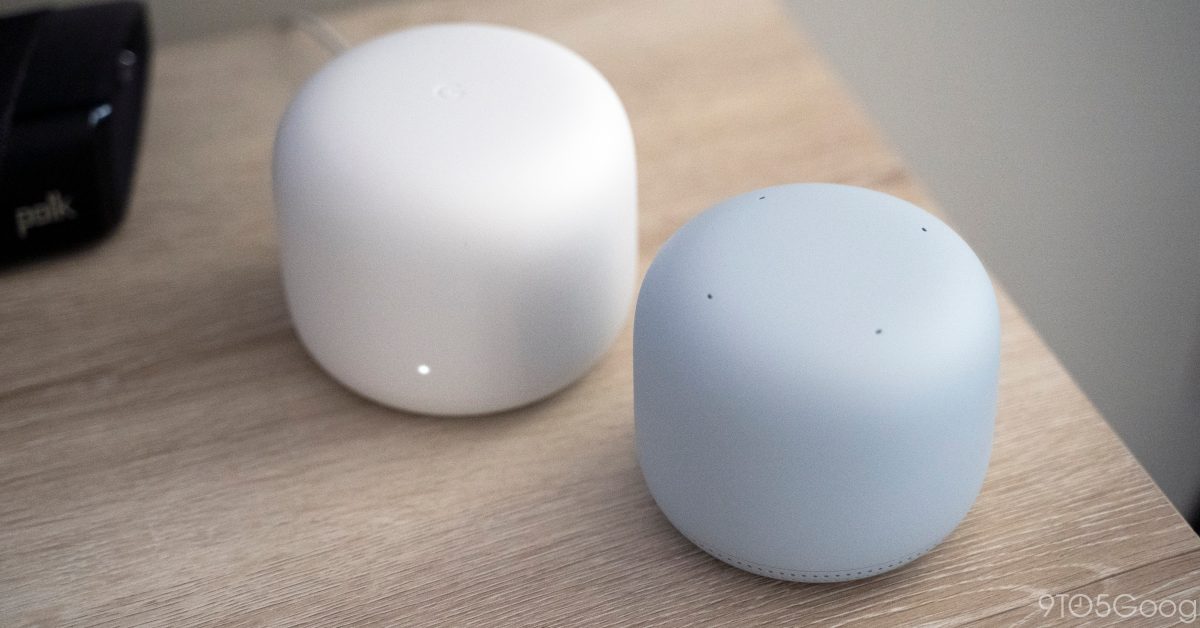
The Google Home Speaker is available in Berry, Hazel, Jade, and Porcelain. Covered in fabric, it offers 360-degree audio (officially: “Omni-directional sound with 58 mm full-range driver”) and can be paired with the Google TV Streamer. There are three far-field microphones with a privacy mute switch at the base. You get a ring of status lights, while the top surface has three capacitive touch controls for volume and play/pause.

Matter support allows it to work as a smart home hub. The 59.1-inch USB-C cable is attached to the Google Home Speaker, with the 30W charger included in the box. At 3.4 inches high, it’s approximately the height of two stacked Nest Minis. 

“Gemini for Home” provides access to the voice commands you’re familiar with, but real-time Gemini Live sessions require a Google Home Premium Standard subscription at $10/month or $100/year. Each speaker comes with a 30-day trial. 

02What’s new in Android Nov. 2026 Google System Updates: Android photo backup with Quick Share for Windows - 9to5Google
Read on 9to5google.com

google-play-services-1.jpg?quality=82&strip=all&resize=1200,628


The monthly “Google System Release Notes” primarily detail what’s new in Play services, Play Store, and Play system update across Android phones/tablets, Wear OS, Google/Android TV, Auto, and PC. Some features apply to end users, while others are aimed at developers.

The following first-party apps comprise the “Google System”:

To update, open the Settings app > tap your name at the very top for “Google services” (on Pixel) > All services tab > Privacy & security > System services.

A feature appearing in the changelog does not mean it’s widely available. Some capabilities take months to fully launch.


Account Management

  • [Phone] You can now access the Android Family Hub, a dedicated space for family management tools in Android Settings.

Developer Services

  • [Phone] New developer features for Google and third party app developers to support Location & Context related processes in their apps.

Device Connectivity

  • [Auto, Phone, TV] This update adds more quality logs for device connectivity.
  • [PC, Phone] Automatic backing up photos/videos from an Android to Windows using Quick Share feature.

Safety & Emergency

  • [Phone] Bug fixes for Safety & Emergency related services.

Security & Privacy

  • [Phone] Google Password Manager now allows you to manually choose which credentials to keep when importing conflicting passwords and passkeys.

System Management

  • [Auto, Phone] Updates to system management services that improve Battery Life, Device Connectivity, Device Performance, Privacy, Security, Stability, and Updatability.

Wallet

  • [Phone] Updates to Wallet loyalty cards.
  • [Phone] Bug fixes for Wallet related services.
  • [PC, Phone] With this update, you’ll get a reminder if Play Protect stays off for a while.
  • [Phone] With new at-a-glance highlights on game detail pages, you can quickly find gameplay style, review summaries, and gaming community activity before you install a game.

03The Meta Quest 2 and Quest Pro are receiving their last OS updates soon. Here’s what you need to know - 9to5Google
Read on 9to5google.com

meta-quest-2-with-quest-3-in-background.jpg?quality=82&strip=all&resize=1200,628


The best-selling VR headset of all time (and its Pro-level cousin) will no longer receive OS updates after March 2027.

Somehow, the Meta Quest 2 has been around for six whopping years, and Meta is finally bringing support for the headset to a close after March 2027. The far less popular Meta Quest Pro, which uses the same chipset as the Quest 2, will also see OS updates cease at the same time with OS v213. Meta will continue to deliver security updates through the end of 2027 to both headsets, according to an official Meta developers blog post.

Meta says it will not be removing cross-play multiplayer functionality or blocking access to Quest 2 players, so any games that support the headset will continue to work after these dates, so long as they don’t rely on any new OS features introduced after March 2027. Developers have to give players a 6-month notice if support is ending for a game, so you’ll have ample time to decide what to do.

That means the Quest 2 will receive just over 7 years of total security updates, while the Quest Pro gets two years less (since it came out in October 2022). The Meta Quest 2 remains the best-selling VR headset of all time, with around 20 million units sold over the lifetime of the headset. Meta says that Quest 2 owners can still play games throughout this time, although game support will likely dry up quickly after January 2028.

The $599 Meta Quest 3 and $349 Meta Quest 3S, which debuted in 2023 and 2024, respectively, are the follow-ups to the Quest 2. The upcoming Meta VR Glasses, which will retail for $1299, feature a next-generation chipset, a significantly higher-resolution AMOLED display, and substantially lighter weight and smaller size than either Quest 3 model.

Meta VR Glasses are expected to debut early next year, and with them, a new generation of OS development will take place. Since the Quest 2 uses a significantly outdated mobile chip at this point, it makes sense for Meta to cease new feature development for it and focus on newer, more capable hardware.

Follow Nick: YouTube, X (Twitter), Threads, Instagram

04AAWireless expands beyond Android Auto adapters with new cooled Qi2 car charger - 9to5Google
Read on 9to5google.com

aawireless-charge-1.jpg?quality=82&strip=all&resize=1200,628


AAWireless is known for helping you convert a wired Android Auto connection into a wireless one, but the company is now launching a new product – an active-cooled Qi2 car charger.

“AAWireless Charge” is a Qi2 25W wireless car charger that costs $50. The charger is compatible with MagSafe, Pixelsnap, and Qi2 in general, and supports up to 25W charging speeds on compatible phones.

“Charge” also includes active cooling support with a built-in fan that the company says is “quiet” when active.

Included in the box you’ll find both an air vent mount as well as an adhesive base. There are also two magnetic ring adapters in the box for “Qi2 Ready” phones that don’t have magnets built-in or a magnetic case available. AAWireless says to use your car’s 12V outlet with the included adapter for “best performance,” but you can also use existing USB-C connections so long as they deliver enough power.

To be clear, there’s no wireless adapter built into the charger (as cool as that would be), but you can use this alongside an AAWireless adapter while driving, the company specifically mentions.

While AAWireless adapters remain available on Amazon, “AAWireless Charge” is available solely from the company’s website.

Follow Ben: Twitter/X, Threads, Bluesky, and Instagram

05Google shuts down a sneaky malware backdoor on millions of Android TV and Google TV boxes - 9to5Google
Read on 9to5google.com

android_tv_google_tv_1.jpg?quality=82&strip=all&resize=1200,628


Google has confirmed that an Android TV device maker snuck a backdoor for malware onto certified devices, which is leading to security improvements for the ecosystem as a whole.

In a post today, Google confirmed that it has cut ties with “Videostrong,” a company that was manufacturing certified Android TV boxes. This is due to the company building in a backdoor that it could sell access to, including the distribution of malware. Google has taken legal action to block the domains and servers that “Videostrong” was using to control the XCPE botnet and malware modules and banned the company and its subsidiaries from selling certified Android devices going forward, or selling software to any other certified vendors.

Google says in part:

We found this malicious software built directly into many different device models and brands over multiple years, supported by dedicated infrastructure and constantly evolving configurations to evade detection and manage their affiliates. We believe this campaign wasn’t an isolated rogue insider or a development oversight. As a result, Google has cut ties with Videostrong and banned them from making devices with preloaded Google apps.

Synthient (via The Hacker News) compiled a list of potentially affected devices, with the focus being on the Mecool brand that has made some well-known Android TV and Google TV boxes in the past. Mecool has been rumored to be shutting down.

Google somewhat admits that this was a failing on its part, as these devices were sold as “certified” Android devices with the implication that they were safe. The company explains that these bad actors “employed obfuscation techniques to exploit a gap in our tests and load malicious code after the device’s first boot.” With that in mind, Google is updating its review process to protect users against this type of behavior, and Google reiterates that “a device manufacturer intentionally infecting their users with malware is an unacceptable breach of trust.”

Google’s shutdown of the domains and servers used to spread malware should leave affected Android TV and Google TV boxes safe to use – the company says that “taking down their C2 domains will sever access to at least 10 million additional compromised devices” – but owners may still want to consider alternate options.

Follow Ben: Twitter/X, Threads, Bluesky, and Instagram

06Monday’s Android app deals and freebies: Reigns The Witcher, Kingdom Rush 5, Apple Knight 3, more - 9to5Google
Read on 9to5toys.com

Google-Play-collage-c6b3f3.webp?resize=1200,628


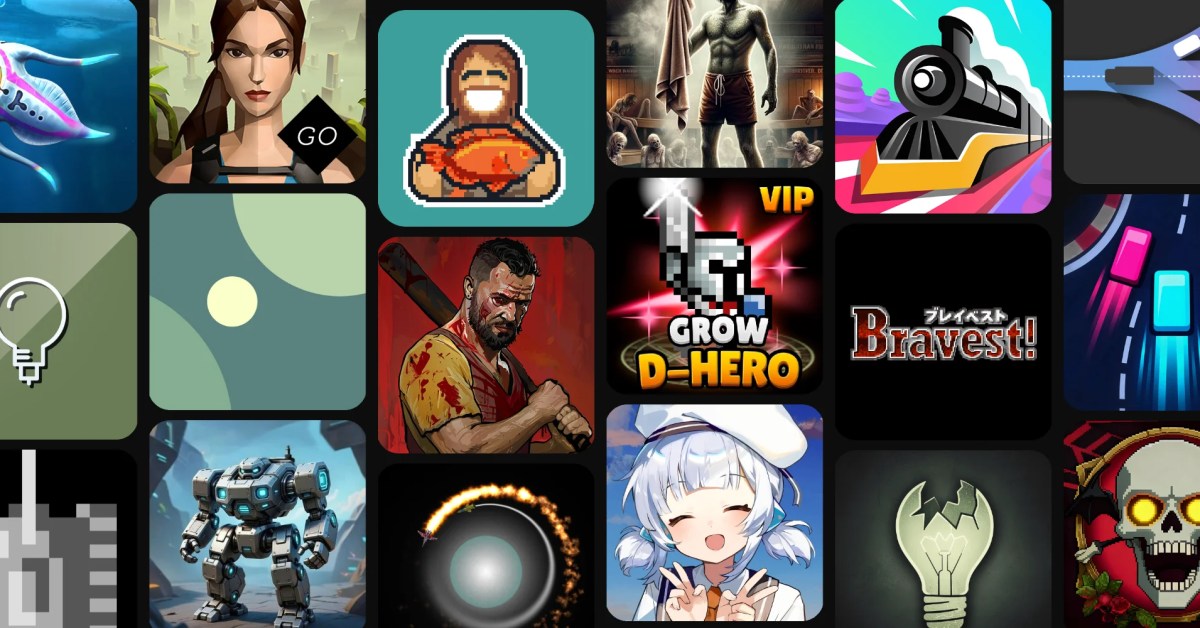
Alongside today’s new all-time low on the latest Google Home Speaker to kick off Black Friday month, we also have Monday’s best Google Play app and game deals are ready, including Reigns: Beyond, Reigns: The Witcher, Kingdom Rush 5: Alliance TD, Shotgun King, Apple Knight 3, Caravan SandWitch, Iron Marines 2 – Invasion RTS, This War of Mine, and more. On top of that we also have Galaxy Z Fold 8 at $300 off via Amazon in new condition and open-box units up to $624 off joined by the very deals on the brand new all-new Amazon Alexa Android Tablet.

Today’s highlight Google Play deals:

FTC: We use income earning auto affiliate links. More.

07Google will let Android & iOS apps directly integrate Quick Share next year - 9to5Google
Read on 9to5google.com

Quick-Share-SDK.jpg?quality=82&strip=all&resize=1200,628


At Android Dev Summit 2026, Google announced a Quick Share SDK that will let Android and iOS apps directly integrate the peer-to-peer file sharing capability.

The Quick Share SDK is coming in the first half of 2027. Developers will be able to integrate file share functionality directly into their apps instead of requiring users to first open the system Share sheet and launch the fullscreen Quick Share experience.

Google touts capabilities like:

  • Privacy at its core with E2E data transfer: Quick Share is end-to-end encrypted “between both devices as the transfers happen between those local networks.”
  • Low latency and maximum transfer speed: The SDK automatically handles hotspot creation and leverages Wi-Fi Direct on supported devices.
  • No need to compress photos/videos
  • Works offline even without cellular network: For offline sharing use cases and constrained data environments. 
  • No need to maintain costly infrastructure 

Google will also offer a Quick Share iOS SDK for apps on the iPhone, as seen in the example below.

In terms of the end-user interface, activating Quick Share in third-party apps launches a bottom sheet “where the users will be able to see the files that are being sent as [a] preview.”

08Google rolling out gradient icon redesigns for Contacts, Messages, and Phone - 9to5Google
Read on 9to5google.com

Google-Messages-Phone-Contacts-icon-gradient-redesign.webp?resize=1200,628


Following the Workspace and Pixel app redesigns earlier this year, Google is overhauling the Contacts, Messages, and Phone icons.

Google says the “icons are sharper and clearer” on homescreens thanks to a “subtle but crisp gradient with easily readable edges.”

The general shapes of Google’s communication apps remain unchanged, but the redesign brings “updated curvature and coloring to align with the rest of the Google apps you know and love.”

Current

This change is rolling out over the coming weeks via the Play Store, and is already live with the latest Google Messages beta this morning. Google emphasizes that there are no functional changes with this update.

Don’t worry, the functionality of these apps isn’t changing as a result of the new icons. You’ll simply spot a sleeker, more cohesive look on your home screen in the coming weeks.

The new icons should also appear on contacts.google.com and messages.google.com/web.

09Some Samsung Galaxy phones are having Android Auto issues with One UI 9 - 9to5Google
Read on 9to5google.com

Galaxy-S25-Ultra-camera-system-4.jpg?quality=82&strip=all&resize=1200,628


Samsung’s Android 17-based One UI 9 update is rolling out more widely and, with it, some apparent issues with Android Auto on some Galaxy phones.

In the time since Samsung’s stable Android 17 update started rolling out, there have been reports popping up around Android Auto issues. Reports of these problems have shown up on Reddit, Samsung’s forums, and Google’s forums.

It’s not a massively widespread problem as far as we can tell, but there’s a clear pattern and enough reports to suggest a trend. Those affected report issues with stuttering performance and/or the connection failing entirely.

The folks at Android Authority found one user test where a Galaxy S25 Edge on One UI 8.5 lacked any issues, but a Galaxy S24 Ultra running One UI 9 immediately reproduced the issues that other users have been reporting. It’s hardly a scientific test, but it shows that One UI 9 is probably responsible for some of this odd behavior.

There’s been no official word on a fix just yet. Let us know in the comments below if you’re dealing with any issues.

Follow Ben: Twitter/X, Threads, Bluesky, and Instagram

10Privacy Display on Galaxy S27 Pro and S27 Ultra looks more promising in latest leak - 9to5Google
Read on 9to5google.com

galaxy-s26-ultra-privacy-display-17.jpg?quality=82&strip=all&resize=1200,628


A new leak strengthens a previous rumor that the Galaxy S27 Pro and Galaxy S27 Ultra will get an improved version of Samsung’s Privacy Display, used on this year’s flagship.

We don’t expect Samsung to just walk away from the Privacy Display feature. It’s a cool addition that’s over-the-top on the surface, but proves useful in certain situations, like localized notification dimming so only the user can see their messages.

The latest leak regarding Samsung’s component options for the Galaxy S27 series indicates two devices in the next Galaxy S series will get a Privacy Display, or at least some version of it. The leak claims the Galaxy S27 Pro and Galaxy S27 Ultra’s Privacy Display will have “enhanced display brightness.”

That’s the only new detail after the display choice was leaked in September. Both leaks claim the same details – only the upper two models will have a display capable of blocking views from certain angles. The Galaxy S27 and Galaxy S27 Plus won’t be so lucky. It makes some sense considering the Galaxy S27 Pro may essentially take the place of the current Ultra.

There are few details beyond the display’s brightness capabilities. One would hope Samsung improves on overall quality, so using the feature doesn’t have to come with many trade-offs.

Samsung is expected to launch the Galaxy S27 series early next year, though no date has been nailed down.

11Deals: Rare all-time low hits Google Home Speaker, Galaxy Z Fold 8 up to $624 off, Amazon Alexa Android Tablet, more - 9to5Google
Read on 9to5google.com

9to5Google-Nov-2.webp?resize=1200,628


Today’s 9to5Toys Lunch Break is headlined by a rare discount and the best cash discount to date on the 2026 Google Home Speaker at 20% off as part of the now live Best Buy Black Friday month sale. The Google Home Speaker deal joins up to $350 off on Pixel 11, Pixel 11 Pro, Pixel 11 Pro XL, and Pixel 11 Pro Fold, as well as $100 off all Pixel Watch 5 models, the first discount on the brand new Amazon Alexa Android Tablet at $199.99 and a new all-time low on the 2026 Fire TV Stick 4K down at $25 (58% off). Amazon has also undercut Samsung and is now offering a solid $300 off Galaxy Z Fold 8 in brand new condition, while open-box models are up to $624 off. Scope it all out below. 

Whether you’re getting off to an early start scoring gifts for everyone on your list or just looking to upgrade your own smart home, Best Buy’s Black Friday month deals are already going live and we are now catching the first cash discount on the new Google Home Speaker at 20% off. That deal joins some increasingly rare savings opportunities on the latest Nest Cams and Nest Doorbells, as well as one of the best prices in months on the Google Nest Learning Thermostat (4th Gen) at $60 off. 

One of the highlight deals here in the Best Buy Black Friday month sale going live today has the Google Home Speaker down at $79.99 shipped. 

Regularly $100, outside of some targeted offers and far more pricey bundle discounts, this is the best cash deal we have tracked to date at Best Buy on the 2026 Google Home Speaker – Amazon does not officially carry it, for the record. 

Delivering 360-degree audio in combination with Gemini magic, you can pair up two of them with a Google TV Streamer for “an immersive home theater rig,” but it also just makes for a wonderful do it all speaker anywhere in the house and can double down as a smart home controller for multiple devices. Just about any Google gear or Pixel user would love one of these under the tree, even if they already have one of them.

Just keep in mind that if you are also looking to upgrade your Google TV experience, Best Buy is still offering the Google Home Speaker at 50% off with the purchase of one of many discounted Google TV models from various brands right now – you’ll find a “Trending – Save 50% on Google Nest device with TV” link directly below the price on the Google Home Speaker listing page. 

Joining Best Buy’s Black Friday month deal on the Google Home Speaker, it is also offering one of the best prices to date on the latest Google Nest Learning Thermostat (4th gen). 

Regularly $180, you’ll now find this one sitting down at $219.99 shipped in all three colors to upgrade your home’s temperature control and HVAC setup alongside your audio and smart home control with the Google Home Speaker. You’re looking at a $60 price drop here and a rare chance to land one for less than $230 here. 

The Week 1 early Black Friday Doorbuster deals have arrived and Amazon is now offering all-time lows across the latest Google Pixel 11 lineup at up to $350 off and Pixel Watch 5 at $100 off. All of the deals can be found on this page right here and you’ll find them broken down with more detail down below. 

Alongside all-time lows at up to $350 off on Pixel 11, Pixel 11 Pro, Pixel 11 Pro XL, and Pixel 11 Pro Fold, Amazon is also now offering $100 off all Pixel Watch 5 models. Aside from a couple one-off and extremely short-lived offers on select models, we are looking at the lowest Amazon prices to date across the lineup. 

Alongside a new all-time low on its latest Fire TV Stick 4K at $25 (58% off), today we are tracking the first deal and a new all-time low on the brand new Amazon Alexa Android Tablet at $199.99. 

At the beginning of the month, just before the reveal of its new Echo speakers and Echo Show 16 smart display you can pre-order at $100 off, Amazon debuted its all-new Android Alexa Tablets and today is your first shot at a discount on them. 

Amazon is now offering its new Alexa Tablet 8 down at $199.99 for the 64GB model, while the 128GB variant is now starting at $249.99 shipped. 

Just after catching the first deal on its brand new Alexa Android Tablet 8, Amazon has also dropped the price even lower on its new 2026 Fire TV Stick 4K. It debuted the all-new model about a month ago with a solid 50% launch discount, but you can now score one for even less at $25 – that’s 58% off and the lowest price we have tracked yet.  

Amazon is now offering its new 2026 Fire TV Stick 4K down at $24.99 with free shipping for Prime members or in orders over $35. 

Carrying a $60 list price, this is a sizable 58% discount and the lowest price we have tracked yet. 

While we are still tracking $200 in savings on the latest Galaxy Z Fold 8 with some bonus add-on discounts directly from Samsung, Amazon has now undercut that cash discount at $300 off. 

Amazon is now offering the 256GB Samsung Galaxy Z Fold 8 from $1,599.99 with limited color options, but you will find all three of the standard 512GB models down at $1,799.99 shipped – both options are $300 off the list prices in brand new condition:

Again, you can score all models at $200 off via the official Samsung site with the option to add a set of Galaxy Buds 4 Pro to your order at just $25, the Galaxy Watch 9 at $238 off, or the new Galaxy Watch Ultra 2 at $270 off. 

These bundle offers are effectively better deals in terms of overall savings, but you will end up spending more out of pocket on the phone itself. 

For even lower prices, down below you’ll find an updated list of the best “excellent” condition open-box deals available at Best Buy currently:

Alongside its now-live early Black Friday deals, and as part of its latest Deals of the Day lineup, Best Buy is offering one of Dell’s latest 2K touchscreen Windows laptops for $549.99 shipped. This Intel-powered model typically goes for $850 and is currently fetching $800 directly from Dell, but today’s offer at Best Buy takes a solid $300 off its usual price and marks the lowest price we’ve tracked for it so far. You’re looking at some serious value here with this deal, considering it’s a feature-packed notebook with a sharp 2K touchscreen panel for casual, everyday use. Head below for more details.

Dell’s 15.3-inch 2K touchscreen laptop highlighted here is a solid everyday machine if you want something a little nicer than the usual budget Windows notebook in this price range. This 2026 model runs on Intel’s newer Core 5 Series 3 processor, paired with 8GB of RAM and a 512GB SSD, giving you enough power and storage for browsing, streaming, schoolwork, office apps, and other day-to-day tasks. The main highlight is the 15.3-inch 2K touchscreen, which is a sharper display than a standard Full HD panel while also offering touch inputs. Other notable touches include a thin and light form factor, a cleaner design that gives it a bit of that newer XPS-style look, and a useful selection of ports for connecting accessories and peripherals.

Alongside the Week 1 early Black Friday Doorbusters live at Best Buy today, LG is also offering “Black Friday Price Guaranteed” on select 2026 TV models. This includes up to $2,000 off the wonderful C6 OLED that also comes with a FREE Xbox Controller alongside deals on its much more affordable new mini-LED models from $600 and some Doorbuster deals on the premium G6.

Down below you’ll find a series of notable early Black Friday offers on LG TVs straight from the brand, many of which with special bonus perks, savings, and freebies, as well as some with the “Black Friday Price Guaranteed.” However, we also wanted to take a closer look at the specials now live on its amazing 2026 G6 OLED model:

The official LG site is offering its premium 65-inch 2026 OLED evo AI G6 4K Smart TV down at $1.999 shipped – that’s a massive $1,400 off the launch price on one of the best OLED TVs you can buy and it also includes the following with purchase:

  • Receive a FREE M7 Wireless Speaker (up to a $399.99 value)
  • FREE professional wall mounting and matching TV stand
  • (Optional) Bundle with an Immersive Suite 7 Pro speaker package and save $400 off your purchase
  • (Optional) TV + Soundbar Bundle: Save up to $200 on a matching soundbar

Best Buy is also offering a special Doorbuster deal on the 65-inch G6 Series OLED TV with the same $1,400 discount and a FREE $100 gift card as well. 

Bose updated its home speaker lineup with the all-new Lifestyle gear this year and we are now tracking one of the first deals on the AirPlay and Google Cast Lifestyle Ultra Home Speaker today at $70 off. 

The official Bose Amazon storefront is now offering its new Lifestyle Ultra Speaker down at $279 shipped in both the black and white colorways. This deal is also live as part of the Week 1 early Black Friday Doorbuster deals at Best Buy.

12This is your rare chance to get a Garmin smartwatch for under $170 - 9to5Google
Read on 9to5google.com

garmin-vivoactive-5-render.jpg?quality=82&strip=all&resize=1200,628


The Garmin Vivoactive 5 is down to its lowest price of all time in all four colors for a limited time, making this the least expensive Garmin you can buy today.

Garmin smartwatches are known for a lot of things. Extremely long battery life, epic health stat tracking, universal phone compatibility, and lots of training plans and tracked exercises. But they’re not known for being low-priced or particularly affordable. That is, until today’s Garmin Vivoactive 5 deal came along.

At just $169.99, this Garmin Vivoactive 5 deal brings the watch down to the lowest price it’s ever been. That’s a particularly excellent price since Garmin isn’t pushy with subscription costs the way some other brands can be. Buy your Garmin and use it. That’s the only real cost unless you need something very specific, and Garmin has several subscriptions for somewhat random things.

Garmin’s Vivoactive lineup is made for casual athletes who find themselves running every so often, go to the gym regularly (but aren’t trying to beat Olympic records), and just find workouts to be a healthy part of normal life. Garmin came out with a Vivoactive 6 earlier this year, which retails for $299, and only offers a few advantages that you might care about. And yes, it even supports proper messaging, images, and replies on Android!

Both the Vivoactive 5 and 6 sport the same 11-day battery life, an AMOLED display with 360 x 360 resolution, 5ATM water depth rating, and 23g weight (without the band). The Vivoactive 6 boosts the storage to 8Gb (from 4GB on the Vivoactive 5) and has a new UI, supports Garmin’s Smart Wake feature, and also includes Garmin’s PacePro feature.

Smart Wake is cool, but only people who wear their watch 24/7 will benefit from it. Likewise, running fans may enjoy PacePro, which gives pace guidance throughout a run. I never use offline song downloads for runs, but double the storage could be worth it if you do. If those features aren’t a big deal, this Garmin Vivoactive 5 deal is the best price you’re going to find on a Garmin smartwatch.

Follow Nick: YouTube, X (Twitter), Threads, Instagram

13The Galaxy Z Fold 8 is $300 off at Amazon right now - 9to5Google
Read on 9to5google.com

Galaxy-Z-Fold-8-lavender-2.jpg?quality=82&strip=all&resize=1200,628


While we await potentially more discounts on our tech in the coming weeks, the Galaxy Z Fold 8 is now down to $1,599 on Amazon, knocking a sizeable chunk off the MSRP.

Whether or not this is going to settle as the new price on the foldable remains to be seen, but it has only ever been cheaper once post-launch as part of Amazon’s Prime Day sale, where it hit an all-time low of $1,549. That said, at $1,599 you’re getting arguably one of the best foldable experiences for content consumption, mobile gaming, and all wrapped up in an elegant and colorful package.

It’s worth noting that Samsung.com still has the Fold 8 listed at the $1,899 MSRP, making this a solid deal for anyone who has been thinking about this phone since Apple decided to wade into the foldable space. If you prefer a “regular” phone shape with that 1:1 inner aspect ratio folding screen, then the Z Fold 8 Ultra is discounted by $200 on Amazon right now too.

Given how passport foldables are now en vogue after the launch of the iPhone Duo, anyone in the market for Android’s best attempt at this so far will likely be very interested. Sure, it’s not a perfect form factor, but it is a gorgeous device that is a lot of fun to use. Check out our extended look at the Z Fold 8 down below if you want to learn all about the benefits and the drawbacks of one of the most interesting devices of the year:

14Gemini 4 Carbon lags just behind Claude in benchmark, but wins in value - 9to5Google
Read on 9to5google.com

gemini-new-logo-2.jpg?quality=82&strip=all&resize=1200,628


Google’s new frontier model, Gemini 4 Carbon, brings some welcome improvements and while it doesn’t top the charts in a new benchmark, it does provide much more bang for your buck.

SemiAnalysis, an AI research and analysis firm, recently published its new frontier-level benchmark, GDPx which includes numbers for Google’s Gemini 4 Carbon model. The leaderboard includes every major frontier model from the likes of OpenAI, Anthropic, and Meta and details both the score and cost for each model.

The benchmark includes 206 tasks across finance, materials science, cybersecurity, software engineering, legal, biology, and several other domains (topics).

Topping the results is Anthropic’s Claude Opus 5.5, but Google’s Gemini 4 Carbon is very close behind. The difference between the two is relatively minimal, but the cost is the biggest factor to consider here. Where Claude’s cost came out to around $51 per task, Gemini was just over $16 per task. Gemini also beat the next model on the list, GPT-6 Astra, which scored lower while costing more than both at about $54 per task.

The report notes that taking out cybersecurity, biology, and alignment domains shuffles the results. Safety guardrails in Claude and GPT models puts GPT-6 Astra at the top of the list with GPT 6.1 Sol and Claude Sonnet 5.5 outranking Gemini 4 Carbon. SemiAnalysis says that this better aligns with their “subjective impressions” of each model.

As for Google’s existing frontier model, Gemini 4 Argon, it ranks in eighth place on both lists, beating Meta’s Muse Wonder, but below Wonder Full. Argon’s costs in this particular benchmark are only slightly lower than Carbon.

Both of Google’s models score better than OpenAI and Anthropic models when focused on cybersecurity, but do fall behind Meta’s Muse models, which the benchmark found to be the best “by a meaningful margin.”

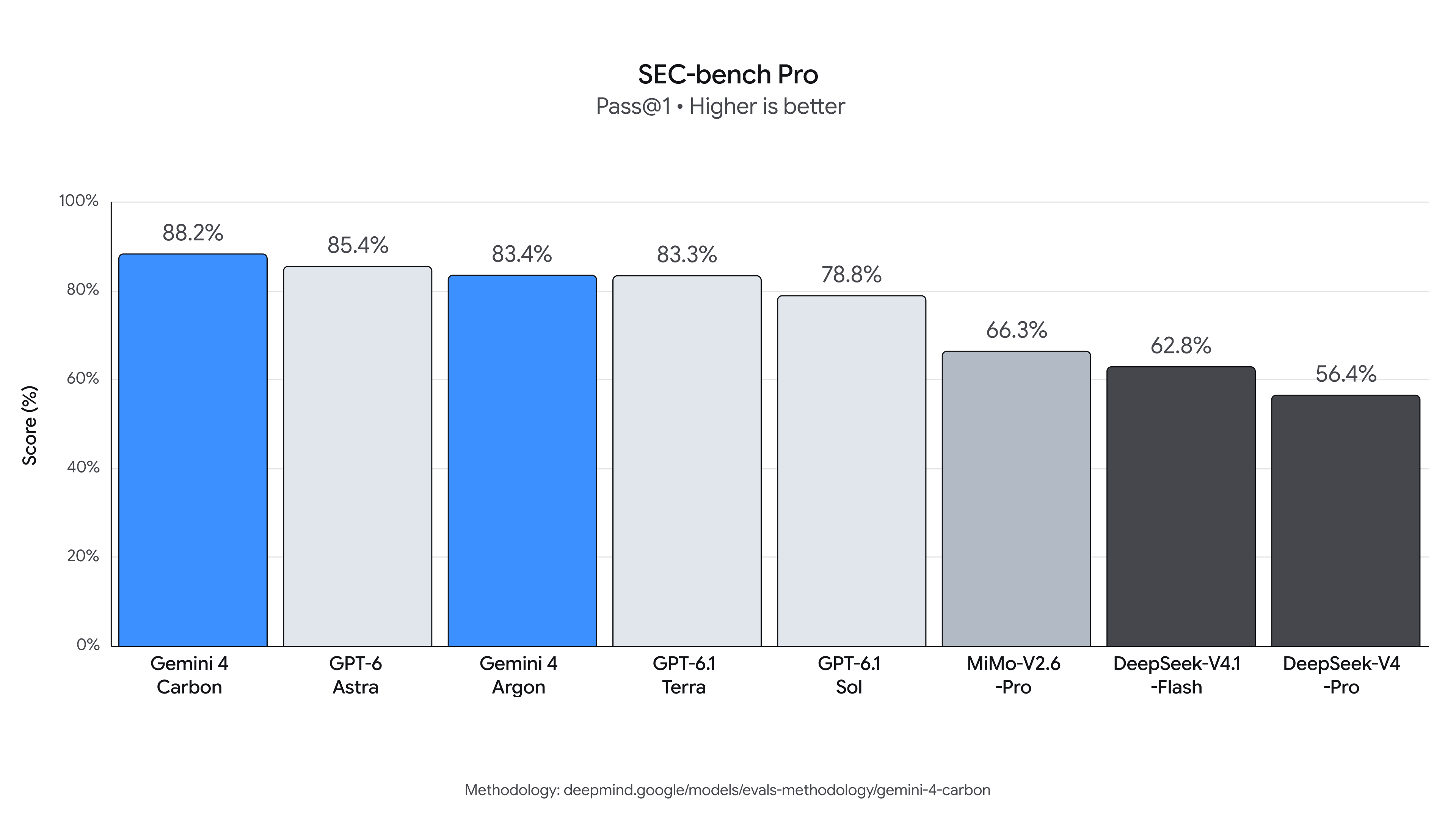
Google announced Gemini 4 Carbon on October 28 and touted “significant gains,” but the public release date has not been confirmed just yet. It is “coming soon” for most customers. Google’s own benchmark, below, beat GPT-6 Astra and Opus 5.5 in many aspects.

Follow Ben: Twitter/X, Threads, Bluesky, and Instagram

15Samsung’s Android XR ‘Intelligent Eyewear’ reportedly launches in December - 9to5Google
Read on 9to5google.com

samsung-android-xr-glasses-warby-parker-12.jpg?quality=82&strip=all&resize=1200,628


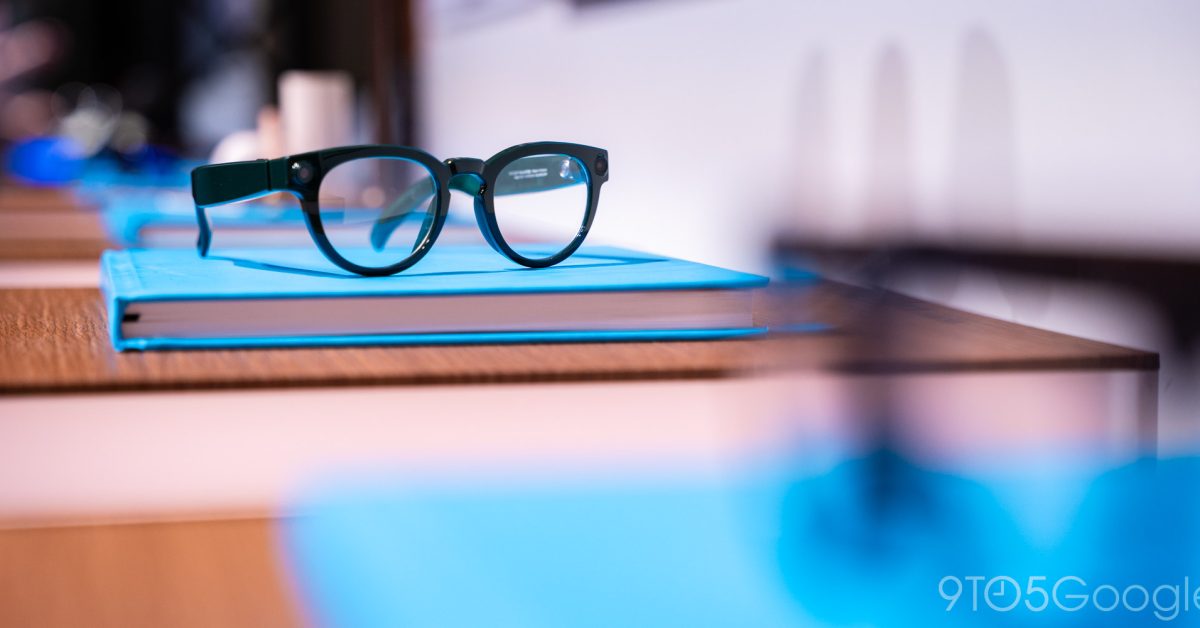
Samsung smart glasses in Gentle Monster and Warby Parker styles may finally launch in South Korea and the US before Christmas.

It’s been a very long time coming, but one report from ChoSun Biz says that Samsung and Google are finally launching the Samsung Intelligent Eyewear line in the United States and South Korea in mid-December. Curiously, while the report helps set a fuzzy date, there’s still no official price for Samsung’s smart glasses.

Back in July, Samsung teased the price, noting that the company’s first smart glasses will come in at “a reasonable price” for a product “in the premium range.” Presumably, that means Samsung Intelligent Eyewear won’t be shipping at $299 like Meta’s latest smart glasses. Meta’s most premium offering, Oakley Meta Vanguard, retails for $499.

All of the upcoming Samsung Intelligent Eyewear models feature cameras on the front, although it’s possible Samsung will release camera-free glasses sometime in the future.

Even at a similar price, Samsung hopes its glasses will differentiate themselves from Meta’s offerings by being “an extension of the experience centered on the smartphone, rather than being a post-smartphone device.” Meta has been developing wearable computers for a while now, including VR and lighter XR headsets, often citing that they’re devices for the post-smartphone era. Samsung, instead, sees its glasses as a companion to phones, similar to smartwatches.

Samsung Intelligent Eyewear also has the advantage of having Gemini onboard and running Android XR, the official Google-built operating system for smart glasses and VR headsets. That means it’s sure to tie in with your Android-powered smartphone better than anything else on the market, something we’ve seen from Wear OS smartwatches.

Follow Nick: YouTube, X (Twitter), Threads, Instagram

16Google Messages update rolling out new app icon with gradient design - 9to5Google
Read on 9to5google.com

google-messages-gradient-icon_e18c7d.jpg?quality=82&strip=all&resize=1200,628


Google Messages is getting on board with the gradient icon design, with a new app icon showing up in the latest update.

Over the past year, Google has been delivering new app icons for its various apps that adopt a new gradient look. This stemmed from Google’s AI push and started with Workspace apps, later expanding to other apps including Wallet, Pixel Buds, and more.

In the latest Google Messages beta (messages.android_20261030_00_RC00.phone.openbeta_dynamic), the app is getting its own gradient redesign.

The new look is very clearly an updated version of the Messages icon, but does share parts of the the basic look of Google Chat’s gradient icon. Colors are familiar, with a bit of a purple color in the gradient “glow” section, and with the darker blue now moved to the back of the design.

This new icon will presumably make its way into the stable track soon, but it’s only in this latest beta update for the time being.

What do you think of the new look?

Follow Ben: Twitter/X, Threads, Bluesky, and Instagram

17Wear OS adding ‘system status bar’ to apps, Wear OS 7.1 coming - 9to5Google
Read on 9to5google.com

Wear-OS-7-cover.jpg?quality=82&strip=all&resize=1200,628


Earlier this week, Google revealed that a “later platform release of Wear OS” is adding a “system status bar.”

On October 26, Google released a Wear OS canary emulator in Android Studio to let developers “test upcoming platform features and user interface changes before they become available in a consumer platform release on physical devices.”

The upcoming feature in question is a “persistent system status bar over Wear OS app windows at the top position of the circular display.” It will display the “current time and system status indicators,” similar to Android on phones and tablets. 

Additionally: “These indicators use standardized clock typography, placement, and backplate across the platform and different apps, including your app.” Apps that require a fullscreen experience will be able to hide the status bar.

As of this preview, “the system status bar displays a placeholder star icon instead of final system status indicators.”


  • Automatic coordination in Jetpack Compose for Wear OS: When your app targets API level 35 or higher and compiles against Compose for Wear OS version 1.8.0-alpha02 or higher, AppScaffold and ScreenScaffold automatically opt your app in to the system status bar.
  • Time text is handled by the system: AppScaffold suppresses its in-app TimeText clock so that only the system status bar time appears. ScreenScaffold applies padding to the top status bar window inset, and the scaffold hides the status bar while users scroll through list content. After about 2 seconds of user idle time, the time text reappears.
  • Full-screen dialogs and immersive mode: Full-screen interactive components in Wear Compose Material 3—including AlertDialog, Dialog, Stepper, TimePicker, and DatePicker—automatically hide the system status bar while displayed. For screens that require a full-screen immersive experience, use StatusBarSuppression.

This emulator is published as Wear OS 7.1 (API level 37.2-beta1, based on Android 17 “CinnamonBun”) with a CP41.260831.001.E8 build ID. This reveals that Wear OS 7.1 is coming, but it sounds like the status bar will launch in a later release: “The system status bar is included exclusively in this canary emulator to support early testing and feedback. It won’t be included in the upcoming Wear OS 7.1 stable emulator.”

18Google says Googlebook ‘detachables’ are coming soon - 9to5Google
Read on 9to5google.com

Googlebook-family-cover.webp?resize=1200,628


At the Android Dev Summit 2026 earlier this week, Google said that Googlebook detachables will be the next form factor after clamshells and convertibles.

This reveal at the Wednesday developer keynote isn’t particularly surprising given leaks earlier this year. On stage, Google highlighted how Googlebook “spans across large screen form factors from clamshells, convertibles, and soon detachables.”

At launch, four of the five devices are clamshells: 

The Acer Googlebook 14 at $899 is the sole convertible with a 2-in-1 form factor that allows for laptop, tent, and tablet modes. Notably, day-one limitations suggest Google has some remaining work before launching a pure detachable. While fullscreen apps can open in portrait tablet mode, the Googlebook OS homescreen/desktop, Overview, and app tray are only available in landscape.

The first Googlebook detachable should be from Lenovo. According to a July leak, the tablet has both a detachable keyboard and kickstand. There’s even a Glowbar next to the camera. This device leaked alongside a laptop smaller than the current 15-inch model.

With Googlebook OS coming to tablets, a broader question is what operating system high-end Android tablets will use going forward. There certainly should still be space for tablets running Android, but Googlebook OS in theory allows for a more desktop-like experience as the company keeps iterating.

19Motorola is filling the gap OnePlus left behind, mostly - 9to5Google
Read on 9to5google.com

motorola-signature-27-1_942c71.jpg?quality=82&strip=all&resize=1200,628


As we near the launch of Motorola’s return to the flagship space, it’s becoming clear that the company is ready to fill a gap left by the departure of OnePlus, though there’s one very obvious difference between the two.


9to5Google Weekender by Ben Schoon is a part of our free newsletter that also includes ‘Inbox,’ a twice-weekly roundup of key stories from around the web by Daniel Bader. Sign up here to get Weekender delivered to your inbox every Sunday along with ‘Inbox’ on Tuesday and Thursday. You can find past issues here.


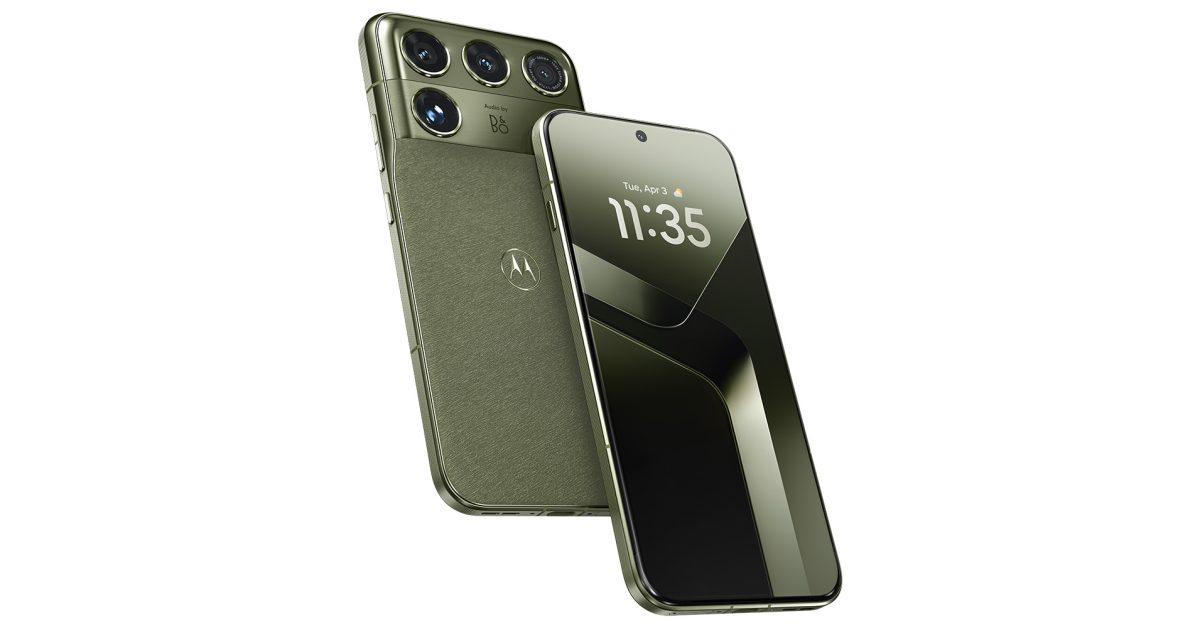
The Motorola Signature 27’s launch is coming up fast and, with it, the first truly exciting flagship the company has launched widely in quite some time. There have been a handful of high-end Moto devices in recent years, but this is the first one in quite a while where it seems Motorola is holding nothing back.

Between a powerful Snapdragon chip, top-tier cameras, and rumors of a massive battery, this is shaping up to be something special. Of course, all-out flagships like this aren’t uncommon in some parts of the world. Oppo, Honor, and other Chinese brands have been building devices like this for years but, especially in the US, they’re just completely lacking, especially now that OnePlus is dead. While OnePlus flagships in more recent years have not quite risen to the same bar as Oppo’s, they’ve been the best equivalent in the States and, now, they’re just gone.

Motorola is stepping up in a big way here, and seems to be the closest many are going to get to a OnePlus replacement.

It’s fitting, really. As much as I’d love to have Google Pixel step up its game here, Motorola’s Lenovo backing and long history in the smartphone space more than earns its spot as a proper flagship smartphone maker. The problem, really, is just going to boil down to pricing.

OnePlus was well known for top-tier specs, of course, but it built its brand on doing so at a lower price point. Even in its final days where prices were creeping higher than ever, a OnePlus flagship was still priced equal to or less than most competitors. Motorola Signature 27 does not seem to be trying to recover that part of OnePlus’ reputation based on early pricing leaks. RAMageddon surely isn’t helping matters, but Motorola’s return to the flagship space is not going to come cheap from the sound of it.

Another sore point for Motorola is in software updates, but it’s not like OnePlus was really doing that well in that regard anyway. Things are moving in a better direction with Motorola moving up to 7-year commitments on certain devices, but there’s still room for improvement and quite the poor track record to make up for.

With the launch of Motorola Signature 27 mere weeks away, I’m personally very excited to see what the company has in store. What do you think?


Breaking: iPhone Duos

You’d think that Android foldables effectively doing all of the R&D for Apple’s first foldable would prevent any major issues, but apparently that’s not enough. While the scale of the problem remains unclear, Apple’s iPhone Duo is cracking for many in the same place, suggesting there’s a manufacturing problem in play. It’s not quite an OG Galaxy Fold debacle, but it doesn’t feel far off either.

Gemini 4 Carbon

Google’s latest frontier AI model has been announced in Gemini 4 Carbon. The company says it makes major leaps forward for coding and other purposes and outranks the competition but, like Argon, it’s not immediately available.

Fitbit Edge is here

After being announced earlier this month, we reviewed the Fitbit Edge this week and the tracker is also now on sale. While it feels like an awkward middle child between the Pixel Watch and Fitbit Air, owners of prior Charge trackers will likely appreciate the upgrades it brings to the table.


9to5Mac: Apple announces all-new MacBook Pro with PROLED XDR display, its first touchscreen Mac

9to5Toys: Review: The Kindle Colorsoft Signature Edition is finally worthy of its name

Electrek: This $15,000 low-speed EV is now on sale, and it’s street-legal


Follow Ben: Twitter/X, Threads, Bluesky, and Instagram

20Motorola Signature 27 specs detailed in new video, including Tandem OLED display - 9to5Google
Read on 9to5google.com

motorola-signature-27-hands-on-2.jpg?quality=82&strip=all&resize=1200,628


Ahead of its launch next week, a new video offers a closer look at the Motorola Signature 27 as well as confirming some key specs.

A video hands-on from Danny Winget on YouTube offers a closer look at Motorola’s upcoming flagship, and only makes its arrival all the more enticing.

There are several key specs mentioned in the video, with the most interesting being the “Extreme AMOLED Duo” display which makes use of Tandem OLED technology. Tandem OLED isn’t a new idea, with the tech stacking multiple layers of diodes on top of each other to improve contrast and brightness. Tandem OLED can be found on Apple’s new “PROLED” MacBook Pro, as well as 2024’s Honor Magic 6 RSR. But Motorola’s use of it in the Signature 27 is certainly nice to see, especially given the other spec shared. 12,000 nits of brightness. That rather insane figure is apparently the peak brightness on this new flagship.

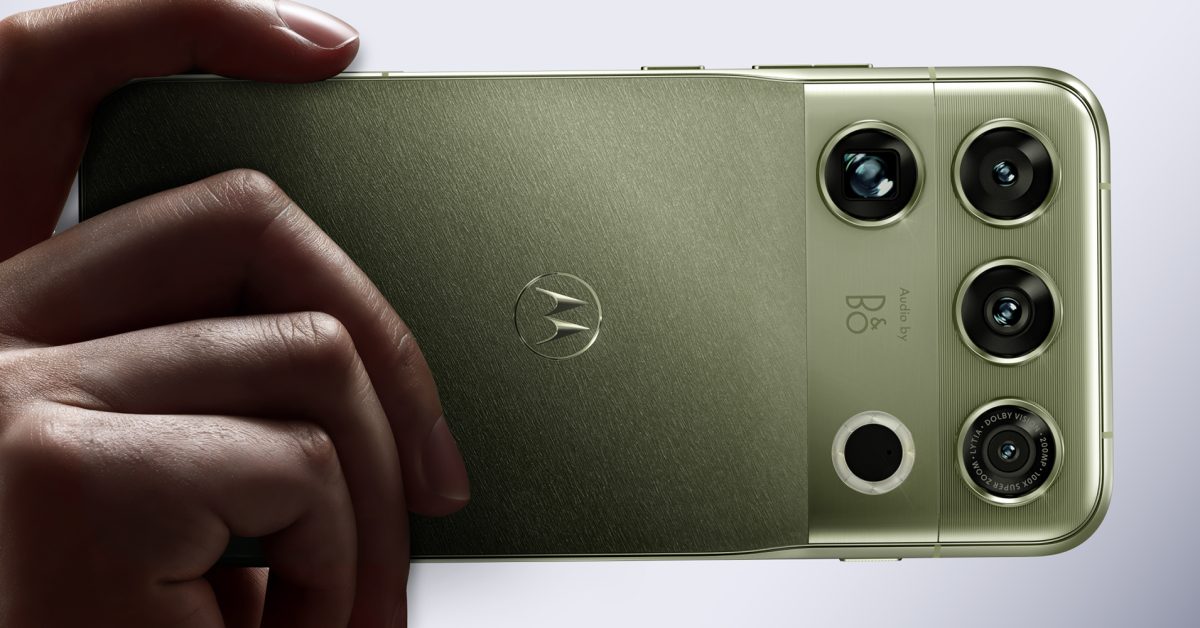
Hardware shots of the phone also show the textured backs on the two color variants as well as the curved glass around the display.

Other specs shared in the video include:

  • 6.8-inch Extreme AMOLED Duo display, 120Hz, LTPO, Tandem OLED, 12,000 nits max brightness
  • Snapdragon 8 Elite Extreme Gen 6
  • 16GB RAM
  • Up to 1TB UFS 4.1 storage
  • Android 17 with 7 years of OS updates
  • Cameras: 50MP Lytia 910 main, 200MP periscope telephoto, 50MP ultrawide, “dedicated action sensor” for motion capture improvements

The battery capacity isn’t revealed, but Winget says that it is “sizable.” Similarly, the vapor chamber is described as “40% larger” but a point of comparison wasn’t given.

It’s all shaping up for a powerful flagship in every sense of the word. Motorola has confirmed that Signature 27 will launch on November 5, and I don’t know about you, but I’m only getting more excited about it.

Follow Ben: Twitter/X, Threads, Bluesky, and Instagram

21Samsung mercilessly mocks iPhone Duo ‘crackgate’ in Galaxy Z Fold 8 ads [Video] - 9to5Google
Read on 9to5google.com

galaxy-z-fold-8-iphone-duo-crackgate.jpg?quality=82&strip=all&resize=1200,628


Samsung isn’t holding back when it comes to the iPhone Duo’s messy start. In new ads, the company mocks iPhone Duo’s “crackgate” with a push for customers to buy the Galaxy Z Fold 8 instead, and there’s not an ounce of subtlety here.

Following the debut of Apple’s first foldable, an unfortunate trend has emerged among early buyers. A number of users found that their display “cracked” with the display panel dying in the center, all in the exact same way, implying there’s a flaw within Apple’s hinge design.

Apple is replacing affected devices, but it is a somewhat harrowing reminder that this is the company’s first attempt at this hardware.

And Samsung is happy to point that out.

In an ad for the Galaxy Z Fold 8 on Instagram, Samsung says that “folding is nothing new to us” and that “we know a thing or eight.” It cuts right to the chase: “Switch to Galaxy Z Fold8.” The attached imagery then depicts the iPhone Duo’s well-known screen “crack.

That one was posted to Samsung Canada’s account, while another ad from Samsung Malaysia further takes that up a notch:

Feeling a little FOMO seeing all this talk about durability… oops, we’ve just been busy folding and getting on with our day

Samsung Australia similarly poked fun at Apple’s durability woes with a post about “how life sounds when your screen doesn’t break when opening your phone.”

Another post from Samsung Saudi Arabia puts the iPhone Duo crack on a Galaxy Z Fold 8 before revealing it’s just a wallpaper.

Follow Ben: Twitter/X, Threads, Bluesky, and Instagram

22Pixelated 123: The primary value is the clock - 9to5Google
Read on 9to5google.com

Pixelated-cover.jpg?quality=82&strip=all&resize=1200,628


Welcome to Pixelated episode 123. This week, Damien and Abner share their earliest impressions of the Fitbit Edge, Google’s latest fitness tracker that promises to split the difference between the Fitbit Air and the Pixel Watch 5. After, the gang gets bleak about the future of RAM prices before turning their attention to Apple one last time to ask…good lord what is happening in there?

Enjoy the show? You can listen to our weekly members-only Pixelated Pro bonus episode by signing up for 9to5Google Pro for just $5 per month, or about $1 per episode.

Sponsored by Proton Unlimited: Pixelated listeners can save 30% on an annual subscription to the company’s suite of privacy-friendly services by signing up using our link. Thanks to Proton Unlimited for sponsoring the podcast.

Drop us a line at gtips@9to5g.com, leave a comment on the post, or reach out to our producer. And for even more Android discussion, dive into the official 9to5Google forums!

23The 12th Google Store is opening on November 6  - 9to5Google
Read on 9to5google.com

google-store-logo-3.jpg?quality=82&strip=all&resize=1200,628


Following San Diego and Tokyo in 2026, the next Google Store is opening in Houston on November 6. This is the company’s 11th retail location in the US and 12th globally.

Google Store Houston Galleria opens on Friday, November 6: 5085 Westheimer Rd, Houston, TX 77056. This indoor shopping mall has the distinction of being “Texas’ Largest Shopping Destination.” The store hours are:

  • Monday-Thursday: 10am-8pm
  • Friday-Saturday: 10am-9pm
  • Sunday: 11am-7pm

The Google Store sells Pixel phones, watches, headphones, and smart home devices, like security cameras. For those in the area, store pickups for online orders are available. The location offers on-site phone repairs, support, and other events.


Houston will be the state’s second Google Store after Austin last year.

24Friday’s Android app deals and freebies: Thronefall, Demon Castle Story, Pocket Academy 3, Dungeon Village 2, more - 9to5Google
Read on 9to5toys.com

Google-Play-collage-af8b04.webp?resize=1200,628


Friday’s best Google Play app and game deals are ready, including Thronefall, Demon Castle Story, Pocket Academy 3, Dungeon Village 2, RPG Silver Nornir, Witchcraft!, Lovecraft’s Untold Stories, Angelo and Deemon (Full), and more. The Week 1 early Black Friday Doorbusters are live with up to $350 off on Pixel 11, Pixel 11 Pro, Pixel 11 Pro XL, and Pixel 11 Pro Fold, as well as Pixel Watch 5 hitting all-time lows at $100 off, and Pixel Buds Pro 2 at over 25% off, but your app deals await below.

Today’s highlight Google Play deals:

More Google Play deals still live:

FTC: We use income earning auto affiliate links. More.

25Apple Music 7.0 for Android rolls out with Liquid Glass redesign  - 9to5Google
Read on 9to5google.com

Apple-Music-7-1.jpg?quality=82&strip=all&resize=1200,628


Following a month of beta testing, Apple Music 7.0 is rolling out with a Liquid Glass redesign for Android, as well as the new icon for the streaming service.

This update starts with a tweaked music note icon in black or white, depending on your device theme, replacing the previous red background. Similarly, the accent color throughout Apple Music is now blue.

Old vs. new

The app now has a floating bottom bar that lets you see content above, below, and to the sides. There is a small amount of translucency that primarily allows you to make out solid colors underneath the navigation element. The mini-player gets the same treatment and is no longer docked to the bottom bar. However, compared to iOS, scrolling does not collapse the bar into a more compact version.

Version 7.0 introduces a very modern, edge-to-edge design for Android’s system status and navigation bars.

Top bars across Apple Music have been updated. The page title and overflow menu are now on the same line, while the three-dot icons are no longer themed red and have been placed in circular containers. The Library tab sees a big update with “Edit Pins” and “Edit Categories” now part of the three-dot menu.

Artist pages have been thoroughly redesigned with the background now themed based on the cover image. Matching the iOS design, there’s a prominent play button and info page, while share has been placed in the top-right corner.

The Settings page has also been modernized with better grouping. There are no major changes to Now Playing, which did not see any big updates on iOS.

With a recent release, Apple Music for Android switched to a new versioning system that aligns with iOS. Today’s version 7.0 matches iOS 27 and is now widely rolled out via the Play Store.

26Deep Google Store discounts on Pixel 11, Pixel Watch 5 start early - 9to5Google
Read on 9to5google.com

Pixel-11-family.jpg?quality=82&strip=all&resize=1200,628


Like other retailers, the US Google Store is already starting Black Friday-level discounts on the Pixel 11 series and Pixel Watch 5 at the end of October.

Google is now taking $200 off the Pixel 11, which is double the last sale in early October. The Pixel 11 Pro is $300 off (versus $200), while it’s $350 off (compared to $250) for the Pixel 11 Pro XL.

Finally, the Pixel 11 Pro Fold sees only a $250 discount. There are matching discounts at Amazon and Best Buy today.

These discounts end on November 8, 2026 at 11:59 PM PST. The Google Store deals are starting pretty early, and it remains to be seen if the actual Black Friday prices will be identical or go slightly further.


Google Store Referral Program back for Pixel 11: 10% off phones, $50 Store credit


Meanwhile, it’s $100 off (versus $50) the Pixel Watch 5 Wi-Fi or LTE:

Other notable deals today at the Google Store include:

27Will Galaxy S27 Ultra and Pixel 12 mark the end of the flagship era of smartphones? - 9to5Google
Read on 9to5google.com

S26-Ultra-Pixel-11-Pro-and-iPhone-17-Pro.jpg?quality=82&strip=all&resize=1200,628


Like most Android fans, you probably enjoy having the latest and greatest smartphone buried in your pocket. The best camera, the best display, the fastest processor, and of course, as much RAM as any given smartphone OEM will pack in. And even as we’ve watched the typical flagship price balloon into the four-digit space, trade-in offers, carrier deals, and steep sales on certain hardware brands like Pixel have made it all too easy to keep up on what’s new in gadgets without breaking the bank year-in and year-out.

Obviously, all of those routes towards a cheaper smartphone purchase still exist today — I assure you, anyone who regularly tunes into the NFL can recite Verizon, T-Mobile, and AT&T’s various deals by heart. But prices are rising so rapidly, with no sign of slowdown in sight, that I can no longer be sure any of those routes towards making new hardware more expensive will be available tomorrow. And honestly, we might hit a point where it’s increasingly difficult to recommend these phones to all but the most hardcore of enthusiasts, no matter how many sweeteners you add to the deal.

Throughout 2026, we’ve watched as new generations of barely-modified hardware have launched with $100 price hikes. We’ve watched as months-old hardware suddenly jumped up in price without so much in the way of a warning or an official announcement. And even outside of smartphones, you have to wonder if Google really hoped its latest lineup of laptops would’ve launched with more models available for under four figures. What’s been an underlying problem throughout the market throughout the last year, though, seems ready to burst into something much larger beginning throughout the next few months.

Recent price leaks have not exactly filled me with confidence over what hardware to recommend to anyone in the market for a new phone. The Galaxy S27 Ultra is sounding like it could arrive starting at $1,500, $100 more than the S26 Ultra’s current MSRP and $200 more than what that phone launched at earlier this year. Motorola’s attempt to come back to the flagship space in the US for the first time since 2023 could be completely derailed by rumors of an even higher price point that guarantees it won’t appeal to anyone. And while we’re certainly too far out to really predict anything regarding Google’s next-gen Pixel pricing, if you think the Pixel 12 might be your next phone, I’d start saving today.

As you climb towards the $2,000 mark, it’s worth putting these costs into perspective. These are laptop prices — maybe not that new “PROLED” MacBook Pro, but certainly other upper-high end laptops from companies like Apple, Dell, and HP. $1,500 will buy you an mid-tier home treadmill, or a nice OLED TV, to say nothing of the truly practical ways you can put that much cash to good use in a time where the costs of everything is rising. While some might think there is no price ceiling that truly keeps them away from new Android hardware, I’d be willing to bet plenty of potential buyers are already being priced out of the high-end market entirely. We’re reaching a breaking point where the question might not even be about whether you can afford something, but whether you should, leaving customers with just two routes forward: keep your existing device, or opt for a midrange option when you can.

Sure, saying “no thanks” to something like the Pixel 11 Pro XL right now might be easy enough. But moving forward, practically every single Android user will need to set some kind of personal limit on the price of a new smartphone, and if you’re convinced the midrange space might serve as your sole savior, you might want to think again. While RAM prices are bound to affect the final cost of Google’s Pixel 12, those constraints on a final bill of materials might mean a whole lot more to something like the Pixel 11a. After all, when you’ve already seen the Pixel 10a and its generation-old Tensor G4 chipset get hit with a $100 price bump, you have to wonder if it’s time to cut back on certain “premium” features.

The next few years of budget-oriented smartphones — and I really am talking about anything outside of the flagship space — is about to shift in a way we haven’t seen in over a decade. In the 2010s, cheap components and streamlined production costs helped bring about excellent midrange options like Google’s Pixel A-series, Samsung’s Galaxy A-series, and some select Moto G entries. Moving forward, these same companies will need to pick between higher prices and reduced spec sheets. The dream of yesterday’s flagship becoming tomorrow’s budget phone is, at least for the time being, dead and buried.

This isn’t just rampant speculation on my part. We’re already hearing about some companies making the decision to reduce RAM in their devices down to 8GB, 6GB, or even as low as 4GB, depending on the model and market it’s entering. It’s easy to see storage options also getting hit with their own downgrade — 128GB entry-level flagships could reemerge just as soon as they began to die off, and I wouldn’t be surprised to see 64GB options begin to reappear in sub-$600 models. That might be the sacrifice needed to keep other high-end features, like 120Hz OLED displays, hanging around in this price range.

Of course, you can’t simply opt to forego RAM or storage in the same way that you can downgrade the display, and with the memory crunch set to possibly extend to 2030 or beyond, there could come a time where cutting back on raw specs or non-essential features stops being an either-or question. The knock-on effect is obvious: If you suddenly have a lot more people buying devices with less horsepower than previous generations, you’re going to see a reciprocal slowdown of any software development that requires hardware capable of reaching a certain threshold. Widespread on-device AI, for those of you who care about local models, seems like a pipedream at this point, but these market conditions are just as likely to crush, say, any hope of more games with high-end graphics coming to Android.

It’s not that the hardware won’t exist to support these features — flagships will obviously still exist even if their price tags balloon over the $2,000 mark. It’s the audience size you have to worry about; for a large majority of developers, it simply won’t make sense to continue pushing the envelope for what constitutes a smaller and smaller crowd of potential users.

The other solution is to hold onto whatever device you have in your possession right now, for as long as you can. That might not sound particularly exciting — I know I couldn’t tell you the last time I went more than six months without changing phones, even discounting review units — but it’s also the most reasonable approach to the current crisis. It’s not too late to jump on a recent flagship (think 2024 or later) before things get particularly dire, either, and with holiday sales coming up, I’d urge anyone on the fence about upgrading their current device with the means to do so to pull the trigger. Tomorrow’s price, simply put, will not be today’s.

And hey, if there’s a silver lining to be found here, I think it’s this: we’ve seeing tech companies across the board — hardware and software alike — grow increasingly comfortable with the idea that, for the user, resources can be effectively unlimited. Those days are gone, and it’s going to force software developers, including Google, to make some changes that are probably long, long overdue. We might lose out on big hardware improvements, resource-heavy advancements, and flagship-esque affordable smartphones, but there’s always a chance Chrome’s memory usage finally gets under control. It might not be worth all of this pain, but it’s something, right?

28Pixel 6 postmortem: How Google’s flawed reboot defined future hardware [Video] - 9to5Google
Read on 9to5google.com

Google-Pixel-6.jpg?quality=82&strip=all&resize=1200,628


I think there are few smartphones in the past decade that have arrived carrying the sheer weight of expectation that greeted the Pixel 6 and Pixel 6 Pro in late 2021. Now on life support, just what did we learn from 2021’s reboot for the brand?

There was a lot of bubbling hype around ahead of Made by Google before the Pixel 6 was unveiled. I think a lot of that is due to just how flip-flop the Pixel lineup had become after years of identity crises, weird experimental gestures, compromised battery sizes, and following on from the charming but overtly mid-range Pixel 5, Google said enough was enough and finally decided to swing for the fences.

I think fans hoped that Google was done playing nice and coming second to Samsung and Apple. The Pixel 6 series was built to make a statement, introducing a brand new design language, custom silicon in the shape of Google Tensor, huge camera sensor upgrades, and a shockingly competitive price tag.

For more video content, subscribe to 9to5Google on YouTube.

Yet, looking back with years of hindsight, the Pixel 6 duo remains one of the most polarizing Google releases, probably ever, but we can’t get away from the important fact that it laid the technological foundation for everything Pixel represents today, but it did so while putting early adopters through a gauntlet of software bugs, sluggish biometrics, thermal throttling, and atrocious cellular connectivity.

So with that in mind, this is the Google Pixel 6 and 6 Pro: the good, the bad, the ugly, and how this turbulent reboot shaped the future of Pixel.

Before the Pixel 6, Google’s hardware design wasn’t exactly tearing up trees. I’d say it was best described as understated, if not entirely apologetic. The fabric cases notwithstanding, and maybe the soft-touch bio-resin finish of the Pixel 5 aside, nothing about them screamed “I am a flagship phone” across a crowded room.

I genuinely feel that the Pixel 6 changed that overnight, but without losing some of the “playful” feel that has been a hallmark of basically all Google hardware.

Dominated by a bold, edge-to-edge camera visor across the rear, the design was, dare I say it, instantly iconic. Instead of an awkward off-center stove-top camera island that rocked incessantly when placed on a flat desk, the camera bar acted as a natural kickstand. It gave the Pixel line an unmistakable silhouette that Google continues to iterate on today.

One thing that was interesting at the time and even more so today is how the line was separated at launch. Two distinct yet similar designs with dual-tone pastel glass backs. The Pixel 6 had a bigger dash of “fun” with the Sorta Seafoam, Kinda Coral, and the striking Stormy Black. The 6 Pro leaned into more traditional executive styling with polished aluminum rails and curved front glass, whereas the standard Pixel 6 has that flat display glass, matte black borders, and a boxier aesthetic.

However, the hardware was not without ergonomic pain points. Both devices were heavy, slippery, and massive. Google completely abandoned the compact form factor of the Pixel 5, offering no refuge for small-phone purists after the palm-friendly 4a and even the smaller Pixel 4. The polished rails of the Pro were a magnet for grease, while the glossy back panels made both phones still feel like a wet soap bar without a protective case.

Complaints aside, the design was arguably the biggest standout. I think they still look great today.

The biggest architectural gamble with the Pixel 6 generation was the departure from Qualcomm Snapdragon processors in favor of in-house silicon. Before launch, we’d heard so much about the first-generation Google Tensor chip thanks to numerous leaks, but really had no idea what it would bring to the table.

Developed in partnership with Samsung’s Foundry, Tensor, or “Tensor G1” as it is known today, was not designed to beat Apple’s A-series chips or Qualcomm’s Snapdragon lineup on synthetic Geekbench benchmarks. Google’s main pitch was on-device machine learning.

The first-gen Tensor chip unlocked voice typing through Google Assistant that was fast and accurate enough to genuinely replace keyboard tapping, real-time live translation, Magic Eraser photo cleanup, and instant offline speech transcription. These are now commonplace, but they felt like real differentiators at the time.

In everyday UI tasks, the Pixel 6 felt fluid and remarkably responsive. Paired with Android 12 and the debut of the Material You’s dynamic theming engine, using the phone felt fresh, cohesive, and modern but styled with Google’s trademark flourishes.

The trade-off was efficiency. Fabricated on Samsung’s 5nm LPE node, the first Tensor generation struggled, well, struggled is an understatement, with sustained thermal performance. Under heavy loads or prolonged 4K recording sessions, the phone warmed up rapidly. Gaming performance was volatile, and battery life was wildly inconsistent between individual units.

I think it’s fair to say that those issues were the tip of the iceberg. The first six months of the Pixel 6’s lifecycle were marred by two notorious hardware bottlenecks: the optical fingerprint reader and the cellular modem.

Google made the controversial decision to ditch the ultra-reliable rear-mounted Pixel Imprint capacitive scanner in favor of an under-display optical sensor. You fell into a couple of camps with this problem in particular. I can’t say I had a single issue, save for unlocking being slower than the competition at the time, but for thousands of people, it was one of the biggest frustrations from the get-go.

Google issued multiple software patches attempting to tune recognition algorithms, but software can only do so much to compensate for mediocre optical hardware.

In my mind, the most damaging issue was cellular connectivity.

So instead of using Qualcomm’s class-leading modems, the Pixel 6 series tried out Samsung’s Exynos 5123 modem. You’ll know all about this if you use either phone for any extended period of time. Dropped calls, slow to send text messages, weak signal basically everywhere, even when in the visible range of a cell tower. It was a mess.

Even testing showed it was just bad compared to other flagship phones. It was a disaster, and this isn’t something you can ever fix with a software update.

Despite Android 12 being the biggest shift in the platform up until that point, and debuting on the Pixel 6 and 6 Pro, it was a very buggy update and one that needed near constant attention alongside the other issues this duo faced post-launch.

The situation spiraled after the disastrous December 2021 security update. The update introduced critical call-dropping bugs so severe that Google was forced to pull the release entirely and pause OTA rollouts for nearly a month while working on emergency fixes that pushed into late January 2022.

For a product line whose defining identity had always been pristine software and rapid, flawless monthly updates, the December-January release cycle was not a good look. That’s not discounting some early issues with the new and improved camera systems onboard.

For four straight generations prior, Google clung stubbornly to the aging 12.2-megapixel Sony IMX363 sensor. I’d say that the company was overrelying on computational photography wizardry to squeeze blood from a stone. With the Pixel 6 and 6 Pro, Google finally listened to the complaints and paired its legendary image pipeline with some actual cutting-edge optical hardware.

Both phones pack a 1/1.31-inch 50MP Samsung ISOCELL GN1 main sensor, which captures roughly 150% more light than the Pixel 5. The resulting images delivered that lovely natural optical shallow depth of field, stunning dynamic range, and rich textures that no longer relied on over-sharpening algorithms. Night Sight became noticeably faster, and skin tones were rendered with unprecedented fidelity thanks to the introduction of Real Tone tuning.

On the Pixel 6 Pro, Google added a dedicated 48MP 4x periscope telephoto lens. This transformed the Pro into a versatile long-range shooter, producing clean hybrid zoom up to 20x.

I guess like basically everything else on the Pixel 6 and 6 Pro, the transition to a larger physical sensor was not entirely smooth. Close-up shots frequently suffered from optical fringing and falloff around the edges of text documents, highlighting the lack of dedicated macro capabilities on the standard ultra-wide camera. Before updates, there was a ton of oversharpening that felt like a hangover from the previously 12MP main sensor era that had to be ironed out.

Video recording, while improved through HDRnet processing, still lagged behind the iPhone in low-light stability and frame consistency. Still, the Pixel 6 camera setup finally looked and shot like real flagship hardware.

In retrospect, the Pixel 6 was the messy blueprint that made everything that came after it possible. Google treated this generation as a clean break, and the hard lessons learned directly dictated the roadmap for subsequent flagships.

The industrial design was one of the strongest areas, and we’ve seen it refined into an integrated visor on the Pixel 7 and 8 series, eliminating the delicate glass visor seams and smoothing out corner transitions. The optical fingerprint reader, while still not top-tier ultrasonic until the Pixel 9 series, saw improved hardware revisions and accompanying software facial recognition fallback added to the next device.

On the connectivity front, the widespread backlash pushed Google to iteratively address modem efficiency and reception, moving through newer Samsung modems before laying the groundwork for better connectivity in recent years. The camera sensor’s higher baseline established on the 6 series provided the stable foundation for Google’s imaging algorithms to mature over several release cycles. The consistency is back and remains a strong suit of the latest phones once again.

Crucially, the aggressive $599 pricing of the base Pixel 6 in some ways reset consumer expectations across the industry. I don’t doubt that it proved premium hardware and custom silicon did not require a four-figure entry fee. A lot of that has been ditched in recent years, but the point remains.

The Pixel 6 and Pixel 6 Pro were fundamentally flawed pioneers for Google. They were the firm’s most ambitious hardware undertaking to date, and simultaneously one of the most frustrating phone series to live with during their initial launch window and beyond.

If the Pixel 5 was a safe play ahead of this big pitch, the Pixel 6 was a risky dive into deep waters. It stumbled badly yet without those painful growing pains; the more polished, confident, and reliable Pixel devices we enjoy today simply would not exist.

Follow Damien: Threads, Bluesky, Instagram
29Deals: Week 1 early Black Friday Doorbusters, Pixel 11 series up to $350 off, Pixel Watch 5 $100 off, more (All-time lows) - 9to5Google
Read on 9to5google.com

9to5Google-Oct-30.webp?resize=1200,628


The Week 1 early Black Friday Doorbusters now live and with them we are now tracking Amazon all-time low prices on Pixel 11, Pixel 11 Pro, Pixel 11 Pro XL, and Pixel 11 Pro Fold at up to $350 off. Those deals join $100 off all Pixel Watch 5 models, the latest Google Pixel Buds Pro 2 at over 25% off – including the new Olive set sitting at its best price ever on Amazon, and return Amazon lows on just about all of Google’s latest Pixelsnap cases. All of that and more awaits below. 

The Week 1 early Black Friday Doorbuster deals have arrived and Amazon is now offering all-time lows across the latest Google Pixel 11 lineup at up to $350 off and Pixel Watch 5 at $100 off. All of the deals can be found on this page right here and you’ll find them broken down with more detail down below. 

The deals we have live here today are delivering new Amazon all-time lows on Pixel 11, Pixel 11 Pro, Pixel 11 Pro XL, and even the Pixel 11 Pro Fold. While we did see select models catch additional savings during the fall Prime Day event earlier this month, just about every single option is now $50 or more less than we saw during that sale event and have never sold for less outside of extremely limited and targeted offers:

Just about all of these deals are also live as part of the Week 1 early Black Friday Doorbuster deals at Best Buy as well.

Alongside all-time lows at up to $350 off on Pixel 11, Pixel 11 Pro, Pixel 11 Pro XL, and Pixel 11 Pro Fold, Amazon is also now offering $100 off all Pixel Watch 5 models. Aside from a couple one-off and extremely short-lived offers on select models, we are looking at the lowest Amazon prices to date across the lineup. 

We spotted and featured these deals as part of our Pixel 11 series Week 1 Doorbuster deals feature this morning already, but we wanted to make sure they were front and center for folks specifically looking towards Google’s latest wearable. 

The early Black Friday Doorbuster deals are kicking off today with as much as $350 off Pixel 11, Pixel 11 Pro, Pixel 11 Pro XL, and Pixel 11 Pro Fold, solid $100 price drops across all Pixel Watch 5 models, and even some return Amazon lows on the latest Pixelsnap cases. All of those deals are, however, also joined by a notable discount on the latest Google Pixel Buds Pro 2 that are now over 25% off – the new Olive set is sitting at its best price ever on Amazon. 

Amazon is now offering Google’s latest Pixel Buds Pro 2 down at $169 shipped in all four colorways. This deal is also live as part of Best Buy’s Week 1 early Black Friday Doorbuster sale.

Regularly $229, this $60 off, or over 25% under the list price, and the best deal we can find right now in brand new condition. 

You’re effectively looking at the best deals in months here, landing slightly below the fall Prime Day price. 

We have seen the Hazel, Porcelain, and Peony models selling for less than this in the past – they have never sold for under $160 at Amazon in 2026 though. The newer Olive set, however, is now sitting at it best price ever after being introduced alongside the Pixel 11 and Pixel Watch 5 this past summer.

Alongside today’s early Black Friday Doorbuster deals on the latest Pixel 11, Pixel 11 Pro, Pixel 11 Pro XL, and Pixel 11 Pro Fold at up to $350 off, as well as $100 off all Pixel Watch 5 models,. Amazon is also bringing back all-time low prices on Google’s latest Pixelsnap cases as well. You’ll find all of the deals waiting on this page and additional details below.

  • Google Pixelsnap Case for Pixel 11 Pro Fold – Olive: $64 (Reg. $80)
  • Google Pixelsnap Case for Pixel 11 Pro Fold – Obsidian: $64 (Reg. $80)

Best Buy is kicking off its early Black Friday deals today, with notable offers landing on pretty much everything from Apple gear, laptops, gaming PCs, and so on. A notable Week 1 Doorbuster deal worth checking out now drops one of Lenovo’s latest 2K touchscreen Lenovo IdeaPad Slim Chromebooks down to $189 shipped. The base variant of this Chromebook with 4GB/64GB config is down to $189 from its $419 price, whereas the more capable 8GB/128GB model is at $289, down from $529. That’s a massive $230 discount on the base variant, which works out to a massive 54% discount. Both models are hitting new all-time lows today, and the value is pretty hard to ignore at these prices, especially if you’re after an affordable Chromebook for casual, everyday use. Head below for more details.

Lenovo’s IdeaPad Slim 3 Chromebook is a practical pick if you’re looking for a simple everyday notebook for casual use. The more affordable version from the sale today pairs MediaTek’s Kompanio 540 processor with 4GB of RAM and 64GB of UFS storage, while the higher-end model steps up to 8GB of memory and 128GB of storage for a bit more breathing room when multitasking or keeping files offline. Both variants feature a 14-inch WUXGA touchscreen, giving you a little more vertical space than a standard 1080p panel while also making ChromeOS easier to navigate. Both of these variants should be able to handle web apps, documents, streaming, and general productivity workloads without any issues, and Lenovo also rates its battery to last for up to 18 hours on a single charge.

Be sure to check out the rest of Best Buy Week 1 Black Friday Doorbuster deals, which are now live to kick off the holiday savings. Loads of other Windows laptops are also discounted right now, and you’ll find them all highlighted right here.

Alongside the Week 1 early Black Friday Doorbusters live at Best Buy today, LG is also offering “Black Friday Price Guaranteed” on select 2026 TV models. This includes up to $2,000 off the wonderful C6 OLED that also comes with a FREE Xbox Controller alongside deals on its much more affordable new mini-LED models from $600 and some Doorbuster deals on the premium G6.

Down below you’ll find a series of notable early Black Friday offers on LG TVs straight from the brand, many of which with special bonus perks, savings, and freebies, as well as some with the “Black Friday Price Guaranteed.” However, we also wanted to take a closer look at the specials now live on its amazing 2026 G6 OLED model:

The official LG site is offering its premium 65-inch 2026 OLED evo AI G6 4K Smart TV down at $1.999 shipped – that’s a massive $1,400 off the launch price on one of the best OLED TVs you can buy and it also includes the following with purchase:

  • Receive a FREE M7 Wireless Speaker (up to a $399.99 value)
  • FREE professional wall mounting and matching TV stand
  • (Optional) Bundle with an Immersive Suite 7 Pro speaker package and save $400 off your purchase
  • (Optional) TV + Soundbar Bundle: Save up to $200 on a matching soundbar

Best Buy is also offering a special Doorbuster deal on the 65-inch G6 Series OLED TV with the same $1,400 discount and a FREE $100 gift card as well. 

Bose updated its home speaker lineup with the all-new Lifestyle gear this year and we are now tracking one of the first deals on the AirPlay and Google Cast Lifestyle Ultra Home Speaker today at $70 off. 

The official Bose Amazon storefront is now offering its new Lifestyle Ultra Speaker down at $279 shipped in both the black and white colorways. This deal is also live as part of the Week 1 early Black Friday Doorbuster deals at Best Buy.

  • Echo Show 16 from $400
    • Customers who preorder Echo Show 16 get $100 off.
  • Amazon Echo Dot $100
  • Amazon Echo Studio with Home Camera $250
  • Amazon Alexa Photo Frame from $200
  • Amazon Echo Time $200

Update 10/28: These deals on the latest Moto Tag 2 item trackers are still live courtesy of Amazon – 4-pack at 30% off or one for $20.

Motorola unleashed its new Moto Tag 2 item trackers over the last couple months and they are now back in stock at Amazon with the sizable launch discount – you can score one for $20 or the 4-pack at 30% off ($17.50 each). 

Amazon is once again offering a single Moto Tag 2 down at $19.99 Prime shipped from the regular $30 list and the 4-pack down at $69.99 shipped:

Nothing released some of the best buds in that $100 or less range this year, and now you can score the Ear (3a) back at all-time low pricing in all colorways as the squad over at 9to5Google pointed out recently. 

Amazon is now offering the 2026 Nothing Ear (3a) wireless buds back down at $79 shipped in Black, Pink, White, and Yellow. 

This set released this past summer at $99 and while the 20% discount might not seem like a massive one, the $79 deal price we are tracking right now is indeed matching the lowest we have seen at Amazon since. 

All things considered, this is a whole lot of buds for under $80 – we said they are easily some of the best buds you can buy for the price after testing them out and now they are even lower. 

We have featured this deal a number of times now, and there is a chance we see some additional savings on them in the coming weeks for Black Friday, but if history is any indication, chances are they won’t drop a whole lot more than this – think $10 or $15 max. That’s not insignificant though, and if you are looking towards the lowest possible price, we will likely see some additional savings across the current-generation Nothing lineup starting next month. 

Get a complete rundown on the 2026 Nothing Ear (3a) in our hands-on review right here. 

30Pixel Watch 5 matches all-time low price on Amazon - 9to5Google
Read on 9to5google.com

Pixel-Watch-5-and-Pixel-11.jpg?quality=82&strip=all&resize=1200,628


Black Friday is still weeks away, but holiday tech discounts are already arriving early. Joining the recent price drops across Google’s flagship hardware lineup, the Google Pixel Watch 5 has once again hit its lowest price ever on Amazon.

Whether you’re looking for the compact model or prefer more screen real estate, the entry-level 41mm Wi-Fi model is down to $299.99 (from $399.99), while the larger 45mm Pixel Watch 5 Wi-Fi model has dropped its price to $329.99 (from $429.99).

If you want the freedom to leave your phone behind while running errands, working out, or taking calls, the cellular models are seeing some of the best value drops of the season. The price drops are equally sharp, bringing the 41mm LTE variant down to $399.99 (from $499.99) and the 45mm LTE variant to $429.99 (from $529.99). What’s helpful is that you can get these deals at Best Buy too, if you’d prefer to pick one up there.

Unlike typical pre-Black Friday sales that restrict discounts to specific colors, this deal applies across all standard finishes. You can pick up the sale pricing in Obsidian, Porcelain, and Hazel across both sizes, as well as Rose Quartz on the 41mm model.

If you’ve been waiting to upgrade your Wear OS setup or pair a new smartwatch with your Pixel phone, these early Black Friday prices match historical lows across the board.

There are even replica pocket charger options now cropping up if you want to have a portable USB-C compatible keychain adapter for the wearable, now just $12.79 too, with a 20% discount coupon.

The deals extend to the Pixel 11 series too, with the Pixel 11 now priced at just $699, while the Pixel 11 Pro can be snapped up for just $799 in this early deal spree.

31Google says Android Auto video apps are still ‘coming soon’ as deadline nears - 9to5Google
Read on 9to5google.com

Android-Auto-new-Widgets-3.jpg?quality=82&strip=all&resize=1200,628


In a brief update at its latest dev conference, Google says that video and browser apps for Android Auto are still “coming soon,” with the company’s self-imposed deadline approaching quickly.

Back in May 2026, Google announced that video apps on Android Auto would be available this year on select vehicles. This would support using your car’s display for watching content from apps such as YouTube, with Google also confirming that background play would kick in after the vehicle shifts out of park.

With only two months left until Google’s year-end deadline lands, one might expect a beta release or some news on timing, but the company’s latest update doesn’t really bring much to the table.

At the Android Dev Summit this week, Google says that video and browser apps for Android Auto are still “coming soon.” Video apps are now “open” on Android Automotive (Google built-in) with browser apps in beta, but the phone-projected platform is still waiting. Google is also currently testing an updated version of audio apps using the Cars App Library, as well as new messaging and calling apps.

Follow Ben: Twitter/X, Threads, Bluesky, and Instagram

32Nothing OS 5.0 (Android 17) is now rolling out to Nothing 4a and 3a series phones - 9to5Google
Read on 9to5google.com

nothing-phone-4a-pro-october.jpg?quality=82&strip=all&resize=1200,628


Nothing Phone 3a, 3a Pro, 4a, and 4a Pro owners are in for a treat with the Nothing OS 5.0 update, now rolling out to all four phone models globally.

The Nothing OS 5.0 update began rolling out to Nothing Phone (3) owners just a few weeks ago, and now the stable build is ready for Nothing’s more budget-minded phones. The Nothing Phone (3a), Nothing Phone (3a) Pro, Nothing Phone (4a), and Nothing Phone (4a) Pro are now in line to get the big update, which includes a slew of new features alongside all the goodies that come with Android 17.

As is the case with all firmware updates, the Nothing OS 5.0 update is rolling out in batches to owners of the aforementioned four Nothing Phone models, so if you don’t see the update right away, just keep an eye out for the notification over the next few days.

Alternatively, you can navigate to system settings, scroll down to system, tap system updates, and then hit the check for updates button. My Nothing Phone (4a) Pro doesn’t have the Nothing OS 5.0 update yet, so be aware that yours might not either.

The Nothing OS 5.0 update includes a new Glyph app, which offloads the Glyph Interface features to a dedicated app with a tweaked UI. Quick Settings now supports split mode, so if you like the iOS-style split notification and Quick Settings concept, you can use that here. The home screen is now easier to arrange and organize with bulk icon management, and three new widgets (Collector, Away Time, and Glyph Timer) can now be used.

You’ll find a new Translucent theme selectable system-wide, as well as new lock screen customization options to play with. The camera UI has been refreshed once again, and a new Dual-view Video mode lets you record with the front and rear cameras simultaneously. There’s even a new yellow AI Processing status indicator that alerts you when your phone is processing potentially sensitive AI data.

See the full Nothing OS 5.0 update changelog here: Nothing Phone (3a) series, Nothing Phone (4a), Nothing Phone (4a) Pro.

Follow Nick: YouTube, X (Twitter), Threads, Instagram

33Motorola is officially launching its Signature 27 flagship next week - 9to5Google
Read on 9to5google.com

motorola-signature-27-1.jpeg?quality=82&strip=all&resize=1200,628


Motorola has officially confirmed that it will spill all of the details on its flagship Signature 27 phone next week.

Teased in September, the Motorola Signature 27 represents the brand’s return to the proper flagship market. The device is confirmed to be powered by Qualcomm’s top-tier Snapdragon 8 Elite Extreme Gen 6 chipset and is also coming to the US, both reasons to be excited about it.

And it’s right around the corner.

Motorola confirmed on Twitter/X this week that Signature 27 will officially launch on November 5. That’s this coming Thursday.

It’s unclear if this date will also serve as Motorola Signature 27’s release date, but it at least sounds like the date we’ll be getting full specs and, hopefully, pricing details. With high-end specs in tow, it sounds like Signature 27 won’t be cheap.

Are you looking forward to this one? Let’s discuss in the comments!

Follow Ben: Twitter/X, Threads, Bluesky, and Instagram
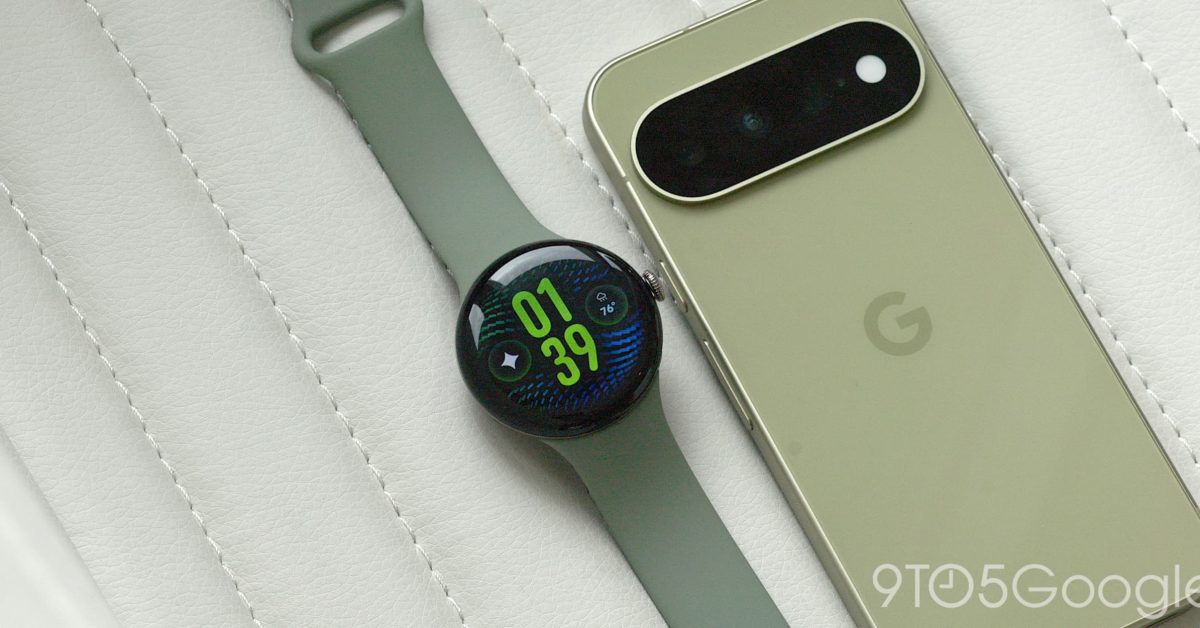
34The Pixel 11, 11 Pro, and Fold just hit an all-time low price weeks ahead of Black Friday - 9to5Google
Read on 9to5google.com

Pixel-11-Pro-Canyon-8.jpg?quality=82&strip=all&resize=1200,628


Google is running a huge Pixel 11 sale across a number of retailers, including the Google Pixel 11, Pixel 11 Pro, Pixel 11 Pro XL, and Pixel 11 Pro Fold.

If you’re looking at upgrading to a Pixel 11-series phone this year, now seems to be the best time to grab an unlocked model. Google just started a huge Pixel 11 sale at Amazon and Best Buy well ahead of Black Friday. Best Buy even calls this a “Holiday Deal” right on the site, so it’s clear that this is related to the usual big annual Holiday sales events. Here’s the breakdown:

This Pixel 11 sale takes up to $350 off Google’s latest Pixel phones, all packing the same Tensor G6 processor inside, as well as Gemini Intelligence and the absolute latest version of Android. Pixel thrives as the de facto way to stay up to date on the latest tech and always gets Google’s latest Android (and Gemini) features first.

If I had to choose between any of these four models, I’d go for the Pixel 11 Pro, as it packs all the best specs from the other Pro models in a more diminutive-sized package. It’s extremely difficult to find a smaller phone that doesn’t cut corners, but Google manages to make one every year with the same great cameras, displays, RAM and storage configurations, and processor as the larger models. It’s a win-win, in my book.

Keep in mind that the 512GB version has more RAM than the model with 256GB of storage, so if you’re a heavy multitasker, you might want to shell out just a bit more for that model. Thankfully, this great 25% off Pixel 11 sale still applies.

Follow Nick: YouTube, X (Twitter), Threads, Instagram
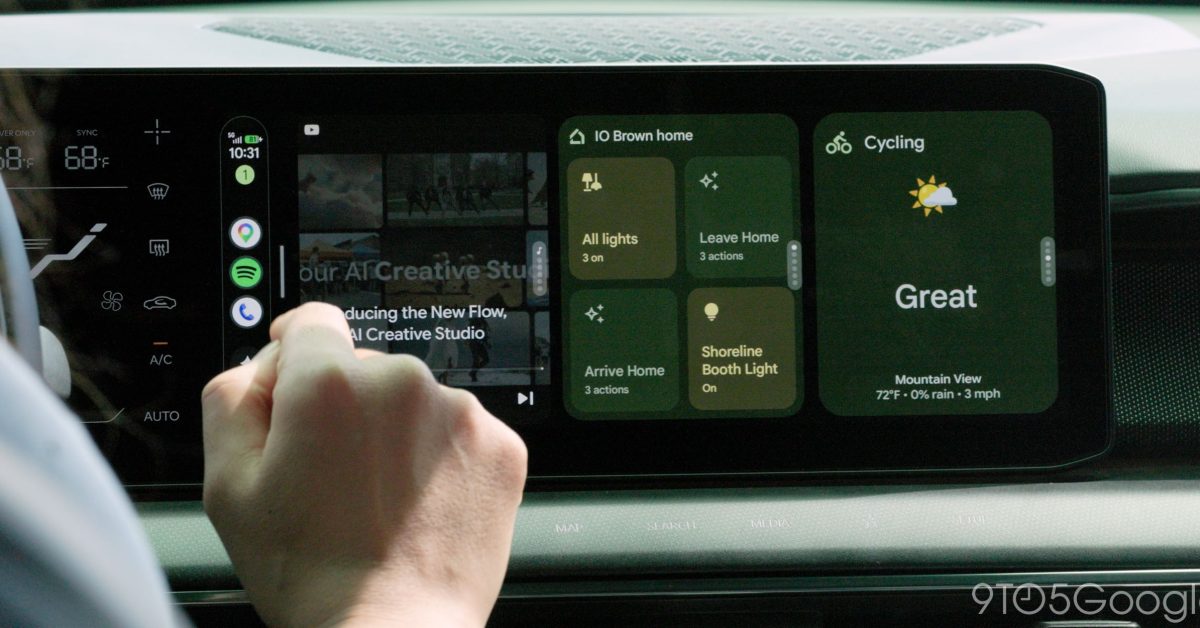
35Android 17 is on 1% of devices after four months, Android 16 on over 25% - 9to5Google
Read on 9to5google.com

android-booth-9.jpg?quality=82&strip=all&resize=1200,628


Google has updated its Android distribution numbers with the latest update showing that Android 17 is on just 1% of devices, while Android 16 now makes up the biggest slice of the pie.

Updated as of October 19, Google’s latest Android distribution numbers offer a peek into the rollout speed of Android 17. Having released to Pixel phones in June, the update has been available for roughly four months.

At this point, though, Android 17 makes up just 1% of active Android devices, Google’s data shows.

That’s compared to over 25% for Android 16, which released last year. Android 16 was on 7.5% of devices in Google’s last update in December 2025/January 2026, which landed several months after Google released the update. The timing here requires context, as major players like Samsung have only started widely rolling out their Android 17 updates in the past few weeks and are very unlikely to be included in this 1%.

The growth of Android 16 is pretty impressive, too, as older versions tend to be still be more widely in use at this point in the schedule, but Android 16 has managed to consolidate quite a bit.

Google dropped Android 5 (Lollipop) from its data with this update, with Android 5.1 making up just 0.2% of active devices. Android 11, for reasons unclear, still holds over 10%, while Android 12 has dropped to 9.6%. Android 11 has had a higher share in the past few updates.

What version of Android is your phone running?

Follow Ben: Twitter/X, Threads, Bluesky, and Instagram

36The official Phantom Blade Zero smart glasses from Viture are here - 9to5Google
Read on 9to5google.com

viture-phantom-beast-official-01.jpg?quality=82&strip=all&resize=1200,628


Viture Phantom Beast features a unique design, comes in a special metal-and-leather scabbard carrying case, and includes three exclusive Phantom Blade Zero collectibles.

Viture is rolling out another pair of smart glasses based on its highly acclaimed Viture Beast release from earlier this year. Viture Phantom Beast is the company’s second special edition pair of XR Glasses, this time partnering with S-GAME for the highly anticipated release of Phantom Blade Zero today, October 30, for $599 at Viture’s website.

Phantom Beast uses the same excellent 3DoF tracking and clean optics as the standard Viture Beast XR Glasses, but everything else is new. That includes a new color scheme as well as metal decals on the temples, modeled after Phantom Zero Blade’s Soul Blade. The carrying case “unsheaths” this time around and is made of metal and leather, giving a higher-quality feel to the overall package.

As a collector’s item, Viture Phantom Beast is designed to be shelf-ready, so you can display it in your gaming room as a testament to your dedication to the hobby. The full package includes:

  • Phantom Beast XR Glasses
  • Metal Carrying Case 
  • Detachable Glasses Lanyard
  • Nose Pads (x4)
  • USB-C to USB-C Cable
  • Prescription Lens Frame
  • 3 Exclusive Phantom Blade Zero Collectibles:
  • Mó Sanguine Blade Replica
  • Lens Cloth
  • Sticker Set

Viture Phantom Beast is plug-and-play ready for any smartphone or computer that supports USB-C display output. The glasses then display a virtual screen equivalent to a 174-inch display (the size and distance are adjustable in-glasses), with a 1200p resolution per eye, 120Hz refresh rate, 1,250-nit peak brightness, 9-level electrochromic dimming, native 3DoF tracking, and built-in HARMAN AudioEFX speakers in the temples.

If you want to connect them to a PS5, you’ll need to grab this $29 cable. Viture also remains one of the only smart glasses that work with a Nintendo Switch and Switch 2, but you’ll need this Mobile Dock Mini, which doubles as a 10,000mAh battery pack to amplify the Switch’s battery life.

Follow Nick: YouTube, X (Twitter), Threads, Instagram

37YouTube for Google TV update gives YouTube Music a distracting red logo I can’t stand - 9to5Google
Read on 9to5google.com

YouTube-Google-TV-1.jpg?quality=82&strip=all&resize=1200,628


YouTube is rolling out, or at least testing, a new update on Google TV that makes YouTube Music stand out like a sore thumb, and I am not a fan.

YouTube’s UI on TVs changes occasionally without much warning, and its latest update is now showing up on Google TV. I’d say it’s a subtle change, but it sure doesn’t feel that way.

That’s because the YouTube Music icon along the side has been replaced with a bright red logo, the only colored icon along that sidebar. Compared to the UI seen previously (above), it really stands out.

The Music tab is unchanged here, still showing music videos and content from artists you’ve listened to or follow.

This change may end up showing up beyond just Google TV, as YouTube’s TV app design is shared across multiple platforms. Personally, though, I hope this one ends up being taken back.

What do you think?

Follow Ben: Twitter/X, Threads, Bluesky, and Instagram

38Google rolling out software updates for these Nest Cam and Doorbell models - 9to5Google
Read on 9to5google.com

google_nest_cam_iq_indoor_2.jpg?quality=82&strip=all&resize=1200,628


Alongside updates to several of its other smart home devices, Google is rolling out software updates to several Nest Cam and Doorbell models.

As it continues support, Google is rolling out software updates to six of its older Nest Cam and Doorbell models. The list includes:

  • Nest Cam Indoor (1st gen)
  • Nest Cam Outdoor (1st gen)
  • Nest Hello / Nest Doorbell (wired, 1st gen)
  • Nest Cam IQ Indoor
  • Nest Cam IQ Outdoor

Google does note that these updates are only available if you have migrated older Nest devices to the Google Home app, a process that’s been widely available to all users and Nest devices for months, if not years.

Also noteworthy here is that Google is referring to Nest Hello, its original doorbell camera, as “Nest Doorbell (wired, 1st gen).”

What do these updates actually bring?

Google details a changelog including improvements to Wi-Fi reconnections, faster Night Vision switching, and a fix for the status light on Nest Cam IQ.

  • Improved Wi-Fi reconnection stability: Fixed issues that could cause cameras to crash or stall when reconnecting after brief Wi-Fi interruptions.
  • Faster night vision switching when turning on the camera: Fixed an issue on Nest Cam Indoor (1st gen) and Nest Cam Outdoor (1st gen) where turning the camera on in low light or switching to night vision in the Google Home app could take 15 to 20 seconds.
  • Synchronized audio and video on Nest Doorbell (wired, 1st gen): Fixed an issue that could cause audio and video to fall out of sync and trigger unexpected device restarts.
  • Accurate status light behavior on Nest Cam IQ: Fixed an issue on Nest Cam IQ Indoor and Nest Cam IQ Outdoor where the status light ring could pulse blue (indicating it was waiting for setup) when Wi-Fi was disconnected on an already set up camera.

These updates are rolling out now and will install automatically in the background.

Follow Ben: Twitter/X, Threads, Bluesky, and Instagram

39Latest Gemini design comes to all Android devices, app upgrades file generation - 9to5Google
Read on 9to5google.com

Pixel-11-Pro-Gemini-Overlay.jpg?quality=82&strip=all&resize=1200,628


A pair of Gemini app updates today brings the latest design to all Android devices, while file generation sees a big upgrade.

The latest Gemini overlay design applies a heavy blur effect over the bar. It’s hard to make out the boundaries of the pill, while there are way more tiny specks and swirls of color. Once the animations complete, you can see how the pill-shaped bar is translucent at the perimeter instead of a solid shape.

Old vs. new

This updated design was first introduced on phones with Gemini Intelligence (Pixel 11) and is now available on all other devices we checked today. Make sure to Force stop the Google app if you’re not seeing it yet.

Meanwhile, the Gemini app now lets you “generate, preview, and edit files right within” chats. You can have Gemini create a text document, presentation, or spreadsheet about a specific topic and then view it inline. Highlight sections to make edits or ask questions.


  • Generate and refine slide decks: Create presentation outlines or slide content, preview the layout in chat, and edit directly or ask Gemini to adjust the tone and structure before opening in Google Slides, or downloading as a PPTX or PDF.
  • Build and export Google Sheets: Generate structured trackers, tables, and data models from a prompt, preview them in Gemini, and open them directly in Google Sheets.
  • Edit documents and PDFs: Quickly draft PDFs, Google Docs, LaTeX, Markdown, or TXT files, and make manual or prompted edits inline on web or in a full-screen view—plus you can upload all of them to Drive.

PDF preview and editing are supported on gemini.google.com and the mobile apps, while Google Docs, Google Sheets, Google Slides, Markdown files, TXT files, and code are web-only.

File creation and editing are live for “users in all languages where the Gemini app is available.”

40Many of UGREEN’s best NAS units are 10-15% off right now - 9to5Google
Read on 9to5google.com

ugreen-nas-homeagent-ha100-drives.jpg?quality=82&strip=all&resize=1200,628


A NAS is way easier and cheaper than you think, thanks to UGREEN NAS units and a great little Amazon sale.

For years, I went about my day juggling several different external hard drives to offload the obscene number of photos and videos I capture for my job. I thought NAS — that’s Network Attached Storage — were simply too complicated for home use until I used a UGREEN NAS. It completely changed my perspective on the tech, and I guarantee it’ll do the same for you.

UGREEN makes a bunch of different NAS units, all of which are impressively highly rated (only one of 20 on Amazon is rated less than 4.5/5 stars), and around half a dozen of those are between 10-15% off right now:

Don’t get confused by the names. The DH series is meant primarily for home use, while the DX series is meant for either home offices or small offices. The main difference is in storage capacity and capability.

The home-use DH series works as a great way to cut down on all those annoying cloud storage subscription costs and ensure that your data stays in your home instead of some data center. If you’ve got a sizable movie collection, you can also digitize it and turn it into a streaming media server. It’s super cool and a great addition to simply storing all those files that no longer fit on your computer.

Upgrading to a UGREEN NAS DX unit will unlock a wild world of possibilities since they support full containerized apps, thanks to their built-in processors. That includes being able to run your smart home camera feed through them and keep it off the cloud, replacing Google Photos (or another AI-powered photo service) with a locally processed AI version on the NAS, running a private Minecraft server, hosting your own streaming service, and even installing advanced apps like Pi-Hole (here’s a guide) to boost your network privacy.

Yeah, it’s a lot, and it feels like there’s something new every week. If you just want one for your home, choose the DH2300 if you just need an easy way to store extra files. Otherwise, upgrade to the DXP2800 if the idea of running containerized apps and personal servers sounds like your jam.

41IQOO’s new mid-range phone puts last year’s flagships to shame - 9to5Google
Read on 9to5google.com

iqoo-neo-12-official-render-02.jpg?quality=82&strip=all&resize=1200,628


The IQOO Neo 12 is outfitted with so many premium-level specs that you’d never know this was targeted toward an upper mid-range budget.

Companies like IQOO often surprise with specs that feel like they shouldn’t belong on relatively inexpensive phones, and the IQOO Neo 12 fits right in with that. The star of the show is the Qualcomm Snapdragon 8 Elite Gen 5, the same one in the $1300 Galaxy S26 Ultra. That’s made even better thanks to a custom 59-blade active cooling fan and a “3D Ice Dome” vapor chamber inside.

On the front is a generous 6.83-inch 185Hz AMOLED panel with 2K resolution, a 2,200-nit peak brightness rate, and both DC dimming and 2,160Hz PWM dimming for eye comfort. Unsurprisingly, for a gaming-centric phone, it’s also got a custom display chip for IQOO 16-level touch responsiveness and a “super-sensitive gyro” for epic gyro aiming in games.

Despite having an active fan, this one features an IP69 rating, so it can be abused in all sorts of ways without seeing water or dust damage. A 9,000mAh battery is inside with support for 100W wired charging, and an ultrasonic fingerprint sensor, IR sensor, and stereo speakers round out the build.

The IQOO Neo 12 packs a 50MP Sony IMX921 main camera sensor alongside an 8MP ultra-wide camera in the stylish raised camera island on the back, plus a 16MP selfie up front. Phone colorway options include Contender, Frost Blade Blue, and Shadow Black. This one is making its initial debut in China for:

  • 12GB/256GB for CNY 4,199 ($630)
  • 12GB/512GB for CNY 4,899 ($735)
  • 16GB/256GB for CNY 4,599 ($690)
  • 16GB/512GB for CNY 5,299 ($825)
  • 16GB/1TB for CNY 6,299 ($945)

Not too shabby, given the specs. Chinese users can buy it from Vivo right now. A global release date has not yet been announced.

Follow Nick: YouTube, X (Twitter), Threads, Instagram

42Here’s everything new in Android 17 QPR3 Beta 3 [Gallery] - 9to5Google
Read on 9to5google.com

google-pixel-11-pro-fold-review-2.jpg?quality=82&strip=all&resize=1200,628


Google today rolled out a big Android 17 QPR3 Beta 3 with a number of fixes for Pixel devices.

Over the coming hours, we’ll dive into all of Android 17 QPR3 Beta 3’s new features and every single change. (The newest updates will be at the top of this list. Be sure to check back often and tell us what you find in the comments below.) Android 17 QPR3 Beta 2 screenshots appear on the left and Android 17 QPR3 Beta 3 on the right.

If you want to quickly install Android 17 QPR3 Beta 3 on your compatible Pixel 6a, Pixel 7, Pixel 7 Pro, Pixel 7a, Pixel Tablet, Pixel Fold, Pixel 8, Pixel 8 Pro, Pixel 8a, Pixel 9, Pixel 9 Pro, Pixel 9 Pro XL, Pixel 9 Pro Fold, Pixel 9a, Pixel 10, Pixel 10 Pro, Pixel 10 Pro XL, Pixel 10 Pro Fold, Pixel 10a, Pixel 11, Pixel 11 Pro, Pixel 11 Pro XL, and Pixel 11 Pro Fold be sure to check out our step-by-step guide.

Updating…

  • Captures full screen, including status and navigation bars

43Reddit will soon be a ‘logged-in-only’ website, forcing you to have an account - 9to5Google
Read on 9to5google.com

reddit-logo.jpg?quality=82&strip=all&resize=1200,628


Reddit is shifting to a “logged-in-only experience,” the company confirmed during its latest earnings call.

While the timeline is vague at this point, Reddit has confirmed that it will be locking down the site for users without an account, also impacting usage in private browsing modes. CEO Steve Huffman explains in a shareholder letter and a post on Reddit that the website will becoming a “logged-in-only experience.”

Moving to primarily logged-in will ensure our users have the best Reddit experience possible, and can find the content and communities most relevant to them. It is better for our business because we will have more signals for ads targeting, and being logged-in leads to higher engagement generally. It also allows us to protect access to Reddit’s extremely valuable corpus of data, and helps us better adapt to emerging regulations around the world.

In Q4 we’ll begin fully testing this in select markets outside the U.S. The results of those tests will inform an optimized version of logged-in-only Reddit globally.

The change also comes as Reddit says that search referral traffic was “down meaningfully” in Q3 2026, mainly in regards to logged-out traffic. “Down meaningfully” was later detailed to mean that traffic “dropped by more than 1 million referrals on average per week.”

As for private browsing, Huffman says that Reddit has “rebuilt and [is] re-releasing incognito mode in our app.”

Details on what will and will not be available to logged-out users are unclear at this time, though Huffman says that “the front page being available logged-out is useful and important,” adding that “visitors arriving from search or other external sources to see the content that’s being linked to.” He further implies that AI scraping is certainly a major part of this decision, saying that “the vast majority of unauthorized access to Reddit (basically the scraping and stealing of Reddit’s data) happens through our logged-out experiences.”

This comes shortly after Reddit rolled out a new personalized “For You” homepage.


Follow Ben: Twitter/X, Threads, Bluesky, and Instagram

44Android 17 QPR3 Beta 3 rolling out with 26 Pixel fixes - 9to5Google
Read on 9to5google.com

Pixel-11-Pro-XL-and-9-Pro-XL-top-down.jpg?quality=82&strip=all&resize=1200,628


Following last week’s release, Google is rolling out Android 17 QPR3 Beta 3 to Pixel devices today. It’s another big bug fixer.


Here’s everything new in Android 17 QPR3 Beta 3 [Gallery]


Beta 3 addresses the following issues:


Report issues via the Android Beta Feedback app on Pixel devices. Access it from the application drawer or Quick Settings to file bugs in Google’s issue tracker. There’s also the Android Beta community on Reddit.

  • DP11.261016.004: Pixel 11/XL/Pro/Fold
  • DP11.261016.003: All other devices

Android 17 QPR3 Beta 3 system images are available for the Pixel 6a, Pixel 7, Pixel 7 Pro, Pixel 7a, Pixel Tablet, Pixel Fold, Pixel 8, Pixel 8 Pro, Pixel 8a, Pixel 9, Pixel 9 Pro, Pixel 9 Pro XL, Pixel 9 Pro Fold, Pixel 9a, Pixel 10, Pixel 10 Pro, Pixel 10 Pro XL, Pixel 10 Pro Fold, Pixel 10a, Pixel 11, Pixel 11 Pro, Pixel 11 Pro XL, and Pixel 11 Pro Fold, as well as the Android Emulator.

You can easily join via the Android Beta Program to get an on-device OTA.

45Google Home update should make Gemini stop saying ‘Sorry, I didn’t understand’ so much - 9to5Google
Read on 9to5google.com
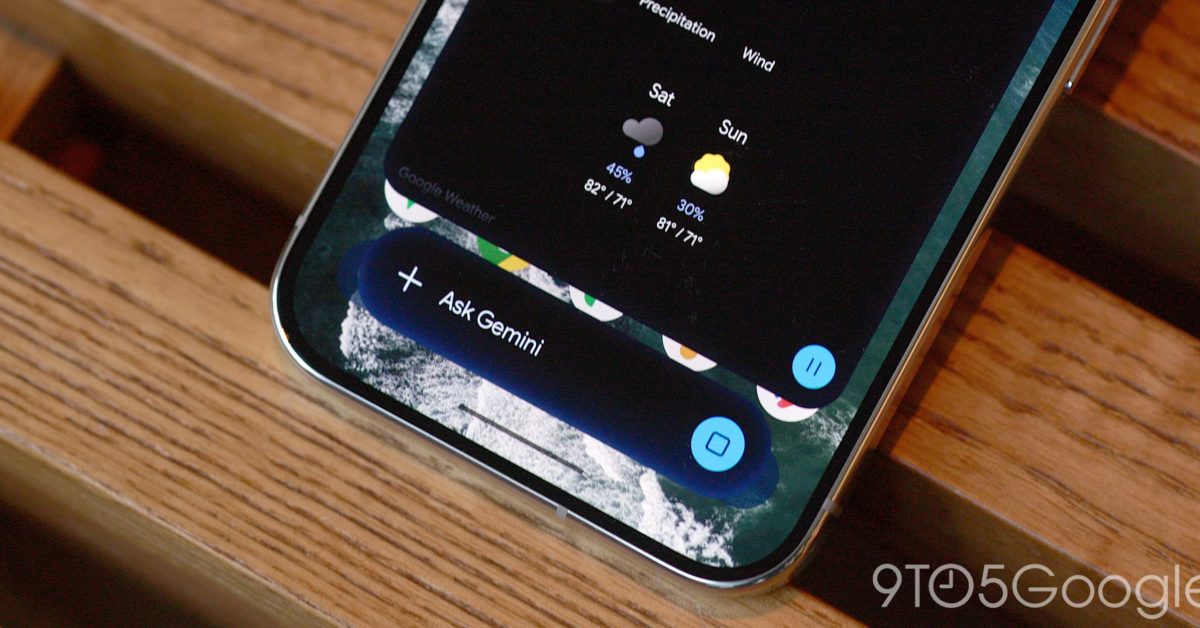
Google-Nest-Hub-Reminders.jpg?quality=82&strip=all&resize=1200,628


Google’s latest Gemini for Home update targets a few issues, like one where speakers randomly blurt out “I didn’t understand” when no one asks.

The second October Gemini for Home update was released by Google today. It bundles a few fixes with a lengthy section in the changelog dedicated to the Google Home app.

But there are six individual changes for Gemini within the Home app. One fix stands out the most, though. According to the update post, Google was aware that Home and Nest speakers/displays were facing a bug that would prompt them to say “Sorry, I didn’t understand” at random. That would happen unprompted, which is understandably a little unsettling. That strange bug should be fixed in this new update.

Further down, two fixes target Gemini’s ability to understand users on Google Home devices. For one, it would misunderstand requests to move music from one room to another. In other cases, it would incorrectly adjust sleep, media, or normal timers instead of the requested type. Both of those features will reportedly work as intended going forward.

The changelog includes a couple of other adjustments, which should make for an overall less stressful experience.

  • More reliable YouTube TV commands on smart displays: Fixed an issue with playing YouTube TV on smart displays so voice commands reliably start the content you’re looking for.
  • More predictable volume controls across rooms: Fixed an issue where asking to adjust the volume on a speaker or display in another room could accidentally change the volume on the device you were speaking to if the other device couldn’t be found.
  • Fixed zero-volume timers and alarms: Resolved a specific bug where alarm and timer volumes were being set to zero. In this situation, alarm and timer volume will be adjusted to match your device volume.

Updates should be live for users starting today, though it might take some time for them to roll out to everyone. Hopefully, Gemini will only let you know it doesn’t understand if it genuinely doesn’t understand.

46Google stock drops amid AI fears; AI Mode has ‘lower monetization,’ getting more ads - 9to5Google
Read on 9to5google.com

google-logo-ces-2024-2-1.jpg?quality=82&strip=all&resize=1200,628


Google is bringing ads to AI Mode globally as it admits that the new take on Search brings “lower monetization,” all while $GOOG stock is seeing a fairly major drop.

Alphabet’s Q3 earnings call yesterday saw Google’s Philipp Schindler acknowledging that AI Mode, the company’s Gemini-powered new take on Search, has “lower monetization” compared to traditional Search. So the “strong growth” of AI Mode didn’t have as much of a positive impact on Google’s bottom line simply because the mode doesn’t generate as much revenue.

Schindler said:

…It’s worth noting that the strong growth in AI Mode queries had an impact because of the lower monetization we’re seeing in AI Mode. To be clear, we feel very good about our trajectory here. Our ad experiments have shown promising results and we’re now scaling ads within both AI Overviews and AI Mode to more users and more queries…

In a blog post the same day, Google announced that AI Mode would be getting ads in global markets. US users will also start to see “multiturn ads” in follow-up queries.

Our research shows that people are comfortable with ads in AI Mode and find them highly relevant. In fact, click-through rates are already similar between sponsored and organic product list items within AI Mode.

Now we’re scaling ads in AI Mode in Australia, Canada, India, Kenya, Malaysia, New Zealand, Nigeria, Pakistan, the Philippines, and Singapore. In Q4 2026, we plan to expand to additional locales, including Brazil, Mexico, and the United Kingdom.

Meanwhile, $GOOG stock dipped by 27 points around the time of the earnings call and has continued to drop on October 29. It currently sits around $280, just a few points higher than a March 30 low of $273.14. The 12% drop reduces Google’s market cap by over $500 billion. NBC News points out that it is the second-biggest drop behind Nvidia’s $589 billion drop in 2025.

The drop is not directly due to AI Mode itself, but is attributed to weaker-than-expected earnings in Q3. Ad revenue from Search still makes up roughly half of Google’s overall revenue.

Our Daniel Bader expands on this in the latest issue of Inbox, our twice-weekly free newsletter:

…But investors are looking at the capital expenditure tied up in future data center buildouts and getting nervous that, if the bubble bursts, even these well-capitalized companies will take massive hits.

The biggest question surrounding Google’s stock performance is whether it can sufficiently monetize AI-powered search before demand for its traditional search inventory falls off a cliff. As the company sends less and less traffic to the open web, it’s touting the fact that AI Mode and AI Overviews keep people on Google for three times as long as traditional search.


Follow Ben: Twitter/X, Threads, Bluesky, and Instagram

47Google Home and Nest speakers getting seven updates, including for Bluetooth & audio quality - 9to5Google
Read on 9to5google.com

google_nest_mini_1.jpg?quality=82&strip=all&resize=1200,628


In addition to Chromecast with Google TV and Nest Wifi Pro updates, Google detailed what new firmware for Nest and Home speakers brings.

The Google Home, Google Home Mini, and Nest Audio benefit from “enhanced streaming performance” that should result in “smoother audio playback.”

There’s also “faster and more reliable local device discovery” in the Google Home app for the Google Home Speaker, Nest Audio, and Nest Mini.

On the audio front, be on the lookout for:

  • Speaker Pair Volume Tuning: Improved audio quality by reducing boomy bass and ensuring minimum volume levels remain clearly audible.
  • Bluetooth Audio Streaming on Resume: Fixed a bug where Bluetooth audio streaming from a connected laptop or device would automatically pause after receiving a voice “resume” command.
  • Speaker Group & Stereo Pair Visibility: Fixed an issue where stereo pairs and speaker groups could unexpectedly disappear or become undiscoverable in the Google Home app.

Google has resolved an issue that prevented smart speakers from “connecting to Wi-Fi 7 access points using WPA3 security.”

The final update addresses an issue “where users were unable to end Google Meet calls using voice commands.”

Google did not specify the firmware versions for these updates, and its release notes page has not been fully updated yet (e.g., Google Home Speaker).

The full changelog is below:

  • Audio playback: Enhanced streaming performance on Nest Audio, Google Home, and Google Home Mini for smoother audio playback. 
  • Speaker Pair Volume Tuning: Improved audio quality by reducing boomy bass and ensuring minimum volume levels remain clearly audible.
  • Local Network Discovery: Improved faster and more reliable local device discovery within the Google Home app for Google Home Speaker, Google Nest Audio, and Google Nest Mini.
  • Bluetooth Audio Streaming on Resume: Fixed a bug where Bluetooth audio streaming from a connected laptop or device would automatically pause after receiving a voice “resume” command.
  • Wi-Fi 7 Router Compatibility: Resolved setup and connection failures preventing smart speakers from connecting to Wi-Fi 7 access points using WPA3 security.
  • Speaker Group & Stereo Pair Visibility: Fixed an issue where stereo pairs and speaker groups could unexpectedly disappear or become undiscoverable in the Google Home app.
  • Google Meet Voice Call Controls: Fixed an issue where users were unable to end Google Meet calls using voice commands

48Google Home update rolling out with Nest Cam, Matter, energy-saving improvements & fixes - 9to5Google
Read on 9to5google.com

nest-cam-usb-c-adapter-3.jpg?quality=82&strip=all&resize=1200,628


There’s a new Google Home update rolling out that delivers improvements for Nest Cam owners, Matter devices, and more.

Detailed on Google’s changelog, there’s a host of new updates rolling out for the Google Home ecosystem, many of which can be found directly in the Home app. And there’s a lot in this one. The October 29 update is one of the biggest in recent memory.

For the Home app, the update includes:

  • New Google Home Premium features & benefits hub
  • Improved event timeline scrolling on iOS
  • Live camera viewing fixes for foldable Android phones
  • Fix offline device status bug on iOS
  • “Visual polish” and fix several display bugs on Android
  • Single-device voice controls now auto-dismiss on Pixel Tablet

Beyond that, there are some bigger improvements to the Google Home app in this latest update. Matter devices, for example, now supports showing energy data from compatible devices through Home for Android, while Matter-connected doors and windows will now show the correct icons and controls through the app. Google explains:

The app now recognizes specific Matter closure types—including garage doors, gates, windows, blinds, and cabinets—displaying the correct device icon and controls instead of treating every closure as a generic gate.

There are also new one-tap shortcuts for thermostats to help you save energy during colder months.

And all of that is just the app itself. Google is also rolling out firmware updates for various home devices including Chromecast with Google TV.

There are also a ton of Gemini for Home fixes and improvements including:

  • Transfer music between rooms
  • Fix “Sorry, I didn’t understand” replies
  • Fix timer vs sleep timer distinction
  • Fix YouTube TV commands on smart displays
  • Improved volume controls
  • Fix timers and alarm volume that was set to zero

These updates are all rolling out now. Check for Google Home app updates on Android and iOS for the latest.

49Google details new firmware for Chromecast with Google TV and Nest Wifi Pro - 9to5Google
Read on 9to5google.com

Nest-Wifi-Pro-1.jpg?quality=82&strip=all&resize=1200,628


Today’s (October 29, 2026) Google Home release notes detail what’s new in firmware updates for the Chromecast with Google TV and Nest Wifi Pro.

The first update of 2026 for the Chromecast with Google TV (4K) rolled out earlier this month. At the time, Google’s changelog only mentioned the August 2026 Android Security Patch Level and “Other bug fixes and performance improvements.” 

This changelog adds “Connectivity, media streaming, and display performance improvements.”

  • Android Security Patch Level upgrade to August 2026
  • Connectivity, media streaming, and display performance improvements
  • General bug fixes and system stability enhancements

Google also noted today that the Chromecast with Google TV (HD) is receiving this update, but the new firmware build hasn’t been posted yet.


Meanwhile, the Nest Wifi Pro sees three updates:

  • Networking: Enabled automatic failover to ISP DNS when public DNS is blocked. Enhanced node setup reliability.
  • Platform & Wireless: Optimized mesh RSSI and client-steering performance, and enhanced wpa_supplicant and DHCP client stability.
  • Ecosystem & Security: Rolled up Google Home Platform updates and applied comprehensive security enhancements.

The updated firmware does not appear to have rolled out yet as the listed and on-device version remains 3.78.518349 from February/March 2026.

Google also details what’s new in this month’s Nest Wifi (2019) update we previously spotted:

  • Enhanced mesh network resilience and DNS fallback improvements
  • Other stability and security vulnerability fixes

50Today’s Android app deals and freebies: Bendy Lone Wolf, The Room Old Sins, more - 9to5Google
Read on 9to5toys.com

Google-Play-collage-f0d80e.webp?resize=1200,628


Today’s best Google Play app and game deals are ready, including Bendy: Lone Wolf, Bendy and the Ink Machine, The Room: Old Sins, SpongeBob – The Cosmic Shake, Master Healer Kale, Epic King Heroes: Classic TD, SpellForce: Heroes & Magic, and more. We also have $473 off Samsung’s 512GB Galaxy S26 Ultra, a return all-time low on Nothing’s 2026 Ear (3a), the new Amazon Echo Show 16 at $100 off, and Lenovo’s new 4K Yoga Tab Gen 2 Android tablets up to $316 off with FREE Pen Pro and keyboard bundles. The apps await below.

Today’s highlight Google Play deals:

More Google Play deals still live:

FTC: We use income earning auto affiliate links. More.

51Samsung just released a new foldable that you probably wouldn’t buy even if you could - 9to5Google
Read on 9to5google.com

Galaxy-Z-Fold-8-Ultra-27.jpg?quality=82&strip=all&resize=1200,628


Samsung has big plans for its foldable lineup in 2027, but also one more release for 2026. The Galaxy W27 just went official as the company’s latest foldable, but you probably wouldn’t want to buy this one even if you could.

The Galaxy W27 continues Samsung’s pattern of releasing a China-exclusive variant of its flagship, book-style foldable. This year, it’s based on the Galaxy Z Fold 8 Ultra and includes all of the same specs – 8-inch inner display, Snapdragon 8 Elite Gen 5, 200MP main camera, and everything else.

So what’s special about this one?

It mostly comes down to the fit and finish. Samsung has given the Galaxy W27 some slick golden accents and two striking color variants. One is a dark red, the other a dark blue. This model also comes with 16GB of RAM as standard, regardless of if you pick the 512GB or 1TB storage options. It’s also optimized for Tiantong satellite comms, SamMobile points out.

But this special edition comes at a cost. It starts at CNY 18,999, around $2,800 USD. The 1TB upgrade lands at CNY 21,999, around $3,300 USD. So, even if you could buy this model, you’d likely be better off going with the standard Galaxy Z Fold 8 Ultra – even the maxed-out 1TB model sells for less at $2,699. Samsung does include a case and even a charging brick in the box with the Galaxy W27, though.

Follow Ben: Twitter/X, Threads, Bluesky, and Instagram

52Google Photos update fixes the bug that hid edited pictures - 9to5Google
Read on 9to5google.com

google-photos-3.jpg?quality=82&strip=all&resize=1200,628


A bug in Google Photos has left edited pictures invisible to other Android apps, but Google has now rolled out a fix.

Since roughly July/August of this year, editing a picture in Google Photos has left Android users with the bizarre side effect of making that image unavailable to other apps. After saving the edit, the picture would vanish from the image picker in apps like Telegram, WhatsApp, and more. A workaround to this was to save the image as a copy rather than the original, but it’s frustrating nonetheless.

Google has thankfully, finally fixed this issue.

The fix is apparently in Google Photos v7.97, Artem Russakovskii (owner of APKMirror) mentions, and we’ve been able to confirm the hidden image behavior no longer occurs on v7.98 either. The company acknowledged the problem last month and confirmed a fix would be coming.

The exact cause remains unclear at this point, but that doesn’t matter now seeing as the problem is fixed. If you’re still seeing the bug, let us know in the comments below.

Follow Ben: Twitter/X, Threads, Bluesky, and Instagram

53Samsung launches a virtual cash back card for Wallet, completely unrelated to the Galaxy Card - 9to5Google
Read on 9to5google.com

Samsung-Cash-Card.jpg?quality=82&strip=all&resize=1200,628


Samsung announced a new way to earn and pay in Samsung Wallet using a new “Cash Card.”

Not to be confused with the Galaxy Card credit card Samsung announced earlier this year, Cash Card is a new virtual account that reflects earned cash back through select purchases. Samsung says it’s partnering with Rakuten to let users find deals both online and in-store using a “Nearby” feature in Samsung Wallet on any Galaxy phone.

Since the app ties into Raktuen’s network, that catalog of deals is constantly updated and available to Samsung Wallet users. Samsung says that it includes over 3,500 brands and more than 25,000 in-store and dining options. New users will reportedly earn 10% cash back, with rates fluctuating throughout the year.

Anything earned gets added to the Samsung Cash Card, which appears in Samsung Wallet as another virtual card. Whatever balance you have can be used online or in-store. Users will be able to send money to and from other Samsung Wallet accounts. The press release says even tapping another Galaxy or Android device will initiate an instant transfer, with some safety guardrails, of course.

The Cash Card is simply another payment method for Galaxy users with Samsung’s branding on it. While it’s entirely unrelated, it’s interesting to hear of another card launch within the same few months as the Galaxy Card, which is Samsung’s new Visa credit card via a partnership with Barclays.

It’s also not the first cash back program for Samsung Wallet. One was added in 2018, though this new release seems to be a revamp with new partners.

The virtual Samsung Cash Card and new Rakuten deals are rolling out now in the US.

54Deals: Galaxy S26 Ultra $473 off brand new, Nothing Ear (3a) $79, Lenovo’s new Android tablets $316 off, more - 9to5Google
Read on 9to5google.com

9to5Google-Oct-29-4.webp?resize=1200,628


Joining the ongoing deals on the Moto Tag 2 Android Find Hub trackers at $17.50 each and AMazon’s brand new Echo Show 16 at $100 off, today’s 9to5Toys Lunch Break is headlined by Amazon knocking $473 off Samsung’s 512GB Galaxy S26 Ultra in brand new condition and Galaxy Z Fold 8/Ultra at up to $570 off. We still have the 2026 Nothing CMF Buds Neo at just $20 alongside the Nothing Ear (3a) wireless buds back down at the $79 Amazon all-time low, but there are also some deep deals on Android tabs and PCs today too – Lenovo’s new 4K Yoga Tab Gen 2 Android tablets up to $316 off with FREE Pen Pro and keyboard bundles, its OLED touchscreen Yoga Slim 7x at $700 off, and more. Everything awaits below. 

While we are still tracking up to $200 or more off Galaxy Z Fold 8 and Fold 8 Ultra via Amazon (additional details await right here), if you’re looking towards the flagship Galaxy S26 series devices, there are some notable offers live starting today headlined by this 512GB model at $473 off the list price in brand new unlocked condition. 

As has been the case lately, Amazon is surfacing today with a one-off discount, and a particularly notable one at that, on the 512GB Samsung Galaxy S26 Ultra in Cobalt Violet at $1,127 shipped. 

This same device, even at the $250 off Samsung Week sale price, will cost you $1,350 directly on the official site. 

The other colorways aren’t down quite as low at Amazon as the Violet, but some of them are undercutting the direct deal prices right now. 

This offer is easily one of the best deals we have tracked on a new condition device in the last few months, landing within $2 of the best deal we have seen at Amazon since the price increases, and we do not expect it to last for very long. 

Nothing released some of the best buds in that $100 or less range this year, and now you can score the Ear (3a) back at all-time low pricing in all colorways as the squad over at 9to5Google pointed out recently. 

Amazon is now offering the 2026 Nothing Ear (3a) wireless buds back down at $79 shipped in Black, Pink, White, and Yellow. 

This set released this past summer at $99 and while the 20% discount might not seem like a massive one, the $79 deal price we are tracking right now is indeed matching the lowest we have seen at Amazon since. 

All things considered, this is a whole lot of buds for under $80 – we said they are easily some of the best buds you can buy for the price after testing them out and now they are even lower. 

We have featured this deal a number of times now, and there is a chance we see some additional savings on them in the coming weeks for Black Friday, but if history is any indication, chances are they won’t drop a whole lot more than this – think $10 or $15 max. That’s not insignificant though, and if you are looking towards the lowest possible price, we will likely see some additional savings across the current-generation Nothing lineup starting next month. 

Get a complete rundown on the 2026 Nothing Ear (3a) in our hands-on review right here. 

Lenovo is now serving up even better deals on its new Yoga Tab Gen 2 and Yoga Tab Plus Gen 2 Android tablets, with both dropping to their lowest prices yet. The standard Yoga Tab Gen 2 is down to $512.99 shipped, while the larger 13-inch Yoga Tab Plus Gen 2 can be had for $683.99 shipped. Be sure to use promo codes DEALDAYSLIVE and EXTRAFIVE during checkout to see the respective discounted prices. We saw both models get their first notable discounts earlier this month, and the standard Yoga Tab Gen 2 even dropped to $570 just last week, but these latest promo codes knock the prices down even further. That makes today’s offer the best we’ve tracked so far on either model, with some pretty steep savings compared to their original $730 and $1,000 prices. Head below for more details.

Lenovo’s new Yoga Tab Gen 2 and Yoga Tab Plus Gen 2 are both pretty stacked Android tablets, pairing high-resolution 4K displays with a flagship chip and seven years of software support. The standard Yoga Tab Gen 2 features an 11.1-inch 4K panel, MediaTek’s Dimensity 9500s chip, up to 12GB of RAM, and an 11,000mAh battery. The larger 13-inch Yoga Tab Plus Gen 2, on the other hand, steps up to Qualcomm’s Snapdragon 8 Elite, up to 16GB of RAM, and a bigger 12,700mAh battery. Both ship with Android 17 and are promised updates through Android 24, along with security support through 2033. Lenovo is also bundling a Tab Pen Pro 2 and keyboard with both models, while the Plus version gets the more versatile All-in-One Clamshell Keyboard. You can learn more about both tablets in our launch coverage right here.

You might also want to check out this deal at Amazon, which takes a huge $473 off Samsung’s 512GB Galaxy S26 Ultra. It’s one of the best prices we’ve tracked on this configuration so far, so be sure to jump in and snag one while the deal is still live.

We are now tracking a deal at Best Buy that drops Lenovo’s Yoga Slim 7x Copilot+ PC with a Snapdragon X2 Elite chip down to $949.99 shipped. This particular config with 16GB RAM and a 1TB SSD typically goes for $1,650, so you’re looking at a straight-up $700 discount on it right now. Today’s deal delivers a 42% discount to mark the lowest price we have tracked for this Snapdragon X2 Elite-powered notebook. We’ve seen the 32GB RAM variant of this laptop see a couple of deals in the past, but this is the first notable offer we’re tracking on the 16GB RAM model. Head below for more details.

This deal on Lenovo’s updated Yoga Slim 7x is worth checking out if you’re shopping for one of the latest 2026 Copilot+ PCs. This configuration is powered by Qualcomm’s Snapdragon X2 Elite chip, paired with 16GB of memory and a 1TB SSD. You also get a 14-inch 2K OLED touchscreen, giving you a sharper and more vibrant panel for everyday work, streaming, and lighter creative use. Other highlights of this laptop include Wi-Fi 7, a slim and lightweight chassis, and three USB-C ports for charging and accessories.

Be sure to stop by our computer accessories hub once you’re done here to check out more discounted gear for your laptop. We’re tracking plenty of deals on chargers, cables, docks, and other everyday peripherals right now, and you’ll find them all highlighted right there.

  • Echo Show 16 from $400
    • Customers who preorder Echo Show 16 get $100 off.
  • Amazon Echo Dot $100
  • Amazon Echo Studio with Home Camera $250
  • Amazon Alexa Photo Frame from $200
  • Amazon Echo Time $200

Update 10/28: These deals on the latest Moto Tag 2 item trackers are still live courtesy of Amazon – 4-pack at 30% off or one for $20.

Motorola unleashed its new Moto Tag 2 item trackers over the last couple months and they are now back in stock at Amazon with the sizable launch discount – you can score one for $20 or the 4-pack at 30% off ($17.50 each). 

Amazon is once again offering a single Moto Tag 2 down at $19.99 Prime shipped from the regular $30 list and the 4-pack down at $69.99 shipped:

55Samsung’s advanced sleep apnea detection is coming to these Galaxy wearables - 9to5Google
Read on 9to5google.com

samsung-galaxy-watch-ultra-2-watch-9-8.jpg?quality=82&strip=all&resize=1200,628


Samsung announced a new, advanced version of its AI-powered sleep apnea detection, and which devices it will appear on in November.

Sleep apnea detection was first introduced to Galaxy devices in 2024, after Samsung gained approval from the FDA in the US. The tool was offered as a baseline detection feature, so users who might be suffering from frequent breathing interruptions during sleep would be aware and seek further medical help.

Samsung says its new and improved version uses an AI algorithm to analyze breathing disturbances per hour (via GSMArena). It goes beyond detection and breaks those disturbances down into more granular detail – closer to something a dedicated sleep study would be equipped to do.

Users will need to record at least five hours of sleep twice within 10 days for the sleep apnea detection tool to properly get results on their Galaxy Watch or Ring.

Samsung is still adamant that this tool does not replace professional diagnosis; it’s simply better at making the user aware of their sleep habits.

Samsung says the new sleep apnea detection feature will roll out in November, starting in Korea, after the tool was approved by the Ministry of Food and Drug Safety. It’s FDA-approved in the US, as well, so it should follow shortly.

So far, Samsung has detailed these wearables:

  • Galaxy Watch Ultra 2
  • Galaxy Watch 9
  • Galaxy Ring

After the initial rollout, the Galaxy Watch 7 and Watch 8 will get an update as long as they’re running Wear OS 7.0 or later.

There are no plans to dismantle the current sleep apnea detection tool available on the Galaxy Watch 4 and later.

56Google Maps update now shows you the Fall foliage along your route [Video] - 9to5Google
Read on 9to5google.com

google-maps-fall-foliage.jpg?quality=82&strip=all&resize=1200,628


Google Maps is rolling out a slightly adorable new update that shows the Fall colors along your navigation route, but not everywhere.

Available in “applicable US metros” through the end of November, Google Maps will now show colorful Fall foliage along your route. This means that Maps will show trees along the side of the road with a pop of orange.

It’s a fun little update, but one that won’t show for everyone.

Google hasn’t specified exactly which “applicable US metros” will be able to see the Fall colors, but Boston is shown in the example video below. It’s also notable that this seems to only appear while navigation is active, as we couldn’t see the colors when scanning through Boston in the Maps app outside of navigation mode.

Let us know in the comments below if you’re seeing this update and what city you’re in.

57Samsung teases Galaxy S27 plans, foldable lineup expansion, more - 9to5Google
Read on 9to5google.com

S26-Ultra-Z-Fold-8-Ultra-and-Z-Fold-8.jpg?quality=82&strip=all&resize=1200,628


In its latest earnings call, Samsung has teased its plans for the Galaxy S27 as well as new foldables and its Android XR glasses.

As RAMageddon rages on – with no signs of slowing – Samsung posted yet another operating loss in its mobile division. Daniel Araujo, VP of Samsung’s mobile division, says to expect “
a series of promotional campaigns during the year‑end peak season” around Samsung’s flagship Galaxy devices.

He adds that Samsung’s holiday plans include the “release of smart glasses,” referring to the long-awaited Android XR specs set to debut before the year is out. Samsung, nor Google, have officially confirmed launch plans for this first run.

More exciting, though, are Samsung’s plans for 2027.

Araujo specifically teased the “next-generation S series,” referring to Galaxy S27, which will include “distinct character of each model.” That reads as a subtle hint of Samsung’s plans to add a new “Pro” device as well as make design changes to Galaxy S27 Ultra. Also teased are “groundbreaking form factors” and new foldable designs that “align with consumers’ real-world lifestyles,” presumably referring to rumors of another new Galaxy Z Fold 9 addition.

For the next-generation S series, we will build on an in-depth analysis and understanding of segmented customer needs to further enhance the distinct character of each model. With regard to foldable smartphones, following a timely expansion of our lineup this year, we plan to elevate the user experience across all series by 2027. In addition, we will advance Galaxy AI‑centric features, offering richer, more intuitive AI‑powered experiences that better interpret users’ contexts and intentions….

…We will also continue to explore entirely new experiences, such as Glass, TriFold, and other groundbreaking form factors…

Looking ahead, we will continue to strengthen our leadership in the foldable smartphone segment by developing thinner and lighter foldable devices, designing form factors that better align with consumers’ real‑world lifestyles, and delivering a truly unique customer experience…

Follow Ben: Twitter/X, Threads, Bluesky, and Instagram

58Google had a very good, very bad Q3 - 9to5Google
Read on 9to5google.com

Google-Logo-HQ-2.jpg?quality=82&strip=all&resize=1200,628


Good morning! Today I’m reading about the death of the internet, deciding whether to buy a PROLED or many pro LEDs, building all my IKEA furniture with this step-by-step 3D app, trying desperately to get into the Readwise Books early access, and playing an “Enhanced 3D” Command & Conquer: Red Alert on my PC.

Inbox is the tech newsletter that goes beyond the news cycle. We cover the most important 9to5Google stories from the last couple of days along with a few highlights from around the web. We publish every Tuesday and Thursday, and if you like what you read, please subscribe.

Inbox is written by Daniel Bader. Read previous issues here, and then catch up with Ben Schoon’s excellent Weekender column published every Sunday.

Alphabet’s Q3 earnings were interesting. Despite a 25% rise in revenue and a healthy net income of $26 billion, analysts were disappointed with the company’s results, sending the stock down as much as 11% in after-hours trading.

On the plus side, the company’s cloud business is booming, doubling year-over-year revenue to $30 billion as it attracts frontier labs to its data centers. But advertising revenue didn’t meet expectations, and investors appear to be worried that its search advertising business, one of the most efficient sources of recurring revenue in history, is not keeping up with changing user behavior.

As Anthropic gets ready to soar into its IPO later this year, mature businesses like Alphabet, Microsoft, and Amazon are racing to adapt to a market where demand for AI infrastructure is outpacing compute supply. But investors are looking at the capital expenditure tied up in future data center buildouts and getting nervous that, if the bubble bursts, even these well-capitalized companies will take massive hits.

The biggest question surrounding Google’s stock performance is whether it can sufficiently monetize AI-powered search before demand for its traditional search inventory falls off a cliff. As the company sends less and less traffic to the open web, it’s touting the fact that AI Mode and AI Overviews keep people on Google for three times as long as traditional search.

So it’s no surprise that it’s expanding ads in AI Mode to 10 new markets this week, with more to come by the end of the year. While the post was only a few paragraphs long, expanding its AI ad business may end up being one of the company’s most consequential announcements of 2026.

I didn’t get to see either of the first Dune movies on IMAX, but you can bet your ass I’ve already secured opening-day tickets for the third one. Dune: Part Three debuts in December, and we now have the final trailer that showcases the impending showdown between Muad’Dib and Chani as the former realizes the consequences of his galactic war.

On the gadgety side, there’s another impending showdown brewing between XREAL’s Android XR-powered Aura glasses and Meta’s upcoming VR Glasses.

I liked Jasmine Uniza’s video below comparing the two because, until I watched it, I didn’t realize the extent of the diverging approaches to reality they’re each taking. The Aura glasses are more traditionally translucent and somewhat awkwardly project two OLED screens on top of the dimmed lenses, allowing the outside world to filter through. Meta’s VR Glasses eschew the traditional headset shape and weight of the Quest but block out far more of the outside world and use external cameras, like their predecessors, to pipe in mixed-reality footage.

Finally, some personal news of a sort: I am now a permanent host of The Sideload. If you know me at all, you know I love a podcast, and Will Sattelberg was my co-host at the Android Police podcast for three years before he left for 9to5 last year. I’m so excited to be doing this again every week with him, and I hope you’ll tune in to our most recent episode about the death of the web browser and other good news.

If you’ve been patiently waiting for Apple’s top-tier M5 Ultra-powered Mac Studio, fear not: Apple has you covered. From 9to5Mac:

When Apple announced the new M5 Max and M5 Ultra configurations of the Mac Studio in August, it said a configuration with 512GB of RAM would be available in October. Today, the company officially revealed the pricing of that option.

If you head to the Mac Studio configurator on Apple’s website, you’ll see the new 512GB upgrade option. As previously announced, the 512GB option is only available with the top-tier M5 Ultra chip that has a 36-core CPU and 80‑core GPU.

It’s a $15,500 upgrade over the base configuration of that processor, which has 96GB of unified memory.

To put it another way: you’ll pay $22,299 for the Mac Studio with the top-tier M5 Ultra, 512GB of unified memory, and 1TB of storage. You can spec it up all the way to 16TB of storage, which brings the total price to $29,799.00.

Hell yeah.


Like what you just read? Subscribe to Inbox today and get it in your email every Tuesday and Thursday morning. Got feedback? Send us an email.

You can also support us by becoming a 9to5Google Pro member, starting at just $5/month. You get bonus podcast episodes, access to our members-only Discord server, and lots more.


Thanks for reading, and have a great day. I’ll talk to you on Tuesday.

—Daniel

59Motorola has already confirmed its Signature 27 flagship is launching in November - 9to5Google
Read on 9to5google.com

motorola-signature-27-3.jpg?quality=82&strip=all&resize=1200,628


Following a “coming months” teaser earlier this year, Motorola has confirmed that its flagship Signature 27 device is launching in the US in November.

The Motorola Signature 27 is the brand’s first proper flagship smartphone in years. Announced in September, it’s set to pack Qualcomm’s new Snapdragon 8 Elite Gen 6 chipset and, based on more recent leaks, it’s also going to have some killer cameras to back that up.

Motorola also confirmed this one would be coming to the US, but only offered a timeline of “in the coming months.” But, as it turns out, a more specific timeline has been available this whole time.

A landing page on Motorola’s US website has confirmed a November launch for the device. Motorola says:

Unveiled at the Snapdragon Summit, the new motorola signature 27 delivers unprecedented speeds with Qualcomm’s Snapdragon® 8 Elite Extreme Gen 6 mobile platform, plus breakthrough AI and an elite-level camera system. Stay tuned for more, coming this November.

This landing page isn’t new, with the November timeline having been in place since the September announcement, but it went under the radar until Motorola added the same note to a landing page in India as spotted by GSMArena. It was only mentioned in passing around the initial announcement.

A November launch date is much earlier than Motorola’s announcement initially suggested, and also lines up with this week’s retail leak. As for an exact timeline, we’ll have to wait and see, but it’s clearly coming up very soon.

60Some Pixel Watch users report a sudden decrease in battery life - 9to5Google
Read on 9to5google.com

Pixel-Watch-5-Steph-Curry-.jpg?quality=82&strip=all&resize=1200,628


A surge of online reports indicates that some users are experiencing a recent increase in battery drain on their Pixel Watch, by as much as 20% every few hours.

Sometimes new software introduces extra stress on device batteries. New processes can take a toll on phone or smartwatch energy at a higher cost than expected, and that might be what’s happening with some Pixel Watch users.


Update 11/2: A Google spokesperson has since reached out, noting it’s working on a fix.

We are aware of a battery drain issue, affecting a small number of Pixel Watch users, and are working to roll-out a fix as soon as possible.


It’s nowhere near a definitive trend, but it’s intriguing to see several new posts on Reddit pop up with the same complaint – their Pixel Watch’s battery is draining faster than normal (via Android Authority). One post has 65 comments, with a healthy number sharing the same concern. One user wrote that their Pixel Watch 2 is getting 12 hours of use on a full charge, instead of the normal 48 hours with AOD off.

The other user claims their Pixel Watch 4 now lasts less than a day. Their normal usage reportedly gets them up to 2.5 days. That’s high for the Pixel Watch 4, but it’s not unheard of. Both of these users dropping by 12 or 24 hours from one charge isn’t nothing.

Sporadic comments echo the same situation, but many report they haven’t noticed a difference. Timing isn’t entirely consistent across comments, either. Some say they started seeing the issue a few days ago, while others say this happened to them a while back.

Still, it might indicate a recent software update is to blame. Google’s recent September 2026 update reaches the Pixel Watch 2 and newer. It adds “Gemini Personalization,” which Google says leverages past conversations and Google apps like Gmail or Calendar to offer personalized responses. It’s also possible that the battery is affected by the recent Google Health update with automatic activity tracking, but that wouldn’t explain why the Pixel Watch 2 is having an issue.

It’s unclear if that’s playing a factor, but Google has yet to officially acknowledge the issue for these users.

What about you? Is your Pixel Watch suddenly dying in the middle of the day? The comments section is all yours.

61AMVR’s new head strap is my favorite way to keep cool with a Meta Quest 3 or 3S - 9to5Google
Read on 9to5google.com

amvr-bs1-with-quest-3.jpg?quality=82&strip=all&resize=1200,628


The upgraded AMVR BS1 head strap includes better ergonomics, a built-in fan, magnetic rechargeable batteries, and a new breathable mesh top support for ultimate comfort.

I don’t know how companies like AMVR and BoboVR keep doing it, but AMVR’s latest head strap is now the most comfortable cooling head strap I’ve ever used for the Meta Quest 3 and Quest 3S. If you’re still using the included cloth head strap or haven’t used a “cooling head strap” before, here’s how it works.

The AMVR BS1 uses a breathable forehead pad attached via magnets to the support bar. Inside that support bar is an adjustable-speed fan, which you can easily adjust using the recessed wheel on the right side of the head strap. This fan keeps sweat down and helps prevent lens fog, two problems that can be a constant annoyance.

The fan is powered by the magnetically detachable, rechargeable 8,800mAh battery pack that mounts on the back of the head strap, helping to even out the weight distribution across the headset. That battery pack will also charge your Quest while playing and adds around 4 hours of additional play time. You can always purchase more packs to keep things going for longer, if you need to.

Lots of padding can be found all around the headset, and the mesh support on top accepts any weight that remains. Every bit of padding is easily removable and washable, so you can keep things clean and tidy (especially if you share your headset with others). You can also get extra pads if you’d rather do it that way.

The back of the head strap cradles your skull with a mix of half supple padding and half grippy silicone. You’ll be double happy there, as the pad on the top part further cushions any headset weight, while the silicone keeps the headset from slipping forward and shifting weight onto your cheeks.

If you don’t need a fan, the BoboVR M3 Pro+ is currently $17 less than the AMVR BS1. I find the BoboVR M3 Pro+’s hybrid design to be slightly more comfortable, but the lack of a fan is a big negative for this particular BoboVR strap.

Once you’ve chosen a head strap, grab an AMVR FC4M face pad to add another layer of comfort to the headset. Like the AMVR BS1’s forehead pad, this face pad attaches to the Quest 3 (NOT the Quest 3S) via magnets and is made of breathable, easy-to-clean material. It’s perfect for staying cool year-round and makes the Quest so, so much more comfortable.

Follow Nick: YouTube, X (Twitter), Threads, Instagram
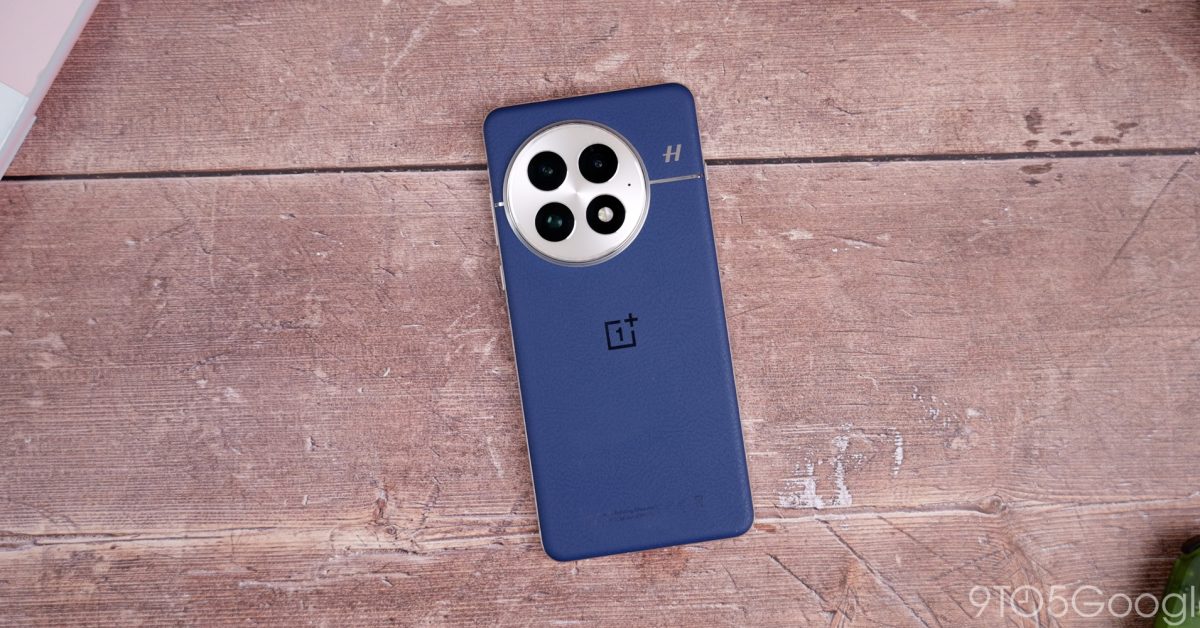
62Alphabet reports Q3 2026 revenue of $127.6 billion - 9to5Google
Read on 9to5google.com

google-logo-4.jpg?quality=82&strip=all&resize=1200,628


Alphabet today announced Q3 2026 earnings with $127.6 billion in revenue. These numbers range from July to September.

Revenue is up 25% from $102.3 billion in Q3 2025, with operating income at $40.58 billion and net income of $26.17 billion for this quarter (versus $34.9 billion a year ago). For comparison, Alphabet reported $119.8 billion in revenue and $112.1 billion in net income last quarter.

We had a strong quarter and are now on a half-trillion dollar revenue run rate. Our deep full stack approach is driving momentum across the business, with Alphabet revenues growing 25% year-over year.

Our AI investments are driving overall Search query growth, including commercial queries. In fact, our year-overyear query growth rate is the highest it’s been in the last five years.

Google Cloud revenues grew 103%, powered by huge demand for our AI infrastructure and AI solutions. We’re also seeing strong demand for our TPU systems across a wide range of customers.

Gemini 4 Argon and Carbon are now leading at the frontier. Overall, our first-party model APIs are now processing nearly 32 billion tokens per minute, more than four times what we processed a year ago.

On top of that, the Gemini app has reached one billion users—making it the fastest-growing product in Google’s history—and we surpassed 150 million YouTube Music and Premium subscribers globally, including trials.

We’re excited by the range of big opportunities ahead of us.”


In Q3 2026, YouTube ad revenue was $11.2 billion (versus $10.26 billion a year ago), while Cloud reported $30.71 billion (compared to $15.16 billion).

“Google subscriptions, platforms, and devices” — which includes hardware, Play Store, and non-advertising YouTube revenues — reported $14.29 billion, compared to $12.87 billion the same quarter last year.

“Other Bets” continues to lose money. It reported $372 million in revenue compared to $344 million in Q3 of 2025. It lost $2.04 billion compared to $1.4 billion in the same quarter of last year.

63Mid-week Android app deals and freebies: Subnautica, Lara Croft GO, Fishfolk, more - 9to5Google
Read on 9to5toys.com

Google-Play-collage-9aba27.webp?resize=1200,628


Today’s best Google Play app and game deals are ready, including Subnautica: Below Zero, Lara Croft GO, Fishfolk Voyage, Sauna of the DEAD, Railways – Train Simulator, Traffix: Traffic Simulator, and more. Just be sure to dive into the brand new redesigned Echo Show 16 with the $100 pre-order discount, Galaxy S25 Ultra at $799 ($600 under the S26 model), and Lenovo’s 2026 2K Chromebook M at $189 (52% off). The apps await below.

Today’s highlight Google Play deals:

Railways – Train Simulator

$1 (Reg. $2.50)

Universe Invader 2: Premium

FREE (Reg. $0.50)

Console Tank – 8Bit TV FC Game

FREE (Reg. $6)

Piggy against the World

$3 (Reg. $4)

Tower Defense: Epic Turret Pro

FREE (Reg. $0.50)

Halls of Torment: Premium

$3 (Reg. $5)

Sauna of the DEAD

$3.50 (Reg. $7)

Mutant Meltdown

$0.75 (Reg. $4)

Fishfolk Voyage

$1.50 (Reg. $2.50)

Subnautica: Below Zero

$7 (Reg. $10)

Lara Croft GO

$2.50 (Reg. $6)

Backpack Battles

$7 (Reg. $10)

Survival Island: Ark Craft pro

FREE (Reg. $1)

Gravity Range

$0 (Reg. $8)

Defense Legend 3 Premium

FREE (Reg. $1)

Bravest! Plus

$3.50 (Reg. $5)

Grow Dungeon Hero VIP

FREE (Reg. $2)

Racing Blocks

FREE (Reg. $2)

Rayadillo Mobile PH

$3 (Reg. $7)

Screen On – Keep Screen awake

FREE (Reg. $1)

Flashlight Tag: Ghosts Escape

$4.50 (Reg. $9)

Traffix: Traffic Simulator

$1 (Reg. $2.50)

More Google Play deals still live:

APHELION SPACE SHOOTER RPG

FREE (Reg. $22)

Shadow Knight: Ninja Fighting

FREE (Reg. $1)

Steam: Rails to Riches

$1.50 (Reg. $5)

Out There: Ω Edition

$1 (Reg. $5)

Defense legend 4 HD: Sci-fi TD

FREE (Reg. $2)

Space shooter – Galaxy attack

FREE (Reg. $1)

Eight-Minute Empire

$2.50 (Reg. $5)

Tokaido™

$2.50 (Reg. $5)

Kurimoto Quest

$3.50 (Reg. $5)

Orbital Drop Commando

$0.50 (Reg. $6)

Tales of Mecha: Rising

$1 (Reg. $2)

Helmet Heroes MMORPG – Heroic

$1 (Reg. $5)

Set a Watch: Digital Edition

$6.25 (Reg. $9)

Stone Age: Digital Edition

$5.50 (Reg. $8)

Charterstone: Digital Edition

$4 (Reg. $10)

Concordia: Digital Edition

$5 (Reg. $10)

Zombie Age 2 Premium: Shooter

FREE (Reg. $0.50)

Front Armies [RTS]

$0.75 (Reg. $3)

Istanbul: Digital Edition

$2.75 (Reg. $7)

Mekaro: Open World Mech RPG

FREE (Reg. $3.50)

Core Breach: Zero-Day

FREE (Reg. $1.75)

Flexina Star Race

FREE (Reg. $3)

Echoes of Vatheria

FREE (Reg. $2)

Siralim Ultimate

$7.50 (Reg. $10)

This War of Mine

$2 (Reg. $13)

Earthlings Beware!

$0.25 (Reg. $3)

The Last Warlord

$1 (Reg. $5)

Star Blaster: Offline Premium

FREE (Reg. $1)

Commander: Modern War

$0.75 (Reg. $4)

Quest of Wizard

$1 (Reg. $4.50)

Runic Curse

$1.25 (Reg. $5)

Project Neon

$5 (Reg. $10)

TLOTS: Gold Edition

$1.25 (Reg. $2.50)

20 Minutes Till Dawn:Premium

$3.50 (Reg. $5)

Alien Food Invasion Premium

$0.50 (Reg. $1)

Boss Rush: Mythology Mobile

$0.75 (Reg. $3.50)

The Fall 3: Zombie Survival

$1 (Reg. $2)

FTC: We use income earning auto affiliate links. More.

You’re reading 9to5Toys — experts digging up all the latest technology and lifestyle deals, day after day. Be sure to check out our homepage for all the latest news, and follow 9to5Toys on Twitter, Facebook, and LinkedIn to stay in the loop. Don’t know where to start? Check out the best Apple deals, our daily podcast, and subscribe to our YouTube channel

64The Galaxy Ring got a new update just in time for a $75-off sale - 9to5Google
Read on 9to5google.com

samsung-galaxy-ring-october-2026-01.jpg?quality=82&strip=all&resize=1200,628


It’s a 0.68MB Galaxy Ring update and a $75 sale. What’s not to like?

Every few months, Samsung delivers a small update to its smallest fitness-tracking product. October 2026 marks the latest tiny Galaxy Ring update, which landed as version Q50XWWU2AZIA for South Korean customers this week (via SamMobile).

As is, unfortunately, the case with most of these tiny updates (and there have been several at this size), no one really knows what’s included since Samsung doesn’t elaborate on the changelog. As you can see from the translated version below, the entirety of the changes seem to be for “stability.” Almost certainly, this just means bug fixes, which is fine by me.

Galaxy Ring updates have been sparse since its release two years ago. In our review, we said it was “in the ring, but not the champ,” and that’s largely been okay since Samsung doesn’t charge a monthly fee for health data. By comparison, the popular Oura ring line will cost you $6.99 per month, which would equate to about $170 over a two-year period.

Amazon is also running a $75-off sale on the Samsung Galaxy Ring right now, making it $324.99. By comparison, the latest Oura Ring is $499 and still requires a subscription. The next big Galaxy Ring update will be to add sleep apnea detection, a major feature that will give it a unique win over the competition. We’re expecting the Galaxy Ring 2 to appear sometime early next year, almost certainly with a much higher price tag.

If you’re okay with a used ring, Amazon has several styles and sizes available from as low as $200, which includes free returns if there’s something wrong when you receive it. These rings are quite durable, with titanium construction and week-long battery life, plus a nifty included charging case that works similarly to earbuds.

Follow Nick: YouTube, X (Twitter), Threads, Instagram
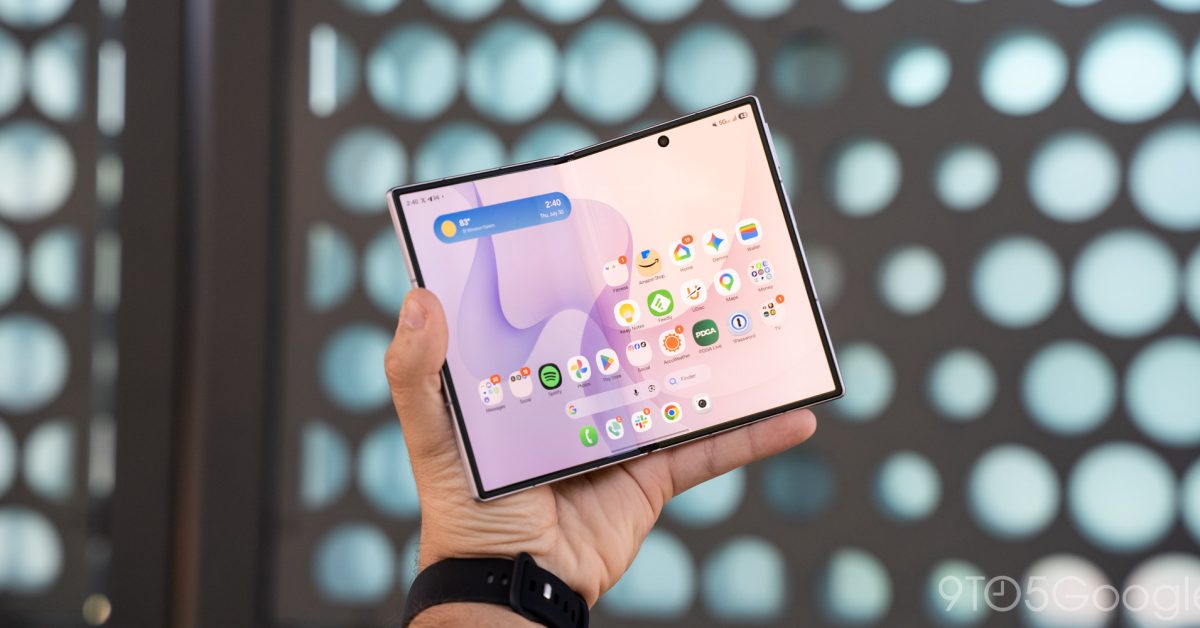
65Nothing Ear (3a) are ‘the best earbuds,’ and they’re back down to their lowest price ever - 9to5Google
Read on 9to5google.com

nothing-ear-3a-colors-2.jpg?quality=82&strip=all&resize=1200,628


Get an incredible pair of earbuds in a striking color for under $80 with this Nothing Ear (3a) deal.

Earbuds are great but, unfortunately, they can be far too easy to lose. If you’ve found yourself in this exact situation and are currently enjoying sound in only one of your two ears, it’s time to grab this Nothing Ear (3a) deal for under $80.

As noted in our Nothing Ear (3a) review, “Nothing Ear (3a) picks up where [the original model] left off, while also upping the ante by a considerable margin.” These are available in four striking colors — pink, yellow, white, and black — and look simply stunning in or out of the gorgeous transparent case.

My wife has been using these for the past few months and swears by them, and that’s no surprise to me considering how good Nothing’s other audio products are. The case design is well thought out, with a super easy magnetic docking method (no more hunting for the right spot) and three indicator LEDs for charging and pairing, plus Android Fast Pair support for instant pairing to any of your devices.

The buds support Bluetooth 6.0, an 8-band EQ in the Nothing X app (like a more expensive pair would), 45dB active noise cancellation, and a really cool feature called “Audio Snapshot” that records a clip of whatever you’re listening to. It’s a great way to get clips for social media posts or for recording a conversation when you need an AI transcription later. Don’t let this Nothing Ear (3a) deal pass you by!

Follow Nick: YouTube, X (Twitter), Threads, Instagram
66Google announces Gemini 4 Carbon with ‘significant gains across coding and agentic tasks’ - 9to5Google
Read on 9to5google.com

Gemini-4-Carbon-cover.webp?resize=1200,628


Following the launch of Argon two weeks ago, Google today announced Gemini 4 Carbon as its next frontier model.

There are “significant gains” in coding, agentic tasks, and cybersecurity defense (finding vulnerabilities). Notably, “Carbon ranks #1 on the recently updated v5.0 of Artificial Analysis Intelligence Index at 59.”

Google says this fast release is due to its researchers and models “working hand in hand to advance capabilities faster.”

Based on user feedback following the last launch, Google worked to improve Carbon across “coding, agentic, and scientific tasks, as well as full-stack web development and multimodal understanding.”

  • “With improved quality of output and artifacts in web development, Carbon jumps +89 elo points to land at #4 (1769) on WebDev Arena.”
  • For cybersecurity:
    • “firm lead in SEC-bench Pro (88.2%) for finding vulnerabilities, ExploitGym (54.8%) for exploitation, and CWE-bench (71.0%) for patching.”
    • “On internal benchmarks, Carbon drives a strong uplift in generating secure code, and in live coding environments with our own teams it shows reduced misalignment and fabrication rates.”

On the safety front, Google worked to improve alignment and trained Carbon to “respond to complex or high-pressure tasks in the right way.”


  • Greater transparency and honesty: In our internal testing, Carbon cuts unsupported claims by approximately 2x over Argon. It puts methodological caveats directly into the deliverable or withholds blocked actions with a clear list of what remains required, rather than fabricating or hedging around missing evidence.
  • Improved collaboration with the user in the face of ambiguity: Rather than guessing or forcing a path forward, Carbon retrieves the relevant sources and surfaces discrepancies to the user before acting — as a result, users should observe a much better collaborative experience with Carbon.
  • Following through without overstepping: Carbon simultaneously reduced overreach by 26% and under-service by 29% resulting in much more reliable execution of multi-step plans end-to-end while respecting project constraints and staying strictly within scope.

Officially, Gemini 4 Carbon is “coming soon to developers, businesses, and consumers.” The model will first be available to “cyber defenders” this week.

Once available, Google will offer introductory pricing of “$2 per million input tokens and $10 per million output tokens, with cached input tokens priced at 95% off input token price.” Afterward, it will cost $4 per 1M input tokens and $20 per 1M output tokens.

Updating…

67XREAL Aura debuts with 150 made-for-XR experiences, including Project Hail Mary, NBA, Fallout, and more - 9to5Google
Read on 9to5google.com

xreal-aura-lifestyle-01.jpg?quality=82&strip=all&resize=1200,628


XREAL Aura already works with all your favorite Android apps thanks to Android XR, and that includes over 150 experiences that tap into the power of the XR glasses.

As I opened the NBA app on XREAL Aura and tapped the tabletop option, I watched the coffee table in front of me transform into a basketball court, complete with models of each player moving around the court in real-time. It was as if I were a giant looking in through the top of the arena. Not only could I get as close or as far away as I wanted, but all the game’s important stats were right there for me to peruse. The video below is taken from the Apple Vision Pro, but the experience is similar on XREAL Aura.

It was one of the most convincing reasons I’ve seen to own a pair of legit smart glasses, and the very reason XREAL chose to launch with Google’s Android XR at its core. All your favorite Android apps are here and work exactly as you hoped, and a curated selection of 150 now delivers a real sense of presence to the heart and soul of each app’s experience.

But it’s not just about compatibility or interoperability, either. The reach of Google’s Android platform means that big names like NBA, NASCAR, the San Francisco Ballet Company, Hulu, Netflix, Disney+, and so many more are playable in-glasses on day one, many with bespoke XR experiences.

Gamers will also be excited to know that Fallout is making a return in Fallout: Factions, a new strategy title for two players that brings classic units to a new tabletop experience. Then, there’s Project Hail Mary: Journey Among the Stars, an original mixed reality game with a story that takes place during the weeks Rocky and Ryland Grace spent trying to survive in space in the untold section of the novel (and movie) during the journey to Eridani.

Acclaimed actor and director Andy Serkis is even in on the mix with Nevatars, an Android XR exclusive that follows a character artist’s abandoned digital creations and will be free for the first 6 months. And then there’s Asteroid, a new type of immersive film from Doug Liman that takes the cinematic storytelling of a movie and meshes it with interactive gameplay via live conversational AI (Gemini). This one’s exclusive to Android XR and free for XREAL Aura owners.

Some of the most popular VR developers are also on board, including Resolution Games, who returns with a fresh port of the D&D-like strategy game, Demeo, plus the Android XR-exclusive Holochess (which is already on the Play Store). Holochess transforms the normally turn-based chess rules into a real-time strategy battle of Clankers vs. Xenoswarm, all on the table right in front of you. This 2-player game is free-to-play, and a third faction can be unlocked for $2.99.

There are also a ton of spatial games and experiences to play, as well as. Simply Piano XR merges physical instruments with virtual ones, giving you a real-time way to learn and improve your music skills while wearing your glasses. And that’s just the tip of the iceberg as developers continue to branch out with new, creative ways of using spatial computing devices like XREAL Aura.

Follow Nick: YouTube, X (Twitter), Threads, Instagram
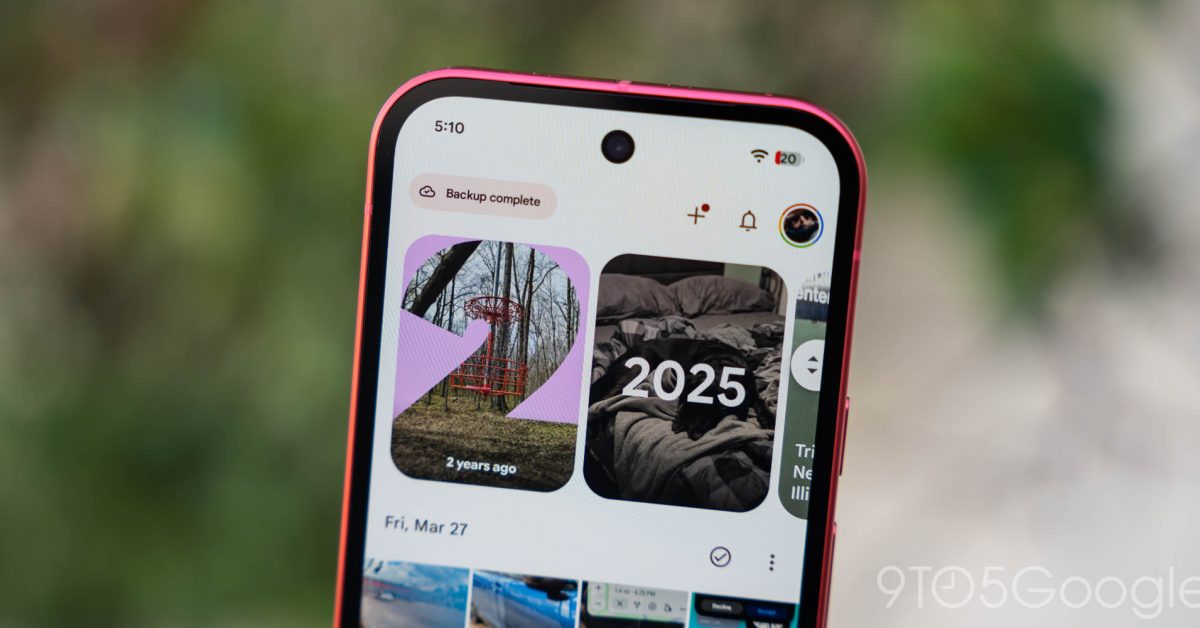
68Google adding more Connected Apps to Gemini & Search with new dev platform - 9to5Google
Read on 9to5google.com

Pixel-11-Pro-Gemini-Splashscreen.jpg?quality=82&strip=all&resize=1200,628


Google today announced the Connected Apps Platform as a “unified way for more app developers to bring their capabilities directly into Gemini and Search.”

Existing third-party Connected Apps let you access Adobe, Dropbox, Instacart, OpenTable, Ticketmaster, and other services — now numbering over 50 — from the Gemini app. Google also announced a new Calm integration that will be available in the coming weeks. These @-integrations join first-party offerings like Google Workspace, Photos, and YouTube. To date, the creation process has required working closely with Google. 

Google is now expanding availability on multiple fronts, starting with the Connected Apps Platform. It’s billed as a way to “build once and reach high-intent users.” Developers need to have a cloud-hosted MCP server or Android MCP using the AppFunctions APIs. They then register, test, and submit their Connected Apps using the new Google Connected Console. This new website lets them track traffic, latency, and error rates, as well as control brand identity.

In addition to the Gemini app, Google will soon make existing Connected Apps available in Search. Developers can “choose whether [their app] will go live in Search, the Gemini app, or both.” As part of the recent redesign, the Gemini app gained a new Customize page.

Developers can sign up for the preview at developers.google.com/connected-apps. Google is opening up access in phases over the coming months.

69XREAL Aura is coming in November with a special $200-off launch discount - 9to5Google
Read on 9to5google.com

xreal-aura-official-render-launch.jpg?quality=82&strip=all&resize=1200,628


The first Android XR-powered smart glasses are almost here, and early adopters actually get a rare discount on the cutting-edge XREAL Aura hardware.

XREAL Aura is set to redefine what a “VR headset” can be by combining the form factor of XREAL display glasses with a small compute puck that clips to your waistband. XREAL and Google have teased Project Aura for months, announcing the official name and price last month, and now XREAL just unveiled the special launch price and release date on stage at Google’s Android Developer Summit.

The special glasses launch in mid-November, with preorders starting today, October 28, at Xreal.com and Best Buy. XREAL Aura will initially be available in the United States, Canada, Japan, and South Korea (with a broader rollout in 2027) and is coming in two SKUs:

Both SKUs are available in standard and large sizes and come with an included carrying case that houses the glasses, compute puck, and cable. The cable is user-replaceable and uses a standard USB-C connection for longevity.

XREAL Aura will be launching alongside 150 made-for-XR experiences designed to showcase the power and capability of the new form factor. I got to use a near-final unit last month and was incredibly impressed with how XREAL and Google have been able to pull together the full Android XR experience on a pair of smart glasses, including full 6DoF spatial tracking and support for hand tracking and controllers.

XREAL Aura attaches via a USB-C cable to a compute puck, which is roughly the size of a phone. This has a generously sized trackpad on the front and a detachable belt clip on the back. The battery and Snapdragon Reality Elite chipset are inside the puck, taking the glasses’ weight down to just 95g (compared to ~500g for a VR headset).

XREAL and GameSir have partnered to deliver a new game controller built specifically for XREAL Aura (and Android XR). This one sports a prominent Gemini button that gives immediate access to Gemini’s helpful gaming capabilities (it’s actually more helpful than you might initially imagine). I also used this controller last month and found it to be wonderful. It feels similar to an Xbox Elite controller, but it is not spatially tracked.

A wireless portable keyboard is also on the way for productivity and multi-window workflows, but you can use any mouse and keyboard you’d like with Aura. XREAL Aura also supports wired mirroring, so you can plug your laptop or gaming console directly into the compute puck and add a spatially-tracked window to your view.

Preorders are open now and, of course, you’ll save $200 if you order XREAL Aura before the end of the year.

Follow Nick: YouTube, X (Twitter), Threads, Instagram

70Google Chrome rolling out ‘Suggested by Gemini’ autofill - 9to5Google
Read on 9to5google.com

google-chrome-navigation-gemini-1.jpg?quality=82&strip=all&resize=1200,628


As previewed in May, Google Chrome can now use Gemini and Personal Intelligence to autofill much more information.

This feature uses Gemini with Personal Intelligence to go beyond autofilling names, addresses, and credit card numbers. 

Chrome autofill can now “automatically suggest information pulled directly from Gmail as you fill out online forms.” This might include order numbers, tracking information, and flight bookings. In the autofill dropdown, you’ll see the “Suggested by Gemini” option when suggestions are available.

On the privacy front, “sensitive data is encrypted and you remain in control.” You can remove specific suggestions and disable the enhanced autofill experience entirely in Chrome Settings. 

This is rolling out now in the US for Gemini in Chrome users who have Personal Intelligence enabled on Android, iOS, and desktop.

71Amazon’s latest Echo smart displays and speakers reinforce Google Home’s lost lead - 9to5Google
Read on 9to5google.com

amazon-echo-smart-displays-speakers-2026.png?resize=1200,628


Amazon just launched a new lineup of Echo smart speakers and a new smart display, all while Google Home’s lineup remains pretty quiet.

Amazon has five new devices launching – two smart displays, a “Photo Frame,” and two speakers.

Starting with the speakers, the latest Echo Dot has “a built-in smart home hub” and upgraded audio and starts shipping today for $100. Meanwhile, Echo Studio builds on that foundation with even-better audio and, optionally, a built-in camera. Those start at $220.

On the smart display side, there’s the Echo Time, which is like an Echo Dot but with a small circular display built-in. Amazon touts “hundreds of clock faces” and “Omnisense” which can track your sleep just like Google’s second-gen Nest Hub, and it starts at $200.

Echo Show 16, meanwhile, is a big 16-inch smart display meant to live on your wall with support for smart home controls, the ability to show a family calendar, and full Fire TV built-in as well. It starts at $500 and, like everything else mentioned so far, is built around Amazon’s AI-enhanced Alexa.

Rounding out the lineup is the Alexa Photo Frame, a simpler smart display that has Alexa built-in but focuses on showing photos from your Amazon Photos library. It has a 10-inch anti-glare display and a design that looks like a normal photo frame and starts at $200.

Google Home really is just so wildly behind isn’t it.

In looking at Amazon’s lineup, I can’t help but feel like Google is just wasting potential here. A smart speaker that doubles as a Nest Cam would be awesome. The same goes for a giant Nest Hub that doubles as a Google TV.

And, seriously, how does Google not sell (or at least partner with someone) a Google Photos digital photo frame. Google Photos is a wildly successful platform and that would sell like hotcakes. Big “how am I not in that movie” energy.

I’ve said it before, but Google Home had such a lead in the smart speaker and smart display market, especially with Google’s ecosystem tie-ins, but Amazon is currently running laps around it with products that Google should be selling. Throw in that even Apple has a smart display now where Google hasn’t even teased a new Nest Hub, and it just feels all kinds of bad to be in Google’s camp right now.

What do you think?

Follow Ben: Twitter/X, Threads, Bluesky, and Instagram

72Deals: Galaxy S25 Ultra at $799 ($600 under S26), new Echo Show 16 $100 off, 2026 Chromebook M 52% off, more - 9to5Google
Read on 9to5google.com

9to5Google-Oct-28-3.webp?resize=1200,628


Alongside the ongoing deals on Galaxy Z Fold 8/Ultra at $200 off with Buds 4 Pro at just $25 (or open-box at up to $570 off), Amazon is now offering its best clearance price ever on this Galaxy S25 Ultra at $799 (that’s $600 under the S26 model). Amazon also debuted its all-new 40% thinner metal Echo Show 16 at $100 off today, we have the return of all-time low pricing across the Nothing’s 2026 CMF Clip Pro open buds lineup, Lenovo’s 2026 2K Chromebook M at $189 (52% off), and all-time low pricing making a return on the latest Moto Tag 2 Android Find Hub trackers at $17.50 each. Check it all out below. 

It’s certainly not the newer Galaxy S26 Ultra at $250 off or the increasingly popular Galaxy Fold 8 at $200 off, but Amazon is offering a deep deal on this brand new unlocked Galaxy S25 Ultra at $799 – that’s $600 under the list price on the most comparable S26 Ultra. 

Amazon is now offering the 256GB Samsung Galaxy S25 Ultra in Titanium Gray down at $799 shipped. This is a brand new condition, unlocked device at the lowest price Amazon has ever offered it for. 

This device launched at $1,300 and is now $500 less than that.

However, the newer S26 Ultra with the same 256GB of storage received a price increase recently to $1,400, putting today’s S25 Ultra deal at $600 less. 

It is worthwhile to keep in mind that we are catching some deals on the latest S26 model this week and we did catch one of the 512GB configurations at under $950 for a very brief time, but nothing nearly as low as the $799 Amazon is serving up today on the still perfectly capable S25 Ultra. 

All of that said, if you are looking towards Samsung’s latest foldable, you’ll want to scope out the deals below instead:

  • Echo Show 16 from $400
    • Customers who preorder Echo Show 16 get $100 off.
  • Amazon Echo Dot $100
  • Amazon Echo Studio with Home Camera $250
  • Amazon Alexa Photo Frame from $200
  • Amazon Echo Time $200

Amazon says it’s all-new Echo Show 16 smart home hub display is completely redesigned “with a stunning 16-inch full high-definition screen—available in standard vibrant and Nanomatte displays.”

The all-new Echo Show 16 is now available for pre-order at $100 off using code CLAIM100 at checkout (or clip the on-page coupon). Shippoing will begin on December 16.

While the Coral orange set has largely been down at the $69 low all month long now, Amazon has now brought back its best prices on the Light and Dark Gray 2026 CMF Clip Pro open-buds as well. 

Amazon is now offering the new Nothing CMF Clip Pro down at $69 shipped in all three colors. 

Regularly $99, this is a straight up 30% off the list price and on par with the best deal we have tracked since launch this past summer. There was a couple chances at the $79 launch deal previously, but Amazon is once again offering all-time low pricing across the lineup to land on par with the fall Prime Day price. 

Some of the highlight features include the 10 hours of playback here (up to 32.5 with the case), Bluetooth 5.4, the app-side Anti-Leakage Mode, Spatial Audio, and custom EQs, as well as the minimalist, retro-modern design with a physical Smart Control on the charging case to access them. 

Scope out our launch coverage for a closer look at the latest CMF Clip Pro open-buds. 

Update 10/28: These deals on the latest Moto Tag 2 item trackers are still live courtesy of Amazon – 4-pack at 30% off or one for $20.

Motorola unleashed its new Moto Tag 2 item trackers over the last couple months and they are now back in stock at Amazon with the sizable launch discount – you can score one for $20 or the 4-pack at 30% off ($17.50 each). 

Amazon is once again offering a single Moto Tag 2 down at $19.99 Prime shipped from the regular $30 list and the 4-pack down at $69.99 shipped:

These are the same discounts we spotted closer to release a couple times, but after bouncing up and down on the official site and some stock issues at Amazon, we are getting another shot at them right now – Amazon seems to have split the single and 4-pack listings up, but the discounted rates are up for grabs here again right now. 

Today only, as part of its latest Deals of the Day lineup, Best Buy is offering Lenovo’s 15.3-inch Chromebook M with a 2K display for $189 shipped. This newer 2026 model normally goes for $399, so you’re looking at a hefty $210 discount, or 52% off. We’ve seen the smaller 14-inch version go on sale before, but this is the first notable deal we’re tracking on the larger 15.3-inch 2K configuration, and it sets a new best price for it. It’s a pretty good option to consider if you just want a simple Chromebook with a high-res display without spending a lot of money, and you can learn more about it in detail below.

Lenovo’s Chromebook M model highlighted here is a fairly simple everyday laptop with a large 15.3-inch 2K display, which is a touch bigger than what you get on most Chromebooks out there for browsing, schoolwork, streaming, and lighter productivity. You’re looking at the base variant of this Chromebook with MediaTek’s Kompanio 540 processor along with 4GB of memory and 64GB of storage. It should be enough for the usual ChromeOS basics and web-based apps, and you’re also getting Google Gemini support built into ChromeOS for things like writing help, summaries, research, and brainstorming.

Be sure to stop by our computer accessories hub for more discounted gear to pair with your new Chromebook. We’re tracking plenty of deals on chargers, webcams, docks, and other everyday peripherals right now, and you’ll find them all highlighted right there.

73RAMageddon is ready to rage on through 2030 - 9to5Google
Read on 9to5google.com

S26-Ultra-Pixel-11-Pro-and-iPhone-17-Pro-2.jpg?quality=82&strip=all&resize=1200,628


SK Hynix, one of the major companies behind memory production, says that it’s sold out through 2029, leaving RAMageddon ready to rage on for at least the next three years.

On its latest earnings call today, SK Hynix confirmed that production of both DRAM and HBM (high-bandwidth memory) are effectively sold out not just for this year, not just for next year, but through 2029. That puts RAMageddon, the global shortage of memory, lasting at least another three years before we see any relief.

SK Hynix’s CFO explains (via The Motley Fool, Seeking Alpha):

…memory supply cannot keep pace with this level of demand growth, thus, we expect it to be difficult to fully meet customers’ volume requirements in the near term, given the complexities involved in implementing leading-edge processes and the lead times required to construct new production facilities. A situation where supply cannot keep up with demand is expected to persist for some time, a constraint projected to continue through 2030.

Micron, one of the other companies responsible for memory production, previously said to expect 2027 to be “even tighter” compared to 2026.

The SK Hynix call also details how the company is making long-term agreements which already account for “more than 50% of our total capacity for 2027 and 2028.”

SK Hynix isn’t the biggest name in DRAM/HBM production, with Samsung accounting for a larger share, but everyone else is dealing with the same constraints. PCMag points out that SK Hynix is working to build out more production capacity, as everyone else is too, but it takes time to build out the complex infrastructure.

Buckle up folks, this isn’t ending anytime soon. 🫠


Follow Ben: Twitter/X, Threads, Bluesky, and Instagram
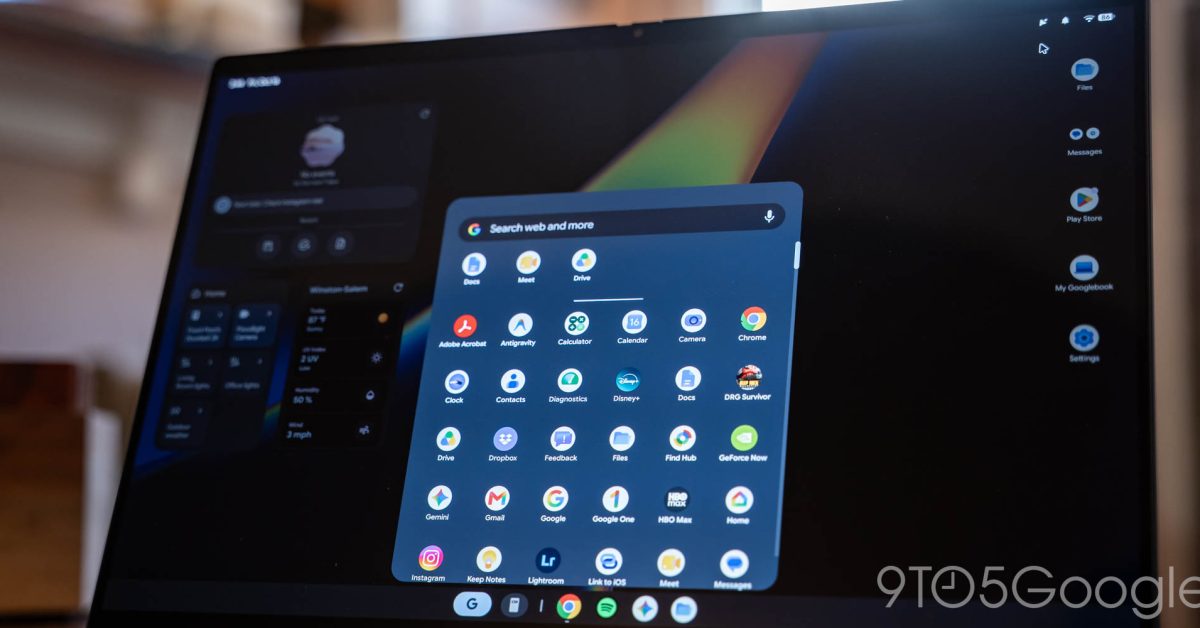
74Public Discord messages might start showing up in Google Search, unless users opt out - 9to5Google
Read on 9to5google.com

Discord-public-servers.jpg?quality=82&strip=all&resize=1200,628


Discord announced today that Discoverable Server web pages will begin showing summaries and pulled content, which might show up in search engines.

Discord splits its servers into three different types: private, community, and discoverable. The latter is the most public version. No one needs an invite, and anyone can message, given that the admins of that server haven’t blocked you completely.

In a recent press release, Discord notes that all Discoverable Servers will get a Server Web Page. The page is essentially an overall summary of that server, so users can easily gauge whether they its something they want to join.

Discord says that discussion summaries will also appear on those server web pages, extracted from public channels. Any conversation that might be deemed noteworthy, whether by an AI model or moderator, could appear on that web page, and by extension, search engines like Google.

It sounds like Discord is hoping channels surface in Google’s AI Mode or other engines, like Reddit, when users search for certain topics. It’s not a bad idea, as message boards often contain answers to incredibly niche questions otherwise hard to find on the internet.

The release makes it clear that server admins can exclude certain channels and channel summaries, but doesn’t say the entire server can opt out. That seems to only be possible by switching server types.

Individual users can also opt out. Users can head to User Settings > Data and Privacy to control whether their public messages appear in the server web page.

Discord says these changes will take effect starting November 16. Admins and users wishing to opt out of having their public messages and channels included in web pages, and by extension, search results, will need to opt out before then.

75Motorola’s flagship Signature 27 sounds quite expensive in retail leak - 9to5Google
Read on 9to5google.com

motorola-signature-27-1.jpg?quality=82&strip=all&resize=1200,628


Motorola’s return to the proper flagship space is coming in the Signature 27, but early leaks suggest this new device, as well as the company’s wide foldable, won’t exactly be cheap.

GSMArena and “Android Treasure“ spotted retail listings in Europe that give us some idea of what Motorola’s upcoming releases will cost.

The Motorola Signature 27 is listed at €1,594.90 through a retailer website based out of Portugal. For comparison, the Galaxy S26 Ultra is sold for €1,299 in Portugal. The listing calls out some marketing points including the 50MP Sony Lytia L910 main sensor, 200MP telephoto camera, as well as a “unique cooling system uses thermal gel with diamond particles and a new 3D vapor chamber to maintain performance for longer.” It also mentions weight of “0.4kg” which seems… unlikely given that would make for a phone that weighs 400g. Perhaps that’s the shipping weight. There’s also mention of a 12GB/512GB configuration.

Circling back to the price, it’s unclear whether or not that’s strictly accurate, but it’s not exactly out of the question.

With Motorola Signature 27 packing top-tier specs including Snapdragon 8 Elite Extreme Gen 6, it was always going to be pricey. And if €1,600~ is the final price, it could be a lot worse. As a reminder, Oppo Find X10 Pro Max recently made its debut in the EU for €1,800.

The same retailer also lists the “Razr Flex,” Motorola’s wide foldable, at €1,510~. This one very much seems like a placeholder listing given there’s no imagery and a generic description compared to the Signature’s listing. The price also seems borderline impossible seeing as the Galaxy Z Fold 8 sells for over €2,200 in Portugal.

What these listings do suggest is that Motorola is gearing up for launch on these new products pretty soon.

What would you pay for Motorola Signature 27?

76Samsung can’t decide between a larger Galaxy Z Fold 9 or one with worse specs, and neither can I - 9to5Google
Read on 9to5google.com

Galaxy-Z-Fold-8-fully-open-rear.jpg?quality=82&strip=all&resize=1200,628


Following a smash hit in the smaller and wider Galaxy Z Fold 8, Samsung is obviously weighing its options behind the scenes when it comes to sequels. According to one leaker, the company is currently deciding between adding another Galaxy Z Fold 9 with a larger display, or one with lesser specs, and I can’t decide which one I want to see either.

Leaker Lanzuk on Naver says that Samsung is adding more options to the Galaxy Z Fold 9 lineup next year after the Galaxy Z Fold 8 garnered “much better response than expected” (translated). It’s all-but-official that Samsung is expanding the lineup – we’ve heard this repeatedly at this point – but exactly what joins the lineup remains unclear.

This latest rumor suggests two possibilities.

The first is a larger version of the Galaxy Z Fold 8, a “Galaxy Z Fold 9 Plus,” the leaker suggests. This wouldn’t be an Ultra device, but rather would share the same wide form factor as the standard Fold 9, just with a larger pair of displays.

The other option is a “Galaxy Z Fold 9 FE” which would downgrade the specs to achieve a lower price point. Samsung tried this with the Galaxy Z Flip 7 FE to essentially no success, but the company’s cuts on that device were far from compelling on a form factor that was already in decline.

Samsung is said to be testing both form factors and “a decision will be made soon,” but only one of the two would move to production and a full release.

Personally, I’m split here. I’ve been using the Galaxy Z Fold 8 as my daily smartphone since its launch, and the size is certainly one of its most attractive features. On the one hand, I’d love to have a larger version for better media consumption and multitasking, but I also think Samsung would run into diminishing returns with a larger size. The wider form factor wouldn’t scale nicely to a larger size too, I think.

Meanwhile, a more affordable version seems like a clear win. This form factor has so clearly resonated with customers, and having an option that makes strategic cuts to hit a price of say, $1,400, would be a home run. However, given Samsung’s existing struggles with profitability amid RAMageddon and ever-rising prices, that also feels unrealistic.

I’m very torn on which would be the better option. Which one would you prefer?

Follow Ben: Twitter/X, Threads, Bluesky, and Instagram

77The Samsung Galaxy S25 Ultra is at its lowest price for a while - 9to5Google
Read on 9to5google.com

samsung-galaxy-s25-ultra-7.jpg?quality=82&strip=all&resize=1200,628


If you’re a patient buyer, you can get a 256GB Galaxy S25 Ultra for a reasonable price, as one of 2025’s best flagship phones is down to just $799 in the latest Amazon discount.

A ton of Samsung’s lineup has been discounted recently, and this is a solid deal for what I’d argue is the best S-series phone in a while. The display is much better than the Galaxy S26 Ultra, and the colors are better too, in my opinion. Check out our long-term review of the device here if you want a verdict:

The price has fluctuated for a while, but at $799 for the 256GB variant, you’re getting a heck of a lot of phone for your money. As I noted, the 6.9-inch AMOLED anti-reflective display is GOATed; it has the Qualcomm Snapdragon Elite, 12GB RAM, same camera system as the S26 Ultra, S-Pen if you care about that, and it has just recently received One UI 9 as its second major Android update since launch. You’ll get another 5 years of Android OS upgrades, too, for what it’s worth.

Get the Galaxy S25 Ultra from Amazon

It’s hard to fault the Galaxy S25 Ultra even today. Some might even prefer this marginally older model over some newer devices like the Pixel 11 series, as you get more bang for your buck. The only limitation is that this deal is currently only for the Titanium Gray finish – if that matters to you.

There is peace of mind in picking up a brand-new device with a fresh battery and unsullied hardware over a used or renewed model. If you prefer to stick to renewed devices, you can pick up the 512GB S25 Ultra for just $645 from the Amazon Renewed storefront, and it’s backed by the firm’s industry-leading return policies.

If you want something even thinner, maybe the Galaxy S25 Edge at $549.99 on Woot could be one for those who want a wafer-thin smartphone that won’t break the bank – or the pockets in your skinny jeans.

78Samsung’s open-ear Galaxy Buds On cost $229 in the US, launching next month - 9to5Google
Read on 9to5google.com

galaxy-buds-on-head.jpg?quality=82&strip=all&resize=1200,628


After launching in Korea earlier this month, Samsung has confirmed that its open-ear Galaxy Buds On will cost $229 in the US and will go on sale early next month.

Galaxy Buds On are clip-style, open-ear earbuds that are designed to be super lightweight and let you hear music, podcasts, and more without blocking sound from the world around you. The form factor has been used by other brands, but is new to Samsung’s lineup.

The company announced Galaxy Buds On earlier in October in Korea, touting Gemini Live integration, 9.5-hour battery life, automatic volume adjustments, and more. Today’s announcement also calls out features like “Intelligent Clear Call” and “Quick Voice Memo,” as well as Bixby integration for searching through recordings “hands-free.” There’s also gesture support for answering/declining calls, dismissing alarms, and more.

Galaxy Buds On are available solely in black and the earbuds have the same case design as Galaxy Buds 4/Pro.

Pricing lands at $229 in the US, making these Samsung’s second-most expensive pair of wireless earbuds behind the $249 Galaxy Buds 4 Pro. Galaxy Buds 4 are $179. Pre-orders open today with shipping in “early November” – a specific release date has not been confirmed.

Are you getting a pair?

Follow Ben: Twitter/X, Threads, Bluesky, and Instagram

79Gemini Notebook for Android, iOS adds built-in audio recorder - 9to5Google
Read on 9to5google.com

gemini-notebook-fold-8-5.jpg?quality=82&strip=all&resize=1200,628


After introducing Connected App integration last week, Gemini Notebook has rolled out an audio recorder on Android and iOS.

Between the camera and “Create New” floating action button at the bottom, you’ll see a new microphone icon. This lets you “capture lectures and record your thoughts on the go,” with the audio file creating a new notebook if you launch the recorder from the homepage. 

Your notes will live directly alongside your sources, meaning you can chat, cite, and build from them anytime, all while making ongoing edits. 

Recordings will be saved to an existing Notebook if you tap the microphone from the Sources tab.

The recorder interface is very simple with a pause button and checkmark that starts the upload once you’re done. A Gemini Notebook-themed waveform and live count appear above. You can switch to another application or lock your screen and have recordings continue in the background. There’s a 1-hour capture limit.

Google first announced the audio recorder in September, and it’s now widely rolling out today on Android and iOS. Force stop the app if it’s not live on your device.

Meanwhile, Google this week made a small tweak wherein tapping the “Create New” FAB immediately starts a new notebook rather than sliding up the “Add a source” panel. 

These updates follow the recent launch of the Live button in the Chat tab that lets you have a real-time conversation with your notebooks.

80The Sideload 049: The death of the browser - 9to5Google
Read on 9to5google.com

sideload-podcast-wider-copy-1.jpg?quality=82&strip=all&resize=1200,628


Welcome to episode 49 of The Sideload, a 9to5Google podcast. This week, Will is once again joined by Daniel Bader — now in a more permanent co-host position, listen to the episode to find out more — as they discuss the state of browsers outside of Chrome, what we’re even looking for in a browser in 2026, and how agentic use cases might completely shape the web as we know it.

Sponsored by NordVPN: Listeners to The Sideload can save up to 76% on a two-year subscription alongside four extra months for absolutely free by signing up for NordVPN using this link. Thanks to NordVPN for sponsoring this week’s episode.

Subscribe to 9to5Google Pro for exclusive bonus content, podcast episodes, and more.

  • 00:00:00 – Intro and New Co-host Announcement
  • 00:08:32 – Arc and the State of Browsers
  • 00:25:41 – The Internet in an Agentic Future
  • 01:00:42 – Wrap-up

Drop us a line at gtips@9to5g.com, leave a comment on the post, or reach out to our producer. And for even more Android discussion, dive into the official 9to5Google forums!

81Today’s best Android app deals and freebies: Out There, Tokaido, Eight-Minute Empire, more - 9to5Google
Read on 9to5toys.com

Google-Play-collage-f9e8d3.webp?resize=1200,628


Today’s best Google Play app and game deals are ready, including Out There: Ω Edition, Tokaido, Eight-Minute Empire, Tales of Mecha: Rising, Front Armies [RTS], Istanbul: Digital Edition, Charterstone: Digital Edition, and more. Just be sure to dive into Nothing’s CMF Watch 3 Pro down at just $59, Galaxy Z Fold 8/Ultra at up to $570 off, and Nothing’s new Buds Neo at just $20. the apps await below.

Today’s highlight Google Play deals:

More Google Play deals still live:

FTC: We use income earning auto affiliate links. More.

82Google Nest Wifi router and point get October 2026 update - 9to5Google
Read on 9to5google.com

google_nest_wifi_5.jpg?quality=82&strip=all&resize=1200,628


The second update this year for the Nest Wifi router and point rolled out last week with two improvements.

Following the April update, the Nest Wifi router is now on software version 14150.883.1264, while the Nest Wifi point is running 1.56.539812.

The changelog dated October 20, 2026 lists two updates:

  • Enhanced mesh network resilience and DNS fallback improvements
  • Other stability and security vulnerability fixes

Google Wifi and Nest Wifi devices update automatically overnight. To manually check, select your Nest Wifi router from the “All devices” top tab in the Google Home app and tap the settings gear icon. You can find “Software information” under the “Wi-Fi information” section.

The Nest Wifi Pro received its last notable update in March.

83Someone is bringing Android Auto back to your phone’s screen, and it actually works [Gallery] - 9to5Google
Read on 9to5google.com

android-auto-phone-display-phoneauto.jpg?quality=82&strip=all&resize=1200,628


When Android Auto first debuted, it didn’t require a fancy display in your car. It just worked on your phone screen and, now, someone is bringing that functionality back after Google killed it.

Back in 2019, four years after Android Auto hit the scene, Google announced that it would be shutting down support for using Android Auto on your phone’s display. Its replacement, Google Assistant’s driving mode, was so unfinished at launch that it required Google to release “Android Auto for Phone Screens” as a stopgap. That later shut down in 2022 as Google made Android Auto “only available for car screens.”

And, in the time since, there haven’t been very many good alternatives to that functionality. You can get in-car displays for cheaper and cheaper – the average prices on Amazon are around $80 or so – but it’s also just conveinent to get it on the phone screen.

That’s what “PhoneAuto” wants to do.

This new app is in development and soon to debut on the Google Play Store and lets you run Android Auto on your phone screen, just like you used to be able to. Well, almost like you used to. The difference here is in how the app gets Android Auto going, using the “head unit server” developer functionality to run Android Auto on-device. It takes a couple of added clicks but gets the job done, but it does work. You also have to tap the “quit” button in your notifications to stop the head unit server from running after you’re done. “PhoneAuto” can partially automate this if you grant it accessibility permissions.

As for actual performance and functionality, it works about as well as I’d expect from a beta.

On my Galaxy Z Fold 8, the portrait mode setting doesn’t work very well, with plenty of lag in play, but the landscape setting works just fine on both the inner and outer displays. The layout adjusts to your screen, just as it does in a car, and I found that touch is responsive enough. It doesn’t run at a full frame rate as you’ll find in some newer vehicles.

But it works. It puts Android Auto on your phone’s display, something you haven’t been able to do for years.

The beta is available for sideloading via GitHub – install at your own risk, as always – with an expiration in January. Presumably it’ll be available in the Play Store before that date.

Would you use this app?

Follow Ben: Twitter/X, Threads, Bluesky, and Instagram

84Here are the latest Samsung Galaxy phones getting Android 17 updates - 9to5Google
Read on 9to5google.com

Welcome-to-One-UI-9-screen-1.jpg?quality=82&strip=all&resize=1200,628


One UI 9 is in its late-stage rollout phase, and a bunch of Galaxy phones have been added to the Android 17 availability list within the last few days.

One UI 9 based on Android 17 was released with the Galaxy S26 launch in September. Since then, it’s expanded to a number of Samsung’s flagship devices. But it’s not just some of Samsung’s top-end devices; Samsung has been pushing One UI 9 to a majority of its recent Android devices.

The list seems to revolve around the Galaxy A lineup, as recent as the Galaxy A57, but hitting most devices the company has launched within the last few years. Android 17 is a major upgrade for Galaxy devices with a lot of features, so a successful rollout is key for the phones that a lot of users rely on.

The major standouts have been the Galaxy A57 and Galaxy A37, as those are the phones that were introduced the most recently. Here’s the list of devices with One UI 9 now available:

  • Galaxy A35
  • Galaxy A36
  • Galaxy A37
  • Galaxy A54
  • Galaxy A55
  • Galaxy A56
  • Galaxy A57
  • Galaxy A26
  • Galaxy A27
  • Galaxy A16
  • Galaxy A17
  • Galaxy M56
  • Galaxy M54
  • Galaxy F17
  • Galaxy F70

Keep in mind that even regionally updated devices are included in this list. For the most part, the majority of Samsung’s Android phones with One UI 9 have been updated globally, but because the push for new software isn’t finished, some of the listed phones may only have received One UI 9 updates in certain areas.

Samsung will likely keep adding to the list. Some that Samsung has acknowledged will get Android 17 aren’t listed, like the Galaxy A25.

85The Galaxy Z Fold 8 still feels refreshing in all the best ways [Video] - 9to5Google
Read on 9to5google.com

Galaxy-Z-Fold-8-fully-open-rear.jpg?quality=82&strip=all&resize=1200,628


With the iPhone Duo now a thing, it puts the Z Fold 8 in an even more interesting position. Yes, it’s an attempt by Samsung to get ahead of the curve, but, in truth, it really has worked.

So now that Apple is here, there is no doubt that the Z Fold 8 faces its fiercest competition, but to me, it highlights so much of what Samsung did so well with. I do not think that the Duo renders Samsung’s design obsolete. Apple’s entry into the market only sharpens the contrast between these competing design philosophies. It even underscores precisely why I’ve come to prefer Samsung’s passport-size footprint.

For more video content, subscribe to 9to5Google on YouTube.

I’m not even sure it’s Samsung that has pushed the form factor forward too drastically.

I’m not alone in realizing that, for a lot of people, passport size makes the most sense. The outer screen is just enough of a taster without being too big; switch to the inner if you want a little more playroom is immediately obvious from the get-go. Everything feels reachable on the outer screen, while the inner screen is the big canvas for all other content.

Sure, the Z Fold 8’s outer display isn’t perfect. Some UI elements can feel cramped; you will need to adjust how tall your keyboard is, but it isn’t as rigid as what Apple seems to have done on the Duo. That’s a good thing as the flexibility of Android just suits the multi-sized form factor.

The thing is, you’re going to fall into one of two categories. Those of us who want a smaller, tablet-y shape, or a phone that happens to open to run more apps side-by-side.

Objectively, the “traditional” folding phone size and shape will be more useful in basically most scenarios. Subjectively, I don’t really care about those as much. I’m in the privileged position of having a decent selection of handsets on deck at any one time to test-drive, and those satisfy something else entirely.

As I was saying, the Galaxy Z Fold 8 has arguably been the most interesting and, now, my most-used phone throughout 2026. Of course, that is alongside the Pixel 10 Pro in early 2026 and now the 11 Pro. It has my backup SIM permanently tucked inside. Backup because I don’t get distracted as much with so many notifications, but that SIM has free roaming, making it my favorite travel companion…and my Balatro on-the-go handheld.

Every week, I’ll download a few movies and TV shows, like a sort of digital “prepper,” so I can be on a flight or a train and just know I have something to watch on a screen that tucks neatly into my side bag or jacket pocket. It is a mini tablet that weighs less than most other phones. You barely notice it. As I keep repeating: It feels so fresh.

One thing I have to appreciate about the slimline design is that I haven’t babied it; I have put a screen protector on the outer display for basic protection. It has handled a couple of days at the beach as an e-reader, and as yet, it’s accrued just one minor ding on the top frame edge, no major damage. That’s a good thing to me, as I haven’t found a Z Fold 8 case I really love yet. It’s super light and razor-thin; I never want to dull that sheen. It’s like the perfect realization of what the Flip ought to have been and likely won’t ever become.

I’ve seen a lot of complaints online about the inner display being both glossy and having a very visible crease. It’s not something I’ve dwelled on too much. They’re not big problems for me, in all honesty. I would like to see some enhancements, but it is what it is. That sounds like me handwaving away those complaints. I’m in agreement that we need to see Samsung make changes, especially now that Apple has a foldable with an almost-invisible crease and, frankly, a beautiful anti-reflective coating. Samsung is the undoubted king of displays, so we need more from the company in the future. That said, I still love the inner screen once I’m zipping around the system.

Against my better judgment, I have recently tried a “matte” screen protector from Amazon. So far, so good, but it’s nowhere near as matte as advertised. It does dull reflections, but I’m still on the lookout for something that might mimic the iPhone Duo display to see what the fuss is about. The screen protector I picked up does make a difference by reducing smears and fingerprints, but you might not want to put something on the inner screen, as Samsung doesn’t entirely recommend it, and it can be a bubbly mess if you get it wrong. It took me a few attempts to get the fit just right.

Back to the software: It helps that One UI is basically the perfect starting base for a foldable, and I think that is what has sealed the deal in a lot of ways. I’m a steadfast Material 3 Expressive fan, and while it’s still my preferred way to experience Android, One UI has continued to evolve in ways that Google likely doesn’t care about. I liked the Pixel 9 Pro Fold and 10 Pro Fold, but they felt less playful than the Fold 8 because I don’t think that Google does quite enough to truly optimize for the non-standard dual UI experience.

Sure, you need to use some of the Home Up and Good Lock plugins, but it opens up the door to vast customization that most other brands can’t really compete with. I like being able to make even minor adjustments to things like the volume UI or icon layout. Don’t get it twisted, I’m not doing insane things on my Z Fold 8, but even the minor adjustability holds weight on a device that acts as both a phone and a tablet, depending on which screen you’re about to use. Even the bottom dock is better placed than what I can glean from how Apple has added a right-sided dock on the iPhone Duo, while the volume buttons are just sensibly placed on the Fold, too.

The “big” apps are all well optimized. Instagram on the inner screen is awesome because you can see the comments and your feed in one instance. It feels like a tablet UI, probably because it is. There’s a little jank when running two apps side-by-side, but nothing that a little resizing can’t fix. I stick to two apps, as adding that third makes things cramped.

To expand on that a little further, I am actually really happy that Apple is about to wade into the foldable waters. For starters, it means we’ll hopefully get even better application support from the biggest developers.

From launch, the Z Fold 8 has had a few apps tuned to take better advantage of the smaller outer display, and while they’re not quite perfect, at least some work has gone into them. I’m really excited about the prospect of more apps being refined, and with so many big corps effectively relying on AI for faster ports, surely the next few years might prove to be a golden age for foldables. The truth is that most Android apps already scale reasonably well, so no major issues. The odd UI section might feel cramped here and there, but I don’t think I can complain too much.

Now, for a few of the weakest portions of the Z Fold 8 that can’t really be glossed over too much.

Yes, the camera is not quite as good as the best in the business.

At its worst, it’s purely functional, and ordinarily that would be a complete dealbreaker, but I’m at an age where a sharp, clear photo that does the job is more than good enough. Maybe I’m a glutton for this kind of punishment, as I find myself working around the limitations to get acceptable shots. It’s not ideal, but foldables compromise here more than any other devices, save the affordable options. So in that regard, you are well aware of that going in anyway.

It probably helps that I haven’t given up the Pixel 11 Pro as my mainstay photography phone. Not everyone can do that, so it’s arguably the biggest complaint you can have on the Z Fold 8 in my opinion – save the price, of course.

Battery life is another one of the weakest points. It will withstand most people’s usage patterns, but nobody should spend nearly £2,000 or $2,000 to have the Fold 8 not reach the end of the day. I think we all know by now that folding phones are going to compromise in this one area quite substantially. Luckily, it does manage to do movies and TV shows more than enough justice with longevity. I have watched multiple episodes of Widow’s Bay back-to-back on a couple of flights recently, and it doesn’t sap the battery all that much so long as you put the thing in flight mode.

In fact, I have been impressed when you’re not glued to the screen. It isn’t amazing, but I wouldn’t call the battery bad on the Z Fold 8 by any stretch. I have a super-slim Anker power bank in my bag at all times, so on a long-haul flight I’d just plug it in to be sure I can keep enjoying that lovely inner display. I can charge while watching and then just unplug, ready to go at my destination.

Now for the brief section where I will unashamedly just say some truly out-of-touch things (although this entire post is debatably out of touch): this is the most special phone I have used this year. Not even because it’s the best at any one thing. It could simply be a symptom of so much being “samey” or feeling so incremental in Western markets right now. This is a luxury product, and that instantly marks it down in most people’s eyes.

If Apple, the tastemakers of the non-tech buying public, are ready to give this form factor a real college try, then Samsung has made the right decision. The Z Fold 8 is easily the most elegant Android phone I’ve used in a while. I’m smitten with it. It’s something I want to unfold, fondle, and play with. What’s somewhat annoying is that, because I’ve enjoyed it so much, I’m giving in to a phone addiction I have tried so hard to curb over the past 18 months, since there is something refreshing here that is hard to truly quantify.

I’ll try my best to quantify it, though.

In my mind, there’s a Swiss Army Knife feel about the Z Fold 8 that no other phone has had for me for a long time. A tablet, gaming screen, reading screen, webpage dream all rolled into a passport package that respects my pockets – or the space in my sidebag.

It’s a really versatile gadget that isn’t just a siloed phone, and that is probably why it’s resonating with so many people – myself very much included.

If you’re bored with your current phone and ready to switch, the Z Fold 8 might be worth taking a look at, provided you can stomach the price.

I’ll drop some of the best deals currently available on the Z Fold 8 down below, but expect to see discounts and sales soon, now that Apple has entered the fray and we’re on the cusp of Black Friday sales in the coming weeks.

86Android 17-based Redmagic OS 12 gets closer to a global release - 9to5Google
Read on 9to5google.com

Redmagic-8-Pro-5.jpg?quality=82&strip=all&resize=1200,628


The global rollout schedule is still a bit of a mystery, but we at least know which Redmagic devices are getting the Redmagic OS 12 Android 17 upgrade.

Redmagic is updating 8 of its latest devices to Android 17 in China, which began with the launch of the Redmagic 12 Pro+. Redmagic calls its Android 17 skin “Redmagic OS 12,” and the update includes a slew of visual changes, more AI integration, simplified connectivity and file transfer to iPhones, and a bunch of gaming and performance upgrades. Here’s the timeline:

  • December 2026: Redmagic 11 Pro and Redmagic 11S Pro series
  • January 2027: Redmagic Gaming Tablet 5 Pro
  • March 2027: Redmagic 10 Pro series, Redmagic 10S Pro series, Redmagic 11 Air, and Redmagic eSports Tablet 3 Pro
  • April 2027: Redmagic 10 Air

While these are technically the Chinese upgrade dates, we expect Redmagic to follow with global availability shortly afterward. Redmagic 12 Pro gets a global release date on November 3, 2026, so a global version of Redmagic OS 12 is already finished and just needs to be ported to these other devices.

As is the case with many Android 17 updates, this one focuses on a visual redesign that includes more Liquid Glass-inspired design, including a giant lockscreen clock and new lockscreen customizations. A Dynamic Island-like feature called AI Magic Island adorns the status bar and expands for actionable notifications like music playback, ride-hailing, and more, presumably using Android 17’s Live Updates feature.

The MORA AI companion is a new VTuber-like AI assistant that’s now built into the phone, and Redmagic is also including new “AI Magic Assistant” automated task executions to go along with it. A refreshed Game Space app is included in the OS update, as well as an Esports Training Arena app with built-in shooting and reaction mini-games, plus the X-Gravity Platform 3.0 update and upgraded live streaming capabilities.

More on Redmagic:

Follow Nick: YouTube, X (Twitter), Threads, Instagram

87Deals: Galaxy Z Fold 8/Ultra up to $570+ off, CMF Watch 3 Pro for $59, buds from $20, more - 9to5Google
Read on 9to5google.com

9to5Google-Oct-27.webp?resize=1200,628


Today’s 9to5Toys Lunch Break is headlined by Galaxy Z Fold 8/Ultra at $200 off with Buds 4 Pro at just $25 (or you can go open-box at up to $570 off). Alongside the ongoing deal on the new Nothing Buds Neo at just $20, we also have the CMF Watch 3 Pro down at just $59 in all colors. from there we move over to Samsung’s latest 4K/330Hz Odyssey OLED G7 gaming monitor at a whopping $600 off (all-time low) alongside its 360Hz OLED gaming monitor down at $560. Head below for a closer look.

With the release of the new iPhone Duo, popularity seems to be surging on the latest foldables from Samsung for Android users, according to Samsung, so let’s scope out some deals. There are still some solid $200 price drops on Galaxy Z Fold 8 and Fold 8 Ultra via Amazon and the official Samsung site for new condition units, but you can save as much as $570 or more with the “excellent” condition Best Buy open-box listings right now as well. Check it out below.

Firstly, let’s take a look at the brand new condition deals for reference:

There are some notable new condition deals right now, especially considering you can score a pair of $250 Galaxy Buds 4 Pro with your order directly from Samsung at just $25 on top of the $200 discount, but the open-box prices below reduce the out of pocket spend significantly.

Let’s compare the prices above to some of the most notable Best Buy “excellent” condition open-box units. They are clearly not brand new units, but they are about as close as it gets from a reputable retailer, come completely covered by its return policy, and all at dramatically lower prices:

Just after catching the first discount on the new geometric Nothing CMF speakers starting at $49 and the ultra-affordable CMF Buds Neo at just $20, Amazon now has the already inexpensive Nothing CMF Watch 3 Pro down at just $59 shipped today. 

Amazon is offering the Nothing CMF Watch 3 Pro down at $59 shipped in all four colorways: Ash Gray, Dark Gray, Light Green, and Black/Orange. 

Just after catching the first deals on the brand new geometric Nothing CMF speakers starting at $49, we are also tracking the latest, ultra-affordable Nothing CMF Buds Neo down at the $20 Amazon low. 

Amazon is now offering the new Nothing CMF Buds Neo down at just $19.99 with free shipping for Prime members or in orders over $35. 

Nothing debuted its striking new milk carton-style CMF speakers a couple weeks ago and today we are catching the first discounts courtesy of Amazon. You’ll now find the more modest CMF Speaker S down at $49 and the larger CMF Speaker M at $89. 

We are now tracking a deal at B&H that drops Samsung’s 32-inch Odyssey OLED G7 (G73SH) gaming monitor down to $499.99 shipped after an on-page coupon that automatically applies during checkout. This model normally goes for $1,100, so you’re looking at a massive $600 discount, or roughly 55% off. We saw this display drop to the $700 mark just last month directly at Samsung, and today’s offer beats that by $200 to deliver a new best price to beat. This display has dual mode support for a versatile experience, and you can learn more about it in detail below.

Samsung’s 32-inch Odyssey OLED G7 (G73SH) gives you the option to switch between sharper visuals and outright speed depending on what you’re playing. You can run the OLED panel at 4K and 165Hz for more cinematic single-player games, or drop to 1080p and push the refresh rate all the way up to 330Hz for faster competitive titles. This monitor also offers a 0.03ms response time, DisplayHDR True Black 400, G-SYNC and FreeSync Premium Pro support, and some of its other highlights include a good selection of ports like an HDMI 2.1 and DisplayPort 1.4, a fully adjustable stand offering height, tilt, swivel, and pivot controls, and so on.

Woot is also running a fresh batch of gaming monitor deals, and you can save up to a whopping 55% by cashing in on those deals. The sale covers displays from Samsung, LG, ASUS, and more, and we’ve rounded up some of our highlights right here.

Twelve South Airfly Drive CarPlay and Android Auto wireless adapter has been one of the more popular tech releases around here over the last month or so, and it’s back. Shipping times started to slip well into December on the popular black model, but Amazon is now listing both it and the white for delivery as soon as next week. 

While we have tracked a few chance to score the latest Google Nest Learning Thermostat (4th gen) is the $230 range more than a few times this year – it has in fact been down that low more often than not. But we are now tracking down at one of the lowest prices to date over at Amazon, landing within roughly $1.50 or of the best deal in new condition. There are also some even lower prices courtesy of Best Buy’s “excellent” open-box listings as well. 

The regularly $280 Google Nest Learning Thermostat (4th gen) is now sitting down at $219.99 shipped at Amazon. That’s a solid 21% off the list price and the lowest we have tracked since the early fall Prime Day sale. 

Today’s deal is within $1.50 of the all-time lowest price on Amazon for the Obsidian model, a rare chance to score one in brand new condition for under $230, and matching the best on the other two colorways.

For those looking to bring the price down even lower, the “excellent” condition open-box units at Best Buy is a great way to do that. Just be sure to avoid the Polished Gold and Obsidian models as they are not down low enough to side step the new deal above. 

As part of its early Black Friday Deal Days sale event, Lenovo is now offering its new Yoga Tab Gen 2 4K Android tablet bundle for $569.99 shipped when you use promo code EXTRAFIVE at checkout. This package includes the tablet, Lenovo Tab Pen Pro 2, and keyboard, and normally carries a $730 price tag, so you’re looking at $160 in savings today. We tracked the first deal on this model earlier this month as part of a bundle that also included a free pair of Yoga ANC earbuds, but this new offer drops the actual tablet, pen, and keyboard package even lower. Today’s deal delivers a new best price for the Yoga Tab Gen 2 bundle itself, making this the better offer if you only care about the tablet and its included accessories. Head below for more details.

Lenovo’s new Yoga Tab Gen 2 is one of the brand’s newest tablets, sporting a 4K display. The standard Gen 2 model sports an 11.1-inch 4K panel and is powered by MediaTek’s Dimensity 9500s processor with 8GB of RAM. This particular model also has a 11,000mAh battery and ships with Android 17 out of the box. Lenovo is also promising updates through Android 24 for this model, along with security patches through 2033. Notably, the Yoga Tab Gen 2 listing highlighted here comes with a Tab Pen Pro 2 and keyboard, so you get the complete experience for productivity and day-to-day usage. Be sure to check out our launch coverage to learn more about this tablet in detail.

If you’re looking for more tablet deals, TCL’s Android lineup is up to 35% off at Amazon right now, with prices starting from $150. A bunch of the brand’s more popular models are discounted, and you’ll find some of our favorites highlighted right here.

88Vivo’s X500 series launches globally with MediaTek chips and insane cameras - 9to5Google
Read on 9to5google.com

Vivo-X500-Pro-Max-launch.jpg?quality=82&strip=all&resize=1200,628


Following its initial debut in China, Vivo is officially taking its flagship lineup global. The X500 series brings three new models to the international stage, including the Vivo X500, X500 Pro, and the range-topping X500 Pro Max.

What’s interesting is that the Chinese OEM has just jumped straight past the X400 to the X500, for what reason, we’re not entirely sure. This is a direct follow-on from the X300 lineup, which was released earlier this year and has been such a promising lineup.

Under the hood, both the X500 Pro and Pro Max are powerhouses, becoming the first smartphones to feature MediaTek’s new 2nm Dimensity 9600 Pro chipset. The standard X500 is powered by the MediaTek Dimensity 9600M. Display-wise, both Pro models sport 2K 144Hz BOE Q11 LTPO AMOLED displays—6.36-inch on the Pro and 6.85-inch on the Pro Max—reaching up to 4,500 nits peak brightness. The vanilla X500 sits in the middle with a 6.59-inch 144Hz AMOLED screen.

Battery capacities have taken a massive leap forward across the board thanks to high-density silicon-carbon technology: an 8,000 mAh cell inside the Pro Max, 6,510 mAh in the Pro, and 7,500 mAh in the standard X500. All three models support 90W wired FlashCharge and 40W wireless charging, carry dual IP68 & IP69 water and dust resistance, and ship running OriginOS 7 based on Android 17.

But as expected, the cameras are the (pun intended…) main focus here.

Co-engineered with Zeiss, the X500 Pro and Pro Max center around a custom 50MP 24mm-equivalent main sensor (Sony LYTIA L910, 1/1.28-inch) featuring an f/1.57 aperture, Zeiss T* coating, and 17 EV of dynamic range. The Pro Max features a “gimbal-grade” 3-degree OIS setup, while the Pro steps back slightly to 1.5 degrees.

For zoom, the X500 Pro Max packs an 85mm-equivalent 200MP periscope telephoto (Samsung ISOCELL HP0, 1/1.4-inch) backed by CIPA 7.0 pro-grade stabilization. The X500 Pro uses a custom 85mm-equivalent 64MP telephoto (Sony LYTIA 610, 1/2.0-inch) with the same stabilization rating. Both Pro variants share a 15mm-equivalent 50MP ISOCELL JN5 ultrawide lens and support an optional 400mm-equivalent ZEISS Telephoto Extender Gen 2 Ultra add-on lens. The company has banked on Pro photography kits in recent years, and this is yet another device shipping with an option.

Meanwhile, the base vivo X500 features a 23mm 50MP LYTIA 828 main camera, a 72mm 64MP telephoto, and a 50MP ISOCELL JN1 ultrawide shooter.

Video performance gets a serious upgrade, too. The X500 Pro and Pro Max offer 4K 240fps cinematic slow motion, 10-bit video capture with 422 encoding, and ACES (Academy Color Encoding System) support, while the Pro Max tops out with 8K 30fps recording and 4K 120fps Pro AF Tracking Video.

As for aesthetics, the standard Vivo X500 comes in White, Gray, Black, and Pink. The X500 Pro and X500 Pro Max are offered in White, Gray, Black, and a standout Sunset Orange finish. The White, Gray, and Orange finishes feature a subtle micro-dot shimmer, while the Black option features a pyramid-like light-shifting texture.

At the time of publishing, Rrgional pricing and localized availability dates for specific global markets will be confirmed soon. We’ll update once available.

89Android Find Hub app reveals how ‘Left Behind’ and ‘Ring your phone’ alerts work on Pixel Tag - 9to5Google
Read on 9to5google.com

google-pixel-tag-2.jpg?quality=82&strip=all&resize=1200,628


We’re just weeks away from the launch of Google’s first Android Find Hub tracker, the Pixel Tag, and that’s also going to bring new options to the Find Hub app, as revealed in a new app update.

Google confirmed that “Left Behind” notifications would be coming to Find Hub when it announced the Pixel Tag earlier this year. The company explained that these alerts were designed to “proactively help prevent leaving your items behind.” Earlier this month, Google further prepared for support including configuring this feature during the setup of a new Find Hub tracker.

None of it is live just yet, but it’s clearly nearing launch.

Further signaling that is the latest Find Hub app update, which contains more information on the granular nature of this new feature, as the folks at Android Authority highlight.

Strings in the app detail that “Left Behind” notifications can stem from tags, “items,” and “headsets,” the latter likely referring to wireless headphones. Another string specifically mentions “multiple_items_left_behind.”

It all sounds very granular, too, with Google’s Find Hub app allowing Android users to “be notified when you leave your device at” a specific location on a device-by-device basis. You can enable notifications on a specific device, too:

  • <string name=”adm_multiple_items_left_behind_default_header”>Left behind items</string>
  • <string name=”lbr_notification_text_no_address_multiple_items”>These items are no longer detected near you. Tap to see their last location.</string>
  • <string name=”lbr_exclusion_zone_dialog_message”>You won’t get notified when you leave your devices or items at this location</string>
  • <string name=”lbr_exclusion_zone_dialog_title”>Don’t notify at this location?</string>
  • <string name=”lbr_move_all_settings_dialog_title”>Move all settings for this tag?</string>
  • <string name=”lbr_move_all_settings_dialog_message”>Left-behind notifications for this tag are currently being shown on %1$s. Would you like to move them to this device?</string>
  • <string name=”lbr_moving_tag_settings”>Moving tag settings…</string>

Beyond that, the app also reveals how the “Ring your phone” feature will work, something else that Google had previously announced for Pixel Tag.

You’ll apparently tap the button on the tag twice to ring your phone, of course needing to be in range of the phone to make it work. The feature is tied to one device at a time, but you can transfer it as needed.

  • <string name=”reverse_ringing_button_title”>Ring this phone</string>
  • <string name=”reverse_ringing_title”>Ring this phone</string>
  • <string name=”reverse_ringing_subtitle_in_range”>If you can’t find your phone, press your tag’s button twice to make it ring:</string>
  • <string name=”reverse_ringing_subtitle_out_of_range”>You need to have the tag with you before you can change this setting</string>
  • <string name=”reverse_ringing_transfer_dialog_message”>This tag is currently set to ring %1$s. Would you like it to ring this device instead?</string>

Google’s Pixel Tag is set to debut on November 11, just about two weeks from now, so these features are likely to roll out soon. While it’s unclear how widely they’ll be available, the strings in this app update certainly suggest neither “Left Behind” nor “Ring your phone” alerts will be exclusive to Google’s hardware.

Follow Ben: Twitter/X, Threads, Bluesky, and Instagram

90OnePlus rolling out ColorOS to OnePlus 13, others as Android 17 update expands - 9to5Google
Read on 9to5google.com

OnePlus-13-design-1.jpg?quality=82&strip=all&resize=1200,628


OnePlus 13 is the latest OnePlus device to ditch OxygenOS for ColorOS as the brand’s Android 17 update rolls out more broadly.

When OnePlus shut down in global markets earlier this year, it was announced that OxygenOS would go away in favor of ColorOS, with supported devices all moving over to Oppo’s Android skin going forward. The transition started last week, ahead of schedule, on the OnePlus 15, and is now expanding to more devices.

The most notable device in this latest batch is the OnePlus 13, the brand’s prior flagship and perhaps one of its most beloved devices in recent memory. Owners can expect their devices to be updated to ColorOS 17 starting in India, with other regions to follow in the coming weeks.

OnePlus is currently rolling out ColorOS 17 updates for the following devices:

That’s in addition to the OnePlus 15 and OnePlus Pad 4 last week, and almost everything is still limited to India for the time being. The only rollout that’s gone global thus far is the update for OnePlus Pad 4.

Follow Ben: Twitter/X, Threads, Bluesky, and Instagram

91Galaxy Z Fold 8 is still $200 off as iPhone Duo displays crack - 9to5Google
Read on 9to5google.com

galaxy-z-fold-8-review-40.jpg?quality=82&strip=all&resize=1200,628


Samsung’s Galaxy Z Fold 8 has the same form factor as Apple’s new iPhone Duo, but it’s in stock, discounted, and doesn’t have any cracking display issue at the moment.

Apple’s first foldable is turning heads right now as many are considering buying a foldable for the first time. And rightly so. The iPhone Duo has a compact form factor, useful inner display, and good attention to detail in its software, and early reviews largely praise the device.

But, now that it’s actually starting to ship, some customers have found that the inner display is facing a problem. While Apple hasn’t confirmed any major issues, it seems that there’s a hinge component that’s causing problems and, ultimately, causing the inner display to “crack” with green lines stemming from the center of the screen.

Not fun!

Meanwhile, Samsung’s Galaxy Z Fold 8 shares the iPhone Duo’s same form factor (but thinner and way lighter), has excellent software, and was an absolute pleasure to use when we reviewed it earlier this year, all while display issues like this have not been reported in any capacity.

And it’s just $1,699 right now.

Where the iPhone Duo starts at $2,000, Samsung has been discounting its popular foldable by $200 or more as of late. So, if you’ve been looking to buy a foldable for the first time, it’s at least worth a look.

Follow Ben: Twitter/X, Threads, Bluesky, and Instagram

92Anthropic is printing money, but AI isn’t paying off outside tech - 9to5Google
Read on 9to5google.com

claude-chatgpt-1.jpg?quality=82&strip=all&resize=1200,628


Good morning. Today I’m reading about Netflix’s bloody week, playing with Apple Music’s fun new 404 page, mourning Arc’s untimely demise, and devouring Maggie O’Farrell’s new novel, Land.

As a reminder, Inbox is the tech newsletter that goes beyond the news cycle. We cover the most important 9to5Google stories from the last couple of days along with a few highlights from around the web. We publish every Tuesday and Thursday, and if you like what you read, please subscribe.

Inbox is written by Daniel Bader. Read previous issues here, and then catch up with Ben Schoon’s excellent Weekender column published every Sunday.

Anthropic is going public, and thanks to its S-1, we now have access to some of the mouthwatering numbers behind the IPO. In the first half of the year, the company reported $16.3 billion in revenue, up from $1.2 billion for the same period of 2025. If you’ve been following the AI phenomenon at all, you’ll know why: Anthropic’s Claude Code kicked off the AI coding boom in early 2026, causing every company from Google to OpenAI to largely pivot to the enterprise. By the summer we were talking about “token-maxxing” as Claude Fable 5.1 ate billions of tokens every day.

With a rumored valuation approaching $1.5 trillion, Anthropic’s IPO, when it does happen, will be the largest of all time, eclipsing SpaceXAI’s by billions of dollars. The interesting thing about the numbers, at least to me, is how much cash is on hand: of the $141 billion raised so far, it has over $112 billion remaining.

However, Anthropic has committed to spending hundreds of billions of dollars with Google, Amazon, Microsoft, and SpaceX for cloud infrastructure, and expects to be compute-constrained over the next year. All of the major hyperscalers, including Google, have are prioritizing their own AI workloads over competitors’, meaning that Anthropic will be on the hunt for newer and potentially less reliable providers, with data centers largely powered by natural gas to keep costs down.

The data in this prospectus are truly outrageous. Anthropic did not exist until 2021 and was largely seen as an ideological research outfit until fairly recently. The notion that it would be one of the hottest stocks of ever was laughable, but here we are.

Conversely, a viral post by Apollo chief economist Torsten Slok last week is making the argument that except for tech, AI is not moving the needle.

In a number of compelling charts, Slok outlines the fact that while the Magnificent 7 are propping up the US economy, the rest of the country’s largest businesses — the S&P 493, as he calls them — are not seeing rising profits or meaningful productivity gains.

“Despite massive investments and widespread hype around artificial intelligence,” it begins, “the technology has delivered zero financial payoff to corporate America outside of tech. There are still no signs of AI boosting productivity growth.”

Perhaps most concerning is where AI spend is concentrated: 80% of the top 1% of all AI spenders in the US are VC-backed companies, reinforcing the idea that frontier models are still the darlings of Silicon Valley more than Main Street.

Ultimately, both things can be true: the AI labs are minting money, but most other businesses haven’t seen the returns.

Welcome to Cc:, where I ask interesting people in the community about what’s making them happy both inside and outside the world of tech. This week, I’m speaking with C. Scott Brown, a video creator at Android Authority and on his own channel.

Who are you?
C. Scott Brown

What do you do for work?
I’m a video creator at Android Authority and on my solo channel, C. Scott Brown (clever name, I know).

What do you do for fun?
I enjoy cycling and hiking quite a bit. I spend a lot of time with my partner watching movies, too, as we’re both big film buffs.

What is your relationship like with technology these days?
Technology has always been a huge part of my life. I really love it. I love when a piece of technology makes my life better/easier, even if only in a small way. I genuinely believe that technology is what moves humanity forward.

What are three apps you can’t live without and why?
The Homey app is so important to me because my entire smart home runs through my Homey Pro, and I don’t even know what my life would look like without it. I’m also addicted to Reddit, and the Relay app is my way of accessing it, so I open it about 400 times a day. Finally, the Tautulli app keeps me hooked into what’s going on with my Plex server, so I check that a lot each day, too.

What is a gadget that you love right now?
I just got done reviewing the Fitbit Edge. I really like the Edge, but while reviewing it, I had to set my Pixel Watch 5 aside for the week. Now that the Edge review is done, I am very, very happy to have my Pixel Watch 5 back!

How does AI fit into your life right now?
I use AI to solve many practical problems in my life. Being a video creator involves a lot of small, mind-numbing tasks, and AI helps me do them faster or, in some cases, remove them entirely from my plate. However, I will never use AI to take over any creative aspects of my job. That’s the fun stuff!

What’s a book you recently read and loved?
The YouTube Formula by Derral Eves. I’m still learning so much about YouTube and how to improve my videos, and this book has been very helpful. I just wish it was written a bit better (sorry, Derral).

What’s an album (or two) you recently listened to and loved?
My two favorite albums of 2026 so far are Get Mean by Boy Harsher and Fantasia by Slift. I love the minimalist simplicity of Boy Harsher’s music. They’ve locked into a vibe and just beat it into the ground. They’re like the AC/DC of synthwave. Meanwhile, Slift is such an amazing band, and it’s so refreshing to hear loud rock music that isn’t overproduced, radio-friendly, or trying to fit into a modern scene. Fantasia is just guitars cranked up to 11, screaming vocals, pounding drums, and everything else I’ve ever loved about loud music.

What’s a TV show you recently watched and loved?
I mean, the only answer in 2026 is Widow’s Bay. It’s literally perfect. Perfect cast, perfect storylines, funny when it needs to be, just enough scares, terrific drama…there’s nothing to dislike about it.

What’s a movie you recently watched and loved?
Everyone Is Lying to You for Money was a banger. It was preaching to the choir for me because I’ve always known crypto was a giant sham, but even if we set that aside, the film was immensely enjoyable and way funnier than I expected.

What’s a game you recently played and loved?
Dungeons of Hinterberg was one of my recent discoveries. It was like Persona meets Zelda with a millennial going through an existential crisis. It sounds awful when I write it out like that, but I thought it was terrific!

What’s something offline you do every day that brings you joy?
Drink a cup of tea. Or three or four cups. It is the simplest and most effective way to make me happy.

Here’s a less cheerful follow-up to last week’s foldable excitement: some iPhone Duo owners are reporting cracked inner screens. Teardowns have raised possible explanations involving pressure from the hinge mechanism, which JerryRigEverything tries to prove in his latest video.

Apple has now acknowledged the issue is affecting “a small number” of units and says owners should contact AppleCare for a replacement. Still, however small the number, it’s likely to tarnish Apple’s big launch in some way, and it certainly won’t help dispel the belief that foldables are just too fragile for the mainstream.

Google has updated its privacy policy to allow for the possibility of using Gmail and Photos data to personalize ads. Anyone who’s enabled Gemini’s Personal Intelligence feature (and if you want it to be useful, you should be) now agrees to allow Google to “access data from other Google services you use, such as Google Photos and Workspace apps, in order to provide you with a more personalized experience, subject to the policies and settings of the accessing service.”

I’m not surprised about this change; anonymized Gmail and Photos data is like crack for advertisers, and Google has finally found a way to justify utilizing it. Yes, if a service is free, then you’re the product, but Google is also asking you to pay a lot of money for Gemini, so the bargain doesn’t feel as fair anymore.


Like what you just read? Subscribe to Inbox today and get it in your email every Tuesday and Thursday morning. Got feedback? Send us an email.

You can also support us by becoming a 9to5Google Pro member, starting at just $5/month. You get bonus podcast episodes, access to our members-only Discord server, and lots more.


Thanks for reading, and have a great day. I’ll talk to you on Thursday.

—Daniel

93Google Photos rolls out customizable redesign of your ‘Collections’ tab  - 9to5Google
Read on 9to5google.com

google-photos-1.jpg?quality=82&strip=all&resize=1200,628


Following the floating navigation bar in July, Google Photos is rolling out a big redesign that lets you customize the Collections tab on Android and iOS.

The previous design started with a 2×2 grid. Favorites and Trash were at the top, while the other two shortcuts changed based on usage. Then there were large cards for Albums, On this device, People & pets, Wardrobe, Documents, Places, Stickers, and Moments. On Android, this was followed by a list: Screenshots, Videos, Recently Added, Archive, and Locked.

Old

This redesign of Collections is focused on customization. The first section is called “Pinned” and lets you choose which cards appear. By default, the carousel shows Favorites, Screenshots, and Trash. You also have the option to remove this section entirely. 

That’s followed by carousels for On this device, Albums, People & pets, Wardrobe, Places, and Documents. “View all” at the top-right corner lets you jump straight to the full grid or list view. Other options let you hide each section and rearrange the order in which they appear.

New

The “Other Collections” grid rounds out this page: Favorites, Screenshots, Moments, Videos, Recently Added, Stickers, Creations, Archive, Locked, and Trash. The “Reorder” button is found at the very bottom. 

This redesign is now widely rolling out with Google Photos 7.97 (Android) and 7.98 (iOS). Instead of the usual Force stop on Android, we’ve curiously been able to get this server-side update by restarting our devices and then opening the Photos app.

94Google says Gemini 4 Argon ranks well behind Claude and GPT-6 for Android coding - 9to5Google
Read on 9to5google.com

android-figures-mwc-2026-2.jpg?quality=82&strip=all&resize=1200,628


Google has updated its Android Bench list for showing how good AI models are at Android coding assistance, with Gemini 4 Argon ranking way behind that of the latest Claude and GPT models.

The Android Bench was introduced early this year as a way for Android developers to get a quick way to see what AI models were best suited to Android coding assistance based on a test from Google. That test took into account aspects of AI use that are specific to Android coding and best practices in Android development. As Google has continued its tests and ranking new models, it has also included the average cost as a part of the benchmark so that developers can make the best decision for their needs.

With the October 26 update, Google has added the reasoning level used for each model, as well as adding results for OpenAI’s GPT-6 Sol, GPT-6.1 Sol, Claude Sonnet 5, and Claude Sonnet 5.5, as well as Google’s own Gemini 4 Argon.

Currently topping the chart is Claude Sonnet 5.5, with a pass rate of 40% and a completion rate of 80.9%. Claude Opus 5.5, added to the list in early October, comes in second place.

OpenAI’s GPT-6.1 Sol might be the most interesting addition here, coming in at a pass rate of 29.3% and completion rate of 82.8%, but a cost of just $99.50 compared to Claude’s $1,574.90 cost for its first place finish.

But it’s Google’s own Gemini 4 Argon that makes a rather underwhelming debut, sitting well behind other frontier models in fifth place. It lags behind Claude Fable 5.1 at a mere 21.3% pass rate, 81.8% completion rate, and an average cost of $267.70.

In a report shortly after Google’s announcement of Gemini 4 Argon, some internal voices claimed that the model “struggles to handle certain coding tasks,” though Google stood by its capabilities.

Follow Ben: Twitter/X, Threads, Bluesky, and Instagram

95What’s new in Android’s October 2026 Google System Updates [U] - 9to5Google
Read on 9to5google.com

google-play-services-3.jpg?quality=82&strip=all&resize=1200,628


The monthly “Google System Release Notes” primarily detail what’s new in Play services, Play Store, and Play system update across Android phones/tablets, Wear OS, Google/Android TV, Auto, and PC. Some features apply to end users, while others are aimed at developers.

The following first-party apps comprise the “Google System”:

To update, open the Settings app > tap your name at the very top for “Google services” (on Pixel) > All services tab > Privacy & security > System services.

A feature appearing in the changelog does not mean it’s widely available. Some capabilities take months to fully launch.


Related:

  • [Phone] Maintenance changes.

Account Management

  • [Phone] You’ll now get faster load times and a smoother experience on the Google One storage management page.
  • [Phone] With the updates to account management, you can now access a new menu in Google Account settings.

Device Connectivity

  • [Phone] You can now connect Android XR glasses to your phone.
  • [Phone] You can now pair true wireless stereo earbuds silently in the background without changes to notifications, audio, or vibration.
  • [Phone] Bug fixes for Device Connections related services.
  • [Phone] New developer features for Google and third party app developers to support Device Connectivity related processes in their apps.

Safety & Emergency

  • [Phone] You’ll now get an improved presentation of earthquake and crisis alerts.

System Management

  • [PC] Bug fixes for System Management & Diagnostics related services.
  • [Phone] You can now find relevant videos with citations and timestamps in Ask Play responses.
  • [Phone] You can now use Playbacks, a new gaming utility for Sidekick that captures last 30 seconds of gameplay retroactively and store the videos locally for later access.
  • [Phone] You can now share Play Shorts via link for users across Android, non-Android and web to view.
  • Improvements to security and privacy and updates for bug fixes.
  • New developer features for Google & 3rd party app developers to support functionality related to displaying web content in their apps.

Important: Some features may be experimental and available to certain users.


Device Connectivity

  • [Phone] You can now automatically bond supported Find Hub locator tags to the tag’s owner and get smoother over-the-air firmware updates for Fast Pair devices.
  • [Phone] You can now use a new version of the Find Hub Network specification.

Security & Privacy

  • [Phone] With updates to in-call scam protections, you’ll get an extra layer of defense against phone call scams on devices with Android 15 and earlier, with protections from apps that ask for accessibility permissions throughout a call.
  • [Phone] You can now use Left-Behind Reminders in Find Hub.

Wallet

  • [Phone] You can now upgrade your digital ID to an Aadhaar card in Google Wallet.
  • [Phone] Bug fixes for Wallet related services.
  • [Phone] With this update, you can now discover device offers tailored to your interests right at the top of your Apps Home.
  • [Phone] Google Play now displays an estimated time remaining or a download size remaining indicator instead of the percent progress for active app downloads.

Device Connectivity

  • [PC] This update disables installation of the Find Hub app and removes Find Hub capabilities on Aluminium (Googlebook) devices.

System Management

  • [Auto, PC, Phone, TV, Wear] Updates to system management services that improve Updatability.
  • [Auto, PC, Phone, TV, Wear] Updates to system management services that improve Device Connectivity, Device Performance, and Stability.

Wallet

  • [Phone] With the new update to Wallet, you can now scan to add receipts.
  • [Phone] With this update, Google Pay on Chrome for Android now lets you skip the Payment Request UI when you provide merchants with your name, email, and phone number.
  • [Phone] This update improves merchant names in Google Wallet transaction notifications.
  • [Phone] This update adds an in-app message center in Google Wallet.
  • [Phone] You’ll now get summarized insights and direct citations from real user reviews with Ask Play to help answer your questions about apps.
  • [Phone] With this update, new tag chips at the top of the Listen cube in Collections make it easier to filter and discover specific types of content.
  • [Phone] With AI Summary in Community Posts, you can quickly catch up on trending discussions, tap to view original posts, and join the conversation.
  • Introduced a new Android WebView API that enables developers to selectively allow cross-origin isolated features, such as SharedArrayBuffer, for trusted origins using a configurable allowlist.
  • Improvements to security and privacy and updates for bug fixes.
  • New developer features for Google & 3rd party app developers to support functionality related to displaying web content in their apps.

Important: Some features may be experimental and available to certain users.


Account Management

  • [Auto] This release introduces OEM Design Tokens, allowing manufacturers to consistently customize the color themes of Google apps on Android Automotive.

Developer Services

  • [Phone] New developer features for Google and third party app developers to support Maps related processes in their apps.
  • [Phone] With this update, you can now view the terms and attribution when you tap the info icon next to the Google Maps logo.
  • [Auto] Bug fixes for Developer Services related services.

Security & Privacy

  • [Phone] With NFC support, you can quickly access Find Hub tag details and settings or identify lost tags when you tap the tag with your phone.
  • [Phone] With the new registration flow, you can now set categories, rename tags, and configure features like Left-Behind Reminders when you first set up your Find Hub network tags, so you don’t have to configure them manually in the app later.

Wallet

  • [Phone] With this feature, you’ll get support for card art and payment network logos in card tokenization prompt notifications.
  • [Phone] With this update, AI-generated images in India will now include an AI label, with some exceptions.
  • [Phone] You can now find your global influence, including total views and helpfulness votes on your reviews.
  • [Phone] Bug fixes and maintenance changes.

96Chrome 156 for Googlebook rolling out with 14 updates across sites, shortcuts, more - 9to5Google
Read on 9to5google.com

hp-googlebook-14-4.jpg?quality=82&strip=all&resize=1200,628


Google is rolling out Chrome 156 for Googlebooks with a slew of improvements and bug fixes. This follows the last browser update two weeks ago.

In terms of “New Features,” there’s “Hover Tooltips in the AI Mode Menu: Items in the address bar’s AI Mode menu now show tooltips on mouse hover.”

The remaining 13 updates today are classified as “Improvements.” On the keyboard shortcuts front:

  • Alt+Tab: Alt+Tab now switches windows on Fullscreen sites and apps when keyboard lock is on, as it does on ChromeOS, Mac and Windows. Users no longer need to hold Esc to exit before switching tabs.
  • Alt+Shift+Enter Shortcut: Alt+Shift+Enter now opens the typed query in a new background tab and keeps you on the current page.
  • Up/Down Arrows in Multi-Line Address Bar Text: Up/Down arrows now move the cursor between lines for easier editing when typed text wraps to multiple lines. Suggestions are hidden.

Specific website improvements include:

  • Google Docs: Enabled copying of large selections and tables in Google Docs. 
  • Facebook Live Video: Performance improvement of Facebook Live streams.
  • Stability fixes: Stability improvements were made across 1Password and other extensions, third party apps, and Chrome tab functionality.
  • Site Icons: Site and Google icons appear correctly when clicking into the address bar from a webpage or search results page. Stale site icons are removed when the URL bar is cleared.

There are some meaningful usability fixes:

  • Close Third-Party Sign-In Prompts: The close (X) button will close third-party sign-in prompts correctly. 
  • File Downloads: Added “Save As” dialog support to choose download save locations, and fixed a naming issue with duplicate file downloads so they open correctly in apps.
  • Right-Click on Incognito New Tab Page: Context menu now opens when right-clicking links on the Incognito new tab page.

Finally, the AI Mode updates continue with:

  • AI Mode Animation Timing: The AI Mode animation waits for the expansion to complete before playing and plays more consistently.
  • “Add to your search”: The menu for adding tabs and files to an AI Mode search now has an “Add to your search” header.
  • “View your AI Mode history”: The address bar now correctly displays “Ask anything” hint text and blinking cursor.

We’re seeing Chrome 156 for Googlebook OS widely rolling out via the Play Store today. It comes a week after the stable release started on desktop and mobile (not fully available for Android phones and tablets yet).

97Even your abuelita will love Even Realities’ new smart glasses styles - 9to5Google
Read on 9to5google.com

even-realities-g2-brown-2-colorway-with-chain.jpg?quality=82&strip=all&resize=1200,628


Grab a cup of hot cocoa and a sweater, because Even Realities’ new styles and glasses accessories are warming up for the fall.

Just in time for the first anniversary, we’re getting a brand new Even Realities G2 colorway, in addition to two new accessories that have been requested since launch.

The new Even Realities G2 colorway is simply called “Brown 2,” and uses a new material to combine the structural nature and balance of G2 glasses with the classy look of tortoiseshell frames. Brown 2 maintains all the great camera-free features of G2 smart glasses, and even ships in both Frame A and Frame B styles (that’s round or square, basically) for $649. The previous grey, brown, and green colors are also still available.

To go along with the new Even Realities G2 colorway, buyers can also select the new Even G2 Chain to keep your glasses hanging on your neck when not worn. Since Even Realities G2 weighs between 38-42 grams, depending on the style, they won’t feel heavy on your neck (or your face). G2 Chain is made of stainless steel with a sandblasted gunmetal finish and retails for $79.

Lastly, G2 users can now finally choose a polarized glasses clip (pictured above in Frame B style) that pops onto the frames. This is great for all-day outdoor wear since it tints the frames (and, by proxy, also makes the in-lens display easier to read in bright outdoor lighting). G2 Clip Polarized comes with a special case and retails for $149.

The new Even Realities G2 colorway and accessories come alongside a big new software update, including a new Conversate Pro mode that changes the way the glasses remember information you tell them. If you’re not familiar with the glasses, check out our Even Realities G2 review.

Follow Nick: YouTube, X (Twitter), Threads, Instagram

98I’ve been using Android’s iPad Mini OLED for months, and it’s the better tiny tablet - 9to5Google
Read on 9to5google.com

redmagic-astra-2-7.jpg?quality=82&strip=all&resize=1200,628


Apple has just released a new iPad Mini with an OLED display and it looks great, but I’ve spent the past few months with Android’s equivalent in the Redmagic Astra 2, and it’s well worth your attention.

The new iPad Mini with OLED is a long-overdue upgrade. As 9to5Mac details, this new tablet delivers an 8.5-inch OLED display, a chassis that’s just 5.4mm thick, and weighs just 255g. By all means, it looks great.

But over the past few months, I’ve been using what has now turned out to be a close rival to that tablet. The Redmagic Astra 2 may be a gaming-focused Android tablet, but it matches or even beats the new iPad Mini in some crucial ways.

The 9.04-inch OLED display on the RedMagic Astra 2 is a bit bigger than Apple’s (it’s a slightly thicker and heavier tablet, too), but it’s still very much in that same ballpark. And it’s a gorgeous display. For everything from movies to games, it’s been an absolute pleasure to use. Colors are vivid, blacks are as deep as only OLED can do, and it beats Apple’s peak brightness at 1,600 nits too.

The biggest point in Redmagic’s favor is in that display, too. Where Apple is still refusing to give the iPad Mini a 120Hz refresh rate with this latest model – utterly insane in the year two thousand and twenty-six, if I do say so myself – Astra 2 has a 185Hz refresh rate. I’ve not found that inherently better than a standard 120Hz panel, but it’s way better than the 60Hz panel Apple’s latest will still be using. You do miss out on stylus support on the Astra, though (sadly).

As for performance, Redmagic Astra 2 is packing Snapdragon 8 Elite Gen 5 and 12GB of RAM in its base model. Over the past couple of months that performance has been absolutely stellar. Not that that’s a surprise, these are the same core specs as you’ll find in something like the Galaxy S26 Ultra, and Redmagic’s Android skin isn’t particularly heavy either.

I’ve been hooked on Metalstorm throughout the review period, and it runs brilliantly even on max settings on the Astra 2.

It also never gets warm, probably thanks in part to the liquid cooling loop and fan built into the tablet. While the whine of the fan can be heard in super-quiet rooms (like late at night in bed), it’s typically never a problem. Despite the fan, Astra 2 is still IP54 rated, too.

Battery life is also great to the point where it’s barely a thought, not surprising for an 8,300 mAh cell. Gaming sessions up to an hour barely make a dent, and the standby time is ridiculous. At one point I didn’t have a chance to use the tablet for over a week and it only drained about 25% in that time. When it came time to charge, any USB-C cable works and you’ve got the choice of two ports, so you can easily top off in the way that’s easiest for you while still being able to use USB peripherals if you want. I just found this convenient for being able to choose between the side-mounted charger on my bedside table or the bottom port when I was still actively holding the tablet.

Astra 2’s hardware, by the way, is an aluminum body that’s 6.9mm thick. It has a little glass window on the back with some RGB accents, but it’s overall subtle enough, and you can turn off the RGB entirely.

The software, as mentioned, isn’t all that heavy. It’s certainly not what you’d expect for something marketed as a gaming tablet. Outside of a gamer font (which you can change), the UI doesn’t feel that far off from a Pixel. It’s not the cleanest, but it’s far from the heavy iOS clones you’ll find elsewhere. There are even nice additions such as lockscreen widgets. A customizable switch up top defaults to a gaming mode (which has a full gamer UI and optimizes performance) can serve whatever function you like, including acting as a mute switch or to active the flashlight.

Meanwhile, there’s also the conversation around price. Apple’s starting price is lower at $699. That said, while the price on Astra 2 is higher at $749 – and that’s the result of a quiet price hike that landed quite literally within the last few days – that’s for the 12GB/256GB model. On Apple’s side, the equivalent iPad Mini lands at $799. Redmagic’s slate is actually a great deal with that in mind, even more so on the 512GB model at $849 compared to Apple’s $999.

I certainly know which one I’d go for, but would you try Redmagic Astra 2? Drop a comment below and let me know.

Follow Ben: Twitter/X, Threads, Bluesky, and Instagram

99Gemini Live redesign makes it easier to add context to chats - 9to5Google
Read on 9to5google.com

gemini-live-2.jpg?quality=82&strip=all&resize=1200,628


Following the other big interface updates this month, Google is rolling out a small ‘plus’ redesign to Gemini Live on Android that lets you more easily add photos and files.

When you activate Gemini Live inside the app, you’ll notice a new ‘plus’ button at the left. Tapping brings up a familiar carousel with the following actions: Share screen, Photos, Files, and Drive. Previously, you first had to add items to the Gemini overlay and then go Live.

It’s now an extra step to share your screen, while the camera button has moved next to the waveform. There are no changes to the microphone mute switch or close button at the right.

The new plus menu is not currently available when you launch Live from the Gemini overlay.

We’re seeing this update live with Google app stable version 17.68. The plus menu is not yet available on iOS.

100Monday’s Android app deals and freebies: War of Mine, Siralim Ultimate, 20 Minutes Till Dawn, more - 9to5Google
Read on 9to5toys.com

Google-Play-collage-9ca2cf.png?resize=1200,628


This offer has expired!

Be sure to follow us on Twitter for the latest deals and more. Sign-up for our newsletters and have our best offers delivered to your inbox daily.

Today’s best Google Play app and game deals are ready, including This War of Mine, Siralim Ultimate, The Last Warlord, Anodyne, 20 Minutes Till Dawn:Premium, TLOTS: Gold Edition, and more. On your way down, scope out the new all-time low available in Lenovo’s early Black Friday sale on its new 4K Yoga Tab Gen 2 stylus/keyboard bundle as well as Nothing’s ultra-affordable CMF Buds Neo down at just $20, and these TCL Android tablets up to 35% off. The apps await below.

Today’s highlight Google Play deals:

Core Breach: Zero-Day

FREE (Reg. $1.75)

Flexina Star Race

FREE (Reg. $3)

Echoes of Vatheria

FREE (Reg. $2)

Siralim Ultimate

$7.50 (Reg. $10)

This War of Mine

$2 (Reg. $13)

Earthlings Beware!

$0.25 (Reg. $3)

The Last Warlord

$1 (Reg. $5)

Star Blaster: Offline Premium

FREE (Reg. $1)

Quarry Town

$1 (Reg. $2)

Commander: Modern War

$0.75 (Reg. $4)

Quest of Wizard

$1 (Reg. $4.50)

Runic Curse

$1.25 (Reg. $5)

Project Neon

$5 (Reg. $10)

TLOTS: Gold Edition

$1.25 (Reg. $2.50)

20 Minutes Till Dawn:Premium

$3.50 (Reg. $5)

Alien Food Invasion Premium

$0.50 (Reg. $1)

Boss Rush: Mythology Mobile

$0.75 (Reg. $3.50)

The Fall 3: Zombie Survival

$1 (Reg. $2)

FTC: We use income earning auto affiliate links. More.

You’re reading 9to5Toys — experts digging up all the latest technology and lifestyle deals, day after day. Be sure to check out our homepage for all the latest news, and follow 9to5Toys on Twitter, Facebook, and LinkedIn to stay in the loop. Don’t know where to start? Check out the best Apple deals, our daily podcast, and subscribe to our YouTube channel