Feed library

The reading room

CNN | US

27 articles/Updated Visit source
Atom feed Refresh

This preview uses the same feed and article caches as your subscriptions.

01Texas couples, 2 young children, caregiver and pilots killed in Florida Learjet crash - CNN | US
Read on cnn.com

gettyimages-2302600685.jpg?c=16x9&q=w_800,c_fill


In the blink of an eye, a private jet plummeting 450 feet per second nosedived into a Florida roadway, bursting into flames and killing all nine people on board.

“It was a cataclysmic plane crash,” Gov. Ron DeSantis said. “It looked like a missile going down.”

The Learjet 60 was traveling from Austin, Texas, to the Bahamas on Sunday when it plunged from the sky, leaving a massive crater near passing cars in Palm Beach County, Florida. The National Transportation Safety Board said on Monday that one person on the ground had a leg injury. Officials initially said no injuries were reported on the ground.

Authorities have not identified the nine people on board who were killed, but family members have identified eight of the victims.

The family of 20-year-old Nathalia Gadelha Filgueiras identified her as the plane’s co-pilot.

Adam Robinson, Helen Sharp, and their two children, Emma and Charlie Robinson, have been identified by family members as being victims in the fatal LearJet plane crash in Florida on Sunday.

Adam Robinson, Helen Sharp, and their two children, Emma and Charlie Robinson, have also been identified by family members as being victims, according to a family statement.

CNN has also confirmed through family statements that Rachael Reed, Charmi Fehr and Anita Maria Cetina were on the plane.

Filgueiras’ family is Brazilian but lives in Florida, where Filgueiras was born, Camila Gadelha Corteleti, her mother, said.

“She was a very good girl – responsible, hardworking,” Corteleti, told CNN Brasil. “She was the co-pilot and couldn’t make any decisions.”

An image shared on Threads shows Nathalia Gadelha Filgueiras, who was identified as one of the nine people on board the Learjet that crashed in Florida on Sunday.

The NTSB, which will try to determine the cause of the crash, said investigators face significant challenges in piecing together what happened.

“The biggest obstacle that we’re going to have is recovering the major wreckage from the impacted crater on the roadway,” NTSB Senior Air Safety Investigator Tim Monville said.

In addition, “we do have some evidence that there was some breakup of the aircraft before impact. We’re still seeking to determine that,” NTSB Member Tom Chapman said. “We may find some parts of the aircraft some distance from the crash site.”

While the cause of the tragedy remains unknown, air traffic radio captured a pilot’s voice as the plane plunged straight toward the ground.

‘We’re going to crash into the ground!’

Before the crash, Filgueiras reported ice accumulating on the aircraft, with an outside air temperature of -47 degrees Celsius (-52 degrees Fahrenheit), as well as moderate turbulence that bounced the plane by up to 700 feet, according to a recording of air traffic control radio calls captured byLiveATC.net.

But moments later, she shouted, “Mayday, mayday!” in an increasingly panicked voice.

Audio captures moments before Learjet crash

Minutes before the crash, the pilot of the plane reported ice accumulating on the aircraft, an outside air temperature of -47 degrees Celsius, and moderate turbulence.

Source: LiveATC.com

“We’re descending 10,000 feet per minute!” Filgueiras told the Miami Air Route Traffic Control Center.

“We are in an overspeed condition descending 20,000 feet per minute,” she yelled. “We’re going to crash into the ground!”

In reality, the jet plummeted 27,000 feet in one minute, just before flight tracking data was cut off, the website ADS-B Exchange shows.

How ice can accumulate on planes in the sky

The weather conditions are a major focus of the investigation, Chapman said. “What we have to determine is what the weather conditions were like at altitude. They were at about 35,000 feet,” the NTSB official said.

There were scattered storms in the area of the crash, and the plane passed through a stronger storm cell a few minutes before it started plummeting. It is unclear if the storm contributed to the crash.

During the flight, the pilot reported icing, which is one of the biggest weather hazards in aviation.

A timeline of the learjet's final moments

  • 9:37 a.m. CT / 10:37 a.m. ET: The plane takes off from Austin-Bergstrom International Airport in Texas.
  • 12:47 p.m. ET: The plane is flying over Palm Beach County, Florida, when it turns right to fly toward Freeport, Bahamas. The pilot says the temperature is -47C (-52F) and reports “light, clear ice that is manageable and moderate turbulence.”
  • 12:48:00 p.m. ET: The pilot reports precipitation and asks to climb to 37,000 feet. Air traffic control grants the request.
  • 12:48:28 p.m. ET: The pilot declares “mayday” as the plane starts dropping 8,000 feet per minute, then 10,000 feet per minute.
  • 12:48:36 p.m. ET: The plane is plummeting 20,000 feet per minute (333 feet per second), which the pilot says exceeds the aircraft’s limits.
  • 12:48:54 p.m. ET: “We’re going to crash into the ground!” the pilot tells air traffic control.
  • 12:49:01 p.m. ET: The pilot says the plane is falling at a rate of 22,000 feet per minute (367 feet per second).
  • 12:49:17 p.m. ET: In the plane’s final transmission, the pilot says, “We’re out of time.”
  • Sources: LiveATC.net audio and FlightRadar24

Icing can cause an increase in weight, a reduction in lift, a decrease in thrust and an increase in drag, according to the Federal Aviation Administration. In other words, icing can slow an aircraft or force it downward.

All clouds at heights where temperatures dip below freezing have the potential to create icing conditions, according to the FAA.

While icing happens more frequently in the winter, it can happen at any time of the year. Even in warm weather, thunderstorms generate powerful updrafts, or columns of rising air that cool rapidly.

The higher the altitude, the colder the air gets. And temperatures in these updrafts can drop to as low as -100 degrees Fahrenheit at the altitudes where planes fly.

Planes are equipped with strong anti-ice systems. But in some cases, the system cannot keep up with the icing.

Ice can “make managing the airplane’s flightpath and airspeed more difficult and can prevent the airplane from maintaining level flight,” the NTSB said.

Ice on wings and other surfaces can pose a major threat to private jets. In January 2024, the NTSB published a safety alert emphasizing the risks of in-flight icing conditions, which can cause pilots to lose control.

Austin family was aboard

Texas couple, Adam Robinson and Helen Sharp, and their two young children were identified as passengers on fatal plane crash.

Robinson, Sharp, and their two children were also victims of the crash on Sunday. Emma was 4 and Charlie was 2.

“It’s quite a blow,” Dudley Sharp, Helen Sharp’s father, told The Palm Beach Post by phone on Monday. “We had a daughter, her husband and two grandchildren on the plane.”

The couple resided in both Aspen, Colorado, and Austin, Texas, where the two had various business ventures. Robinson was a tech entrepreneur who co-founded Robly, an email marketing platform, The Associated Press reported. He also founded Retention.com, a platform that uses technology to connect e-commerce website visitors to their email addresses. Sharp was in the public relations industry and also a ceramics artist.

“Helen and Adam were the love affair that will last forever,” said Robinson’s brother, Anthony, in a family statement shared on Monday. “Their warmth, generosity and gift for making people feel welcome touched so many lives. Their loss will be felt deeply by all those who loved them and who they loved in return.”

In a statement on Instagram, Sharp’s ceramics business said, “She simply radiated.”

Sharp was described as a talented and fun person who loved to travel. She grew up in Houston, went to the University of Arizona and met Robinson in Argentina while living abroad.

“Together, they built a life rooted in family, adventure and love,” the statement read. “Her happiest place was next to Adam and their two beautiful children, along with their dog Bonnie, who was always by her side (and usually in her lap).”

Image of Anita Maria Cetina one of the victims in the LearJet crash In Florida on Sunday.

Cetina was identified in the family’s statement as a caregiver for the two children.

“She was truly part of the family,” the statement read. “She showed us a legacy of unconditional love and devotion.”

Florida plane crash victims Charmi Fehr and Rachael Reed

While it is unclear what the relationship was between Reed, Fehr and the rest of the family, the statement said they were “deeply loved” and will be missed.

Fehr and Reed “were full of joy and adventure. They loved their people fiercely, fully and without hesitation,” the statement read. “From the moment they met, they were all in on each other and the life they were building.”

Co-pilot earned her pilot’s license before her driver’s license

Filgueiras received her pilot’s license at age 17, before she even got her driver’s license, her stepfather Thiago Corteleti told CNN Brasil.

The young pilot graduated from American Flyers, one of the most prestigious aviation schools in the United States and had already accumulated more than 1,300 flight hours, her family said.

No details have been released about the other pilot on board.

Filgueiras started ground school in 2020, going into her sophomore year at West Boca Raton High School, CNN affiliate WPEC reported in 2023. She also gained knowledge from her father, who began flying for fun in 2018.

“I like being different than everyone, so to me, I think it’s, like, cool,” Filgueiras told the outlet at the time. “Some people think that it’s, like, weird because I can fly planes, but I can’t drive a car. I mean, I can, but a lot of people think it’s funny.”

The school district paid for Filgueiras to get her private pilot’s license, the station reported. With it, she was able to fly anywhere around the country. Her goal was to become a commercial airplane pilot or fly private jets, the outlet reported.

‘I heard and felt the boom’

The plane hit the ground shortly before 1 p.m. on Military Trail, a major thoroughfare between Cresthaven Boulevard and 10th Avenue North, the Palm Beach County Sheriff’s Office said. The roadway was left shattered and burning wreckage dotted the crater, video from CNN affiliate WPBF showed.

“There is a lot of debris that was strewn as a result of this crash,” DeSantis said.

Flames rise after a plane crashed into the ground Sunday in Palm Beach County, Florida.

The scene is just miles from the airport in West Palm Beach that was recently renamed for President Donald Trump and his Mar-a-Lago resort.

About 600 people are in need of shelter because the damage on the ground is blocking the entrance to a mobile home park, said Joel Flores, Palm Beach County commissioner for District 3, who was the first county official at the scene. Residents are being sent to two shelters in the county while the site is being investigated, he said.

“I heard and felt the boom,” Andrew Mannino told CNN. “The power immediately went out and is still out.”

Mannino said he smelled the smoke and saw a large black cloud in the sky.

Sunday’s crash marked the second deadliest plane crash in the US this year, according to NTSB records. In June, 12 people died when a skydiving plane crashed in Butler, Missouri.

The catastrophe is also the deadliest crash involving a Learjet 60, according to data from the Flight Safety Foundation. In 2008, four people were killed when a Learjet 60 bound for Los Angeles crashed on takeoff from Columbia, South Carolina.

Flight data recorder might have been destroyed

Dashcam video showing the crash will be important to investigators piecing together what happened, said Mary Schiavo, CNN aviation analyst and former inspector general for the Department of Transportation.

The Learjet crashed into a roadway, leaving a massive crater Sunday in Greenacres, Florida.

“That is not a controlled descent,” Schiavo told CNN’s Fredricka Whitfield Sunday. “It’s clear, whatever happened, they had lost control of the plane.”

The steep descent could have forced parts of the plane to break off and the flight data recorder could have been destroyed in the explosion, she added.

Aircraft maintenance records show a cockpit voice recorder was installed on the plane, but it is unclear whether it was still on board, the NTSB said. FAA regulations require jet aircraft with more than one engine to carry a voice recorder if they are flown for hire.

The plane is registered to an LLC in Delaware, according to FAA records, and is listed as available for charter online. It was operated by Aurora Aviation and did business as Upper Jets, according to the NTSB.

The NTSB is expected to release a preliminary report within 30 days of the crash. A final report, including the probable causes of the crash, could take one to two years to complete.

CNN Brasil’s Mariana Catacci and CNN’s Cindy Von Quednow, Angela Fritz and Ronnie Glassberg contributed to this report.

02Federal judge dismisses Trump administration’s Harvard admissions probe case - CNN | US
Read on cnn.com

c-2025-09-04t134709z-1713063386-rc20lgapnscq-rtrmadp-3-usa-trump-harvard.jpg?c=16x9&q=w_800,c_fill


A federal judge Monday dismissed a lawsuit by the Trump administration seeking to force Harvard University to turn over records for an investigation into whether it continues to consider race in its student admissions process.

US District Judge Myong Joun in Boston rejected the US Department of Justice’s lawsuit, which Harvard contends was filed as part of a broader campaign by the Republican president’s administration against the Ivy League school.

Harvard has been a top target of the administration’s effort to leverage federal funding and government power to force changes at universities that Trump says are dominated by “radical left” ideologies.

The Cambridge, Massachusetts-based university has already secured rulings from other judges rejecting the administration’s efforts to terminate over $2 billion in grants, block the school from hosting international students and sue it for allegedly failing to protect Jewish and Israeli students from harassment.

The Justice Department filed the case before Joun in February, arguing that Harvard was not complying with investigations into whether it is following the US Supreme Court’s 2023 ruling rejecting race-conscious admissions programs used to boost enrollment of minority students.

The administration contends that the Justice Department and the US Department of Education need years of applicant-level admissions data to determine whether race remains a factor in Harvard’s admissions decisions.

The university’s lawyers countered that the case was filed to retaliate against Harvard for refusing demands that it overhaul its governance, hiring and academic programs to align with the administration’s agenda.

They said the lawsuit was filed after Trump announced in early February that he was ending settlement talks and wanted $1 billion in damages from Harvard, which he said had “been, for a long time, behaving very badly.”

Harvard said the Justice Department sued without first taking legally required steps aimed at securing the university’s voluntary compliance with its demands for years of records, which Harvard said included sensitive data on thousands of high school students who sought admission.

The Justice Department sought the records as part of an investigation into whether Harvard is complying with Title VI of the Civil Rights Act of 1964, which bars racial discrimination in education programs.

03ICE officer indicted on allegations he ran over undocumented Mexican immigrant released on bond - CNN | US
Read on cnn.com

still-23127059-55222-745-still.jpg?c=16x9&q=w_800,c_fill


The US Immigration and Customs Enforcement officer accused of running over an undocumented immigrant from Mexico with a vehicle was released on a $30,000 bond Monday after appearing in court for a bond hearing, according to his attorney.

A grand jury indicted Mario Alberto Morales Friday on a charge of aggravated assault with a deadly weapon after he allegedly struck the man, causing multiple leg fractures. Morales’ next court hearing is set for December 2, according to his attorney David Lindenmuth.

Morales was driving an ICE vehicle, a Jeep Grand Cherokee, near Houston on October 10 when he started to pursue a vehicle driven by Miguel Parra Hernandez, an ICE spokesperson said. Parra Hernandez, who has lived in Harris County for more than 30 years, has no criminal record and had no deportation order at the time of the incident, Harris County District Attorney Sean Teare said at a news conference Friday.

Parra Hernandez, 48, and another occupant in the vehicle with him began to flee on foot after Morales pursued their vehicle, Teare said. “What happened next shocked our entire community,” the district attorney said before playing video he said showed Morales striking Parra Hernandez with his vehicle.

ICE said it “immediately contacted EMS and provided aid” to Parra Hernandez. The agency claimed Parra Hernandez “ran in front of an ICE vehicle,” which Teare said contradicts findings of his investigation.

Miguel Parra Hernandez seen in an indated photo.

An ICE spokesperson called the allegations that Morales struck Parra Hernandez intentionally “RECKLESS and FALSE” in a statement to The Associated Press, adding local officials are not authorized to investigate federal officers following their duties.

The indictment, obtained by CNN, alleges Morales “intentionally, knowingly, and recklessly” caused serious bodily injury to Parra Hernandez “by striking the Complainant with a motor vehicle.”

When contacted by CNN for comment on the indictment and the district attorney’s comments about Morales, a DHS spokesperson responded: “What makes someone a target for immigration enforcement is whether or not they are in the United States illegally—period.”

Mario Alberto Morales is seen after a court hearing in Houston, Texas, on Monday.

“I’ve reviewed hundreds of cases, some very similar to this,” Teare said at the news conference, citing his background leading the division in the office responsible for prosecuting vehicular crimes. “The evidence that we have in this case is as clear as any I’ve ever prosecuted or investigated,” he added.

Lindenmuth said the DA’s case against his client amounts to “political prosecution” and “character assassination.”

“When you don’t have the evidence, you attack the person’s character, so they’re trying to make him a monster. They’re trying to make him the face of ICE, because that’s their best chance to get a conviction,” the attorney told CNN on Monday.

The attorney said he believed the incident was an “accident” and claimed his client did not commit a crime.

Morales is a former corrections officer, pastor and military veteran who filed to run for Texas’ 34th Congressional District in 2025 and later dropped out, Lindenmuth said. He said Morales was contracted by ICE as a transportation officer.

Cesar Espinosa, FIEL executive director, speaks during a news conference on October 30 about the indictment of ICE officer Mario Alberto Morales by a Harris County grand jury. Shown left are Chris Serrano, nephew, and Graciela Garcia, mother, of Luis Delfin, a key witness to the ICE action involving Miguel Parra Hernández.

The consequences of the incident have been “devastating and horrible” for Parra Hernandez, leaving him with life-threatening injuries, his attorney Kim Bruno said at a separate news conference Friday.

“He has suffered fractures, nerve damage, and has had surgery, and continues to face mobility limitations and chronic pain,” Bruno said, adding he has also suffered from anxiety and depression since the incident.

After a three-hour conversation with her client on Thursday, Bruno said, “All he wants is accountability,” and “assurance that this will not happen to anybody else. He is so sympathetic, and all he cares about are the other people, but he’s the one in the bed suffering.”

ICE pursued wrong man, DA says

The other occupant in the car with Parra Hernandez was identified by ICE as Jose Mendoza-Cervantes, who the agency said was the target of the operation. But Teare said the man by that name has been “apparently dead for nine years” and did not identify the other man with Parra Hernandez inside the vehicle.

In a previous interview with CNN, Parra Hernandez’s brother said the other man in the truck was not Mendoza-Cervantes, the person ICE said it was trying to arrest. “We don’t know him,” said Rodolfo Parra Garcia. “The person ICE was looking for was not the person with my brother.”

Parra Hernandez was on his way to work at a nearby construction site with another man and had just gotten water from a nearby gas station when ICE officers started the enforcement action, his brother said.

“My heart broke, seeing my brother lying in a bed without being a criminal,” Parra Garcia said.

Parra Hernandez was still in the hospital on October 25, according to a GoFundMe page created by his brother.

The incident is one of several examples involving federal agents where witness accounts and video footage have at times contradicted the federal account of what transpired, such as the fatal shooting of US citizen Renee Good in Minneapolis.

It also comes amid heightened scrutiny over vehicle stops in immigration enforcement operations after two immigrants, Lorenzo Salgado Araujo in Houston and Joan Sebastian Durán Guerrero in Biddeford, Maine, were fatally shot in July by ICE officers in separate incidents about a week apart.

A memorial sits at the site where Johan Sebastian Duran Guerrero was killed.

Morales “aggressively steered his vehicle into Parra Hernandez,” Teare said, leaving him “seriously injured and hospitalized to this day” before calling 911 to report the Mexican national had “hit his car.”

In the 911 call played by Teare during the news conference, Morales told dispatch: “We’re following this guy, trying to pull him over. He jumped out of the vehicle. I tried to get around him and he hit my car.”

In the audio of the call, Parra Hernandez can be heard crying out after the incident.

Body camera and surveillance video footage of the incident was also displayed during the news conference, showing the moment Morales allegedly struck the man with the vehicle as well as the aftermath when Parra Hernandez was on the ground.

Parra Hernandez’s attorney said the video footage of the incident tells “a different story than what was offered” by ICE, showing her client “running away from the vehicle and not in front of the vehicle.”

Surveillance video previously reviewed by CNN appeared to show the two men jumping out of a white pickup truck and running away as the ICE vehicle accelerated and hit Parra Hernandez as he fled on foot, but the video did not clearly show the moment of impact.

“Prosecutors synced up surveillance video from a local business with the ICE officer’s body camera footage from the incident, and just before Parra Hernandez is struck by the SUV, we see the officer make a hard left turn, steering the heavy vehicle toward the man,” said Josh Campbell, CNN Senior Correspondent and former FBI Supervisory Special Agent.

“There isn’t a law enforcement agency in this country that permits its officers to use a vehicle as a deadly weapon against someone who poses no imminent threat,” Campbell added.

Even before the strike, Campbell said there were numerous questionable tactics employed by the ICE officer, which appear to mirror other controversial immigration enforcement encounters of late.

“The officer is in an unmarked SUV, with no emergency warning lights flashing as he barrels over a traffic median. We also learned from local authorities that the whole time the ICE officer was chasing Parra Hernandez, there were two other prisoners from unrelated arrests in the back of his SUV not seat-belted in.”

In early October, CNN reported on new internal agency guidance, which said ICE officers would be allowed to conduct vehicle stops only if they have completed related training courses and must ensure vehicles used for stops are equipped with lights and sirens.

ICE officer was a ‘surge’ hire last year

Morales was one of the “surge hires” by ICE in August 2025 and Teare’s office has not received any training records, he said during the news conference.

Without being able to go into detail regarding the officer’s past work history, Teare said: “I can unequivocally tell you that I’ve reviewed thousands of job applications and resumes for law enforcement officers from around this state, and I’m not familiar with a single agency that would have hired this person, based on his past.”

It’s not the first time Teare’s office has investigated a federal law enforcement officer for allegedly injuring or killing members of his community. The case against Morales shares similarities with the investigation into the fatal ICE shooting of Salgado Araujo in his van in July, Teare said.

“In all honesty, this was not even in the back of my mind that I would be having to investigate multiple instances of federal officers harming our community members,” Teare said.

As CNN reported, a byproduct of President Donald Trump’s nationwide surge has been a ramped-up effort to hire more immigration agents while slashing in half the amount of time they are trained before hitting the streets, Campbell said.

“Federal law enforcement officers have incredible powers,” Campbell said, “which include the powers to deny someone their liberty and even legally kill someone who might present a threat. The public expects that anyone hired to carry out the duties of a federal agent will be someone with exceptional judgment who is provided intensive training before being given a badge and gun.”

Evidence in case against Morales is clear, DA says

Teare stressed his office’s “utmost respect and admiration for law enforcement,” adding all local, state and federal officers should be properly vetted, trained and expected to follow standard law enforcement practices, especially as it relates to vehicle pursuits and stops.

“An ICE badge does not give you free rein to injure, kill, or violate the constitutional rights of anyone,” Teare said, adding he hopes the prosecution of Morales sends a “loud and clear message to every ICE officer who feels they have a free pass to terrorize our streets.”

Harris County Sheriff Ed Gonzalez, right, along with Harris County District Attorney Sean Teare, during a media conference about the indictment of ICE officer Mario Alberto Morales in Houston on October 30, 2026.

At the news conference, Harris County Sheriff Ed Gonzalez said investigators at his office gathered video evidence, interviewed witnesses and worked closely with prosecutors to establish the circumstances surrounding the incident.

Investigators “developed serious concerns about the actions of the agent involved” and the office presented the findings of the investigation to the district attorney, Gonzalez said.

“Behind every investigation is a human being whose life has been affected, and we should never lose sight of that,” the sheriff added.

CNN’s Lauren Mascarenhas contributed to this report.

04Lindsay Clancy’s judge eyes March 2027 for retrial – if there is one - CNN | US
Read on cnn.com

still-23125651-2002483-3329999999-still.jpg?c=16x9&q=w_800,c_fill


The judge overseeing the case of Lindsay Clancy, the Massachusetts mother accused of murdering her three children, said Monday he would like to schedule her retrial for March – though prosecutors remained non-committal about whether they plan to retry her on first-degree murder charges.

Prosecutor Jennifer Sprague said a retrial “will depend” on the judge’s rulings on several pending motions. “We’re not at that point yet,” she said.

Defense attorney Kevin Reddington accused the prosecution of “(spinning) everyone in the breeze” and questioned why they hadn’t made a decision yet on a retrial or what charges his client may face.

“I will not have this woman sit in jail for another year or two or three. I want a trial, and I want it with you, and I want it this spring,” he told the judge.

Judge William Sullivan asked the parties to meet November 16 to discuss scheduling while he considers defense motions to dismiss the charges and access a holdout juror’s records and the Commonwealth’s motion seeking a gag order.

The discussion about the timeline for a potential retrial came at the end of a court hearing Monday that featured legalistic yet heated debates on Clancy’s earlier mistrial, the holdout juror and Reddington’s statements to the media. Sullivan said he would take the arguments under advisement and issue rulings in the coming weeks.

The hearing was the latest development in a triple-murder case that became one of the most hotly debated criminal trials in recent memory this summer before it ended in a mistrial.

Prosecutors had argued Clancy, 36, “acted intentionally, rationally and swiftly” when she fatally strangled her three children in their Duxbury home and attempted suicide in January 2023. Her defense argued she was suffering from postpartum psychosis at the time and was not criminally responsible for the deaths of Cora, 5; Dawson, 3; and 8-month-old Callan.

Clancy’s trial put a spotlight on maternal mental health, postpartum psychosis, the internet’s tendency toward conspiracy and the ongoing skepticism of the so-called “insanity defense.”

After more than a month of testimony, the 12-person jury was unable to come to a unanimous decision due to a lone holdout juror, leaving an 11-1 split in favor of not guilty due to a lack of criminal responsibility. Sullivan declared a mistrial due to the deadlock.

Clancy did not testify in the trial. She has been held in Tewksbury Hospital since shortly after the killings and remains partially paralyzed due to her suicide attempt.

Lindsay Clancy is accused of killing her three children Callan, Dawson, and Cora Clancy in January 2023.

She could face life in prison if convicted of murder. If jurors find she cannot be held criminally responsible, the court will likely begin the process of committing her to a psychiatric hospital.

Prosecutors could choose to retry her on first-degree murder charges, bring lesser charges such as manslaughter or drop the charges altogether. There also is the remote possibility of a plea deal that could end the case outright.

“I’ll be talking more on November 16,” Plymouth County District Attorney Timothy Cruz said outside court Monday.

In the wake of the mistrial, Reddington has made several motions seeking to prevent a retrial. In late September, Clancy appeared in court for the first time since the trial ended, and the parties debated several of them.

Fireworks in court on holdout juror

The hearing Monday exploded into fireworks when Reddington asked the court for the holdout juror’s phone records and the juror questionnaire form. In making his case, Reddington named the holdout juror, and Sullivan interrupted him to ask he not do so.

“I’m gonna stop you right there,” Sullivan said.

“No, you’re not gonna stop me,” Reddington said.

“I am,” Sullivan said.

“No you’re not,” Reddington said.

Kevin Reddington speaks as prosecutor Jennifer Sprague objects to his use of the holdout juror's name.

Sullivan said to refer to the juror with a pseudonym, but Reddington protested, saying the juror had given interviews on TV and in podcasts. “He’s got more face time than I do,” Reddington said.

Reddington then attempted to bring up the juror’s statements on a jury questionnaire, but Sullivan stopped him and noted the form is confidential by statute, frustrating the defense attorney.

“I have evidence that this man was not honest on this form,” Reddington alleged, slamming his hand on the podium.

Heather O’Connor, an attorney for the juror, said he did not violate any jury rules and noted the defense did not object to any issues until once they learned his position on the case. She asked the court to deny the defense’s request, saying it would send a dangerous message to potential jurors: “Agree with the majority, or potentially be investigated.”

The holdout juror, Michael Péguy Desronvil, has said his position was misrepresented by some of his fellow jurors who spoke to the press.

Defense asks to dismiss charges

Defense attorney Martin G. Weinberg asked the judge to dismiss the charges against Clancy, stating the judge improperly declared a mistrial due to a hung jury in September. He argued a retrial would violate her protections against double jeopardy.

During deliberations in Clancy’s trial, the jury foreperson wrote notes to the court saying a holdout juror was not following the law. Sullivan called the jurors into the courtroom and asked if they could follow his instructions on the law and reasonable doubt, and each juror affirmed they could.

Weinberg argued Sullivan should have asked more “probing” questions of the jury to get to the bottom of the issue. His decision not to probe the jury further violated Clancy’s right to a fair jury trial.

“At minimum, these notes required appropriate voir dire,” Weinberg said, referring to the process of questioning jurors. “That voir dire would have included – should have included – a determination of whether or not the 12th juror was deliberating in good faith.”

Sullivan interrupted Weinberg: “Didn’t I do that? Didn’t I do a voir dire? Didn’t I bring the jurors in? Didn’t I swear them in?”

Yet Weinberg said the judge’s question to the jurors was insufficient. “A single question that led to the assurance by all 12 jurors is simply constitutionally insufficient to probe what was going on in that jury room,” he said.

In contrast, prosecutor Sprague said the judge properly declared a mistrial. The jury notes indicated the holdout juror had a disagreement on the evidence rather than improper bias or a personal issue, she argued. Asking probing questions would have been inappropriate and would have violated the secrecy of the jury room, she said.

“It was clear from the record this juror did not refuse to deliberate. He refused to agree,” she said.

Judge William Sullivan addresses the parties during Monday's hearing in Lindsay Clancy's case.

Prosecution asks for gag order

Finally, the Commonwealth asked the judge to impose a gag order in the case to restrict what the parties can say in public.

Sprague said Reddington’s comments on the holdout juror, on his relationship with Clancy and on a presidential pardon were “calculated to affect public perception of this case.”

“I am not looking for 15 minutes of fame in this case,” Sprague said. “What the Commonwealth wants is justice for Cora, Dawson, and Callan.”

Laura B. McConnell, a defense attorney, argued against a gag order and said the prosecution’s arguments about harm to a potential jury is “purely speculative.” Restricting what Reddington can say would also infringe on Clancy’s rights, she argued.

“He is not only her attorney, he is her voice, too,” she said.

This story has been updated with additional information.

CNN’s Lauren del Valle contributed to this report.

05Learjet crashes and erupts into flames in Florida, killing all 9 on board - CNN | US
Read on cnn.com

2026-11-02t025532z-354953810-rc2efoa2g0jc-rtrmadp-3-usa-crash-florida.JPG?c=16x9&q=w_800,c_fill


EDITOR’S NOTE:  For the latest developments, follow our updated coverage here.

A private jet traveling from Austin, Texas, to the Bahamas careened into the ground in Palm Beach County, Florida, Sunday afternoon, leaving a deep crater and burning debris just feet from nearby homes and businesses and killing all nine on board, officials say.

Video from a passing vehicle shows the jet, a Learjet 60, slamming down nose first on a busy roadway in a flash before a fireball erupts.

“It was a cataclysmic plane crash,” Florida Gov. Ron DeSantis said. “It looked like a missile going down.”

There were no immediate reports of anyone on the ground injured.

Before the crash, the pilot calmly reported ice accumulating on the aircraft, with an outside air temperature of -47 degrees Celsius, and moderate turbulence, bouncing the plane by up to 700 feet, according to a recording of air traffic control radio calls captured by LiveATC.net.

But moments later, the pilot began to sound more panicked.

“Mayday, mayday,” the pilot told the Miami Air Route Traffic Control Center. “We’re descending 10,000 feet per minute!”

“We are in an overspeed condition descending 20,000 feet per minute,” they yelled, “We’re going to crash into the ground!”

Audio captures moments before Learjet crash

Minutes before the crash, the pilot of the plane reported ice accumulating on the aircraft, an outside air temperature of -47 degrees Celsius, and moderate turbulence.

Source: LiveATC.com

The jet descended 27,000 feet over the course of one minute, just before flight tracking data cut off, the website ADS-B Exchange shows.

Officials have not said what caused the jet to crash, and they have not identified the nine who died or said how many were passengers and crew.

There were scattered storms in the area at the time, and the plane passed through a stronger storm cell a few minutes before it began descending, but it is unclear if the storm contributed to the crash.

A news conference is expected Monday as authorities from the Federal Aviation Administration and National Transportation Safety Board investigate.’

‘I heard and felt the boom’

The crash marks the second deadliest plane crash in the United States this year, according to NTSB records, after 12 people died in June when a skydiving plane crashed in Butler, Missouri. It is also the worst crash involving a Learjet 60, according to data from the Flight Safety Foundation. In 2008, four people were killed when a Learjet 60 bound for Los Angeles crashed on takeoff from Columbia, South Carolina.

The plane hit the ground shortly before 1 p.m. on Military Trail, a major thoroughfare between Cresthaven Boulevard and 10th Avenue North, the Palm Beach County Sheriff’s Office said. The roadway was left shattered and burning debris dotted the crater, video from CNN affiliate WPBF showed.

“There is a lot of debris that was strewn as a result of this crash,” DeSantis said.

The scene is just miles from the airport in West Palm Beach that was recently renamed for President Donald Trump and his Mar-A-Lago resort.

About 600 people are in need of shelter because the damage on the ground is blocking the entrance of a mobile home park, said Joel Flores, Palm Beach County commissioner for District 3, who was the first county official at the scene. Residents are being sent to two shelters in the county while the site is being investigated, he said.

First responders work after a Learjet 60 carrying nine people crashed in a residential area in Palm Beach County, Florida, Sunday.
Police vehicles are parked on a road after a plane crashed in a residential area of Palm Beach County, Florida, Sunday.

“I heard and felt the boom,” Andrew Mannino told CNN. “The power immediately went out and is still out.”

Mannino said he smelled the smoke and “saw a large black cloud immerse in the air.”

Transportation Secretary Sean Duffy called the crash a “horrific tragedy.”

A steep descent

Dash cam video showing the crash is going to be important to investigators piecing together what happened, said Mary Schiavo, CNN aviation analyst and former inspector general for the Transportation Department.

“That is not a controlled descent,” Schiavo told CNN’s Fredricka Whitfield Sunday. “It’s clear, whatever happened, they had lost control of the plane.”

The steep descent could have forced parts of the plane to break off and the flight data recorder could have been destroyed in the explosion, she added.

Flames rise following a plane crash in Palm Beach County, Florida, Sunday.

Investigators will also have to piece together whether the environment played a part in the crash.

Ice on wings and other surfaces can also pose a major threat to private jets. In January 2024, the NTSB published a safety alert underscoring the risks of in-flight icing conditions, which can cause pilots to lose control. The agency warned ice can “make managing the airplane’s flightpath and airspeed more difficult and can prevent the airplane from maintaining level flight.”

It’s not clear if the plane had a cockpit voice recorder on board, but FAA regulations require jet aircraft with more than one engine to carry a voice recorder if they are flown for hire.

The plane is registered to an LLC in Delaware, according to FAA records, and is listed as available for charter online.

This story has been updated with additional information.

CNN meteorologist Tyler Ory and CNN’s Amanda Jackson and Nic Anderson contributed to this report.

06Violent Halloween weekend in US with more than a dozen killed, over 90 injured in shootings - CNN | US
Read on cnn.com

still-23122566-13656-still.jpg?c=16x9&q=w_800,c_fill


More than a dozen people were killed and over 90 others injured over a Halloween weekend marred by gun violence, with multiple shootings across the country upending celebrations.

One mass shooting in California occurred as people went to get last-minute costumes at Spirit Halloween, leaving a pregnant woman dead and sending people scrambling for cover. Another happened after the annual Magic City Classic football game in Birmingham, Alabama, between rivals Alabama State University and Alabama A&M University. Delaware, a state with just over 1 million people, had two mass shootings on Halloween night, including near its largest university.

“This is not normal,” Delaware Gov. Matt Meyer said in a statement. “We must never accept gun violence as a part of life in Delaware.”

The latest violence occurred around typically American fall events – Halloween, football, college parties – and comes just over two weeks after a mass shooting in an Oregon elementary school killed three students and a teacher inside a special needs classroom.

With at least 13 people dead and 92 injured, this Halloween weekend was one of the most violent in recent years, according to CNN’s preliminary estimates, based in part on tallies from the nonprofit Gun Violence Archive. The list, while not exhaustive, gives a glimpse into the country’s latest bouts of gun violence.

Shootings at costume store and pre-Halloween parties

One of the first deaths happened on the eve of Halloween at a holiday store in Fairfield, California, northeast of San Francisco. Constance Hages, 31, who family members said was pregnant, was at a Spirit Halloween when gunfire erupted at 8:30 p.m. Friday, police said.

Six others were wounded, including three critically. The shopping center canceled the next day’s trick-or-treating event after the shooting.

Police vehicles are seen outside the Spirit Halloween store in Fairfield, California, on Saturday after a woman was killed.

A shooting at a Flint, Michigan, party just before 12:30 a.m. on Saturday left one woman killed while two teenage boys and a man were injured, CNN affiliate WJRT reported. The three injured are listed in good condition.

In Kansas, Wichita Police said an after-party early Saturday resulted in four people shot, including one 36-year-old man hit in the face by a stray bullet while looking outside of his window, CNN affiliate KAKE reported.

2 shootings at storied college game

In Alabama, two shootings just minutes apart followed the end of Alabama State University and Alabama A&M University’s Magic City Classic on Saturday night in Birmingham. The rivalry football game, which took place at the city’s 71,000-seat Legion Field, is an eight-decade tradition between the historically Black universities.

One person was killed and eight others wounded in the gunfire just before 8 p.m., near vendors set up outside of Legion Field, Birmingham police said.

A 17-year-old not affiliated with either university was taken into custody, Birmingham Mayor Randall Woodfin said. The teen had a gun with a Glock conversion switch, Woodfin said.

In Birmingham, the mayor said, people can be united in grieving and seeking justice while still celebrating the classic football game, where Woodfin had posted pictures of himself Saturday evening.

“We can have an honest conversation about public safety while continuing to embrace and celebrate the traditions that have helped shape our city and our institution,” he told reporters Sunday afternoon.

Gun violence in college towns

Later Saturday, as people went out to parties in small communities, college towns and urban hubs, they encountered more violence.

Delaware experienced two shootings in just over an hour.

At an outdoor party in Ellendale, a small Delaware town about 20 miles northwest of Rehoboth Beach, someone opened fire into the crowd from a neighboring property just before 10 p.m., according to the State Police’s preliminary investigation. The shooter hit nine people, including a 17-year-old girl who later died from her injuries, police said. Those injured ranged in age from 17 to 22.

Just over an hour later, at around 11:13 p.m., came another mass shooting as people celebrated Halloween along a crowded Main Street near the University of Delaware, in Newark. Six people were shot and taken to hospitals, Newark Police said early Saturday.

A shooting near the University of Delaware campus in Newark left six people injured, according to police.

“I ask that you keep the victims in your thoughts and hearts as they receive care,” University of Delaware President Laura A. Carlson said in a campus letter Sunday. “Please also recognize the impact and toll on our students and community members who were on Main Street last night and witnessed this violence.”

Near the US-Mexico border, gunfire erupted at a Halloween birthday party just north of Edinburg, Texas, around 11:45 p.m. CT, CNN affiliate KRGV reported. The shooting left seven people wounded with non-life-threatening injuries, according to a Hidalgo County Sheriff’s Office statement.

Two cities named Bloomington – one in Illinois and another in Indiana – suffered shootings early Sunday that left a total of 14 people injured and one dead.

In Illinois, Bloomington Police responded to reports of shots fired at around 1:23 a.m. CT on a residential block just north of Illinois Wesleyan University, where they found multiple people with gunshot wounds, officials said in a social media post. Eight victims have been identified, local police said, including a 19-year-old woman pronounced dead at the scene.

In addition, another woman was transported to a regional trauma center, where she’s listed in critical condition, police said. Six other people have non-life-threatening injuries, officials said.

In Bloomington, Indiana, police officers from the city and Indiana University were watching a large crowd at a downtown street corner when shots were fired around 1:30 a.m. ET, CNN affiliate WISH reported. Seven people between 17 and 27 years old were injured, WISH reported.

None of the victims go to school in Bloomington, Mayor Kerry Thomson said Sunday, adding all were from the Indianapolis area. All seven were in stable condition, Thomson said.

One person was arrested while trying to flee from police while armed, city officials said. No suspects have been identified or arrested.

A person wearing a costume stands at crime scene tape as police investigate a shooting on Kirkwood Avenue in Bloomington, Indiana, on Sunday.

In Arkansas, Fayetteville Police had already been assigned to work in the city’s popular Dickson Street area because of Halloween festivities and a University of Arkansas home football game, according to a department news update. But just after 1:40 a.m. Sunday, police responded to reports of a shooting nearby and found six people shot. All were taken to local hospitals with non-life-threatening injuries, police said.

From towns to cities

In Jackson, Mississippi, police said a man and woman were killed and four others were injured at a nightclub early Sunday. Two men wearing ski masks entered the club, which was hosting a costume party, and at least one of them pulled out a gun and fired into the crowd on the dance floor, CNN affiliate WAPT reported.

On the streets of Dallas’ bustling nightlife district in the Deep Ellum neighborhood, three shootings that began just after midnight left four people killed and at least 15 others injured. More police were already patrolling the area, just east of downtown Dallas, because of Halloween events.

“We had more presence out here, and this was something that we were ramped up for,” Dallas Police Chief Daniel Comeaux told reporters. He added the number of injured was “still moving a little bit” with some people transporting themselves for medical care.

Shootings at two Halloween parties in Jacksonville, Florida, resulted in two people killed and 11 others injured.

One happened around 1:45 a.m. while people were in line for a party, leaving a 17-year-old girl fatally shot and two others wounded, the Jacksonville Sheriff’s Office said. The second was just over two hours later at a house party, the sheriff’s office said. Two instances of gunfire there left a 20-year-old man dead and nine others between the ages of 15 and 25 hurt; one has a life-threatening injury, the sheriff’s office said.

The shootings at both Jacksonville parties were the result of fights that then led to gunfire, police said.

“I am saddened by the heinous acts of violence our community endured this weekend,” Jacksonville Sheriff T.K. Waters said in a statement. “My heart goes out to the victims of these senseless acts and the many others impacted.”

There have been nearly 400 mass shootings in the United States so far this year, which amounts to more than one a day, according to the Gun Violence Archive’s ongoing tally.

CNN’s Chris Boyette, Amanda Watts and Sydney Bishop contributed to this report.

074 killed, about 15 injured after multiple overnight shootings in Dallas neighborhood, police say - CNN | US
Read on cnn.com

still-23123211-49375-still.jpg?c=16x9&q=w_800,c_fill


Four people were killed and approximately 15 others were injured after multiple overnight shootings in one of Dallas’ vibrant nightlife neighborhoods, police said.

The incidents occurred at three locations, all in the city’s Deep Ellum neighborhood east of downtown.

Several live music venues in the area had advertised Halloween events for that night.

It is unclear whether the shootings took place inside any businesses or on the street, Dallas Police Chief Daniel Comeaux said during a Sunday morning news conference.

Police have not found a connection between the incidents but say they are continuing to investigate, Comeaux said.

The total number of people injured is “still moving a little bit,” according to Comeaux, as some transported themselves for medical care.

The first shooting took place around 12:20 a.m., while the second happened shortly after 1 a.m. and the third shooting in the string occurred about a half hour later, according to a news release from Dallas police, citing the preliminary investigation.

Multiple people have been arrested and are being questioned as police work to identify the shooters, he said, although their possible connection to the shootings is unclear.

All three incidents appear to have been within about a half mile of one another, along streets checkered with restaurants, art galleries, bars and concert venues.

“One of my coworkers just told me she was out, and she had to duck behind a food stand,” said Bri Jason, a hostess at Hawkers Asian Street Food in Deep Ellum.

Jason told CNN she was still in the neighborhood after her closing shift at the restaurant when the first shooting started and said she heard people screaming and saw them running nearby.

The police department had increased its staffing in anticipation of Halloween crowds, the chief said. “We had more presence out here, and this was something that we were ramped up for.”

No officers were injured, police said.

Bars in the area were packed on Halloween, said Jason, who described jammed streets with “100 bodies around you.”

“I’ve been down here a couple years, and you know, it’s nowhere near my first time being caught up in the middle of it,” she added. From her perspective, gun violence in the area feels “very common,” she said.

Its streets splashed with colorful murals, Deep Ellum, whose name evolved from “Deep Elm” thanks to local dialects, refers to itself as “Dallas’ premier arts and entertainment district,” according to its website.

Established in 1873, the post Civil War-era neighborhood holds cultural value as one of the city’s first commercial districts for African Americans and European immigrants, the website says.

Comeaux praised the police department’s “amazing” response time to the shooting scenes, adding one officer successfully performed lifesaving measures on an injured person.

Victims’ identities and the conditions of the injured were not released Sunday morning.

“Our thoughts and prayers are with the victims and their families following the tragic overnight shootings in Deep Ellum,” said City Manager Kimberly Bizor Tolbert in a statement. She said the city will share more information as it becomes available.

The police department is asking the public for photos and videos from the area, Comeaux said in the news conference.

“We’re going to do everything that we need to do to get everyone in custody that’s responsible,” he added.

The overnight incidents took place roughly six months after a pair of overnight shootings within a block of each other in Deep Ellum left a 26-year-old security officer dead and five others injured, according to CNN affiliate KTVT.

CNN has reached out to Dallas police for more information.

This is a developing story and will be updated.

CNN’s Amanda Watts contributed to this report.

081 dead, 8 injured in pair of shootings after college football game in Alabama - CNN | US
Read on cnn.com

2026-11-01t041208z-1614200537-rc2seoa5g7rk-rtrmadp-3-usa-shooting-alabama.jpg?c=16x9&q=w_800,c_fill


At least one person was killed and eight others injured in two nearby shootings, just minutes apart, after a college football game in Birmingham, Alabama, on Saturday, officials said.

Multiple shots rang out in the 400 block of Graymont Avenue near Legion Field beginning around 7:50 p.m., and officers responded and located multiple gunshot victims, De’Rell Freeman, assistant public information officer with the Birmingham Police Department, told reporters Saturday.

The shooting happened after the Magic City Classic — an annual rivalry game between Alabama A&M University and Alabama State University, the state’s two largest historically Black universities. The classic dates back over eight decades, and Saturday’s game took place in the nearly century-old Legion Field that can seat 71,000 people.

“Multiple firearms were recovered from the scene by officers and turned into our property room,” Freeman said.

Mayor Randall Woodfin on Sunday said there were two separate shootings outside of Legion Field. The first shooting resulted in six victims, followed by a second shooting, with three victims, less than eight minutes later across the street from the stadium, Woodfin told reporters in a Sunday afternoon briefing.

While the investigation is still active, a 17-year-old is in custody on a 48-hour hold, Woodfin said. The 17-year-old, who is not affiliated with either university, had a gun with a Glock conversion switch, the mayor said.

“This afternoon, our community is still shaken,” he said. “Our community is still hurting, and we are all still trying to process the tragic events that unfolded last night.”

Among the nine victims, they range in age from 19 to approximately 30 years old, Fire Chief Cory D. Moon said at the briefing. Birmingham Fire and Rescue Service dispatched to the scene at around 7:55 p.m. Saturday began treating seven people with gunshot injuries before they were transported for further medical care, he said.

One person was pronounced dead at the scene, Moon said. Among those taken to hospitals, Moon said two patients are listed in critical condition, while five patients are listed in stable condition. One person was “fighting for their life as we speak,” Woodfin said.

Birmingham Police Chief Michael Pickett said at a Saturday news conference he was “very grateful that more people weren’t injured.”

Most spectators had already left the stadium after the game when the shooting occurred nearby, where vendors were set up along the street, Pickett said.

The violence came one week after a mass shooting near Florida A&M University in Tallahassee, when shots were fired during a fight, wounding 11 people, including six juveniles.

There have been at least 393 mass shootings in the US so far this year, according to the Gun Violence Archive, which, like CNN, defines a mass shooting as one in which four or more people are shot, not including the shooter.

In a statement late Saturday, the Birmingham Police Department said all Magic City Classic tailgating had been suspended. Police told attendees to leave the stadium as soon as possible.

Police later asked the community for assistance in gathering video of the incident and set up a portal for witnesses to anonymously submit evidence.

Mayor Woodfin earlier said in a social media post that “no argument, no beef, no misunderstanding that can justify this level of senseless violence during a night of celebration.”

The Magic City Classic is an 85-year tradition that’s been known as family-friendly and safe, Woodfin said Sunday. Woodfin had posted pictures of himself at the game earlier on Saturday.

“We can acknowledge this tragedy without characterizing the classic,” he said. “We can demand accountability without assigning blame where it does not belong. And we can have an honest conversation about public safety while continuing to embrace and celebrate the traditions that have helped shape our city and our institution.”

This story has been updated with additional information.

CNN’s Chris Boyette contributed to this report

09Authorities rule out new ransom note as not credible in the Nancy Guthrie case. Here’s the latest - CNN | US
Read on cnn.com

24886063-48805686-generated-thumbnail.jpg?c=16x9&q=w_800,c_fill


Months into the disappearance of Nancy Guthrie, with no main suspect or person of interest named, authorities say they investigated a new possible ransom note tied to the 84-year-old’s disappearance and found it not to be credible.

The Pima County Sheriff’s Department said its joint task force, along with the FBI, had recently been “made aware of a new possible note” and were looking into it.

The sheriff’s department announced in August that human remains had been found in the Tucson desert, just 15 miles from where Nancy Guthrie was believed to have been abducted.

While authorities quickly said there was no indication the remains were connected to the case, every possible lead among the saguaro cacti of the Sonoran Desert has brought renewed hope for the return of Guthrie and a stinging reminder of the ongoing grief felt by her loved ones.

Guthrie, the mother of NBC “Today” show host Savannah Guthrie, vanished from her Tucson-area home on February 1 without her phone or critical medications.

The investigation has been marked by a previous ransom note demanding millions of dollars and video of an armed, masked person tampering with the doorbell camera at the Tucson home.

Nancy Guthrie’s family has lived “every moment, every breath, and every heartbeat in agony and despair ever since,” her disappearance, Savannah Guthrie has said six months after her mother’s disappearance, as few answers have emerged despite the anchor’s repeated requests for help.

Here’s a look at where things stand in the investigation:

FBI Tip line

  • Anyone with information that could help investigators can call 1-800-CALL-FBI or 520-351-4900. You can also submit information at tips.fbi.gov.

Sunday, November 1

Nine months after her mother’s disappearance, Savannah Guthrie made another plea for information in the case.

“We need someone to help us, tell us what you know,” Guthrie wrote on Instagram. “Our mom was a light in this world. We want to celebrate her and give her the dignity she deserves. The reward is still available. Please. We are begging you. Please help us.”

Friday, October 30

The Pima County Sheriff’s Department said its investigators traveled to Florida to meet with scientists in hopes of furthering its DNA analysis in the case.

The sheriff’s department reminded the public that it is still seeking tips in the ongoing case.

Monday, September 28

The Pima County Sheriff’s Department said its joint task force, alongside the FBI, investigated the credibility of a new possible ransom note tied to Nancy Guthrie’s disappearance, but found it not to be credible.

“On Monday, September 28, 2026, the PCSD/FBI Guthrie Task Force was made aware of a new possible ransom text message related to the Nancy Guthrie investigation,” the sheriff’s department said in a post on X. “After further review, investigators determined the text message is not credible.”

The department encouraged “anyone who receives a text message or other communication related to Nancy Guthrie” to report it and said the investigation into Guthrie’s disappearance is “active and ongoing.”

Tuesday, August 18

Authorities do not believe there is a connection between the remains and Nancy Guthrie’s disappearance, a senior law enforcement official briefed on the investigation told CNN.

“There may be practical law-enforcement concerns behind their silence,” CNN Chief Law Enforcement and Intelligence Analyst John Miller says. “Saying that they don’t believe there’s a connection and officially ruling one out are two different things. The first requires an investigative judgment based on what they see, but the second requires actual scientific evidence.”

Monday, August 17

Human remains are found in a desert area near West Ajo Way and South La Cholla Boulevard in Tucson, according to the Pima County Sheriff’s Department. The area is approximately 15 miles from the home where Nancy Guthrie was last seen alive.

Authorities say there is no indication “at this time” that the remains, which appear to have been there for “an extended period of time” are connected to the Nancy Guthrie investigation.

A day after the discovery, the desert was silent and empty once again, with no trace of law enforcement activity.

The sheriff’s department declines to comment on CNN’s questions about who found the remains and when they were located, as well as why officials indicated there was no immediate connection to Nancy Guthrie.

Saturday, August 1

Savannah Guthrie says the family is “begging for help” in a new Instagram post, six months after her mother disappeared from her home.

“Our hearts are in ruins,” Savannah Guthrie says, adding that she and her siblings “spend every waking moment thinking of her, longing for her, looking for” their mother.

An undated photo of Nancy Guthrie, shared by Savannah Guthrie on August 1.

She urges anyone with information about who the alleged kidnappers could be to come forward.

“Someone knows something. Someone suspects something. Someone recognizes the writing in the ransom demand notes. Someone has noticed something different, strange, troubling or just unusual - perhaps with someone they deeply love,” Guthrie writes.

“Perhaps they are afraid to come forward. Perhaps they are conflicted. Perhaps they are angry or upset for being in this situation. There is a way out - to tell what you know. You can do so anonymously.”

Friday, July 31

The Pima County Sheriff’s Department releases two early letters written by Nancy Guthrie’s purported abductor and urged the public to look at the linguistic patterns in hopes of generating new leads.

Both notes were sent to a Tucson television station.

The first, a ransom note sent a day after her disappearance, came from someone who claimed they have her, and that “she is safe but scared” and would not be released until payment, $4 million in bitcoin, is received, according to the messages released by the sheriff’s department and the FBI Phoenix field office.

“If payment is not received by the last deadline on Monday the 9th at 5PM, she will be killed,” the note reads. “Your mother is aware of this and her life is in your hands.”

The second note, sent on February 6, was directed to the “Guthrie Family” and claimed Nancy Guthrie had died.

“We did not fully grasp the seriousness of her physical condition,” the note read. “We never intended to hurt her, that was not our intention. She perished shortly after she was taken. We believe it was heart related. She is buried in nature now. Nothing you could have done could have changed the outcome. We want your family to know this and hope you all can find peace. We are truly sorry.”

Thursday, July 2

A man accused of making an illegitimate ransom threat to Nancy Guthrie’s family pleads guilty to two counts of harassment using a telecommunication device, according to the US Attorney’s Office for the District of Arizona.

The 42-year-old man is accused of sending a threat via text messages to Guthrie’s daughter and son-in-law on February 4, shortly after the family posted a plea for help on social media, according to a complaint, which does not name the Guthries but uses initials when describing the interaction.

As part of his plea, the man acknowledges he was aware the family was sent an earlier ransom demand and says his actions were meant to harass the family, according to prosecutors.

His attorney declines to comment on the plea. He is set to be sentenced September 10.

Wednesday, July 1

The FBI Phoenix office addresses the legitimacy of the ransom notes sent to local media and TMZ earlier in the year, saying some were not legitimate, but other notes might be and are still under investigation.

“Some (of the notes) have been deemed to be extortion attempts without legitimacy,” its post on X says. “Other ransom demands may potentially be legitimate and are still being investigated as such.”

The case is still being investigated as a kidnapping for ransom case, the FBI office says, noting local authorities are the lead investigators.

The Pima County Sheriff’s Department says in its own statement that “every tip and lead is taken seriously” and sent to its detectives, “who continue to work in coordination with the FBI.” All questions about the ransom notes should be directed to the FBI, it says.

The new statement rebuts a June 30 Reuters report, citing an unnamed FBI official, that federal investigators have determined “all three kidnapping-related messages” tied to Nancy Guthrie’s disappearance to be fake.

Tuesday, June 23

Coming alongside the first public reporting that the second note received by her family stated Nancy Guthrie had died, Savannah Guthrie makes her first public comments on the case in months on the “Today” show.

“I don’t have any comment on this story, and I’m not involved in our coverage, but I can’t pretend I’m not here,” Guthrie says, addressing her co-hosts. “And since I am, I just wanted to take this opportunity to ask people – really to beg people – to come forward. Somebody knows something.”

Her voice breaking, Guthrie says her family is still heartbroken as the investigation remains unresolved, hoping that some new clue will be found.

“This is a news story today that is on your radar, but this is the life that my sister lives, that I live, that my brother lives, that our extended families live, that our children live every day,” she says. “That we are in agony, and we cannot be at peace no matter how much I try to come out here every day and smile and find that joy – and I will, I promise I will – this is a moment to tell you that we need your help.”

Thursday, April 16

The Pima County Sheriff’s Department says on X it has worked with the FBI “since the beginning of the Guthrie investigation,” adding: “This is not new information.”

The private lab in Florida used by the department continues to share information with the FBI lab and other partner labs across the country, the sheriff’s department says, adding that DNA analysis in the case remains ongoing.

Monday, April 6

Wearing a sunny yellow dress reminiscent of the yellow flowers and ribbons placed at her mother’s home, Savannah Guthrie is warmly welcomed by colleagues and fans during her “Today” show return.

“It’s good to be home,” she says.

Friday, March 27

Savannah Guthrie says she feels it’s important for her to return to the show, even as her mother’s case is unresolved.

“I can’t not come back,” Guthrie says. “This is my family. I think it’s part of my purpose right now.”

Thursday, March 26

In her first interview since her mother’s disappearance, Savannah Guthrie says she believes her own public profile might be the reason her mother was abducted for ransom.

The prospect that someone targeted her mother because of Savannah’s fame is “too much to bear, to think that I brought this to her bedside, that it’s because of me,” the “Today” show host tells her colleague and friend Hoda Kotb.

“I just say, I’m so sorry, mommy. I’m so sorry. … If it is me, I’m so sorry,” Guthrie says.

Guthrie believes most of the purported ransom notes were not real, except for two.

“I believe the two notes that we received, that we responded to, I tend to believe those are real,” she says.

Sunday, March 22

Savannah Guthrie posts a statement from the family to her Instagram account, asking the Tucson and larger Arizona community to mine through images and information that could be relevant to their mother’s case.

“No detail is too small. It may be the key,” the statement, which echoed one released to CNN affiliate KVOA the previous day, says.

Saturday, March 21

The Guthrie family released a statement expressing their deep gratitude to neighbors, friends and residents of Tucson who have provided their support as they pleaded for renewed attention to their mother’s case.

The family continues to believe residents of Tucson and the greater southern Arizona community “hold the key to finding resolution in this case,” the statement said, adding: “Someone knows something. It’s possible a member of this community has information that they do not even realize is significant.”

The Guthries urged the community to look through camera footage, journal notes, text messages, observations or conversations around the key dates of January 31, the early-morning hours of February 1 and the late evening of January 11, according to the statement.

“We miss our mom with every breath and we cannot be in peace until she is home. We cannot grieve; we can only ache and wonder,” the statement reads.

“We want to celebrate her beautiful and courageous life. But we cannot do that until she is brought to a final place of rest.”

Thursday, March 5

Savannah Guthrie visits 30 Rockefeller Plaza Thursday to thank her “Today” colleagues, according to a statement from NBC.

During the emotional reunion, Guthrie could be seen embracing her colleagues, including her former co-host Hoda Kotb, who’s been co-anchoring the morning program during her absence.

The visit appears to be the first time Guthrie returned to Studio 1A since her mother’s apparent abduction. But, according to NBC, it won’t be her last.

“While she plans to return to the show on air, she remains focused right now supporting her family and working to help bring Nancy home,” NBC says in a statement.

Savannah Guthrie hugs Dylan Dreyer during a visit to the Today show at Rockefeller Plaza on Thursday, March 5, 2026, in New York.

A source present during the visit tells CNN’s Brian Stelter that Guthrie thanked her colleagues for “caring about my mom as much as I do” and said she has “every intention of coming back” to the show.

“I don’t know how to come back, but I don’t know how not to. You’re my family. And, I would like to try,” Guthrie says.

Wednesday, March 4

Black gloves previously publicized in the case – found in February about 2 miles from Nancy Guthrie’s home – have been traced by DNA to a local restaurant worker who “is not part of this investigation,” the Pima County Sheriff’s Department says on X.

Authorities previously said those gloves – initially of interest because investigators believed they appeared similar to those worn by a suspect in doorbell camera footage at Guthrie’s home – did not return any matches in the national database known as CODIS, and didn’t match DNA found at Guthrie’s house.

Monday, March 2

This image made from video provided by Fox News Digital shows Savannah Guthrie, right, her sister Annie Guthrie, left, and her brother-in-law Tommaso Cioni, on March 2 visiting a tribute to their mother Nancy Guthrie.

Savannah Guthrie was seen outside of her mother’s home, according to The Associated Press. This is the first sighting of the “Today” show anchor at the home since her mother disappeared a month ago, the AP reported.

Joined by her sister, Annie Guthrie, and brother-in-law, Tommaso Cioni, the family placed yellow flowers next to a makeshift tribute at the edge of the property, according to the AP.

In an Instagram post, Savannah Guthrie posts a photo of the flowers with a caption that reads, “We feel the love and prayers from our neighbors, from the Tucson community and from around the country.”

Friday, February 27

Savannah Guthrie renews her appeal for anyone with information on Nancy Guthrie’s whereabouts to submit tips to the FBI.

Guthrie makes two sets of social media posts underscoring the family’s previous offer of $1 million for information leading to the recovery of her missing mother.

One of the posts – shared on Instagram and Facebook – features a 36-second video clip of a “Today” show segment explaining how the FBI’s tip line works and how reward money can be claimed anonymously. In the caption, she writes “the reward can be paid in cash,” marking the first time she specified that on social media.

The second message – also shared to Instagram and Facebook – features a truncated version of her video from three days earlier in which she announced the family’s $1 million reward offer.

The text of this post reads, in part: “Please bring her home. You can be anonymous.”

Wednesday, February 25

Law enforcement officials visit Nancy Guthrie's residence on February 25 in Tucson.

Several people are seen walking around Nancy Guthrie’s property Wednesday morning — the most activity CNN has seen at the residence in days.

Federal prosecutors, accompanied by FBI Special Agents, visit the home, the US Attorney’s office in Phoenix confirms.

“Federal prosecutors traditionally work with all levels of law enforcement and have done so throughout this investigation,” says Timothy Courchaine, US Attorney for the District of Arizona, adding they’ll “go anywhere, do anything, and persevere always to find her.”

Tuesday, February 24

Twenty-four days since her mother disappeared, Savannah Guthrie acknowledges Nancy “may already be gone.” In an emotional video, the “Today” host said her family is “blowing on the embers of hope” and still believes their mother will come home. But, she acknowledged a difficult truth.

“She may already be gone,” Guthrie says. “She may have already gone home to the Lord that she loves. … If that is what is to be, then we will accept it. But we need to know where she is.”

The family is offering a personal reward of up to $1 million for any information leading to Nancy’s recovery, Guthrie says. This action was taken after careful consultation and in coordination with law enforcement a source close to the family tells CNN.

“Somebody knows. We are begging you to please come forward now,” she says.

She also acknowledges her family is not alone in suffering through the “uncertainty” of a missing loved one. So, she says, they are also donating $500,000 to the National Center for Missing and Exploited Children.

“We are hoping that the attention that has been given to our mom and our family will extend to all the families like ours who are in need and need prayers and need support,” Guthrie says.

The family’s reward is in addition to the FBI’s $100,000 reward for information about Guthrie, the agency says. The announcement raises the total reward to up to $1.2 million for information on Guthrie’s disappearance.

The Guthries have continued to “stay in lockstep” with investigators, a source close to the family tells CNN. The reward comes after investigative updates have appeared to slow as the search enters its fourth week.

In other developments, the FBI will be shifting its investigative command post from Tucson to Phoenix, FBI Phoenix Public Information Officer Kevin Smith tells CNN, while emphasizing that everyone who is working on the ground with the sheriff’s department will stay and it is not a reduction in resources.

Monday, February 23

The masked person seen on the doorbell camera footage of Guthrie’s home the morning she is believed to have been kidnapped was also at her doorstep on another night, a source tells CNN.

The photos and video of the masked person on Guthrie’s doorstep — released by the FBI on February 10 — were taken on two different days, rather than just on February 1, when authorities believe she was abducted, the source says. That’s because the masked suspect is not wearing a backpack in one of them, according to the source.

ABC News first reported the suspect appears to have been at her door before February 1.

The Pima County Sheriff’s Department says in a statement “there is no date or time stamp associated with these images” and “any suggestion that the photographs were taken on different days is purely speculative.” It added the investigation is ongoing and “conclusions will be guided by verifiable evidence and established facts.” CNN reached out to the FBI Phoenix office for comment.

The photos and video show a masked, armed suspect approach the door and tamper with the doorbell camera the morning of her disappearance. The suspect is described as male, approximately 5’9” - 5’10” tall and having an average build, according to the FBI.

Local and federal investigators on the ground in Arizona searching for Nancy Guthrie were surprised by video and photos posted on social media earlier this month by the head of the FBI depicting her suspected abductor, another law enforcement source involved in the investigation tells CNN.

FBI Director Kash Patel posted on February 10 chilling video of a man at Guthrie’s front door before her disappearance, including a follow-up post announcing and releasing “additional recovered images from the same camera at Nancy Guthrie’s front door the morning of her disappearance.”

But investigators in Tucson believed one of the images Patel posted — showing the man without a backpack or gun — was not actually from the date of her abduction, but possibly from weeks before as the man appeared to surveil her home, the source says.

Authorities had hoped to keep specific details of that image confidential while they worked to identify the suspect and a motive, the source says. Local investigators were also puzzled by the fact FBI headquarters insisted the new imagery would be tweeted from Patel’s own X account rather the general FBI account.

“It would have been nice to know what (FBI) headquarters was planning to release,” the source says.

The FBI has not responded to CNN’s request for clarity on Patel’s social media post.

Residents in Guthrie’s neighborhood were previously asked by the sheriff’s department to submit video as far back as January 1, but the request specifically focused on two dates. Authorities also requested footage that includes cars, traffic, people or pedestrians, or anything that feels out of the ordinary or important.

Saturday, February 21

Detectives and agents are back in Nancy Guthrie’s neighborhood, canvassing the area as part of their investigation, according to the Pima County Sheriff’s Department. “No additional details will be provided,” the agency says.

Thursday, February 19

Mexican officials say there is currently no indication Guthrie was brought into Mexico.

“The FBI informed us that they currently have no leads to suggest that this woman could be in Mexico,” says Carlos Flores, general commissioner of the Criminal Investigation Agency for the State of Sonora, speaking to reporters.

Sonora officials say there’s been no specific request for assistance in the investigation from the FBI.

Wednesday, February 18

Authorities have canvassed residences, businesses and government agencies for surveillance video to identify any possible indication of where Guthrie may have been taken, a law enforcement official familiar with the case says. Reviewing the “thousands of hours” of footage is a painstaking process and often involves slowing down video frame by frame to look for anything of interest, the source adds.

Officials on both sides of the US-Mexico border were also told to be on the lookout for clues that might assist in the case as part of standard investigative procedures, according to a law enforcement official familiar. Investigators briefed US Border Patrol agents and Mexican law enforcement authorities, the official says.

Due to the proximity of Tucson to the border, the official says, both US and Mexican border officials are aware of doorbell camera footage showing a suspect possibly responsible for Nancy Guthrie’s disappearance.

It is not uncommon for US authorities to brief their Mexican counterparts out of an abundance of caution about cases involving fugitives who may abscond from the United States.

Madres Buscadoras de Sonora (Searching Mothers of Sonora) — a Mexican nonprofit organization of women activists comprising volunteers, mothers and wives — tells CNN it was contacted by a member of the Guthrie family to help with the search. The group’s founder, Ceci Flores Armenta, says some women plan to meet with the family and possibly start looking for Nancy Guthrie on both sides of the border.

Meanwhile, Nanos tells CNN affiliate KOLD decisions on how to pursue leads in the search are being made jointly by command center leadership, which includes chiefs from his department, FBI leadership and federal and local prosecutors, among others.

88-Crime, the Pima County and Tucson affiliate of the national Crime Stoppers organization, offer a reward of up to $102,500 for information leading to an arrest in the case. Up to $100,000 of that is from a private donor, it says.

This is separate from the FBI’s offer of up to a $100,000 reward, and will only be available for information reported directly to 88-Crime, it says. Tipsters can remain anonymous.

Earlier, the “Today” set is filled with yellow flowers, mirroring the growing tribute outside Nancy Guthrie’s home, where neighbors, friends and strangers from across the country have sent or delivered bouquets of support for the Guthrie family.

The set of "Today" on February 18, 2026.
The set of the “Today” show is decorated with yellow flowers that match those outside Nancy Guthrie’s home on February 18, 2026.

Tuesday, February 17

The Pima County sheriff announces DNA from gloves found near Nancy Guthrie’s house does not have any matches in the national database known as CODIS, and doesn’t match DNA found at her home, either.

DNA found at her Tucson property is still being analyzed, Nanos says, adding that nothing in the investigation has any matches in CODIS. CODIS is the FBI-managed Combined DNA Index System, a national database that holds more than 19 million offender profiles, according to the agency.

Investigators are looking into other genetic genealogy options to check for matches with the DNA evidence, the sheriff says, noting CODIS is just one of the databases available.

Meanwhile, investigators have been visiting gun shops in the Tucson area. The suspect was seen in doorbell video with a gun and a holster that the sheriff said “had some pretty unique characteristics.”

CNN speaks to roughly a half dozen shop owners, most of whom say they aren’t able to comment on what investigators asked them. But one owner says FBI officials visited about a week ago and showed him pictures of various people, although he didn’t recognize any of the individuals.

Pima County Sheriff's Department vehicles are seen at Nancy Guthrie's property in Tucson, Arizona, on February 17.

Another gun shop owner tells CNN affiliate KOLD that an FBI agent asked him to review between 18 and 24 images and names for gun purchases. He also said he searched the shop’s computer system and found no matches, KOLD reports.

Investigators continue to follow up on various leads, including processing evidence from the homes of two people who were detained and later released, Nanos says in an interview with CNN affiliate KNXV. The sheriff assures that “if detectives weren’t satisfied, they wouldn’t have been released.”

Monday, February 16

The sheriff’s department clears all Guthrie family members – including siblings and spouses – as possible suspects in Guthrie’s disappearance in a Monday afternoon statement.

Nanos’ statement puts an end to online speculation throughout the weekslong search for Nancy Guthrie about her family’s possible involvement.

“The family has been nothing but cooperative and gracious and are victims in this case,” Nanos says in the statement posted on X. “To suggest otherwise is not only wrong, it is cruel.”

Sunday, February 15

People pay their respects at a makeshift memorial outside of Nancy Guthrie's residence in Tucson, Arizona, on February 15.

A glove found near Nancy Guthrie’s home appears to match those worn by the suspect captured in doorbell camera footage outside her house the morning she disappeared, the FBI says in a statement.

The glove, containing DNA, is one of “approximately” 16 that investigators found near Nancy Guthrie’s home, most of which the FBI says belonged to searchers who discarded them while working in the area.

Meanwhile, in a video posted to Instagram, Savannah Guthrie shares a new message to the possible kidnappers of her mother.

“It’s never too late and you’re not lost or alone, and it is never too late to do the right thing,” Savannah Guthrie says.

The “Today” show anchor says she and her family are still hopeful. “We still have hope and we still believe,” she says.

Friday, February 13

As neighbors tie yellow ribbons around trees in Nancy Guthrie’s neighborhood in solidarity and hope for her safe return, a local official tells CNN investigators have received more than 30,000 tips from the public so far.

Later Friday, authorities conduct an operation at a residence roughly 2 miles from Nancy Guthrie’s home, the sheriff’s department says.

No arrests are made, though one man is questioned and released, with law enforcement believing him not to be the kidnapper, a law enforcement official tells CNN. More than a dozen vehicles, including those from SWAT and forensics, are seen at the location.

Local authorities and the FBI are also at a second location near where law enforcement activity is underway.

Authorities are seen at the site investigating a gray Range Rover in a parking lot of a restaurant.

Thursday, February 12

Savannah Guthrie posted a video on Instagram which features home video clips of Nancy Guthrie with her children. “Our lovely mom. We will never give up on her. Thank you for your prayers and hope,” Savannah wrote in the caption of the post.

As the search for Nancy Guthrie enters its 12th day, the Pima County Sheriff’s Department asks neighbors to submit video footage that includes cars, traffic, people or pedestrians — and anything they feel may be out of the ordinary or important for law enforcement to review.

Later in the day, the FBI releases a description of the person seen in footage captured by Nancy Guthrie’s doorbell camera, and the agency raises the reward for information to $100,000.

The suspect is described as male, approximately 5’9” - 5’10” tall and having an average build. The backpack he was wearing in the video is identified as a black, 25-liter “Ozark Trail Hiker Pack.”

Savannah Guthrie also shares a touching tribute to her mother on social media.

The video features a short clip of a young Savannah Guthrie and her sister, Annie Guthrie, smiling at the camera while handing their mother flowers, as well as a photo of the three siblings and their mother.

“We will never give up on her,” Savannah Guthrie captions the post.

Wednesday, February 11

Thousands of tips for investigators to pore over are generated after the February 10 release of surveillance photos.

TMZ reports the media outlet received a “bizarre letter” from someone purporting to know Nancy Guthrie’s kidnapper.

Harvey Levin, the outlet’s founder, tells Fox News the person who sent the email demanded a single bitcoin in exchange for information about the kidnapper.

CNN has not been able to independently verify the existence or authenticity of the note.

Meanwhile, CNN speaks to Carlos, the man detained February 10 by law enforcement, outside his home in Rio Rico, Arizona. He says investigators told his family he’d been stopped as a result of an anonymous tip that came after surveillance photos of the suspect were released Tuesday.

Tuesday, February 10

The FBI released these images from a camera at Nancy Guthrie’s house, showing a person wearing a mask on the night she disappeared.

The FBI releases new images and video from a camera at Nancy Guthrie’s house, showing a person wearing a mask.

The images show “an armed individual appearing to have tampered with the camera at Nancy Guthrie’s front door the morning of her disappearance,” according to a post on FBI Director Kash Patel’s X account.

Shortly after the images and videos are released, Savannah Guthrie shares them to her social media accounts.

“Someone out there recognizes this person,” she writes. “We believe she is still out there. Bring her home.”

Later Tuesday, the Pima County Sheriff’s Department announces it has detained a person for questioning in the case after pulling them over “during a traffic stop” in Rio Rico, around 60 miles south of Tucson, near the US-Mexico border. Hours later Wednesday morning, the person is released.

A spokesperson with the Pima County Sheriff’s Department also tells CNN a search warrant is being executed at a home in Rio Rico in connection with the case.

Separately, Patel says the agency is looking at “persons of interest” in the case without saying who might be under suspicion.

Monday, February 9

Days after several media outlets received purported ransom letters demanding millions in bitcoin for Nancy Guthrie’s return, a second deadline mentioned in one of the notes passes at 5 p.m.

Hours before the deadline, around 1:30 p.m., Savannah Guthrie posts another video to social media, this time appealing to the public instead of her mom’s alleged captor, asking for assistance.

“We are at an hour of desperation, and we need your help,” the “Today” show host says, telling people to report anything “strange” to law enforcement.

Sunday, February 8

Just before 11 a.m., investigators are seen examining the septic tank near Nancy Guthrie’s property after police were notably absent from her home Saturday. Video shows investigators moving around a long stick in the tank, at times repeatedly jabbing it, and using a flashlight to peer inside.

Meanwhile, CNN affiliate KGUN, which received one of the ransom notes sent to some media stations, reports new details from the letter: The purported abductor demanded $6 million and threatened Nancy Guthrie’s life if the 5 p.m. Monday, February 9, deadline isn’t met.

Saturday, February 7

Guthrie's children plead for their mother's return in a video posted on social media on Saturday, February 7.

On the one-week mark of Nancy Guthrie’s disappearance, her three children say to her possible captor in a new social media video: “We will pay.”

“We received your message, and we understand,” Savannah Guthrie says in the video. “We beg you now to return our mother to us so that we can celebrate with her. This is the only way we will have peace. This is very valuable to us, and we will pay.”

The statement follows a second note stating Nancy Guthrie had died, CNN would later report in June, although that is not mentioned by the family in their statement and is not reported by media at the request of law enforcement.

Hours after the new video of the siblings, law enforcement officials are seen at the home of Annie Guthrie. They leave shortly after 10:30 p.m. with a bag and one deputy sheriff is seen wearing blue latex gloves.

Friday, February 6

CNN affiliate KOLD receives a second purported ransom note on Day 6 of the search. The news station says it forwarded the message, along with the IP address from which the note originated, to law enforcement. The new note includes sensitive information but no deadline, according to an anchor at the news outlet.

Unstated by the station at the time is that the note also includes the claim that Nancy Guthrie had died, multiple law enforcement sources briefed on the investigation tell CNN. Investigators believe the note is authentic.

KOLD and CNN are both aware of the statement’s content, but agree not to immediately report on it so any future communications with the kidnapper or kidnappers can be authenticated, CNN would report four months later.

Later in the evening, gloved investigators are seen buzzing over Nancy Guthrie’s property, placing evidence markers and climbing onto the flat, stark white roof of her home. Agents peer into bushes and scour the ground as a car that appeared to be Nancy Guthrie’s is towed away.

Thursday, February 5

Pima County Sheriff Chris Nanos exits the press room past a missing persons poster after giving an update on the investigation into the disappearance of Nancy Guthrie, in Tucson, Arizona, on February 5.

Camron Guthrie, Savannah Guthrie’s brother, issues another plea in a video posted on social media at 5 p.m. as the first deadline given in the purported ransom note passes.

“Whoever is out there holding our mother, we want to hear from you,” he says. “We haven’t heard anything directly. We need you to reach out and we need a way to communicate with you so we can move forward.”

The FBI, now jointly working the case with the Pima County Sheriff’s Department, announces a $50,000 reward for information leading to the recovery of Nancy Guthrie “and or the arrest and conviction of anyone involved in her disappearance.”

Wednesday, February 4

In their first emotional video posted to Instagram, Savannah Guthrie – flanked by Annie Guthrie and Camron Guthrie – pleads for her mother to come home on Wednesday evening, four days after her disappearance.

“We need to know without a doubt that she’s alive and that you have her,” Savannah Guthrie says in response to the reports of ransom notes. “We want to hear from you and we are ready to listen. Please reach out to us.”

Law enforcement activity suddenly increases Wednesday early evening as detectives perform a “follow-up” at Nancy Guthrie’s home, the sheriff’s department says. Fresh crime scene tape wraps around the length of the house — and is taken down within a matter of hours.

Tuesday, February 3

On the third day of the search for Nancy Guthrie, several media outlets, including TMZ and CNN affiliates KGUN and KOLD, receive the first purported ransom letters demanding millions of dollars in bitcoin for her return.

One note includes a first deadline of 5 p.m. Thursday, February 5, and a second deadline for Monday, February 9.

Sunday, February 1

Hours after Nancy Guthrie was reportedly home from dinner with family, her home doorbell camera is disconnected at 1:47 a.m., and about 25 minutes later, surveillance camera software detects movement. At 2:28 a.m., data from Nancy Guthrie’s pacemaker app shows the device is disconnected from her phone.

More than nine hours later, at 11:56 a.m., the family realizes she’s missing when checking on her at home.

A person close to the family later tells CNN Nancy Guthrie typically spends her Sundays watching virtual church services with friends at a nearby home. When she did not arrive Sunday morning, her friends alert the Guthrie family.

Relatives call 911 at 12:03 p.m. to report her missing, and Pima County Sheriff’s Department patrols arrive by 12:15 p.m.

Investigators scour the scene, finding blood on the front porch that is later confirmed to be Nancy Guthrie’s.

“There’s still more items that have been submitted. We just haven’t got them back yet,” the sheriff would later say on February 5. “In the meantime, we’re not just sitting on our haunches waiting. We do have a number of leads coming in.”

Saturday, January 31

Nancy Guthrie joins her family for dinner and game night Saturday evening, Ubering to her older daughter Annie Guthrie’s nearby home around 5:32 p.m. Hours later, her son-in-law, Tommaso Cioni, drives her home. Nancy Guthrie’s garage door opens at approximately 9:48 p.m. and closes at 9:50 p.m.

“It is that time we assume that Nancy’s home and probably going to bed,” Nanos would say at a news conference a few days after her disappearance.

This story has been updated with additional information.

Correction: An earlier version of this story incorrectly reported the timeframe that residents are being asked to share footage from on January 31. The alert did not specify whether it was morning or night.

CNN’s Norma Galeana contributed reporting from Tucson. CNN’s Josh Campbell, Elise Hammond, Brian Stelter, Holly Yan, Eric Levenson, Taylor Romine, Hanna Park, Julianna Bragg and Andy Rose also contributed reporting.

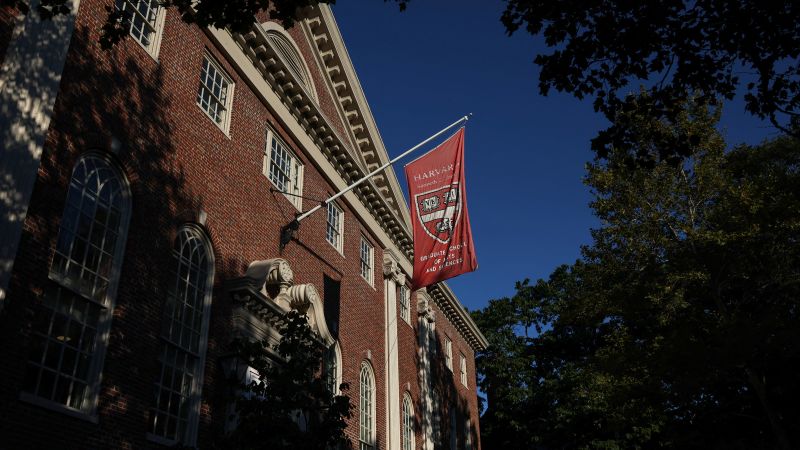
10Hero teacher who tackled Bend gunman speaks out as community prepares to reopen school - CNN | US
Read on cnn.com

headshot-1-20261101145328880.JPG?c=16x9&q=w_800,c_fill


A teacher hailed as a hero for her quick action to help stop the gunman who carried out the school shooting in Bend, Oregon, last month is speaking out about her experience as the community prepares to send its children back to the school.

“It all happened so fast, and I wish with everything in me that we had more time,” Cassidy Schutz, a certified learning specialist at Silver Rail Elementary, said in a statement Friday.

After the shooting, Bend Police Chief Mike Krantz described an unnamed teacher’s “heroic action” to stop the gunman who opened fire in a special needs classroom, killing three students and a teacher.

She threw her cellphone at the gunman and tackled him to try to get the gun away before a parent at the school fatally shot him, Krantz said.

Her quick action “almost certainly helped prevent more bloodshed,” the chief said.

More than a week after the tragedy, Schutz came forward to address the incident in a statement released by the Bend-La Pine school district.

A makeshift memorial lies in front of Silver Rail Elementary School on October 16, 2026, in Bend, Oregon.

“There are no words to describe the depth of sadness I am feeling following the events of October 15th,” Schutz said in the statement. “My thoughts are with those who were lost, their families, those who were hurt, and those who were there that day. My heart is with you.”

Another student and teacher were also injured during the attack. Schutz was uninjured, according to police.

Schutz emphasized the “horrific and heartbreaking tragedy” is more than just a story for those who are living it and requested privacy as she navigates the aftermath.

“The pain of this loss I will carry with me forever. There are no words for this unimaginable reality we are facing. My focus is on these families, our team, our school, and my own healing,” she said.

The father who helped stop the attack, Kaylub Giamanco, was carrying a legally secured .40-caliber pistol when he saw the gunman and followed him into the school.

In an interview with Oregon Public Broadcasting, Giamanco said he was grateful to Schutz – whose name he still did not know at the time – for her brave action in the moments before he shot the gunman.

“I would love to give her a hug because that’s a real true hero,” he said.

Bend-La Pine Schools Superintendent Steven Cook expressed gratitude for both Giamanco and Schutz after the shooting.

“I believe your actions saved lives,” Cook said.

Returning to the school

Now the community faces the daunting task of returning to normal life in a setting marred by inexplicable violence.

Community members grieve during a candlelight vigil at Drake Park on October 15, 2026, in Bend, Oregon.

While other schools in the Bend-La Pine district returned to learning the week following the shooting, Silver Rail Elementary remains closed through November 6, pending repairs to the areas impacted by the shooting.

“With an overwhelming 86.2% of families indicating a preference to return to Silver Rail Elementary, we plan to reopen Silver Rail for students and families who feel ready to return,” the district said in a statement last week.

A police officer was present at each school in the district the day they reopened, and a team of eight school resource officers will continue to rotate between the schools, Bend-La Pine Schools said.

A community meeting is planned for November 5, where school officials will take questions about the shooting, school safety and reopening plans.

11A religious reckoning may be looming for White evangelicals who support Trump - CNN | US
Read on cnn.com

gettyimages-1229720637.jpg?c=16x9&q=w_800,c_fill


“What profit is it for a man to gain the whole world but lose his soul?”

It is one of the most haunting questions posed by Jesus in the New Testament. Why, he asks his followers, should a person chase riches or power if it means losing their most precious possession when the day of reckoning comes?

As the midterm elections approach and a post-Trump America looms, some evangelicals and religious scholars are now considering a similar question: What will White evangelicals’ allegiance to President Trump cost them now that their day of reckoning is at hand?

Trump’s rise to power was the culmination of a religious movement that began in the early 1970s. White evangelical Christians have since become his most steadfast supporters. The vast majority of them voted three times for a man one White evangelical commentator recently called “arguably the most vulgar, most corrupt president in American history.”

What they received in return is now clear: unprecedented access to political power, the overturning of Roe v. Wade and the appointment of conservative Supreme Court justices who are dismantling the separation of church and state.

But what’s less clear is what kind of price they may pay for their allegiance once Trump is gone. As the President nears lame duck territory, that question becomes more urgent. Young Americans are already saying they’re less inclined to attend church because of Christian leaders’ support for Trump.

Other unintended consequences may soon follow. Moral reform movements often boomerang on their followers. Prohibition triggered an explosion of organized crime and a public health crisis. The sexual revolution of the 1960s fed the rise of the Religious Right. Black Lives Matter protests led to the War on Wokeness.

Reform movements trigger furious counterattacks because America is a deeply divided nation, says James A. Morone, a professor at Brown University and author of “Hellfire Nation: The Politics of Sin in American History.”

“If one side wins, it’s never permanent. If history is a guide, it’s very likely you’ll see some backlash to this,” Morone tells CNN, referring to the “religious right” movement that helped put Trump in the White House. “There are some indications that we are already seeing it.”

Morone is one of a handful of evangelicals and scholars who recently spoke to CNN about White evangelicals’ support of Trump. They identified four challenges that evangelicals will likely face in the final years of the Trump era and beyond.

They may face a loss of moral credibility

It’s an image that distills the unbreakable bond between Trump and many White evangelicals. The president is sitting at his desk in the Oval Office, eyes closed and head bowed, as a prayer circle of evangelical leaders surround him, beseeching God to watch over their holy warrior.

President Trump meets with members of the White House Faith Office in the Oval Office on March 5, 2026.

The photo illustrates the political power White evangelicals amassed under Trump. For over 40 years, evangelical pastors like Pat Robertson and Jerry Fallwell sought to reshape the culture and the courts to sway public opinion and change the legal system. Their goal: persuading Americans to “turn back to God.”

But some critics would say the image captures something else: hypocrisy. White evangelicals who support Trump have been accused of setting aside their faith to support a president whose rhetoric and personal conduct often contradict the teachings of Jesus.

To be clear, millions of White evangelicals lead lives of faith and service, and do not support Trump. But those who have stood by Trump won’t have the moral credibility to persuade people or shape public opinion, says John Fea, an evangelical and author of “In God We Trust: Was America Founded as a Christian Nation?”

“Evangelicals are going to see post-Trump that they’re not going to have any prophetic voice — they’re not going to be able to speak morally to the culture,” says Fea, a historian at Messiah College in Pennsylvania.

“How do you critique the next president if something goes wrong ethically when you’ve been in bed with Trump for 12 years?” he adds. “The evangelical movement … is now going to be associated with Trump’s politics. It’s going to take a generation or more to shake that stigma.”

But some White evangelicals reject the notion that their alliance with Trump has undermined their moral credibility.

The Rev. Lucas Miles, senior director of Turning Point USA Faith, has been one of the most vocal evangelical supporters of Trump.

“We elected presidents, not a savior,” he said in a statement shared with CNN. “Every man is fallen by nature, but that reality does not suspend our duty to seek the welfare of the country in which God has placed us.”

Miles said Trump has “advanced religious liberty protections, appointed the most pro-life Supreme Court majority in 50 years, and resisted efforts to impose gender ideology on children and institutions.” He also cited a recent dramatic rise in Bible sales as well as increasing church attendance by young people (a revival that has been disputed by some scholars).

“Looking ahead, the future of the evangelical community does not rest on any single political figure,” he said.

They may be displaced by a competing brand of Christianity

White evangelicals’ alliance with Trump could damage them in another way: They could be displaced by a competing brand of Christianity.

This may already be happening. It’s evident in the candidacy of one of the most talked-about Democrats in the midterms: James Talarico, the Texan running for the US Senate.

Talarico often cites Jesus to argue that health care is a human right and that the wealthy and corporations should pay more taxes. But he is also part of a Christian backlash that is poised to take advantage of labeling White evangelicals as hypocrites.

Texas State Rep. James Talarico sits for a portrait in the Austin Presbyterian Theological Seminary’s Shelton Chapel on March 20, 2023.

Democrats are having a “come to Jesus” moment. At least a dozen pastors, seminarians and former clergy are running as Democrats for federal and state offices, including Rob Sands, a Democrat running for governor of Iowa, and the Rev. Adam Hamilton, a Methodist pastor running for a US Senate seat in Kansas.

The brand of Christianity that Talarico and other Democrats are invoking is called the “Social Gospel,” and it has clashed with evangelical Christianity for more than a century.

The Social Gospel is a Christian movement that emerged in late 19th-century America. It was a response to the obscene levels of inequality in the Gilded Age. It turned Christianity into a weapon for economic and political reform. Its message: saving people from poverty was just as important as saving them from hell.

The Social Gospel shaped public policy during the Great Depression. It drove the dramatic expansion of the welfare state under the New Deal. It saturated the Rev. Martin Luther King Jr.’s sermons. It’s become more popular in recent years. When Talarico says, “the real fight in this country is not left versus right. It’s top versus bottom,” he’s singing from the Social Gospel hymnbook.

Many White evangelicals, though, sing a different tune. Evangelicals are loosely defined as Christians who often share a “born again” personal conversion, take the Bible literally or seriously, and believe they’re supposed to spread their faith to others.

Some of them care about social justice. White evangelical Christians fought for the abolition of slavery as well as women’s rights. But when it comes to fighting poverty, many have traditionally preached a trickle-down Christianity. People who are saved, they argue, will help the poor and transform society.

Both Christian perspectives — one shaped by the Social Gospel, and another by a focus on individual sin and salvation — have competed for public dominance throughout American history.

The Social Gospel’s message of economic justice resonated with many Americans when the Great Depression hammered the country in the 1930s. By that time, it had displaced the more fundamentalist strain of White evangelism and later served as the “implicit assumption in American policy making” of the 1970s, Morone wrote in “Hellfire.”

New York City residents line up for food outside a soup kitchen in 1935, during the Depression.

That displacement may happen again. The erosion of moral credibility among some White evangelical leaders has created a theological vacuum. Democratic politicians like Talarico are stepping into that public void. White evangelical Christian leaders haven’t traditionally offered any sustained critique of concentrations of wealth and corporate power. But the Social Gospel’s message of “top vs. bottom” resonates with many Americans.

“We’re in a period now where lot of the population is very upset about the economic inequality, and the most powerful answer to that is the Social Gospel movement,” Morone says. “It’s been a long dry spell for the Social Gospel, but the conditions are in place for its revival, and we’re really seeing it.

“If Talarico wins, everybody is going to be talking about it.”

They may learn a lesson from overturning Roe v. Wade

It was one of the greatest victories of any moral reform movement in American history. Cheers erupted across the country. People staged rallies and praised God during church services.

“The reign of tears is over,” the Rev. Billy Sunday, a popular evangelist, told a crowd of 10,000 in Norfolk, Virginia. “The slums will soon be only a memory.”

Americans were celebrating a political victory that day in 1920 that once seemed unattainable. They amended the Constitution with the passage of the 18th Amendment, which banned the making, selling, and moving of alcohol and created Prohibition.

Evangelical Christians were some of the temperance movement’s most active supporters. They thought their crusade was inspired by God and predicted it would lead to a moral revival.

And then they discovered something that happens to many moral reform movements:

Once reformers achieve their goal, they never recover. They often lose intensity and followers.

Like some White evangelicals today, proponents of Prohibition were also accused of being hypocrites. Many of the same politicians who voted for Prohibition were known to be persistent drinkers. Even President Warren G. Harding was rumored to keep bootleg liquor in the White House.

The moral revival they promised never arrived. Prohibition eventually collapsed in 1933 during the Great Depression, when the federal government needed the tax revenue that alcohol sales provided.

But the temperance movement fell apart for reasons apart from money and hypocrisy. Many of its supporters lost their fervor, while their opponents mobilized.

Anti-abortion demonstrators celebrate outside the US Supreme Court as the court rules in the Dobbs v. Women’s Health Organization abortion case overturning the landmark Roe v. Wade decision, on June 24, 2022, in Washington.

The same dynamic could afflict White evangelicals in the post-Trump era, Morone tells CNN.

“The moralists always promise that there will be a new era of love and justice in this world that never happens,” Morone says. “When they win their prize, it’s never as good as they promised it was going to be. You finally overturn Roe v. Wade, and abortions don’t even go down. People who want abortions are still getting them.”

Some of that reaction is already evident. The overturning of Roe in 2022 didn’t settle the abortion issue. Abortions increased in the US during the first two years after the Supreme Court reversed Roe and made abortion a state issue (although they decreased in 2025). In recent years, anti-abortion groups have lost most state ballot measures. Most Americans continue to say that abortion should be legal in most cases.

“It’s like the dog finally caught the bus — evangelicals don’t know what to do,” says Fea, the evangelical historian. “Coming out of the Trump administration, they’re going to have to come to grips with the fact that overturning Roe v. Wade was not the answer. Maybe they’re going to realize that if you really want to reduce the number of abortions in the United States, you may have to support candidates that have social programs that help the poor, who are having the significant number of abortions.”

They could pay the ‘ultimate cost’

Robert P. Jones isn’t easily surprised when it comes to White evangelicals.

He grew up in the Deep South attending White churches. He joined evangelical youth groups, Bible studies and prayer services. He graduated from an evangelical seminary before becoming the founder and CEO of the Public Religion Research Institute (PRRI), an organization that studies religion and politics.

For years, he’s parsed White evangelical attitudes through PRRI’s widely distributed polls. But Jones says he was puzzled by responses to recent surveys that found most White evangelicals favored militarized encampments for undocumented immigrants and agreed with Trump’s charge that immigrants are “poisoning the blood of our country.”

Federal law enforcement agents confront demonstrators protesting outside of an immigrant processing center on September 27, 2025, in Broadview, Illinois. The demonstrators were protesting a recent surge in ICE apprehensions in the Chicago area, part of a push by the Trump administration dubbed Operation Midway Blitz.

“It was stunning, especially for me — I still have plenty of friends in that world,” says Jones, author of “Backslide: Reclaiming a Faith and a Nation After the Christian Turn Against Democracy.”

He sighs before adding, “I’ve come to the conclusion that it is nearly impossible for me to … (cite) a policy that was too cruel for White evangelicals to support.”

A PRRI survey this month found that White evangelicals are the only major religious group in America that rejects the belief that empathy “is a foundational moral value for a healthy society.”

Jones compares many White evangelicals who support Trump to the Christians in Germany who rationalized their support for the Nazi Party. In his new book, Jones writes that most German Christians “redrew their moral bearings to align more comfortable with Nazi ideology.”

“Today we are seeing a similar degradation of our moral faculties,” Jones writes. “Like the Germans, Trump’s white Christian supporters have relieved themselves of moral discomfort not by demanding a more ethical politics but by continually tailoring their theological convictions to fit Trump’s demands.”

Jones believes many evangelicals who support Trump are now facing their own “moment of reckoning.” He describes this dynamic as a form of spiritual debasement — adding that White evangelicals’ moral faculties are “essentially broken.”

“That’s going to be the ultimate cost of white evangelicals who followed Trump to the end of this authoritarian road,” Jones tells CNN. “They will not be able to tell the truth, even if they wanted to, after embracing the lies for so many years.”

There are signs that some White evangelicals are having second thoughts about Trump. Although evangelicals remain his strongest supporters, a Pew Research Center poll in January found they view Trump less favorably than in previous years.

Empty pews inside a Catholic church in the Brooklyn borough of New York City.

But one evangelical leader says he doesn’t believe a large number of White evangelicals will regret their support of Trump.

“It’s not about personality, it’s about policies,” says the Rev. Samuel Rodriguez, president of the National Hispanic Christian Leadership Conference, citing Trump’s pro-life stance and his support of evangelicals’ religious liberty.

Most evangelicals know that the Bible employs morally flawed leaders like King David for a higher purpose, Rodriguez says.

White evangelicals, and their Latino counterparts, will continue to ask the same question in the future when considering supporting a political leader, says Rodriguez, author of “Goliath Never Wins: 5 Rock-Solid Strategies for Slaying Your Giants.”

“Who do we support that will undergird our Judeo-Christian system?” he asks. “For evangelicals, it’s simple. The world is divided between your Christian value system and everything else: chaos, anarchy, socialism, Marxism — whatever it may be. Whatever policy will undergird a Judeo-Christian worldview, that’s the one you’re going to support. Whatever president, or whatever candidate.”

Jones also doesn’t envision widespread remorse from White evangelicals who supported Trump, but for a different reason.

“That kind of repentance often comes from a kind of brokenness,” he says. “Would White Christians had ever repented of slavery if the Confederates had won the Civil War? I doubt it.”

In the months and years ahead, White evangelical leaders will continue to speak out on the big issues of the day. They may continue to urge America to turn back to God. They may even cite scripture in demanding a politician resign over some sexual impropriety.

But many people will accuse them of being hypocrites and tune them out. Their greatest victories may be undone because political power is temporary, while moral credibility is more durable.

If they face that religious reckoning, those who went all in on Trump would have to decide if it was worth it. They may discover the hard wisdom of the New Testament scripture:

“You reap what you sow.”

John Blake is a CNN senior writer and author of the award-winning memoir, “More Than I Imagined: What a Black Man Discovered About the White Mother He Never Knew.”

12Federal officials investigate suspected arson at beleaguered police department in Mississippi - CNN | US
Read on cnn.com

ap26304740530159.jpg?c=16x9&q=w_800,c_fill


A suspected arson Saturday morning damaged the building of a beleaguered police department in Mississippi that has drawn outrage from the community in recent months after an officer shot and killed a 1-year-old, authorities said.

It was unclear what caused the fire at the headquarters of the Senatobia Police Department. The U.S. Bureau of Alcohol, Tobacco, Firearms and Explosives and local agencies are investigating.

The Associated Press has reached out to the fire department, police department, and the Tate County Sheriff’s Office for comment.

Firefighters were dispatched to the city’s police department at 4:58 a.m. to respond to smoke in the building, the Senatobia Fire Department said in a statement, and crews were able to quickly knock out the fire. There were no details on the damage.

The Senatobia Police Department ignited anger in the community of 8,000 after an officer fired into a vehicle and killed 1-year-old Kohen Wiley in June while investigating a shoplifting call at a Walmart.

Wiley, who is Black, was in the vehicle with his mother, who was unharmed, and her friend, who was seriously injured. The two women denied having stolen anything, and no charges have been filed against them.

In September, the police chief was fired after reporting by The New York Times, Mississippi Today and Verite News alleged that he used racist slurs in private text messages. Earlier this month, the officer involved in the shooting resigned, though he was cleared of criminal wrongdoing by the Mississippi Attorney General’s office after its probe concluded his use of force had been justified.

Senatobia is about 40 miles south of Memphis.

13Flock was founded in Atlanta. Thousands of cameras later, the company is getting pushback in its hometown - CNN | US
Read on cnn.com

gettyimages-2291172825.jpg?c=16x9&q=w_800,c_fill


When Alex Wittlin makes the 6-mile drive home every day from his workplace near Atlanta, 22 eyes follow him.

On May 3, something else was following him: police cars with their sirens on.

Spotting the lights less than a mile from his home, Wittlin turned onto a side street and pulled his gleaming red Pontiac Firebird over. Then the guns came out.

“Hands up!” an officer is heard yelling in body camera video Wittlin later obtained from the suburban Dunwoody Police Department. After following orders to walk backward and drop to his knees, he was placed in handcuffs and questioned by officers from Dunwoody and the neighboring community of Doraville.

“They asked me why was I beating my wife. I was like, ‘I don’t have a wife,’” Wittlin told CNN.

Wittlin, a 26-year-old broadcast television technician, watched quietly as two officers fist-bumped and another looked inside his wallet. At that point, the tense demeanor suddenly changed.

“It’s been a big misunderstanding,” the Doraville officer who saw his identification said.

Police actually had been looking for a different man who they said was accused of domestic violence in Doraville, was possibly armed with a gun, and was last seen driving a car similar to Wittlin’s. But it was Wittlin’s car – not the suspect’s – that was spotted on a Flock license-plate-reading camera, police would say in incident reports. More than 20 license plate readers were on his route, Wittlin said he discovered from a crowdsourcing website.

Police said they stopped Alex Wittlin after his car, which is similar to that of a suspect they sought, was spotted by a Flock camera. Wittlin was released when police realized he wasn't the suspect.

Wittlin was released after the Doraville officer confirmed Wittlin wasn’t the suspect, Doraville police told CNN.

Wittlin said he’d been aware Flock cameras existed, but that frightening afternoon made him realize just how much he was being watched.

“I don’t want to say it’s PTSD, but it definitely doesn’t make me feel happier about these cameras being around, seeing them everywhere I go,” Wittlin said.

Less than 20 miles from where Wittlin was stopped, another Atlanta-area resident is watching a growing backlash against that surveillance technology very closely. He is the CEO of Flock Safety, the Atlanta-based company that is the country’s most prominent maker of license plate readers and producer of the camera that spotted Wittlin’s car.

“I started Flock because I believe that every single person that lives in Atlanta deserves the right to be safe,” Garrett Langley told CNN in an interview last month.

But Langley’s affection for his hometown hasn’t kept his company from drawing, even in Atlanta, the kinds of criticism over issues of privacy, mistakes and misuse that have been simmering nationwide. In Flock’s home area, the business is being increasingly met by opposition expressed in town halls and city council meetings. And in September, the mayor of Atlanta announced plans for new regulations governing the city’s extensive camera networks – including Flock cameras.

“I have the same concerns as everyone, which is I want to be safe, and I want to have privacy,” Langley said. “I want both.”

Company started by college classmates

Automated license plate readers, or ALPRs, scan tag numbers and vehicle descriptions and put them in a searchable database that is frequently shared by police agencies. Users include not only law enforcement, but also homeowners associations and businesses – and advocates say the cameras can deter criminals and help track down suspects and missing people.

But concerns about mistaken identity, the right to privacy and misuse by police officers have exploded nationwide – including in metropolitan Atlanta, where Flock was created and still keeps its headquarters – in response to the cameras’ increasing use.

Garrett Langley, Flock CEO and co-founder, speaks during a TechCrunch technology and startup conference on October 14 in San Francisco.

Flock Safety started after Langley was frustrated with car break-ins in his neighborhood, according to a profile from the Georgia Institute of Technology, where he graduated with a degree in electrical engineering in 2009. He founded the company in 2017 with two other Georgia Tech alumni, using off-the-shelf parts and wireless tech to make a license plate reader that was less expensive than what was already on the market.

Langley says his connection to Atlanta is still critical.

“I live in Atlanta, right?” he told CNN. “I’m a citizen first and foremost. I’m a father second. And then I’m the CEO of Flock third.”

But the company’s hometown status hasn’t spared it from the current backlash, both political and physical, with automated license plate readers becoming targets for vandalism.

On a recent day at a crosswalk to the entrance of Georgia Tech’s midtown Atlanta campus, where Langley learned the skills that made Flock possible, students walking to class ignored some trashed electronics lying on the sidewalk.

A solar panel that had been cut from its perch on a utility pole lay on the ground, its glass smashed. Just above it, the powerless Flock camera it once powered still precariously hung on, despite one of the metal straps holding it up having been snapped in half.

A damaged solar panel from a Flock system rests on the ground across from Georgia Tech's campus in Atlanta on September 17. The camera it once powered, not seen here, was still on the utility pole above.

Like many communities, Atlanta’s government doesn’t release the exact number of license plate readers it has or where they are. Although some agencies give more details through “transparency portals” operated by Flock, Atlanta does not participate in that service, and the city’s police did not respond to a question as to why it doesn’t.

But DeFlock, a crowdsourcing website that directs people to plot the cameras on a map after finding them, estimates the number in a 29-county area around Atlanta is more than 6,000 – both Flock and non-Flock ALPRs. Flock Safety declined to give a number for the Atlanta area, saying it is up to each of its clients to decide how much information about their Flock cameras they want to make public.

Flock says it operates more than 120,000 ALPRs across 49 states.

Atlanta leaders tighten rules

Public concerns about the technology got the attention of politicians in Flock’s hometown this year. Atlanta’s mayor recently asked city police to audit their ALPR searches – a process that flagged some possibly questionable uses that are currently under investigation.

The Atlanta police audit found only 0.07% of all their Flock searches from January to early September were questionable, Atlanta police said. But that still amounts to 79 inquiries now being double-checked for a possible violation of policy.

By September, Atlanta police revised their ALPR policy, including by clarifying circumstances when officers can search the Flock database, defining prohibited searches and potential criminal and administrative penalties for misuse, and mandating monthly compliance audits. A city council panel is now reviewing a citywide ALPR policy proposal, including restrictions on who can access the database.

“Technology that gives government extraordinary capabilities must come with extraordinary accountability,” Atlanta Mayor Andre Dickens said in September while announcing the changes and proposals.

While Atlanta’s rule-tightening is welcomed by ALPR critics, many say it should have happened before thousands of eyes were already watching them.

“My parents grew up in mainland China, where surveillance technologies span every corner of the country, and citizens aren’t provided a say in their implementations,” Rachel Jiang, a student at Emory University, told the Atlanta City Council in September. “Growing up with this awareness has taught me the importance of laying down fundamental democratic safeguards around technology.”

In Dunwoody, just northeast of Atlanta, resident Stephen Upchurch is speaking out against the cameras, saying new regulations aren’t enough to protect privacy.

“In my opinion, the best course of action would be to cancel the contracts, remove the hardware that informs the software that’s so scary, and then we can all have a conversation about whether this type of thing is right for our communities,” Upchurch told CNN.

A protest against Flock cameras is held in Atlanta on April 17.

Critics have been literally flocking to speak publicly against the cameras, as city officials and police departments have held town halls in all of metro Atlanta’s four largest counties since August.

As the company navigates fierce critics and a wave of communities outside the Atlanta area ending their contracts, Flock has been tightening some standards on its own, nationwide.

Flock is reducing its standard data retention window from 30 days to seven, with the caveat that data can be retained longer if police attach it to a case number. The company by January 1 also will require users to accept new guardrails, including a requirement that police enter a case number to justify each search – though that function can be overridden in the case of emergencies.

Still, Flock’s co-founder says Flock is ready to accept more regulations like the city of Atlanta proposes.

“I think (Dickens) is taking a step in the right direction,” Langley said. “We need to have more accountability in the technology that police uses.”

While Flock Safety has become the most prominent provider of the technology – and the most prominent target of critics – Langley insists his company isn’t the problem, especially in a city heavily watched by cameras other than ALPRs. A 2024 analysis by the cyber security firm Comparitech said that among big US cities, Atlanta was the most surveilled per capita, with one camera accessible by law enforcement for roughly eight people. That counted not just ALPRs but standard surveillance cameras, body cameras and other devices.

“This isn’t about Flock,” Langley said. “This is about every piece of technology law enforcement uses in Atlanta, and I think that’s the exact right approach.”

Some officers are accused of illegally tracking citizens’ movements

Since 2021, there have been at least 85 cases in the United States – including 21 in Georgia – where law enforcement officers were accused of misusing an ALPR system to stalk people including former or current romantic interests, according to a database from the Institute for Justice, a nonprofit public interest law firm.

For example, a Milwaukee police officer resigned this year after he was accused of secretly using Flock to learn the location of his romantic partner 124 times and that partner’s ex 55 times, according to court records. He pleaded guilty to attempted misconduct in public office as part of a deal.

A Flock camera is seen in Jefferson, Georgia, on July 9.

Stalking allegations are not the sole misuse cases that have arisen from ALPR systems. The Institute for Justice documents scores of cases in which officers are accused of misusing ALPRs in ways besides stalking, including officers giving search results to unauthorized people. Errors involving mistaken identity cases like Wittlin’s have also put Flock under fire.

Langley says he’s been disturbed by the misuse of his company’s services but believes it is not a problem confined to Flock cameras.

“Whether it’s legally criminal or clearly the intent is to do something unethical, it’s painful,” Langley said. “It’s one of the reasons why I’m proud of the tools we’re building, because I don’t believe if someone is using Flock, that’s the only thing they’re abusing.”

Flock says it is addressing data security issues through the new auditing and accountability controls it is implementing by the end of the year.

A citizen is watching the watchmen

While the Atlanta area has Flock defenders especially in law enforcement, communities near the company’s headquarters also have some of its most ardent and determined critics.

In Dunwoody, Jason Hunyar has been one of the most determined activists trying to find out how Flock cameras are being used in the city, filing a flurry of open records requests.

“I just had this super unnerving feeling and wanted to find out more about what was going on,” Hunyar told CNN about filing his first request last December.

By poring through logs, he determined that Flock employees with no law enforcement responsibilities had accessed some of the city’s cameras, including ones at the community center where his baby attended daycare that were tied into the city’s monitoring network.

Dunwoody resident Jason Hunyar speaks to Dunwoody’s City Council on February 23.

Flock employees did so for testing and demonstration – including showing the system to another law enforcement agency – as allowed in an agreement with the city, according to a Flock email that Hunyar also found in the record searches, he said.

“If me and my wife and my 3-month-old son haven’t done anything wrong, we don’t need to be tracked and recorded by the government,” he said.

Texts that Hunyar saw through his records requests also indicated Langley had a private meeting with Dunwoody Mayor Lynn Deutsch this year, he said.

In an email, Deutsch told CNN the spring meeting “focused on access to Dunwoody cameras by executives for sales demos, which was stopped.”

“Since then, city leadership and police command staff have worked with Flock on additional guardrails,” Deutsch wrote. Deutsch declined CNN’s request for an interview regarding the city’s discussions and previous agreement with Flock.

A Flock spokesperson confirmed the company agreed to stop accessing the city’s data for its own promotional purposes, although Flock still features the community prominently on its website.

In response to the community center footage discovered by Hunyar, the company said: “Although the camera was only viewed during a routine demo, we understand that this is a sensitive location for many. We have therefore determined that employees will be trained to only conduct demos in more public locations, like retail parking lots.”

Police say the technology is helping deter crime

Although the Atlanta area is seeing an increasing hostility to license plate readers, it is also home to one of the technology’s most prominent success stories. In 2020, 1-year-old Mateo Mantufar-Barrera was abducted at gunpoint by kidnappers who jumped out of a passing vehicle near his home in Chamblee, a city about 15 miles northeast of downtown Atlanta. He was found later that same day near the Alabama state line, unharmed but dressed as a girl to obscure his appearance, after authorities tracked a vehicle matching a description given by Mateo’s mother.

“Luckily through license plate readers, they were able to stop those two very dangerous criminals and recovered this child who had been abducted from his mother while she was walking him in a stroller,” Chamblee Police Chief Michael Dieppa told CNN.

A Chamblee police officer watches surveillance video feeds from his department's Real Time Crime Center in March in Chamblee, Georgia.

Chamblee has doubled down on surveillance technology, opening a Real Time Crime Center earlier this year to monitor cameras and share information. Officers access the database of license plate readers only when they are looking for something specific as part of an investigation, and supervisors regularly check those searches, the police chief said.

“Every single one of our Flock uses … has to be audited by a supervisor at the rank of lieutenant or higher every week,” Dieppa said.

But even with safeguards, abuse is possible, and Dieppa says his own department fired an officer accused of misusing the Flock system, along with other violations of policy, two years ago.

Dieppa says he hopes that the increasing stories of officers being disciplined or fired will build trust – that people will see police are taking privacy seriously.

“I think that’s going to rein in some of the misuse that’s out there,” he said. “Hopefully not too late so it doesn’t totally kill the public’s trust that we’ve tried to build.”

Some are skeptical about guardrails and whether cameras are effective

Though Flock is tightening some use standards on its own, for some civil rights advocates, the changes are too little, too late.

Recent Flock changes and guardrails are “retreads of easily circumventable security measures that had previously failed,” Chad Marlow, senior policy counsel for the American Civil Liberties Union, said in testimony to Congress on September 23.

Marlow’s testimony also challenged the efficacy of Flock cameras and argued that the only situations that they have been studied and found to deter crime is in relation to car thefts and property crimes.

One of the most recent studies on the effectiveness of automated license plate readers, a working paper published in August by researchers at the University of South Carolina, found that communities they studied which deployed the cameras saw an 11% drop in auto theft but no significant change in other property crime.

“Research does not show that surveillance alone, cameras alone, deter the impulsive and emotionally charged behaviors behind violent crime,” said Thaddeus Johnson, a former Memphis law enforcement officer and senior fellow at the Council on Criminal Justice.

A Flock camera mounted on a pole is seen in University City, Missouri, on September 16.

The desire for tighter rules is starting to get bipartisan backing in Congress, where Democratic Sen. Raphael Warnock of Georgia and Republican Sen. Katie Britt of Alabama asked the Justice Department to create its own nationwide guidelines on preventing police abuse of license plate readers, saying Americans aren’t satisfied with the current lack of federal guidance.

“Yes, they want to be safe from crime, but they also want to be safe from stalking and harassment,” Warnock told reporters in September. “They shouldn’t have to choose between one of the other.”

Flock’s CEO says he’s open to nationwide rules but thinks there may not be a single set of regulations that works around the country.

“I’ve thought a lot about this, and my guess is that it will wind up being a state-by-state regulation,” Langley said.

Currently under Georgia law, misusing license plate reader data is only an aggravated misdemeanor offense.

Even as they tighten regulations, Atlanta officials have made clear that wiping out Flock in its hometown is not part of their plans.

“Cameras, ALPRs, and other cutting-edge technologies have proven to be invaluable in the Atlanta Police Department’s efforts to prevent and solve crimes,” the Atlanta Police Foundation told CNN.

As conversations continue over how to reform the use of license plate readers, critics find that one of the most difficult things to do is get away from them entirely. After his own experience being tracked on Flock cameras, Wittlin said he used DeFlock, hoping he could cut down on the number of license plate readers he passes every day.

“There is a route with only one (Flock camera), but it would turn my 15-minute trip into a 30-or 40-minute trip,” he said.

As for a path that would let him avoid the electronic eyes altogether? He couldn’t find a single one.

14Pregnant woman killed, 6 others wounded in targeted shooting at California Spirit Halloween store, police say - CNN | US
Read on cnn.com

still-23121381-64782-949-still.jpg?c=16x9&q=w_800,c_fill


One person was killed and six others injured after a shooting inside a shopping mall at a Spirit Halloween store in Fairfield, California, on Friday night, police said.

Fairfield Police identified the person killed as Constance Hages, 31, whom family members said was pregnant at the time of her death.

Three other victims — a 16-year-old male, a 19-year-old male and a 32-year-old male — remained in critical condition as of Saturday afternoon. A 23-year-old man was also hospitalized in stable condition, while two additional victims who suffered gunshot wounds had been treated and released, police said.

Fairfield Police Chief Dan Marshall told reporters late Friday that the shooting happened at the Solano Town Center shopping mall, around 45 miles northeast of San Francisco.

Based on preliminary information, the shooting “is believed to have stemmed from a targeted incident involving one suspect” inside the store, the Fairfield Police Department said.

Detectives are actively investigating the case and reviewing evidence “to identify the individual responsible,” police said.

The FBI’s Sacramento field office said it had deployed its evidence response team to assist Fairfield police.

Police respond to the scene of a shooting at a Spirit Halloween in Fairfield, California, on Friday, October 30.

“Our thoughts and prayers are with the families of the victims,” Spirit Halloween said. “We are fully cooperating with local law enforcement as they investigate the circumstances surrounding this event.”

The incident took place on the eve of Halloween, when many shoppers were likely making last-minute preparations for the holiday. Police said officers responded to the shooting at 8:30 p.m. local time.

A man at the scene who spoke with CNN affiliate KCRA said his wife was by the store’s wig section when shots rang out and she ran out the emergency exit.

“She said she heard five big bangs … it was loud,” David Bernal told KCRA. “She’s at home right now and still in shock.”

“She just told me she heard some shots and people running, yelling and crying,” Bernal said.

Solano Town Center boasts more than 130 shops and restaurants, according to its website. The shopping center canceled its scheduled “Mall-O-Ween!” event for Saturday evening, which would have included “mall-wide trick-or treating” for children. Solano Town Center will continue to be open during regular business hours on Halloween, it said.

According to Spirit Halloween, the store will remain closed “out of respect for those impacted and to support the ongoing investigation.”

By Gun Violence Archive’s count, there have been at least 388 mass shootings nationwide so far this year.

This story has been updated with additional information.

CNN’s Chimaine Pouteau and Sharif Paget contributed to this report.

15Mamdani says Trump agrees to grant visa to mother of teen from Ghana killed in Bronx shooting - CNN | US
Read on cnn.com

gettyimages-2300009546-20261031223357100.jpg?c=16x9&q=w_800,c_fill


New York (AP) — New York City Mayor Zohran Mamdani said on Saturday in a social media post that after talking to President Donald Trump, he has agreed to grant a visa to the mother of a 15-year-old immigrant from Ghana who was shot to death earlier this week.

The White House did not immediately respond to an email from The Associated Press confirming the administration would be issuing the visa.

The teen, Javits Frimpong, was on his way to school in a Bronx neighborhood shortly before 9:30 a.m. Thursday when he was shot in the abdomen, New York City police said. He was pronounced dead at a hospital later that day. No arrests have yet been made, and the killing remains under investigation.

“The murder of a child is a pain no parent should have to endure, let alone from thousands of miles away,” Mamdani wrote Saturday on X. “Javits Frimpong’s mother deserves to say goodbye to her son in person. I just got off the phone with President Trump and he has agreed to grant her visa immediately.”

“All of New York City is mourning this tragedy,” he said.

Frimpong arrived in the Bronx from Ghana a year ago to be with his father and begin a new life in the United States, according to US Rep. Ritchie Torres, a Democrat from the Bronx.

Frimpong was on his way to school when he was shot, Torres wrote on X.

“Our entire borough is mourning a young man who should have had his whole future ahead of him,” Torres said. “Every child in the Bronx deserves to walk to school without fearing for their life, and no parent should ever have to endure what Javits’s father, Thomas, is enduring now.”

Thomas Frimpong described his son as a quiet teen who spent much of his time on his cellphone. He told reporters that several days before the shooting he learned his son was being bullied at school.

“It was the principal who told me,” Thomas Frimpong said. “He said two guys are disturbing my son so he has suspended the two guys. My son is at school. He’s innocent, so I call him. I talk with my son, he said ‘dad, I’m OK.’ ”

Foreign Minister Sam Okudzeto Ablakwa said in a post on X that Ghanaian officials in New York are coordinating with local authorities and that the foreign ministry “will work tirelessly with U.S. authorities to ensure justice is secured.”

Trump has clamped down on immigration during his second term, including suspending the processing of visas from 75 countries.

16Michigan man charged with threatening to kill FBI Director Kash Patel - CNN | US
Read on cnn.com

gettyimages-2295417428.jpg?c=16x9&q=w_800,c_fill


A Michigan man was arrested Friday and charged with making threats against FBI Director Kash Patel, federal prosecutors announced.

Anthony Daniel Palazzolo, 42, of Chesterfield Township, is accused of writing Facebook messages threatening to kill Patel and an associate earlier in October, according to the office of US Attorney Jerome F. Gorgon Jr. of the Eastern District of Michigan. Palazzolo is charged with interstate communications involving threats, court records show.

It is unclear who Patel’s associate is, though prosecutors included what they said were screenshots of redacted messages sent by Palazzolo, who refers to himself as Baby Bird in the message. Palazzolo is accused of messaging the unidentified Patel associate on October 8, “i put a hit on you” and Patel is “a dead mf too.”

Federal investigators used his Facebook and TikTok accounts to trace him to a residential address in Chesterfield Township, located about 30 miles north of Detroit, according to the criminal complaint filed by FBI Special Agent Brian Koczenasz. FBI agents went to his home on October 9 to interview him.

The complaint said Palazzolo wanted to talk about his belief the government was violating his property rights. He admitted to sending the message to the associate and Patel and apologized, saying he had no intent to harm anyone, the complaint stated. He also told FBI agents he had contacted several federal law enforcement agencies to complain about what he saw as an insufficient response to his concerns, the complaint said.

Before leaving, one FBI Task Force officer provided Palazzolo with his cellphone number and government email address, the complaint said. On October 12, Palazzolo emailed the officer, as well as a district court in Texas, the Secret Service and the Supreme Court with threats of sexual violence, according to the complaint. The next day, he called the officer, leaving two voicemails threatening to “use deadly force” on federal officials, the complaint said.

The FBI referred questions about the case to the US Attorney’s Office, which did not immediately respond to a request for comment. The defense attorney appointed to represent Palazzolo did not immediately respond to a request for comment.

Palazzolo appeared in federal court in Michigan on Friday before Magistrate Judge David R. Grand, who ordered Palazzolo be temporarily detained. Palazzolo has a detention hearing set for Monday, court records show. Palazzolo did not enter a plea.

A Massachusetts man was arrested and charged in March with sending a threatening email to Patel’s fiancee, Alexis Wilkins, the previous month. Like Palazzolo, defendant Alden Welch Ruml faces a charge of interstate communications involving threats, a felony. He pleaded not guilty and has a jury trial set for February, court records show.

17This retired professor was arrested for blocking a delivery robot. She says she’ll do it again - CNN | US
Read on cnn.com

ap26293555412453.jpg?c=16x9&q=w_800,c_fill


October 14 wasn’t the first time Carolyn Marvin put herself in front of an autonomous delivery robot. It had become, since the wheeled little food vessels were unleashed upon certain parts of Philadelphia, a habit for the 78-year-old: standing in front of one of the robots when she encountered it rolling on the sidewalk, delaying it for a few minutes from delivering its precious lunchtime cargo.

But it was the first time that Marvin, a retired University of Pennsylvania communications professor, was arrested for doing it — in a case that she says raises profound questions about public space and the legal protections extended to robots in our increasingly tech-dominated world.

“I was under the impression that I had more rights than the robot did,” Marvin said, laughing.

Uber Eats launched its self-driving robot delivery fleet in Philly in March, making it the fourth city where meals can be delivered via robot. Not everyone welcomed the heart-eyed little machines: In Philadelphia and elsewhere, videos show people sitting on, vandalizing or kicking the robots.

Marvin says the impact of her one-woman protest is limited. “I have a life, so I don’t have tons of time to stand in front of robots,” she said. If she comes across a robot, and it’s “convenient and possible” for her, she might spend 10 or 15 minutes blocking it, moving as it does, to delay it on its journey.

The only harm that comes from her hobby is that an office worker’s lunchtime bowl “might be delayed for about 15 minutes at the most,” she said.

She views her actions as a symbolic protest against the problems posed by delivery robots: the displacement of low-income delivery workers; the physical hazard the robots pose on the sidewalk; and the privacy concerns posed by the robots’ embedded cameras.

“I also think that I have a First Amendment right to protest the abuses of corporations in public space, in the same public space that the robots are occupying,” she said. In the past, she had protested in favor of civil rights, abortion rights, Black Lives Matters, and for ending the Gulf and Vietnam wars. She views her robot mission as an extension of the same impulse: “It’s what we need to do to make sure the government hears the will of the people.”

Stopping in front of the robots, Marvin said, led to productive conversations with other passersby who asked what she was doing. Most were supportive, or curious. She never considered that she might be arrested, since, as she said, “I wasn’t impeding any persons. I was impeding a machine.”

That’s until the 14th. On the way home from getting her flu shot, Marvin, a jar of enchilada sauce in one hand and chicken biryani takeout in the other, encountered one of the robots and stopped in front of it, per usual. It was in a busy part of the city, and a larger-than-normal crowd began to gather around her. Some were supportive; some were critical. She suspects, she said, that a member of the crowd eventually called the police, who handcuffed her and put her in the back of a squad car, giving her a citation for disorderly conduct.

Marvin said one of her friends put it thusly: “Well, you got a disorderly conduct charge for impeding capitalism.”

Philadelphia police said that they had responded to a report of “criminal mischief involving a delivery robot.” When they arrived, “officers encountered a female who was refusing to allow a delivery robot to pass,” they wrote in an email. “Police issued multiple commands directing the female to move; however, she refused to comply.”

In the aftermath of her arrest, Marvin has found out more about the legal infrastructure that protects robots. In 2020, the Pennsylvania legislature passed a law that classifies autonomous delivery robots — what the law calls “personal delivery devices” — as pedestrians, not vehicles. Democrats, along with labor unions and accessibility advocates, largely opposed the law on the basis that legalizing delivery robots could kill jobs and endanger children and pedestrians; Republicans touted it as an exciting technological advancement.

The law means that a vehicle must yield to a delivery robot on crosswalks, just as it would to a person, said John Mattiacci, a Philadelphia personal injury attorney. Still, in theory humans are at the top of the hierarchy: “Personal delivery devices must yield to other pedestrians and pedalcyclists in a pedestrian area,” he said. Uber Eats didn’t respond to a request for comment.

Marvin sees the proliferation of delivery robots — and the legal protections of them — as another case of machinery and technology infiltrating everyday life. “There’s a way in which we’ve surrendered the streets to cars long ago, and I don’t think we should surrender the sidewalks to machines,” she said.

“Machines in general encroach on our lives,” she went on. “Public space is the most visible place where they’re encroaching on our lives, but they’re going right up the ladder, and lots of people are interested in making that happen.”

Most of the technology people encounter day to day is less tangible: the overwhelming adoption of AI, the mysterious social media algorithms that determine the images and narratives the public consumes. The robots, on the other hand, are a clear and visible symbol of the tech takeover, an easy target for anti-tech rage. Her protest, she said, “makes it visible to people and presents the issue in a way that it might not otherwise be presented.” Asked if she plans to get back to blocking robots post-arrest, Marvin was succinct: “Oh yeah.” But now she’ll keep an eye out for the cops.

183 dead after 2 helicopters collide midair near Oregon airport, sheriff says - CNN | US
Read on cnn.com

2026-10-29-ycso-mcminnville.JPG?c=16x9&q=w_800,c_fill


Investigators were combing through debris scattered across a field in northwest Oregon Friday after two helicopters collided midair, killing three people and forcing the closure of a nearby highway, officials said.

Oregon pilot Tyler Sturdevant, 38, died in the crash, along with Texas flight instructor Maddie Aasbo, 22, and 31-year-old student pilot Christopher Joughin from the United Kingdom, Yamhill County Sheriff Sam Elliott said during a news conference. Aasbo and Joughin were in one helicopter and Sturdevant was the sole occupant of the other, the sheriff said.

The aircraft crashed to the ground in a private farm field near McMinnville Municipal Airport, officials said, with a red helicopter left crumpled in pieces and a green helicopter lying upside down. McMinnville is about 40 miles southwest of Portland.

A one-mile stretch of nearby Highway 233 remained closed Friday due to the crash, according to the Oregon Department of Transportation, giving no estimate for reopening.

A green helicopter was seen lying upside down in a field after a deadly helicopter collision in McMinnville, Oregon, on Thursday.

Leo Rodriguez said he called 911 after witnessing the crash from his family vineyard.

“All of a sudden I hear this big boom and this metal breaking, and I look up and just see these two helicopters just collided in mid-air,” he told CNN affiliate KPTV.

“It took me a while for my brain to figure out what I was seeing. You don’t see this every day. They twisted and fell to the ground.”

The sheriff’s office asked the public to avoid the area and have “patience as we respond to this critical incident.”

The investigation into the crash, which took place around 2:10 p.m. local time, is being led by the National Transportation Safety Board with help from the FAA and the helicopter airframe and engine manufacturers, the federal agency said during a Friday news conference.

NTSB investigators arrived at the scene Friday morning and were in the process of documenting the crash site.

“We expect to be completed with the on-scene and recovery later this evening,” NTSB investigator Grant Mills said Friday. “Tomorrow, we will be conducting interviews with witnesses and the operators of the aircraft.”

The two aircraft involved were a Robinson R-22, which was the instructional flight, and an Airbus AS350, which was on a maintenance flight, the NTSB said.

Investigators were working Friday to retrieve equipment containing flight instrument data from the Airbus AS350, Mills said. The agency was still determining whether the Robinson R-22 had similar equipment.

Law enforcement responds to a deadly helicopter collision near McMinnville Municipal Airport on Thursday.

One of the helicopters was operated by Jerry Trimble Helicopters, a helicopter flight training school and rental service for private flights, the company said in a statement.

“Jerry Trimble Helicopters is deeply saddened to confirm that one of our aircraft was involved in an aviation incident this afternoon,” the company said. “Our hearts and thoughts are with the individuals involved, their families, and everyone affected by this event.”

The company added it is cooperating with authorities in the investigation.

This story has been updated with additional information.

19Christa Pike makes first public comments since botched execution: ‘Healing is not the same as being okay’ - CNN | US
Read on cnn.com

2026-10-03t095406z-141454320-rc2ptnayxsrm-rtrmadp-3-tennessee-execution.jpg?c=16x9&q=w_800,c_fill


Christa Pike, who survived Tennessee’s attempt to execute her by lethal injection a month ago, is speaking out for the first time, saying she is recovering, “but healing is not the same as being okay.”

“There hasn’t been a moment since that night when I haven’t been in pain. My body hurts. My arms hurt. My hands hurt. My throat hurts. I still struggle to speak,” Pike said in a written statement her attorneys say was dictated to them. “And the pain isn’t just physical. There is pain in my mind and in my soul.”

Pike, 50, was hospitalized after she survived two doses of pentobarbital as the state attempted to execute her on September 30 for the 1995 beating and stabbing death of classmate Colleen Slemmer. Soon after the failed procedure, Pike was on a ventilator, and her attorneys did not expect her to survive. But she woke up and later began talking and walking with assistance.

This undated photo provided by May Martinez shows her daughter, Colleen Slemmer, who was murdered in 1995 in Tennessee.

Pike said she was “prepared to die” by execution, but instead “woke up alone in a hospital confused and in pain,” according to the statement.

It’s the first public comment attributed to Pike since the botched execution. She is the only person to ever survive being injected with lethal chemicals in an execution, according to the Death Penalty Information Center.

The failure to execute Pike upset Slemmer’s family, who previously said the attention on Pike’s condition has taken attention away from the victim.

“I think the state owes me a big apology,” May Martinez, Slemmer’s mother, told CNN affiliate WTLV a few weeks ago. Pike was returned to prison earlier this month after a 10-day hospitalization and has continued receiving medical care, according to her lawyers.

“Since that night, I have been largely isolated in the prison’s medical ward, away from other people and the human connections that mean so much to me,” Pike said in Friday’s statement. “That isolation brings its own kind of pain. I spent 28 years in solitary confinement and much of what I am experiencing today is a repeat of that condition.”

Pike’s attorneys filed an emergency motion on Friday requesting she be removed from “indefinite isolation in the prison infirmary,” where she’s been “cut off from all other inmates” since she was discharged from the hospital earlier this month.

The attorneys said the state of Tennessee is violating the 2024 settlement agreement allowing Pike to work, eat, socialize and exercise alongside other women in the general population at the Debra K. Johnson Rehabilitation Center.

“State officials have kept her alone in the prison infirmary, cut off from all other women in custody and with no expected end date for her isolation,” Angie Bergman, Brian Roark and Hannah Webber, Pike’s lawyers, said in a statement. “Despite repeated warnings that this conduct not only harms Ms. Pike but is in direct violation of the clear terms of the Settlement Agreement, the State has failed to make any accommodations or engage in any attempt at a meaningful resolution.”

The emergency motion asked for the settlement agreement to be enforced and for an end to “her indefinite isolation” and for accommodation for “group meals, recreation, work and other social interaction,” according to the federal court filing.

“The motion was filed on an emergency basis because each day of continued isolation causes further harm to Ms. Pike,” the attorneys said in the statement.

The Tennessee Department of Correction doesn’t comment on pending litigation as agency policy, a spokesperson said.

The state Attorney General’s Office didn’t immediately respond to CNN’s email request for comment.

Pike is fighting what will likely be a protracted legal battle to prevent a second attempt to put her to death. Her attorneys filed a complaint in January seeking to delay her execution because of the state’s new lethal injection protocol, saying it was untested and “sure or very likely to result in unnecessary and superadded pain and suffering, terror, and disgrace.”

“The new protocol does not provide for any life saving measures, in violation of the Plaintiffs rights under the United States Constitution and the Tennessee Constitution in the event that the execution fails,” Pike’s legal team warned at the time.

Pike’s legal team has asked a judge to amend their complaint to reflect what happened to her on September 30. On Thursday, the court ruled Pike has until late January to make a new filing, giving her extra time due to her current medical condition.

Emergency vehicles arrive at Riverbend Maximum Security Institution after the execution of Christa Pike was halted on September 30, 2026, in Nashville.

State is investigating what went wrong

In the immediate aftermath of the botched execution, Tennessee’s Republican Gov. Bill Lee ordered an investigation into what went wrong in the death chamber and indefinitely postponed another execution scheduled this year.

Earlier this month, Lee announced state Correction Commissioner Frank Strada would step down following the backlash after the attempted execution.

On Friday, the governor’s office said Christopher Hansen would serve as the interim commissioner of the state Department of Correction effective immediately, while also keeping his current duties as assistant commissioner of community supervision.

“Chris Hansen is a committed public servant with decades of experience in corrections and public safety,” Lee said in a statement. “His knowledge of the Tennessee Department of Correction makes him uniquely qualified to lead, and I am grateful for his willingness to serve Tennesseans during this transition.”

Lee is not inclined to commute Pike’s sentence and take the death penalty off the table, he told reporters this week in Nashville.

“She’s still incarcerated under the laws of the State of Tennessee,” Lee said, according to CNN affiliate WSMV. “I suspect her sentence will be the same as before unless determined otherwise by the courts.”

This story has been updated with additional information.

CNN’s Eduardo Cuevas and Avni Trivedi contributed to this report.

20Tennessee prison escapee crossed state lines before prison officials alerted external law enforcement, district attorney says - CNN | US
Read on cnn.com

tennessee-prison-escapee-thumbnail.jpg?c=16x9&q=w_800,c_fill


A convicted murderer who escaped a Tennessee prison last weekend had already crossed state lines before prison officials alerted external law enforcement agencies, according to District Attorney Danny Goodman Jr.

Jacob Morley had been in Marion, Illinois, by 4:40 a.m. Monday, but local law enforcement was not notified until 6:15 a.m., following multiple cell counts late Sunday, Goodman told CNN Friday.

“The biggest concern I have, obviously, is just the large gap between the time that someone was notified,” he said. “If they had known as quickly as the department of corrections knew…that would have given two hours for local police to be patrolling, and good chance they catch him before he gets out of the county.”

Now, authorities in multiple states are scrambling to find Morley, who is “considered dangerous and could be anywhere,” the Tennessee Department of Correction warned in a social media post Friday afternoon. The department asked truck drivers and travelers who were in Marion Monday morning to review dash camera footage for suspicious activity.

“We ask the public to remain vigilant, check on family members and neighbors, and be alert for suspicious activity on your properties, including vacant homes, vacation properties, and outbuildings.”

Morley, 28, escaped late Sunday from the Northwest Correctional Complex in Tiptonville, in the northwestern corner of Tennessee, officials said.

Before fleeing the state, Morley stole a 2008 white Ford F-350 early Monday, investigators said. The truck was found abandoned Tuesday in Marion, Illinois – about a 130-mile drive north of the prison, the Tennessee Bureau of Investigation said.

The stolen truck apparently sat in southern Illinois for more than a day before police found it, investigators said. Surveillance video shows the truck was apparently abandoned in Illinois around 4:40 a.m. Monday, Marion police Lt. Justin Dwyer told CNN. He said police found the truck around 10 a.m. Tuesday.

Video evidence so far indicates Morley headed toward a highway after leaving the truck, Dwyer said.

Marion police have reviewed a handful of grainy surveillance videos that match Morley’s description but haven’t been able to confirm whether he is still in Marion, according to Dwyer.

“We have continually searched neighborhoods, knocked on doors and followed every lead and tip that we receive. Although there is no indication he is still in Marion, we will continue to assume he is and will be on the lookout,” Dwyer said.

“All of our officers and detectives are well versed in Morley’s descriptors, photographs, etc., and will diligently canvass the area until we are confident he isn’t here or has been captured.”

REWARD NOW $17,500 | JACOB MORLEY REMAINS AT LARGE
Morley's last known location was Marion, IL. He could be anywhere & is considered dangerous. Check properties, including vacation homes & outbuildings, for anything unusual, and check on vulnerable individuals. 1-800-TBI-FIND pic.twitter.com/vLMwMkzekn

— Dept of Correction (@TNTDOC1) October 29, 2026

Morley is the second inmate to escape this month from the custody of the Tennessee Department of Correction, whose commissioner resigned after the botched execution last month of Christa Pike. Pike is now back in a maximum-security prison. Gov. Bill Lee announced the appointment of Christopher Hansen as interim commissioner of the department on Friday.

Morley is now on the TBI’s “Most Wanted” list, with a combined reward of $17,500 offered by the Tennessee governor’s office, the TBI and the US Marshals Service for information leading to his arrest.

Convicted killer vanishes in the dark

Morley was sentenced to life in prison after he was convicted of first-degree murder, aggravated burglary, tampering with evidence, evading arrest and vandalism.

A correctional officer conducted a routine cell count at 9:30 p.m. Sunday, according to Goodman, the district attorney. When an officer knocked on Morley’s cell and asked how many inmates were inside, an inmate falsely claimed two were present, but Morley was not in the cell, Goodman said.

CNN has reached out to the Tennessee Department of Correction for comment.

He escaped through a fence at the prison in Tiptonville late Sunday, and staff confirmed he was missing around 11:30 p.m., the Tennessee Department of Correction said. Prison staff alerted an internal investigator around 2 a.m., but state agencies and the DA’s office weren’t notified until 5:30 a.m., according to Goodman.

Security camera footage later revealed Morley “breached the perimeter fence” and fled wearing his prison uniform, the department said. Goodman said he cut through the security fences and hid among pallets and a trash cart behind the main kitchen. Goodman added he doesn’t know what tool he used to cut through the fence or how he obtained it.

He then stole the truck early Monday in Lake County, where Tiptonville is the county seat, the TBI said.

“Everybody is locking their car doors now,” local attorney Bridget Lawler said Wednesday. “My husband checked all of our doors before he went to bed.”

In Marion, a small Illinois city of about 17,600 people, one resident told CNN: “It’s a scary time.”

Marion police said they notified the public through local media outlets. But one resident said she didn’t get an alert from local authorities.

“No one that I have talked to has mentioned seeing it, either,” Lachelle Hartline told CNN. “We only got information through Facebook.”

Victim’s family worries what the fugitive might do next

Morley was convicted in the killing of Cody Birchfield, who was initially reported missing in February 2022, the Carter County Sheriff’s Office said. Birchfield’s body was found weeks after he went missing, in a box under Morley’s house, The Associated Press reported.

Birchfield’s older sister said her brother was always there for his family. “It didn’t matter when, where, or what you needed,” Carrie Norman told CNN affiliate WCYB.

After learning her brother’s killer had escaped, “You feel sick to your stomach,” Norman said. “It’s all those feelings come rushing back.”

A cousin of Birchfield’s, who asked not to be identified for safety reasons, told CNN Morley’s life sentence gave the family “a small sense of closure and the reassurance that justice had been served.” But learning of his escape has reopened their “deepest wounds.”

The cousin said the family’s primary concerns are public safety and keeping attention on Morley’s escape, urging anyone with information to tell authorities.

A photo from a wanted poster released Monday shows surveillance images of inmate Jacob Allen Morley taken during his escape late Sunday.

But the victim’s family also wants to make sure Birchfield is never forgotten.

“Above all, we want Cody to be remembered not for the tragedy of his death, but for the warmth, kindness, and decency of his life,” the cousin said.

Another cousin of Birchfield’s, who also asked to speak anonymously for safety reasons, told CNN they’re worried about the safety of Birchfield’s father and sister, who still live in the same area.

“If that man can do that to my cousin,” the family member said, “what’s he going to do to the next individual?”

21From death row to a botched execution and back: A timeline of Christa Pike’s case - CNN | US
Read on cnn.com

usatsi-11063151-20261013172911168.jpg?c=16x9&q=w_800,c_fill


After spending decades in prison for a gruesome murder, Christa Pike was set to become the first woman executed in Tennessee in 200 years. But something went wrong.

The 50-year-old survived two ostensibly lethal doses of the drug pentobarbital, spent more than a week in the hospital and returned to a maximum-security prison as her future remains uncertain.

Pike’s experience surviving lethal injection is unprecedented, leading to a pause on executions in Tennessee and reigniting the debate over the humanity and reliability of capital punishment methods.

A month after the botched execution, Pike issued a public statement saying she was in chronic pain – both mentally and physically.

Here’s what we know about how Pike landed in prison, her legal battle while on death row and what happened during and after the failed execution:

Failed execution prompts scrutiny and questions over what comes next

October 30: Pike gives her first public comments since Tennessee tried to execute her, saying she was “prepared to die” but instead “woke up alone in a hospital confused and in pain.” Over the past month, “I have been largely isolated in the prison’s medical ward, away from other people and the human connections that mean so much to me,” Pike said in a statement released by her attorneys. “That isolation brings its own kind of pain. I spent 28 years in solitary confinement and much of what I am experiencing today is a repeat of that condition.”

Pike’s attorneys file an emergency motion seeking her removal from “indefinite isolation in the prison infirmary,” where they say she had been held for about 20 days. They cite a 2024 settlement with the state that ended Pike’s solitary confinement while on death row, allowing her to work and socialize with other women in prison.

Tennessee Gov. Bill Lee announces Christopher Hansen as interim commissioner of the Department of Correction, following Frank Strada’s departure earlier this month. Hansen currently oversees the department’s probation and parole operations.

October 22: Pike’s attorney Randy Spivey says Tennessee execution team members warned some of Pike’s veins may have ruptured or “blown” as they were trying to establish working IV lines in her arms before the attempted execution. The attorney wrote a detailed account of the execution attempt in a court document.

October 13: The Nashville Department of Emergency Communications tells CNN it followed standard processes after receiving the 911 call from the maximum security prison, sending first responders to stage in the area while dispatchers worked to verify the emergency. Callers from the prison must provide a verification code to prevent fake calls or escape attempts. The caller did not provide a code, officials said.

October 12: Audio and transcripts of 911 dispatch recordings after the botched execution, obtained by The Associated Press, reveal emergency help for Pike was delayed by confusion and miscommunication between first responders and prison officials.

October 10: Pike is discharged from the hospital and returns to prison. She “is dealing with the profound psychological trauma of having survived a failed execution, including the terror, pain and uncertainty of believing she was about to die,” her attorneys said in a statement, adding it could take months to determine if she has lasting cognitive injuries.

If Pike is found to be competent, experts said her attorneys could argue a second execution attempt would violate her constitutional protections against double jeopardy, which prevent individuals from being prosecuted or punished for the same crime twice.

October 7: More than a week after the botched execution, Pike’s attorneys appear in a Nashville courthouse to take the first steps in what will likely be a drawn-out legal fight to prevent a second attempt to put Pike to death. Whether Tennessee will again attempt to execute Pike remains unknown, and may come down to a judicial ruling or the governor’s intervention.

October 6: Pike regains consciousness while hospitalized. “Her recovery is medically unprecedented. Her prognosis remains unclear but, at a minimum, we expect a long recovery,” her attorneys said in a statement.

October 3: Gov. Lee announces Strada, the commissioner of the Department of Correction, would soon step down. Less than three years earlier, Lee brought Strada on to lead the Department of Correction, tasking him with reforming Tennessee’s execution system after enduring concerns over the state’s approach to the death penalty. This is the second botched execution under Strada’s purview.

October 1: The next scheduled execution is halted and the Tennessee governor orders an independent review of the Department of Correction’s actions in carrying out Pike’s execution.

The execution fails

September 30: Pike is rushed to a Nashville-area hospital unconscious. The Tennessee Department of Correction maintains it followed standard protocol, including the use of a second injection of pentobarbital if the inmate survives the first. There is no protocol for what happens if the second injection does not work.

Her attorneys believe IV complications caused the lethal drug to flow into her body tissue rather than her bloodstream.

8:53 p.m.: The microphone in the execution chamber at the Riverbend Maximum Security Institution in Nashville, Tennessee, is cut off. The witnesses are led out of the viewing area.

8:50 p.m.: Spivey, an attorney for Pike who was in the witness room, is told an ambulance was on its way to the prison.

Approximately at 8:40 p.m.: A 911 call requesting medical assistance at the maximum-security prison is made, according to the Nashville Department of Emergency Communications.

8:15 p.m.: Witnesses continue hearing Pike making sounds and Pike’s attorney tells the prison staff they need to stop the execution. He is escorted to a phone in a separate room of the prison, where he calls other members of Pike’s legal team and asks them to help stop the execution, the attorney said.

8:05 p.m.: Pike appears to lose consciousness. The blinds are closed, but witnesses can hear Pike breathing heavily.

7:49 p.m.: The blinds are reopened.

7:46 p.m.: The execution chamber blinds are closed, presumably indicating a second dose of pentobarbital is administered in accordance with Tennessee’s protocol, according to a media witness. Her attorneys later said a second dose was given.

7:34 p.m.: Pike says her arm felt like it was about to burst, but she remains awake. She appears to be talking, breathing, moaning and snoring over the following minutes, witnesses said.

7:26 p.m.: The window blinds to the execution chamber open for the first time. Pike delivers what was to be her final statement: “I just want to say that I’m going to leave this world the way I spent most of my life. And that is with love.” The execution drugs are administered.

During the procedure, executioners struggled to place IV lines to administer the doses of pentobarbital, according to Pike’s attorneys, and the execution team spent an hour trying to establish an IV line and used about 10 needles.

6:41 p.m.: Media and official witnesses are brought into the witness room, according to media witnesses.

Emergency vehicles arrive at Riverbend Maximum Security Institution in Nashville after the execution of Christa Pike was halted on September 30.

Last-minute appeals precede the failed execution

Earlier on September 30: The US Supreme Court overturns a stay by an appeals court, which stops the execution an hour before it was set to begin. The appeals court said it wanted to review whether her allegations of sexual abuse as a child were fully considered before she was sentenced to death.

In the years Pike was incarcerated, her attorneys try many times to get her sentence commuted, and file a formal clemency petition emphasizing she was only 18 years old at the time of the 1995 murder. They also warn about Pike’s history of difficulties with finding vein access.

The crime that led to death row

March 1996: At 20 years old, Pike becomes one of the youngest women to be sentenced to death and the youngest person on death row at the time in Tennessee.

January 1995: Pike, 18, and her boyfriend lure 19-year-old Colleen Slemmer, their classmate in a Job Corps training program, to an isolated area away from campus where they torture and kill her by beating and stabbing her, according to a Tennessee Supreme Court opinion.

This undated photo provided by May Martinez shows her daughter, Colleen Slemmer, who was murdered in 1995 in Tennessee.

The boyfriend was later convicted in the killing.

The violent killing makes headlines due to gruesome details made public, including how a satanic symbol was carved into Slemmer’s body.

Slemmer’s mother, May Martinez, has described her daughter as kind, nurturing and passionate.

“She was a computer geek to begin with. She and my husband would build and tear apart the computers constantly,” Martinez told AP. “She trusted everybody, and that was her downfall.”

CNN’s Devon M. Sayers contributed to this report.

22An ICE officer has been charged after striking a man with a car in Houston - CNN | US
Read on cnn.com

still-23059257-40739-263999999996-still.jpg?c=16x9&q=w_800,c_fill


A U.S. Immigration and Customs Enforcement officer accused of intentionally ramming his car into a Mexican construction worker in Houston was indicted by a grand jury Friday on a charge of aggravated assault with a deadly weapon, prosecutors said.

The officer, Mario Alberto Morales, was driving an unmarked SUV on Oct. 10 when he struck and ran over Miguel Parra Hernandez, 48, who was running away during a pursuit through a parking lot, the Harris County District Attorney’s Office said. Parra Hernandez broke his leg and remains in federal custody at a rehabilitation facility, District Attorney Sean Teare said.

Law enforcement investigate the scene, where a man officials described as an undocumented immigrant from Mexico was injured after being struck by a vehicle driven by ICE agents while fleeing on foot during an enforcement operation near Houston, Texas, on October 10, 2026.

ICE has asserted that Parra Hernandez ran in front of the vehicle, an account that Teare said is contradicted by video.

“The evidence we have in this case is as clear as any that I’ve ever prosecuted or investigated,” Teare said.

Morales, 33, of Brownsville, Texas, is one of just a few federal officers who have faced criminal charges over their actions on the job during President Donald Trump’s immigration crackdown, although other encounters have come under investigation, including a fatal shooting by an ICE officer this summer in Houston.

Morales’ attorney, David Lindenmuth, said his client didn’t commit a crime and he accused Teare of indicting Morales “for political gain.” Morales had worked as an ICE Enforcement and Removal Operations officer for a little more than a year, Lindenmuth said.

“Mr. Morales is truly a good man, a former member of our military, that has given his entire life to public service either for his country or in or adjacent to law enforcement,” Lindenmuth told The Associated Press. “To have him charged for what was so clearly just an accident — the DA’s office, the DA himself, has invented a crime out of thin air.”

Teare hinted at concerns over Morales’ background but would not provide details.

Morales, who is charged with a second-degree felony, was not in custody Friday and a warrant will be issued for his arrest, according to Teare.

ICE asserted that local officials do not have the authority to investigate federal officers acting in the course of their duties.

“Allegations that ICE struck Miguel Parra-Hernandez intentionally are RECKLESS and FALSE,” the agency said in a statement.

The district attorney played Morales’ body camera footage

Teare has said video clearly contradicts the ICE account. Surveillance video shows a Jeep Cherokee speed over a median and drive toward Parra Hernandez as he runs away. During a news conference Friday, he played Morales’ body camera footage, which shows him driving and talking about pursuing someone.

The video shows Morales making a few sharp moves with the steering wheel before the SUV shakes. Morales stops the vehicle, then gets out and turns toward Parra Hernandez, who is several feet away. The video then shows Parra Hernandez on the ground and grabbing his leg, yelling in pain.

Morales is heard saying, “He got hit with a car, bro.” It is not clear to whom he is talking.

“I was coming in and I hit him with the car,” Morales says.

Family says ICE was looking for a dead person during operation

Parra Hernandez has lived in Harris County for more than 30 years and did not have a deportation order or criminal background, according to Teare.

Other aspects of ICE’s account have also been called into question.

After Parra Hernandez was taken into custody, ICE released a photo of another man, Jose Mendoza-Cervantes, and said he was the target of the operation that day. ICE said he was seen entering a vehicle with Parra Hernandez. Family members of Parra Hernandez said they had never heard of him. FIEL, an immigrant rights group in Houston that has been working with the family, said Mendoza-Cervantes’ daughter told them her father has been dead since 2017.

Cesar Espinosa of FIEL speaks during a news conference about an Immigration and Customs Enforcement action that left Miguel Parra Hernandez with a broken leg.

Teare’s office has previously said its investigation has not found that Parra Hernandez and the man ICE identified as Mendoza-Cervantes were in a vehicle together, contrary to ICE’s statement.

ICE has not responded to claims that the suspect they were looking for has been dead for years.

Fatal summer Houston shooting also under investigation

Teare has said the Department of Homeland Security, which oversees ICE, has not cooperated with his investigators and accused ICE of destroying evidence “either intentionally or through gross negligence.” He has said Morales left the scene before the vehicle could be impounded.

In July, Teare said DHS also ignored his requests for information after an ICE officer fatally shot 52-year-old Lorenzo Salgado Araujo in his van. DHS has said Salgado Araujo had “weaponized his vehicle” before the shooting and that an officer fired in self-defense. Other passengers in the van have disputed that account.

This story has been updated with additional information.

23‘This can’t keep happening’: How divorced military spouses get trapped in foreign countries - CNN | US
Read on cnn.com

20261019-enterprise-military-child-custody.jpg?c=16x9&q=w_800,c_fill


Christina Fuller is an American former military spouse living without legal residency in southern Spain, where a custody fight has kept her and her son for years. When her family arrived near the Strait of Gibraltar on US military orders, her son was two. Now, he’s nearly 10.

Fuller’s marriage to a US Navy sailor assigned to a guided-missile destroyer at Naval Station Rota fell apart soon after the family arrived in 2019.

When her husband filed for divorce in 2021, a Spanish court barred either parent from taking their child out of the country without the other’s permission. The next year, the Navy ordered her husband back to the US as the divorce was finalized and Fuller appealed a Spanish custody order.

She eventually won full physical custody and rights similar to legal custody in the US, but she still had to get permission from a judge or her now ex-husband to move their son. By then her son’s American passport had also expired, leaving them stuck in Spain.

Fuller says she supports her family by scrapping together an income from this odd job and that – she’s a “buscavida,” she says, what the Spanish call a hustler.

“I never came to Spain intending to make it my permanent home,” Fuller told CNN. “I don’t want to feel like a prisoner in another country any more simply because I followed military orders overseas.”

When a marriage falls apart, military spouses living overseas can find themselves stranded in foreign countries and bound by foreign custody judgments in their courts — even when those involved are American citizens who moved abroad on US orders. Spouses already made financially vulnerable by years of relocations can be left navigating unfamiliar courts, hiring lawyers in two countries and fighting simply to bring their children home.

Spouses caught in foreign courts have been largely invisible to almost everyone in military circles, including each other. But in August the issue burst into public view when the wife of a Marine Corps officer went viral with an online plea, warning that she and her children could be trapped indefinitely in Germany.

Marine Corps spouse, Jamie Lenio, in Southern California, shortly after leaving Germany with her three children.

Jamie Lenio said her marriage was ending partly because her husband had an affair with a superior officer, a one-star general — a claim substantiated by a US Africa Command inspector general report obtained by CNN.

Within 48 hours, the video had drawn nearly 500,000 views, more than 30,000 likes and 2,300 comments.

Spouses facing similar circumstances contacted Lenio, leading to an informal network of women, and at least one man, who shared their stories, including on social media, in the hope they, too, can get some help.

Soon after, the military ordered Lenio’s husband to return to the US, paving the way for Lenio and her kids to return as well, before a German court could take up the family’s case. Earlier this month, Lenio arrived in Southern California with her children.

When foreign courts take control

CNN spoke to more than a dozen current or former spouses of active-duty service members, Defense Department employees or US government contractors who said they were living overseas against their wishes with their children — or had returned to the United States without them — after their marriages ended. All but one of the spouses CNN spoke to were women.

They all described debilitating financial hardship as they fought their legal battles overseas. Many racked up heavy debt, ruined their credit or relied on food banks just to feed their children. Multiple spouses said they skipped meals to get by.

“It’s heartbreaking, but it’s unfortunately the reality,” said Gilbert “Joey” Comley, a retired Army judge advocate who has represented service members and veterans in custody cases involving foreign courts. “Someone always has to have jurisdiction over child custody.”

Once a child becomes integrated into daily life abroad, courts may treat that country as the child’s “habitual residence” under the 1980 Hague Convention on international child abduction and the US law implementing it.

Legally, that can outweigh citizenship or the fact that the family moved only because of military employment, Comley said.

CNN spoke to military spouses based in Germany, Spain, the UK and Japan, all of whom expressed surprise at having an obscure, international treaty play a role in child custody during and after a divorce. Some said they were blindsided by the power of the foreign court — no matter the country they were in. And they all described incorrect or conflicting guidance from US military officials.

Image of the Rota military base, 4 March 2026 in Rota, Cadiz, Andalusia, Spain.

Ahead of deployments or overseas tours, military families often contemplate potential life-changing events, including the death of a service member or illness of a spouse in a structured Family Contingency Plan.

A number of spouses said they wished the military had armed their families with more information so they could incorporate an agreement on how they would approach custody in the event of a divorce overseas.

In response to questions for this story, individual service branches initially directed CNN to the Pentagon for information about the guidance families receive from the military when navigating divorce and child custody in foreign courts. A Pentagon spokesperson then directed CNN back to the individual service branches before highlighting a series of webpages on Military OneSource, a DOD-funded website for military personnel and families. None of the links provide direct support for navigating divorce or child custody in foreign legal systems, a reflection of the dearth of official information available to families before they may be educating themselves in the middle of a crisis.

The Air Force flagged an article that mentioned military divorce overseas, but only that it “can be more complicated than if the couple filed within a state. A US court may not recognize a divorce filed overseas, so it’s best to file in the United States.” It briefly addressed physical property but not child custody.

The Navy, like other service branches, said it doesn’t track how many families are in divorce or child custody proceedings in foreign courts but that it does give them briefings before they go overseas to “ensure service members and their dependents clearly understand host-nation jurisdiction, legal protections, and administrative responsibilities while serving abroad.”

Spokespeople for the Marine Corps and the Air Force outlined a number of resources available to military families, including legal-assistance services but with a significant caveat: they would need a private local lawyer to represent them in court.

‘A nightmare every day’

Across the cases CNN reviewed, a common pattern emerged: The higher-earning partner had an incentive to remain overseas — whether as a service member nearing retirement and eyeing a military contracting job, or as a civilian employee or contractor able to extend an at times lucrative posting long after the marriage ended. Those employment opportunities provide legal status to work in host countries.

The accompanying spouses who were stranded abroad — or felt forced to leave without their children — uniformly described custody proceedings that favored the higher-earning partner, who could afford stronger legal representation and argue that a steadier income left them better positioned to provide for the children.

A warship docked at the US-Spanish naval base in Rota, southern Spain, on June 17, 2025.

“It gets expensive,” Comley explained, because finding a fair resolution requires retaining a lawyer in the US and another in the foreign country.

For many military spouses, financial independence is elusive, even more so overseas where their job opportunities are further limited by visa restrictions on where they can work. Moving every two to three years makes finding a job or maintaining a career difficult as they contort their lives around their spouse’s military service demands.

Though half of active-duty spouses have attained at least a bachelor’s degree, the military spouse unemployment rate is about four times higher and they have a median income 42% lower than civilian spouses, according to an analysis of U.S. Census Bureau data by D’Aniello Institute for Veterans and Military Families at Syracuse University.

Overseas, employment obstacles multiply as a spouse’s legal status extends through their military-connected partner. Once they lose that protection, they have to find an alternate justification for remaining and working in the country while they fight for custodial rights, a costly endeavor.

“As long as the Germans have jurisdiction I have zero hope.”

Jose 'Trey' Gonzalez, former military spouse

Military spouses divorcing in foreign courts can also lose out on a major marital asset: US military retirement benefits. Foreign courts may decide divorce and custody but generally do not have jurisdiction to divide those benefits as a US court can, leaving spouses little recourse if the service member refuses to share them voluntarily.

The legal fight often unfolds as an accompanying spouse loses practical support that made overseas life possible: base entry access to affordable shopping, post-office boxes and access to bank accounts or cars tied to the sponsoring spouse. Several CNN spoke with accrued significant credit card debt; one documented relying on a food bank and military-provided thrift-store vouchers.

Jose Trey Gonzalez had to leave Germany without his son after his marriage fell apart in 2023.

Parents separated from children

Jose ‘Trey’ Gonzalez’s marriage deteriorated in 2023, soon after his family moved to Germany for his wife’s work with a Defense Department contractor. While a German court considered custody of their now-5-year-old son, Gonzalez’s immigration status linked to his wife expired and he left Germany. He saw his son briefly during a 2024 court hearing and visit in Stuttgart but says he has not seen him since.

“I felt like there had to be some kind of workaround because we’re all American,” Gonzalez told CNN from Florida.

“It’s been terrible. It’s been a nightmare every day. As long as the Germans have jurisdiction I have zero hope.”

In England, Air Force spouse Brandylyn Cohea is torn between staying or going in the wake of her husband filing for a divorce in the United Kingdom.

Brandylyn Cohea poses for a photo with her two children, whose faces have been blurred to protect their identities.

She fears being deported without her teenage son if she loses her status to work and live in the country. Meanwhile, she worries a court could rule unfavorably if she leaves. The Air Force briefly authorized her and her son to return to the US but they would have had to leave without their two beloved golden retrievers, who came from the US.

She’s working up to 55 hours a week while parenting alone, she says, receiving $1300 in child and spousal support per month.

“It’s really difficult to watch” other families leave, she says, choking up, “because I want to go home.”

A viral plea — and swift intervention

Since Lenio’s story gained national attention, military spouses facing divorce have increasingly seen public pressure as the only way to force action.

A number have taken their stories public, some appearing in social media videos. Lenio’s viral plea in August quickly reached the highest levels of the Navy Department.

Acting Navy Secretary Hung Cao, who oversees the Marine Corps and was recently nominated to permanently fill the role by President Donald Trump, responded publicly: “We hear you loud and clear. You and your family will be home soon.”

The next month, around the time of Cao’s nomination, the Marine Corps issued Lenio’s husband new orders, and she returned to the US with her children.

President Donald Trump speaks alongside Republican candidate for US Senate in Virginia Hung Cao at the Truong Tien Restaurant in the Eden Center on August 26, 2024 in Falls Church, Virginia.

Lenio told CNN the video got her home. The Marine Corps said the move was underway before she went public, telling CNN it had already concluded the situation “would be best resolved in the US.”

But in short order, the Marine Corps and Navy made similar determinations in the cases of other families.

Several sources – spouses, service members and former military officials familiar with personnel decisions – said Lenio’s video was a clear catalyst.

During CNN’s reporting, another Marine Corps family facing divorce in Germany also received orders allowing them to return to the US after CNN asked the Pentagon about their situation.

Corina Acevedo, mother of four and the wife of a senior enlisted Marine, said her case began moving only after Lenio’s video. Earlier, a German court denied her the authority necessary to return to the US with her children. The Marine Corps would not discuss her case, but said every family’s circumstances and timeline are different.

‘Sucked into the German court system’

Foreign family court orders can also trump certain decisions by the US military.

Ashlee Gamble’s marriage to a Navy sailor fell apart in the summer of 2025 while the couple were living near Kaiserslautern, Germany with their two children. A German court spelled out a JOINT custody arrangement after Gamble filed, ultimately unsuccessfully, for the right to determine where her children would reside, what’s known as Aufenthaltsbestimmungsrecht in Germany.

“You’re sucked into the German court system. And all of it is in German,” she said.

Last year, over her husband’s objections, the military granted a request for Gamble to return to the US with both children, but the German court took the unusual step of granting Ashlee Aufenthaltsbestimmungsrecht for her daughter, while granting that right for her son to his father. For Ashlee, returning home would mean leaving her son behind in Germany.

Stars and Stripes first reported on the family earlier this month. Two days later, Gamble’s Navy-appointed legal advisor let her know the Navy had released orders to move her husband and family back to the US, more than a year after a military-provided clinical social worker first recommended Gamble return with the two children.

Gamble’s husband says the orders have upended his family’s lives in the middle of his children’s school year, and he questioned why the Navy would intervene in a private family matter.

“I think that civil matters should be handled by the civil courts and not have the military involved,” he told CNN, outlining what he sees as advantages for military spouses in the German court system.

“It’s going to cost them more in the US because here in Germany, if they can’t get a job, they’re provided access to a free lawyer for a civil case. Where in the US are you going to get a free divorce lawyer?”

But Gamble says her court-appointed lawyer is managing many cases besides hers and she is relieved to be leaving Germany and heading back to the US.

“I feel like military families have no business being in German courts unless someone broke a law. But when it comes to custody, this can’t keep happening.”

Even so, the German court order will still apply once the family moves back to the US.

Without a treaty change or a Pentagon-wide policy, commands and contractors retain broad discretion over whether a family can return home to pursue divorce and custody in an American court. Families described officials who were ill-informed or unwilling to intervene and others who were supportive and responsive but still unable to force a resolution once a foreign court became involved.

Efforts to bring attention to this specific issue have coincided with a broad new policy focus on military family struggles amid the Iran War and the early days of Trump’s Military Spouse Commission, a panel led by Jennifer Hegseth, wife of Defense Secretary Pete Hegseth.

The commission’s membership includes almost all of the spouses of the military’s top brass. The commission is tasked with, among other things, developing “policy recommendations to address … deployment-related support” and “improve the quality of life for military spouses while supporting the highest standard of military readiness,” according to the White House.

Christina Fuller with her children in Spain

Building a life in Spain

Christina Fuller watched military interventions for other families from Spain.

“When I saw Jamie’s story come out and I saw the Secretary of the Navy saying ‘not on my watch,’ I thought, ‘OK, sir, let’s see what’s going to happen on your watch,’ because this has been happening for a long time,” she said.

Her ex-husband returned to Spain on military orders last year, she says, and now has brief regular visits and calls with their son.

However, Fuller is no longer a military dependent, limiting the Navy’s ability to resolve her case through new orders or an early return program. Her son remains a military dependent, though Fuller says he was unable to receive on-base health care for the years his father was in Hawaii.

An email Fuller provided from the naval hospital in Rota showed records incorrectly identifying the child as living in Hawaii with his father, who told CNN he included his son on his military orders.

He said it has been “extremely difficult” being separated from his son and “navigating different legal systems and military obligations presents significant challenges.”

Fuller has sought help from three congressional offices and the US consulate, but says she has been unable to obtain a US passport for her son without his father’s consent.

While she still wants to return to the US, for now she is building a life for her children: play dates, basketball practice, dance classes and birthday parties. Her son now has an American half-brother, and Fuller has learned Spanish while studying European law and the Hague Convention as she works to provide other families information on social media.

“Even if it’s too late to give me those years back, it is not too late to make sure somebody else doesn’t lose theirs.”

This story has been updated.

24Fire at South Carolina nuclear site triggers emergency but no contamination found outside lab, officials say - CNN | US
Read on cnn.com

savanahrivernationallaboratory.jpg?c=16x9&q=w_800,c_fill


A fire at a South Carolina laboratory on a site that produces materials for US nuclear weapons triggered an emergency response, but the fire was extinguished and no contamination was reported outside of the facility, site officials said.

The emergency at the Savannah River National Laboratory near Aiken, located on the US Department of Energy’s Savannah River Site, was declared at 5:39 p.m., prompting a temporary shutdown of traffic at the facility’s entrances, the site’s emergency response organization said.

Rail, river and air traffic in the area were also restricted out of precaution, a news release said. As of 9:18 p.m., there were no “operational emergencies or scheduled delays” at the facility and traffic at all entrance barriers resumed, a later update said, and the site emergency was terminated at 9:45 p.m.

All oncoming shift workers were allowed to report to work as usual, the update said.

Facility officials had directed emergency response efforts, as well as notified state and local government agencies, they said.

Earlier Wednesday, officials had advised residents to stay tuned to local news for updates on any actions they may need to take. Employees who were working in the impacted areas of the site had been sheltered “as a precaution” if they were not involved in the emergency response or shutdown operations, officials said.

The Savannah River Site contains both the national laboratory and a defense complex overseen by the semi-autonomous National Nuclear Security Administration. The site is managed by a pair of private contractors: the lab by Battelle Savannah River Alliance, and the defense site by Savannah River Nuclear Solutions, LLC. More than 13,000 contractors and federal employees work there.

The complex was built in the 1950s to produce tritium and plutonium for US nuclear weapons. Today, the site still produces tritium, and it also handles spent nuclear fuel and stores uranium and plutonium. The laboratory area of the site, where the fire occurred, focuses primarily on research, rather than large-scale nuclear material production and storage.

Savannah River Site is also at the heart of the US government’s push to reestablish mass production of US nuclear warheads. NNSA recently gave the site the green light to start full-scale construction on a major facility for producing plutonium pits — the explosive core of modern nuclear weapons — that is expected to cost roughly $23.5 billion, according to trade publication Exchange Monitor.

Correction: A previous version of this story showed a Savannah River National Laboratory facility that was not involved in the fire.

Davis Winkie’s work at CNN is supported by a partnership between Outrider Foundation and Journalism Funding Partners (JFP). CNN retains full editorial control of the reporting.

25Judge sharply questions lawyers over request to remove Letitia James from Cornell sex assault investigation - CNN | US
Read on cnn.com

2026-10-02t140748z-1961133804-rc21vnasjv8b-rtrmadp-3-usa-crime-cornell.JPG?c=16x9&q=w_800,c_fill


A New York judge on Thursday sharply questioned attorneys over a request to remove Attorney General Letitia James from her role as the special prosecutor investigating sexual assault allegations at Cornell University.

The petition to remove James due to bias was filed by Cornell student Gillio Lopes, one of the seven men accused by Jane Doe of sexually assaulting her at a fraternity party in 2024.

In court, Judge James Farrell questioned why the other six men were not jointly part of the petition.

“It’s not just your client. There are six other people. They’re not part of this litigation. Why?” Farrell asked Lopes’ attorney Andrew Miltenberg. “Say I agree with you. Does she get removed for your client’s case and the other six have her as special prosecutor? How’s that work? Multiple prosecutors for different defendants?”

The judge gave Lopes’ attorney until November 5 to submit additional papers on the other defendants’ positions. “I think you’ve got a real issue with the joinder,” Farrell cautioned.

At issue is a statement James made last month in response to Jane Doe’s lawsuit alleging she was gang-raped at the Chi Phi house in 2024, in a case that has reignited a conversation about sexual assault on college campuses.

“What this young woman has been forced to endure is horrific and unacceptable,” James posted on her official X account on September 28. “I’m holding her in my heart and in my prayers. To her, and to all survivors: you’re not alone. We stand with you.”

Three days later, New York Gov. Kathy Hochul issued an executive order naming James special prosecutor to investigate the allegations.

Miltenberg filed a petition October 7 arguing those comments should disqualify James from leading a criminal investigation, saying she “has unequivocally demonstrated a bias and presumption of guilt” against the men. He is asking a judge to void Hochul’s executive order.

When questioned in court, Miltenberg sought to steer the judge back to his core argument.

“We got here because people were not satisfied with the investigation done by Cornell and the results of that. We’re here because people were not satisfied with the Tompkins County district attorney’s approach to this. Why do we need to put the people of this state in the position of again lacking confidence in the result?”

Outside of court, Miltenberg told reporters some of the other attorneys have contacted him about joining this effort. “I’m confident the other six will join, whether they want to or not,” he said.

Tough questions in court

Judge Farrell, a Republican elected to the bench in 2019 and a former Sullivan County district attorney, gave each side 30 minutes to make their case Thursday. James, who is running for reelection, did not attend.

Farrell questioned Assistant Attorney General Kaitlin Vigars in court about James’ statement on X about the case. The judge asked if Hochul was aware of that statement when she named James as special prosecutor, and Vigars said she was.

Farrell then asked if James was standing beside Hochul at a press conference following the appointment when the governor said that students like Jane Doe deserve to be heard, protected and fought for.

“This brave young woman deserved that in 2024 and she deserved it now. I’m going to use every part of my power, do everything I possibly can, to make sure that she finally gets it,” Hochul said at the time.

“But wasn’t her stated purpose in appointing the attorney general to be … objective?” Farrell asked. “Is that a problem?”

Vigars said she doesn’t believe it’s an “impediment” to an investigation, noting a prosecutor “has a duty of fair dealing to the accused.”

A spokesperson for the Office of the Attorney General issued a statement shortly after the hearing ended defending their position.

“As indicated in our motion before the court, these claims are without merit. The Office of the Attorney General remains committed to conducting an investigation guided only by the facts, the evidence, and the law,” the spokesperson said.

How we got here

The petition is one of two legal challenges to remove James from the case. A separate motion, which was filed by another student accused of assaulting Doe that night, is pending in Tompkins County.

The hearing came as the Cornell Faculty Senate is weighing a no-confidence vote on Cornell’s handling of the “ongoing crisis of sexual assault” at the university. The non-binding vote would not force the resignation of Cornell’s president, but it could add pressure to the administration as it tries to shore up confidence that the campus is safe.

The school’s board of trustees hired Sally Yates, a former deputy US attorney general, to lead an outside investigation into Cornell’s handling of Doe’s allegations and other reported instances of sexual assaults. Cornell announced Thursday that during Yates’ review, sexual assault survivors who elect to pursue criminal charges will be able to choose whether to have State Police or Cornell Police investigate.

Hochul issued the executive order on October 1, after she said she “lost faith” in the Tompkins County district attorney who had previously looked into the allegations and concluded they could not support criminal charges.

Miltenberg said he doesn’t dispute that Hochul has the authority to appoint someone to investigate the allegations, but he believes James has already picked a side.

Cornell University in Ithaca, New York, on October 5.

“It has nothing to do with it being Letitia James,” Miltenberg told CNN. “No one who made that statement, which we think goes beyond compassion to accepting the narrative of the allegations, is the right person to restore confidence in an investigation.”

Lawyers for the attorney general said courts have limited authority to review the governor’s use of her powers to appoint the attorney general to supersede, or take over, an investigation.

They also said Lopes’ concerns are “wildly speculative,” and James’ statement was a “single empathetic remark” that does not mean she prejudged the investigation. His concerns are premature and could be renewed when, and if, there is ever a criminal case, they added.

Doe accused Lopes of having sex with her and another student that she did not consent to.

Miltenberg denied the allegations. He previously told CNN that Lopes was not involved in facilitating or encouraging others to participate in the alleged assault, and emphasized that Lopes’ own encounter with Doe was consensual and happened before any messages inviting other fraternity members to his room were sent. The alleged assault took place in Lopes’ room.

“I’ve seen all of the evidence in the Title IX file; there was no crime committed that I’m aware of, and to the extent an investigator decides there was the possibility of a crime, it certainly wasn’t Gillio,” Miltenberg previously told CNN.

Lopes was suspended for one academic year and was required to take a class and submit a “reflective paper” about what happened, following the Title IX process. He is currently attending Cornell with two semesters left to graduate, his attorney said.

This story has been updated with additional information.

26‘Ghoul’ is a political insult with real bite - CNN | US
Read on cnn.com

sija021-ec179.jpg?c=16x9&q=w_800,c_fill


The daylight is getting shorter, the wind is getting colder, and the date fast approaches when people are supposed to beware of “ghouls” — no, not October 31, but November 3, Election Day.

Vivek Ramaswamy, the Republican nominee for governor of Ohio, “is an absolute ghoul,” the former Obama and Biden administration official Andrew Weinstein posted to Bluesky. “Vivek is a ghoul,” Pennsylvania Rep. Malcolm Kenyatta, the Democratic Party vice chair, wrote on X.

That chorus of people crying “ghoul” was inspired by a Ramaswamy campaign ad featuring his opponent Amy Acton’s estranged mother, whose husband was charged with raping Acton when she was a child. But Ramaswamy is far from the only accused ghoul in today’s politics. In recent weeks, members of the public have also leveled the insult at Defense Secretary Pete Hegseth over his plan to livestream a firing squad execution and at Israeli Prime Minister Benjamin Netanyahu after his speech at the United Nations General Assembly.

Use of the pejorative crosses party lines. Earlier this year, a Republican strategist called former Washington Gov. Jay Inslee a “soulless ghoul” for a social media post he made after a shooting at the White House Correspondents’ Dinner. President Donald Trump’s White House applied the term last year to a journalist who accused Health Secretary Robert F. Kennedy Jr. of running away from a medical emergency in the Oval Office; it also called a writer who questioned Trump’s decision to deploy National Guard troops in Washington, DC a “sick, disgusting ghoul.”

What does it mean to call someone a “ghoul”? And how did the mythical creature become a go-to insult in politics?

Critics called Ramaswamy a "ghoul" after his campaign ran an ad featuring the estranged mother of his opponent Amy Acton.

“It’s in a sense a dehumanization tactic,” said Fielding Montgomery, a researcher and author of “Horror Framing and the General Election.” “It’s that they are a monster … that they are particularly taking advantage of people or preying on people.”

The word “ghoul” derives from the French “goule” and the Arabic “ġūl,” which in turn comes from the Arabic “ġāla,” meaning “to seize.” Originating in pre-Islamic Arab traditions, the ghoul has long been a source of fear and fascination in Arab folklore, the scholar Ahmed Al-Rawi wrote in a 2009 article. People believed ghouls had the power to change form, and the concept of their underlying essence was likewise malleable — Al-Rawi noted that the ghoul has variously been considered “a kind of devil, genie, enchantress of genies, devilish genie, and spirit.”

Generally, though, the ghouls of Arab folktales were ugly female predators that wandered the desert, steering travelers astray.

Ghouls morphed again in the early 18th century when the orientalist Antoine Galland translated “One Thousand and One Nights” into French. Galland embellished his ghouls with new characteristics not found in the original Arabic, chiefly the macabre practice of digging up graves to feast on human flesh.

Galland’s depiction cemented the ghoul’s image in the Western world as a cemetery-dwelling cannibal. The Galland-style ghoul appeared in other European adaptations of the tales in “One Thousand and One Nights” — in “The Story of King Yunan and Duban the Sage,” a prince meets a ghoul who presents as a beautiful woman only to transform later into a grotesque, cannibalistic monster.

It was also a source of intrigue for writers of the Gothic era, featuring in William Beckford’s 1786 novel “Vathek” and in Lord Byron’s poem “The Giaour.” Edgar Allan Poe, in his 1849 poem “The Bells,” wrote that “They are neither man nor woman— They are neither brute nor human— They are Ghouls.”

By the 19th century, the word “ghoul” had also developed a figurative sense, applied to people who seemed to delight in others’ misfortune. In his 1854 novel “The Newcomes,” William Makepeace Thackeray wrote of “Ghouls feasting on the fresh corpse of a reputation.”

EDITOR’S NOTE:  CNN’s “Word of the Week” brings you the meaning behind the words in the news.

Ghouls continued to evolve in fiction and entertainment. The writer H.P. Lovecraft further iterated on the monsters in his 1927 short story “Pickman’s Model,” which depicted ghouls as subterranean creatures with “dog-like features,” Rehan Hyder wrote in “The Ashgate Encyclopedia of Literary and Cinematic Monsters.” In Lovecraft’s later novella, “The Dream-Quest of Unknown Kadath,” the character Richard Pickman reappeared as a ghoul — capturing the idea of the ghoul as a less-than-human form that a human could devolve into, Hyder noted.

Other popular depictions of ghouls conflated them with monsters such as zombies and demons. The 1933 film “The Ghoul” and the 1943 film “The Mad Ghoul” seemed to have little to do with the ghoul of Arab folklore, Hyder wrote, besides a connection to death and burial grounds. And though the 1968 film “Night of the Living Dead” is often described as zombie horror, director George A. Romero said he thought of his antagonists as ghouls.

The ghoul had become an emblem of desecration, a predator violating the boundary between life and death, a corruptor of what was wholesome and decent. Naturally, then, it was drawn into politics.

In the early 1920s, as the corruption of the late President Warren G. Harding’s administration came to light, Sen. George Wharton Pepper, a Republican like Harding, attacked those who pounced on “the mistakes of a beloved leader” as “political ghouls.”

“When any man for campaign purposes or to gain a partisan advantage undertakes to disturb the repose of that leader I brand him as a political ghoul and declare him to be unfit for the society of decent people,” Pepper said.

But the insult was thrown back at him. “[T]he Senator states that he is ‘speaking of the mistakes not of the living but of the dead’ when he lays upon the late President Harding’s shoulders the entire responsibility for the disgraceful condition of the Republican Party today,” the progressive political activist J. A. H. Hopkins declared. “Senator Pepper therefore does what he says only a political ghoul would do.”

In 1966, when World War II veteran Robert G. Thompson was denied a burial in Arlington National Cemetery over his communist sympathies, his widow Sylvia Thompson decried the decision: “The Pentagon has yielded to political ghouls,” she said. “Are they now saying that Arlington is only for political conformists?”

Today, calling someone a “ghoul” suggests a moral depravity so stark that it renders the person inhuman.

Though the antagonists in the 1968 film "Night Of The Living Dead" seem to resemble zombies, director George Romero said he envisioned them as ghouls.

Robert L. Ivie, a scholar of political rhetoric, sees the ghoul as another iteration of the “evil enemy,” a longstanding trope in political and militaristic discourse. In today’s culture of politics as warfare, calling someone a “ghoul” can create a sense of fear and anxiety that heightens the stakes.

“It’s associated with darkness and death and savagery and tyranny and irrationality,” he said. “Where on the other side of that notion is, ‘We’re on the rational side, we’re on the side of the light instead of the dark, we’re on the side of life instead of death.’ That kind of dialectic.”

Using “ghoul” is just one part of the suite of horror imagery politicians use to signal an opponent’s inhumanity. Montgomery said he found an uptick in the use of horror tropes in presidential campaign advertisements after 9/11, but especially in the 2016 election. He pointed to one particular ad about Hillary Clinton from the Trump campaign: Narrated in a deep, ominous voice, the ad shrouded her in darkness and featured red lettering typical of monster flicks.

Though the ad didn’t explicitly refer to Clinton as a ghoul, or any kind of monster, the implication was obvious, Montgomery said.

“Do you attack someone for being ghoulish, or foolish?” he said. “The ghoulishness is really going to get at the inhumanity.”

27Man pleads guilty to federal hate crimes in deadly firebomb attack on Colorado demonstrators - CNN | US
Read on cnn.com

c-ap26302537640388.jpg?c=16x9&q=w_800,c_fill


An Egyptian man faces an additional life sentence after pleading guilty Thursday to federal hate crime and other charges for a deadly firebombing attack on demonstrators in Boulder, Colorado, last year.

Mohamed Soliman is already serving life in prison after pleading guilty to state charges last spring. Federal prosecutors, who previously said they would not seek the death penalty against Soliman, said at his change-of-plea hearing they would seek a life term plus 50 years in prison for the dozen counts.

Soliman spoke through an interpreter at the hearing and said little besides “yes” and “no” responses to the judge’s questioning, such as whether he understood the consequences of pleading guilty. Wearing a brown shirt and khaki-colored pants, Soliman was led out of court in handcuffs and shackles without looking at the victims in the courtroom.

Yelling “Free Palestine,” Soliman lit and threw two Molotov cocktails at the demonstrators who were marching in support of hostages taken in the October 7, 2023, Hamas attack on Israel.

Federal prosecutors accused Soliman of attacking in June 2025 because the demonstrators were Jewish. The flames badly burned Karen Diamond, 82, and injured a dozen others.

Diamond died three weeks later. Her family says she suffered “indescribable pain.”

In all, Soliman pleaded guilty to nine federal counts of hate crimes, including one resulting in Diamond’s death and eight for attempting to kill other demonstrators. Three additional counts were federal weapon charges.

“The defendant violently used the explosives to cause permanent and life-threatening injuries to several of these victims and cause the death of Karen Diamond,” Assistant US Attorney Melissa Hindman said in court shortly before Soliman pleaded guilty.

A group of victims sat stoically in the courtroom, some taking notes as the judge asked Soliman if he understood the proceedings. Several victims intended to make statements at Soliman’s sentencing but declined to do so in court Thursday, Hindman told the court.

Colorado US District Judge John Kane said he would review sentencing guidelines before deciding whether to accept or reject prosecutors’ sentencing recommendation. He noted the guidelines are not binding.

“I have not made up my mind about the sentence,” Kane said. “Sometimes I follow that advice and sometimes I don’t.”

Soliman’s federal sentencing was set for Jan. 7.

A woman places a bouquet of flowers at a makeshift memorial for victims of an attack outside of the Boulder County, Colorado, courthouse, June 3, 2025, in Boulder, Colorado.

Boulder residents, particularly the Jewish community, described being unnerved by the attack in their city northwest of Denver that’s home to the University of Colorado.

The group “Run for Their Lives” had been demonstrating weekly downtown. Soliman got near the demonstration on Pearl Street, a pedestrian mall lined with shops and restaurants, by posing as a gardener.

Federal authorities alleged Soliman planned the attack for a year. After his arrest, Soliman told police he sought “to kill all Zionist people,” a reference to the movement to establish and protect a Jewish state in Israel, according to an FBI affidavit.

Federal officials said he was in the U.S. illegally. He entered in 2022 on a tourist visa that expired the following year, then filed for asylum.

He was granted work authorization, but it too expired, federal officials said

Soliman was living with his wife and their five children in an apartment in Colorado Springs at the time of the attack. He worked a series of low-paying jobs.

The couple divorced in April. Soliman recently dropped his opposition to removing his family from the US.

Prosecutors in Soliman’s state case argued he planned for more harm than he carried out. He tried twice to buy a gun and was denied, they said.

He brought 18 Molotov cocktails — bottles filled with flammable liquid that are lit, thrown and burst into flames when they shatter — to the demonstration in a box, but only two were thrown.

Of the 29 attack victims identified by state prosecutors, 13 were physically injured. Prosecutors considered the rest victims because they could have been hurt.

An injured dog led to a state animal cruelty charge.

While in court to plead guilty to the state charges in May, Soliman said he has known and respected Jewish people but questioned the deaths of innocent people in Israeli attacks on Gaza.

“Yes, I am against Israel and I can’t deny that. And that is my right,” Soliman said.