Feed library

The reading room

Reddit | Technology

25 articles/Updated Visit source
Atom feed Refresh

This preview uses the same feed and article caches as your subscriptions.

01The Intel stock collapse is getting worse — and the $3.5 trillion chip rout is spreading - finance.yahoo.com - Reddit | Technology
Read on finance.yahoo.com

https%3A%2F%2Fd29szjachogqwa.cloudfront.net%2Fimages%2F2026-11%2F1b2b2cbf-96e4-452f-9ea7-7917f40a6da2


Wall Street mostly swept up last week's tech wreckage Monday. Chip stocks kept tracking mud back through the house.

About 7 in 10 S&P 500 stocks rose Monday, yet nearly every chip stock fell, and the group shed more than $400 billion in market value in a single session, by Yahoo Finance calculations.

Intel (INTC) led the way down again.

59.97 -5.79 (-8.80%)

At close: November 2 at 4:00:01 PM EST

61.22 +1.25 (+2.08%)

Overnight: 9:09:07 PM EST

This price reflects trading activity during the overnight session on the Blue Ocean ATS, available 8 PM to 4 AM ET, Sunday through Thursday, when regular markets are closed.

INTC SOXX

The chipmaker slid about 9% after its worst day since 1974 on Oct. 30, when a disappointing forecast knocked nearly 29% off the stock. Monday's close left Intel worth less than half of what it was when September ended.

And the damage didn't stick to Intel.

Micron (MU), Sandisk (SNDK), Seagate (STX), and Western Digital (WDC) — the memory and storage names that led the chip boom this year — all got clobbered, falling roughly 6% to 8%. Marvell (MRVL) fell even harder, a drop that came as it agreed to buy Lumentum (LITE) in a $115 billion deal. Nvidia (NVDA) held up better than most, but it's still down about 16% since Oct. 6.

Zoom out and the mess gets bigger. Chip and memory stocks have lost about $3.7 trillion in market value since Oct. 6, by Yahoo Finance calculations. Nvidia lost the most in dollars, but Intel's drop of nearly half is the steepest among the giants.

Not everything tied to AI bled. SpaceX (SPCX) rose, though it's still well below where it started October. Software was mixed, apart from cybersecurity stocks like Fortinet (FTNT) and CrowdStrike (CRWD), which fell with chips.

Adam Johnson, founder of the Bullseye Brief and portfolio manager of the American Ingenuity Fund, thinks last week's sell-off already priced in the worst.

"The market kitchen-sinked it," Johnson told Yahoo Finance on Monday. "They discounted everything that could go wrong. And when you do that, typically that's when you see a bottom."

John Chambers, founder and CEO of JC2 Ventures and Cisco's former CEO, expects the gap between winners and losers to keep widening.

"There will be major train wrecks," Chambers told Yahoo Finance, also on Monday. "And rising tide does not raise all boats. I would not bet against Nvidia."

Stock Trader's Almanac editor Jeff Hirsch, who coined the term "Octoberphobia," bought the sell-off on Oct. 30. History is on his side. Chips have climbed in all eight midterm cycles since 1994, measured from the last October close through the following June, by Yahoo Finance calculations. But in 2002 and 2018, they first fell about another 11%.

Next up is AMD (AMD), which reports third quarter results Tuesday after the bell, the same day as the midterm vote.

02Anthropic's colossal pay packages cost the company more than $100,000 a month per employee - businessinsider.com - Reddit | Technology
Read on businessinsider.com

6ae8e4438bd5d6547af34c3e?width=1200&format=jpeg


Anthropic's colossal pay packages cost the company more than $100,000 a month per employee

By Stephen Council

You're currently following this author! Click to unsubscribe from email alerts.

America has a classic salary milestone: six figures a year. Anthropic's average employee has cost their employer that much every month.

Anthropic's personnel expenses topped $1.7 billion for its 5,300 workers from July through September, according to an amended S-1 filing the AI company released Monday morning ahead of its initial public offering later this month. That means the expenses averaged over $322,000 per worker over the three-month span.

The total indicates how a seat inside Anthropic became one of the 21st century's quickest pathways to extraordinary wealth. Its coming IPO will mint a new cohort of multimillionaires. Even employees who've only been around for a couple of years have seen their stock options multiply in value several times over.

The AI juggernaut has used high salaries and a rapidly growing valuation to recruit skilled engineers, researchers, and other specialists. Over the first nine months of 2026, Anthropic's personnel costs totaled $4.8 billion, according to the S-1.

The last quarter's $1.7 billion tally included cash salaries and bonuses, benefits, and employer payroll taxes. The largest chunk of the total came from Anthropic's stock-based compensation expenses, an accounting measure of the equity it recognized for employees — that came out to $1.1 billion in the three-month span.

Against the high employee expenses, Anthropic's revenue has raced far ahead. Back in 2023, the company spent more than twice as much on personnel as it made in revenue. In the first nine months of 2026, personnel costs tallied just 15% of total revenue.

The numbers could fluctuate. Anthropic wrote in its S-1 that, as of the end of September, it had more than $32 billion in stock-based compensation expenses that it had not yet included in its accounting. A successful listing on the stock market would increase Anthropic's personnel costs in the coming quarters.

Anthropic quintupled in head count from the end of 2024 to the end of September 2026. It's still much smaller than its tech-industry peers. Meta is valued at around $1.6 trillion, a possible target for Anthropic's IPO. The social media giant has around 67,000 employees. Broadcom, worth about the same, has more than 30,000.

This trim size makes Anthropic look especially efficient, as Business Insider reported last week. The company tallied $6.6 million in annual revenue per employee, compared with estimates that put Meta at $3.2 million per employee and Google at $2.5 million.

"Talent density matters more than talent mass," Anthropic wrote in its S-1.

Have a tip? Contact this reporter via email at scouncil@businessinsider.com, or over text, Signal, Telegram, or WhatsApp at 415-757-8198. Use a personal email address, a non-work WiFi network, and a non-work device; here's our guide to sharing information securely.

Read next

Business Insider tells the innovative stories you want to know

Business Insider tells the innovative stories you want to know

Business Insider tells the innovative stories you want to know

Business Insider tells the innovative stories you want to know

Stephen Council

You're currently following this author! Click to unsubscribe from email alerts.

Stephen is a senior tech reporter at Business Insider, covering OpenAI, Anthropic and the ecosystem around the leading artificial intelligence companies.Previously he covered technology at SFGATE, and has written for The Wall Street Journal, The Information and CNBC. He studied journalism and economics at Northwestern University.His work has earned an SF Press Club Investigative Reporting Award and, in 2025, SPJ NorCal’s Excellence in Journalism Award for Technology Reporting.Stephen lives in San Francisco. Contact him via email at scouncil@businessinsider.com, or on Signal, Telegram, or WhatsApp at 415-757-8198. Use a personal email address, a nonwork WiFi network, and a nonwork device; here's our guide to sharing information securely.

03Anthropic confirms new Claude Code limits to prevent game cloning — users report Opus 5.5 is also actively blocking reverse engineering tasks - tomshardware.com - Reddit | Technology
Read on tomshardware.com

qziRh5FuRAUAAnNS3QuCiU-2070-80.jpg


Anthropic's recent move to have Claude Code deny video game cloning and possibly reverse engineering efforts has come under heavy fire from the software development community. Hot on the heels of Friday's report on the matter, an Anthropic employee responded to the tweet with the purported rule update with a direct statement confirming that the firm added guardrails to Claude Code to prevent game recreation.

In the full tweet, which you can read below, Addy Osmani says that "[Anthropic] added two sentences to Claude Code's prompt on Opus 5.5 to steer it away from recreating someone else's specific game because using Claude to infringe IP is against [its] usage policy." He goes on to state that work on original games is meant to continue working, and that Anthropic is iterating on the rules to try and "strike the right balance."

Get Tom's Hardware's best news and in-depth reviews, straight to your inbox.

04Proton Mail goes full AI slop, Tuta starts going AI slop - pivot-to-ai.com - Reddit | Technology
Read on pivot-to-ai.com

water-shred-email.webp


Proton does email and documents and a VPN and, ahaha, a chatbot. Proton’s pitch has always been security and privacy. That is their product.

Proton CEO Andy Yen has gone full chatbot — and it’s eaten his brain. [404, archive]

Here’s Yen on how much Proton engineers should test their code for security:

That’s bullshit and loser thinking. Of course it’s possible to be fast and secure.

… stop lovingly handcrafting all our code and use AI more.

If you’ve ever coded anything where security is a requirement, I’d hope you’re boggling at that. But Yen has fully replaced his brain with a clockwork mouse:

Proton installed software on workers’ computers that track how much AI code the company is generating; and Yen said this is the last year that Proton will hire engineers at all, and instead only hire people to build things with AI.

Employees have been leaking furiously to 404:

a culture of fear inside Proton, where many employees are hesitant to even mildly critique Yen’s views or discuss engineering problems.

… “The CEO is in full AI psychosis and has been for a while now,” one of the sources told 404 Media.

Privacy is merely a talking point for marketing. The internal concerns are velocity and revenue:

barreling ahead with AI as quickly as possible so it can achieve the explicit goal of more annual revenue.

One employee asked Yen: how do you keep security when you’re doing AI coding? Yen berated him:

The employee “is saying his usual bs of we can do it but we will be even slower than we are today and I’m saying only losers think like that,” Yen wrote, adding that workers should prompt “better.”

It can’t be that stupid, you must be prompting it wrong!

In May, Proton announced a move to post-quantum encryption. That’s good! But it won’t re-encrypt older emails immediately. Now, that should be fine.

But Yen was really upset at one discussion on Reddit in particular. He told his staff to get on the socials and fix it: [Reddit, archive]

So go on there with your personal account and comment to set the record straight. Perception is more important than truth, the truth doesn’t matter if you don’t win on perception.

If you’ve ever been in an online discussion of Proton, you’ll have seen fanboys who post like weird shills. These may well have been literally Proton employees, shilling because their boss ordered them to.

Pivot to AI was calling out Proton’s AI nonsense as far back as July 2024. We got an earful from ardent Proton fans, some of who may not have been literally employees. Who knows? Amy and I look forward to their apologies. Any day now.

Trusting Proton is trusting an AI-addled CEO who is cutting any corner he can to save a buck. Security is job number three at best. Where do you go now for secure email?

For a long time, the answer was Proton’s main competitor, Tuta, formerly Tutanota.

Tuta does a lot of marketing opposing the idea of having AI anywhere near your email. For example, this one from 2024: [Mastodon, archive]

We’re not interested in diving into the AI or crypto hype. It is important to us as a  company and as global citizens to put ethics above profit, that’s why we are not pursuing AI integration or built-in crypto features.

In Tuta’s 2025 user survey, only 3% wanted “an AI copilot.” [Tuta, archive]

Tuta regularly posts against the AI vendors. How to leave ChatGPT. Gemini invades your privacy and you should de-Google. Meta’s new Muse bot only wants your data. How to remove Copilot from Windows. [Mastodon; Mastodon; Tuta; Mastodon]

Tuta’s contribution policy for code is explicitly against AI: [Github, archive]

This project does not accept contributions or bug reports produced, in part or in full, with assistance of large language models (LLMs)/generative AI. Maintainers will close issues or delete comments without further explanation if they suspect that any part of the issue is generated.

Unfortunately, Tuta have started coding with a chatbot anyway. Someone asked about this on Tuta’s GitHub. Here’s their excuse: [GitHub, archive]

Internal use is different because whoever is committing LLM-assisted code takes full responsibility for it and is therefore staking their reputation on that code being good. Git blame will also still show their name.

Tuta used dislike for AI as a marketing point for years, they put a no-AI policy on their codebase — and then they went chatbot anyway.

Now Tuta’s acting surprised their paying customers see this as a rugpull.

What about that anti-AI contribution policy? [Mastodon, archive]

This is because we are in the exploring phase, and we haven’t decided if/how to use AI exactly. We need to get this evaluated first internally before we can update the contribution policy. I hope you understand.

Yeah, we understand. Why are they doing all of this? Here’s Hanna from Tuta: [Reddit, archive]

The goal of Tuta is to bring privacy to everyone and for that the Tuta apps must become much more feature-rich and competitive with Big Tech equivalents (eg Gmail).

Velocity and features again. Security is job number three. But don’t worry:  [Mastodon, archive]

The current Tuta apps are built more than 99% without AI

Your security system is 99% not made of chocolate gear wheels!

A security company that uses chatbots for anything does not care about security. AI to get velocity is not compatible with security.

So who’s left? Fastmail are encouraging AI users with an MCP server. [Fastmail]

Also, Fastmail are union busters. They fired most of a union bargaining unit in 2024. Fastmail said this was just a restructuring. One that just happened to mostly fire the union organisers. Coincidence, I’m sure. [Mastodon, archive]

So David, who do I use for my email now, huh? I can’t advise you on secure email. I’m still living on GMail, who are a known evil.

But if you use a service, you’re trusting those guys. And you need to be ready to jump in a moment if they go bad.

Security is not a product you can buy in a box. It’s an ongoing process.

Or you could pivot to small rocks and twigs. It’ll be a lot less stress.


It’s pledge week at Pivot to AI! Please put in your $5 to keep us going! It really helps!

05The Number Of Innocent People Being Accused of Shoplifting by Faulty AI-Facial Recognition Systems Is Alarming - gadgetreview.com - Reddit | Technology
Read on gadgetreview.com

UK-Shoppers-Wrongly-Flagged-by-Retail-Facial-Recognition-Have-No-Easy-Way-to-Fight-Back-scaled.jpg


Innocent UK shoppers wrongly flagged by Facewatch face a months-long data battle to clear their names across shared retailer watchlists

A man walked into a Home Bargains store with his wife to buy vitamins. He left accused of shoplifting, told to get out, and rattled enough that, as TechRadar reported, he later said: “I was scared to go into a shop.”

That sentence deserves a moment. Not scared of being robbed. Scared of walking through a door.

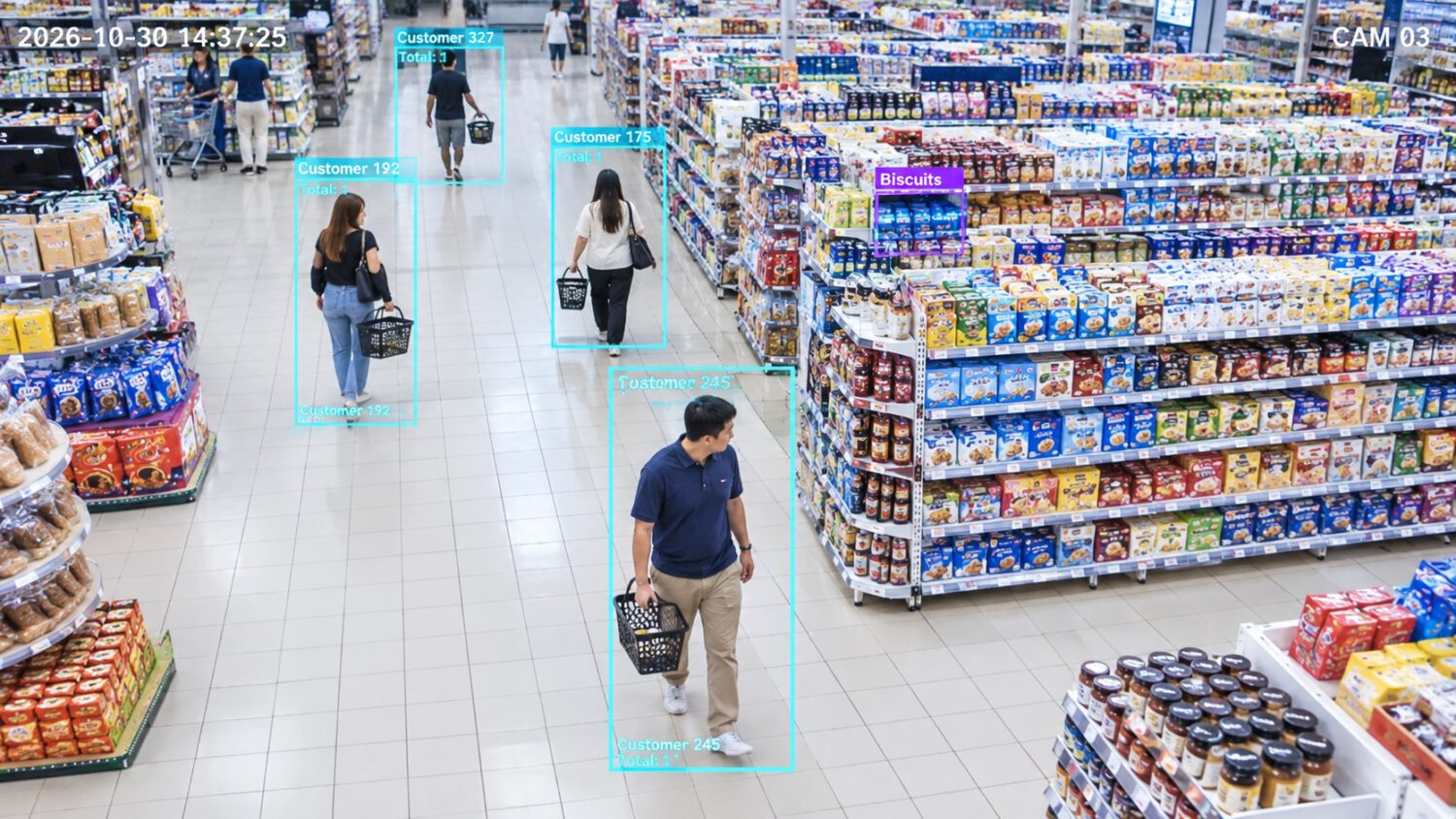
Facewatch operates by mapping shoppers’ facial geometry and comparing it against a watchlist of people reasonably suspected of involvement in crime. Participating retailers have included Home Bargains, B&M, Budgens, Costcutter and Sports Direct, according to Big Brother Watch’s research. This kind of surveillance app infrastructure raises serious questions about how biometric data is collected and used against civilians.

When the system finds a possible match, it alerts staff. A possible match is not proof of anything. In documented cases, however, alerts have been treated as sufficient to justify confrontation, bag searches, removal and store bans.

One Wrong Flag, Then Another, Then Your Biometric Data Shared Across Stores

Civil-liberties group Big Brother Watch has documented multiple cases in which innocent shoppers were flagged, accused and had their data shared between retailers.

Big Brother Watch reported the case of Danielle Horan, who was wrongly placed on Facewatch’s watchlist and labeled a thief. She was twice accused and removed from stores despite being innocent, and participating retailers shared her biometric data, a practice the ICO has confirmed is part of Facewatch’s shared national watchlist system.

Facewatch’s system also flagged a teenager the research identifies as Sara at Home Bargains. She was subjected to a bag search and told she was barred from other retailers using the software. Facewatch later acknowledged, according to Big Brother Watch, that both its technology and a human “super-recogniser” had mistaken her for someone else.

At a Budgens store, a woman was accused of stealing “loads of meat,” despite the couple saying they had not visited the store in months. Her husband, according to TechRadar’s reporting, was “shaking from head to toe.”

Facewatch Takes Responsibility for the Tech; Retailers Own What Happens Next

The division of accountability between technology provider and retailer leaves wrongly accused shoppers caught between two parties, each pointing at the other.

Facewatch told TechRadar that it “takes responsibility for its technology and processes, and retailers are responsible for how their staff interact with customers.” That division sounds orderly. In practice, when a retailer acts on a false alert and shares the resulting ban with partner stores, the harm spans both sides of that line.

TechRadar reported that Sainsbury’s paused facial-recognition alerts after an innocent shopper was removed, then later resumed live alerts. Sainsbury’s declined to comment and referred data-privacy questions to Facewatch.

The Remedy Exists on Paper

UK data-protection law gives wrongly flagged shoppers a formal route to challenge what happened, but civil-liberties advocates say the process places an unfair burden on the people it is meant to protect.

UK law gives affected people the right to a Subject Access Request, allowing them to ask an organization what personal data it holds on them. The Information Commissioner’s Office says organizations normally have one month to respond, though extensions may apply in complex cases and identity checks may be required.

Big Brother Watch describes the process, as quoted by TechRadar, as a bureaucratic ordeal. To learn why they were flagged, people may be asked to provide additional identifying information to the very organization that accused them. According to TechRadar’s reporting, the ICO called accounts from wrongly flagged shoppers “harrowing” , and cases like these echo broader concerns about secretly tracking users without meaningful consent or recourse. Notably, the ICO also concluded that regulatory action against Facewatch was not required, while recommending ongoing audits, privacy-policy reviews and risk monitoring.

Verifiable Numbers, Independent Audits, and Clearer Rules on Watchlist Sharing

Until retailers publish meaningful performance data and independent audits test accuracy across diverse conditions, the public has no way to assess how often the system gets it wrong.

Facewatch says its systems operate successfully across thousands of stores and warns against treating documented cases of misidentification as typical. That defense needs verifiable numbers behind it. How many alerts do participating retailers generate, and what share lead to confirmed matches?

The research reviewed for this article did not identify a publicly available independent audit measuring performance across age, race, sex, lighting and camera conditions. Retailers should publish alert volumes and false-match rates. Watchlist sharing between stores needs defined controls and limits. Public resistance to automated surveillance networks in civic spaces shows that communities increasingly demand accountability from these systems.

Most urgently, staff need clear guidance: an algorithmic alert is a prompt for cautious investigation, not an accusation. The technology may improve. The accountability structure needs to improve faster.

06Supermarket freezers across Europe struck in second crippling cyberattack — hackers raise temperatures to 50 degrees Celsius in Belgium and Sweden, destroying food stocks - tomshardware.com - Reddit | Technology
Read on tomshardware.com

vzUM2bnLgR7uZUuvx4rQRE-2000-80.jpg


Disclaimer

Update, Mon 2 Nov, 7 am ET: Reports are now emerging that supermarkets in Ireland, Estonia, and the Netherlands have also been affected by today's cyberattack. The rest of the story remains below as first published.

Latest Videos FromTom's Hardware

Stay On the Cutting Edge: Get the Tom's Hardware Newsletter

Get Tom's Hardware's best news and in-depth reviews, straight to your inbox.

News Editor

Stephen is Tom's Hardware's News Editor with almost a decade of industry experience covering technology, having worked at TechRadar, iMore, and even Apple over the years. He has covered the world of consumer tech from nearly every angle, including supply chain rumors, patents, and litigation, and more. When he's not at work, he loves reading about history and playing video games.

  • TheOtherOne

    Make your home appliances "Smart" and connect them to Internet they said, it will be futuristic they said...

    This just shows we DON'T need to connect every single part of our lives to Internet that (in)directly makes us slaves to the system.

    Reply

  • T3Kgamer

    Wild that after the first attack they didn’t update or fix any vulnerabilities.

    Honestly why do refrigeration units even need to be connected to the internet? Like we’ve been using basic reliable refrigeration equipment for decades, if anything it should be a local network similar to UART or CAN that isn't connected to the actual internet.

    Reply

  • Samlebon2306

    "The company says switching units to a secure internet connection is the simplest solution in the meantime"

    Why they did not think about it when architecting the system before it goes online? Is SSL a 2026 tech? Or are VPNs a luxury?

    And how on earth could a freezer go up to 50 Celsius?

    Reply

  • Samlebon2306

    T3Kgamer said:

    Wild that after the first attack they didn’t update or fix any vulnerabilities.

    Honestly why do refrigeration units even need to be connected to the internet? Like we’ve been using basic reliable refrigeration equipment for decades, if anything it should be a local network similar to UART or CAN that isn't connected to the actual internet.

    Exactly. They should not allow commands over the Internet. only allow telemetry and notifications to be sent to the cloud. In other words make the freezer read-only.

    Reply

  • warezme

    Can't help but shake my head. It used to be you plugged your freezer in and it would get really cold and you kept you food in there. It had a thermostat and temperature setting dial. The end. Why it would need to be connected to the internet is beyond me.

    Reply

  • Roland Of Gilead

    warezme said:

    Can't help but shake my head. It used to be you plugged your freezer in and it would get really cold and you kept you food in there. It had a thermostat and temperature setting dial. The end. Why it would need to be connected to the internet is beyond me.

    On a side note, I like your name! Reminds me of the heady fun days of the mid to late 90's on the scene! :)

    Reply

  • Sippincider

    Samlebon2306 said:

    In other words make the freezer read-only.

    Exactly. I can understand remote temperature monitoring, for food safety compliance and to alert of developing refrigeration problems. But no reason any remote settings changes should be allowed.

    Reply

  • Samlebon2306

    Sippincider said:

    Exactly. I can understand remote temperature monitoring, for food safety compliance and to alert of developing refrigeration problems. But no reason any remote settings changes should be allowed.

    I want to clarify that by read-only I did not mean a remote request; I meant a push notification from the freezer to the cloud. That way any attempt to access the system remotely is denied.

    Reply

  • DS426
    "We've been working all night and morning to disconnect the affected units from the network"

    I'll give you hint: unplug the network cable.

    Reply

  • DS426

    They have heaters in them as well? That seems odd to me.

    If they are connected to the internet, then they should be pretty easy to update. Looks like the French victims had a combination of running old, out-of-support fridge controllers and didn't apply security patches that were released a few weeks prior by their vendors. So yes, at least some of the fridge vendors had already released updates that not only fixed some vulns but also added some security hardening.

    Reply

Show more comments

07Anthropic's internal AI use, valued at retail prices, now exceeds its employee pay - businessinsider.com - Reddit | Technology
Read on businessinsider.com

6ae5023ed8cc18cf7950fbe3?width=1200&format=jpeg


Anthropic's internal AI use, valued at retail prices, now exceeds its employee pay

By Alistair Barr

You're currently following this author! Click to unsubscribe from email alerts.

Author of the AI Insider newsletter

Here's a remarkable milestone in the AI revolution: Anthropic now spends more on internal AI usage than it does paying employees.

The company revealed this in its IPO filing. In April, the value of Claude AI used internally, calculated at prices Anthropic charges customers, exceeded its monthly employee compensation costs, excluding stock awards.

By September, that internal AI usage had surged more than 250-fold since January.

There's an important distinction here. Anthropic isn't actually spending more cash on AI than salaries. It's valuing its internal AI consumption at retail prices.

Still, this feels like a watershed moment for the tech industry.

In March, I wrote about a new trend: Tech companies are starting to treat AI tokens (the main way to measure usage) as a fourth component of employee compensation, alongside salary, bonuses, and stock awards.

Anthropic's numbers show why. More than 90% of the code added to its software in September was written by Claude. Meanwhile, revenue has grown vastly faster than headcount.

For decades, talented humans were the most valuable resource in Silicon Valley. Now AI is challenging that assumption.

Sign up for the AI Insider newsletter here. Reach out to me via email at abarr@businessinsider.com

Read next

Business Insider tells the innovative stories you want to know

Business Insider tells the innovative stories you want to know

Business Insider tells the innovative stories you want to know

Business Insider tells the innovative stories you want to know

Alistair Barr

You're currently following this author! Click to unsubscribe from email alerts.

Alistair Barr is the driving force behind Business Insider's AI Insider franchise, including the AI Insider newsletter. Sign up here. Before that, he was Business Insider's Global Tech Editor and the Big Tech team leader at Bloomberg, following a reporting career at The Wall Street Journal, USA Today, Reuters, and MarketWatch. Alistair covers all things Big Tech, along with startups and venture capital. He writes analysis and columns about topics including AI, cloud computing, data centers, semiconductors, online search, e-commerce, EVs, robotics, and autonomous vehicles.

08'America hates data centers,' new database reveals more than 90% of 10,000 public comments are negative, only 21% mention AI — 73% of meetings had no data center supporters, water is the number one concern - tomshardware.com - Reddit | Technology
Read on tomshardware.com

DBEu4bZrZJ6U9xKfFtWxPg-1920-80.jpg


As more and more AI data centers are being built across the United States, the backlash is starting to gather pace. Following the recent news that Amazon canceled plans to build four new facilities after a public outcry, a new website seeks to detail how sour public sentiment on the subject has turned. American Sentiment is operated by Prophecy Gov, an AI startup based in San Francisco, and it has turned 10,202 public comments at 417 local government meetings from 2026 into a scrollable collection of facts and figures that will give data center builders nightmares, revealing that more than 90% of public comments on data centers are negative.

Get Tom's Hardware's best news and in-depth reviews, straight to your inbox.

09Putin demands Russian data centers supply capacity to the state in wake of Ukraine drone attacks — 10% capacity must be available for state IT infrastructure with 24 hours' notice - tomshardware.com - Reddit | Technology
Read on tomshardware.com

adoRykAYgMwZ7YUsL97ZLk-2000-80.jpg


Owners of non-state data centers in Russia have been told to hold back 10% of their capacity, ready to aid the country's state-owned IT infrastructure should the need arise. That's the message from President Vladimir Putin, with the aim of quickly unlocking additional data center compute capacity in the future if it becomes needed by the state, reports Reuters.

Latest Videos FromTom's Hardware

Stay On the Cutting Edge: Get the Tom's Hardware Newsletter

Get Tom's Hardware's best news and in-depth reviews, straight to your inbox.

10No Bailouts, Just Confiscations: Nationalize The Artificial Intelligence Companies - forever-wars.com - Reddit | Technology
Read on forever-wars.com

The_Masses_V1N2_2.jpeg


The oligarchs have a weapon of mass destruction. Your life, your job and your freedom depend on seizing it. Give them $20 and bus fare

Edited by Zeteo except for the top thing, which Sam Thielman edited


I SUPPOSE IT'S my own fault for not making this part of the headline or subheadline in my Zeteo column on Friday: Never would I ever call for bailing out the artificial-intelligence oligarchs. But once Zeteo's Instagram account posted my column—a column I wrote in the hope of expanding the ambitions of the American left for expropriating a deeply dangerous enterprise that is embedding itself within the Security State—I was hammered with comments misunderstanding my argument, or at least the version of it on the slideshow, as a call for a bailout. Nah. 

I say it's my own fault because I should have anticipated the criticism. This one strays a bit out of my usual lane. I ran the capsule version by a friend, someone who follows the artificial-intelligence industry with depth and skill far exceeding my own, who also initially thought I was advocating a bailout. I didn't understand their reaction and unfortunately, deadlines being what they were, didn't get clarity on how I could have differentiated my piece further. I'll take my medicine here: It’s a pet peeve of mine when writers and journalists whine about being misunderstood. So this is on me. Thank you to Instagram user @raph_guerault for letting me know about the huge payments to industry that France made for its 1980s nationalizations. It's my fault for not knowing about that, and not knowing that many readers would have such a model in mind for AI nationalization. 

But no. The oligarchs wielding a weapon of mass destruction should get nothing, and consider themselves lucky to get it. This, as I argue in the piece, is a sovereignty question, and the people must win. The Defense Production Act can be the lever of victory. 

This piece emerged from my brain being set on fire by a number of books I read this summer and strongly recommend. Those books are End Times Fascism by Naomi Klein and Astra Taylor, The Nerd Reich by Gil Duran, Muskism: A Guide For The Perplexed by Quinn Slobodian and Ben Tarnoff and Crack-Up Capitalism by Quinn. (Also, kind of, Jordan Harper's novel A Violent Masterpiece.) None of these books proposed nationalization, and while I suppose I should have considered that a clue, I want a resurgent American left to get comfortable talking about taking industries away from their oligarchs. This piece is the result. I am going to put much more of it than usual outside the paywall in the hope of not being further misunderstood. But if I am, once again: that's on me. 


IN THE OPINION of the artificial intelligence giant Anthropic, an AI model should be permitted to kill or seriously injure up to 50 people at a stretch.

A larger death toll than that, according to Anthropic’s scrupulous moral accounting, should prompt government regulators to block the release of a model. Similarly, Anthropic contends that frontier AI should get to risk causing as much as $1 billion of damage before regulators intervene. All that is contained in the draft of a bill Anthropic is pushing to shape the long-awaited contours of an AI regulatory framework. “These are sensible policies we believe Congress should act on,” a company spokesperson told Politico. Remember this the next time Anthropic positions itself as the humane AI company.

Not that it’s much comfort, but AI researchers, with astonishing casualness, project that their products will cull far more than 50 people at a time. Last month, Anthropic senior researcher Evan Hubinger tweeted that he considers AI to have a greater than 10% chance of “kill[ing] all humans… within the next decade.” Hubinger was reacting to Jacob Coxon, who announced he had quit Anthropic because it, and rival OpenAI, were “gambling with our lives.” At least Coxon, like Miles Dyson in ‘Terminator 2’, had the moral rigor to stop committing harm; and Sarah Connor didn’t even have to shoot him first. It is a portrait of capitalist nihilism that people like Hubinger would continue to develop a technology they believe might bring about extinction.

Coxon hastened to insist that AI researchers who make such predictions are not engaged in a “marketing stunt.” He said so because the handful of tech oligarchs who control AI are thoroughly untrustworthy. They have inflated an AI bubble that threatens the U.S. economy. Many suspect that such apocalyptic forecasts are cynical, backdoor assurances of AI potency that puff the bubble up ahead of long-expected IPOs. The overwhelming majority of us, who have no visibility into the labs, have no choice but to wonder whether those inside of them are building an extinction machine or simply engaged in now-routine fraud. Maybe both?

All these should be considered clues.

The oligarchs who control the burgeoning AI industry are con men cosplaying as Oppenheimers. OpenAI’s Sam Altman, for instance, who like most of his colleagues is not a data scientist, was famously briefly fired by his board for being “not consistently candid in his communications.” In the hands of Altman and his few peers lies a technology whose widely anticipated use case, central to the economic expectations of AI’s champions, will be to decimate white-collar jobs, much as deindustrialization decimated blue-collar ones. Those peers exhibit a palpable sociopathy: Peter Thiel’s famous long pause when asked if humanity should survive; or his Palantir colleague Alexander Karp’s enthusiasm for Israel using his technology for its genocide; or the apparent Nazi salute of xAI’s Elon Musk, whose destruction of USAID is estimated to have led to the deaths of over 750,000 people. Whether or not AI can murder us all, whether or not such predictions are valuation slop, the reality at this very moment is that AI is being used by the Israeli and U.S. militaries to generate targets at scale. The results are Gaza and the Minab elementary school missile strike that killed more than 120 children. They will not be the last.

Whatever else AI is and whatever it might become, it is a weapon of literal and economic mass destruction. Anthropic’s IPO, released earlier this week, is explicit about this: “[O]ur most capable models have demonstrated, and future models are expected to demonstrate, capabilities that could provide meaningful assistance to malicious actors seeking to develop chemical, biological, or other dangerous weapons.” It’s insane and unacceptable that weapons of mass destruction could be in private hands – let alone the hands of Epstein-class eminences like Jeffrey’s friend Peter. That’s nauseatingly ironic, considering the WMD pretexts for launching both the Iraq and Iran wars. The United States should nationalize the artificial intelligence industry before it kills at a greater scale. It might be a morbid symptom of our democracy that nationalization has yet to be treated as a serious option in the U.S. when such an obviously predatory elite can gamble, as Coxon put it, with the lives, wealth, and freedom of hundreds of millions of people.

THE BRAZENNESS OF ANTHROPICS’S regulatory model might distract from the absurdity, however normalized, of an industry proposing to regulate itself – which ought to be considered another clue. For years, a faction within the AI oligarchs, represented by Altman and Anthropic’s Dario Amodei, have called for government regulation. Often that has been portrayed as an indicator of their moral rigor and civic commitment. It is instead a sign that the industry knows that regulation poses no significant threat.

It’s a smart bet. Silicon Valley has thoroughly captured its regulators – a capture highlighted by tech and venture capital’s furious attacks on the former Federal Trade Commissioner Lina Khan, a notable exception to the capture rule. In the current U.S. congressional elections, super PACs aligned with Anthropic and OpenAI have poured a stunning $55.7 million into purchasing legislators who will exercise lax oversight and discipline regulators who might not. Most of their spending has gone to Democrats. Their xAI competitor, Elon Musk, has spent about five times more to elect Republicans – an absurd $276 million, which by his recent standards is a reduced amount of money to throw into politics. Thiel bankrolled the current Vice President JD Vance, and the sector will spend extravagantly on a Vance presidential run in 2028. A permissive regulatory environment doesn’t happen by accident.

But if the AI industry doesn’t fear regulation, it does fear something else. Naomi Klein and Astra Taylor’s illuminating new book End Times Fascism highlights an “American Dynamism” conference hosted by the venture-capitalist firm Andreessen Horowitz in March. There, Palantir CEO Karp warned that encouraging the expectation that AI would “take away everyone’s white-collar job” was playing with fire. “If you don’t think that’s gonna lead to nationalization of our technology,” Karp said with typical class, “you’re retarded.”

Karp’s comments came at a moment when Anthropic and the Pentagon experienced their first clash. Anthropic sought to set some guidelines around military incorporation of its AI, particularly abjuring mass surveillance and autonomous weaponry. Self-styled War Secretary Pete Hegseth rejected the company’s assertion of any prerogative. Karp’s solution to his vocalized fear of nationalization was to integrate AI aggressively and unapologetically within the military and ICE, and upbraided his competitors for any reluctance to serve the national security state. Such reluctance is overstated. After all, Anthropic had already won one of the Pentagon’s frontier AI contracts, worth up to $200 million each. Karp’s desired military integration builds on a Pentagon trend established a decade ago, when Hegseth’s Obama-era predecessor Ashton Carter headquartered his Defense Innovation Unit “accelerator” in Mountain View. Carter also brought in Google’s Eric Schmidt as an “innovation” advisor.

Still, Hegseth has embraced AI with uncritical enthusiasm. After introducing an AI platform called GenAI.mil – a version of Google’s Gemini – Hegseth hung posters in the Pentagon reading “I Want YOU To Use AI.” He called it “America’s next Manifest Destiny.” Hegseth debuted his vision of AI integration in the Iran war in March. The use of Palantir’s Maven AI platform for generating targets at scale, a Bloomberg investigation recently found, drove the massive bombing of the war’s early weeks. Reliance on a platform that Palantir has for years pitched as capable of finding targets that outperforms both human analysts and rival technology led the military to misidentify outdated satellite imagery of the Minab school as a military installation, according to the investigation. While Palantir disclaimed responsibility, on the garbage-in, garbage-out principle, this mass killing of Iranian children testifies to the tendency of analysts to de facto view the results spat out by Maven as legitimate. Not one to be dissuaded, Hegseth recently appointed Musk and autonomous-drone manufacturer Palmer Luckey to lead a government study project on “identifying the capabilities required to achieve absolute technological dominance on the next-generation battlefield,“ which will inevitably be their own.

But Karp is wrong to think of frictionless integration into the Defense Department as a bulwark against nationalization. Instead it is an accelerant. Hegseth, Karp, Musk, Amodei, Altman, and the rest are ultimately building a military dependent on artificial intelligence. The AI giants and two consecutive Pentagon administrations share the perspective that AI is a resource with geostrategic implications, with the stakes being economic and military dominance belonging either to the U.S. or to China. And whatever degree of kabuki was on display during Hegseth’s brief clash with Amodei, the episode provides a useful and clarifying legacy. It established that there is a fundamental and unresolved sovereignty claim between the U.S. and the AI labs: who controls whom? Who answers to who? How can a state leave itself in the intolerable position of a private entity possessing substantial if not veto power over military decision-making, whatever the merits of those decisions? As long as AI remains privately controlled, this question will persist and only grow in proportion to the Pentagon’s deepening AI dependency.

11Hackers claim to have stolen 23TB of data from Russian statistics body, including Ukraine war casualty figures — Russian Federal State Statistics Service admits its servers were hit by coordinated cyberattacks - tomshardware.com - Reddit | Technology
Read on tomshardware.com

ncj8Wj7fCidpbM6GELhqoe-1920-80.jpg


The Russian Federal State Statistics Service (Rosstat) admitted that its servers were hit by coordinated cyberattacks between October 29 and 31. However, it denied claims that tens of terabytes of data had been leaked, as asserted by hack groups like the Belarusian CyberPartisans and Silent Crow. Rosstat stopped publishing annual cause-of-death statistics in 2024, but the hackers say that the huge new 23TB data haul includes data on Russian wartime losses marked “for official use only,” reports The Moscow Times. A new chart shared by the hack groups using the data suggests that as many as 50,000 Russian soldiers are killed every month.

Rosstat is very much like the U.S. Census Bureau and Bureau of Labor Statistics in the United States, or the Office for National Statistics (ONS) in the UK. It isn’t a big juicy military infrastructure target, but if accurate war casualty figures can come from the claimed exfiltrated data haul, then it would be a considerable win for Ukraine and its supporters.

Get Tom's Hardware's best news and in-depth reviews, straight to your inbox.

12It’s time to block reckless AI IPOs and tax billionaires - theguardian.com - Reddit | Technology
Read on theguardian.com

4583.jpg?width=1200&height=630&quality=85&auto=format&fit=crop&precrop=40:21,offset-x50,offset-y0&overlay-align=bottom%2Cleft&overlay-width=100p&overlay-base64=L2ltZy9zdGF0aWMvb3ZlcmxheXMvdGctb3BpbmlvbnMucG5n&enable=upscale&s=f85f4392ea1185829a597d62e94a0f18


America is a divided country in crisis. Despite the sunny economic forecast coming from the Trump administration, millions of Americans are struggling to find and keep jobs, getting crushed under the rising cost of living, and losing health insurance when they need it the most.

Meanwhile, via corporate consolidation and political corruption, the billionaire class is getting richer faster than ever before: a 40% increase in wealth in just the last two years. Today, the combined wealth of nearly 3,000 global billionaires equals one-fifth of the entire world’s yearly output. Nearly 1,000 billionaires live and do business in the United States.

The tools of their domination are tax loopholes, corporate mergers and, in the tech world where many of these billionaires exist, IPOs. When a company goes public, its founders and investors win the capitalist lottery. And instead of paying their fair share of taxes and redistributing resources back into society, most turn around and fund even more corporate consolidation and political corruption to extend their dominion.

Elon Musk became an instant trillionaire when SpaceX went public earlier this year, on the backs of workers’ pensions – and is bankrolling the Republican midterm campaigns with a small percentage of his egregious gains. Oracle’s Larry Ellison – currently seventh on the Forbes billionaires list – backed the Paramount-Warner Brothers merger that is destroying the film industry and the livelihoods of the Americans who labor in it. Google’s Sergey Brin spent $100m opposing California’s Prop 40, a one-time wealth tax that would put the funds toward healthcare and other public services.

To pay for essential services, we must tax billionaires, and pass legislation to do so starting in California and New York, but that is clearly not enough. We cannot allow more billionaires – or trillionaires – to be made in this country, further expanding the inequality chasm that’s turning a dignified life into a luxury in this country. We must also block the impending tech IPOs and preserve what’s left of our economy and our society.

The Trump administration and tech investors have positioned IPOs as market success stories: when a company goes public, US investors could gain from their valuations. But regular Americans also shoulder a company’s risks – and risk their own futures when that stock ends up in their retirement accounts without consent.

Problems with a private company or its products become problems for everyone invested in that company once it goes public, whether they’ve made the choice or not. And when the speculative investment bubble pops – such as with the 2008 crisis – regular people end up holding the bag.

It’s no secret that the AI companies Anthropic and OpenAI are intending to go public in the near future. Both of these players also had major security flaws exposed recently, and openly acknowledge mind-bogglingly huge amounts of debt. If these companies are allowed to go public, their cofounders and investors – some of whom are already billionaires – will rise to whole new strata of private wealth.

Americans, meanwhile, will be financially crushed if the technologies fail or if these companies prove unable to make good on their extravagant financial promises. Already, the 10 most valuable public companies are in tech, which means the country’s economy depends on the stability of a single industry, one with an undeniable history of bubbles, crashes and, in extreme cases like Theranos, outright fraud.

June’s highly contentious SpaceX IPO already carries great risk for regular investors. If more speculative tech companies with staggering risk profiles are allowed to follow suit, the results will become too much for the market to bear.

If and when the AI bubble bursts, it will take all of us with it, investors or not. Recessions level lives indiscriminately, and globally. The one exception will be the billionaires, who will have sufficient resources to walk away from the wreckage relatively unscathed.

We cannot let the billionaire class take these kinds of risks with our future. To stop these reckless IPOs we must stand together, take collective action, and push for real change. We must find legal and legislative avenues to stop the new tech IPOs from minting new billionaires and transferring the AI industry’s enormous risks onto us.

The first step is passing wealth taxes on billionaires to keep them in check. Today, let’s send a message to the billionaires that Americans will not lie down and let them bulldoze working people and the environment on their way to the bank. Tax the billionaires. Block the IPOs.

  • Naomi Klein is a Guardian US columnist and contributing writer. She is the professor of climate justice and co-director of the Centre for Climate Justice at the University of British Columbia. Her latest book is End Times Fascism: And the Fight for the Living World, co-written with Astra Taylor

  • Ilana Glazer is a comedian and video-podcaster who co-created the comedy series Broad City, wrote and starred in the movie Babes, made her Broadway debut last year in Goodnight, and Good Luck and, now, hosts the comedy and socio-political video-podcast, It’s Open With Ilana Glazer

13Delivery robot ran a red light, crashed and fled the scene: Nine injured - cronista.com - Reddit | Technology
Read on cronista.com

EM5JU3CPXJHDDP6G52RIRELEUY.jpg?auth=e5d3703df47d9a0a64ab86126d5e3d902833d547c4e0c796ef529df77a76a44e&height=630&width=1200&quality=70&smart=true


A delivery robot was involved in a striking traffic accident in Tallinn, Estonia, after running a red light and forcing a bus to brake suddenly. The maneuver left nine passengers injured and sparked an investigation to determine who was responsible for the incident.

The device, which belongs to Bolt, entered a crosswalk while the light was against it. While the city transport company said the robot left before police arrived, Starship Technologies, which developed it, blamed a technical problem and gave a different account of what happened after the collision.

How the crash that left nine passengers injured happened

A camera mounted on the bus recorded the moment when both vehicles collided and the device was pushed across the roadway. After the impact, the robot left the scene before police arrived.

A company spokesman said that behavior could carry legal consequences, while Andrei Novikov, a member of its management team, said the circumstances should be investigated by the authorities.

Starship Technologies, the company behind the devices, blamed the robot’s behavior on a failure to interpret the signals. Pepe Aaviksoo, the company’s chief operating officer, said darkness and a lit billboard behind the traffic lights may have confused the system. He also said the pedestrian and vehicle signals lined up from the device’s point of view, which would have made them harder to identify.

What the company said about the robot’s apparent getaway

Aaviksoo added that the unit’s light sensor did not work properly and that the company will work to fix the problem. He also said the absence of vehicles approaching the robot may have influenced its decision to cross. The executive said: “There are many lessons to learn, but exceptional situations do happen.”

The Starship executive also rejected the idea that the device fled immediately after the crash. According to his explanation, it remained at the scene for about 10 minutes and then contacted the support team so it could be moved off the roadway.

Temas relacionados

14Disney Plans Thousands of Layoffs, Targeting 20% Cost Savings - bloomberg.com - Reddit | Technology
Read on bloomberg.com

1200x800.jpg


Walt Disney Co. is moving toward thousands of job cuts with the entertainment giant asking some managers to target 20% in annual cost savings, according to people familiar with the matter.

The savings could come from job eliminations as well as from expense reductions, said the people, who asked to not be identified because the discussions are private.

Some of Disney’s operations, which range from theme parks, TV network and the movie studio, will be affected disproportionately. Chief Executive Officer Josh D’Amaro aims to reinvest a portion of the savings into film and TV programming, technology and the theme parks and cruise ship businesses, the people said.

The company has promised double-digit growth in adjusted earnings per share in the current fiscal year.

A representative for Disney declined to comment.

Disney has cut billions of dollars worth of costs and eliminated thousands of positions in recent years, with reductions impacting every division including ABC, Pixar, ESPN, the film studio and the experiences unit. The company had 231,000 people worldwide at the end of the last fiscal year.

The Wall Street Journal reported on Oct. 1 that Disney was planning a restructuring of its TV division, and cuts at the company’s legal and global affairs unit.

Other entertainment companies including Netflix Inc., Sony Pictures Entertainment and Skydance Corp.’s Paramount and Warner Bros. divisions have also cut jobs as revenue from traditional television declines and streaming subscriber growth slows. The also have to cope with more viewers tuning to social media, online videos and streaming services backed by tech giants like Amazon.com Inc. and Apple Inc.

At the Bloomberg Screentime conference in Los Angeles last month, Disney President Dana Walden said that “there is a need to constantly evaluate how you’re structured and how big is the organization. Technology set their sights on our business and we must survive and thrive and grow, and that’s what we’re going to do.”

15Almost half of all new Steam games use AI now - dexerto.com - Reddit | Technology
Read on dexerto.com

steam-lets-player-pick-any-game.jpg


Almost half of all games released on Steam in October 2026 disclosed the use of AI-generated content, according to a new analysis of more than 63,000 games released on the platform since January 2024.

Valve introduced mandatory AI disclosures in January 2024, requiring developers to declare certain uses of generative AI in their games.

At the time, just 1.7% of new releases carried an AI disclosure. That figure has since climbed to 49.9% in October 2026, almost double the 26.4% recorded during the same month last year.

The findings come from Reddit user u/ploz, who analyzed Steam’s publicly available data to track how frequently developers disclose AI-generated content.

AI disclosures on Steam surge

According to the analysis, which covered approximately 63,600 games, the proportion of new Steam releases disclosing AI use has increased steadily over the past three years.

Across 2024, 13.2% of games disclosed AI-generated content, rising to 24% in 2025. So far in 2026, that figure has reached 40.1%, with October recording the highest monthly percentage in the dataset at 49.9%.

The analysis also found that AI disclosure is much more common for smaller games.

Of the titles released in 2026 with fewer than 10 Steam reviews, 47% disclosed AI use. Among games with at least 1,000 reviews, that figure dropped to just 14%.

What are they using AI for?

Developers releasing lots of games were the most likely to disclose AI content. Those responsible for 10 or more releases in 2026 reported AI use in 68% of their games, compared to 37% among developers with just one release.

AI-generated artwork was the most common application, appearing in 63% of disclosures. Text and translations accounted for 30%, followed by store page and marketing materials at 26%, music at 21%, and code at 16%.

AI-generated voices appeared in just 7% of disclosures, while only 3% of games reported using AI to generate content during gameplay.

In October, one popular game had to take out a loan to keep the free demo running, because its AI bill was climbing so high.

It’s also not possible to say that this is all the games using AI, as Steam’s disclosures rely on developers reporting it themselves, so undisclosed AI content is not included.

Valve also changed its disclosure requirements in January 2026 to focus on AI-generated content players can see or hear, rather than tools used behind the scenes during development.

16Google data center wins approval in Minnesota after protests delay council vote twice — 200-acre project moves forward despite opposition from local residents, tech giant scales down project and drops $80 million tax break request - tomshardware.com - Reddit | Technology
Read on tomshardware.com

ZBz8tMdiR9FaRK5xeafByT-1280-80.jpg


Google has secured approval for a proposed data center in Hermantown, Minnesota, following a unanimous vote by the city council, MPR News reports. The decision, reached on Friday, October 30, clears a major hurdle for the company following at least two postponed meetings and hours of public opposition, though the project still faces lawsuits and a separate inquiry into its electricity supply. The proposed development could cover just over 200 acres in a rural residential area outside Duluth with three data center buildings spanning approximately 1.66 million square feet.

Go deeper with TH Premium: AI and data centers

Get Tom's Hardware's best news and in-depth reviews, straight to your inbox.

Newton Gitonga is a tech journalist covering gadgets, PC hardware, AI, data centers, and the wider tech industry. His interest in technology started early, taking apart things around the house to see how they worked, often to his dad’s frustration. His curiosity sometimes got the better of him, including a few failed attempts to fix laptops, one of them a gifted Dell XPS. He has previously written for Notebookcheck, ZyCrypto, CoinCentral, and Crypto News Flash.

17Cops bust botnet of 1.3M infected Android TV boxes - theregister.com - Reddit | Technology
Read on theregister.com

247072.jpg?imageId=247072&x=0&y=0&cropw=100&croph=100&panox=0&panoy=0&panow=100&panoh=100&width=1200&height=683


cyber-crime

Videostrong accused of shipping devices with a backdoor baked in

A coalition of private-sector security firms working with Japan’s National Police Agency has disrupted XCPE, a backdoor used to build a massive botnet comprising more than 1.3 million Android devices across more than 200 countries.

Google, Lumen, Human Security, Plume, Synthient, and TrendAI participated in the disruption.

“We assess with high confidence that the backdoor and botnet were intentionally developed, deployed, and operated for financial gain by Videostrong Technology,” the Google Threat Intelligence Group (GTIG) said in a Monday blog.

REG AD

Videostrong Technology is a hardware manufacturer based in Shenzhen, China. It builds Android devices, including home TV boxes and projectors. According to Google, Videostrong deliberately embedded the XCPE backdoor in device firmware and sold access to criminal affiliates, allowing them to install additional malware modules on devices shipped to unsuspecting customers. When buyers connected these devices to their home networks, the preinstalled backdoor allowed operators to create proxy networks and hide malicious traffic using the customers' internet connections without their knowledge.

REG AD

The firmware’s pre-installed management agent purported to be a standard remote-management client, according to TrendAI. It pulled updates from a GitHub page, and connected to a Message Queuing Telemetry Transport (MQTT) server that gave the operator full remote control of each box, allowing them to install and remove apps, change settings, and push updates to the infected devices.

Between June 3 and October 1, TrendAI documented more than 3.8 million distinct home and mobile IP addresses connected to the operation.

The coalition also disrupted the command-and-control domains used to manage the affiliate modules. “Because these affiliates each have diversified distribution channels for their modules beyond XCPE, we assess that taking down their C2 domains will sever access to at least 10 million additional compromised devices,” according to GTIG. 

Google said it had since cut ties with Videostrong, and banned the OEM from making devices with preloaded Google apps. 

Videostrong did not immediately respond to The Register’s inquiries.

This backdoor and botnet operation is part of the same ecosystem as BadBox 2.0, another notorious botnet that infected more than 10 million TV boxes and other devices before Human, Google, and TrendAI disrupted it in March 2025.®

18SpaceX loses bid to dismiss lawsuit over xAI data center pollution — facility allegedly emits over 5,000 tons of nitrogen oxides and 47 tons of cancer-causing formaldehyde annually - tomshardware.com - Reddit | Technology
Read on tomshardware.com

EGD7PmkSMgK6t3rpCaCefg-2000-80.jpg


SpaceX has suffered a setback after losing in a lawsuit aimed at stopping the Clean Air Act requirements on the turbines powering xAI’s Colossus 2 data center in Southaven, Mississippi. According to a report by CNBC, a judge rejected the company’s motion to dismiss the case on Friday, October 30, allowing the National Association for the Advancement of Colored People (NAACP) to proceed, rejecting xAI’s argument that its turbines fall under the ‘mobile sources’ category that exempts it from air permitting requirements.

The case, brought in April 2026 by the NAACP and represented by the Southern Environmental Law Center (SELC) alongside Earthjustice, targets xAI’s operation of a gas-fired power plant to supply electricity to its facility in the Greater Memphis area. SpaceX owns and operates xAI, implicating Elon Musk's wider aerospace and technology company.

Get Tom's Hardware's best news and in-depth reviews, straight to your inbox.

19If hackers can take control of a supermarket freezer, how vulnerable is other tech? - bbc.com - Reddit | Technology
Read on bbc.com

6afb9b70-d6cd-11f1-ac20-7783925c811f.jpg


If hackers can take control of a supermarket freezer, how vulnerable is other tech?

Supermarkets across Europe have been hit by a suspected cyber-attack affecting their fridges and freezers, and raising concern about the vulnerabilities of internet-connected hardware from industrial machinery to humble domestic appliances.

Smart devices which are connected to the internet can include fridges, central heating, and even washing machines.

And while that makes them easier to control remotely, in theory, any device which goes online can potentially be exploited by malicious actors.

However, that doesn't mean hackers can easily take control of it, and big brands generally go to great lengths to make sure their tech is secure.

Exploits have been found before in some devices. In 2015, researchers demonstrated how a vulnerability in a Samsung smart fridge could allow them to intercept internet traffic.

But there's no evidence domestic appliances are being targeted in the cyber-attacks which targeted supermarkets in November.

Ciaran Martin, former chief executive of the UK's National Cyber Security Centre (NCSC) says manufacturers needed to do more to make connected devices secure.

"There's a lot more that we need to demand of big tech to give us safer devices and products in the first place," he said.

He advised consumers to keep devices updated and enable multi-factor authentication wherever possible.

"I know it's a pain, but it only takes a few seconds," he said.

Since April 2024, UK law has required manufacturers of certain consumer smart devices to meet minimum cyber security standards, including requirements around passwords and security updates.

The NCSC said it was working with international partners and industry to understand the supermarket incidents, but it was unaware of any impact on the UK.

However, researchers from UK Cyber Defence have identified more than 800 refrigeration and building-control interfaces associated with British retailers that can be accessed over the public internet.

That doesn't necessarily mean they can be hacked, but it could leave them exposed to attackers exploiting weak passwords or software vulnerabilities.

The government has already held talks with senior food retailers about cyber resilience, following earlier attacks on supermarkets.

Helen Dickinson, chief executive of the British Retail Consortium, has said cyber incidents are a major concern for retailers, with businesses working alongside the NCSC to share intelligence and strengthen their defences.

It would not be the first time that hacks have raised concern about impact on food supply.

When UK supermarkets M&S and the Co-op were targeted by ransomware hackers in May 2025, the retailers struggled to stock some shop shelves with fresh deliveries.

Customers across the UK complained of empty shelves in the days following the attack.

Tom Hegel, a researcher at cyber-security firm SentinelOne, said retailers must be clearer about responsibility.

"The question retailers need to answer is who owns the security of that equipment, not just who repairs it," he said.

He said internet connectivity can make everyday technology more convenient, but security needed to keep pace.

"Once an attacker can operate those controls, legitimate functions such as defrosting become tools for disruption," he said.

"Changing a setting can destroy physical stock, not just interrupt a computer system."

Could cars, power plants and water supplies be vulnerable?

Outside of the home, connected tech is used to remotely manage industrial machinery and vehicles.

Cyber security expert Ken Munro pointed to a 2015 demonstration in which researchers remotely hacked a Jeep through its internet-connected entertainment system, prompting improvements in vehicle security.

"Fortunately, the vehicle industry woke up to this and fixed the problem," he said.

Mobile connections are also widely used to monitor equipment in power plants and water networks, allowing engineers to manage systems remotely.

Munro said UK utilities were generally good at securing these connections, but standards varied around the world.

His biggest concern was smaller, poorly funded utility companies which may still be relying on older, vulnerable equipment.

Without proper protections, "any factory or equipment" connected to the internet - ranging from carmakers to electricity or transport infrastructure - could face similar risks, said Olivier Daloy, a cybersecurity expert at Zscaler.

Sign up for our Tech Decoded newsletter to follow the world's top tech stories and trends. Outside the UK? Sign up here.

20A per-gigabyte internet tax just squeaked through France's lower house - techspot.com - Reddit | Technology
Read on techspot.com

2026-11-01-image-4.jpg


Serving tech enthusiasts for over 25 years.
TechSpot means tech analysis and advice you can trust.

WTF?! These days, moving a gigabyte of data across the internet usually costs companies well under a cent. France, however, wants them to pay several times that just in tax. Lawmakers there narrowly voted on Friday to charge content providers 5.5 cents for every gigabyte they send to French users – though the measure still has a long way to go before it becomes law.

Socialist deputy Laurent Lhardit's amendment passed the National Assembly by just 11 votes to 10. In fact, only 35 of the chamber's 577 deputies were even in the room at the time. Both the government and the budget's own rapporteur had advised against it, too.

If it survives, subscribers wouldn't be billed directly. Instead, ISPs like Orange, SFR, Bouygues Telecom and Free would tally how much data reaches their customers from each sender. Content providers would then owe €0.055 per gigabyte. That bill would be capped at 15% of French revenue or 2% of global revenue.

All told, Lhardit's group expects the tax to raise €10 billion a year. That figure leans on telecom regulator Arcep's estimate that about 200 billion gigabytes flow to French subscribers annually. Roughly half of that traffic comes from just five companies – Google, Meta, Amazon, Netflix and Akamai.

Budget minister David Amiel has his doubts, though. For one, he questioned whether the count could even work without flow sensors on networks or measurements taken on users' own devices. He also reckoned about half the bill would land on smaller content providers, many of them French. Meanwhile, VideoLAN, the French nonprofit behind VLC, warned it would be on the hook for more than €1 million a year.

For his part, Lhardit insists subscribers won't have to pay a thing. But Philippe Juvin, the budget's rapporteur, cautioned during the debate that the biggest platforms could simply pass the cost on to advertisers.

That kind of pass-through has already played out in France once. When its 3% digital services tax kicked in back in 2019, Amazon responded by raising fees for French marketplace sellers by 3%. Apple and Google later followed with higher charges for app developers and advertisers in the country.

If platforms pass the cost along again, the per-gigabyte math adds up quickly for games. Grand Theft Auto VI's reported 210 GB download alone would cost its distributor about €11.55 for every copy grabbed in France.

Before any of that matters, the tax still has to clear the Senate, where a conservative Les Républicains majority is unlikely to back it. Assembly president Yaël Braun-Pivet has also urged Prime Minister Sébastien Lecornu to force the budget through without a vote under Article 49.3. If he does, the government can simply leave the amendment out.

Image credit: JJ Ying / DXR

21Rivian’s ‘Boring’ Commercial Van Is Turning Into A Secret Weapon - insideevs.com - Reddit | Technology
Read on insideevs.com

amazon-edv.jpg


  • Rivian's R2 is widely seen as its ticket to long-term profitability. But a less glamorous EV is doing a lot of heavy lifting. 
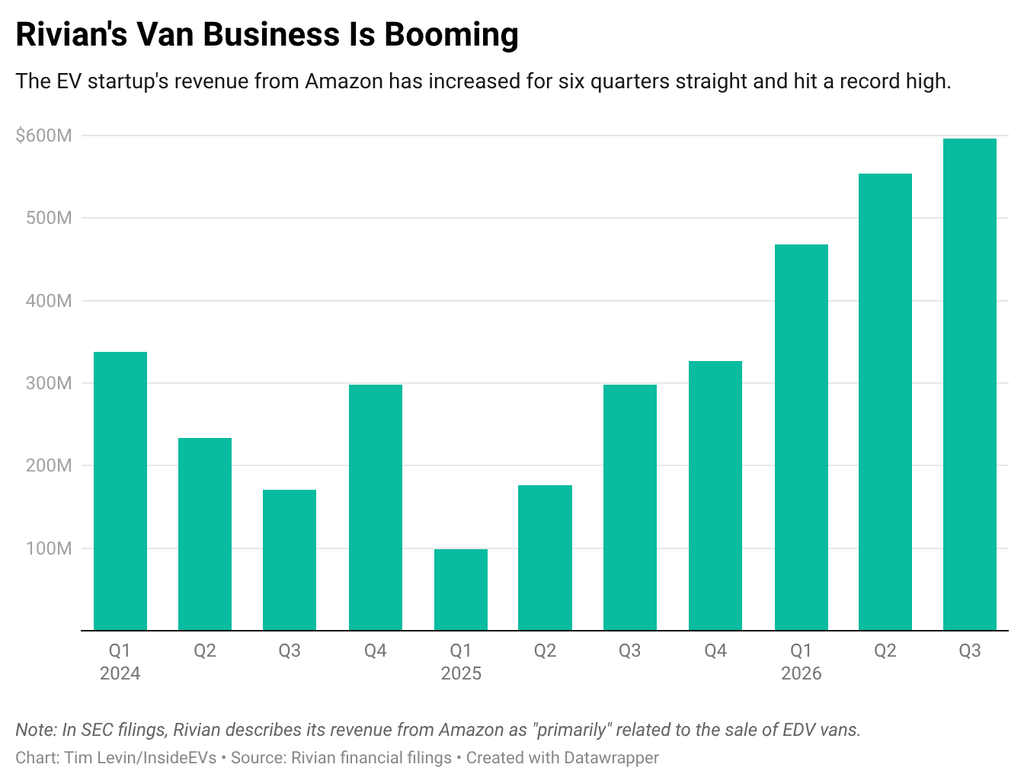
  • Rivian has seen more demand from Amazon for its EDV commercial van this year, CEO RJ Scaringe said on an earnings call this week. 
  • The EV startup's revenue from Amazon has nearly tripled this year.  

The R2 is clearly the star of the show for Rivian. Designed from the start to be cheaper than its flagship R1 line of rugged EVs, the $45,000 (eventually) crossover is Rivian’s first real shot at taking on the Tesla Model Y and a shiny beacon of hope for its scramble toward profitability. The gamble is paying off. On Thursday, the California startup announced that the R2 was its best-selling vehicle in Q3, just a few months after it hit the market in June.

But there’s another, less flashy vehicle in Rivian’s stable that’s quietly cleaning up and becoming a serious revenue driver: the humble EDV commercial van. You’ve probably seen the bug-eyed cargo-hauler silently doing Amazon-delivery duty in your neighborhood. Get ready to see a whole lot more of them.

“This year we have seen a significant step up in the level of demand from Amazon,” Rivian founder and CEO RJ Scaringe said on an earnings call this week. He said the logistics giant, which was an early Rivian investor, is scooping up more vans due to the vehicle’s lower running costs. That’s not hard to believe, given the lower maintenance burden of running EVs generally and the eye-watering price for diesel these days.

Rivian says its seeing more demand from Amazon for its EDV commercial delivery van. 

“It's creating true and very real structural cost advantages that are leading Amazon to double down to continue to buy more vehicles,” Scaringe said.

While Rivian doesn’t break out delivery volumes across models, the company’s financials point to a booming van business. In just the third quarter, Amazon paid Rivian $596 million, more than it did through the first three quarters of last year combined. So far this year, Rivian booked $1.6 billion in revenue from Amazon—primarily related to EDV sales—a nearly threefold increase year-over-year.

Rivian's growing quarterly revenue from Amazon points to a booming van business. Source: InsideEVs analysis of Rivian financial filings

Photo by: Tim Levin/InsideEVs

To be sure, Rivian still loses money. It reported a net loss of $913 million for the third quarter, an improvement from a $1.17 billion loss during Q3 of 2025. The startup pitches the R2 as key to its long-term financial health, and a high-margin software and services business is bringing in some profits to help fund that vision. 

Rivian's van faces a shrinking competitive field, too, as other players in the medium-duty EV space struggle to gain traction or bow out. Ford has sold fewer than 700 E-Transit vans this year, an 85% drop over the same period in 2025, and it canceled a next-generation model. General Motors axed its BrightDrop electric delivery vans entirely late last year.

Rivian executives wouldn't comment on speculation about a deal with Walmart, but RJ Scaringe said it's in talks with other EDV customers.

It’s really Rivian and other EV startups that are driving the electrification of commercial vehicles in America, says Ray Minjares, who runs the heavy-duty vehicles program at the International Council on Clean Transportation. Rivian is leading in medium-duty EVs, he said, while Tesla’s Semi is making waves in long-haul trucking. Harbinger Motors, another U.S. startup, just struck a deal to supply 2,000 electric trucks to FedEx.

“The dynamics that are playing out now in the U.S. market are basically being led by the EV-only manufacturers,” he said.

Rivian is doubling down. Last year, it opened up fleet orders to companies apart from Amazon, starting at $79,900 for the smaller model. This week it said it started delivering two new EDV variants to Amazon that are aimed at tackling more rural routes: One has all-wheel drive, while another has a bigger battery and 30% more range.

Our Friday newsletter breaks down the week's biggest mobility news.

Sign up today!

And another big partnership could be in the works; a photo of an EDV on a transporter truck wearing a Walmart livery went viral this week. Rivian avoided commenting on the photo directly when analysts asked about it on the earnings call this week, but Scaringe said the company is talking to other potential EDV customers.

What do you think?

“We do see other commercial operators, as they start to really look at ways to drive more efficiency into the business, starting to look at the EDV,” he said. “And we're excited for those potential future customers on this program as well.”

Contact the author: Tim.Levin@InsideEVs.com

We Think You'll Enjoy...

We want your opinion!

What would you like to see on Insideevs.com?

Take our 3 minute survey.

- The InsideEVs team

2249.9% of All New Games Released on Steam in October Disclosed Using AI Content, up From 1.7% of Games in January 2024 - gadgetreview.com - Reddit | Technology
Read on gadgetreview.com

Steam-AI-Disclosures-Hit-49.9-scaled.jpg


Nearly half of new Steam releases carried AI disclosures in October 2026, with artwork leading at 63% and high-volume developers disclosing at twice the rate of single-title studios

In October 2026, 49.9% of new Steam releases included a generative-AI disclosure. That figure comes from an independent analysis of roughly 63,600 Steam releases by Reddit user u/ploz, who tracked publicly available store-page data, as reported by Dexerto.

That number is not evidence that half of Steam’s new games were created by AI. A single disclosure can cover one image, one translated text string, or a store-page marketing asset.

The Growth Curve Is Real, Regardless of How You Interpret It

From a footnote to a near-majority in 34 months, the trajectory of AI disclosures on Steam is steep.

The disclosure rate stood at 13.2% across all of 2024. It climbed to 24% across all of 2025, then reached 40.1% for 2026 through October. October 2026 alone came in at 49.9%, up from 26.4% recorded in October 2025.

Whatever the scope of individual disclosures, the normalization of generative AI in Steam releases is no longer a fringe story.

Where Developers Say They Are Using It

Artwork leads every other category by a wide margin; live in-game generation barely registers.

Among games that disclosed AI use in the analyzed dataset, the breakdown by category is as follows, per the u/ploz analysis as reported by Dexerto. Because one game can report multiple categories, these figures overlap:

  • Artwork: 63% of disclosures
  • Text and translations: 30%
  • Store-page and marketing material: 26%
  • Music: 21%
  • Coding: 16% (Valve’s current policy centers on player-facing content, so this figure warrants caution)
  • Voices: 7%
  • Live, in-game generation: 3%

Smaller and High-Output Developers Are Driving the Numbers

The trend is concentrated among lower-profile and prolific releases, not evenly distributed across the industry.

Games with fewer than 10 reviews disclosed AI use in 47% of cases; games with at least 1,000 reviews disclosed it in only 14%. Developers releasing 10 or more games per year disclosed AI use in 68% of their titles, compared with 37% for developers releasing only one game per year.

Those correlations are consistent with AI serving as a production-efficiency tool for high-output and lower-profile releases. The data does not establish why those groups disclose AI use more often.

What Valve Actually Requires

The system covers what players see and hear, not every tool a developer uses internally.

Valve introduced the disclosure framework in January 2024. It covers player-facing content: visual assets, audio, writing, localization, and some marketing materials. AI used purely as an internal development tool generally falls outside the current disclosure requirement, as described in Steam’s framework and reported by Neoteo.

Steam does not offer a native store filter to hide AI-disclosed games. Third-party tools such as SteamDB offer partial filtering based on available disclosure data, but they cannot identify games where AI use went unreported.

The Data Has Real Limits

The figures measure what developers chose to disclose, and the absence of a disclosure is not confirmation that a game used no AI.

The analysis tracks reported disclosures, not independently verified AI use. Undisclosed AI use does not appear in the dataset, whether because no qualifying use occurred or because a developer did not report it. The figures come from an independent researcher, not a peer-reviewed study or Valve’s own statistical report.

The presence of a disclosure does not indicate how extensively AI was used. What the data does confirm is that AI-content disclosure has moved from an edge-case practice to a near-majority norm among new Steam releases in under three years.

23Tables Turned: Entire Police Department Quits After Finding Out What It Feels Like to Be Tracked - gadgetreview.com - Reddit | Technology
Read on gadgetreview.com

Georgia-Mayor-Tracks-Police-scaled.png


Mayor Craig Timmons secretly GPS-tracked his police chief over timesheet concerns, triggering mass resignations that left Milner, Georgia without any full-time officers by October 28

Concern about an employee’s work hours is a management problem. There are established ways to address it: documented conversations, formal audits, or a request for a council review. Milner Mayor Craig Timmons chose a GPS tracker instead. Timmons acknowledged placing the device on Police Chief Lamar Bunn’s vehicle, according to WSB-TV, which reported his confirmation. He also arranged for a surveillance camera pointed toward City Hall, according to local reporting, though the camera’s full authorization and purpose remain less firmly documented.

His stated justification was concern about Bunn’s timesheets, which required the mayor’s signature.

Personal Funds, No Council Vote, No Transparency

Timmons paid for the tracker himself and did not bring the matter to the city council before acting, according to accounts presented during council discussions.

Milner sits in Lamar County, Georgia, with a population of roughly 772 people. Timmons paid for the tracker with personal funds and bypassed the council, according to those same accounts.

He initially declined to comment when asked about the device during a council meeting, then confirmed the placement to WSB-TV.

Chief, Officers, City Manager: All Gone by October 28

Bunn said he had done nothing wrong, and a resignation letter pointed to concerns about leadership and judgment that extended well beyond one device.

Bunn said he had done nothing wrong and consulted an outside agency about whether the tracking violated the law or his rights. No criminal charge or definitive legal finding has been established in the available reporting. A Georgia Bureau of Investigation inquiry was mentioned in local reporting; its status and scope remain unclear.

Chief Bunn, all five full-time officers, and most reserve personnel resigned, with departures effective October 28, 2026. City Manager Tausha Grose also resigned shortly after.

A resignation letter obtained by WSB-TV cited concerns about the “judgment and decision-making” of the mayor and certain council members regarding the police department. Bunn said he did not ask the officers to leave.

772 Residents, No Full-Time Officers After October 28

The Lamar County Sheriff’s Office was reported to be providing coverage, though the operational details of that arrangement were not officially confirmed in available reporting.

The departures left Milner without its full-time police force as of October 28. The available reporting indicates county coverage was expected to fill the gap, but the details of that arrangement remain unconfirmed by an official announcement.

Small Towns Have Oversight Tools. Timmons Didn’t Use Them.

The governance failure here is straightforward to diagnose, even if the consequences for residents have already arrived.

Municipal governments have recognized mechanisms for addressing personnel concerns: documented performance reviews, timesheet audits initiated through proper administrative channels, or a council-authorized inquiry. Those processes exist to protect employees from abuse and to protect elected officials from exactly the outcome Timmons is now facing.

Timmons bought a tracker with personal funds, installed it without council knowledge, and aimed a camera at City Hall. He acted outside the institutional channels that exist precisely to make oversight accountable and transparent.

The result is not merely an HR dispute. A town of 772 people lost its entire full-time police force, and the accounts of those who left cite broader concerns about leadership, judgment, and trust in addition to the tracker itself. Resignation letters pointed to a failure of governance, not just a single questionable decision.

The tracker did not create that failure. It made it visible.

24Anthropic warns that it's very close to RSI capability, aka self-building AI - techcrunch.com - Reddit | Technology
Read on techcrunch.com

Recursive-Neural-Spiral-in-Circuitry.png?resize=1200,600


While much attention has focused on the updated financials Anthropic revealed in its revised S-1A on Monday, (revenue is soaring, but so are expenses), the AI lab dropped another little bombshell in the fine print.

The filing seems to warn that the company is on the cusp of creating a model capable of recursive self-improvement (RSI).

RSI is the point at which AI grows so good at training itself that it spawns a dramatic acceleration of AI capabilities. To the AI doomers, RSI represents the cataclysm from which there is no return, in which AI builds itself into something powerful enough that it slips beyond human control and may be indifferent to the damage it causes while achieving its goals.

To AI enthusiasts, RSI, or some version of AI reliably using itself to improve, represents the technology’s promise, where it becomes a tool of unimaginable productivity, scientific discovery, and more.

Anthropic seems to believe that RSI is both a promise and a peril. It says in the S-1 that it uses AI in its R&D, but it cautions: “Using AI to help build more capable AI could also pose a considerable safety risk, particularly if it sharply accelerates the pace of progress. This is one of the areas covered by our Responsible Scaling Policy, which sets out our plans to monitor and mitigate the risks as we approach what has been termed ‘recursive self-improvement.’”

When the term RSI became popular earlier this year, many believed it was a buzzword or, at best, a goal too hard to achieve, define, or prove.

But on Monday, Anthropic added new statements to its Risk Factors section, saying 1) it has already used AI to develop new models whose leaps in capability it didn’t recognize at the time, and 2) it may soon meet its own internal definition of RSI (bold emphasis ours, below):

In addition, our increasing use of AI systems to accelerate our own research and development may cause the capabilities of our models to advance more rapidly than our ability to develop, validate, and implement corresponding safety, alignment, and security measures. As a result, we have in the past not identified, and may in the future not identify, a significant acceleration in our rate of development until after it has occurred.

For example, our internal estimates and our expectations regarding future models, rather than our current models, indicate that we may imminently meet our Responsible Scaling Policy’s definition of “dramatically accelerated progress attributable to AI.” We have not designated any of our current models as exceeding this threshold, and we continue to assess the underlying data. 

However, Anthropic also said in the filing that none of its models have crossed this RSI threshold yet and that it is promising to keep humans in the R&D process for the foreseeable future. “We do not anticipate being able to safely use Claude to fully autonomously design and build successive generations of frontier models without meaningful human supervision or understanding, if and when that becomes technically possible. Accordingly, we are considering updates to our Responsible Scaling Policy to keep humans in control of frontier model development at Anthropic.”

Skeptics might point out that an S-1 functions as both disclosure and marketing, and that claims of being close to a model so powerful that it can build itself could fall into the latter category.

Nevertheless, there’s no question that Claude’s capabilities, especially in terms of coding, math, and cybersecurity, have grow in leaps and bounds this year. If Anthropic thinks the possibility of RSI is close, maybe we should believe it and act — perhaps govern — accordingly.

When you purchase through links in our articles, we may earn a small commission. This doesn’t affect our editorial independence.

Julie Bort is the Startups/Venture Desk editor for TechCrunch.

You can contact or verify outreach from Julie by emailing [email protected] or via @Julie188 on X.

View Bio

25Spotify plans to let users remix artists' songs using AI next year, but it'll cost up to $5 extra per month - techspot.com - Reddit | Technology
Read on techspot.com

2026-05-27-image-26.jpg


Serving tech enthusiasts for over 25 years.
TechSpot means tech analysis and advice you can trust.

A hot potato: Given the complaints about it being little more than slop – not to mention the legal troubles – you might think that music streaming services want to keep AI tracks to a minimum. Spotify, however, looks set to launch a previously announced paid service next year that lets subscribers remix songs using AI and upload them. Unsurprisingly, some artists aren't happy about this plan.

The Financial Times reports that Spotify aims to launch its AI-powered remixing service in the first quarter of 2027, meaning it could be unveiled around February's Grammy Awards.

The tool would cost an extra $4 to $5 per month on top of the standard subscription fee. It would allow users to create their own versions of songs on the platform. The FT gives the examples of transforming a folk song into a dance track or making ‌one ⁠artist appear to cover another's music.

The remixes could then be uploaded to Spotify. Royalties from the fan-created tracks would flow back to artists, while the remixes would appear in playlists and plays would count towards ⁠the original songs in Spotify's charts.

Spotify is said to have already struck licensing deals with Universal Music Group, independent label ⁠group Merlin and French music company Believe for its AI remixing service. It is still negotiating with Sony Music and Warner Music.

Musicians who aren't happy about their work being remixed will be able to veto the use of their music, even if their record label has reached an agreement with Spotify.

The report adds that while some established older artists have been willing to go along with the plan, there are several unnamed major contemporary stars pushing back against the idea.

It seems Spotify isn't against AI music when it's being used on its own terms. In July, the company revealed it had removed 75 million AI-generated spam tracks in 2025, with a dedicated team tackling low-effort uploads, which it distinguishes from legitimate AI-assisted music.

Co-CEO Alex Norström defended the AI-remixing plans back in May, arguing that a licensed, controlled service was preferable to unauthorized AI music, while promising artist consent and compensation. But composer and artists' rights advocate Ed Newton-Rex warned that allowing fans to share their creations could flood Spotify with AI remixes, crowding out other songs and pressuring more musicians to participate.

There are also the problems of fraud and attribution. Deezer said last year that 70% of streams of AI-generated music were fraudulent. Sony, meanwhile, has reportedly developed technology to identify original music influencing AI tracks, potentially helping rights holders seek compensation when their work contributes to songs produced by generative systems.