Feed library

The reading room

The Guardian US

122 articles/Updated Visit source
Atom feed Refresh

This preview uses the same feed and article caches as your subscriptions.

Showing the last available update. The source could not be refreshed.
01US midterm elections 2026 live updates: Annie Andrews stuns Republicans in South Carolina Senate race amid Democratic surge - The Guardian US
Read on theguardian.com

5757.jpg?width=1200&height=630&quality=85&auto=format&fit=crop&precrop=40:21,offset-x50,offset-y0&overlay-align=bottom%2Cleft&overlay-width=100p&overlay-base64=L2ltZy9zdGF0aWMvb3ZlcmxheXMvdGctbGl2ZS5wbmc&enable=upscale&s=4e7a398c024a3dc5f11f651db503db77


From

4m ago

Summary: key race calls so far

With polls beginning to close in western states, we’re seeing a number of trends emerging in tonight’s midterm results.

The night has favored Democrats, with three of the president’s Senate endorsements losing their races so far, and with three Democrats holding on to seats even in heavily redrawn districts in Florida. The night has also seen historic firsts, including the election of the country’s first Black female governors.

Here are the top lines:

  • Democrats have flipped two Senate seats, with Roy Cooper elected to represent North Carolina and Annie Andrews elected to represent South Carolina. Cooper’s victory marks the first time since 2008 years voters in North Carolina have sent a Democrat to Congress’s upper chamber, and Andrews’ win marks the first time South Carolina will send a Democrat to the Senate since 1998.

  • Hakeem Jeffries is poised to become the first Black House speaker. Although The Guardian has not yet called House control for Democrats, following the Associated Press, other outlets have begun to do so.

  • In Florida, Democrats Kathy Castor, Jared Moskowitz and Pia Dandiya all won in congressional districts that were re-drawn this year to boost Republicans.

  • Democrat Zach Dembo, a former federal prosecutor, has won the US House race in Kentucky’s sixth congressional district, beating Republican Ralph Alvarado, a physician and former state legislator.

  • Democrat and union leader Bob Brooks has flipped Pennsylvania’s seventh congressional district. He beat first-term Republican Ryan Mackenzie, who won the seat in 2024 – turning it red.

  • Democrat Rebecca Bennett has won the race for New Jersey’s seventh congressional district, flipping a Republican district that congressman Tom Kean has held on to for three terms.

  • Jon Ossoff has been re-elected to the Senate in Georgia, defeating Mike Collins, his Republican challenger.

  • Chris Pappas, the four-term Democratic congressman, has won New Hampshire’s US Senate race, protecting the open seat from a Republican flip in a closely fought contest against John Sununu, the former senator.

  • Democratic senator Mark Warner has won re-election in the US Senate race in Virginia. He fended off a challenge from Bert Mizusawa, a Republican.

  • Republican Byron Donalds, a congressman, has won the governor race in Florida, succeeding Ron DeSantis. Donalds beat Democrat David Jolly, a former US representative, after receiving Trump’s endorsement.

  • Three of the president’s Senate endorsements have lost so far (in New Hampshire, North Carolina and Georgia), while four have won their races (Kentucky, West Virginia, Wyoming and Florida).

  • Keisha Lance Bottoms has won the governor’s race in Georgia, beating Republican Rick Jackson. Her victory means that Lance Bottoms, the former mayor of Atlanta, has made history as the first Black woman ever elected governor in US history. Earlier in the evening, Stacey Plaskett became the first Black woman elected to lead a US territory, the US Virgin Islands.

Key events

Democrat Bob Brooks flips key Pennsylvania House seat

Democrat and union leader Bob Brooks has flipped Pennsylvania’s seventh congressional district. He beat first-term Republican Ryan Mackenzie, who won the seat in 2024 – turning it red.

The district is one of three central Pennsylvania seats that Democrats are have eyed this cycle as key battlegounds that swung for Republicans in the last election.

Democrat Zach Dembo flips Kentucky House seat

Democrat Zach Dembo, a former federal prosecutor, has won the US House race in Kentucky’s sixth congressional district, beating Republican Ralph Alvarado, a physician and former state legislator.

Dembo’s victory means he flipped the seat that is currently held by Republican Andy Barr – who also won his race for US Senate tonight.

Dara Kerr

in Commerce City, Colorado

As the first results rolled in, showing Democrat Manny Rutinel as the projected winner for the hotly contested toss-up congressional seat in central Colorado, the crowd whooped, hollered and started chanting, “Manny, Manny, Manny”.

The Commerce City event space was decorated with American and Colorado flags and the DJ spun classic rock hits: Joan Jett, Pink Floyd and Queen. Las Dos Americas served up taquitos, flautas and beans and rice.

Throughout his campaign, Rutinel has told his personal story of being raised by a single Latina mother. He worked at McDonald’s as a teen and went on to serve in the US Army Corps of Engineers and get a law degree from Yale. He became a state representative when he was 29 and was serving his second term when he announced he was running for Congress.

Rutinel is set to unseat Gabe Evans, a conservative Republican who has ran a campaign focused on fighting crime and “defending American values”, including the second amendment and freedom of expression.

Democrat Annie Andrews secures historic win in US Senate race in South Carolina

An astonishing Democratic pickup now …

Annie Andrews, a pediatrician, has won the US Senate race in South Carolina – the first Democrat to win a Senate seat in the state since 1998.

Andrews beat Republican Darline Graham, the sister of the late senator Lindsey Graham, who was appointed to complete the remainder of her brother’s seat.

Andrews’ win is a momentous pick up for Democrats this cycle, as it widens their path to reclaiming control of the Senate.

Hakeem Jeffries wins congressional seat, poised to become first Black House speaker

Democrat Hakeem Jeffries, the House minority leader, has won his congressional seat in New York’s eighth district.

While his victory was expected, it’s historic for another reason. If Democrats take control of the lower chamber – as expected – Jeffries is set to be the first Black speaker in US history.

MS Now, NBC News and CNN have projected that Democrats will take control of the House, but the Guardian will wait for the Associated Press to officially make that call.

Voters in Virginia have approved a ballot measure that creates a “fundamental right to reproductive freedom”. Abortion rights are on the ballot tonight in three other states: Idaho, Missouri and Nevada.

Virginia’s amendment ensures access to abortion care through the first two trimesters of pregnancy, while allowing some government regulation during the third. It also codifies a right to childbirth, pregnancy care, contraception and fertility treatments.

Robert Tait

in Portland, Maine

Muted – and nervous cheers – at the Democrats’ watch party here as CNN’s early returns show the party’s Senate candidate, Troy Jackson, fewer than 800 votes ahead of the Republican incumbent, Susan Collins, with about 12% of ballots counted. It could be a long and tense count.

Polls close in Idaho, Montana, Nevada and Utah

Almost all polls have now closed in Idaho, Montana, Nevada and Utah.

One of the more under-the-radar gubernatorial races we’re watching is in Nevada, where Democratic attorney general Aaron Ford is hoping to unseat Republican governor Joe Lombardo in the Sun Belt battleground state that Trump won in 2024.

Many polling places in one Oregon county will also close at 10pm ET.

Gaya Gupta

in Overland Park, Kansas

In a surprise to no one, the Adam Hamilton watch party is indeed playing tracks from the Hamilton soundtrack along with other cheery pop hits. (The DJ has also been playing anthems associated with other Democratic leaders – including Obama’s anthem, Signed, Sealed, Delivered by Stevie Wonder, and Bill Clinton’s Don’t Stop by Fleetwood Mac.)

The mood is high here, with attendees cheering everytime CNN shows positive results for Democrats anywhere around the country. Many are waving miniature American flags or holding posters that say, “It’s time for something different.”

Rachel Leingang

in Des Moines, Iowa

As the polls closed in Iowa at 8pm local time, Iowa’s Democratic party chair, Rita Hart, took the stage at a watch party for the Democratic candidates to commend volunteers and campaign staff for all their work, saying all that was left was to wait on the results.

The Democrats here at the state historical society of Iowa, right by the state capitol in Des Moines, are feeling “nauseously optimistic”, Hart said. Hart knows just how close elections can be here: in 2020, she lost a congressional race in the state’s second district by just six votes. “A six-vote loss is a loss you never forget,” she said.

Iowa voters have been inundated with ads – so much so, Iowa Democrat Micki Henderson said, that her 12-year-old son got a campaign ad pop-up on his school-issued iPad. She’s found other Iowans open to hearing about candidates outside their typical party this year.

“When you’re talking about local things, like water, there’s much more middle ground,” Henderson said.

Alison Meagher, a 22-year-old who has been knocking doors for third congressional district Democratic nominee Sarah Trone Garriott each weekend for the last couple months, said she is feeling both fear and excitement while awaiting the results.

“I will say, selfishly, it is a little nice to be recognized again and be in the news,” Meagher said. “It’s been a little while since we’ve been purple. It’s exciting, it’s a rush.”

As she’s knocked doors, people have been willing to hear about Trone Garriott and other Democratic candidates, often saying they’ll do some more research when they can.

“I think it helps that we all shop at the same gas stations and all shop at the same supermarkets,” she said. “I’m coming to you as a peer.”

Democrat Rebecca Bennett wins New Jersey US House race, flipping seat

Democrat Rebecca Bennett has won the race for New Jersey’s seventh congressional district, flipping a Republican district that congressman Tom Kean has held on to for three terms.

Notably, Kean, was not seen in Congress, or public, for more than three months this year. He also missed 100 votes without explanation – as Trump’s war on Iran piled pressure on the US economy, and the president threatened fresh tariffs on global imports.

02Democrat Annie Andrews flips South Carolina Senate seat held by Republicans since 1998 - The Guardian US
Read on theguardian.com

3000.jpg?width=1200&height=630&quality=85&auto=format&fit=crop&precrop=40:21,offset-x50,offset-y0&overlay-align=bottom%2Cleft&overlay-width=100p&overlay-base64=L2ltZy9zdGF0aWMvb3ZlcmxheXMvdGctZGVmYXVsdC5wbmc&enable=upscale&s=3c5091f9a45b2532b86dffdcfe887433


Democrat Annie Andrews, a pediatrician who campaigned on healthcare affordability, has won the race for US Senate in South Carolina, making her the first Democrat to represent the state in the Senate for over a quarter century.

Andrews had faced an uphill battle in what has been seen as a reliably Republican state against Darline Graham, the sister of the late Republican powerbroker Lindsey Graham.

The 62-year-old Graham, who had been appointed by South Carolina governor to serve out the remainder of her brother’s term after he died in July aged 71, had been publicly urged to run for office by Donald Trump, who enthusiastically campaigned for her and denigrated her Democratic opponent, including referring to Andrews using a transphobic slur.

But Graham’s lack of national political experience – she admitted she was “not that informed on national security” when asked about US policy on Taiwan during a debate in August – is believed to have made the race more competitive.

The last time South Carolina elected a Democrat to the Senate was in 1998, but a New York Times/Siena poll the week before the election had the two candidates neck and neck, both polling at 48%.

Graham had stayed close to Trump in her platform, including saying she fully trusts Trump on tariffs and the war with Iran, which is deeply unpopular with a majority of Americans.

Andrews, in contrast, had called the war with Iran “illegal” and criticized its effect on gas prices. Andrews said in September she wanted to “find our way out of this illegal, unconstitutional billion-dollar-a-day war overseas”.

Andrews had tried to separate herself from other Democrats on several issues, and faced criticism from LGBTQ+ advocates for an ad she aired in the final month of the campaign, in which she referred to trans women as “biological men” and said she doesn’t “support and haven’t ever performed gender surgery for minors”.

In 2022, Andrews had referred to South Carolina’s Save Women’s Sports Act as “actively harmful”, and wrote on X, “I will always support trans youth.”

The election marks the first time South Carolina has elected a woman to the senate, nearly a century after Hattie Caraway of Arkansas became the first female US senator, in 1932. As of October, 15 US states still have never had a woman as a US senator, including several liberal northeastern states, including Pennsylvania, Connecticut, New Jersey and Vermont.

Joseph Gedeon contributed reporting

03Key US Senate races called as Democrats aim to retake chamber from Republicans - The Guardian US
Read on theguardian.com

3760.jpg?width=1200&height=630&quality=85&auto=format&fit=crop&precrop=40:21,offset-x50,offset-y0&overlay-align=bottom%2Cleft&overlay-width=100p&overlay-base64=L2ltZy9zdGF0aWMvb3ZlcmxheXMvdGctZGVmYXVsdC5wbmc&enable=upscale&s=ee505aa861a534fb93838b48624392cf


Roy Cooper has won the US Senate election in North Carolina, the Associated Press reports, a significant victory for Democrats in their quest to regain control of Congress’s upper chamber.

North Carolina has not elected a Democrat to the US Senate since 2008, and the success of Cooper, a former governor, brings his party one seat closer to retaking control of a chamber they lost two years ago, when Donald Trump returned to the White House.

Democrats notched wins elsewhere earlier in the night, with the AP calling Georgia’s Senate race for the incumbent Democrat Jon Ossoff, who easily won a second term in a state that voted for Trump in 2024.

In New Hampshire, Democrat Chris Pappas will succeed outgoing senator Jeanne Shaheen, according to the AP, defying Republicans’ hopes for an upset in a state known for its independent streak. Pappas is the first openly gay man elected to the US Senate.

Even where they have lost, there were signs that Democrats had gained ground with voters in midterm elections that appear to have been defined by Trump’s substantial unpopularity.

In Florida, the AP projects that the incumbent senator Ashley Moody won against Democrat Angie Nixon. But Moody, who was appointed to the Senate last year after Marco Rubio became Trump’s secretary of state, has beaten Nixon by about three percentage points with 97% of ballots counted – a relatively narrow margin in a heavily Republican state.

She will finish the remainder of the six-year term Rubio won in 2022, when he was elected by a 17-percentage point margin.

Democrats have also won re-election in several blue states, including Virginia, Delaware, New Jersey, Illinois, Rhode Island, Massachusetts, Colorado and New Mexico, according to the AP. The GOP has meanwhile held Senate seats in deep-red West Virginia, Wyoming and Kentucky.

Republicans currently hold 53 seats in the Senate, and for Democrats to win back control, they must gain at least three more seats from the Republicans. Cooper’s victory in North Carolina is the first Democratic flip of the election, and he will succeed Republican senator Thom Tillis, who opted to retire after falling out with Trump.

Control of the Senate offers potent leverage against Trump for the final two years of his presidency. Not only could Democrats block the president’s bills and issue subpoenas to investigate his administration, they could also reject his nominees to the federal judiciary – including the supreme court.

At the outset of his presidency, it appeared difficult to believe that the minority party would have much of a shot of regaining the majority in the midterms – most senators set to face re-election in 2026 represented solidly red or blue states, giving Democrats few offensive opportunities.

But Trump’s approval ratings have fallen sharply since his inauguration, fueled by dissatisfaction over his handling of the economy, and the all-important cost of living. His decision to attack Iran has also proven unpopular with voters, as has his hardline implementation of immigration law.

To flip the Senate, Democrats initially named as their best bets races in Maine – the only state that voted for Kamala Harris and had a Republican incumbent on the ballot – North Carolina, Ohio and Alaska.

As sentiment towards Trump worsened, the party believed their candidates had a shot at winning in Texas, Kansas, Iowa and South Carolina – all red states Trump won by double digits.

In a sign of Republican concern that a “blue wave” could sweep their Senate majority away just two years after it was created, Trump spent the final weeks before the elections campaigning in places such as Kansas, South Carolina and Texas, where his party usually romps to victory.

Republicans have their own targets, namely Democratic-held seats in states that had broken for Trump two years ago, or that Harris carried by slim margins. This group included Minnesota, New Hampshire, Michigan and Georgia, though Republican candidates have already lost in two of those races.

A poll by the New York Times and Siena University published Sunday found Democrats leading in five battleground states surveyed, and statistically tied in a sixth. But other surveys have found Republican candidates ahead, while some Democrats in key race have been dealing with drama and scandal in the closing days of the campaign.

Last week, the New York Times reported that Alaska Senate candidate Mary Peltola’s campaign collaborated with Democratic operatives to recruit a candidate with nearly the same name as her opponent, the incumbent Republican Dan Sullivan. The state’s governor has ordered a criminal investigation into the allegation, while the US Department of Justice filed a suit to block the election’s certification if Sullivan loses, though a federal judge recently dismissed it.

In Michigan, tensions between Democratic Senate nominee Abdul El-Sayed and congresswoman Haley Stevens, whom he defeated in the primary, erupted into open conflict after she endorsed his Republican opponent, Mike Rogers. Stevens said she objected to El-Sayed’s stance on an advertisement by an outside group that blamed the rising cost of living on US support for Israel, but Democrats accused the four-term congresswoman of “betrayal”.

04Democrats poised to flip House in midterm elections after two turbulent years of Trump - The Guardian US
Read on theguardian.com

3364.jpg?width=1200&height=630&quality=85&auto=format&fit=crop&precrop=40:21,offset-x50,offset-y0&overlay-align=bottom%2Cleft&overlay-width=100p&overlay-base64=L2ltZy9zdGF0aWMvb3ZlcmxheXMvdGctZGVmYXVsdC5wbmc&enable=upscale&s=ef8a538e9d975448d1b728a9bccdd942


Democrats are winning competitive House races and are expected to flip the US House of Representatives after two tumultuous years of Donald Trump’s second presidency. A change in House control would give Democrats a perch to conduct robust oversight of the administration for its final two years.

Republicans currently hold 218 seats in the House and Democrats have 214. (There is one vacancy in a Republican seat and one vacancy in a Democratic seat, and one Republican member switched his party affiliation to independent.) Democrats need to flip just three seats to gain control of the House.

Traditionally, the president’s party performs poorly in the midterms – held midway through the president’s four-year term. Republicans are facing significant headwinds this year with Trump’s approval rating hitting record lows. The war in Iran also remains deeply unpopular and gas prices remain extremely high.

Gaining a majority in the House would give Democrats control of the body’s committees and the ability to subpoena documents and witnesses as part of investigations. Democrats have signaled they will investigate Trump’s family business, immigration enforcement, matters related to Jeffrey Epstein, and Robert F Kennedy Jr’s handling of vaccine procedures and recommendations, among other issues.

If Democrats retake the House, Hakeem Jeffries, a Democrat from Brooklyn first elected in 2012, is expected to become speaker. The 56-year-old would be the first Black speaker in US history.

Democrats are expected to take control of the House despite an unusual and aggressive effort by Republicans to redraw congressional districts before the election to their advantage.

At the request of Trump, Republicans in Texas, Florida, Missouri and other Republican-led states redrew their districts to add more GOP-friendly ones. After the supreme court issued a landmark ruling significantly weakening a key provision of the Voting Rights Act, lawmakers in Alabama, North Carolina and Tennessee redrew their maps to eliminate districts where Black voters had been able to elect a candidate of their choosing.

But the political environment is so unfavorable to Republicans that Democrats could win races in the Alabama and North Carolina districts that were redrawn. Some GOP-friendly districts added in Texas also appear winnable for Democrats. Overall, Republicans may only pick up a handful of the districts they redrew to their advantage.

The first polls closed in Indiana and Kentucky at 6pm ET, with more states following mostly hourly after that. Results in Kentucky’s sixth district will be closely watched, as Democrat Zach Dembo, a Navy veteran and former prosecutor, defeated Republican Dr Ralph Alvarado, whom Trump has backed, for the open seat. The Cook Political Report rates the race as a toss-up despite a partisan lean towards Republicans.

Polls closed across Florida at 7pm ET; there are also several competitive House races in the state, even in districts that state Republicans recently redrew in their favor. Democrat Kathy Castor, for example, won in a district that includes Tampa that was redrawn to be more favorable to Republicans. Had the district been in place in 2024, Trump would have won it by 11 points. The Cook Political Report rated the race as one of the most competitive this cycle.

Democrat Jared Moskowitz also won a highly competitive race in Florida’s 25th congressional district that Republicans redrew in their favor. Democrat Pia Dandiya also won the election in the newly drawn 22nd congressional district that heavily favored Republicans. That means Democrats have triumphed in three of the four Florida districts that Republicans redrew in their favor earlier this year.

In North Carolina, Democrat Jamie Ager won in the 11th congressional district in the western part of the state, flipping it in Democrats’ favor. The district is currently represented by Republican Chuck Edwards, who dropped his re-election bid after an ethics committee report found he sexually harassed staffers.

In New Jersey, Republican representative Tom Kean Jr was ousted by Democrat Rebecca Bennett. Kean disappeared from public view for three months earlier this year without any initial explanation. He later said he was suffering from depression.

05Trump claims US will end military aid to Israel by end of this year - The Guardian US
Read on theguardian.com

2339.jpg?width=1200&height=630&quality=85&auto=format&fit=crop&precrop=40:21,offset-x50,offset-y0&overlay-align=bottom%2Cleft&overlay-width=100p&overlay-base64=L2ltZy9zdGF0aWMvb3ZlcmxheXMvdGctZGVmYXVsdC5wbmc&enable=upscale&s=045b23841933642d5266d342d0be21a6


Donald Trump has said that the US will end military aid to Israel at the end of this year in a surprise election day announcement that appeared to be targeted at voters sceptical of US support for Israel and the war in Gaza.

In a phone interview with Fox News as voting began on Tuesday morning, the US president said the US would cut nearly $4bn (£2.96bn) in military aid to Israel because “they don’t need it”.

“We were giving them $4bn … But it gets cut off at the end of the year,” he said.

Trump also indicated that he had decided to end the aid – which he claimed would be replaced by arms sales to Israel instead – because it had become a popular criticism of US foreign policy led by outspoken candidates including the Michigan Democrat Abdul El-Sayed.

“Why should we suffer the slings from lunatics like El-Sayed when they don’t need it?” Trump said. “It’s a bad talking point.”

During the interview, Trump claimed that the abrupt ending of aid was proposed by Israel’s prime minister, Benjamin Netanyahu. “We give them $4bn of things and money, and they don’t need it,” he said. “And I was approached by Bibi Netanyahu, and we’ve been talking about it for a couple of years because it’s a lot of money.”

Netanyahu had previously suggested tapering off US military aid to Israel over the next decade, but Trump’s announcement on Tuesday would significantly accelerate that timeline.

Israeli officials appeared to be taken by surprise by the announcement, and leading members of the opposition said it showed the damage that Netanyahu had done to the US-Israel relationship. The announcement comes at a crucial moment after Netanyahu’s party lost its majority in the Knesset in last week’s elections and the opposition is trying to cobble together a coalition to replace him.

“The fact that the security establishment, along with Israeli citizens, is learning about a change in the strategic relationship framework through the media highlights just how much Benjamin Netanyahu’s conduct poses a genuine danger,” said Gadi Eisenkot, a centre-right rival to Netanyahu who is seeking to replace him as prime minister. “We can no longer rely on him and must replace him.”

“A responsible prime minister would have fought to increase American aid, not dismantle it,” wrote Yair Golan, the head of the Democrats opposition party. “Netanyahu is deepening the security and economic crisis, putting Israel’s future at risk.”

Israel received most of the approximately $3.8bn in 2025 as foreign military financing grants that allow the country to buy US military hardware including F-35 fighter jets. Another $500m was given for joint missile defence programmes.

Trump’s announcement on Tuesday appeared timed to affect the outcome of the midterm elections, in which US foreign policy and support for Israel have played an unusually important role in key races, including the Michigan senatorial race where El-Sayed is running against Republican Mike Rogers. El-Sayed would become the country’s first Muslim senator if he is elected.

A Quinnipiac University poll released in September showed that 48% of Americans believed that the US was too supportive of Israel, and other recent polls have shown a historic shift away from US support for Israel and Netanyahu’s government.

Anger over the humanitarian crisis in Gaza has helped usher in a wave of progressive Democratic candidates including El-Sayed, and Trump’s vice-president, JD Vance, has openly accused Israel of trying to sabotage US negotiations with Iran. In a June interview with the New York Times, Vance said of Israel’s foreign policy: “You can’t just kill your way out of solving every single national security problem that you have.”

During his Fox News interview, Trump spoke warmly about Netanyahu and also boasted about his own popularity in Israel. “If people ever got tired of me in the US, I’ll move to Israel and become prime minister,” he said.

06Investigators say they found tail pieces of Learjet that crashed in Florida, killing nine - The Guardian US
Read on theguardian.com

1196.jpg?width=1200&height=630&quality=85&auto=format&fit=crop&precrop=40:21,offset-x50,offset-y0&overlay-align=bottom%2Cleft&overlay-width=100p&overlay-base64=L2ltZy9zdGF0aWMvb3ZlcmxheXMvdGctZGVmYXVsdC5wbmc&enable=upscale&s=65aa866f16d0ea72fc01a424b82d3053


Investigators looking into the fatal crash of a Learjet in Florida have said they found pieces of the horizontal tail section more than a mile from where the aircraft made impact, killing all nine aboard and leaving a fiery crater in the ground.

National Transportation Safety Board (NTSB) member Tom Chapman said during a news conference on Tuesday that the discovery of tail parts broken into three pieces confirms the plane was breaking apart before it hit the ground.

The official said the plane wouldn’t have been able to pull up from its nose dive without the tail intact, and he was not sure it would have been effective even if it was complete because of the aircraft’s extreme rate of descent.

The jet was flying from Austin, Texas, to the Bahamas on Sunday when it appears to have flown into a thunderstorm at 35,000ft, causing – according to radio transmissions from co-pilot Nathalia Filgueiras – icing on the jet and turbulence, causing it to climb and fall by more than 700ft before it began to dive.

In harrowing communications, Filgueiras, 20, told air traffic controllers that the plane was descending at 8,000ft per minute, then 10,000ft per minute. During one of her final transmissions she said: “Declare an emergency 722 Bravo Delta, we are in an overspeed condition descending 20,000ft per minute.”

Seconds later, it crashed in to the ground near a trailer park and exploded into a fireball at the intersection of Military Trail and Cresthaven Boulevard in Palm Beach.

The victims of the crash have been identified by relatives as technology entrepreneur Adam Robinson; his wife, Helen Sharp; and their two young children. Family friends Rachael Reed and Charmi Fehr also died in the crash, as did the family’s nanny, Anita Maria Cetina.

The pilot of the plane has been identified as 55-year-old Jeff Gregory by his employer, East Coast Jets, a charter aviation company based in Allentown, Pennsylvania. “Our prayers go out to Jeff’s family, his fellow crew member, the passengers and everyone affected by this heart breaking tragedy,” the company said in a statement.

In the NTSB briefing on Tuesday, Chapman encouraged anyone living in the area to leave any pieces that may look as if they belong to the aircraft alone and to contact the NTSB or local authorities.

He said the NTSB would work to lay out the recovered pieces of the plane in a way that “remakes” the aircraft in order to determine what may have occurred.

Filgueiras reportedly texted her boyfriend before the situation turned critical: “I’ve got turbulence, I’ve got ice.”

Chapman said on Monday that weather would be a key focus of the investigation. A preliminary report describing what happened will be released in about a month, but it will likely take more than a year to determine the exact cause of the crash.

07Google says there’s no way to use Search without using artificial intelligence - The Guardian US
Read on theguardian.com

2931.jpg?width=1200&height=630&quality=85&auto=format&fit=crop&precrop=40:21,offset-x50,offset-y0&overlay-align=bottom%2Cleft&overlay-width=100p&overlay-base64=L2ltZy9zdGF0aWMvb3ZlcmxheXMvdGctZGVmYXVsdC5wbmc&enable=upscale&s=aa50cd14b7047d2810914484cdc9560f


Google just acknowledged that you can’t use Google Search without using artificial intelligence.

The search giant announced a slate of new AI products for classrooms and schools on Tuesday as well as more ways for teachers and schools to limit or restrict use of those AI tools. The company said the schools should have control over whether students use AI in the classroom. There’s one catch, though: if a school or teacher blocks the use of Google’s AI features, students won’t be able to use Google Search.

“After listening to schools, teachers, leading researchers, and policymakers, we are now updating our approach to controls for Gemini, Gemini Notebook, Gemini in Classroom, and Google Search,” company executives wrote in a blogpost. “Access to these products will be entirely off for K-12 student accounts until school administrators explicitly turn them on.”

In a comment to the New York Times, Chris Phillips, Google’s vice-president for education, said that there is no Google Search without AI.

“Search and AI are deeply integrated,” said Phillips. A school-wide ban on AI would mean that students “will not have access to search, and they’ll see a message from their school that indicates it’s not available”, he told the Times. The Guardian also reached out to Google but did not hear back by publication.

To some, the move reads like a penalty for not implementing Google’s AI features.

New York City’s mayor, Zohran Mamdani, who recently imposed a one-year moratorium on generative AI tools in city schools through the eighth grade, said Google was exploiting its near-total control of online search.

“Google is trying to use its monopoly power to force AI into our public schools,” Mamdani posted on X. “No corporation should have the power to dictate how we teach our children. Our public schools exist to serve students, not to grow the profit margins of Big Tech.” Lina Khan, former chair of the US Federal Trade Commission, echoed his statement, tweeting that Google was using its monopoly on search to “to coerce schools into adopting AI”.

The ubiquity of Google Search has long made it a critical tool for students, and losing access to it may prove enough of a reason to opt in to using new AI features for schools. Google has also maintained a stranglehold on technology in US classrooms for years by offering cheap and free products. From Gmail and Google Docs to Google Classroom and Google Chromebooks, the company’s suite of software and hardware solutions are among the most widely used in schools.

One of the new features Google announced today was Guided Learning, an AI study tool that “coaches students through the process of problem solving” rather than giving them the answer. The company is planning to integrate Guided Learning directly into Google Search.

“For example, if a student pastes a complex physics problem or asks for help writing a book report in Search, they’ll see prompts to help them think critically and work through the concepts, without going directly to the answer,” the company wrote in a blogpost.

Lila Byock, founder of Schools Beyond Screens, called Google’s announcement a “hostile ultimatum”. Schools Beyond Screens is a national coalition of parents and teachers advocating for more student-centered policies on the use of screens in schools.

“This kind of bullying has no place in our schools,” Byock said in a statement. “Educational value – not shareholder value – must determine which products are used by students and regulators must intervene to prevent big tech from exploiting schoolchildren for profit.”

08DoJ says Trump’s proposed 250ft arch would be completed after end of his term - The Guardian US
Read on theguardian.com

5001.jpg?width=1200&height=630&quality=85&auto=format&fit=crop&precrop=40:21,offset-x50,offset-y0&overlay-align=bottom%2Cleft&overlay-width=100p&overlay-base64=L2ltZy9zdGF0aWMvb3ZlcmxheXMvdGctZGVmYXVsdC5wbmc&enable=upscale&s=3ef4ff4cab9186c66073ecf40b03dad6


The US justice department said on Tuesday that Donald Trump’s proposed 250ft (76-meter) triumphal arch in Washington would not be completed until after the end of his second term.

If it is given ⁠the go-ahead, the ⁠justice department said, it ​expected an initial six to eight months of construction focused on excavation and foundation work that could begin as soon as Thursday, with above-ground construction ⁠beginning in May 2027 at the earliest. Total construction is anticipated to take 33 to 39 months, the government said.

The project, modelled on Paris’s Arc de ⁠Triomphe, is planned for near Arlington national cemetery in Virginia, just across the Potomac River from Washington.

The National ​Capital Planning Commission is set to hold ‌a meeting to approve the ‌project on Thursday and the Department of the Interior said in a court filing it may issue ‌a final decision to approve the proposal the same day. The National Park Service may also issue a permit or other authorization on Thursday, the department added.

The arch has faced significant opposition in the courts. The state of Virginia and the District of Columbia sued the National Park Service and Department of the Interior on Saturday, seeking to halt the start of construction, ‌calling it “legally indefensible” and arguing Congress had not approved it.

Several veterans have also sued to block the arch, arguing it would destroy the historic sightline between ​the Lincoln Memorial and Arlington national cemetery.

The government urged the US judge Tanya Chutkan in the District of Columbia to reject the effort to stop construction. It argued that the arch’s location and height could be used to defend the capital from evolving threats such as drones.

Others have raised fears about the arch’s ⁠proximity to the Ronald Reagan Washington national airport and location within the airport’s main approach and ​departure corridors.

The Federal Aviation ​Administration found the arch did not pose ​aviation safety risks. The FAA said the arch will include an eternal flame ​and floodlight projectors ‌pointed at it to ​make it noticeable for ​pilots.

The arch is part of Trump’s broader push to remake Washington DC, including renovating the Lincoln Memorial reflecting pool, redeveloping a golf course in East Potomac Park, adding his name to the US Institute of Peace and attempting to add his name to the Kennedy Center for the Performing Arts.

09Canada joins coalition refusing to play ice hockey against Russia over Ukraine war - The Guardian US
Read on theguardian.com

4911.jpg?width=1200&height=630&quality=85&auto=format&fit=crop&precrop=40:21,offset-x50,offset-y0&overlay-align=bottom%2Cleft&overlay-width=100p&overlay-base64=L2ltZy9zdGF0aWMvb3ZlcmxheXMvdGctZGVmYXVsdC5wbmc&enable=upscale&s=9636aa244ea9133326593a9ba8953653


Canada has joined a coalition of countries refusing to play ⁠ice ​hockey teams from Russia, with prime minister Mark Carney saying Russian skaters will not be able to compete in ⁠a world junior championship next month due to the war in Ukraine.

“While Russia and Belarus are supporting this illegal, unjustified, horrific ‌war in Ukraine, as long as that’s going on, there will be none of ​those athletes competing for their countries in Canada,” Carney told reporters on Tuesday.

Carney’s comments follow announcements by a growing number of national hockey federations that they will not play Russian teams, after ‌a decision by the Court of Arbitration for Sport (CAS) to allow ‌Russians to compete in International Ice Hockey Federation (IHF) events.

An IIHF ban on Russian teams took ⁠effect after Moscow began its full-scale invasion of Ukraine in February 2022 and has been extended ​annually.

After several appeals by Russia’s hockey ‌federation, the CAS finally ‌lifted the ban on Friday, contending safety and security worries “were not supported by sufficient evidence”.

On Monday, the Finnish Ice Hockey Association asked other nations to stand up against the decision. Federations representing Denmark, Sweden, Norway, Latvia and the Czech Republic announced Tuesday they sided with Finland.

Ukraine’s foreign minister Andrii Sybiha on Tuesday thanked European nations for “refusing to share the ice with Russia”.

“If CAS lacks a moral compass, let’s show that hockey still has values,” he said in a post on X. “Refuse to play against Russia and deny visas to its players. Keep Russia off the ice! A war of aggression and hockey are incompatible.”

The Norwegians ‌were the first to announce on Tuesday their intention to play games in tournaments against all teams but those involving Russia.

“Our position that Russia should be excluded from all international championships as long as the war in Ukraine continues … remains unchanged,” Norway’s federation posted to social media.

“At this time, this decision is based on our responsibility to ‌protect the safety and wellbeing of our players, team staff and their families. We believe playing against Russia under the current circumstances could expose our players ​and team staff to significant security risks.”

Similar statements followed from the other three nations.

The CAS ruling has left cities worldwide to decide whether they will host upcoming tournaments, as planned, should Russians compete as the war continues in Ukraine.

The world junior ​tournament is scheduled to ​begin 26 December in Alberta.

1024-year-old woman dies after collapsing in final stages of New York City Marathon - The Guardian US
Read on theguardian.com

3315.jpg?width=1200&height=630&quality=85&auto=format&fit=crop&precrop=40:21,offset-x50,offset-y0&overlay-align=bottom%2Cleft&overlay-width=100p&overlay-base64=L2ltZy9zdGF0aWMvb3ZlcmxheXMvdGctZGVmYXVsdC5wbmc&enable=upscale&s=f9c49e9668a673a2fe60ef03845d137a


A 24-year-old woman died after collapsing during the final stages of Sunday’s New York City Marathon, her father has said.

Rachel Apa’s father, Steve Apa, told the New York Times his daughter was in Central Park, two miles from the end of the race, when she collapsed. It was Rachel’s first marathon and she was running as part of the Parkinson’s Champions team in honor of her late grandfather, who suffered from the disease.

Steve Apa told the Times that his daughter had played field hockey in college and was in “perfect health, perfect shape”.

Rachel, from Lewisberry, Pennsylvania, was being cheered on by Steve and her mother, Michelle Apa, on Sunday.

Michelle Apa filmed her daughter smiling at mile 14, but at mile 18 later Rachel texted her father, writing “Ow”. A mile later she texted him: “Ow, ow”. At mile 23, Steve texted “final stretch” to her but she did not reply. She collapsed soon afterwards and was given CPR by a member of the public. Race medical staff then used a defibrillator on Rachel before she was taken to Mount Sinai Medical Center. Doctors there tried to save her but she died at 9.40pm. Her father told the Times that Rachel had died from rhabdomyolysis, a rare condition that can be brought on by heavy exercise in which muscles break down.

“It’s unfathomable,” Steve Apa said.

Rachel had recently started an MBA program at Charleston Southern University.

“We are deeply saddened by the death of one of our runners following yesterday’s race,” the New York Road Runners, who organize the race, said in a statement. “Our thoughts and sincere sympathies are with the runner’s family, friends, and the entire running community.”

New York Road Runners said the last time a participant in the race died after a medical incident was in 2024.

11Officials investigate fire at Mississippi police department tied to fatal shooting of Black toddler - The Guardian US
Read on theguardian.com

3278.jpg?width=1200&height=630&quality=85&auto=format&fit=crop&precrop=40:21,offset-x50,offset-y0&overlay-align=bottom%2Cleft&overlay-width=100p&overlay-base64=L2ltZy9zdGF0aWMvb3ZlcmxheXMvdGctZGVmYXVsdC5wbmc&enable=upscale&s=afaeeb5dab69995e0cf9b457a0709837


In the early hours of 31 October, a fire broke out at the Senatobia police department in Mississippi, which has been embroiled in controversy recently after one of its officers shot and killed Kohen Wiley, a one-year-old. Though the cause of the fire has not been reported, it is being investigated as arson by agents with the US Bureau of Alcohol, Tobacco, Firearms and Explosives.

In June, then Senatobia police sergeant Hunter Foster shot Kohen as he sat in his mother’s arms in a Walmart parking lot. Foster, who is white, was responding to a report of an alleged shoplifting; Kohen, his mother and the driver of the vehicle, are Black.

An arrest tied to the fire was made on Monday, but no details about the person of interest have been released. The Senatobia police department did not respond to a request for comment.

Shortly after Kohen was killed in June, activists and community members led protests, including one outside the Senatobia police department, in hopes of receiving answers about the shooting.

The Mississippi bureau of investigation, which investigated the shooting, alleged that the driver of the vehicle in which Kohen sat “drove in the direction of the officers, almost striking one”. However, civil rights attorney Ben Crump, who is representing the Wiley family, released an independent autopsy that indicated Kohen was shot from the side of the car, not the front.

In mid-October, Lynn Fitch, Mississippi’s attorney general, announced in a statement that the shooting was “justified”. Foster resigned from the police force shortly after Fitch’s statement.

“After what I’ve seen today, I’m having a difficult time understanding the word ‘justified’,” LaSandra Williams, Kohen’s paternal grandmother, said during a press conference Crump held about video footage of the shooting. “I don’t understand how it’s OK for someone to take a sweet, innocent soul – Lord knows I miss him so much.”

The shooting was just the most recent in a series of incidents involving Senatobia’s police force. The month prior to Fitch’s statement, Senatobia, which is about 40% Black, fired its police chief, who allegedly used racial slurs.

A year before Kohen was killed, at the same Walmart, an officer forced a Black woman from her car and pointed a stun gun at her in front of her children after she parked in a handicap space to wait for her grandmother, who was shopping in the store. The woman was driving a vehicle with a handicap parking tag.

And in 2023, an officer arrested and placed in a cell a 10-year-old Black boy who had urinated in public. The child was later sentenced to three months’ probation.

Kohen would have turned two last weekend. The Senatobia Committee for Accountability and Transparency, an activist group, organized a giveaway at the city’s community center to celebrate what would have been the toddler’s birthday. Families who attended received diapers, wipes, food and other items.

The ongoing investigation into the fire is being handled by the US attorney general’s office of the northern district of Mississippi.

12One dead and another missing in suspected grizzly bear attack in Canada - The Guardian US
Read on theguardian.com

4800.jpg?width=1200&height=630&quality=85&auto=format&fit=crop&precrop=40:21,offset-x50,offset-y0&overlay-align=bottom%2Cleft&overlay-width=100p&overlay-base64=L2ltZy9zdGF0aWMvb3ZlcmxheXMvdGctZGVmYXVsdC5wbmc&enable=upscale&s=7221e5e4952201cce8572e86370e447c


A mother is dead and her daughter is missing in western Canada after a suspected grizzly bear attack in the same community where a bear attacked a group of schoolchildren earlier in the year.

On Tuesday, the British Columbia conservation officer service said in a social media post that it had launched a search for the two missing people on the weekend, and that during the search on Sunday an officer found the mother’s body. The search for her 19-year-old daughter is ongoing.

“Our thoughts are with the families of the victims during this tragic time,” Inspector Jeff Tyre said in a video posted online.

Jenny Balcarras, an art therapist, and her daughter were reported missing by relatives over the weekend. A family member posted on Facebook about them, later updating it after the conservation service announced the suspected attack to indicate that their vehicle had been found at a trailhead near Bella Coola, British Columbia.

The suspected attack happened at the Snooka West trail area, about 8km (4.97 miles) east of Bella Coola, on the province’s central coast.

Bella Coola, a community of roughly 2,100 people, sits at the end of a fjord along the province’s central coast. Its remote location and abundant food sources mean that grizzly bears are a common sight in the region, which is informally known as the Great Bear rainforest.

Grizzly attacks in the province are exceedingly rare, but last November, 11 people, some as young as nine years old, were injured when a grizzly emerged from the forest near 4 Mile, a Nuxalk community, and attacked a school group on a lunch break alongside a walking trail. Despite an extensive search, the bear was never located.

“While the full circumstances are still unfolding, we understand first-hand the trauma this incident will inflict upon the victims’ family members, the victims of last year’s attack and the community at large,” said Samuel Schooner, elected chief of the Nuxalk Nation, on Tuesday. “Our thoughts are with the victim’s family as they learn of this tragic event.”

Schooner said a trapping effort to find the bear was under way and asked media to refrain from contacting community members.

13Man arrested as girl, 17, found in Oregon after disappearing from Utah last year - The Guardian US
Read on theguardian.com

684.jpg?width=1200&height=630&quality=85&auto=format&fit=crop&precrop=40:21,offset-x50,offset-y0&overlay-align=bottom%2Cleft&overlay-width=100p&overlay-base64=L2ltZy9zdGF0aWMvb3ZlcmxheXMvdGctZGVmYXVsdC5wbmc&enable=upscale&s=169563808013ca605d51133c20462043


A 17-year-old girl who disappeared last year from Garden City, Utah, has been found in Oregon, and a 39-year-old man has been taken into custody.

The recovery of the teenager took place last Sunday, following a 500-plus day search involving Oregon law enforcement, the FBI’s Salt Lake City field office and the Rich county sheriff’s office in Utah.

According to the FBI, the man was taken into custody without incident.

In a statement following the girl’s recovery, the FBI director, Kash Patel, said: “Tonight, local police in Oregon brought a minor who had been missing for a year and a half to safety, acting on information provided by our FBI Salt Lake City field office.”

“We are grateful she can return home, and we will continue working with our partners to hold those responsible accountable. To anyone using gore groups to target and exploit children: the FBI and our partners are coming for you. We are using every tool at our disposal to combat nihilistic violent extremism, bring offenders to justice and protect America’s children,” Patel added, referring to online communities that target and extort children and teenagers.

According to the FBI, investigators with the agency and the Rich county sheriff’s office had been working on the case for more than a year, following leads from across the United States and internationally.

Authorities have not released additional details about the circumstances surrounding the teenager’s disappearance or recovery, citing the ongoing investigation.

However, local reports have identified the teenager as Kylie Arellano, who was last seen by her family on 29 May 2025.

Speaking to NBC’s Dateline last December, Arellano’s mother Stephanie Coleman said that on the night her daughter disappeared, the two had been texting.

“She goes: ‘I love you mama. Goodnight.’ I said: ‘I love you too, baby girl,’” Coleman told Dateline, adding that their messages were exchanged at 9.44pm. Arellano’s phone reportedly shut off just eight minutes later, at 9.52pm.

Arellano’s family noticed she was missing the next morning, with Coleman saying: “Her jacket was … left in the driveway. Stuff was packed, her Xbox was gone.”

On Monday, Coleman posted a message on the Help Bring Kylie Arellano Home Facebook page, saying: “My babygirl was found SAFE today!! We did it KOAS ARMY.”

The Guardian has approached Coleman for additional comment.

14‘The nipple touch of doom’: what is sad nipple syndrome and what causes it? - The Guardian US
Read on theguardian.com

3000.jpg?width=1200&height=630&quality=85&auto=format&fit=crop&precrop=40:21,offset-x50,offset-y0&overlay-align=bottom%2Cleft&overlay-width=100p&overlay-base64=L2ltZy9zdGF0aWMvb3ZlcmxheXMvdGctZGVmYXVsdC5wbmc&enable=upscale&s=40b50b6e87c83977b8f87363e0d2b98b


Some say it feels like a sudden burst of anguish; others liken it more to homesickness. The sudden onset of a sinking, upsetting feeling due to nipple stimulation is anecdotally known as Sad Nipple Syndrome (SNS), and for Sandra, it can be triggered by something as commonplace as putting on a shirt.

“I was probably a child when I first noticed: ‘Why does touching my nipple make me sad?’” says the 28-year-old. The sensation seemed to happen at random, and without the words to describe it, she kept it a secret. It wasn’t until college that she worked up the courage to Google it. “I realized I wasn’t crazy,” she says.

There are many others like Sandra (who, for privacy, has asked to use a pseudonym). Breastfeeding mothers, queer lovers and cis men alike have all sought an explanation for this phenomenon.

What is Sad Nipple Syndrome (SNS)?

Sad Nipple Syndrome is often discovered in private. People describe it as a sudden dysphoria (a profound state of unhappiness or uneasiness) that follows nipple stimulation. It is often resolved within a couple of minutes, but can cause confusion and disruption.

I spoke to four people who experience SNS, and each described similar negative feelings. Sandra described it as “dread, a nostalgic sadness or the feeling of a bad memory”. Salma Zaky, a New York-based comedian who has talked about her SNS on stage, says she can “tell if a woman has gone through it – they’ll light up or clap”. Zaky likens it to a mix of homesickness or nostalgia.

For Sandra, the most common trigger is a light, unexpected touch when changing clothes or towel drying. Its intensity can vary depending on the circumstances. For instance, if she triggers the feeling on her own with light touch, “the negative feelings tend to persist for more than just a few seconds,” says Sandra. If there is sustained friction with her clothing, she sometimes feels “deep grief”.

Their sentiments are echoed in thousands of online posts asking whether anyone else experiences the “nipple touch of doom”. In the absence of a formal clinical diagnosis, most people’s understanding of Sad Nipple Syndrome has come from word of mouth or chatter online.

“Reddit was helpful in just being like: ‘Oh, I’m not an insane person,” says Zaky. “Other people feel this too.”

What do scientists think is happening in SNS?

SNS is not an official medical diagnosis, and scientific research remains in short supply. That said, awareness is growing, even among researchers and medical practitioners.

As with many conditions that primarily affect women’s intimate or hormonal experiences, there is not much medical curiosity, funding or research. “While there is no explanation yet, we can assume that the hormone oxytocin is somehow involved, since nipple stimulation leads to its release,” says Dr Vladimír Kraus, PhD, Department of Gynaecology and Obstetrics at Pavol Jozef Šafárik University.

Oxytocin is often referred to as the “love hormone”. Largely responsible for bonding and increased emotional connectivity, it is triggered by physical touch like hugging, massage or sex, and also after uterine contractions during childbirth or breastfeeding. When it comes to its role in SNS, Kraus theorizes that “some subtle changes may cause the [oxytocin signaling pathway] to go haywire and [could] be responsible for the surprisingly prompt and very negative feeling experienced”.

There are no SNS-specific studies, but there are two more well-studied conditions that are similar enough to help us understand it. The first is dysphoric milk ejection reflex, or D-MER, which occurs during breastfeeding. It is an emotional response to the milk letdown, the moment where milk starts flowing out of the milk duct. People commonly describe the sudden rush of emotion as homesickness, sadness, loss of hope, worthlessness, shame and guilt, according to Alia Macrina Heise, an international board-certified lactation consultant and an expert on D-MER in Naples, New York. “It is disruptive to the duration of lactation and to the mother’s experience of breastfeeding and bonding,” she says.

SNS and D-MER present identically, and are also similar to post-coital dysphoria, says Heise. While SNS and D-MER are focused on nipple stimulation, the negative feelings people experience with post-coital dysphoria occur after the hormonal spike of orgasm. Anyone who has one of these conditions “will describe the embodied emotional sensations basically exactly the same way, even though the cause and the trigger is different”, says Heise.

The prevailing theory is that these three conditions involve a “hormonal cocktail inside the body”, says Heise.

The two most relevant hormones are prolactin and dopamine. This cocktail Heise refers to affects every human in a multitude of ways. “Prolactin and dopamine have a known relationship inside the human body – male, female, breastfeeding, not breastfeeding, in sexual arousal, in orgasm,” says Heise. Prolactin also contributes to weight control, immunoregulation, stress adaptation and maternal behavior.

Meanwhile, dopamine drives the brain’s reward system, playing a key role in movement, pleasure, desire, motivation and thinking. “Dopamine is often called prolactin’s gatekeeper,” explains Heise. In order for prolactin to flow into the body, dopamine has to allow prolactin through in order to complete one of its many jobs.

It’s possible that what happens in SNS, D-MER and post-coital dysphoria has to do with the way prolactin and dopamine go about their daily duties. One possible explanation is “inappropriate dopamine activity”, says Heise, who first heard a colleague mention SNS in the 2000s. “With dopamine being a mood stabilizer, that inappropriate activity is causing a mood destabilization that lasts for a very short amount of time.”

There is a growing body of research focused on D-MER, but to truly understand these conditions, we need more specialized studies. Without a clearer picture, sufferers are left feeling alone and “crazy”. Even if they work up the courage to ask their doctor about it, most medical professionals don’t have enough experience with these conditions to recommend treatment.

Techniques for reducing the severity of symptoms are mostly experimental. “One of the tricks that we’ve found helps the most by also targeting the dopamine system is cold therapy,” says Heise, who’s worked with thousands of breastfeeding mothers with D-MER. “Mothers drinking ice water or putting cold wraps around the back of their neck and cooling down their face and mouth receptors before letdown significantly eases the symptoms because it increases prolactin levels.” But whether this trick works for people with SNS is unknown.

How does SNS affect people?

Unexplained physical phenomena can be confusing and distressing, especially when they involve intimate body parts. The impact of SNS goes beyond the brief sensations, to shame and confusion over what they might mean.

Without formal answers from the medical community, many have developed theories about the causes, including forgotten sexual trauma, questions about one’s sexuality and marital doubts. These unfounded explanations can do real harm.

Kraus says SNS has rarely come up in his practice, but those who experience it often feel concerned “about their mental state or fear that they don’t like their partner or sex”.

As with all sexual preferences or personal boundaries, clear communication is key, experts say. It may also feel challenging or personal for partners of people who experience SNS.

“This isn’t about you, and it isn’t rejection,” says Dr Jennifer Lincoln, a board-certified OB-GYN and author in Portland, Oregon. “Talk about it outside the bedroom, agree on a signal to pause or change what’s happening, and let the person with the reaction lead.”

It can be tricky to bring up something you might not even know the name for, feel ashamed of or confused by. But talking about it can be helpful.

“Even just naming [Sad Nipple Syndrome] helps a lot, because many people think they’re going crazy – or with D-MER, that they are a bad mother,” says Lincoln. Similarly, shame can arise when SNS leads to negative experiences during sex and intimacy.

“I just avoid any nipple stuff during sex now, and it’s completely fine,” says Zaky.

“It pretty much has not impacted my sex life at all,” says Sandra. “I think the hardest part was simply feeling like a weird freak, and having a reaction that can’t be explained.”

Ivana Rihter is a writer in Chicago whose work has appeared in Vogue, Vanity Fair, Slate, Nylon and more

15Citizen Kim by Jonathan Van Meter review – Kardashian under the microscope - The Guardian US
Read on theguardian.com

3000.jpg?width=1200&height=630&quality=85&auto=format&fit=crop&precrop=40:21,offset-x50,offset-y0&overlay-align=bottom%2Cleft&overlay-width=100p&overlay-base64=L2ltZy9zdGF0aWMvb3ZlcmxheXMvdGctZGVmYXVsdC5wbmc&enable=upscale&s=66e9f6773f52ac8de05094a36c9ccf35


The magazine writer Jonathan Van Meter profiles very famous people for extremely glossy publications. He was responsible for the notorious 1990 interview in which supermodel Linda Evangelista said she wouldn’t wake up for less than $10,000 a day, and in recent years, he has interviewed Taylor Swift, Michelle Obama and Lady Gaga for American Vogue. In 2019, he wrote a cover story, also for Vogue, on Kim Kardashian, the reality TV star turned business­woman turned criminal justice activist, and one of the most famous women in the world. In the lengthy acknowledgments to this book, he describes receiving a phonecall from her after the piece had been published. “There’s no better feeling in the world than when someone gets you,” she told him. He replied by telling her that he was going to write a book about her, “whether you like it or not!”

Spoiler alert: she liked it. And the concept underlying the book can be justified: Kim Kardashian really has transformed celebrity culture. Her family, broadcasting their lives for years, came to define contemporary reality television, beginning with Keeping Up With the Kardashians in 2007 and continuing to the present day with The Kardashians. She saw the potential in social media and used it to her advantage from its inception. Last year, her clothing line, Skims, was valued at $5bn (£3.75bn). Van Meter notes that despite her ubiquitous presence, there has been “a dearth of well-written profiles and shrewd cultural analysis” about the phenomenon of Kim K.

But what is promised and what is delivered are not exactly the same. Early on, Van Meter references Kant and the academic Timothy Morton, and later, he invokes Joan Didion’s writing on Hollywood. But any attempts at cultural analysis, shrewd or otherwise, quickly fall away in favour of a more traditional in-depth biography, its wheels greased by regular, intimate access to the Kardashians and many of Kim’s closest friends and colleagues.

Van Meter visits his subject often, at her many homes and places of work. They talk over snacks and coffee. Kim may be in her pyjamas or a bathrobe, having just got out of the shower. At one point, she does away with the formality of clothing entirely. “I looked up from my phone and she was entirely naked. Neither of us flinched,” he writes, describing a day spent with her at a photoshoot. This is intended to suggest candour, though inevitably it implies a lack of critical distance. At the end, in the acknowledgements, he thanks her for her “time, but more so, your trust”.

Van Meter notes that Kim does not like to dwell on the bad stuff, nor does she seem particularly inclined towards introspection. What more is there to say about her life that has not already been televised? Ironically, her views on the family’s show may be the most fascinating part of this book. Doing television has been good for them, she says, “because we’re not going to leave an episode unfinished” – by which she means that arguments are almost always resolved, because they have to be, for the shape of the TV narrative. Public and private are one and the same.

At its best, the book does expose some of the Kardashian family’s gothic underbelly. In 1995, Kim’s mother and father found themselves on opposing sides of the OJ Simpson murder trial (Kris Jenner supported her best friend Nicole Brown’s family during the trial, while her ex-husband, the late Robert Kardashian, was on Simpson’s legal team). For a while, Kim’s teenage boyfriend was TJ Jackson, nephew of Michael, whose own family lore is horrifying and unique. Her school days are likened to the movie Clueless, but there is a touch of Bret Easton Ellis in there, too.

There is some reflection on the sex tape that propelled Kim into the public eye (it has left her with “a lot to prove”, she says). Van Meter offers a pop-psychology analysis of why she seems to gravitate towards “lost boys”, and she talks about her marriage to Kanye West, albeit with respect and restraint. She describes a move away from a more materialistic worldview after being robbed at gunpoint in Paris, in 2016. The book ends with speculation that she might run for political office. “I am so flattered,” she responds, and leaves the prospect open.

There are moments of camp extravagance. One chapter begins, “Did the trouble start with not one, but two boob jobs?” Van Meter namedrops Anna Wintour, Oprah Winfrey and his own tennis coach. But elsewhere, the narrative swoons and fawns. Kim’s private jet is “a shade of nudey grey,” we learn. “Which is so me,” she says. It is also so this book. The Kardashian aura must be strong, because reading this evokes the same sensation as watching their show: it is seductive, hypnotic, but possessed of a sleight of hand that turns everything beige.

16Champagne, cocaine and some very long walks: when pedestrianism ruled the sporting world - The Guardian US
Read on theguardian.com

4960.jpg?width=1200&height=630&quality=85&auto=format&fit=crop&precrop=40:21,offset-x50,offset-y0&overlay-align=bottom%2Cleft&overlay-width=100p&overlay-base64=L2ltZy9zdGF0aWMvb3ZlcmxheXMvdGctZGVmYXVsdC5wbmc&enable=upscale&s=ef80453219f36f5eddc128f1ae97caa7


More than $1.4bn has been staked on prediction markets for this week’s US midterm elections, according to CNN.

Though a lot of people are about to win – or lose – a lot of money, it’s hard to imagine any wagers as consequential as the election bet that birthed a sporting craze spearheaded by a chancer who walked and talked his way into becoming one of the greatest athletic stars of the 19th century.

Before ultrarunning, there was ultrawalking: pedestrianism. The Victorian-era fad started in the US with laddish banter that got out of hand. A 21-year-old door-to-door bookseller named Edward Payson Weston made a wager with a friend that if Abraham Lincoln were elected president in 1860, Weston would walk 478 miles from the Massachusetts state capitol in Boston to the US Capitol in Washington. In less than 10 days.

“It was simply a banter between ourselves while dining together one day, and I do not suppose that either of us at that time had the remotest idea of ever attempting such a task,” Weston wrote in his 1862 account, The Pedestrian’s Adventures.

Born in Providence, Rhode Island, Weston was sacked from his job with a traveling circus because he was unable to perform as he recovered from being struck by lightning. He then worked as a copy boy for the New York Herald and discovered he had “great locomotive powers” while rushing across Manhattan. A slim 5ft 7in, he had average speed but exceptional stamina. The New York Times would later describe his “elastic, swinging stride and legs that never seemed to tire”.

Lincoln won the presidential election on 6 November 1860. On Christmas Day, Weston decided to stick to his word. Seeking to monetize his side hustle (as he put it, “I bethought myself to devise some means to defray my expenses”), he assembled a support team to accompany him in a horse-drawn carriage and secured sponsors who would pay him to deliver circulars to homes he passed on his route.

He set off on 22 February. His media blitz seemed to have backfired when he arrived in front of a crowd at the Massachusetts state house to start his walk to Washington: he was accosted by a constable who arrested him for an unpaid debt.

After negotiating his way out of trouble, Weston arrived in Washington on 4 March, narrowly missing his 10-day goal by a few hours after taking a wrong turn. That night he attended Lincoln’s inauguration ball. A couple of days later a member of Congress introduced him to the president, “who seemed much surprised that he should possess such great powers of endurance” and offered to pay his fare home. (Weston refused, insisting he would walk back.)

So began the long career of a man dubbed the “Wily Wobbler” for his distinctive gait, albeit that it was soon interrupted by the civil war. Weston put his ability to traverse great distances to use as a Union spy and dispatch-bearer. After the war, thanks in large part to Weston’s feats and celebrity status, pedestrianism became one of the most popular spectator sports of the remainder of the 19th century, with grueling, torturous events held in venues including Madison Square Garden in New York and the Oval in London.

The phenomenon has unsurprisingly captured the attention of several chroniclers, including Nick Harris, Helen Harris and Paul Marshall, who wrote a biography of Weston, A Man in a Hurry, in 2012. The history of pedestrianism teems with bizarre incidents and exceptional athletic achievements. Its culture presaged today’s commercialized, hype-driven and detail-obsessed sporting landscape.

This year is the 150th anniversary of Weston’s first British tour, which stoked transatlantic rivalries. A report in the Times in December 1876 describes Weston seeking to walk 505 miles in six days in a contest that started at midnight and was billed as Weston “against the world”. Three Englishmen were hired as pacers “to give a certain amount of zest to the affair”, each walking for 48 hours and incentivized with rewards of up to £60 (the equivalent today of £6,250, or $8,400). The newspaper reported Weston’s early split times down to the second: “Ten miles, 1h.53min. 50sec. ; 20 miles, 3h. 50min. 50 sec.” and so on. Even his pit stop was timed precisely: “Weston made but one stoppage, of 18min, 10sec, during which time his head and feet were bathed.”

Another report describes Weston consuming beef tea and gruel during a walk of 55 miles in 12 hours around Trent Bridge cricket ground in Nottingham. Ever the showman, he walked backwards for half a mile and “[accompanied] the band for a time on his cornet”.

Weston treated pain by dousing his feet with whiskey and lashed his legs with a riding whip until he bled as he tried to stay awake during an 1870 attempt to walk 112 miles in 24 hours. His body was a source of fascination to early sports scientists as he seemingly pushed the limits of human endurance. During a walk in Britain in 1884, doctors examined his pulse and breathing rates, tracked his food and drink intake and took samples of his urine and feces. Weston was even at the center of a debate over performance-enhancing drugs after it emerged that he chewed coca leaves during one race, thereby ingesting traces of cocaine. Some walkers experimented with other actual or presumed stimulants, including champagne. But Weston abstained from alcohol before and during races, making him a role model for the temperance movement.

What pedestrianism lacked was a governing body. While one of its legacies is Olympic race walking, introduced as a standalone event for men at the 1908 London Games, the International Olympic Committee was not founded until 1894. Hucksters and opportunists including PT Barnum filled the void by staging and marketing races and settling rules.

Events were often highly lucrative. The leading British promoter, Sir John Dugdale Astley, an MP and retired lieutenant colonel, inaugurated a “world championship” in 1878 with a prize for whoever could walk the farthest over six days. The winner received the Astley Belt and £500, the equivalent today of £54,000 or $72,000 in 2026. The first was won by Weston’s great rival, an Irish-American, Daniel O’Leary, who walked 520 miles around a track at the Agricultural Hall in Islington, north London (now the Business Design Centre).

As recounted in a New York Times article from 1879, a British walker who traveled to the US, Henry “Blower” Brown, gloomily watched a crowd of 3,000 hail Weston at Madison Square Garden and accused the American of deviously dissuading him from entering a money-spinning race. “[Brown] is short and stout, and has the face of the English prize-fighter,” the writer observed. “He sat in his box last night and drank lager, staring at the great throng which had assembled to greet his rival.” The article adds: “The Times reporter attempted to talk with him, but found that he had no ideas worth communicating to the public. ‘Blower’ Brown is a walker, and nothing else. His talents lie entirely in his legs.”

The surge in betting on sports and politics in the present-day US is throwing up a range of legal and ethical concerns that echo the challenges faced by pedestrianism, which was hugely attractive to gamblers but vulnerable to race-fixing. As the author Matthew Algeo pointed out to NPR, there were many ways to manipulate contests given that spectators could wager on a variety of outcomes within races, such as who would be the first walker to drop out or the first to reach 100 miles.

During one high-profile, high-stakes walk around a Bradford pub in 1864, a leading British female pedestrian, Emma Sharp, walked 1,000 miles in 1,000 hours. As she approached her target, gamblers who had bet against her reportedly tried to scupper her attempt in various ways, from trying to trip her up to hurling burning embers at her feet and attacking her with chloroform. In response she was said to have armed herself with a pistol that she used to fire warning shots.

Pedestrianism declined in the 1890s as it fell victim to shorter and more watchable pastimes, such as bicycling and baseball. But the closing years of Weston’s life were no less colorful than his youth. In 1909, on his 70th birthday, he embarked on a walk from New York to San Francisco, aiming to complete the challenge in just 100 days. The public interest was so great that he chronicled his exploits in a series of dispatches for the New York Times, and schoolchildren were let out early to cheer him on. He arrived a little later than planned, having covered 3,895 miles in 104 active days (122 days including rest periods).

Weston remained remarkably vigorous into his mid-80s. In 1924, aged 85, he was reported to have fought off intruders who shot him in the leg at his home on a farm near the Hudson River in New York state. Despite all the rewards and endorsements he collected during his career – including a Weston sock brand – the New York Times reported that, towards the end of his life, he was living off a $150-a-month trust fund and had long ago separated from his wife. His demise was poignantly cruel: he was left wheelchair- and ultimately bed-bound after being struck by a taxi in Manhattan while walking to church in 1927 and died two years later at 90.

17Carrie at 50: Brian De Palma’s fiery masterpiece still has the power - The Guardian US
Read on theguardian.com

2111.jpg?width=1200&height=630&quality=85&auto=format&fit=crop&precrop=40:21,offset-x50,offset-y0&overlay-align=bottom%2Cleft&overlay-width=100p&overlay-base64=L2ltZy9zdGF0aWMvb3ZlcmxheXMvdGctZGVmYXVsdC5wbmc&enable=upscale&s=c88220cba3e18e9dc860c630a270bdc2


Often when a pop culture figure, whether real or fictional or somewhere in between, is described as an eternal teenager, it refers to an image of youthful vitality. Carrie White, the wallflowery, telekinetic, sort-of heroine at the center of Stephen King’s book and its multiple adaptations, is a sadder case. She’s forever a teenager because until recently, every version of the story ends with her demise – a turn that would qualify as a spoiler if not for the universal familiarity of her story, or the fact that the book heavily implies her fate within the first 30 pages or so.

That fate is poised to change with Mike Flanagan’s TV series, which was recently renewed for a second season (though even then, there’s still plenty of room for poor Carrie to die young). The new show updates and expands the story of the 1974 novel, taking its inspiration from a combination of 2020s social trends and details from the original text. In other words, it’s a new adaptation, not a remake of the Brian De Palma film from 1976. As such, it’s the first truly successful version of Carrie in half a century. (Previous iterations popped up in a 1999 movie sequel, a 2002 miniseries and another film in 2013.) It’s arguable, however, that the reason such a high-profile new version of Carrie exists in 2026 is that first film, which was released 50 years ago on 3 November.

In fact, King’s book was not a bestseller when it first came out in 1974. His subsequent novel, Salem’s Lot, sold better out of the gate in 1975; Carrie didn’t hit the New York Times bestseller list until December 1976, in paperback form. This was a month or so after the release of De Palma’s film, which had become an unexpectedly strong holiday-season hit. Though a willowy Sissy Spacek wasn’t a precise match for King’s description of Carrie as a more full-figured and less ethereal teenager (nor was her mid-20s age a match for Carrie’s teenage status), the image of her drenched in blood, wide-eyed with shellshocked vengeance, at the film’s prom-set climax became indelibly associated with the simple story.

De Palma’s film is even more streamlined than King’s novel. It retains the basic structure – the first half taking place over a week or so leading up to the high school prom, the second following that evening, where Carrie is unexpectedly crowned queen before suffering a planned humiliation, followed by an extremely brief survey of the aftermath – as well as many of the book’s details and some of its dialogue. But King also intersperses excerpts from various (fictional) outside texts written after the story’s deadly climax, both hinting (sometimes more than hinting) at the carnage to come and filling in various backstories and flashback anecdotes about Carrie White, her telekinetic powers and her religious fanatic mother, Margaret (Piper Laurie in the movie).

Without these digressions, De Palma’s film seems ruthlessly efficient, especially compared with the recent series. While King’s imaginative array of academic explorations, magazine articles and fake tell-alls lend the proceedings a slight detachment (if a frequently mournful one), De Palma uses his pure-cinema immediacy to put the audience into the movie’s hair-trigger adolescent-hothouse atmosphere. That most of the actors were actually well into adulthood only makes their aggression pop more. Some have accused De Palma’s opening sequence, where the camera tracks around a girls’ locker room in anticipation of the famous inciting incident in which Carrie gets a late-onset period and is terrorized by her cruel classmates, of crossing the line into lasciviousness. But when his camera lands on a showering Carrie White, alone with her thoughts and a vaguely sensual look on her face, De Palma keys into all that is discomfortingly intimate about the story, fraying at that image immediately when Carrie notices her menstrual blood and panics.

That raw-nerve discombobulation is a hallmark of the film, which traffics in familiar settings (high school, teenagers in cool cars, a glittery dance) while making them feel distorted and intense. To this end De Palma makes heavy use of split-diopter shots, a camera-lens trick that creates the ability to sharply focus on objects in the foreground and background simultaneously, with a blurry, out-of-focus line separating the two. In an English-classroom scene, for example, De Palma keeps popular, cheerful Tommy (William Katt) in closeup while Carrie, quietly besotted with the poem he wrote for class, remains in focus several rows behind him. They’re occupying the same space, but Carrie – bedeviled by her classmates, yes, but also the haranguing of her impossible-to-please, God-fearing mom – looks impossibly distant, too.

Later, after repentant popular girl Sue (Amy Irving) has Tommy, her boyfriend, ask Carrie to prom to give her a taste of social acceptance, De Palma’s camera follows the not-quite couple to the dancefloor. As they dance in circles, the camera rotates around them, which in conjunction with the colorful lighting creates a dizzying, carnival-like effect. It’s a lead-up to a classic De Palma uncorking, where vengeful mean girl Chris (the terrific Nancy Allen, who later married and divorced De Palma) dumps a bucket of pig’s blood on to poor Carrie, unleashing the girl’s nascent telekinetic powers. An entire gymnasium’s worth of students suffers her split-screened, fiery wrath, with Psycho-style string stings accompanying the bursts of power. (It’s probably not a coincidence that the main location has been rechristened Bates high school by Alfred Hitchcock-loving De Palma.)

Watching De Palma’s treatment of this sequence soon after Flanagan’s is striking: in part because De Palma’s version is scarier (while Flanagan’s somewhat mitigates Carrie’s participation), and in part because it’s so evocative without the torrents of dialogue that Flanagan favors. There are about 15 minutes from Carrie’s prom-queen coronation to her arrival back at home to have it out with her mother that involve only incidental chatter. For that matter, there isn’t a whole lot of dialogue in the ensuing final 15 minutes, either. This does mean that both King’s book and Flanagan’s series have a bit more nuance to various characters. The 1976 movie portrays the world around Carrie as both beautiful and unceasingly harsh; her moments of respite, even joy, have a pleading quality. That quality only makes Spacek’s performance – Oscar-nominated, alongside Laurie’s – all the more heartbreaking. In the end, the White house collapses on to Carrie and her mother; it crumbles from her psychic powers, but she seeks cover all the same, toting her lousy mother’s body with her, surrendering to her power as uncontrollable.

De Palma can’t resist one last sting that wouldn’t make much sense in the book: a dreamy scene in which Sue visits the razed site of the White house, whereupon a bloody arm bursts out of the ground and grabs hold of her, before she awakes screaming in fright. This could be read as a cheap horror-movie trick to rattle audiences just a little more on their way out the door, or a nasty rebuke to Sue’s mother, who claims a doctor said Sue will probably forget all about the Carrie White incident in time. Fifty years later, though, it feels most like an acknowledgment of how this particular version of Carrie has lingered in the public imagination as a nightmare reflection of the adolescent experience. Flanagan brought Carrie White into the 21st century, but she didn’t have to travel far to get here.

  • Carrie is available to watch on Amazon Prime in the US, the UK and Australia

18They fell in love on The Simpsons and married in real life. Meet the French Homer and Marge - The Guardian US
Read on theguardian.com

1447.jpg?width=1200&height=630&quality=85&auto=format&fit=crop&precrop=40:21,offset-x50,offset-y0&overlay-align=bottom%2Cleft&overlay-width=100p&overlay-base64=L2ltZy9zdGF0aWMvb3ZlcmxheXMvdGctZGVmYXVsdC5wbmc&enable=upscale&s=591c1a9123b19f09ae3c2d106e74244f


The Simpsons is the biggest cartoon comedy in the world, with suburban couple Homer and Marge at its heart. From their beginnings as high-school sweethearts to the travails of married life, they’re an unbreakable pair. Gag-heavy as it may be, it’s also a series with plenty of sentimental plots, from Homer giving up his beloved Duff beer for a month to prove his love to Marge, to Marge composing a heartfelt poem to a dying Homer (miraculously, he makes it through his sushi-induced food poisoning).

Not even the temptations of a brunch-loving bowling instructor called Jacques or a doughnut-guzzling redhead called Mindy could get between them. Plus, of course, they enjoy the occasional “snuggle” (even on a miniature golf course … ).

Now in its 38th season, The Simpsons has also been a huge hit across the globe, meaning hundreds of international actors have voiced this much-loved couple. Among them are Philippe Peythieu and Véronique Augereau, who – as well as playing Marge and Homer in the French dub of The Simpsons since 1990 – met through the show and ended up getting married.

“Matt Groening called us the second most famous couple in the history of animation,” says Peythieu. “There were the actors who voiced Minnie and Mickey Mouse [the late Wayne Allwine and Russi Taylor], and then there was us. Meanwhile in Los Angeles, he said, everyone he worked with was getting divorced …”

The pair record their scenes together with a director in a Paris dubbing studio over 10-12 days a year. But clearly The Simpsons is a 365-day-a-year commitment, from appearances at galas and conventions to the gifts they receive from adoring fans. Both are adamant that they wouldn’t carry on without the other, which means a definite non to AI taking over in the future. “We’re not for artificial intelligence – we’re for artistic intelligence!” says Augereau. There will always be roles that require a human soul, she adds, and – for Peythieu and Augereau – this role has given them each a soulmate to boot.

Do you remember meeting for the first time?

Philippe Peythieu: We met at a casting call in 1989 – it was only six months after The Simpsons had debuted in the US, so it wasn’t a success there yet. We auditioned, and then six months later – by fax – we found out we had got the roles.

Véronique Augereau: Philippe and I didn’t know each other well at all. When we were trying out, we crossed paths in the hallway at the dubbing offices and greeted each other but we were just colleagues – we weren’t even friends at that stage. There’s a video of us at a wrap party for the first series and we’re just walking right past each other, not even speaking, let alone stealing any glances!

PP: Voilà, that’s how this beautiful story began. The recording process brought us closer together, since we were working in the darkness of the studio, and so we became more than friends … We had to be very discreet in the beginning, because this was a professional setting, but eventually word got out and we were inseparable from that point on. As for the series, we never imagined it would last so long. But the success also contributed to the success of our relationship.

VA: In terms of what actually attracted us to each other, it’s hard to say, but I think the atmosphere around the recording sessions helped – there was always a friendly, funny vibe. Personally, I find the show and the storylines extraordinary, and incredibly intelligent. I think we really loved this show and were enthusiastic about it from the get-go. We liked the spirit of the series, and that humour that could be quite biting.

What do Homer and Marge love about each other?

VA: Marge isn’t a fan of Homer’s over-the-top antics, but deep down she knows that he is her one and only love in life. Ultimately, she has a lot of tenderness and affection for this man, whom she knows is devoted to her and to their children. He is completely in love with his family – even if he doesn’t remember his children’s names all the time …

PP: Through the seasons there have been rifts, but every time they’ve found their way back to each other. If you look at the film [The Simpsons Movie, released in 2007], Marge decides to leave Homer, but ends up forgiving all of his foolish mistakes in the end. Their love grows stronger – they’re able to separate then find each other again.

VA: A critic in France, Romain Nigita, actually wrote a book called Les Simpson ou le paradoxe du donut intemporel (The Simpsons, or the Paradox of the Timeless Doughnut), to which we wrote the preface. [The book is about the show’s relationship with time, and how it never changes yet always seems relevant.] He writes about Marge and Homer’s first meeting in high school – Homer smoking in the bathroom with Barney, Marge burning her bra at a feminist protest, before the pair cross paths at the high-school prom. That’s when Homer says: “I’m sure we were meant to be together. Usually when I have a thought, there’s a lot of other thoughts in there ... something says yes, something says no ... But this time, there’s only yes! How can the only thing I’ve ever been sure about in my life be wrong?”

When did you realise this was a love story for the ages?

VA: Across all of these seasons (we will soon be dubbing season 38), this couple is still standing!

PP: Despite his doubts, his worst gaffes and the tests of time, Homer is certain of one thing: Marge is the love of his life!

What have been your favourite romantic moments between them?

VA: We love the bedroom scenes when they’re in their room with the lights off and you can only see their eyes moving around.

PP: Those scenes that can be a bit cheeky but they’re handled very well – the show addresses sexuality but with a lightness of touch, affection and humour.

Is there anything you wish Marge and Homer did differently?

PP: When you’re this hooked on The Simpsons, it’s hard to be critical of the show. It would also be difficult to rewrite its history – it’s a show that has defined an era. Besides, we love these characters unconditionally, so whatever they do we would always forgive them! Homer also resembles us – I think, as a man, I’m a bit like him, and he’s a bit like me in some ways. What you see is what you get with Homer, and yet he still manages to surprise us …

VA: I don’t love the Halloween specials, personally.

PP: She finds them scary. There was a Halloween episode where they sent up The Shining – I loved that one.

What is your real relationship like off camera?

VA: We share the same values ​​in life and move forward together, bound by a very strong connection.

How romantic are you in real life?

VA: We often stroll down the street arm in arm, and people always say, “Hello, lovebirds!” or – if I’m alone – “Oh, not with your husband today?” I don’t want to say that people have this idealised vision of us, but when we meet fans at conventions they always say the same sorts of things to us too. Whether in The Simpsons or in real life, it seems that many people see us as this devoted couple that they enjoy spending time with.

PP: We’ve had the opportunity to meet Matt Groening and the team several times, and they’ve always told us that the French version is one of the best, because we’ve understood the spirit of the series, and the fact that we’re husband and wife has added that little extra something to it.

What has been the most intense fan reaction to Marge and Homer?

VA: People tell us, you were the soundtrack to our childhood. Fans will tell us that we represent this perfect couple in their eyes – every Saturday night we were in their homes, on their TVs, so for some people we were almost like surrogate parents.

Did you keep something from set that reminds you of Marge and Homer?

VA: It’s not from set, but at a charity gala in Switzerland we were given a huge portrait of Marge as a Playboy bunny [a callback to the episode The Devil Wears Nada].

PP: I’ve lost count of the amount of times I’ve been given doughnuts.

What can Marge and Homer teach us about love?

PP: What they teach us is that – come what may – it’s all about this strong bond that they have. It’s a bond that’s almost indestructible despite life’s difficulties and the differences that sometimes come between them.

VA: They show us that love is about forgiveness.

PP: And accepting the differences between both people.

VA: You have to be on the same page in life too … with us, we have the same tastes, like contemporary art, food …

PP: We’re bon vivants! We love life. We rarely argue, and if we do it’s usually about trivial things.

VA: That’s why it’s lasted all these years – we’ve been together nearly as long as The Simpsons!

19Juan Atkins built a cybernetic future for music – but invested it with humanity - The Guardian US
Read on theguardian.com

2391.jpg?width=1200&height=630&quality=85&auto=format&fit=crop&precrop=40:21,offset-x50,offset-y0&overlay-align=bottom%2Cleft&overlay-width=100p&overlay-base64=L2ltZy9zdGF0aWMvb3ZlcmxheXMvdGctb3BpbmlvbnMucG5n&enable=upscale&s=c617daaae919e3a2182c3fc7bb512c16


Juan Atkins, the originator of techno who died on 31 October, spent his lifetime translating a fascination with the future into sound.

He was the oldest of the founding fathers of techno known as the “Belleville Three”, along with his junior high school friends Kevin Saunderson and Derrick May. He was the first of the trio to buy a Korg MS-10 synthesiser, and also taught the others how to DJ on turntables. His work in the duo Cybotron alongside Rik Davis was the sonic blueprint that sketched out what later became known as techno – indeed, he is the one who gave the genre its name. Without Atkins, and the way he empowered those around him, electronic music certainly would not exist in its current form today.

After moving from his birthplace of Detroit to nearby Belleville, Michigan, Atkins holed himself up in his bedroom, toiling away for hours creating drum kicks. “I more or less knew I was doing stuff that was not the normal thing to do,” he said in a Red Bull Music Academy interview in 2017.

As a teenager in the 1970s he wouldd listen to The Midnight Funk Association, a five-hour late-night radio programme by DJ Charles “The Electrifying Mojo” Johnson, which opened with the space-age introduction of The Landing of the Mothership before braiding together selections from Prince, Michael Jackson, Parliament-Funkadelic, the B-52s, the Human League and Atkins’s biggest influences, Yellow Magic Orchestra and Kraftwerk. Atkins was a conduit for a particular moment in musical and technological history: able to draw from this increasingly accessible globalised pool of music, and put those influences to bear on musical hardware that just a few years earlier would have been the wildly expensive preserve of universities or computing companies.

Atkins also loved anything about space, time travel, UFOs, religiously consuming TV shows such as Star Trek and Lost in Space, and the books of HP Lovecraft and Isaac Asimov. Three texts in particular defined the extraterrestrial reach of his sound: Childhood’s End by Arthur C Clarke, and Future Shock and The Third Wave by Alvin Toffler. The latter two were how he initially developed a bond with Davis at Washtenaw Community College in Ann Arbor, Michigan, as they discussed Toffler’s idea of the third wave, a way of living that would come after agrarian and industrial societies. Inspired by Toffler, Atkins deployed words such as Metroplex, the name of his record label which evokes a sprawling future city, and Cybotron, the name of his duo with Davis which calls to mind a brutally efficient robot who may or may not be benign.

He also applied Toffler’s idea of “techno rebels” to music – those people who wield technology for their own creative empowerment; a third option between destructive luddites and uncritical techno-optimists. Atkins reportedly rejected Derrick May’s suggestion to label their music “hi-tech soul” on the Virgin Records compilation that introduced the propulsive Detroit sound to the UK. Instead, the compilation was titled after one of Atkins’ tracks on it, Techno Music, and that became the name of a whole global movement.

Crucially, and like his hero Toffler, Atkins wasn’t naive or needlessly optimistic about the impact technology would have on the future, even if it was giving him the means to make a totally new style of music. Living in and near Detroit, where the city’s car manufacturing industries had badly decayed by the 1980s, Atkins had a front row seat to see how an industrial society could become obsolete and end up far from a techno-utopia.

In the 1996 Arté documentary Universal Techno, he is filmed against the backdrop of post-industrial Detroit, explaining: “The general attitude here with the powers that be is that industry must die to make way for technology … I think that we probably wouldn’t have developed this sound in any other city in America … There is a certain atmosphere here that you can’t find in any other city that lends to the technological movement.” Detroit’s mayor Mary Sheffield paid tribute after his death: “Today, millions of people dance to music that traces back to him and to our city. That is a Detroit story: genius, grit, and invention, from neighbourhoods the world too often overlooked.”

Atkins’ music, born from Detroit’s urban discord, found a shared spiritual home in 90s Berlin after the fall of the Wall. Dimitri Hegemann, founder of the Berlin club and record label Tresor, tells me that Atkins – alongside other US midwest visionaries such as Jeff Mills and Robert Hood – gifted the then fragile German capital a new soundtrack for the reunification of east and west. “His music was actually the sound of freedom,” Hegemann says.

For more than four decades after his earliest innovations, Atkins produced and performed his music worldwide, most recently in 2026 at the 30th anniversary of Amsterdam Dance Event and the Motor City’s own home-grown electronic celebration Movement festival. Laurens Von Oswald, nephew of Moritz Von Oswald – one half of Borderlands, the 2013 duo with Atkins – collaborated with Atkins to revive Cybotron in 2023 after 28 years away, resulting in the singles Maintain the Golden Ratio and Parallel Shift. In remembering Atkins, he says: “It’s particularly heartbreaking losing a man who gave the future its sound, knowing how much of his own future was still unwritten.”

Von Oswald emphasises the “magnitude” of the oeuvre Atkins created, saying it was “as though he’d travelled somewhere the rest of us hadn’t been and returned with something to show us”.

Atkins was a prophet of modern music. Thirty years ago, he foresaw both the overwhelming challenges and endless possibilities of an era he deemed the impending “techno age”. The key, as he found, was not relentless technology for its own sake, but a means of returning to emotion and finding our way back to what makes us human. “They make these synthesisers and keyboards with functions to allow you to get as close to a human feel as they possibly can,” he once said. “I think this is the beauty of Detroit: we were able to put that emotion into our music.”

20Lupin is back! Omar Sy is ridiculously watchable and effortlessly charming as a blindingly brilliant thief - The Guardian US
Read on theguardian.com

5041.jpg?width=1200&height=630&quality=85&auto=format&fit=crop&precrop=40:21,offset-x50,offset-y0&overlay-align=bottom%2Cleft&overlay-width=100p&overlay-base64=L2ltZy9zdGF0aWMvb3ZlcmxheXMvdGctZGVmYXVsdC5wbmc&enable=upscale&s=d66c57b19d88f79875165e3cf13a74b5


If you’re not watching Lupin, you’re missing out on one of the most charming, thrilling and twisty capers of all time. Netflix’s adaptation of the popular French drama first hit our screens back in 2021 and it is the most wildly ambitious – and successful – to date. The brilliant writing, terrific ensemble cast and the effortless charm and panache of its lead actor, Omar Sy, make it ridiculously watchable.

The series is based on the adventures of Arsène Lupin, conceived by the French author Maurice LeBlanc. In France, Lupin is an almost totemic cultural figure. LeBlanc penned 24 books about the definitive gentleman thief in his lifetime, the first being 1907’s Arsène Lupin, Gentleman Cambrioleur. And the 119-year-old character is everything readers crave: suave, mysterious and cunning, with an unerring ability to run circles around law enforcement.

In the Netflix series, which is now in its fourth series, Assane Diop (Sy) is a blindingly brilliant thief who has modelled himself after his hero – Lupin.

“We grew up with him,” Sy says, speaking to me via Zoom about Lupin. “We had shows, we had so many movies … the Japanese anime from when we were kids and, of course, the books, so it really was all around us.”

Diop is a fresh take on the Lupin legend. “It was very natural and organic for me to think about maybe having my own vision of this character,” Sy says. “Because I’d always been watching him, you know? I wanted to create my version of him.”

During the interval between the show’s seasons, France experienced a real-life museum heist, though perhaps not one worthy of a master thief like Diop.

“Actually, I was so surprised to see that happen,” Sy says, grinning. “Seeing people try, and then really do it, you know? It took me a lot of time to process and really believe it happened.

“And when that passed, I was a little bit … well, feeling a little bit guilty that I could have inspired something like that. And after that, at some point, you become very cynical … like, hey, maybe it’s a good advertisement for the show?”

What makes the series so appealing is how analogue Diop’s schemes feel. There are smatterings of tech involved but by and large the capers are classic thievery, rife with deceptively simple misdirects. One of the tools in his arsenal? Good old-fashioned disguises.

“Lupin is my best toy,” Sy says, “because I get to play a character … who plays characters, you know? I always have this picture of putting a mirror in front of another mirror – there are infinite doors opening, it’s endless. There are so many things you can do with him. That’s why we have four seasons, and we could do 10 more! He’s so inspiring, and he’s such a joy to play.”

Sy caught the world’s attention with his leading role in The Intouchables, becoming the first black actor to win France’s coveted César award for best actor in 2012. Since then he has become colossally famous – and instantly recognisable.

Would he ever wear one of Diop’s disguises in public? “No, but it’s not that far from the truth!” he says. “The FX guy I work with, for the prosthetics on the show, we started to talk about one mask we could work on that I can put on my face and go to a concert, [take] the metro and all of that … we really started to talk about it very, very seriously.”

The first three seasons of Lupin are fascinatingly propulsive in that they tell one long, protracted story with ever-increasing stakes. In the books, Lupin flits in and out of strangers’ lives. In the show, Diop finds himself fighting an uphill battle as the odds stack up against him.

Season four opens with him facing public notoriety, a nemesis with a grudge and nobody in his corner to back him. Will Lupin ever go straight? Give up his perilous life of crime?

“I love the fact that all the characters besides him and the audience, the viewers, know that that will never happen,” Sy says. “And I’m so happy for that, because the audience is always completely with us and it’s also very, you know … touching, that he really tries, you know? He really wants that, to escape his life of crime, but everyone knows that will never happen.”

It’s mind-boggling that Lupin is as consistently excellent as it is. There not a single wasted minute of screentime. And even if you’ve seen it already, and know how Diop pulls off his increasingly complex schemes, a rewatch from the beginning will give you a newfound appreciation for the dazzling cleverness of it all.

“Putting back on the coat and being on set was really a relief for me,” Sy says, laughing. It’s a relief for us too.

21Jon Stewart on Haley Stevens’s betrayal in Michigan: ‘The most diabolical episode of Fargo I’ve ever seen’ - The Guardian US
Read on theguardian.com

1327.jpg?width=1200&height=630&quality=85&auto=format&fit=crop&precrop=40:21,offset-x50,offset-y0&overlay-align=bottom%2Cleft&overlay-width=100p&overlay-base64=L2ltZy9zdGF0aWMvb3ZlcmxheXMvdGctZGVmYXVsdC5wbmc&enable=upscale&s=201fe6ae3ba97ff44faa49d8b3fad0ba


On the eve of the US midterm elections, late-night hosts mocked Donald Trump’s lack of focus on the campaigns, a scandal in the Alaska Senate race and Haley Stevens’s about-face in Michigan.

Jon Stewart

With only one day to go until the midterms, “it’s closing arguments time,” said Jon Stewart on Monday evening, “and today, the president took to the Lincoln Memorial reflecting pool to make his final case to the voters.”

But instead of talking about the election, Trump instead droned on about his reflecting pool renovations, bragging about “this massive piece of pool”.

“That was the president of the United States, on the day before the midterms, choosing to make a speech at the reflecting pool to talk about the reflecting pool,” the Daily Show host marveled. “No symbolism, no metaphors, just straight-up pool maintenance. That was Donald Trump’s ‘I had it cleaned’ speech, if you will.”

But while Trump’s priorities were, as Stewart put it, “badly misplaced”, Democrats “appear in position for a wave election” in the House and Senate “as long as the remaining couple of days before the election are bombshell-less, drama-free, non-earthquakey”.

And then there’s Michigan, where the Democratic congresswoman Haley Stevens switched her endorsement at the 11th hour away from the progressive who defeated her in the primary, Abdul El-Sayed, to the Republican Mike Rogers. “We all knew there was drama in Michigan when Senate candidate Abdul El-Sayed defeated Haley Stevens in a contentious primary for the Democratic nomination, but Stevens has always been very clear as to their shared goal of defeating Republican Senate candidate Mike Rogers,” said Stewart before several clips of Stevens criticizing Rogers as a “nightmare” Trump Republican who would not stand for Michigan voters.

And yet on Sunday, Stevens posted a video endorsing Rogers seemingly filmed in her car.

“Is her car in a ditch? Is she endorsing Mike Rogers after getting in a car accident?” Stewart wondered. “Real quick, before I lose consciousness, I am endorsing the nightmare.’

“What the fuck happened?” he added. “This is like the most diabolical episode of Fargo I’ve ever seen.

“What could have driven Haley Stevens into the arms of the Rogers campaign?” he asked, before a clip of Stevens alongside Rogers, complaining that she was not invited to any of El-Sayed’s campaign events.

“That says why you’re mad at Abdul. But not why you’re for Rogers,” Stewart said. “Rogers is, hold on, let me find the word, a nightmare, who is against every principle you’ve worked for your entire career.

“I mean, at least say you were visited by three ghosts who convinced you that it turns out people don’t need health insurance,” he added. “This can’t really be about getting your feelings hurt.”

Jimmy Kimmel

“More than 57 million Americans have already cast their ballots,” said Jimmy Kimmel on Monday evening. And “Trump made his closing arguments. He chose to do that in front of his ill-fated reflecting pool. What better way to reassure the public that they are in good hands than in front of a pool you’ve repeatedly botched to the tune of $16m?

“Donald Trump, the man who famously promised to ‘drain the swamp’, made his last stand at the site of his own man-made swamp, standing victoriously in front of this hard-won pond like the soldiers who triumphed at Iwo Jima,” he joked.

The president spoke beside the pool for over an hour, and “many are calling it his Pettysburg address,” Kimmel quipped. “He blamed Joe Biden and Obama for everything that happened to the pool before he was there. He said he’s giving serious thought to renaming the pool after himself – which, that’s a nice idea. He ranted about bermuda grass and topsoil and his construction projects and the ballroom, James Comey, rusty pipes. He had visual aids. And then he stripped down to his diapers and did a pretty impressive cannonball into the shallow end of the thing.

“Somehow, the ‘Energizer Dummy’ managed to blabber his way through 30 rallies over the past 32 days,” he added. “And with the campaign for control of Congress at the 2-yard line, Trump is laser-focused on the issues that matter most.”

Seth Meyers

In the final stretch until the midterms, “Trump isn’t really hitting the campaign trail,” said Seth Meyers on Late Night. “He’s just kinda falling on it with a big ol’ splat, like a birthday cake hitting the pavement facedown.

“Execution isn’t what he and his buddies are worried about,” he continued. “Don’t focus on the insane things he’s saying. Focus on how hard he’s working and how little he’s sleeping.”

According to Trump, “no president has ever worked so hard on a midterm”, as he’s “working like a dog”.

And yet the president canceled several campaign rallies that were supposed to be held this weekend in Kansas and Iowa. “The dude’s done 30 rallies in less than two months, and suddenly he’s canceling during the final climactic weekend?” Meyers laughed. “That’s like sprinting the first 26 miles of the New York City marathon and then calling an Uber for the last thousand feet.”

Meyers then switched tack to a bombshell New York Times report from the Alaska Senate race. According to the investigation, Democrat Mary Peltola’s campaign helped recruit an independent candidate named Dan Sullivan as a spoiler in her race against a different Dan Sullivan.

“Wow, I am shocked. It pains me to say this, but I have to call balls and strikes: this is very fucking funny,” said Meyers. “I mean, fuckin’ A, they finally did it: the Democrats finally did something as dirty as the Republicans.

“I mean, it’s not systematically lobbying state election officials to send alternate slates of electors to Congress as part of an illegal scheme to undermine a presidential election and then storming the Capitol, shitting in the rotunda and threatening to kill Mike Pence dirty, but it’s still pretty dirty,” he added.

“Both parties do stuff like this,” Meyers noted. “The difference is, this time, the Democrats were actually good at it.”

22‘I perfected deception’: My secret life as a relapsed alcoholic | Meghan O'Gieblyn - The Guardian US
Read on theguardian.com

3482.jpg?width=1200&height=630&quality=85&auto=format&fit=crop&precrop=40:21,offset-x50,offset-y0&overlay-align=bottom%2Cleft&overlay-width=100p&overlay-base64=L2ltZy9zdGF0aWMvb3ZlcmxheXMvdGctZGVmYXVsdC5wbmc&enable=upscale&s=c3e0e14025a20d8e5abb50ef9a0f093d


I am finding it very hard to write about my return to drinking. This is unexpected, given that I spent more than 10 years identifying as an alcoholic and narrating, from the podiums of church basements, the most shameful and unflattering moments of my life. The story of how you initially fell into addiction is comparatively easy to tell, because it’s widely understood that nobody chooses to become an addict, that it’s something that sneaks up on you and takes hold gradually, usually when you are too young to know better, and that quitting is an uphill battle against denial and the difficult work of coming to admit to yourself that there is a problem.

It’s much harder to tell the story of how you convinced yourself to return to a habit that you had already pushed to its limit, a habit from which you’d been free for more than a decade.

I was not under the delusion that my drinking was contextual, that my 20s had been a particularly dark time, and that things would be different in my late 30s. People had suggested this over the years – people who were not addicts themselves and who saw a commitment to lifelong abstinence as a rather extreme response to the ordinary rough patches that people experience, especially in their youth, especially when there has been a disruptive life event, like the loss of my Christian faith.

People who are not addicts seem to put a lot of stock in context, perhaps because their own drinking fluctuates according to the ups and downs of life, and because they experience alcohol as a wave of relaxation or mild euphoria that softens the world’s rough edges, not as a bolt of religious rapture that makes you want to sell all your possessions and hole up in a cave with your one precious pearl, which is how it is for those of us who were born with this disease.

So how did I convince myself to return to drinking? For a long time, I did not even understand that there was an argument taking place. There was only the hypothetical, the mental game I played to pass the time, the idle fantasies. Each bar I passed became part of the game. It got a silent vote of yes or no, depending on whether I could see myself drinking there or not. I decided I could not sit at a bar – it had to be a table. And I could not order the drink, which is to say that I could not audibly request it. This was something I only understood the first time I allowed myself to imagine the scenario in detail. I could not say the words aloud. I could not hear myself say them. It could only happen if there was a deli case next to the register, or, as I’d once glimpsed, rushing through an unfamiliar airport to make a connecting flight, self-serve taps where you could pay at an automated station.

At some point, these hypotheticals bled into planning, but the threshold between those two mental states was so subtle I did not recognise it until I’d passed over. And even then, I failed to see it as a real threat. The hypothetical was a firmly contained grammatical structure, one that was relegated to the mind, which is, as everyone knows, unreal.

Wasn’t this what I’d come to believe? I’d recently published a book about AI and human consciousness and had spent that year speaking on panels with people who insisted that our minds were fundamentally computational and determined, conclusions that were not so different, on their surface, from the meditation lectures I’d been listening to about the illusory nature of the self. It occurred to me that the whole notion of “sobriety” was a narrative construct I’d been imbuing for years with reality and substance, as though it were a concrete facet of my identity, as though there were a “self” to be sober.

This line of thinking, I can see now, rested on a crucial (and perhaps deliberate) misapprehension of these teachings. The point of recognising the “unreality” of thoughts was to avoid getting caught up in their seductive logic. I had drawn from the lectures the inverse conclusion: that if my thoughts were not real, then they could not possibly hurt me or have any effect on the real world. And if selfhood was just a story, then I could tell that story however I liked.


I was in Helsinki for work that December – a month that is, at that latitude, almost entirely swallowed by darkness. It was 15 below zero most mornings, and my eyes watered so constantly from the cold that I now remember the city as a blur of light: candles flickering in the windows of oyster bars, the green pulse of mastheads gliding into the harbour. In the mornings, magnificent plumes of pink smoke billowed out of chimneys, and during the slender hours of daylight, all the buildings were cast in a rose-coloured light that seemed to belong to both dawn and dusk. The Christmas market was set up in the middle of town, and many of the tents sold cups of glögi, the traditional mulled wine, in large metal vats.

I was doing some shopping on my last night, wandering from booth to booth, encased in my parka, looking at the wooden nativities, the long taper candles, the meat pastries. Some of the tents offered glögi in both alcoholic and non-alcoholic varieties. I was very cold. I reached for my wallet, approached one of the vendors and ordered a glass of the non-alcoholic kind. The woman behind the table did not hear me, or did not understand my pronunciation. “Which one?” she asked in English. She picked up the small chalkboard sign on which the two alternatives were listed, and when I pointed, I found my finger gravitating, without hesitation, towards the other option. It was a split-second decision, a reckless act.

That’s how it felt as I paid for the drink and took it, my heart pounding.

I told myself it was a misunderstanding. I walked towards the bin to throw it away, but before I did, I took off the lid and drank half of it, maybe more. Then I left the market and walked two blocks to a restaurant. It was there, at the entrance to the restaurant, that I felt it, though it was not euphoria or religious rapture. It wasn’t even pleasant. I felt blurry and slightly confused. I ate, and the fogginess subsided, then turned into an awful depression.

I walked back to the hotel in the cold, consumed with a Sunday-evening emptiness that I had not felt in years. It would go away if I drank more, I thought. But the strangest thing was that I did not want more. I felt precisely the way I’d heard “normal” drinkers describe feeling after a single drink: tired, sedated, eager to reclaim their clarity of mind with a coffee or a glass of water. Eleven years had passed. All my cells had since replaced themselves. Maybe it was in fact unreasonable to think I would respond the way I had in my 20s, when I was lost and miserable. I had lived for 11 years in fear of that supposed inevitability, which some part of me must have known was not the truth, but one of the many necessary fictions on which I’d built my new life.


I did not plan to drink again after that night. I had no desire to do so, and I had given up looking for the deli kiosks and self-serve taps at airports. But then, quite suddenly, a new loophole appeared, one that fate itself supplied: QR codes. Seemingly overnight, they were bolted to every table and printed on the backs of menus, initiating the miracle of contactless service that allowed you to order without speaking your sin aloud.

I was flying out of Nashville one morning, a brilliantly sunny February day that felt like spring. I’d arrived at the airport three hours before my flight and found myself, immediately after passing security, at a restaurant with QR codes on the table. A seating area below some skylights. Pop music from the previous decade over the speakers. I sat at the table and ordered a burger and a glass of white wine. The first one went straight to my head. I ordered a second before my food arrived. That was when it happened. Then or just after I’d started the third.

When I tell this story at meetings, I don’t linger on this moment, but instead flash forward several hours to the layover at O’Hare, where I switched to vodka and ended up on my knees in the women’s bathroom, vomiting into a toilet that kept flushing automatically because my head was triggering the sensor. In meetings, I talk about how I almost missed my connecting flight, and I recall the waves of shame, relief and disappointment I felt later that night, when my husband picked me up from the airport and it became clear that he did not suspect anything.

I do not talk about that moment in Nashville, finishing my second or beginning my third, when I noticed for the first time the late-morning light that fell from the skylights, purely and simply, on to the surface of my table; the warmth that came down and lifted me out of my life, out of time, and placed me in a chamber where I could see everything from a position of cosmic indifference, a perspective that captures how life must look from the vantage of eternity, where it’s possible to see how the totality of a person’s temptations, digressions and errors contribute to the compositional beauty that makes up a life. I thought about all the rules I’d made and almost laughed at how silly and stupid they were, how they belonged to the fearful, small-minded part of myself who was deluded about what really mattered, and for whom I felt enormous compassion, the way you do for a child, because even the delusions were beautiful and belonged to the expansive order of the composition.

I do not talk about this moment at meetings because I would be guilty of romanticising and elevating an act of reckless self-destruction – and also, more importantly, because words are but resounding gongs and clanging cymbals, because it is impossible to describe in language that singularity where time dissolves, and all utterance fades into light, and which entirely consumed me that morning as I sat alone, dumbstruck in the winter sunlight, wondering how on earth I had ever consented to give this up.


The following nine months were, objectively speaking, the most boring period of my entire history with alcohol. They were also the purest and most perfect. There was nothing standing between myself and the bottomless freefall of bliss. I was not trying to prove anything. I was no longer under the delusion that I could control it; the only objective was to contain it. The experience was very nearly ascetic. I limited myself to airports and hotel rooms. I never spoke to anyone, except to request the cheque or to ask, at the hotel desk, where the ice machine was, though even these small transactions were minimised by the digital interfaces that had suddenly gone up everywhere, and which appeared to have been designed specifically for people in my position, people who had slipped between the cracks of their lives and were entirely content to remain in the cracks, unobserved by the world of conscience and daylight.

I did speak to my husband, on the phone and sometimes in person, on the days when I came home not yet entirely clear. These conversations caused a great deal of anxiety, though the anxiety did not arrive until the next day, an anvil of terror and guilt as soon as I woke up, because in the moment I had been floating 10,000 miles above my body.

I had spent a decade of my life – a formative decade, the first of adulthood – perfecting the art of dissemblance, and I fell back into the groove of these tactics through sheer muscle memory. It was like riding a bicycle. Arriving home an hour before he returned, I knew instinctively to get into the bath – an old trick, one that offered a rationale for flushed cheeks, plus the tub created a barrier, as did the fragrant suds, to the smell of alcohol leaving the pores.

Each binge was a controlled explosion, safely contained from the rest of my life. I reasoned they were hurting no one, and it’s true that for a while there were few consequences. Or perhaps I am cursed with “euphoric recall” – the inability to remember the lows with the same vivid resolution as the highs. I do remember the vomiting, both during and after.

It made a difference, whether it was during or after. During was not entirely unpleasant: you kneeled and opened your mouth and your body took it from there – there was nothing to it. And you always felt better afterwards, empty and slightly more sober, ready to drink more. It was a cleansing that literalised the central promise of the intoxicated mind: that every error could be undone, that all the tapes could be reversed, that all would be well.

After was a different story. The body still took over, but it was with churning, mechanical violence – or perhaps the problem was that the mind on those wretched mornings was not willing to play along, was not able to let go and surrender to the process. You tasted everything coming up, there was no way to avoid it, and it was not the blameless liquid that had escaped so easily the night before, but all the filth that had festered in your stomach for hours, the shame of whatever you had eaten and forgotten you had eaten before passing out. The clear afterbirth that followed, pure stomach acid that burned the back of your throat and tasted like death itself, acid you had to cough to get out.

And that was not even the end of it, because there was also the empty heaving, the eternity during which you sat on the cold tile floor, praying it was over, occasionally spitting fire into a wad of toilet paper, conscious the whole time of how close you were to death, grateful only that you did not see any bile.

There was so much to be grateful for during those months. I had forgotten about this, how any period of dissolution brings you into such close proximity to the gratuitous abundance of human kindness. I had experienced it throughout my 20s: the cab driver who picked me up when I was passed out on a kerb, drove me to the address on my licence, carried me up the stairs to my apartment and laid me on the couch, where he left me unharmed. The pharmacist who could have reported me for trying to fill an expired script (the date changed by one number), and who instead saw that I was shaking with withdrawal and told me to meet her outside, where she slipped me two pills and the number of a local detox centre. The woman who stopped at my table in the rehab cafeteria, where I was sitting alone, sobbing, and told me it would get better, her voice so full of calm authority that I assumed she was a doctor or a therapist, or perhaps an angel, and whom I discovered later was a patient who’d been admitted only three days before me.

The dangers this time around were not as extreme, but I was still frequently the recipient of baffling acts of compassion. The woman at the airport bar who paid my tab when I realised I was about to miss my flight. The flight attendant who brought me aspirin when I was vomiting in the aeroplane toilet. The librarian who was so entirely forgiving when I cancelled the virtual panel she had organised on the morning it was supposed to take place, and who may or may not have bought my line about a stomach virus.

These were not heroic acts, but the kindness was so entirely undeserved – in fact, the opposite of what I deserved – that it felt like grace in its most intense form, the grace of the reformers, unmerited favour “given to the most undeserving and unworthy”, as Luther said. We should all pity those perpetually capable, functioning adults who have never experienced this grace, which is among the rare miracles of this life.


One afternoon, as I was boarding a flight, I received a voicemail from the teenage son of one of my mother’s friends. I had not spoken to this kid – I still thought of him as a kid, though he was now 18 – for several years, but I’d heard through the family grapevine that he had just completed his second or third stint in rehab. His voice in the message was sullen and compulsory; it was clear that his mother had given him my number and urged him to call. But when I called him back, soon after arriving on the east coast and checking into my hotel, I was surprised to hear real desperation in his voice.

He’d been sent to rehab this last time, he said, after an overdose that may or may not have been a suicide attempt – he was not totally sure himself – and had been thrown out of the institution for smuggling in pills. He was now back at home with his mum, trying to go to recovery meetings. There were lots of people his age who were excited about sobriety, but he did not feel that way. He said that he could not picture his life without drugs and alcohol, that it was the most depressing thing he could imagine. There was an exhaustion in his voice that seemed to belong to someone much older, not a child who had his whole life ahead of him.

I listened for a long time and then said everything I knew to say: I told him that I loved alcohol more than anything, more than any person or thing, more than God. I said the thing about addiction is that it demands everything; no sacrifice is ever enough. I said that he could have this one luminous thing, or he could have everything else, which is to say every experience, every possibility, all the ups and downs that make up a life. I said these things and meant them. I truly believed, as I sat there on the floor of my hotel room, looking out at the freezing rain, that his life would be better if he could stay on the right side of that equation, just as mine had been better for doing so. I also, at the same time, believed that if I wanted to choose the single luminous object over a rich and full life, it was my business.

He asked how long I had been sober.

Eleven years, I said.

How hard it was during that year to say that number out loud! My whole life had become a lie, though so long as I remained in the realm of language and narrative, as opposed to the inflexible mathematics of time, it was easy to believe that nothing had changed. The story of my life was one I had been telling for more than a decade, and I believed it was strong enough to sustain private infractions. Or perhaps the point of the infractions was to discover how much the story could sustain. As far as everyone in my life was concerned, including even my husband and my closest friends, I was the same person I had always been – a person who could be counted on to keep an extra set of keys to your house, or to be named the godmother to your child, or to offer wise counsel to a kid who’d just got out of rehab.

I don’t pretend to remember exactly what I was thinking during this time, or all the convoluted ways I rationalised my actions to myself, but I do remember the fundamental inability to buy into the reality of my secret life, and the inarticulate conviction that so long as the official version of my life continued without hiccup, that was what counted. I felt like a marine crustacean whose shell remained on shore, a solid proxy for its being, while the animal inside slithered off into the sea.

This is an edited extract from Will and Attention, published by Little, Brown. To support the Guardian, order your copy at guardianbookshop.com

23What made Haley Stevens turn on El-Sayed? | Judith Levine - The Guardian US
Read on theguardian.com

4087.jpg?width=1200&height=630&quality=85&auto=format&fit=crop&precrop=40:21,offset-x50,offset-y0&overlay-align=bottom%2Cleft&overlay-width=100p&overlay-base64=L2ltZy9zdGF0aWMvb3ZlcmxheXMvdGctb3BpbmlvbnMucG5n&enable=upscale&s=316e30dc14a23092155d7f6c18f2c01c


“Did you talk to anyone? Did you have a long night of the soul? Were you up all night? ... Did you have a dream?”

Interviewing the Michigan US representative Haley Stevens on CNN on Sunday, Anderson Cooper was casting about for explanations. What caused the Democrat’s radical change of heart between a Saturday night promise to her House colleague Debbie Dingell that she would stand with the Democratic Senate candidate Abdul El-Sayed and a public endorsement on Sunday morning of his Republican opponent, Mike Rogers?

All Cooper could get from Stevens was her bruised feelings at el-Sayed’s “anger and lack of kindness”. El-Sayed disinvited her from a campaign event at a Black church with the South Carolina representative Jim Clyburn. She went to another Black church and sat with Rogers.

Stevens told Cooper she has “a whole heck of a lot of love for the Democratic party”, and that she “was just trying to help this campaign and stand up for people who felt hurt”. Democrats from the Senate minority leader, Chuck Schumer, to the Vermont senator Bernie Sanders lambasted her. Half of her own staff resigned in disgust.

It’s hard not to psychoanalyze Stevens. She evinces equal measures of titanic self-absorption and midwestern self-abnegation, masculine arrogance and feminine people-pleasing. While imperiling what might be the last chance Congress has to contain a rampaging Donald Trump, she insists that she’s just one voter, who is “not trying to upset anyone”. In televised interviews about this very serious matter, she smiles a lot. Is she being deceitful, or just deluded?

Maybe Stevens inherited this confusion from her mother, who declared herself proud of her daughter for “standing up for her values … [and] for the Democratic Party”. Dingell, who has condemned Stevens’ betrayal, allowed that she is nevertheless “worried” about her friend as “a human being”. Others have raised questions about the influence of her fiance, who backed Rogers before she did.

Stevens now joins the quisling caucus with Senator John Fetterman, Democrat of Pennsylvania, who made a video appearance at Trump’s Republican convention in September, in which he denounced socialism and praised his fellow Pennsylvania senator, Republican David McCormick.

As with Fetterman, there is one issue that triggers Stevens to act in ways that are destructive both to herself and her allies: Israel. Fresh from endorsing El-Sayed after her primary loss, she told the Jerusalem Post that “anti-Zionism” is a “hate movement” so powerful it can “break down civil society”.

Fetterman has said that official Democratic opposition to Israel’s policies would be the “red line” whose crossing would force him to leave the party.

Unlike Fetterman, who has received nothing from the American Israel Public Affairs Committee, Stevens has debts to Aipac, which spent at least $30m in attack ads against El-Sayed during the primary and added $9m to support Rogers in October. Maybe she was counting on more of Aipac’s largesse in her political future, imagining she had one.

Stevens cannot stop obsessing about El-Sayed’s various anti-Israel and antisemitic supporters, who act independently from him and his campaign. But she expresses no discomfort with her new guy’s unpalatable champions, including the Trump-loving gang leader-turned-preacher Lorenzo Sewell, who calls Islam a “death cult” and El-Sayed an “Islamist jihadist”, and the Texas oil billionaire Tim Dunn, who once told the Jewish Republican Texas speaker of the House that only Christians should hold leadership positions. Of a $23m campaign war chest, Dunn donated $5m.

At some point in history, Zionists and anti-Zionists had reasonable political differences. But in 2026, when the world, including the UN, confirms that Israel is committing genocide and when a win for the US president’s party augurs a plummet into full-on fascism, Stevens’ betrayal of the Democrats suggests a kind of political madness, Israel derangement syndrome.

  • Judith Levine is a frequent contributor to the Guardian. Her Substack is Today in Fascism

24America has been witnessing the worst speeches in presidential history | Ted Widmer - The Guardian US
Read on theguardian.com

4285.jpg?width=1200&height=630&quality=85&auto=format&fit=crop&precrop=40:21,offset-x50,offset-y0&overlay-align=bottom%2Cleft&overlay-width=100p&overlay-base64=L2ltZy9zdGF0aWMvb3ZlcmxheXMvdGctb3BpbmlvbnMucG5n&enable=upscale&s=94ab4faced4bfcdbd458af5181e35c75


In a sense, history has already been made. We do not know the result of the election yet, but over the last two months, Americans have endured the worst speeches ever given by a president of the United States.

It is far from a simple matter to adjudicate – there have been so many bad speeches over the years, going back the founders, some of whom dreaded speaking in public. George Washington’s inaugural address did not begin promisingly, with a halting first sentence: “Among the vicissitudes incident to life, no event could have filled me with greater anxieties than that of which the notification was transmitted by your order, and received on the 14th day of the present month.”

But it feels like we have entered new territory, with speeches that are far worse than convoluted, or dull. Instead, they are routinely overflowing with vitriol against perceived enemies, groundless predictions of victory, and delusions of grandeur.

At their best, they can offer a form of entertainment to the Maga supporters who still line up, in dwindling numbers. At their worst, they provide evidence of a president whose faculties are failing him.

It used to be vitally important for any White House speechwriter, under any previous administration, to factcheck a speech, because it would be unthinkable to state a known falsehood in a presidential address. Now, it is impossible to rely on anything communicated from the most powerful office in the world, whether in the torrent of rally speeches now ending, or in the ceaseless drip of social media posts every night.

Donald Trump has succeeded in lowering the bar even further than where it was in his first term, or even in the first year of his second term.

In the past, a White House would routinely put every presidential utterance on its website, believing it to be in the interest of the American people. But the current gatekeepers refuse to put Trump’s rally speeches online, as if conscious that they are lowering the dignity of the office. Instead, they must be read in other places.

The media has reported with some bemusement on the strangeness of Trump’s 28 rallies, but the problem is more serious than that. Many of the speeches make little sense. The president often loses his way.

In North Carolina, Trump told the story of Mike Dukakis and Willie Horton twice in the same speech. There are non-sequiturs (“only a Hispanic could survive that fall”). Or threats to rename oceans and rivers. Or boasts about the “freaking fortune” the oil industry is making from the Iran war. Or casual pardons issued to polluters from the stage (making one lucky recipient “as clean as a newborn baby’s ass”).

As that comment suggests, it has been a race to the bottom. There has been a lot of profanity (in Ohio, he said: “We’re going to win, and we’re going to win big. And we’re going to shove it up their ass.”) At other times, he has referred (repeatedly) to the firmness of Jon Husted’s posterior.

Then there are the insults to foreign countries (“Norway sucks”) political rivals and Robert DeNiro (“a moron”). The juvenile nicknames: Talafreako, Annie Trannie, Dumocrats. The taunts to hecklers (“shut up, loser!”), who are coming out in ever greater numbers, drawn to the spectacle of this bonfire.

It is not simply that Americans have a president who, as if defensive, brags about acing his cognitive tests (“I’m a freaking genius”). There is also the absence of any moral leadership of any kind, on issues ranging from our foreign policy to domestic concerns.

We rarely hear of defending democracy; instead, we have seen a palpable decline in US support for Ukraine, and last week offered refuge to an election-denier, Flávio Bolsonaro, who lost by more than 4m votes to Lula. Our own elections have been under constant attack, even before they can be held. We declare “ceasefires” that are routinely ignored. We have no idea what the plans are for Iran.

This is the American Carnage that was promised in Trump’s 2017 inaugural. It goes far beyond mere rhetorical chaos; instead, it threatens the irreversible decline of the presidency itself, and the great nation it is supposed to represent. It’s a striking setback during a year that was supposed to be all about celebrating America’s 250th birthday and the enlightened ideas enshrined within our founding creed, the Declaration of Independence.

The founders anticipated some of these problems – Washington warned that the “baneful effects” of excessive partisanship would “enfeeble” the nation. His successor, John Adams, worried that the country would only be as moralistic as its leaders. In 1798, he wrote: “Avarice, Ambition and Revenge or Galantry, would break the strongest Cords of our Constitution as a Whale goes through a Net.”

Of course, they also wanted “energy in the executive”, as Alexander Hamilton put it in Federalist 70, and to be fair, it does require a lot of energy to speak for nearly two hours at a rally. But is that serving the interests of the nation, or even of the Republican party?

It could be argued that the Trump brand is now so toxic that it does more harm than good for a candidate to appear at a rally with him. The wheels are coming off the bandwagon.

Historians often debate the best presidential speeches; they rarely worry about the bad ones. In fact, many have been failures.

William Henry Harrison’s inaugural address in 1841 was so long (8,445 words) that it essentially killed him (he died not long after delivering it). James Buchanan refused to take a stand on slavery in 1857 and promised to “cheerfully accept” the dreadful Dred Scott decision. Jefferson Davis (not quite a president) promised “no aggression upon others” shortly before the Confederacy attacked Fort Sumter, launching the American civil war.

The 20th century brought more duds. Barry Goldwater’s convention address in 1964 has often been cited as an embarrassing example of extremist rhetoric, attacking international communism as well as the US government. But a close reading indicates many passages that appear downright calm compared with the constant fusillades of the Trump rallies.

Goldwater called for “the flowering of an Atlantic civilization, the whole of Europe reunified and free, trading openly across its borders” and offered a definition of his party that was eminently reasonable: “Balance, diversity, creative difference – these are the elements of the Republican equation.”

Richard Nixon had well-known problems with the truth, and, like Trump, hated his enemies. But a casual glance at his rally speeches in the fall of 1970 show nothing like the invective of 2026 – simply cautious statements about balancing the budget, offering tax relief, and restoring law and order.

It will take time to heal from the nonstop airing of grievances over the past two months – the Festivus Campaign of 2026. The next two years may be difficult in Washington, with a lot of blaming and shaming if the Republicans perform as poorly as expected. But if early indications are accurate, there will be a far greater balance in Washington, and that is a beginning.

In other ways, too, democracy has been making a comeback, with surprising victories for progressive campaigns in Brazil and Serbia, and elegant speeches delivered in the last few days by the leaders of those causes, Lula and Radomir Sajčić.

They do not demonize their opponents; they simply accept the challenges of building peace and prosperity at home, promote unity and promise to get to work for the people.

In the final weeks of 2026, it would be difficult to think of a better way to vindicate the long-ago promises of the Declaration of Independence, that a better day is possible for a people willing to role up their sleeves and work together.

  • Ted Widmer, a former White House speechwriter, is the editor of American Speeches, and the recently published The Living Declaration: A Biography of America’s Founding Text, both published by the Library of America

25America has always been drawn to an unelected elite. Meet the courtier class | Nancy Isenberg - The Guardian US
Read on theguardian.com

2560.jpg?width=1200&height=630&quality=85&auto=format&fit=crop&precrop=40:21,offset-x50,offset-y0&overlay-align=bottom%2Cleft&overlay-width=100p&overlay-base64=L2ltZy9zdGF0aWMvb3ZlcmxheXMvdGctb3BpbmlvbnMucG5n&enable=upscale&s=3191160fe9bc511f35db03f7833c9d2b


Americans remain awed by the extravagance of the super-rich, oddly enticed and generally accepting of the fact that the moneyed elite have privileges that they use to their own advantage.

After the Hollywood celebrity and the professional athlete, the figure who invites the most curiosity is what is colloquially termed “powerbroker”. We’re talking about the dealmaker, the inside player – or in the words of Sade’s song, a “smooth operator”.

As an unelected class, this shadow group appears to exert undue control over decisions made and directions taken by those who technically wield power. One might imagine that the recent exposure of the “Epstein class” marks a new phenomenon, a perverse dynamic operating within circles in Washington and the upper echelons of the corporate world.

In fact, there is nothing at all new here. The same type held sway at America’s founding and throughout the Gilded Age. Indeed, their history reaches as far back as court politics in old-world aristocracies.

Who is this transhistorical figure? He (and every so often she) is the courtier.

The educated elite of America’s Revolutionary generation were schooled in Baldassare Castiglione’s The Book of the Courtier (1528), which in turn informed popular guidebooks on manners, politeness and self-fashioning. George Washington admired Castiglione’s ideal of the “graceful warrior” and saw him personified in the “thorough paced courtier”, Lord William Howe, the blue-blooded commander of the British army in North America.

Titled diplomats belonged to this unofficial club as well. As Washington’s aide-de-camp, Alexander Hamilton described the French minister Chevalier de La Luzerne as one who “makes the point of being pleased with everything he sees”. The Frenchman’s “dexterity” wooed his allies; his maneuvering appeared effortless.

The courtier’s image was doubled-edged. Admired for his polished manners, he might also be reviled for exuding style over substance. To the critical eye of John Adams, who observed plenty of courtiers as a senior diplomat abroad, they were little more than sycophants, fawning on “great men in order to obtain their smiles, Esteem and Patronage and consequently their favours and Preferments”.

Yet the courtier quickly became a regular fixture at the courtly levees of presidents Washington and Adams. The celebrated Dolley Madison was far from the only first lady who accommodated herself to (and herself played) the patronage game.

Hamilton, after his appointment as secretary of the treasury, was quickly dubbed the “American Walpole”. Robert Walpole, leader of the king’s cabinet during the reigns of George I and George II, lived on in memory as one who dominated politics.

As first lord of the treasury and chancellor of the exchequer, Walpole used flattery, bribes and lavishly bestowed patronage, doing everything possible to win over both fellow Whig politicians and his Tory adversaries. Most of all, he had to impress and appease the royal family. Whether one spoke of royal authority or the president of a republic, a man could become the power behind the throne as a courtier.

Hamilton, who recognized Washington as his “aegis”, or steppingstone, on his way to the top, appreciated Walpole’s famous motto: “Every man has his price.” An ally wrote to him in 1791, citing this cunning precept. In any age, the “few great men” were those who “knew human nature” and how to “influence & operate upon temper & character”. History has fallen for mythology by failing to portray Hamilton as he truly was: the quintessential courtier.

The courtier was more than a sycophant. He effectively turned politics into a game and excelled at the art of persuasion. He plied his trade at informal social gatherings, mixing friendship with politics. Hamilton’s closest ally was William Duer, born in England, educated at Eton, and a member of the “Aristocratic Faction” headed by Hamilton’s father-in-law, Philip Schuyler.

Selected by Hamilton to serve as assistant treasury secretary, Duer made his mark as a speculator. He orchestrated lavish entertainments, kept liveried servants, and treated prospective investors to expensive wines, drawing them in to his elaborate schemes. The charming courtier lived the dazzling “life of a nobleman”, as one fellow speculator gushed, until he lost his ruffled shirt and ended his run in debtor’s prison.

A direct line links the courtier to the lobbyist, who gained a permanent foothold in political life in the era of Jacksonian democracy.

Martin Van Buren, Jackson’s cabinet-adviser-turned-successor, was known as a “fawning courtier”. He rose to power in New York, where his Albany Regency – its aristocratic name no accident – mastered the game by dispensing the “spoils” of government largesse to party insiders. The lobbyist came in various guises: he might be a well-heeled aristocrat, a respected politician and attorney, an ambitious journalist, or just a clever raconteur who, like Duer, knew how to charm.

By 1857, one journalist lamented, lobbyists ruled the US Capitol in service of a new monarch: the “almighty dollar”.

During the Gilded Age, buying influence became even more brazen. The railroad robber baron Collis Huntington showed up in Washington with trunks of cash for bribing officials. Along with the corrupt dealmaking, the courtier’s art continued to flourish.

The celebrated gourmand Samuel Cutler Ward gathered businesspeople and politicians at his elegant dinners, where wine and witty conversation forged “lobby friends”. Ward was a bona fide American aristocrat, educated at Columbia University, after which he lived in Europe; his first wife was an Astor. His cousin Ward McAllister was the impresario who orchestrated the fabled “400”, providing the invitation list for the creme-de-la-creme of New York high society.

“Every close student of Washington knows half the essential business of government is still transacted in the evening,” outside the halls of Congress, the historian Arthur Schlesinger Jr dryly remarked in 1980. The irrepressible critic Christopher Hitchens saw Schlesinger himself as a “compulsive socialite” and “courtier”, who rose to prominence in John F Kennedy’s “Camelot”.

Lewis Lapham, editor of Harper’s, wrote an entire book on the pervasiveness of the “courtier spirit” from Reagan’s administration to Clinton’s. Bill Clinton, whose seductive style borrowed from the courtier spirit, caused a media uproar when he invited friends and donors to stay overnight in the Lincoln Bedroom. Was it the “Fat Cat hotel”, as some charged, or a reward granted to the king’s favorites?

The same spirit continued to thrive at the start of a new millennium. During the contested 2000 election, George W Bush’s campaign manager, Karl Rove, earned the title of “kingmaker”, as both party conventions created their own titled peerage.

The most generous donors were accorded honorary ranks: the “Chairman’s Circle” ($500,000) for Democrats, “Regents” ($250,000), for Republicans. Not inconsequentially, the United States now stands virtually alone among western nations in awarding ambassadorships in exchange for cash-infused fealty.

The role of courtier has never just been political. As a profession, public relations is devoted to curating elite reputations. Old Hollywood gave its stars a classy makeover, and business schools in the 1950s trained future executives to exhibit an “appearance” of independence alongside the “grace” of command.

Since the 1990s, business self-help books have echoed Castiglione’s classic description of the courtier, instructing social climbers in developing a refined body language, subtly drawing attention to themselves, and always aiming to impress those above them.

Dressing for success is the direct descendant of aristocratic courtliness. After reading an account of the Russian tsar’s admission that the masses idolized him owing not to any grace, but simply his royal regalia, Mark Twain wryly observed: “Clothes do not merely make the man, the clothes are the man.” He meant it. “There is no power without clothes.”

The point is that aristocracy has infiltrated vital areas of American culture. No one gains access to the corporate boardroom or the White House without elite connections. No one climbs the ladder without impressing a superior, and self-presentation tends to carry more weight than measurable talent. The courtier’s pose is about cultivating trust, projecting a desirable image, and pleasing others. Of course, the cost of flattery is that principles are easily sacrificed.

The sordid depths to which the courtier will stoop seized headlines in the mortifying afterlife of Jeffrey Epstein. He performed a masquerade as a well-bred, college-educated elite who had moved up the ranks of the superrich. His entire life was about courting powerful men, luring them to parties and to his private island.

He understood how much belonging matters, and that, in the complicated social dance he learned to exploit, wealth and patronage is easily confused with greatness. A gilded surface conceals the rot within.

The always prescient John Adams conceded long ago that genuine merit and character would always be at a disadvantage wherever public honors were bestowed on the “lovers of gain”. Now, perhaps, it makes better sense why it took so long for his double life to be unmasked. Epstein is gone, but the courtier class waltzes on.

  • This essay is adapted from Aristocracy, American Style: Class Privilege and the Persistence of Elite Power by Nancy Isenberg, to be published on 10 November by Viking, an imprint of Penguin Publishing Group, a division of Penguin Random House, LLC

  • Nancy Isenberg recently retired as the T Harry Williams professor at Louisiana State University. She is the author of the New York Times bestseller White Trash: The 400-Year Untold History of Class in America, and two award-winning books, Fallen Founder: The Life of Aaron Burr and Sex and Citizenship in Antebellum America

26Trump’s midterm campaign has distilled his vile message | Sidney Blumenthal - The Guardian US
Read on theguardian.com

4590.jpg?width=1200&height=630&quality=85&auto=format&fit=crop&precrop=40:21,offset-x50,offset-y0&overlay-align=bottom%2Cleft&overlay-width=100p&overlay-base64=L2ltZy9zdGF0aWMvb3ZlcmxheXMvdGctb3BpbmlvbnMucG5n&enable=upscale&s=7a0935585db9b47e39ec23b93478786c


Far from veering off his track, Trump in his ceaselessly vile midterm campaign statements has attained an optimal level of Trumpism. He has distilled the raw elements of misogyny, racism and nativism to the purified essence of his political philosophy.

The Republican candidates and his vice-president have followed him down the trail of “defining deviancy down”, as explained by Daniel Patrick Moynihan, in his essay in The American Scholar in 1993, about lowering the bar to make abnormal criminal behavior seem normal, coping through denial of its obvious presence, and through that process trivializing “the manifest decline of American civic life”.

Moynihan wrote:“Here is a theory that clearly implies that there are circumstances in which society will choose not to notice behavior that would be otherwise controlled, or disapproved, or even punished.”

Trump’s disinhibition has been on neon display. In nearly every public speech he has delivered in the last month, he has spewed profane or vulgar language. He has directed his obscenities at Democrats, “dumb sons of bitches”, to whom he is going to “shove it up their ass”, but also called Norway a “shithouse country” for not awarding him the Nobel peace prize.

Trump used to hold up Norway as a model Nordic country as opposed to the “shithole countries” of Africa and Haiti. He has lately been confusing his racial disparagement with his personal peeves and forgetting that his trademark denigrating word is “shithole”, not “shithouse”.

Wielding his vulgarity, Trump has refined Maga without excuses. His animus springs from a deep well of resentment, in the beginning considered enticing forbidden fruit by TV talkshow hosts who gave him $2bn in free airtime in 2016. His rants are little different in substance, even if they now are rancid. In escalating his hyperbole, he fails to realize that such excesses have now become self-discrediting.

Alienating Latinos with his ICE roundups, the young men of his now tattered manosophere and working-class swing voters who believed he would benefit them economically, his supposed 2024 coalition is long gone with the wind. He’s down to his last resort.

At his Republican mini convention in September – for a minimum $25,000 attendance fee; $89,000 for a picture with Trump – he demanded that the paying customers raise their right hands to recite after him: “I pledge, to the greatest president in the history of the United States, that loves us so much he can’t even breathe, that I will go out with my family, my friends, I’ll do it any way, I don’t care if I’m registered or not, I’m going try and cheat like hell …”

The bounder from Queens who frenziedly sought the approval of the Manhattan elites, but whose own clownishness and bankruptcies curdled his dearest desire, has risen on inciting his Maga minions against these specters of elitism.

Yet now, the more he gets his Maga followers to dance to YMCA, and show ever greater devotion in the face of self-evident failure, the more his condescension for them leaks out. “I could say the stupidest things, and you’d clap me,” he said on 11 October in Tennessee to a Maga crowd that immediately burst into applause.

Trump’s routine and flagrant lies about his Iran war, as if he attacked out of necessity because Iran was on the verge of developing a deliverable nuclear weapon, are now accompanied by his proposal to rename the strait of Hormuz “the Trump strait”, which he has frequently been calling the “Hormone strait”, perhaps in the recesses of his mind a conflation.

He hails the “greatest” economy, and promises $5,000 to everyone “if the Republicans win”, his unfulfillable lies a series of false incentives.

Trump tosses out the allure of his ridiculous bribes almost as an aside to get to the red meat. On 27 October, after deriding the Democratic candidate for the Senate from Texas falsely as a vegan, Trump yelled: “I love the meat! Ahhh, I love it! Look!” while he rapidly jerked his hand back and forth from his mouth and grunted, closely resembling either clumsily eating a sausage or an act of fellatio.

This disturbing act followed his weeks-long obsession with men’s “asses”, repeated more than a half-dozen times across four states beginning when he leeringly declared about the Republican candidate for the Senate from Ohio Jon Husted on 12 October: “I don’t do this with men very often. I started examining his body … And I looked, and I watched up and down, and I looked at his ass … ”

His hankering for the aesthetics of men’s asses was matched with his expressions of contempt for women’s professional status whether they were Democratic candidates or members of the press. He told female journalists they were “fake”, “dumb”, should “be quiet” and to one: “Your whole outfit is fake, and so are you.”

He referred to the Democratic candidate for the Senate from South Carolina, Annie Andrews, a pediatrician and public health expert, as “Annie Trannie”, and to the Democratic candidate for the Senate from Florida, Angie Nixon, a state representative, as a “very low IQ person” and someone “who can’t speak or think properly”. She is in fine company as the ninth prominent Black official, from Kamala Harris to the supreme court associate justice Ketanji Brown Jackson, whom Trump has called “low IQ”.

These insults are for Trump simply commonplaces. He has reached new territory, however, with his defense of the ad produced by Vivek Ramaswamy, the Ohio Republican candidate, that charged his opponent Amy Acton, a physician and former director of the Ohio department of health, with lying about being raped repeatedly as a 12-year-old girl by her stepfather. In fact, the records show that she was a victim.

In effect, the ad was a cloaked defense of pedophilia. Trump called it “hitting pay dirt”, while JD Vance slammed the ad’s Republican critics for “whining”.

Trump neatly recapped his nostalgic Roy Cohn-era Red Scare, nativism and bigotry in his attacks on Abdul El-Sayed, the Democratic candidate for the Senate from Michigan, labeling him a “jihadist lunatic”, a communist and “on the side of the terrorists”. Trump told a Maga crowd to “send him back to where he came from”.

El-Sayed, born in Michigan, was already back where he came from. JD Vance came to Michigan to prove his superiority as a man of the people and an intellectual at the same time to falsely assert that El-Sayed “says not only should we have sharia law, but if you criticize it you’re a white supremacist”.

Mike Rogers, the Republican candidate in Michigan, insistently and falsely claimed that El-Sayed had “pledged his support to the Muslim Brotherhood” and adhered to “this radical Islamic agenda”.

In Kansas, the Republican senator, Roger Marshall, facing a tough challenge from Adam Hamilton, the Democratic candidate and pastor of the largest United Methodist congregation in the country, accused Hamilton of pedophilia: “He pushes drag shows for kids … is that grooming? Yeah, he probably is grooming.”

Perhaps the most pathetic descent of the Republican candidates to validate their credentials in Trump’s cult of personality through imitation was the wan effort of Darline Graham Nordone, whom Trump had induced into the Senate seat in South Carolina left vacant by the death of her brother, Lindsey Graham.

Utterly unprepared for the position, floundering like a broken-winged sparrow, she introduced Trump at a rally on her behalf, by calling her opponent Annie Andrews “batshit crazy”. She had managed to eke out “batshit” to please Trump.

On 27 October, Trump stumped at a rally in Texas for Ken Paxton, the scandal-ridden Republican candidate for the Senate, dangling his $5,000 promise if Republicans win.

“You’ll be my guest at Mar-a-Lago,” Trump said. “The problem is that for $5,000, the most you’ll be able to buy is a hamburger and maybe a small dessert. I’m not even sure you could buy that. No, don’t go there. That’s not a good place if you’re price-conscious.”

And so, Trump mocked his followers and their economic plight, for which they cheered and laughed.

Four days later, Trump staged a lavish jungle-themed Halloween costume and drag party at Mar-a-Lago, with tables spread with caviar and king crab as the “trick-or-treat”, flashing green strobe lights, performers hanging from the ceiling, dancers in full-body spandex animal print leotards, face-painted guests in drag style, some with reptilian headdresses, a live miniature pony and a caged zebra. The House speaker, Mike Johnson, and attorney general, Todd Blanche, were among the revelers.

On 20 April 1945, on the night of Hitler’s last birthday, as the Red Army closed in on Berlin, Hitler held a staid little party with Heinrich Himmler and Hermann Goering after which they fled the capital. Above the Führerbunker, in the Old Reich Chancellery, the staff and officers remaining broke into stores of champagne, played jazz records and held a wild hedonistic party.

An annoyed Hitler trying to sleep below sent an aide up to order them to shut off the phonograph and stop the party. But the Führer’s command was disobeyed. The end was near.

As the Mar-a-Lago Halloween drag party reached a fever pitch, Donald Trump burst in wearing his blue suit and red tie, and flapping open his jacket.

“I came as Donald Trump,” he announced. “I had 10 minutes … rich people spend nine hours getting ready.” He raved with pride: “Look at all my rich members. They spent all day getting ready. Look at these guys.” And he danced to YMCA.

27Will Trump relaunch his war on Iran after the midterm elections? | Mohamad Bazzi - The Guardian US
Read on theguardian.com

4439.jpg?width=1200&height=630&quality=85&auto=format&fit=crop&precrop=40:21,offset-x50,offset-y0&overlay-align=bottom%2Cleft&overlay-width=100p&overlay-base64=L2ltZy9zdGF0aWMvb3ZlcmxheXMvdGctb3BpbmlvbnMucG5n&enable=upscale&s=9f40279ac89a9a7da191b6291b72c0dd


Will Donald Trump decide to resume a large-scale war against Iran after the US midterm elections?

That question has loomed over the campaign for weeks, as officials leaked plans for a new round of joint US-Israeli military strikes that would target Iran’s underground nuclear facilities, missile arsenals and civilian infrastructure.

If Trump was reluctant to restart the war before the elections – fearing an even bigger loss for Republicans who are facing widespread voter anger over rising energy prices and other costs – he would have less to lose once the country got past 3 November.

But even if the president can avoid deeper losses for his party, would a renewed bombing campaign bring Trump any closer to a deal that would enable him to declare victory and move past the disastrous conflict he started eight months ago? That’s unlikely.

Trump can’t bomb his way out of the mess he created in Iran. One of the central rationales being floated by the Pentagon is that an “intensive” multi-day attack would force Iran to make new concessions in stalled negotiations. But this is the same folly that dragged the US into a senseless war in the first place, when Trump seemed to be convinced that the Iranian regime would fall within a few days of a surprise attack that killed its top leadership.

And Trump shows little sign that he has learned from the mistakes that led him into this quagmire, especially after he repeatedly promised his supporters that he would not start new wars in the Middle East. The Israeli prime minister, Benjamin Netanyahu, spent months persuading Trump to join Israel in a war aimed at regime-change in Tehran. Netanyahu is at it again, urging Trump in a phone call on Saturday to restart the bombing soon after the midterms. Netanyahu wants a renewed war with Iran as he fights for his political survival, after his rightwing governing coalition failed to secure a majority in Israel’s parliamentary elections last week.

The president might still opt for a deal with Iran, instead of a wider war.

Over the past week, negotiators from Qatar organized multiple rounds of talks with Iranian officials, trying to avert a new round of intense fighting. Those talks reportedly led to progress on an interim deal, with Iranian leaders offering to reopen the strait of Hormuz within two days if Washington agrees to lift a blockade on Iran’s ports and release billions of dollars in frozen Iranian assets. After the US and Israel attacked in late February, Tehran largely closed the critical waterway, through which more than a fifth of the world’s oil supply passed each day.

But an interim agreement reached in June to reopen the strait of Hormuz collapsed, and other negotiations led by Qatar and Pakistan stalled for months. The US and Iran mistrust each other deeply – and Trump makes it worse by vacillating between wanting a deal and repeatedly threatening to “annihilate” Iran.

“Will a deal be made with Iran that lets them rebuild and create a far greater country than it ever was before?” Trump asked in his speech at the UN general assembly in September. “Or do I annihilate the Islamic Republic and do it quickly … Do I drive them into hell?”

While Trump’s threats are usually dismissed by the media as part of his bluster, the president’s vows to “wipe out” Iran naturally sow more distrust among Iranian leaders. And Trump could use a Republican defeat in the midterms as an excuse to exact revenge on Iran’s leaders, whom he blames for rising prices and his historically low approval rating that fell to 30% in early October.

If Republicans lose badly, Trump’s impulsiveness and thirst for vengeance could make him more inclined to order a large-scale attack that targets not only Iran’s nuclear facilities, but also its civilian infrastructure, including power plants, oil refineries, bridges and factories.

And if Trump follows through on his repeated threats to destroy Iran’s infrastructure, those attacks could further devastate the Iranian economy and would probably constitute war crimes under international law.

“If he feels embarrassed or disenfranchised he will do something bold,” one US official told Axios last week, explaining the possibility of Trump lashing out after a humiliating loss in the midterms. What might that humiliation look like? Democrats winning control of both houses of Congress and securing larger majorities than expected, especially in the Senate.

At a rally in Florida last month, Trump said he was considering “another little Epic Fury”, referring to the weeks-long US and Israeli bombing campaign against Iran that started on 28 February. In the war’s early hours, US and Israeli airstrikes killed dozens of senior Iranian military and political officials, including the supreme leader, Ayatollah Ali Khamenei.

At first, Trump was seduced by the prospect of a quick victory, thinking he and Netanyahu could topple the Islamic regime that rose to power after Iran’s 1979 revolution.

But the Iranian regime was prepared to fight for its survival, despite the assassination of its top leaders: Iran retaliated with missile and drone strikes against US military bases across the Middle East; it closed the strait of Hormuz; and it destroyed oil pipelines and gasfields in neighboring Gulf countries, driving up global energy prices.

Iranian leaders also quickly appointed Khamenei’s son, Mojtaba, as the new supreme leader, and expanded the influence of hardliners within the Islamic Revolutionary Guard Corps, the country’s most powerful military force.

Trump’s war ended up trading one Khamenei for another – and emboldening Iran’s leaders to use their control over the strait of Hormuz to demand new concessions. And Iranian officials say they would retaliate for any new US military campaign that targets their country’s infrastructure with large-scale attacks on American bases and the energy infrastructure of neighboring Gulf countries.

On Saturday, Mojtaba Khamenei warned that Iran’s response would be “immediate” and “without any geographical limitations” – hinting that Tehran could strike targets beyond the Middle East.

In the coming days, it will become clear if Trump can swallow his pride, and his quest for vengeance, and make a deal with Iran. Or if he will repeat the same mistakes – and hubris – that led him to launch this catastrophic war in the first place.

  • Mohamad Bazzi is a Guardian US columnist. He is also director of the Center for Near Eastern Studies, and a journalism professor, at New York University

28Even if US democracy can be salvaged from Trump, Europe is moving on | Rafael Behr - The Guardian US
Read on theguardian.com

3913.jpg?width=1200&height=630&quality=85&auto=format&fit=crop&precrop=40:21,offset-x50,offset-y0&overlay-align=bottom%2Cleft&overlay-width=100p&overlay-base64=L2ltZy9zdGF0aWMvb3ZlcmxheXMvdGctb3BpbmlvbnMucG5n&enable=upscale&s=1fa2b2c647cef5daf072db967526e85b


When Joe Biden entered the White House in 2021 it was possible to believe that Donald Trump’s reign had been an aberration. “America is back. The transatlantic alliance is back,” the new president declared to relieved European leaders shortly after winning the 2020 race. It was true, but not for long.

Trump’s defeat proved that US democracy was mechanically operational, not culturally robust. His supporters tried violent subversion to prevent the inauguration of a successor. A second term should have been unthinkable. Republicans who failed to denounce the 6 January insurrection should have been unelectable. Instead, within four years, US voters reinstated the champion of a failed coup against their cherished constitution as commander-in-chief.

That is worth remembering in any analysis of midterm congressional elections. Voting was under way at the time of writing. Opinion polls in the run-up favoured Democrats. But it is a measure of how grievously Trump has imperilled democracy that peaceful completion of that process, followed by a fair count, cannot be anticipated with confidence.

The most that can be said is that the elections were not aborted, nor did they look blatantly rigged on the eve of polling, which gives hope that the balloting process can still function in theory. That is no protection against a president with a record of denying results that displease him and a party that cravenly endorses every lie and coercion he deploys to consolidate his power.

With two years left in his second term, Trump has ample scope to punish disloyalty and reward sycophants. Facing a choice between election integrity and partisan venality, precedent suggests few Republicans prefer the path of constitutional virtue. That moral collapse in the ruling party is salient for some voters, but that group – the anti-tyranny constituency – were always going to vote Democrat. In the swing-voting middle, Trump is a drag on the Republicans because people feel let down on the economy and disrespected by a president who is more interested in the construction of a White House ballroom for himself than the affordability of everyday goods for everyone else.

A disciplined and sophisticated fascist would have focused on suffocating domestic opposition and dismantling institutional checks on the presidency, instead of launching a strategically inept and economically self-sabotaging war against Iran. That miscalculation has damaged Trump. It upset “America first” ideologues who thought he stood against forever wars in the Middle East. By precipitating closure of the strait of Hormuz, it landed higher bills on voters whose motive for voting Republican in 2024 had been the spike in inflation preceding that poll.

Democrats can’t afford to be fussy about different flavours of anti-Trump vote. If the economy is what people care about, that is the campaign to run. If a quixotic, megalomaniac foreign policy choice made in February leads indirectly to the election of a Congress better equipped to hold a rogue president to account, that would obviously be better than the scenario where the same failure passes with impunity.

But it leaves the argument incomplete in the same way that Biden’s 2020 victory was insufficiently decisive. The case that defenders of US democracy still haven’t landed is the one that explains Trump’s bad decisions as the inevitable consequence of his beliefs, not just disappointing meanders away off the true path.

If US society were truly and passionately wedded to the principles enshrined in its constitution, a campaign exposing Trump as a persistent aggressor against that foundational ethos would be unbeatable. But it has been tried and beaten.

Before Biden stepped down mid-race in 2024, he sought to frame his bid for re-election as an existential contest for the soul of the US political system. Trump was a despot, he said, whose embrace of the 6 January insurrection was a clear disqualification from ever being allowed near the Oval Office again. “Whether democracy is still America’s sacred cause is the most urgent question of our time,” he told a rally in Pennsylvania. When Kamala Harris took over as the Democratic nominee, she made the same point. Trump was “unhinged and unstable”, seeking “unchecked power”, she said weeks before polling day. America decided the price of eggs was a more pressing concern.

Perhaps Trump’s second term can achieve what the first one didn’t. Maybe the extra exposure to a more virulent strain of the virus is generating antibodies in the US body politic that the initial four-year dose couldn’t produce. If so, we won’t have proof of it any time soon. A nation that swerves dictatorship by luck, because the aspiring dictator lacked the strategic acumen to complete his mission, doesn’t look immune for the long term.

It is a lesson US allies learned from the false comfort they took when Biden said the old America was back. Slowly, European democracies are adapting to a world in which they cannot assume US friendship. Reliance on the US defence umbrella and advanced technology is now recognised as a strategic vulnerability to be urgently addressed.

For Britain, Trump is an engine driving closer integration with Europe. His trade policy, combining innumerate protectionism and territorial rapacity, has destroyed the flimsy case for Brexit that posited nonexistent transatlantic deals as alternatives to the EU single market. White House indulgence of Vladimir Putin and scorn for Nato makes it hard to credibly sustain the idea of UK leverage through a “special relationship” with Washington.

Some restoration of trust in a post-Trump America is feasible. But so is the spread of Trumpian nationalism through Europe. The election of far-right governments could strain and ultimately even break postwar 20th-century institutions that were founded with vows of determination never again to let enemies of liberal democracy plunge the continent into spirals of hatred and war.

That history was meant to be an inoculation on both sides of the Atlantic. But when it mattered, the 20th-century parables didn’t sway US voters. The warnings went unheeded when familiar authoritarian intent appeared, lightly camouflaged in modern celebrity style, speaking in all-American idiom. The challenge now for European democrats is to study that lesson – the cautionary tale of America’s fragile defences against tyranny in the 21st century – and turn it into campaigns that prevent the same thing happening here.

  • Rafael Behr is a Guardian columnist

  • Do you have an opinion on the issues raised in this article? If you would like to submit a response of up to 300 words by email to be considered for publication in our letters section, please click here.

29Datacentres are deeply unpopular – so the geniuses at OpenAI are rebranding them | Arwa Mahdawi - The Guardian US
Read on theguardian.com

4597.jpg?width=1200&height=630&quality=85&auto=format&fit=crop&precrop=40:21,offset-x50,offset-y0&overlay-align=bottom%2Cleft&overlay-width=100p&overlay-base64=L2ltZy9zdGF0aWMvb3ZlcmxheXMvdGctb3BpbmlvbnMucG5n&enable=upscale&s=a3dd33091b077a09b649acab70e2d2e9


Jesus may have turned water into wine, but Donald Trump has done one better: he turned Lake Ontario into Lake America and the Gulf of Mexico into the Gulf of America. And then, for his next trick, he insisted we all stop talking about artificial intelligence (AI) and call it superintelligence (SI) instead.

Those, of course, are only a few of the name changes the president has ushered in. When he’s not golfing or commenting on senators’ buttocks, president Trump loves a rebranding project. Which makes sense: coming up with a new name is far easier than making meaningful improvements to people’s lives.

Trump isn’t alone in thinking a rebrand can distract from bigger issues. The tech industry seems to be on a mission to pepper every inch of the earth with datacentres that will facilitate our glorious AI-powered future. One slight problem: the hoi polloi are not quite so enthusiastic. People around the world are increasingly nervous about AI. Meanwhile, a majority of Americans across the political spectrum hate datacentres with a passion; so much so that they have become one of the biggest talking points of the midterms. There are various reasons for this anger, but the big one is that a lot of people blame the resource-guzzling centres for driving up the cost of utility bills. And so, with Trumpian logic, the great minds at OpenAI have come up with a brilliant solution to their very bad image problem. They will rename datacentres … wait for it … compute campuses.

Did a consultant (or ChatGPT) land on this new alliterative formulation because it sounded a smidgen warmer, a bit more human, than datacentres? I presume that is the case, but the official explanation is somewhat more convoluted. “Compute campuses better describes the scale and role of the infrastructure we’re building for AI,” an OpenAI spokesperson told Business Insider on Sunday. “These are long-term investments in computing, energy infrastructure and skilled work.”

As someone once said, nobody ever went broke by underestimating the intelligence of the American people, but do the geniuses at OpenAI really think the public is stupid enough to be swayed by a few new buzzwords?

I won’t speculate as to what these people think, but I will concede that names do matter. The Affordable Care Act (ACA), the major US healthcare reform passed in Barack Obama’s first term, is one obvious example. When the ACA was being debated, Republicans started calling it “Obamacare” to try to make it seem as if it was a self-serving power grab by the president. This wasn’t an entirely successful ploy, but it did cause a lot of confusion. A 2017 Morning Consult study found that a third of Americans had no idea that the ACA and Obamacare were the same things. About 80% of Republicans strongly disapproved of Obamacare while only about 60% strongly disapproved of the ACA. “Very slight variations in how you describe something can change people’s minds,” the co-founder of Morning Consult noted at the time.

That said, I’m fairly certain that a new name for datacentres isn’t going to win hearts and change minds. But that’s OK: the tech industry has other tricks up its sleeve and a number of helpful partners in crime. Fox News, for example, seems to be going out of its way to do PR for the industry. According to a new analysis by Media Matters for America, the volume of pro-datacentre claims made by Fox News personalities and guests increased 420% after 18 August. That’s not a random date; it’s when the National Republican Senatorial Committee sent out a memo warning that animosity towards the industry could hurt pro-datacentre Republican candidates in the midterms.

As the propaganda proliferates, I don’t think it’s a stretch to say that we’re simultaneously seeing the gradual criminalisation of opposition to AI. In June, the Intercept reported that Philadelphia police were scanning “social media looking for posts opposing AI datacentres” because of a supposed risk from “domestic violent extremists”. Meanwhile, in August, Futurism counted at least 37 arrests from protests related to datacentres so far this year, many for petty infractions. Since that analysis, there have been a number of other reported arrests. It seems the powers that be think that if people can’t be brainwashed into loving the “compute campus” next door, they can always be scared into shutting up.

Arwa Mahdawi is a Guardian columnist

30From the US midterms to the hard right in Britain, empathy has become a dirty word in politics | John Harris - The Guardian US
Read on theguardian.com

6880.jpg?width=1200&height=630&quality=85&auto=format&fit=crop&precrop=40:21,offset-x50,offset-y0&overlay-align=bottom%2Cleft&overlay-width=100p&overlay-base64=L2ltZy9zdGF0aWMvb3ZlcmxheXMvdGctb3BpbmlvbnMucG5n&enable=upscale&s=524fd2615a85ce4a176e38c4f61f1ea9


Towards the end of the summer, the Tory-Reform defector Robert Jenrick authored an op-ed piece for the Daily Telegraph about the seemingly impossible economics of rising benefits bills because of mental ill-health. In his capacity as Reform’s Treasury spokesman, his task was to big up its plans to cut 25% of so-called welfare spending by 2030, and thereby tackle what he called the state’s “suicidal empathy”.

Straight away, I wondered where this most opportunistic politician had borrowed that phrase from, and instantly found out: a book with the same title, published this year by the Canadian academic Gad Saad, whom the dust jacket describes as having particular expertise in “the use of evolutionary psychology in marketing and consumer behaviour”. It comes with an endorsement from Elon Musk. “Western civilisation is doomed unless the core weakness of suicidal empathy is recognised and actions are taken that are hard but necessary for survival,” says the world’s richest man. “All of Gad’s books, including this one, are great.”

Unfortunately, Suicidal Empathy is not great. It is, in fact, a baggy mess, glueing together absurd straw men (“suicidal empathy can cause people to care more about rapists and other felons than their victims”) to familiar arguments about immigration, Covid lockdowns and whether the word “imbecile” is offensive. One of its most head-turning claims is that the west’s supposed embrace of degenerate woke-ism is largely traceable to the fact that “women are much more likely to succumb to such emotional and ideological capture”. At a push, its most useful function is as a meandering guide to the soup of ideas simmering in the minds of hardcore Maga voters as they prepared for this week’s midterms.

There is a huge amount of this stuff around, crystallising the philosophical core of Trumpism and its adherent movements across the world – roughly, the idea that might is right and compassion is for wimps. We are now well beyond the culture wars and the US right’s long history of (to put it politely) Christian revisionism, and into the very serious prospect of a decisive western moral counter-revolution that may already be under way. That’s certainly the intention of the slew of voices responsible for podcasts, social media posts and other Maga potboilers – witness 2024’s Toxic Empathy: How Progressives Exploit Christian Compassion, by the Christian podcaster Allie Beth Stuckey, or last year’s The Sin of Empathy: Compassion and its Counterfeits, by the rightwing pastor Joe Rigney.

But here’s the crucial thing: the same moral push is also supported by alarming numbers of regular people. According to polling by the Public Religion Research Institute, while 84% of registered US Democrats support the proposition that empathy helps build a healthy society, only 54% of Republicans agree. Perhaps most strikingly, to quote from the survey’s accompanying blurb: “White evangelical Protestants are the only religious group in which a majority does not agree that empathy is a foundational moral value (42%). Instead, a majority (54%) say empathy can be dangerous.”

Much the same seems to be true of that possible Trump successor, JD Vance – a Catholic convert who now has the rare distinction of having locked horns with two popes. In April, Leo XIV plainly decried the US’s attacks on Iran, insisting: “Anyone who is a disciple of Christ, the Prince of Peace, is never on the side of those who once wielded the sword and today drop bombs.” Vance’s response? “I think it’s very, very important for the pope to be careful when he talks about matters of theology.” Only a few months before, the vice-president insisted his “old-school” notion of Christian compassion descended in priority from “your family”, “your neighbor” and “your community” to “your fellow citizens in your own country”. Then and only then, he said, could you “focus [sic] and prioritize the rest of the world”.

Soon after, our era’s most pre-eminent moral philosopher was interviewed by the podcaster Joe Rogan. “The fundamental weakness of western civilisation,” said Musk, “is empathy, the empathy exploit.” Progressives, he said, have set themselves on “exploiting a bug in western civilisation, which is the empathy response”.

At that point, I went straight back to one of my favourite modern books: the classicist and historian Tom Holland’s bestseller Dominion, that brilliant history of Christianity and its global impact that illuminates how an emphasis on what we now call empathy (the word was only created in 1908, as the English translation of the German “Einfühlung”, or “in-feeling”) was one of that religion’s philosophical revolutions.

“Across the Roman world,” Holland writes, “wailing at the sides of roads or on rubbish tips, babies abandoned by their parents were a common sight.” Such everyday barbarism was also reflected in official attitudes to poor, disabled and infirm people – until a moral up-ending began with Rome’s conversion to Christianity under Constantine. As Holland writes: “Every week in churches across the Roman world, collections for orphans and widows, for the imprisoned, and the shipwrecked and the sick had been raised … Entire systems of social security had begun to emerge.” But there was an additional element of this sea change – which, in a modern context, stands in sharp contrast to everything from ICE detention camps to Musk’s vandalism of USAID and the 700,000 deaths it is reckoned to have already caused. As Holland puts it, “divine love for the outcast and derelict demanded that mortals love them too”.

No one would claim Christian countries and institutions stuck to those ideas in the centuries that followed, but the modern US is surely now moral light years away. And there is a British story here, too, bound up with the changes brought to our politics by Margaret Thatcher – who was raised as a strict Methodist, and occasionally blurted out quite remarkable opinions about Christian teaching and questions of morality: in January 1980, for example, she claimed that “no one would remember the Good Samaritan if he’d only had good intentions; he had money as well”.

In this and so many other respects, she was way ahead of her time, opening the path to the kind of moral contortions we hear not just from Jenrick, but both his new comrades in Reform and his former Tory colleagues. Some have gone even further: let migrants drown, they say, while others accuse the lifeboat service – the lifeboat service! – of complicity in a supposed invasion of untouchables, barely pausing for breath before they mourn the decline of “Judeo-Christian culture”. In the States, a proper Republican drubbing on Tuesday might give the anti-empaths the kind of shock they deserve, but Musk’s power and influence alone shows that it will take a lot more than a single round of election results to really push them back. Meanwhile, all over the world, compassion, kindness and other such virtues gather a thick layer of dust, like old hymn books in a long-deserted church.

  • John Harris is a Guardian columnist

31Manchester United produce comeback for the ages as Cunha double floors Roma - The Guardian US
Read on theguardian.com

4032.jpg?width=1200&height=630&quality=85&auto=format&fit=crop&precrop=40:21,offset-x50,offset-y0&overlay-align=bottom%2Cleft&overlay-width=100p&overlay-base64=L2ltZy9zdGF0aWMvb3ZlcmxheXMvdGctZGVmYXVsdC5wbmc&enable=upscale&s=622a6968428bcd519bae338dbe6db273


Michael Carrick enjoyed one of his finest nights as a Manchester United player in the Champions League against Roma, scoring twice in a 7-1 win in the quarter-final, second leg in 2007. The re-run here was all about his managerial survival at the club.

The situation looked impossibly grim for him at half-time. Amid an atmosphere of continued fan anger towards the United ownership, Carrick’s team had been implausibly bad. Roma took a 2-0 lead into the break and the truth was that the scoreline greatly flattered United.

What happened next was a fightback for the ages. For Carrick, it might even have topped 2007. United’s defending had been so loose, so generous. But they finally showed the other side to their game – the one about attacking punch; derring-do. They found a solution to their woes at the back. Keep the ball in the other half.

Matheus Cunha was the hero and it said plenty about the chaos of this tie, the wildness of the emotions, that he ended up being sent off for a second yellow card in the 90th minute. His lunge at Leonardo Balerdi was the definition of a rush of blood.

Before that, Cunha had supplemented a Bruno Fernandes penalty – which the captain converted after a retake – with a touch and finish in the 83rd minute following an error from Balerdi. Then came the coup de grace.

It was a burst from Kobbie Mainoo, who was positive on his return to the starting XI after injury, and a fizzed pass from the substitute, Shea Lacey. Cunha took the ball with a lovely first touch before flashing a shot in off the inside of the near post. Cunha likes to celebrate his goals with a surfing move. This time, having torn off his shirt, it was a surf in the crowd, which led to his first booking.

The United support sing about having seen it all. This was just extraordinary. Can it save Carrick? It was the team’s first win in 10 matches in all competitions so it was only a small step forward, even if it put United in a good position to qualify for the knockout rounds of the Champions League. In the heat of the moment, it felt like a giant one.

Carrick will go into Sunday’s Premier League game at home against Aston Villa – another must-win – with renewed belief. It was easy to say that his players had fought for him. As much as that, after all of the criticism of them, they fought for themselves.

Carrick had cut a relaxed figure at the pre-match press conference on Monday. He had seen some good signs, he insisted. There had been bursts. A win was coming. Nobody saw it at half-time, only yet more evidence of the defensive disasters that have blighted the season.

With Luke Shaw still injured, Carrick was forced to persist with Diogo Dalot out of position at left-back. Dalot pushed high at the outset, which felt bold. His positioning was pure folly on the opening Roma goal.

The visitors transitioned quickly and when Rodrigo Mora looked up from the inside left, all he could see was Matías Soulé in acres of space on the opposite channel. Where was Dalot? Mora played the pass. Soulé took a touch and swept past the exposed Senne Lammens.

United’s defending for the second goal was even worse. Leny Yoro turned and ran back towards his own goal as Roma advanced up the left and when the move appeared to have broken down for them around the United box, there was Harry Maguire to gift it back to Soulé with a dreadful miskick. He dropped his shoulder and shot; the ball hit Ayden Heaven’s hand and Donyell Malen converted from the penalty spot. Again, Dalot had been high up the pitch.

The mutiny could be felt before kick-off. The green and gold balloons of protest against the Glazers blew around the stadium. The sounds of it were everywhere; the chants against the club’s ownership a constant. When the clock showed 20 minutes and five seconds – or 2005; the year of the Glazer takeover – the Stretford End erupted in a planned move; hurling tennis balls down on to the pitch.

Moments earlier, a grisly Dalot error on the ball had almost led to Malen getting in for a third Roma goal and the first half was just an ordeal for United. Roma were well organised in their 3-4-2-1 shape and they got in up the right time and time again.

They might have had many more before the interval; Mora, Malen and Soulé all went close. United were so easy to play through. They were nervous on the ball. The lack of cohesion was glaring.

Carrick was in the last chance saloon during half-time. Maybe United had nowhere further to fall. They rebelled. Carrick lost Carlos Baleba in the 46th minute after the midfielder pulled his hamstring as he shaped to shoot in a promising position. Then United caught a break – two, actually – and the mood shifted sharply.

It was a soft penalty award for a push by Gianluca Mancini on Cunha after he played a give-and-go with Fernandes. But when United had that sinking feeling after Fernandes saw his kick saved by Devis Vásquez, they were reprieved when the referee, Jesús Gil Manzano, ordered a retake for encroachment. Fernandes lashed home.

Bryan Mbeumo, played through by Cunha for a one-on-one with Vásquez, saw his shot hit one post and then the other one before refusing to cross the line.

United threatened from corners. Maguire went close. Dalot had a header cleared off the line. It was Dalot’s cross for Cunha’s equaliser – a reward for the full-back’s perseverance. Cunha’s winner was the prompt for bedlam.

32USOPC considering plan to sell stake in Team USA as LA Olympics approach - The Guardian US
Read on theguardian.com

3333.jpg?width=1200&height=630&quality=85&auto=format&fit=crop&precrop=40:21,offset-x50,offset-y0&overlay-align=bottom%2Cleft&overlay-width=100p&overlay-base64=L2ltZy9zdGF0aWMvb3ZlcmxheXMvdGctZGVmYXVsdC5wbmc&enable=upscale&s=854e95f6300047185911d74c36262aee


The US Olympic and Paralympic Committee (USOPC) is in the advanced stages of setting up an entity to sell a stake ⁠in the commercial rights for Team USA in return for capital, according to multiple reports.

Any deal would mark a significant shift for the USOPC, a non-profit organization that, unlike many national Olympic committees, relies heavily on sponsorships, licensing ⁠and other commercial revenue streams rather than government funding.

The plan has been in the works for months, according to minutes of USOPC board meetings which showed the proposed commercial entity would be named United States Olympic and ⁠Paralympic Ventures (USOPV).

“[USOPC CEO Sarah] Hirshland reported encouraging feedback from preliminary discussions with potential investment and strategic partners,” the minutes said. “Prospective partners generally validated ​the vision for the USOPV and strategic rationale underlying the initiative.”

The ‌USOPC is being advised by investment ‌bank Raine Group, according to Sky News, which said the venture could be valued in the billions of dollars.

Raine did not immediately respond ‌to a request for comment.

The potential deal comes as the United States prepares to host the 2028 Summer Olympics in Los Angeles and seeks to capitalize on growing investor interest in sports assets and intellectual property. Team USA consistently tops the medal table at the Summer Olympics and brings NBA stars, high-profile track athletes and famous names like Simone Biles to the Games.

Hirshland told Reuters that her organization was preparing to transition away from its commercial partnership with LA28, known as United States Olympic and Paralympic Properties, which comes to an end after the Games.

Hirshland said the commercial model for the USOPV is “very much in progress” and declined to offer specific details.

“This is a natural transition point and is one we’ve been talking about and preparing for for more than a couple of ​years,” Hirshland said.

After the Los Angeles Olympics, the US will turn attention to the 2034 Winter Games in Salt Lake City.

“We’re obviously very focused on how do we create a sort of sustainable and consistent commercial strength that will both incorporate potential host cities, in this case obviously Utah 34, but also a structure that would allow for future host organizations,” Hirshland said.

The move underscores how sports leagues and governing bodies are increasingly turning ⁠to private capital in a bid to unlock the value of their commercial rights and secure access ​to resources to fund future growth.

The USOPC said ​in a statement it was evaluating a range ​of commercial options to generate additional resources for athletes and national governing bodies while preserving its mission, governance ​and leadership. It added that it ‌had consulted athlete and federation ​representatives throughout the process.

The USOPC ​move comes after Fifa scrapped plans to create a $20bn subsidiary to run the World Cup and its other events, offering stakes of up to 20% to external investors.

The proposal prompted a revolt across global soccer, and the backlash threatened Fifa president Gianni Infantino’s job security.

33Giannis says Dončić could be best scorer of all time as Lakers star pours in 42 against Heat - The Guardian US
Read on theguardian.com

3105.jpg?width=1200&height=630&quality=85&auto=format&fit=crop&precrop=40:21,offset-x50,offset-y0&overlay-align=bottom%2Cleft&overlay-width=100p&overlay-base64=L2ltZy9zdGF0aWMvb3ZlcmxheXMvdGctZGVmYXVsdC5wbmc&enable=upscale&s=f5bd64f0af5b8ff529e9b9c0bb64db82


Giannis Antetokounmpo has offered high praise to his fellow All-Star Luka Dončić after the Los Angeles Lakers star went on another scoring tear on Monday night.

Dončić scored 42 points in the Lakers’ 138-117 win over Antetokounmpo’s Heat to bring the Slovene’s scoring average this season to 38.3 points per game, the best in the NBA.

“Obviously, he’s one of the best scorers to play this game, if not the best,” Antetokounmpo said. Antetokounmpo was asked to clarify his answer and replied: “Not right now. Of all time. I feel like some people are scared to say that, but he’s got to be up there.”

Dončić’s career scoring average of 29.35 points per game trails only those of Michael Jordan (30.12) and Wilt Chamberlain (30.07). He is 165th on the all-time points list at 15,289, but he is still only 27.

The Lakers are 6-2 to start the season and Dončić is averaging 43.4 points over the last five games.

“It just feels almost anything he shoots, whether it’s a circus shot or regular step-back three, or it’s a tough floater, it just seems like everything he’s shooting is going to go in,” Dončić’s Lakers teammate Quentin Grimes said. “I don’t think I’ve ever been on the court when everything somebody shoots, you think it’s going in. So, kind of crazy little heater he’s on for sure.”

Dončić also had 13 assists and seven rebounds in Monday’s win.

34Tenerife footballer Jesús de Miguel dies aged 30 after on-pitch collision - The Guardian US
Read on theguardian.com

4013.jpg?width=1200&height=630&quality=85&auto=format&fit=crop&precrop=40:21,offset-x50,offset-y0&overlay-align=bottom%2Cleft&overlay-width=100p&overlay-base64=L2ltZy9zdGF0aWMvb3ZlcmxheXMvdGctZGVmYXVsdC5wbmc&enable=upscale&s=2ed71719a58e4522abff19310e48d67a


Spanish football was in shock on Tuesday after the Tenerife striker Jesús de Miguel died after a collision with the Andorra goalkeeper Jesús Owono during a match in the second division. The homicide division of the national police has opened judicial proceedings into a possible involuntary manslaughter, a routine procedure after any death not by natural causes. The chief public prosecutor in Santa Cruz de Tenerife told the state news agency EFE that it was “very difficult” for a case to come to court.

Tenerife announced that De Miguel had died at 8am on Tuesday after he had been taken into intensive care on Monday afternoon. He did not regain consciousness after a cardiorespiratory arrest.

The collision occurred in added time at the end of Andorra’s visit to Tenerife, a game put back 24 hours because of the risk of torrential rain. With the score 2-2, in the 96th minute, a long ball was played away from the Tenerife area and up the pitch. De Miguel chased it into space and Owono came a long way out of his goal, jumping forward, with his right knee up, and crashing into the attacking player inside the centre circle.

Owono was sent off, walking straight to the touchline. De Miguel was left unconscious, with players from both sides appealing for medical assistance. The match was abandoned by the referee, Manuel Ángel Pérez Hernández, having run into the 108th minute.

Medics restored De Miguel’s pulse in the ambulance and transferred him to the Hospital Universitario de Nuestra Señora de Candelaria in Santa Cruz. Tenerife said he was able to breathe unassisted and was stable but that he remained unconscious and in a critical condition. At 5am the club announced De Miguel’s condition had worsened neurologically.

“CD Tenerife announce the tragic passing of Jesús de Miguel Alameda on Tuesday 3 November 2026 at 8:00am,” said a statement released at 9.31am. The statement described the club as “broken by pain, with a lump in the throat and unable to believe that this is true”, and accompanying the forward’s “devastated family, loved ones and everyone associated with Tenerife who mourns this cruel end … there are no words of consolation”.

The former Barcelona defender Gerard Piqué, who is Andorra’s majority shareholder and attended the game, wrote on social media: “I am so deeply sorry, to my soul. Rest in peace, Jesús.” The club’s president, Ferran Vilaseca, told reporters: “This has had a huge emotional impact on our players, coaching staff and everyone at FC Andorra. Our sincerest condolence arriving on the Spanish mainland after midnight, still unaware of the outcome.”

The chief public prosecutor in Santa Cruz de Tenerife, José Luis Sánchez-Jáuregui, told EFE it was “very difficult” for a legal case to be taken up given that the impact happened in the course of the game. A formal legal complaint could still be brought. Sentences for involuntary homicide range from three months to four years of imprisonment. There is no precedent of a footballer facing legal proceedings as a result of a challenge in the course of a game.

According to federation protocols Owono could face a 12-game ban, with the disciplinary committee due to decide.

The report from the referee said: “In minute 90+6, player no 25 Ferrer Owono, Jesus Lazaro, was sent off for the following reason: for impacting sharply upon an opponent with his leg high and excessive force in dispute of the ball. The player was treated on the field of play, which he then abandoned on a stretcher. At the close of this report, no medical certificate had been presented.”

Tenerife have asked to postpone their next two games, against Granada on Saturday and Badajoz in the cup the following week. Andorra have requested that their meeting with Mallorca at the weekend be postponed. The Spanish football federation announced the postponement of all games due to be held on Tuesday in the Copa del Rey and the Copa de la Reina.

Clubs across Europe, including Barcelona and Real Madrid, paid tribute to De Miguel. “Our thoughts and support are with his family, friends and loved ones during these difficult times,” Barcelona said. Real Madrid said they sent “condolences and affection to his family, his teammates, his club, and all his loved ones”.

De Miguel had played most of his career in Spain’s third tier, at Leganés B, Inter Madrid, Fuenlabrada, Navalcarnero, Unionistas de Salamanca and Castellón. He was Castellón’s top scorer when they were promoted to the second division in 2024 and joined Tenerife in 2025.

35Mainoo and Lacey raise the spirits but systemic change still required at Manchester United | Nick Ames - The Guardian US
Read on theguardian.com

4050.jpg?width=1200&height=630&quality=85&auto=format&fit=crop&precrop=40:21,offset-x50,offset-y0&overlay-align=bottom%2Cleft&overlay-width=100p&overlay-base64=L2ltZy9zdGF0aWMvb3ZlcmxheXMvdGctZGVmYXVsdC5wbmc&enable=upscale&s=63d0b308a210bfeeae2261c5096a0b78


Green and yellow balloons bobbed around the Stretford End. Tennis balls rained down on the pitch in protest at the chronic, enduringly cinematic decline presided over by Manchester United’s ownership. Then came a reminder of the humble football’s extraordinary power to bend history, minds and wills. United’s players departed victorious having somehow won the game within the game, separating themselves from the fog of unhappy context swirling on all sides and turning the second half into its own soaring, ripping story for the ages.

Will it be enough to save Michael Carrick, who was once again serenaded when minds wandered from the joint scourges of the Glazer family and Jim Ratcliffe? If Aston Villa defend a shade more competently than Roma on Sunday then perhaps not. United have led their supporters, remarkable in their tenor of backing for players and head coach here, up more than enough false peaks over the past 13 years. Arguably, that is one reason for Carrick being given the job on a permanent basis.

Until United are equipped to repeat their second 45 minutes on a weekly basis, which requires systemic change in departments far outside the technical area, even if Carrick’s head will surely be first on the block, nobody is likely to deliver them from ongoing psychodrama. History may tell that his heavily maligned players were fruitlessly raging against the dying of the light in blowing Roma out of the water. But their achievement here was worth savouring for its discreet brilliance and, perhaps, the wholesome powers that ultimately wrought it.

Kobbie Mainoo had been introduced as “Manchester born and bred”, to obligatory cheers, when the teams were read out. Any emotional heartstring is worth plucking on at the moment but there was something grounding about seeing the midfielder, largely injured over the past month and an onlooker while his colleagues’ fortunes spiralled, return to the starting XI. Mainoo was far from alone in enduring a tentative, twitchy, flustered first half but was caught flat-footed when Marten de Roon mugged him near halfway, setting in train the move that exposed an execrably organised backline for Matías Soulé’s opener.

At 2-0, another crossfield ball from the left having triggered United’s defence into recidivism, Mainoo attempted to raise spirits by surging through the middle on his own and spraying the ball right under pressure. There was no more nourishing gruel on offer than this; the only nagging glimmer of possibility was that Roma, for all their broad control, did not look like the kind of side that would withstand any gale that came their way.

When Carlos Baleba, eye-catching in phases but loose in possession, pulled up with Bryan Mbeumo ready for a tap-in, the notes of misery deepened. But the subsequent introduction of Youri Tielemans, in his element against opponents whose intensity was evidently sagging, created angles and spaces that had previously seemed figments of the mind. United were fortunate when Bruno Fernandes converted his soft, twice-taken penalty; they were gifted parity when Leonardo Balerdi’s air-kick afforded Matheus Cunha a chance he could barely miss. The die, though, had long been cast through their waves of slick, insistent pressure.

So it fell for Mainoo and another academy product, Shea Lacey, to tee up the coup de grace. Lacey hails from Liverpool but there is no need to whisper that: his credentials since childhood have firmly passed muster. While Lisandro Martínez was lightly booed on to the pitch in the 75th minute, Lacey arrived with him to raptures. How poetic it was that Mainoo, speeding up an attack before quickly shifting the ball right, and the mesmerising Lacey, should complete the revival.

Lacey’s jink inside and left-footed pass whipped into Cunha were genuinely breathtaking. So was the finish and so, too, the reaction. Few do it quite like an Old Trafford crowd on a European night. This is still a citadel like no other, even if its strains nowadays alternate between dubbing Mainoo unplayable and impolitely requesting the Glazers to make haste back across the Atlantic.

The contradictions fizzed everywhere on this thick, still night. Earlier on Wednesday Carrick will doubtless have been spared the news that sacking season had already visited the Ineos football empire. At this point Jim Ratcliffe’s sporting citadels are more akin to a line of Dickensian rubbish heaps, their proprietor a modern-day golden dustman, and the plug had been pulled on Luka Elsner and United’s hapless junior sibling, Lausanne Sport. They are bottom of the Swiss top flight and results, a club statement explained, had been the determining factor in the manager’s demise.

They have not exactly helped Carrick either. Mainoo had claimed in a transactionally toned pre-match press conference that United could be “one win away” from changing the shape and scope of their season. In reality all that can be guaranteed about whatever occurs next is the sheer theatre of it. Of course it is Unai Emery, discussion whose suitability or otherwise for any United vacancy has brought surprising ramifications, who walks into this perplexing cocktail of loathing and unconditional support this weekend. Carrick will need the football to perform him a few more favours yet.

36Caleb Williams and new arrival Jeffery Simmons power Bears past sputtering Seahawks - The Guardian US
Read on theguardian.com

4243.jpg?width=1200&height=630&quality=85&auto=format&fit=crop&precrop=40:21,offset-x50,offset-y0&overlay-align=bottom%2Cleft&overlay-width=100p&overlay-base64=L2ltZy9zdGF0aWMvb3ZlcmxheXMvdGctZGVmYXVsdC5wbmc&enable=upscale&s=6e8797930e65c2ed2020b11cae609e9c


Caleb Williams threw a touchdown pass on the opening drive and Jeffery Simmons delivered just what Chicago needed on defense as the Bears beat the host Seattle Seahawks 34-17 on Monday night.

Williams was extremely efficient for the Bears (6-2) against one of the NFL’s stingiest defenses, committing no turnovers, taking just one sack and throwing for 247 yards while completing 71% of his passes.

Williams’s play helped set up three short touchdown runs by D’Andre Swift and that proved to be more than enough against Sam Darnold and the Seahawks (4-4), thanks to the impact Simmons had on the defense.

Acquired last week from Tennessee for a package that included two first-round picks, Simmons took little time to make a big impact on a defense that had lacked difference-makers.

He had a sack on the opening drive, added another tackle for loss and finished with six tackles and a pass defended as Chicago held Seattle to 252 yards and one third-down conversion on 11 tries.

“I’m so excited to be a Chicago Bear man,” Simmons told ESPN. “This is just the beginning. We’ve got some stuff to clean up but it’s a good football team and I’m happy to be a part of it.”

The reigning champion Seahawks lost for the third time in four games and are now looking up at the NFC playoff standings. They can ill afford many more slip-ups. The loss ended a 30-game streak for Seattle in the regular season and playoffs – the fourth longest for any team in the Super Bowl era – of not losing by more than four points.

Darnold went 17 of 34 for 188 yards and two touchdowns for Seattle, but his interception in the fourth quarter set up Swift’s third touchdown that made it 34-17 with 4:41 to play.

The Seahawks struggled once again to run the ball despite their trade last week for three-time All-Pro guard Quenton Nelson and the return of Zach Charbonnet and Jadarian Price from injures. Seattle ran for just 81 yards.

The Bears started off well against Seattle’s stout defense by putting together a 17-play drive on their opening possession. They took the lead when Williams threw a one-yard touchdown pass to Luther Burden III. Chicago added two more field goals in the first half and built the lead to 20-9 in the third quarter with another efficient touchdown drive that ended with a one-yard run by Swift.

The Seahawks were bottled up by Simmons and the Bears for almost the entire first half before Darnold connected with Jaxon Smith-Njigba on a 43-yard touchdown pass with 30 seconds left in the second quarter.

Things looked bleak for Seattle when Jason Myers had a 33-yard field goal blocked in the opening minute of the fourth quarter. But DeMarcus Lawrence forced a fumble by Colston Loveland on the next possession that set up Darnold’s seven-yard touchdown pass to Cooper Kupp, and Seattle converted the two-point attempt to make it 20-17.

The Bears answered with another touchdown drive and put the game away after Darnold’s interception.

Swift ⁠rushed 27 ​times for a game-high 69 yards, and Loveland and Burden each made seven receptions. The Seahawks had entered the game with an NFL-best .711 winning percentage on Monday Night Football (32-13).

37Wolff hails world champion Antonelli as role model in blast at F1’s ‘entitled moaners’ - The Guardian US
Read on theguardian.com

4002.jpg?width=1200&height=630&quality=85&auto=format&fit=crop&precrop=40:21,offset-x50,offset-y0&overlay-align=bottom%2Cleft&overlay-width=100p&overlay-base64=L2ltZy9zdGF0aWMvb3ZlcmxheXMvdGctZGVmYXVsdC5wbmc&enable=upscale&s=47dd24816df9ba5542a7e69226556c15


The Mercedes team principal, Toto Wolff, has described his Formula One world champion Kimi Antonelli as a new kind of racing driver who represents the future of the sport, com­paring him scathingly to what he called some of the entitled ­moaners on the grid and declaring “selfless, ruthless” drivers now dead to F1.

Antonelli secured his first world title in Mexico City on Sunday, at 20 years old becoming the ­youngest F1 champion in only his second season in the sport. The ­Italian’s attitude, enthusiasm and sense of fair play have been notable in a revelatory season for a driver so young and Wolff believes he has proved to be a gamechanger in more ways than one.

Wolff said: “This notion of win at all costs, selfish, opportunistic, ruth­less for your own benefit, that model of ­racing driver has died. We have a new champion that represents ­values: humility, integrity, loyalty, respect. Being himself. He should be a role model for many other young drivers.

“He should be a role model for the few entitled ones in Formula One. The endless moaners on the radio. The ones that complain, the ones that crash. Look at this kid of 20 years and then think what you can do in order to improve. That’s the message to these kids.”

Wolff did not name the targets of his ire but his comments will be lost on no one and clearly he believes Antonelli, who has been with ­Mercedes since he was 12, is an excellent example.

Antonelli sealed the title with his third-place finish in Mexico, after a season where he has been on top throughout but has driven clean. Fellow world champions including Lewis Hamilton, Max Verstappen and Lando Norris offered similar plaudits to the young driver who has bested them and his Mercedes teammate, George Russell, roundly beaten by the Italian this year, has ­acknowledged his honest and fair approach to racing.

Wolff went further in stating that the most senior figures in the sport felt Antonelli embodied what they wanted in Formula One drivers, including Stefano Domenicali, the F1 chief executive, and the president of the FIA, Mohammed Ben Sulayem.

“That is how the FIA, that Mohammed, that Stefano, that I would want to see racing drivers in the future,” Wolff said. “That is ­modern ­Formula One. Kimi represents the ­modern ­Formula One driver, because of those values, not only because of his talent. The talent is there with everyone. But you got to be a good person too and he has demonstrated that you can beat everyone out there by being a good person.”

Before Wolff had raised the subject in Mexico, Antonelli had already expressed his desire to retain his sense of self, even as world champion. Now entitled to put the No 1 on his car next season, he said he would instead retain his current No 12. Antonelli chose it because of his admiration for Ayrton Senna who used it early in his career with Lotus between 1985 and 1987 and when he won his first title in 1988 for McLaren.

“I’ll stay with No 12 because ­obviously it’s a very special number for me but also it’s a way for me to stay grounded, to stay humble,” Antonelli said when asked if he would adopt the champion’s No 1. “I feel like by keeping No 12, it allows me to have a new point where to start and build on everything again and try to improve.”

After what was clearly a hugely moving experience in taking the title, Antonelli, was raised aloft on the podium after the race by ­Verstappen and Hamilton, two greats of the sport who finished in first and second in Mexico, which the 20-year-old said he would treasure and immortalise.

“I will definitely frame that picture and put it in my house,” he said. “It’s just an incredible moment. To see so much respect from two incredible drivers in the history of the sport is truly special that will live and will always be remembered.”

38Millions of Americans crippled by medical debt despite relief efforts - The Guardian US
Read on theguardian.com

3751.jpg?width=1200&height=630&quality=85&auto=format&fit=crop&precrop=40:21,offset-x50,offset-y0&overlay-align=bottom%2Cleft&overlay-width=100p&overlay-base64=L2ltZy9zdGF0aWMvb3ZlcmxheXMvdGctZGVmYXVsdC5wbmc&enable=upscale&s=c5a07dd6a4f3acd8671d749e8d3da224


Some of the millions of Americans who collectively owe billions of dollars for medical expenses have seen their debt forgiven in recent years, and there has been a dramatic uptick in aid this year.

But the relief still only covers a small fraction of the outstanding balance and is just a stopgap measure that does not solve the fundamental problem: people in the US get into serious financial trouble because they can’t afford the healthcare they need, experts say.

“Addressing the affordability crisis in healthcare is what will ultimately get at the heart of the issue,” said Mary Shannon, director of Care Over Collections, a non-profit that educates patients who receive bills about their options.

In 2024, people in the United States owed at least $220bn in medical debt, according to KFF, a non-profit health research group. About 14 million people owed more than $1,000, and 3 million owed more than $10,000.

“Costs are very high, and some people have no health insurance, so when they get sick or injured or need healthcare, they have no way to pay the extremely high charges,” said Emma Wager, KFF senior policy analyst.

Even people with insurance often have high deductibles or high cost-sharing provisions in their plans, which means they could still find the bills unaffordable, Wager said.

Patients often fall behind in their payments. In 2024, 21% of US households had a past-due medical bill, according to the journal Health Affairs Scholar. In 2021, more than half of the bills sent to collectors were for medical care, according to the Consumer Financial Protection Bureau.

Undue Medical Debt, founded in 2014 by former debt collection executives, helps address the problem by purchasing large portfolios of debt from healthcare organizations and collection agencies at a steep discount. According to the organization, a $1 donation erases about $100 of medical debt.

The organization does not take requests from individuals, but people who earn four times the federal poverty level or less, or with medical debt that is 5% or more of their annual income, are eligible.

Undue Medical is not alone in helping people pay for their medical care. For example, Dollar For, another non-profit, allows patients to apply for financial assistance to forgive or reduce their medical debt and has provided more than $117m, according to the organization. The HealthWell Foundation helps with prescription copays and insurance premiums and deductibles, among other expenses.The Community Service Society of New York has successfully advocated for state legislation like the Fair Medical Debt Reporting Act, which prohibits hospitals and providers from providing consumer reporting agencies information about a patient’s medical debt.

Undue Medical gets its funding from private donors and state and local governments. For example, in Illinois, the state provided $10m to Undue Medical, which used the funds to provide more than $1.1bn in medical debt relief for its residents, according to the state.

Unlike when people get those nausea-inducing bills from providers, recipients get surprise notices informing them that their debt has been absolved.

The organization states that it has provided $53.3bn in medical debt relief. About half of that was provided this year. The organization attributes that spike to its investment in technology that allows it to process files more quickly and its increased partnerships with governments.

“I am hopeful everyone that receives a letter feels more comfortable going back to the doctor and getting the care that they need and are not scared about the financial consequences,” said Allison Sesso, president and CEO of Undue Medical.

Still, Sesso acknowledges that the financial assistance is a “stopgap for people that need help today”.

“We have set up a system that incentivizes profits over people,” Sesso said.

To affect change upstream, providers must do more to make patients aware that they offer financial assistance, advocates argue.

For example, in Missouri, almost all general hospitals offer free or discounted care but less than a quarter of adults said they received information about the programs from a provider, according to a 2025 study from the Missouri Foundation for Health and the Lown Institute.

States are working to increase financial assistance for patients who need it. Federal law requires non-profit hospitals to establish a financial assistance policy but does not specify any minimum eligibility requirements; eighteen states have gone further and required all hospitals – including for-profit ones – to offer financial assistance with minimum eligibility standards, according to the Commonwealth Fund, a non-profit that studies health care issues.

Six states also have “presumptive eligibility” laws, which require hospitals to screen patients to determine whether they qualify for assistance and, if so, proactively erase the debt, KFF Health News reported.

The Biden administration also passed a rule that banned the inclusion of medical debt on credit reports, but the Trump administration and trade groups asked a federal court to block the measure, which a judge did.

But 16 states prohibit or restrict the inclusion of such debt on credit reports, according to the Commonwealth Fund.

“It has a major impact on people’s credit ratings,” said Sara Collins, Commonwealth Fund senior scholar for expanding coverage and access. “People have healthcare problems that are not their fault, and yet they are being saddled with medical debt because they don’t have the coverage to pay it off.”

In 2019, Tiffany Miller was just 26 weeks pregnant when she went into labor. Her daughter, Brie, spent more than three months in the neonatal intensive care unit and then required physical and occupational therapies. Even though Miller, a mental health caseworker, had insurance, she still accumulated more than $2,000 in debt.

“I’m a very faith-based person, so I had just been praying a lot because a lot of this debt was on my credit report,” said Miller, 40, who lives in Aurora, Illinois.

In May, she received a letter from Undue Medical informing her the debt had been erased.

She thought it was a scam but did some research and learned it was real. Meanwhile, Brie is now a healthy seven-year-old.

Harris said: “It just felt like those financial weights that have accumulated over the years, like a couple of them were taken off.”

39Justice department funds research into gender dysphoria and violent crime in latest anti-trans effort - The Guardian US
Read on theguardian.com

5000.jpg?width=1200&height=630&quality=85&auto=format&fit=crop&precrop=40:21,offset-x50,offset-y0&overlay-align=bottom%2Cleft&overlay-width=100p&overlay-base64=L2ltZy9zdGF0aWMvb3ZlcmxheXMvdGctZGVmYXVsdC5wbmc&enable=upscale&s=bbaccb22f7d52c42166192bd9b005123


The US Department of Justice is funding research aimed at exploring whether there is a link between gender dysphoria and violent crime.

Last month, the National Institute of Justice (NIJ), the research arm of the justice department, said it would grant up to $1m for studies into the frequency and type of violence committed by people who have been diagnosed and treated for gender dysphoria.

The notice comes as the Trump administration has aggressively sought to curtail the rights of transgender people in the US, limiting their access to healthcare and identification documents with their correct gender identity on them. It also comes more than a year after the administration has cut funding to research into hate-fueled and extremist violence.

The Trump administration has repeatedly sought to falsely portray transgender people as more likely to commit extremist violence, said Wendy Via, the co-founder and CEO of the Global Project Against Hate and Extremism (GPAHE). By doing this, the administration diverts attention from violence driven by far-right extremist ideologies such as the “great replacement” theory, which several high-profile shooters have cited in their manifestos, she added.

“What the administration is doing is very dangerous,” Via said.

Experts and LGBTQ+ advocates call these attempts to link trans people and violence “pseudoscience”, because they depart from a growing body of academic literature showing that it is impossible to link a single characteristic, such as race, political affiliation or gender, as the prime reason for violence. Instead, researchers say the most common thread between most high-profile attackers is not their identity, but their views, which often include racism, homophobia, misogyny and nihilism.

That has not stopped public speculation around the role gender identity plays in violence.

After conservative activist Charlie Kirk was shot and killed in September 2025, rightwing influencers argued that the suspected shooter was motivated in part by what they call “transgender ideology”, a term often used by those on the right to falsely suggest that being trans is a political ideology, not an identity.

The idea that being trans or that being an ally to trans people represents a dangerous political ideology was included in a White House counter-terrorism report this year. Part of its counter-terrorism approach is to address leftwing violence and “transgender ideologies”.

The vast majority of mass shootings in the US have been carried out by cisgender people, although transgender and non-binary people have committed some mass shootings, including ones at Annunciation Catholic school in Minneapolis, Club Q in Colorado Springs, and Tumbler Ridge elementary school in British Columbia in Canada. In these cases, transgender shooters shared characteristics of modern high-profile mass shooters, such as idolizing other killers and online radicalization.

“We don’t know exactly why a person decides to commit mass violence, because they’ve all had things in their lives that have led them to it,” Via said. “Being trans or being straight likely doesn’t have anything to do with it.”

The NIJ’s new funding priorities will shift attention away from the dangers posed by far-right extremists and toward trans people, said Zane McNeill, a staff attorney with Lawyers for Good Government.

“I see it as a part of this larger apparatus to distract from who’s propagating the violence,” McNeill said. “It’s also about weaponizing funding decisions. They’ve been undermining projects while diverting taxpayer dollars for far-right pseudoscience.”

The NIJ is not the only part of the government trying to find links between transgender people and violence. The Department of Health and Human Services (HHS) recently published the report, Where the Clinic Meets the Movement: Does Gender Ideology Arm Left-Wing Authoritarian Psychology?

The report was commissioned by HHS and authored by researchers from Rutgers University, the Manhattan Institute and the Network Contagion Research Institute. It’s based on a survey of about 1,200 adults in the US and suggests that people who receive or support gender-affirming care are more likely to support political violence.

Last month, McNeill sent a letter to HHS requesting several corrections to the report, and argued that it violated the agency’s own guidelines. McNeill and other researchers are trying to obtain access to the survey data so they can offer their own analysis.

“This research is so flawed that it should not be published,” McNeill said. “It’s obvious that it’s extremely biased.”

The NIJ and the institutions affiliated with the HHS report did not respond to the Guardian’s request for comment.

In a statement to the Guardian, HHS press secretary Grace Davis Jamison said that the department’s report will help the government better understand how “political radicalization develops”.

“The findings should be evaluated based on the evidence, and under the Trump administration, HHS will not shy away from asking important questions to protect the health and safety of the American people,” she said.

40US tech stocks recover after selloff spooks investors over AI spending - The Guardian US
Read on theguardian.com

5820.jpg?width=1200&height=630&quality=85&auto=format&fit=crop&precrop=40:21,offset-x50,offset-y0&overlay-align=bottom%2Cleft&overlay-width=100p&overlay-base64=L2ltZy9zdGF0aWMvb3ZlcmxheXMvdGctZGVmYXVsdC5wbmc&enable=upscale&s=f3b0f3052fce2a851f7a64839079935f


US tech stocks made a recovery on Tuesday afternoon after a selloff spooked investors over AI spending.

Tuesday’s midterm elections didn’t appear to have a huge impact on Wall Street, though investors are predicting Democrats get at least a majority in the House and potentially gain seats in the Senate, which could lead to more AI regulation.

The S&P 500 was up 0.37% at market closing on Tuesday, while the tech-heavy Nasdaq increased 0.83% for the day. The Dow dropped 0.38% following a 1.9% dip in Apple’s share price after the company released a worse-than-expected margin forecast due to the higher cost of memory chips.

Nvidia picked up a 2.3% gain after dropping over four sessions, while fellow chipmakers Advanced Micro Devices, Broadcom and Micron Technology also jumped on Tuesday.

Tuesday marked the end of a brief selloff of AI and tech stocks that started last week, with the Nasdaq in October experiencing its largest monthly decline since March 2025. The Nasdaq had ended on Monday in correction territory, dropping 10% from its 6 October record close.

Small drops in oil prices, amid potential new negotiations with Iran and Russia, also eased investors. Brent crude, the global oil benchmark, dropped to $103 a barrel on Tuesday, down from $117 a barrel at the end of October.

While many Americans say frustration with the higher cost of living will be a major factor in their vote on Tuesday, Wall Street has continued to soar off investments in AI, particularly the chips and infrastructure used to power the technology. The S&P 500 is up 10% for the year so far, while the Nasdaq and the Dow are up 9% and 7%, respectively.

Analysis from CNBC of post-midterms market performance from 1980 to 2024 showed the market tends to pick up after an election. Wall Street is often jittery before an election, when results are uncertain, but tends to recover once results are settled.

41Canva layoffs: design giant to cut or relocate more than 1,200 jobs in major restructure - The Guardian US
Read on theguardian.com

3000.jpg?width=1200&height=630&quality=85&auto=format&fit=crop&precrop=40:21,offset-x50,offset-y0&overlay-align=bottom%2Cleft&overlay-width=100p&overlay-base64=L2ltZy9zdGF0aWMvb3ZlcmxheXMvdGctZGVmYXVsdC5wbmc&enable=upscale&s=b7b5b88c0a93861253074c5f831d2cc4


Canva is cutting or relocating more than 1,200 jobs, representing 22% of its global workforce, as part of a major restructure that includes laying off staff who helped build the Australian-founded design platform.

The changes mirror a trend across the technology sector, where software companies are fighting to stay competitive against cheaper artificial intelligence disrupters while aggressively embedding AI tools themselves.

Canva’s chief executive, Melanie Perkins, said in an email to staff on Wednesday that the restructure was “without doubt the hardest moment in our thirteen-year history”.

“For some people, this will mean changes to their roles or being asked to relocate to centralised hubs,” she said. “Sadly, it will also mean saying goodbye to teammates and friends who have helped build Canva into what it is today.”

The restructure will affect 1,271 people, according to the company, as it focuses on “collapsing layers” and bringing “more teams together in person”.

“We know relocating is a big decision for those being asked to consider it, and we’re committed to making the process as smooth as possible with comprehensive support,” said Perkins, who did not specify the exact number of job losses.

Those leaving Canva will receive at least six months of salary and retain healthcare coverage for a further 12 months in countries where workers receive that benefit. They can also keep their laptops.

Those leaving can also apply for US$10,000 (A$14,000) grants to start their own ventures.

The graphic design company is one of Australia’s most successful startups and has long been touted as a candidate for a blockbuster listing on the Nasdaq.

But it has now added to a wave of restructures in the technology sector, which has included 1,600 redundancies at the software company Atlassian, and job losses at Afterpay’s owner, Block, and at WiseTech Global, another software company.

While established software companies have rejected the threat of a “SaaS-pocalypse”, a term used to describe the idea that AI becomes so advanced that specialised software becomes redundant, many have overhauled their business models in response or aggressively adopted AI tools.

Unlike Atlassian, Block and WiseTech, Canva did not mention AI in its restructure announcement.

42Ukraine war briefing: race to free dozens trapped under rubble of Russian strikes on aid hub - The Guardian US
Read on theguardian.com

4885.jpg?width=1200&height=630&quality=85&auto=format&fit=crop&precrop=40:21,offset-x50,offset-y0&overlay-align=bottom%2Cleft&overlay-width=100p&overlay-base64=L2ltZy9zdGF0aWMvb3ZlcmxheXMvdGctZGVmYXVsdC5wbmc&enable=upscale&s=edf3bb64a5a6b667f09ae0a8b33fb741


  • Thirty-three people were killed and more than 50 could be trapped in rubble a day after multiple Russian strikes on a Ukrainian village, Volodymyr Zelenskyy said on Tuesday, calling it one of Moscow’s worst attacks of the war. Rescue operations were ongoing in the frontline south-eastern village of Komyshuvakha, where Russian forces had struck a former school building that Ukraine said was being used to distribute aid. The attack hit after a ceasefire held for several days in the Kherson region, Pjotr Saeur reports, allowing for a rare humanitarian mission.

  • Russia bombarded Ukraine’s ⁠energy infrastructure in waves on Tuesday, knocking out power to swathes of the country with dozens of missiles and hundreds of drones, a week before US-brokered peace talks were due to resume. Zelenskyy said Russia had launched 289 drones, 17 ballistic missiles and 59 cruise missiles overnight, hitting power plants and substations from the Black Sea port of Odesa in the south to Rivne in the west. Ukraine’s largest private generating company, DTEK, said three of its five thermal power plants had been knocked offline. The Kyiv ‌mayor, Vitali Klitschko, writing on Telegram, described the situation with power in the city as “extremely difficult”.

  • A further suspect has been arrested in connection with a fire at a Polish Starlink station in September, German prosecutors said Tuesday. The Turkish national was detained in the southern German city of Reutlingen, three weeks after two other Turkish suspects were also arrested in Germany over the same case. The two men arrested in October are in custody ahead of their possible extradition to Poland. Polish prime minister Donald Tusk has called the fire an “act of hybrid warfare”, at a time when Ukraine’s allies have accused Moscow of such hybrid attacks.

  • Ukraine has opened an investigation into reports a group of alleged army deserters had been held against their will, an incident that renewed focus on the sensitive issue of military conscription during Russia’s invasion. The State Bureau of Investigation (SBI) announced the probe after reports circulated on social media of “the allegedly illegal detention of soldiers” at a house in the Kyiv region, it said in a statement on Tuesday. Agence France-Presse reported videos circulating on social media showed angry crowds outside the house, where the SBI said clashes had erupted.

  • Management at Ukraine’s Russian-held Zaporizhzhia nuclear power plant ⁠said on Tuesday that a Ukrainian drone had killed two people ⁠in a car, ⁠including a ​female employee. The statement gave no indication where the ⁠incident occurred. It said the employee was the third killed in the past ⁠two weeks and the 13th since April. “Attacks on ​civilian cars, killing ‌of peaceful ‌people – this is targeted terrorism. People must not ‌become targets,” the statement said. Ukraine did not comment.

  • Norway, Denmark, Sweden and the Czech Republic will refuse to play Russia at the next year’s men’s Ice Hockey world championship in Germany due to safety concerns and ⁠geopolitical tensions, their national federations said ⁠Tuesday. The Court of ​Arbitration for Sport (CAS) ruled last week to allow Russia to compete in International Ice Hockey Federation (IIHF) events again, overturning the governing body’s decision to exclude Russian teams following Moscow’s invasion of Ukraine in 2022.

43Convicted murderer captured in Missouri a week after escaping Tennessee prison - The Guardian US
Read on theguardian.com

2033.jpg?width=1200&height=630&quality=85&auto=format&fit=crop&precrop=40:21,offset-x50,offset-y0&overlay-align=bottom%2Cleft&overlay-width=100p&overlay-base64=L2ltZy9zdGF0aWMvb3ZlcmxheXMvdGctZGVmYXVsdC5wbmc&enable=upscale&s=f7839ec76ef7e313f6501d94fd986824


An escaped Tennessee prisoner convicted of murder was recaptured on Tuesday near Kansas City, Missouri, when his truck got stuck in the mud after troopers used roadside cameras and a helicopter to track him down, ending his more than a week on the run, authorities said.

Jacob Morley, who was sentenced to life in prison for killing a co-worker four years ago, was apprehended at around noon, officials said.

The Missouri state highway patrol says it learned on Tuesday morning that Morley was possibly traveling west on Interstate 70 in the Kansas City area. The vehicle was located using automated license plate readers and undercover officers traveling on a state highway in western Missouri.

Morley was driving a “metal flatbed work truck” with a white cab, said Sgt Justin Ewing, a spokesperson for the Missouri state highway patrol. It is unclear how Morley acquired the vehicle or where he was going. Morley may have had connections in the Kansas City area, but authorities don’t believe that he stopped at any residences, Ewing added.

A Kansas City police helicopter also followed the vehicle, which made it into Carroll county, a small county in north-west Missouri. Morley drove off the road and got stuck in mud, according to Ewing, and a Missouri state highway patrol trooper took him into custody without incident, ending a weeklong hunt. Morley was “compliant” when he was arrested, Ewing said.

Morley, 28, escaped from the Northwest Correctional Complex in Tennessee’s far north-western corner on 25 October, after he slipped through a fence in his prison clothes.

Surveillance video showed him stealing a truck from a farm near the prison, which he abandoned last week in Marion, Illinois, about 120 miles (193km) north of the prison.

Morley was serving a life sentence for killing co-worker Cody Birchfield in 2022. Birchfield’s body was found in a box under Morley’s home after he had been missing for a few weeks. The two lived in Carter county, in eastern Tennessee.

When Morley saw deputies at his home, he led officers on a chase that ended in North Carolina, authorities said. Morley was convicted of first-degree murder, aggravated burglary, tampering with evidence, vandalism and evading arrest.

After his escape, law enforcement agencies searched buildings and other structures near the prison, which is in Tiptonville, about 90 miles north of Memphis in flat farmland near a bend in the Mississippi River. Prison officials offered a reward of up to $17,500 for information leading to Morley’s arrest.

Morley’s escape is the latest blemish for Tennessee’s prison system.

Several violent attacks among prisoners and by employees have been reported in recent years at the Northwest Correctional Complex. A grand jury in July returned dozens of indictments for five prisoner killings and other violent acts.

After the failed execution of Christa Pike in late September, Frank Strada, the department of correction’s commissioner, resigned after less than three years on the job.

44Nasa telescope launched in 2004 to plunge back to Earth after failed rescue mission - The Guardian US
Read on theguardian.com

2159.jpg?width=1200&height=630&quality=85&auto=format&fit=crop&precrop=40:21,offset-x50,offset-y0&overlay-align=bottom%2Cleft&overlay-width=100p&overlay-base64=L2ltZy9zdGF0aWMvb3ZlcmxheXMvdGctZGVmYXVsdC5wbmc&enable=upscale&s=10ac8e8bd6def1da688ac7563be19251


Nasa’s Neil Gehrels Swift Observatory, which has spent two decades studying the most powerful explosions in the cosmos, is expected to re-enter the Earth’s atmosphere on Wednesday, burning up in the process.

The satellite, which was designed to operate with its three telescopes for just two years, is no longer able to steer or observe, and its re-entry is uncontrolled.

The US Space Force predicts the 3,200lb spacecraft will hit the atmosphere at about 3.30am ET on 4 November. Nasa says most of the spacecraft will burn up, but some components are expected to survive.

“Re-entry locations of any surviving components can vary from hemisphere to hemisphere and depend on when it re-enters,” the agency said in a blogpost, adding that surviving fragments are limited between 20.6 degrees south latitude and 20.6 degrees north latitude.

The agency added: “The risk of harm coming to anyone on Earth is unlikely – approximately 1 in 2,100. NASA and Space Force will continue to monitor the re-entry and update predictions.”

The observatory was launched in 2004 to explore the universe’s most powerful explosions, called cosmic gamma-ray bursts, and quickly return its observations of location and strength to Earth.

Over the course of its operational life, the observatory detected and tracked more than 2,000 gamma-ray bursts (GRBs) that are considered the most powerful explosions the universe has seen since the big bang.

Nasa says these bursts of energy occur approximately once per day and are brief, but intense, flashes of gamma radiation and come from all different directions, and can last from a few milliseconds to a few hundred seconds.

But scientists do not know what causes them – theorizing that they may be the birth of a black hole in a massive stellar explosion or produced by the collision of two neutron stars, or some other phenomenon.

Swift was launched as part of Nasa’s medium explorer, or Midex, program. In July, it observed a wandering mega black hole shredding star, which occurs when a star passes fatally close to a supermassive black hole.

“Crumbs of the splintering star heat up as they swirl around the black hole, creating a glow astronomers can see from far across the cosmos, and the black hole launches a relativistic jet into space,” said the agency.

The black hole, described as an “orphan”, lit up as it devoured the star on the outskirts of a galaxy, in what scientists call a “tidal disruption event”. Nearly every galaxy has a supermassive black hole at its center, and a tidal disruption occurs about once every 100,000 years.

The star-shedding event occurred 2,600 light-years from the center of the host galaxy, but the Swift team observed one more than 30,000 light-years away.

“We were looking for these star-shredding events as a way to find otherwise invisible supermassive black holes wandering away from the galactic cores where they usually reside,” said Robert Stein, a research fellow at the University of Maryland, College Park, and Nasa’s Goddard Space Flight Center in Greenbelt, Maryland, at the time.

A paper describing the results published in The Astrophysical Journal Letters, said: “The tidal disruption event outshone its entire host galaxy in ultraviolet wavelengths, temporarily radiating with the light of about 10 billion suns.”

Still unknown is how the black hole came to drift so far. Stein said it could have started off in a small galaxy that merged with the big one, but the key question was how common are wandering black holes.

Nasa attempted to push Swift into a higher orbit last year using a private space contractor but the mission did not succeed after they failed to rendezvous. Last month, Swift was estimated to be orbiting 171 miles above the Earth and it was commanded to end operations to prepare for re-entry.

Nasa said Swift has “broadened our understanding of a wide variety of cosmic objects and events, from active galaxies powered by supermassive black holes and stars undergoing X-ray flares, to supernova explosions and comets and asteroids in our own solar system”.

45Babies more likely to have heart defects from Louisiana’s areas with industrial pollution, study finds - The Guardian US
Read on theguardian.com

3925.jpg?width=1200&height=630&quality=85&auto=format&fit=crop&precrop=40:21,offset-x50,offset-y0&overlay-align=bottom%2Cleft&overlay-width=100p&overlay-base64=L2ltZy9zdGF0aWMvb3ZlcmxheXMvdGctZGVmYXVsdC5wbmc&enable=upscale&s=e36d589f8d72347f700e9e95ca3406e3


A study looking at babies hospitalized in New Orleans found that babies born to mothers from neighborhoods in south-east Louisiana with high levels of industrial pollution were four times more likely to suffer from severe congenital heart defects.

Published last week, the study in the Environmental Health journal looked at medical records for 454 infants hospitalized at the two major Louisiana hospitals that can provide surgery for heart defects in babies. Researchers traced back where the mothers of these infants lived, examining the levels of industrial toxic pollution in their communities using the US Environmental Protection Agency’s risk-screening database. Compared to infants from low-pollution areas in the region, the odds of congenital heart defects were 4.3 times higher for infants from toxic hotspots, and 3.1 times higher for infants from places with intermediate levels of pollution.

Some of the babies in the study were patients of Dr Kelly Gajewski, a pediatric cardiologist at Manning Family children’s hospital and professor at Louisiana State University Health Sciences Center. “I think the biggest part of it is that it is very anxiety-producing to have a baby that has congenital heart disease,” Gajewski said.

When she moved to Louisiana more than a decade ago, Gajewski thought she was seeing a lot more cases of severe congenital heart disease in children. “I had some suspicions that there was something in this state leading to higher rates,” she said. That led her down a path of exploring environmental factors as possible contributors to the conditions.

The study shows that the impact of industrial pollution on Louisianans’ health starts in the womb, said the lead author, Kimberly Terrell, who is a research scientist with the Environmental Integrity Project. “When we think of really serious health effects, we think about cancer and COPD [chronic obstructive pulmonary disease] that come from long-term exposures, but developmental impacts come from pretty short exposures,” she said. “We know that early in pregnancy is the critical window of heart development and also development of other body systems, so you have this pretty narrow three-month window where it’s really critical to reduce these exposures.”

The researchers looked at infants born from 2018 to 2021 and their mothers’ potential exposure to 20 toxins known to cause adverse health effects during early development, including benzene, formaldehyde and toluene. The study left out cases where the mother was recorded as having smoked, consumed alcohol or had diabetes during pregnancy. “We wanted to focus on the births we would expect to be healthy,” Terrell said. “We can confidently say this risk is unattributable to smoking, alcohol or diabetes.”

Louisiana has among the highest rates of infant mortality and industrial emissions in the US. Previous studies have linked Louisiana’s toxic air pollution to low birthweights and high cancer rates among Black and impoverished communities. Petrochemical facilities are the largest source of toxic pollution in the state.

Every 15 minutes, a baby is born with a heart defect in the US, according to the Centers for Disease Control and Prevention (CDC). Having a child diagnosed with a serious heart defect can be life-altering, Gajewski said, adding that the parents of some of her patients move to New Orleans to be closer to the hospitals where their children are receiving care. About 15% of infants born with critical forms of heart defects do not survive their first year of life. Of the 454 babies with heart defects studied, 194 of the cases were severe and 38 of the babies died during the study’s timeframe.

The study team included researchers and medical staff at the hospitals. “Although modern medical care can save the lives of babies born with serious heart defects, almost all of these children will continue to need specialized care and will face higher risks of learning disabilities, mental health disorders, heart failure, or other organ problems during their lifetime,” Gajewski said.

The study team suggests that fewer babies in south-east Louisiana would be born with life-threatening heart defects if maternal exposure to industrial pollution was reduced.

“If there’s political will, it can happen,” Terrell said.

46Brazil publishes first global ‘roadmap’ for phasing out fossil fuels - The Guardian US
Read on theguardian.com

2720.jpg?width=1200&height=630&quality=85&auto=format&fit=crop&precrop=40:21,offset-x50,offset-y0&overlay-align=bottom%2Cleft&overlay-width=100p&overlay-base64=L2ltZy9zdGF0aWMvb3ZlcmxheXMvdGctZGVmYXVsdC5wbmc&enable=upscale&s=b11504090f7788b05dec1d0cded339da


All countries can start to break their dependence on fossil fuels now without needing to wait for new technologies or economic changes, Brazil’s government has said ahead of a global climate summit.

Brazil, the host of last year’s UN climate conference, set out the world’s first global “roadmap” for phasing out fossil fuels on Tuesday, showing that countries could boost their economies and pull people out of poverty while breaking the link with coal, oil and gas.

But Joeri Rogelj, a professor of climate science and policy at Imperial College London, said that although the Brazilian roadmaps represented a step forward, they were limited. “The roadmaps are valuable but fall short of clearly indicating the pace of change needed by including no timeline or key benchmarks,” he said.

“Because of this omission, they still leave much to be imagined about what is needed to achieve the Paris agreement’s ultimate goal: limiting global warming to well below 2C, and preferably to 1.5C, to avoid dangerous climate harm.”

André Corrêa do Lago, Brazil’s president of the Cop30 summit, said the roadmaps were intended to help move the annual UN Cops away from their previous focus on negotiating global agreements to tackle the climate crisis, and on to implementing the targets that had already been agreed. Cop31 takes place in Antalya, Turkey, this month.

“They are documents of implementation,” Corrêa do Lago told the Guardian in an interview. “There is a different group of people that negotiate and that implement. The problem we’ve had at many Cops is to think that the same people who negotiate might also need to coordinate the implementation – this is not the case.”

He said the roadmaps should be taken up by ministries of finance, transportation, energy and infrastructure to work on how they could be implemented in each country.

Brazil hosted the Cop30 summit last November in the coastal city of Belém, in the Amazon rainforest, where a bitter dispute broke out over whether the final set of resolutions should include pledges on fossil fuels. As a compromise, the presidency agreed to produce two roadmaps, one on “transitioning away from fossil fuels in energy systems in a just orderly and equitable manner” and the other on halting and reversing deforestation.

These roadmaps are separate from similarly named plans from governments that met after Cop30 at a conference in Santa Marta, Colombia, in April, to discuss the transition away from fossil fuels. At that conference, nearly 60 countries formed a new “coalition of the willing”, separate to Cops, to set out their own national roadmaps to phase out fossil fuels. Several countries have since produced national plans, including Germany, France and the Netherlands.

The roadmaps produced by governments under the Santa Marta initiative are much more specific and prescriptive than Brazil’s, as each of those is written by the national government responsible for implementing the policies recommended.

The Brazilian roadmaps only set out steps that are possible. They are not binding, they contain no deadlines or milestones for actions, and they leave it to countries themselves to “diagnose” their degree of dependence on fossil fuels and select steps to reduce it.

“Every country will have a different rhythm [for moving away from fossil fuels] – it’s very important to concentrate on the diagnoses of countries’ circumstances,” Corrêa do Lago said. “Based on these diagnoses, they can choose their levers [of policy] and implement the transition.”

Among the steps Brazil suggests is for oil and gas producers to urgently cut the flaring and venting of gas from extraction sites. Methane is a greenhouse gas 80 times more powerful than carbon dioxide, so this would have an immediate impact. Other steps are for countries to reduce their subsidies to fossil fuel use or production, and building up renewable generation.

The roadmap on deforestation notes the large sums that are expected to be needed to help poor countries with heavily forested areas such as the Amazon, the Congo rainforests and south-east Asian tropical forests that are under threat from fires and palm oil exploitation.

About $300bn is likely to be needed every year for forests by 2030, and $500bn a year by 2050, according to the roadmap, citing UN figures. The current amounts available fall far short at about $85bn a year.

At Cop30 last year, Brazil set up the Tropical Forest Forever Facility, a fund aiming to preserve forests, which raised about $7bn from various countries including a £400m loan from the UK.

The deforestation roadmap also notes the importance of regulating trade between forested countries and consumer countries. At present, there are few trade checks to stop unscrupulous companies from selling goods from deforested areas.

In some cases, deforestation has appeared to be condoned or encouraged by local or even national administrations. Indonesia is being sued by civil society groups for “gross negligence” over the record-breaking fires over the last few months that have cleared swathes of forest and destroyed wildlife habitats, most likely to be replaced by palm oil plantations.

Brazil was able to publish the roadmaps after its president, Luiz Inácio Lula da Silva, won a fourth election term just over a week ago. In the last four years under Lula, deforestation rates have fallen by about 70%. His defeated opponent Flávio Bolsonaro, son of the jailed ex-president Jair Bolsonaro, had been expected if elected to return to his father’s policies of rampant exploitation of the Amazon rainforest.

47The Amazon’s canary in the coalmine: what a tropical fish can tell us about climate upheaval - The Guardian US
Read on theguardian.com

4641.jpg?width=1200&height=630&quality=85&auto=format&fit=crop&precrop=40:21,offset-x50,offset-y0&overlay-align=bottom%2Cleft&overlay-width=100p&overlay-base64=L2ltZy9zdGF0aWMvb3ZlcmxheXMvdGctZGVmYXVsdC5wbmc&enable=upscale&s=fbf7963127fb26d69fb9911c2d13a573


As a boy in rural São Paulo, Adalberto Luis Val used to stare into the lake where his father took him fishing and wonder how all those creatures swimming below stayed alive. One day, he netted a few, put them in a jar, and brought them home to observe. The next morning, they were all dead. Val was devastated but intrigued.

“I needed to know how fish are able to live,” he says.

Fast forward to present-day Manaus, a city in Brazil’s Amazon rainforest and Val’s adoptive home since the early 1980s, which he has helped convert over the past five decades into a frontier for tropical climate science.

An award-winning ecophysiologist, Val, now 70, learned about gills, gases and the biochemical mysteries of how fish survive by pulling oxygen from water – and perish when the climate goes rogue. That is how the tambaqui caught his eye.

Caged canaries were the classic early-warning system for poisonous gases in the coalmine. In the climate-castigated Amazon rainforest, that’s a job for the tambaqui. Coveted by epicureans, this huge freshwater “surface breather” (Colossoma macropomum) rises when increased temperatures drive water-oxygen levels to critical lows and carbon dioxide spikes.

That’s an evolutionary trick the tambaqui has mastered over millions of years, thanks to a protruding lower lip designed to hoover up oxygenated surface water. Val’s research suggests that tracking the tambaqui may also be one of the best ways to gauge the resilience of the Amazon forest itself.

“For 65m years we’ve had a reliably stable and predictable climate in the Amazon basin, with water oxygen levels rising in the cooler nights and falling in the warmer days,” Val says. “From the Industrial Revolution on, everything started to look different.”

A leading investigator at the National Institute for Amazonian Studies (INPA), Val found that tropical fish, far more than their temperate-zone counterparts, are highly sensitive to fluctuations in heat, humidity and chemicals in the water and air.

Add the heavy human footprint on the rainforest, from slash-and-burn farming and wildcat mining to chemical runoff into waterways, and many signature species of river fauna are already living on the brink. After years of documenting the gathering climate upheaval in Amazonia, Val’s work is finally drawing global attention.

On 30 July, he travelled to the University of Southampton in the UK to claim the Fisheries Society of the British Isles’ prestigious Le Cren Medal for his lifelong contribution to international aquatic science.

This was not just another trophy for the mantelpiece: the stocky scientist – known for his big straw hats and broad smile as well as his 22 books and about 280 scientific articles – had already bagged Brazil’s Grand Cross of the National Order of Scientific Merit and the American Fisheries Society Award of Excellence.

This year’s Le Cren medal was the first awarded to a scholar in the tropics, a global nod to the vast, understudied world where planetary biodiversity is richest and the battle to contain climate disruption is fiercest.

“A lot of great work has been done on climate change in North America and northern Europe. But no one else was doing this right at the equator, where population is growing,” says Chris Wood, a University of British Columbia biologist and longtime collaborator with Val on Amazonian research. “Combine climate change, pollution and deforestation with intense migration to the tropics, and you have the perfect storm.”

Climate disruption and consequential extreme weather are often felt, but not always adequately grasped, let alone measured. Val set out to change that. Baseline scientific research told him that rainforest fish flourish within a relatively narrow temperature band, between 27C and 31C (80.6-87.8F). Anything above that could be deadly.

So Val and his team at INPA divided their laboratory into four chambers to monitor the vital signs of tambaqui and other aquatic species as heat and drought intensify.

Three chambers were engineered to simulate escalating climate impacts – mild, medium and extreme – as modelled by the Intergovernmental Panel on Climate Change (IPCC), the global panel of Earth scientists, for the year 2100.

A fourth served as a control chamber, replicating present-day temperatures, carbon dioxide levels, luminosity and humidity in the river basin based on real-time data transmitted from sensors mounted on a tower in the forest.

They found that excessive warming raises water temperatures, depleting water-oxygen levels and damaging the vascular systems, metabolism and physiology of river fish. More than a single rainforest species was at stake.

“Tambaqui transport seeds along the course of rivers,” Val says. “So, depleting the tambaqui handicaps the recovery of the forest itself.”

Beyond the lab, his team observed how soaring temperatures prolonged the dry season to devastating effect: back-to-back record droughts in 2023 and 2024 provoked big die-offs of fish and river dolphins across the Amazon basin. Brazil’s biodiversity authority, ICMBio, recently added the tambaqui to the list of species at risk of extinction.

Val’s work also warns that tropical waterways are acutely susceptible to broader human-driven habitat disturbances. Forest clearing and burning pump toxic soot and ash into the air and watershed. Chemical runoff from mining and plantation agriculture ends up in rivers and aquifers, fouling drinking water, contaminating fish and making humans sick with dangerous trace elements of copper, mercury, microplastics and pesticides.

A hotter, wetter Amazon could also trigger toxic blooms or bring more mosquitoes, and with them vector-borne ailments such as malaria, dengue and chikungunya.

The combined fallout threatens the 40 million people spread across the eight-nation Amazon Basin, where freshwater catches can represent up to 90% of diets. Although fish represent 6.7% of global protein consumption worldwide, 3.1 billion people rely on fish for at least a fifth of their daily protein, especially in the global south, where coastal and riverine populations rely on their catch for up to 70% of their diet.

Val’s work is a reminder that what happens in the Amazon matters, and that there is no understanding, never mind containing, the calamitous climate crisis without cutting-edge science in the tropical biomes and the waterways that sustain them.

Troublingly, he also notes that spending on research and technology in the marquee Amazon basin nation is a fraction (3% to 4%) of Brazil’s total investment in science. The result is a global blind spot that we ignore at our collective peril.

“Each species in the Amazon holds a wealth of information about the habitat that is extremely relevant to the task of managing aquatic organisms, and conserving the forest as a whole,” he says.

“When we destroy something, often we are destroying the unknown – losing perhaps vital knowledge that we still don’t have and maybe never will.”

48UK ministers told not to engage formally with Indian mega-zoo after lobbying - The Guardian US
Read on theguardian.com

6148.jpg?width=1200&height=630&quality=85&auto=format&fit=crop&precrop=40:21,offset-x50,offset-y0&overlay-align=bottom%2Cleft&overlay-width=100p&overlay-base64=L2ltZy9zdGF0aWMvb3ZlcmxheXMvdGctZGVmYXVsdC5wbmc&enable=upscale&s=4abb9bfb8929f8afbeed61b5fca418d4


British government ministers were told not to engage formally with Vantara, the controversial mega-zoo run by the Indian billionaire Anant Ambani, after lobbying efforts by the private animal sanctuary in the run-up to a UK-chaired meeting on the trade in endangered species, according to documents.

This week, the UK heads a 32-country committee meeting in Geneva of Cites, the United Nations body that regulates trade in endangered species. The meeting will examine how India has responded to compliance concerns about imports of endangered animals.

Documents obtained by the Guardian and the news outlet Mongabay under the UK’s Freedom of Information Act reveal Vantara’s efforts to lobby British officials and ministers before the meeting.

Ambani, 31, is the heir to the oil and gas fortune of one of India’s richest men, Mukesh Ambani. He set up a 1,400-hectare (3,500-acre) private zoo near his family’s oil-refining facilities in Gujarat, where more than 150,000 animals have reportedly been amassed since 2022. Vantara boasts high welfare standards for animals in its care, including facilities such as an elephant hydrotherapy pool, where more than 260 elephants can also receive oil therapies and Ayurvedic massage.

But conservation groups have repeatedly questioned how such a vast number of species, many of which are endangered, were gathered so quickly. Last year, India’s supreme court cleared the zoo’s operators of any wrongdoing.

A subsequent Cites fact-finding mission looking into the zoo raised concerns about India’s compliance with international rules on animal imports in 2025. It recommended temporary restrictions on India, although the recommendation was later withdrawn.

Its November 2025 report said: “There is a need for caution to ensure that imports of large numbers of animals by these facilities are not inadvertently creating a demand for illegally sourced animals.”

In May, officials from the UK’s Department for Environment, Food and Rural Affairs (Defra) met a representative from Vantara and the US lobbyist firm Checkmate Government Relations, founded by Ches McDowell, a hunting friend of Donald Trump Jr.

Before the meeting, internal briefing documents said Checkmate was “seeking to persuade the UK to take a more sympathetic view of India’s handling of imports to Vantara and of Checkmate’s argument that responsibility for verifying legality sits primarily with exporting or re-exporting parties rather than with India as importer”.

During the meeting, the Vantara representative invited UK officials to visit the zoo – an invitation that was subsequently declined to ensure the impartiality of the UK’s Cites chair role.

After the meeting, a representative from another lobbying firm, Atlas Strategy, working on behalf of Vantara, approached the then secretary of state, Emma Reynolds, and then nature minister, Mary Creagh, also raising the prospect of a visit to the zoo.

When a department official asked for advice, a note was issued recommending that ministers did not engage formally with Vantara.

The government documents also reveal concerns about an application by Vantara to import falcons and falcon hybrids, after an unnamed organisation made a £50,000 “donation” to a breeder in the UK, whose identity was also not disclosed. British Cites officials classified the transaction as commercial, according to the documents. The falcons were not exported to India.

A spokesperson for Vantara said it had not imported falcons from the UK, nor had the zoo hired or paid a lobbying firm. It is understood that Checkmate and Altas Strategy were working pro bono for Vantara and not required to register with the Office of the Registrar of Consultant Lobbyists.

After recent scrutiny, Vantara has sought to “reset” its activities by voluntarily suspending animal imports for a year and hiring John Scanlon, a former Cites chief, to oversee its operations. In an interview with the Sunday Times this year, Ambani said he only brought animals to Vantara legally to ensure their welfare, mentioning a group of hippos he had saved from a hunting lodge in South Africa and jackass penguins saved from a shopping centre in Qatar.

“I think since I was a baby I have been taking care of animals. It’s always been a passion,” he said.

Vantara was used to host Ambani’s lavish pre-wedding celebrations in 2024, which were attended by celebrity guests and politicians. In September, Newcastle University awarded the oil heir a professorship of practice for “his work in conservation, biodiversity protection, animal welfare and environmental stewardship”, sparking a backlash from conservationists.

A Defra spokesperson said: “The UK has strict rules in place to protect endangered species and ensuring international wildlife trade is legal and sustainable, with every application assessed individually against internationally agreed and domestic requirements.”

Find more age of extinction coverage here, and follow the biodiversity reporters Rebecca Ratcliffe, Phoebe Weston and Patrick Greenfield in the Guardian app for more nature coverage.

49Pardoned January 6 participant charged over alleged threats to kill federal judges - The Guardian US
Read on theguardian.com

4467.jpg?width=1200&height=630&quality=85&auto=format&fit=crop&precrop=40:21,offset-x50,offset-y0&overlay-align=bottom%2Cleft&overlay-width=100p&overlay-base64=L2ltZy9zdGF0aWMvb3ZlcmxheXMvdGctZGVmYXVsdC5wbmc&enable=upscale&s=541d55434bcd44a59adada47b295c86c


A man pardoned by Donald Trump for participating in January 6 attack on the US Capitol and threatening to kill the then house speaker, Nancy Pelosi, is facing new charges for threatening to kill federal judges that presided over his and other cases arising from the violent anti-government clash.

Cleveland Meredith, from North Carolina, was arrested on Monday over a Facebook post in April that allegedly read: “ALL J6 Federal JUDGES will be EXECUTED!”

Then last month, according to the government, Meredith posted “several threatening and concerning messages calling for violence following the midterm elections”, including: “Make damn sure you’re on the right team going into the midterms/… firing squads will commence 11/04/26.”

Another post, noted in the complaint, reads: “The midterms will be an absolute MASSACRE.”

Federal prosecutors in the Georgia, from where the messages was sent, said in the complaint that the message “expressly threatened execution” and “constituted a true threat under the circumstances”.

“Meredith’s history of violent online rhetoric indicates that he knowingly sent the message on April 23, 2026,” the complaint said, alleging that he did so for “the purpose of issuing a threat, with knowledge that his post would be viewed as a threat, or while consciously disregarding a substantial risk that his post would be viewed as a threat”.

In December 2021, Meredith was sentenced to 28 months after pleading guilty to a charge involving a threat he made to shoot Pelosi.

Prosecutors said Meredith had traveled from Colorado to Washington DC on 6 January 2021, but arrived late because of car trouble, missing the confrontation at the US Capitol.

Several days before the riot, Meredith posted his strategy for the insurrection action: “Allow your enemy to be boastful, to think he has won. Present yourself as weak, disorganized. Then eradicate.” That was followed by another Facebook post that read: “We’re gonna surround DC and slowly constrict.”

Then, on 6 January, he wrote: “War time” and “I’m gonna collect a shit ton of Traitors heads.”

The following day he sent a text message to one of his relatives that included a threat directed toward Pelosi. The relative contacted Meredith’s mother, an interior designer whose work has appeared in Southern Living magazine, who then contacted the FBI.

Meredith was then tracked to a hotel near the Capitol. The FBI found a 9mm semi-automatic firearm, an assault-style rifle with a telescopic sight, approximately 2,500 rounds of ammunition and large-capacity magazines inside his trailer.

On his first day back in office in 2025, Trump pardoned Meredith as part of a mass executive clemency order covering nearly 1,600 individuals charged or convicted of seditious conspiracy over their participation in the assault.

Prosecutors said Meredith’s April Facebook post was part of a campaign.

“The Defendant has been threatening and harassing individuals and institutions online for at least the last sixteen months,” they said in a motion to hold Meredith in detention.

He had been referred to the FBI in July 2025 for making a threat to an unnamed individual, prosecutors said, and was interviewed by the bureau. Meredith “acknowledged making them but denied they were threatening in nature”, according to the government.

Meredith is one of a number of Trump’s J6 defendants who received pardons and have, or allegedly have, reoffended.

Before the January 6 riot, Meredith had run Car Nutz, an Atlanta-area car-wash business. The business attracted controversy in 2018 when it sponsored a billboard linking itself to QAnon.

Asked why he had linked his car-wash business to the conspiracy theory umbrella, Meredith told the Atlanta Journal-Constitution: “We all support freedom and independent thought.”

50Federal judge dismisses Trump lawsuit seeking Harvard admissions data - The Guardian US
Read on theguardian.com

3864.jpg?width=1200&height=630&quality=85&auto=format&fit=crop&precrop=40:21,offset-x50,offset-y0&overlay-align=bottom%2Cleft&overlay-width=100p&overlay-base64=L2ltZy9zdGF0aWMvb3ZlcmxheXMvdGctZGVmYXVsdC5wbmc&enable=upscale&s=f12c199560712aec71c23b0cba0f02d4


A federal district court judge dismissed a lawsuit on Monday filed by the Trump administration seeking individual applicant records from Harvard, finding the government failed to meet procedural requirements before filing the lawsuit against the university.

Judge Myong J Joun did not rule on the merits of the case, rather he granted a request from Harvard to dismiss the case on procedural grounds, finding that the justice department failed to demonstrate it took necessary steps to seek voluntary compliance before moving for judicial enforcement.

The justice department filed the lawsuit against Harvard in February 2026, seeking records and claiming Harvard had “thwarted” and “slow-walked” a federal civil rights review by delays and failure to meet deadlines for record requests.

The Trump administration has sought the records to ensure Harvard ceased using affirmative action in admissions.

Last week, Harvard released admissions data showing the enrollment of Black students at Harvard fell for a third straight year, to 9.3% for the class of 2030, down from 18% in the class of 2027.

“A deadline and a threat to sue, standing alone, do not necessarily demonstrate compliance with the regulatory voluntary-compliance process where the agency seeks to enforce disputed demands for extensive information,” Joun wrote in his opinion.

He also found the Department of Education failed to follow proper procedural steps prior to folding its admissions investigation into the lawsuit filed by the Department of Justice.

Harvard has maintained it provided more than 2,000 pages of documents without divulging personal individual records, which it states are privileged information. Lawyers for Harvard have argued the Trump administration prematurely abandoned negotiations with the university in favor of a retaliatory campaign against Harvard.

In August 2026, the same federal judge dismissed the Trump administration’s antisemitism lawsuit against Harvard, in one of the Trump administration’s many efforts against Harvard that has included freezing federal funds and attempting to revoke Harvard’s ability to accept international students.

51US man charged with mailing hundreds of letters containing powder to officials before midterms - The Guardian US
Read on theguardian.com

4445.jpg?width=1200&height=630&quality=85&auto=format&fit=crop&precrop=40:21,offset-x50,offset-y0&overlay-align=bottom%2Cleft&overlay-width=100p&overlay-base64=L2ltZy9zdGF0aWMvb3ZlcmxheXMvdGctZGVmYXVsdC5wbmc&enable=upscale&s=d59b9267603c11fd22c888de63faa30f


Federal authorities have charged an Oklahoma man with sending hundreds of letters containing nonhazardous white powder to public officials before the 2024 and 2026 elections.

The powders turned out to be yeast or flour, though not all letters had been fully tested, the FBI said in a court filing made public on Tuesday.

Robin Martin is charged with conveying a hoax and mailing threatening communications. Martin was expected to make his initial court appearance on Tuesday afternoon in Oklahoma City. Online records do not list an attorney to comment on his behalf.

Federal authorities announced last month that they were investigating letters with “suspicious substances” that had been mailed to congressional and election offices nationwide and urged recipients to treat the mailings as “potentially hazardous”.

A message from the Senate sergeant at arms obtained by the Associated Press said law enforcement officials were working to intercept any additional letters, but “it is possible that some letters may reach their destinations”.

The FBI said at the time that the bureau and the US Postal Inspection Service were investigating. The FBI referred questions to the US attorney’s office Tuesday, and the Postal Inspection Service didn’t immediately return an email message from the AP seeking comment.

52Judge orders Iowa to permit Satanic Temple holiday event at state capitol - The Guardian US
Read on theguardian.com

5018.jpg?width=1200&height=630&quality=85&auto=format&fit=crop&precrop=40:21,offset-x50,offset-y0&overlay-align=bottom%2Cleft&overlay-width=100p&overlay-base64=L2ltZy9zdGF0aWMvb3ZlcmxheXMvdGctZGVmYXVsdC5wbmc&enable=upscale&s=e56a915596e91104a32c95a485c0f2b2


A federal judge ordered state officials in Iowa on Monday to permit a local Satanic Temple organization to hold a holiday event in the rotunda of the state capitol after years of denying the group’s application.

The religious organization and Iowa Republican state officials have been in a legal battle over the group’s applications to hold a holiday event at the state capitol in recent years.

Republicans in Iowa, who currently control the governorship and majorities in the state house and senate, have cited the capitol building’s policies prohibiting gratuitous violence and obscene displays as justification for denying the applications.

According to the office of the attorney general, Brenna Bird, state Republicans intend to appeal the federal judge’s decision.

The Satanic Temple and Iowa chapter leader filed a lawsuit in August, alleging discrimination from former and current state officials.

Chief District Judge Stephanie M Rose stated in her court order that the group was likely to succeed on its free speech claim and ordered the current director of the Iowa department of administrative services to approve the holiday event application within seven days.

The Satanic Temple (TST), which was founded in Salem, Massachusetts, in 2013, characterizes itself as a “non-theistic religious organization” that advocates for secularism and emphasizes separation from the Church of Satan founded in 1966.

The Satanic Temple argues that it does not believe in Satan, rather arguing it uses Satan as a symbol to protest against religious authoritarianism.

“Satan is a symbol of the Eternal Rebel in opposition to arbitrary authority, forever defending personal sovereignty even in the face of insurmountable odds,” the Satanic Temple’s website states. It adds: “Satanists adhere to the principles of individual sovereignty and the rejection of tyrannical authority.”

In December 2023, the group had a religious holiday display in the Iowa state capitol, but it was vandalized by a Christian military veteran. The Turning Point founder, Charlie Kirk, pledged $10,000 to the accused vandal’s legal defense. The following year, the Satanic Temple’s application for a holiday display and event was denied.

“State officials have made it clear that they denied TST permission to hold events in the Capitol rotunda because they disagreed with their religious viewpoint,” said Shefali Aurora, ACLU of Iowa staff attorney, in a statement on the court order. “It is a foundational principle that the government cannot restrict speech in this way, favor one religion over another, or discriminate against religious groups because they don’t agree with them.”

The group said its proposed holiday event would include costumes of the European folklore character Krampus, caroling, coloring for children and ornament making. In its denial of the application, state officials cited sticks included in the costumes that could be used as weapons and policies meant to protect children who might be present in the public space.

Judge Rose wrote that the state officials’ arguments did not justify the denials, noting the argument that the character Krampus might scare children was “not a permissible basis for excluding speech” and the argument about the sticks included with the costumes “cannot justify denying the entire event”.

The Iowa department of administrative services and the Republican governor, Kim Reynolds, have not yet commented on the court order.

In 2023, Governor Reynolds stated in response to the group’s holiday display at the state capitol, “like many Iowans, I find the Satanic Temple’s display in the Capitol absolutely objectionable. In a free society, the best response to objectionable speech is more speech, and I encourage all those of faith to join me today in praying over the Capitol and recognizing the nativity scene that will be on display – the true reason for the season.”

53Food suppliers in UK hit by cyber-attacks after freezers targeted in Europe - The Guardian US
Read on theguardian.com

4972.jpg?width=1200&height=630&quality=85&auto=format&fit=crop&precrop=40:21,offset-x50,offset-y0&overlay-align=bottom%2Cleft&overlay-width=100p&overlay-base64=L2ltZy9zdGF0aWMvb3ZlcmxheXMvdGctZGVmYXVsdC5wbmc&enable=upscale&s=856d97b6d849cc1b95790f36cf3fd12e


Food suppliers in the UK have been hit by cyber-attacks after hackers raised the temperatures of supermarket freezers across Europe.

The UK’s National Cyber Security Centre (NSCS) said it was working with the affected companies but the national impact was minimal.

Speaking at the launch of the NCSC’s annual review on Tuesday, its director of operations, Paul Chichester, said: “We’re aware of those incidents in the UK, and obviously we’re working with the affected organisations. We’ll keep monitoring that. At the moment, the impact is minimal.”

Cybersecurity experts meanwhile reported that attacks on “dummy” fridge controls – deliberately placed online to lure would-be hackers – displayed characteristics similar to malicious operations linked to Russia.

Retailers in Belgium, Estonia, Finland, Ireland, Luxembourg, the Netherlands and Sweden reported problems with their refrigeration systems on Monday – with some rising to as high as 50C (122F) – and several companies confirming they had been hacked.

Similar incidents were reported in France last month. It has emerged that the cyber-attack on French supermarket fridges involved legacy technology connected to the internet with default passwords.

No UK grocery chain has been directly affected so far.

Chichester said the NCSC, part of the GCHQ spy agency, was working with organisations to identify loopholes in their technology and close them before hackers exploited them.

He said the NCSC was not able to comment on who might have carried out the attacks, but that they were not AI-enabled and had used vulnerabilities that had been “out there for a long period of time”.

The NCSC’s chief executive, Richard Horne, said the fridge attacks represented the “foothills” of an enlarged cyberthreat that companies and the public faced as AI systems highlighted flaws in IT networks that owners were not aware of or had neglected to patch.

“There are so many vulnerabilities out there that … you could say are waiting to be exploited,” he added.

The agency’s chief technology officer, Ollie Whitehouse, said everyday domestic devices connected to the internet would be susceptible to hackers in certain situations. He said manufacturers needed to be encouraged to make their technology safer, and consumers needed to accept paying more for safer equipment.

The British Association of Independent Meat Suppliers said some of its more than 300 members had been affected after becoming “collateral” in the hack.

The industry body said no meat had been lost in the refrigeration hacks but the incidents were a “reminder to all in the food industry at whatever point in the supply chain they are that their businesses may be seen by some as targets”.

One meat supply company saw its cold units rise to up to 100C while another two reported their units had started to defrost. The association said the affected units were empty at the time.

A fruit and vegetable wholesaler in London was also affected but prevented the attack from escalating by pulling the internet connection to its cold storage units out at the wall.

Alex Pearce, managing director of Langridge Organic, said the hackers had changed the parameters on a number of units, setting them to defrost for more than four hours at 150C. However, Pearce and his staff intervened before any stock could be damaged.

“It clearly must have been easy to get in [to the system] because the simple solution was to unplug ourselves from the internet,” he said.

Pearce said Langridge uses the same fridge control system, developed by a US software company called Copeland, that was involved in the French supermarket incidents. The Grocer news website first reported the Langridge incident. Copeland said it is talking to affected customers and has recommended software fixes.

Cybersecurity researchers said attacks on dummy Danfoss fridge controls – whose systems were also targeted by the hackers in mainland Europe – were similar to recent operations linked to Russia.

Xavier Bellekens, the chief executive of the cyberdefence firm Lupovis, said it had recorded 256 attempted attacks from 91 different sources between 20 October and 30 October after setting up online “honeypot” traps that are indistinguishable to attackers from real Danfoss fridge controllers.

The attackers attempting to take over the dummy controls remained anonymous, but most of the authentication attempts used the manufacturer’s publicly documented factory-default username and password credentials.

They also used what Bellekens called “bulletproof” hosting, which means using internet service providers that are particularly tolerant of malicious activity, often ignore abuse complaints or make it difficult for authorities to disrupt their customers’ operations.

“What caught our attention was the overlap between infrastructure involved in the recent probing activity and infrastructure we have previously associated with Russian-linked malicious operations,” he said.

“While we are not able to pinpoint a group yet, the number of actors that fit this bill is relatively small and the bulletproof hosting we have seen being used by these actors for probing was also being used by Russian groups some time ago.”

54King Charles addresses summit as demands for slavery apology grow - The Guardian US
Read on theguardian.com

4585.jpg?width=1200&height=630&quality=85&auto=format&fit=crop&precrop=40:21,offset-x50,offset-y0&overlay-align=bottom%2Cleft&overlay-width=100p&overlay-base64=L2ltZy9zdGF0aWMvb3ZlcmxheXMvdGctZGVmYXVsdC5wbmc&enable=upscale&s=25aec646a1e2c9db367013ea8e021e8c


King Charles has said that deepening his understanding of the horrors of slavery has made him more determined to address the wrongs of the past, as Caribbean leaders and campaigners intensified demands for an apology and reparations from Britain.

“We cannot change the actions of those who came before us,” Charles told leaders at the opening of the Commonwealth summit in Antigua and Barbuda on Tuesday. “We can, however, learn from the past.

“The transatlantic trade in enslaved persons still casts a shadow over these islands and other members of our Commonwealth,” he said. “That shameful chapter of history is one that fills my heart with horror and my soul with the most profound personal sorrow.”

Charles said the more he had furthered his understanding “through listening, learning and looking”, the more committed he had become to building modern partnerships capable of addressing past wrongs.

But the king stopped short of an apology or explicit support for reparations, instead pointing to education, employment, intra-Commonwealth trade and climate resilience as ways of tackling continuing hardship and disadvantage.

“For, as any sailor navigating the seas knows, we cannot command the winds, least of all where the winds of yesterday have delivered us, but we can choose how we set our sail,” he said.

Though speaking as head of the Commonwealth, and this speech would have been drafted by Charles personally along with his advisers, palace aides have indicated there would be “no surprises” in it for the UK government.

Andy Burnham refused to be drawn on whether the UK might offer further financial contributions to the Commonwealth stopping short of direct reparations.

The UK prime minister told reporters: “I’ve been very clear that we do not support reparations, and I made that quite abundantly clear in the piece that I wrote in advance of coming here.

“But it’s not the case that we don’t support countries in the Commonwealth around development and helping them with debt issues that they’ve got, green finance. That’s what we’ve done under all governments, and in my view, we should continue to do as part of being a Commonwealth.”

Pressed on whether this could mean additional financial contributions that would weigh on the taxpayer, Burnham said: “Well, you’re getting ahead. What we need to have is that meaningful dialogue where we take time to listen, and let’s be clear: the Commonwealth is an important part of our trade too.

“It’s a two-way arrangement. You know, trade is up between the UK and the rest of the Commonwealth in the last year quite significantly, actually. So you need to see it in that way as well. It benefits Britain to be here, listening to people, building that new partnership, and that’s good for growth in Britain.”

Reparations are not formally on the agenda of the Commonwealth heads of government meeting (Chogm), where trade, climate resilience and finance, sustainable debt, democracy and opportunities for young people were among the stated priorities of the 56-member bloc.

But sustained campaigning by Caribbean governments and a growing international reparations movement have propelled the issue to the centre of political debate surrounding the gathering.

Opening the summit in St John’s, the capital of Antigua and Barbuda, the country’s prime minister, Gaston Browne, said “fairness” required an “honest engagement with our shared history” and called for meaningful and respectful dialogue on reparatory justice and the enduring consequences of slavery and colonialism.

Burnham had said he was open to Britain apologising for slavery, with officials holding talks with national leaders in Antigua about what that could entail.

He has also proposed discussions on debt resets for smaller Commonwealth nations and announced £40m ($54m) for critical infrastructure in the Caribbean over the next three years.

But Caribbean leaders have stressed that dialogue must extend beyond an apology. Philip J Pierre, the chair of the Caribbean Community (Caricom), described an apology as an “essential first step” but said an “apology without repair is incomplete”.

He said any structured dialogue must allow consideration of the entirety of Caricom’s 10-point reparations plan, including public health, education, cultural restitution, psychological rehabilitation, debt cancellation and monetary compensation.

Britain’s royal family benefited from the trade, but Charles is politically neutral and is not expected to offer an apology. A palace spokesperson said it would “not be appropriate” for the king to announce a change in government policy.

According to the AFP news agency, Burnham discussed slavery with the Barbados prime minister, Mia Mottley, during a meeting on Monday, one of several bilateral meetings the prime minister is expected to have at the summit.

They discussed how Britain was “offering a structured dialogue for communities impacted by the transatlantic slave trade”, including the “next steps”, Downing Street said.

Outside the heavily secured summit venue, protesters gathered with placards declaring: “We know what you did and we can see you,” and “You say appalling atrocity, yet you refuse to apologise.”

One protester, Lenworth Johnson, said that if the king’s constitutional position prevented him from apologising, the British government should authorise him to do so. “We feel an apology is necessary,” he said.

Another, Radcliffe Robins, said the wealth enjoyed by Britain and other western powers was built in part on enslavement. “It is absolutely necessary that his majesty the king and the royal family apologise for the brutality and the injustice that they have imposed on us,” he said. “And with that, we ask for reparations.”

Another protester said the demonstration was intended to ensure those entering the summit knew campaigners were “watching them and listening to what they’re saying and what they’re doing”.

Dorbrene O’Marde, chair of the Antigua and Barbuda Reparations Support Commission and one of the organisers, said: “One whose heart is filled with horror and whose soul bears the most profound personal sorrow must surely be moved beyond words – beyond repeated emotional expression without acceptance of responsibility.

“Genuine moral consciousness demands apologies – the acknowledgment of wrong, the acceptance of responsibility and the commitment to pursue reparations. Unfortunately King Charles III does nothing of the sort. He has again failed the people who recognise him as king.”

The demonstrations followed a reparations event on Monday hosted by the House of Commons’ all-party parliamentary group for Afrikan Reparations alongside campaign organisations.

Its chair, the Labour MP Bell Ribeiro-Addy, welcomed debt relief but warned against presenting it as reparations.

“Reparations was never about personal guilt. It is about the responsibility of states and institutions that still stand,” she said. “Aid is not reparations, because aid leaves the power with the giver. Agency was the crime. Agency has to be the remedy.”

The meeting was followed by a candlelight vigil on an Antiguan beach commemorating enslaved Africans brought to the island. The Rev Bonnie Smith, president of the Antigua Christian Council, asked those gathered to remember people torn from their homes, separated from their families and forced across the Atlantic into enslavement.

“Their names may be absent from our records, but they are not absent from your love,” she said. “Their voices may have been silenced, but their lives have never ceased to matter.”

Prof Sir Hilary Beckles, chair of the Caricom Reparations Commission, meanwhile framed the campaign as part of a wider struggle for peace and justice.

“We are concerned about the unleashing of terror and violence upon innocent people,” he said.

“We believe that reparatory justice that calls for human decency, equality and justice for all is the philosophy that will hold us together as humanity going into this 21st century.”

Ralph Gonsalves, a former prime minister of St Vincent and the Grenadines and a senior figure in the Repair Campaign, the reparatory justice movement, said he believed Charles’s expressions of sorrow over slavery were sincere, but was disappointed he had not gone any further than his previous remarks.

“The apology hasn’t come. And there’s no talk about reparatory justice. So to that extent, this speech to me was a disappointment,” he said.

The king’s reference to support for health, education and infrastructure, Gonsalves said, concerned subjects already covered in the agreements in the UN sustainable development goals.

“What we are saying is that there has to be, additionally … a special carve-out in respect of reparatory justice,” he added.

55Jury in Russell Brand rape and sexual assault trial retires to consider verdicts - The Guardian US
Read on theguardian.com

3121.jpg?width=1200&height=630&quality=85&auto=format&fit=crop&precrop=40:21,offset-x50,offset-y0&overlay-align=bottom%2Cleft&overlay-width=100p&overlay-base64=L2ltZy9zdGF0aWMvb3ZlcmxheXMvdGctZGVmYXVsdC5wbmc&enable=upscale&s=7922f6af9b60edbe4ea7903cb77fc66f


The jury in Russell Brand’s rape and sexual assault trial has retired to consider its verdicts.

Brand, 51, has been described as a ruthless, calculated and manipulative sexual predator during the three-week trial at Southwark crown court. The comedian is accused of seven offences, including rape and sexual assault, against six women in allegations spanning 10 years from 1999. He denies all the charges.

Addressing the jury of eight men and four women, the judge, Mr Justice Bennathan, said: “I can only accept a verdict from all 12 of you that is a unanimous verdict.”

The judge had earlier begun summing up the evidence in the case by going through each count on the indictment.

In her closing speech on Friday, the prosecutor, Riel Karmy-Jones KC, said six women who did not know each other had come forward to accuse Brand of a similar pattern of behaviour.

“Six women who have nothing to gain, who have not sought the limelight, who have not looked out for some form of publicity, who have not taken part in a documentary, not made claims for compensation,” she said.

“There is no benefit to them, apart from perhaps some closure by coming before you and telling you their accounts of what happened to them so long ago.”

Brand’s barrister, Ian Winter KC, said in his closing speech on Monday that a Dispatches documentary about the comedian’s alleged sexual misconduct had “poisoned the wells” of justice against him.

He also said there had been “monstrous delays” in the women in the criminal trial coming forward to police, and he questioned why Brand had been accused of “only three rapes in 10 years” out of all the women he had slept with.

Brand made no comment to the press when he arrived at court on Tuesday morning accompanied by his wife, Laura Brand, and members of his entourage. He wore a knee-length black wool coat over a black suit with a long white scarf.

Brand is accused of three counts of rape and three counts of sexual assault. An allegation of indecent assault was changed to a charge of attempted indecent assault last week. Brand has pleaded not guilty to all charges.

The trial continues.

56The private creative world of Rabindranath Tagore, the man Yeats called ‘greater than any of us’ - The Guardian US
Read on theguardian.com

1390.jpg?width=1200&height=630&quality=85&auto=format&fit=crop&precrop=40:21,offset-x50,offset-y0&overlay-align=bottom%2Cleft&overlay-width=100p&overlay-base64=L2ltZy9zdGF0aWMvb3ZlcmxheXMvdGctZGVmYXVsdC5wbmc&enable=upscale&s=00d5fa441557635bb4d13f8b168524ac


It’s easy to run out of words to describe Rabindranath Tagore. The first non-European to win the Nobel prize in literature, Tagore was a Bengali poet, musician, novelist, philosopher, songwriter, painter, humanist and educator.

Born in 1861, Tagore left an indelible mark on the subcontinent’s literature, music, education and art. Among his enduring legacies are the national anthems of India and Bangladesh.

As Nobel laureate economist Amartya Sen once wrote, Tagore was “a towering figure in the millennium-old literature of Bengal”, whose songs resonate across eastern India and Bangladesh, while his ideas on education, nationalism and freedom of the mind remain relevant today.

Yet his work also made a deep impression on the literary world far beyond the shores of India. WB Yeats is said to have described Tagore as “greater than any of us”. Gitanjali, the collection of poems that won Tagore the Nobel prize that same year, was praised by the committee for its “profoundly sensitive, fresh and beautiful verse”. Tagore’s English translation was published in London that March and reprinted 10 times by the time the prize was announced in November.

Tagore’s life and works have, of course, been well documented, but a collection of material preserved in a private family archive is now being brought into public view for the first time at an exhibition by Christie’s, opening in Mumbai this month. The archive draws from Tagore’s visits to the family home of his protege, Maitreyi Devi, in the bucolic village of Mungpoo in Darjeeling between 1938 and 1940. He died in 1941.

The collection on display – artworks, manuscripts, letters, photographs and personal effects – offers an intimate glimpse into Tagore’s creative process and personal world in his final years.

I spoke to the exhibition curator, Nishad Avari, head of south Asian modern and contemporary art at Christie’s, about the stories behind the archive.

One instructive document Avari points to is a manuscript from 1940. It appears to be a draft of Tagore’s memoir Chelebela or My Boyhood Days, in which he reflects on his life – from growing up in a large family in Calcutta (modern-day Kolkata) to the rapidly changing world ushered in by electricity and the motorcar.

For Avari, what stood out was how the ideas in the document echoed the educational philosophy Tagore put into practice in Santiniketan (or Abode of Peace), the experimental school he set up about 100 miles from the state capital.

“He speaks about how education is like being in prison and that it should be open and free … about the idea of wonder and even fear as inspiring creativity,” Avari told me.

“That’s a direct relationship to Santiniketan and the open model of the school where people sat under trees with their gurus and learned in the open. Education didn’t feel like a restriction, prison or imposition,” he added.

Avari points to another detail that makes this particular document valuable. Of the 10 complete manuscripts in the exhibition, it is the only one dictated to Devi, whose father was a close friend of Tagore’s. For Avari, this speaks to their close relationship and the trust he placed in her.

“If you look at the collection as a whole, she has copies of almost every single one of his publications signed to her by him,” he says. The collection includes hundreds of letters, too: first between Tagore and her father, and later between Tagore and Devi herself.

There are doodles among corrections, Avari explains, which show how his literary practice fed into his artistic practice. Alongside the manuscripts and correspondence are vintage photographs and personal effects, including a kurta and a lungi that Tagore left behind at the family home.

Among the artworks in the collection is a portrait of Devi, particularly notable because Tagore’s figure studies were not generally attributed to specific individuals in the way that portraits by his nephews, Abanindranath and Gaganendranath, often were, Avari said. There is also a landscape depicting the forests of Mungpoo, which Tagore embraced as a retreat.

On the international art market, Tagore’s paintings command significant prices. This year, Sotheby’s sold one of his watercolours for £1.02m (Rs 12.97 crore), nearly four times its low estimate.

Institutions such as Visva-Bharati in Santiniketan and the National Gallery of Modern Art hold much of Tagore’s archival materials, making the discovery of a private archive particularly rare.

He hopes that making these materials public will offer historians, scholars and admirers alike additional perspectives on Tagore. “We hope to add to the understanding of the artist, their career, and in this case, of course, our understanding of the man beyond his art as well.”

Rabindranath Tagore and Mungpoo runs between 10 November and 18 December at Christie’s space in south Mumbai.

What else we’re reading about

Politics | India has invited Pakistan to attend the Shanghai Cooperation Organisation’s Civilisational Dialogue Forum in New Delhi later this month, the Indian Express reported. It is the first invitation since the two neighbouring states engaged in a military conflict last year.

Law | Twenty-one media organisations have challenged India’s privacy laws in court, arguing that the controversial provisions threaten press freedom, Reuters reported. The petition warns that the law could expose journalists’ sources and force publishers to remove stories at the direction of authorities.

Academia | Indian academic Mahmood Kooria, a lecturer at the University of Edinburgh, is among this year’s recipients of the Philip Leverhulme prize in Humanities. The £100,000 award recognises his work on the premodern Indian Ocean world.

Guest shelf

A recommendation from someone with great taste

Freddy Birdy, a copywriter whose delightful words have earned him a devoted Instagram following, recommends writer and historian Malvika Singh’s cookbook, Cooking for My Firefly.

“This book isn’t about recipes, though it does include them. It is a voyage through another time and place, tracing the social fabric of India of the 60s, 70s and 80s, trickling down to today. Told in Malvika’s beautiful prose, it takes us to a time when people entertained in homes, not in restaurants; when dishes were cooked in-house and there were no caterers or party planners. An era long before Instagram posts, WhatsApp invitations, celebrity chefs and food delivery apps, when the point of having a party was simply to have fun. It is an archive of photographs, food, culture, gossip, movie stars, politicians, royalty, set against the spectacular backdrop of Malvika’s dining tables through the decades. I like to dip into it every now and then, much as one might do standing in a dark kitchen with the light of the refrigerator enticing you to midnight goodies.”

Count it

A number worth knowing

22,495

Indians lost Rs 22,495 crore (£1.77bn) to cyberfraud in 2025, Times of India reported citing data from the Home Ministry. While the figure is marginally down from the previous year, losses have risen sharply since 2023.

Vibe check

At a time when public anger has spilled into the streets, artist Aamir Aziz’s new track, Dopeher Blues (Afternoon Blues), captures the frustration and angst of a generation that has lived through many crises.

Aziz describes the song as an expression of a period of deep suffocation. Issues such as farmer suicides, unemployment and conflicts in Palestine and Kashmir, he told me, are things he has grown up with even as public attention shifts with the news cycle. It is also a warning, in part, against internet culture, where injustices risk becoming normalised.

Aziz, 35, works in acting, music and writing, and became an internet sensation with his defiant poem Sab Yaad Rakha Jayega (Everything Will Be Remembered) during the citizenship protests. At the heart of his new track is a note of defiance and hope: “We’ll find a way to sing,” he says, as he calls on everyone “to keep speaking up even in a climate of fear, misinformation and oppression.”

Get in touch

Do you have any thoughts or responses to this week’s newsletter? Is there anything you’d like us to cover in the future? Share your feedback by emailing us at thisisindia@theguardian.com and we may include your response in a future issue.

57‘We’re all on constantly shifting sands’: the play capturing life during the US midterm elections - The Guardian US
Read on theguardian.com

1866.jpg?width=1200&height=630&quality=85&auto=format&fit=crop&precrop=40:21,offset-x50,offset-y0&overlay-align=bottom%2Cleft&overlay-width=100p&overlay-base64=L2ltZy9zdGF0aWMvb3ZlcmxheXMvdGctZGVmYXVsdC5wbmc&enable=upscale&s=c7ac222b4d9424385430ee534cabaf10


Richard Nelson learned a great lesson, cliched as it is, late in his writing career: the thing you toss off without overthinking can end up being some of your life’s greatest work. In the program notes for We’ll See, the latest in what has become a 12-play series, he admits he used to view the plays as “disposable, because of their being tied to a given time and place”.

Every November from 2010–2013, Nelson checked in on the fictional Apple family in upstate New York during elections and important national anniversaries, with each play set on the day of its premiere and mostly starring the same cast. (We’ll See, which opens this week at the Public Theater, sees them awaiting the results of the midterm elections.)

“I totally thought four was it, and I was content with that,” he says.

But the head of Berlin’s Schaubühne theatre happened to catch them in 2013, when the Public presented all four in repertory, and suggested Nelson bring them overseas.

“I didn’t think it would make any sense,” he says. “The very first line of the first play is ‘Fuck you, Andrew Cuomo,’ and no one there would know who that was. But when I saw the reaction, the reaction was visceral. I learned the lesson that the more specific you are, the more universal you can be.”

The plays were then broadcast on television, toured globally, and Nelson spun off two other family cycles also set in Rhinebeck, New York, where the writer-director has lived since 1982, allowing him to take national temperature checks throughout the first Trump administration. Barely a month after Covid shut down live theater, the Apple family popped up in a Zoom trilogy, allowing the works – known as the Rhinebeck Panorama – to reach even wider audiences.

“I’ve been spending a lot of time abroad, recently,” he says. “I’ve been working a lot in Paris, Kyiv, London, and I felt a real need to try to articulate this for myself, some feelings I was having about what’s going on in this country. And I seem to have a way of doing that. I already had the characters: Where were they now?”

In the age of mass displacement and gentrification, and amid Nelson’s travels, We’ll See has migration on its mind, and an outside-in mentality. Nelson builds the plays from his extensive note-taking, which allows his characters’ opinions on culture or politics to feel organic – an extension of his own everyday observation.

Near the beginning of We’ll See, a family member mentions having stumbled upon the 19th-century folk song No One to Welcome You Home (“It had been in my notebook for a long time”), prompting a discussion about the town’s recent ICE raids.

When conversation turns to Ukraine (where Nelson often works), a character brings up an anecdote about a Ukrainian actor with startlingly different back-to-back interactions during her time in New York: someone took care of her bill as a show of empathy, another hurled xenophobic insults. Both are true stories Nelson had been told, and also reflect his recent experiences abroad.

“I was there when the famous White House meeting with Zelensky happened, and the next morning I felt like I needed to apologize to everybody,” he says.

Though one of the characters suggests that maybe the country is “no longer burdened by being special”, Nelson thinks that exceptionalism is “a simplistic slogan”, at least as it pertains to his plays.

“I think there’s a kind of American exceptionalism, which we see in a very perverse and grotesque effort right now, in the Maga effort,” he says. “I think there’s nothing wrong with embracing the beauty of your country and the good things that are there and have been there. You need to have those feelings to feel the pain and the loss and the sorrow of when they’re being taken away or abused.”

By focusing on a family, he says, “you’re not dealing with presidents and leaders in a fantasy political world,” but rather the complexities of the individual.

“Everything is entwined: our politics, our sex life, friendships, cultural interests, everything,” he continues. “The moment you try to pull one strand away and say ‘This is who that person is,’ it trivializes the human being. What these plays are trying to do is not trivialize a human being. There’s no possibility of that kind of rampant exceptionalism because it’s too complicated.”

Sixteen years into the series, Nelson says he can hear his characters and instinctively know where they’ll stand on certain issues. In 2026, the Apple family is dealing with retirement (both chosen and forced), cancer and downsizing, and he says “all of that connects to what they’re thinking, politically, socially, culturally, morally”.

“We’re all a good bit older,” he says. “I’m a very different person, and my actors are different. We’ve all grown up and grown old together, so the play is also about old age.”

Because the plays are set not only toward the end of an evening, but often at the conclusion of exhausting political campaigns, its characters have an endearing – and recognizable – sense of exhaustion. But in We’ll See, the first Apple family play since 2020, they feel even more so.

“I tried to write a play that was not going to be, ‘Who’s going to win the election? What’s going to happen?’ – it’s a play about what’s happened,” he says. “And what’s happened is we are all exhausted. We’re all on constantly shifting sands, and we can’t hold on to much, and nothing is settled. Living like that day after day, it’s exhausting. I wanted to write about people trying to deal with that and feeling that.”

“There are two kinds of plays,” he continues. “There’s a play in which an audience says, ‘What’s going to happen?’ And there’s a play in which the audience says, ‘What’s happened?’ My plays are always the latter; it’s always an unpeeling of a situation. It’s like if you sit in a restaurant and the people next to you are having an interesting conversation: you’re not going to affect anything, but you’re going to learn more and more and, hopefully, it’s interesting.”

  • We’ll See is on at the Barbaralee Theater until 29 November

58‘Music is the most powerful way of connecting to what’s happening’: can this album change your mind about the climate crisis? - The Guardian US
Read on theguardian.com

910.jpg?width=1200&height=630&quality=85&auto=format&fit=crop&precrop=40:21,offset-x50,offset-y0&overlay-align=bottom%2Cleft&overlay-width=100p&overlay-base64=L2ltZy9zdGF0aWMvb3ZlcmxheXMvdGctZGVmYXVsdC5wbmc&enable=upscale&s=59de3b93752e1bc49b2f6971dcc759b4


Amid tense and long-winded negotiations, and with the future of the planet at stake, emotions can often run high at Cop climate summits. But last year, when the annual conference arrived in Brazil, one UN official was unexpectedly moved to tears by five women singing about the power of water.

“She gave me a massive hug after the event and said, ‘We need to bring music into Cop,’” says Nikita Llerena, the project manager for Flow, a music collective that’s hoping to bring art to the centre of the climate movement. What started as a handful of musicians meeting over Zoom last year has grown into a full-length album that unites female artists from around the world, including Charlotte Church, Maxine Peake and Nadine Shah. This month, members of the collective will return for Cop31, in Turkey, where they have been promoted to a slot at Global Cultural Action’s opening event.

“We are moving beyond awareness,” says Llerena. “Cop is now starting to realise the importance of art and culture to bring the climate debate forward. We can reach levels of human subjectivity that data alone cannot.”

The album focuses on the common theme of water, and is co-produced by Grammy winner Jennifer Decilveo. The artists have roots in Bangladesh, Canada, the UK, India, Brazil and beyond. Shingai, vocalist and bassist for the pop-rockers Noisettes, draws from her Zimbabwean heritage, singing in Shona about the importance of environmental conservation.

It’s an ambitious project in scale and intent. From heatwaves and wildfires across Europe to devastating flash floods in Nepal, the consequences of rising global temperatures have never felt so urgent. But can art bridge the gap between statistics, lived experience and meaningful political change?

“Music is the most powerful way to help people connect emotionally with what is happening,” says Church. Her song on the album – My Mother, the Ocean – begins as a hypnotic ode to water, developed from a sound-healing piece, before breaking into a distorted, electropop expression of mourning and rage. Amid the all-too-evident effects of global heating, says Church: “There’s an enormous amount of grief, at our separation from the natural world, at what’s being lost, and the fear and existentialism that’s wrapped up in all that. It requires people to feel, and so much of modernity is pushing us away from feeling.”

The album will also soundtrack a documentary that charts the experiences of women on the frontlines of the crisis. Márcia Mura, an Indigenous teacher from the Brazilian Amazon, is one of them. As a child, she could drink water directly from the Madeira River. Now, she says, the area resembles “a state of war”, damaged by severe floods and droughts that were exacerbated by local dams and pollution.

For Mura, a member of the Mura people, the inclusion of Indigenous voices in initiatives such as Flow is crucial. “The Indigenous people in Brazil have a slogan: ‘Nothing about us without us,’” she says, speaking through an interpreter. “It’s very important that we speak for ourselves, especially the women who are protagonists of this struggle.” Her point reflects research by UN Women, which found that women and girls are disproportionately affected by disasters, but it also speaks to Mura women’s spiritual relationship with water. “Women in the Amazon are the defenders of the waters,” she says, and these days, that goes beyond cultural tradition. Mura helped set up the Mura Collective, connecting women from different territories to share resources and defend their local waters. “When we protect the river, we protect our lives.”

Flow ends with a spoken-word piece, written and performed by Peake. It tells the story of a woman who, like Mura, harnesses her ancestral connection to water to protect her local riverbank from corporate development. In her telling, the woman is victorious.

Peake hopes Flow will inspire people to feel less helpless amid climate doomerism – to recognise that they, too, can make an impact. “Even if you don’t spark a revolution, it’s about slowly chipping away,” says Peake. “If enough people throw enough pebbles into the sea, we can cause a tidal wave.”

59‘His voice was too queer – so they silenced him’: how Spain’s national poet Lorca finally became a gay icon - The Guardian US
Read on theguardian.com

6000.jpg?width=1200&height=630&quality=85&auto=format&fit=crop&precrop=40:21,offset-x50,offset-y0&overlay-align=bottom%2Cleft&overlay-width=100p&overlay-base64=L2ltZy9zdGF0aWMvb3ZlcmxheXMvdGctZGVmYXVsdC5wbmc&enable=upscale&s=5752e223396d85d649f078a60422808d


Patricia Langa parades on to an invisible stage in a basement room of Instituto Cervantes in central London, locked into the character of Conchita, an eternally grieving Spanish widow loosely based on the sorrowful heroines of Federico García Lorca’s 1936 play, The House of Bernarda Alba.

“His voice was too loud, too queer, too alive for those around him, filled with jealousy and hatred,” she tells her imagined audience. “So they silenced him.”

Langa is rehearsing her cabaret-cum-drag ode to Lorca, which she will perform as part of the Festival of Queer Spanish Culture, taking place in London this November. Combining flamenco, lip-sync and poetry, the show imagines a funeral for the poet and playwright, 90 years since he was killed by Franco’s nationalist regime. His body was never found.

The performance feeds into a growing embrace of Lorca among Spain’s LGBTQ+ community. From viral Booktoks, drag memorials, documentaries, book clubs and, most recently, the Oscar-tipped film La Bola Negra, the Andalucían poet has emerged as an increasingly important queer icon in Spain.

For Langa, studying Lorca’s work through a queer lens has led to a deeper, more personal, connection with it. “He went out there and told stories that are not typical,” she says. His first play, The Butterfly’s Evil Spell, about the forbidden love between a cockroach and a butterfly, serves as one example. “A lot of his work is about being different. There is something quite magical about understanding these little tricks that he used to share something that maybe he publicly didn’t feel he was able to.”

Born near Granada in 1898, Lorca rose to be one of Spain’s greatest writers in his lifetime. Although there was speculation about his homosexuality, allegedly a factor in his murder, Lorca was never openly gay. Homosexuality was violently oppressed during the Franco regime, and Spain was one of the last western countries to decriminalise same-sex relations – sentences for which were only cleared in 2001.

In the decades after Lorca’s death, any mention of Lorca’s queerness was hushed by his family and Spain’s literary circles – academics and writers who feared being denied access to the family’s archives and university resources, would pussyfoot around the topic as a result.

“If you went around saying that Lorca was gay, the door was shut,” says Ian Gibson, one of Spain’s most respected Lorca biographers. Gibson refers to a biography written by Lorca’s brother, Francisco, published posthumously in 1980, as an example. “In that book the word homosexual doesn’t appear. There is no allusion to his sexuality.” Gibson’s own groundbreaking biography of Lorca came out in 1985 to critical acclaim. “I put homosexuality in the centre of the picture,” he says, “and that was the end of my relationship with the family.”

Gibson’s subsequent 2009 book, Lorca y el Mundo Gay, delved deeper into the poet’s sexuality and has been a key resource for readers looking to uncover more about Lorca’s queerness. In Berkana, a queer bookshop in Madrid’s gay Chueca district, copies of a pink-tinted reissue of the book from 2026 line the window display. “In Spain, we didn’t speak about his sexuality for many years,” says the bookseller, who says that the popularity of La Bola Negra, Spain’s highest grossing film of the year, has led to a rise in demand for Lorca-related work. La Piedra Oscura, the play by Alberto Conejero on which the film is based, has become an unlikely bestseller.

An Irishman who moved to Spain in the 1960s in pursuit of studying Lorca – and subsequently became a citizen – Gibson is honoured in La Bola Negra through the character played by Glenn Close. True to accounts of the film, his interest in conveying the truth around Lorca’s sexuality stems from his own personal circumstance: his brother, Alan, was gay, and died in a psychiatric clinic after a lifetime of trauma growing up in a puritanical methodist family in a wider closeted Irish society.

“[My brother] has influenced my life at a very profound level and obviously is the basis for my fascination with Lorca,” says Gibson, who is 87, over a cocido Madrileño stew in Lavapiés, his longtime home. “I don’t think it’s the least bit strange that Lorca is now a gay icon, I think he should be. And they’ll tell you across the right that he’s apolitical, but that’s bullshit.”

Recently, Lorca’s queerness has also entered the Spanish political arena. Encouraged directly by Gibson, Spain’s incumbent leftwing prime minister, Pedro Sánchez, has appropriated Lorca’s ideals as part of his current political campaign, in the run-up to a tense snap election that will take place this November.

At a campaign speech in Granada on 24 October, Sánchez referred to the success of La Bola Negra, before reciting one of Lorca’s poems. “This is the Spain of Lorca, the Spain that embraces the diverse and different,” he said, addressing the crowd in a white shirt with the slogan La Fuerza del Amor (The Force of Love). Sanchéz faces tough competition from a unified right, with both the conservative People’s Party and far-right Vox having campaigned to roll back LGBTQ+ rights across the country.

The past 40 years have seen Spain reckon with much of the horror inflicted by Franco on the LGBTQ+ community, moving to become one of the most progressive countries on gay rights. (It was the third country in the world to legalise same-sex marriage in 2005.) However, the current rise in far-right homophobic attitudes has sent shock waves through Spain’s gay community, which fears a regression to Francoist attitudes.

Lorca’s sexuality has become increasingly significant in this current political climate – a point that La Bola Negra confronts directly, addressing the damaging consequences of the intergenerational trauma imprinted on Spain’s queer community as a consequence of silence and shame.

Its star, Álvaro Lafuente Calvo, more widely known as Guitarricadelafuente, wished the film had been released when he was young. “Growing up in Spain there weren’t many references,” says the gay musician. “Lorca’s desire was so profoundly linked to his art, it can’t be separated. It was something that we didn’t learn in school.”

Set across three different timelines, inspired by Lorca’s life and work, La Bola Negra focuses on Lorca’s intimate relationship with Rafael Rodríguez Rapún, and his unfinished play La Bola Negra – his only work with an explicitly gay protagonist. Meanwhile, La Nieve – the original song Lafuente wrote for La Bola Negra, which reached the Top 10 of the Spanish charts – takes cues from Lorca’s Sonnets of Dark Love, which is thought to be dedicated, at least in part, to Rapún.

La Nieve is a favourite for the best original song award at next year’s Oscars, and is also the soundtrack to a queer-led viral trend where young Spaniards film themselves at the cinema before watching La Bola Negra and then afterwards in tears

“What this film can shed a light on, and what moved me when I watched it, is acknowledging those stories that weren’t able to happen, ever. Those impossible stories hidden in the ground,” says Lafuente. “I think this is a testimony of those stories and that it can help people see we cannot go back to that. Even though we think we’ve achieved so much, we cannot take the freedom that we have for granted.”

Langa, who watched the film while visiting her family in Barcelona, was among those in tears – and says the film has reaffirmed her admiration for the poet. “Lorca left us more than his poetry. He left us a way of seeing the world: finding beauty where others see shame, humanity where others see difference, and possibility where others impose limits.”

60Mum, I’m Alien Pregnant review – slime and silliness in amusing New Zealand comedy horror - The Guardian US
Read on theguardian.com

2917.jpg?width=1200&height=630&quality=85&auto=format&fit=crop&precrop=40:21,offset-x50,offset-y0&overlay-align=bottom%2Cleft&overlay-width=100p&overlay-base64=L2ltZy9zdGF0aWMvb3ZlcmxheXMvdGctcmV2aWV3LTMucG5n&enable=upscale&s=ab9d37b2c2c3c475388119f2b62254fb


In this amusingly silly exercise in gross-out body horror and bathos from New Zealand, thirtysomething underachiever Mary (Hannah Lynch) finds herself unexpectedly pregnant after shy neighbour Boo (Arlo Green) ejaculates on her in the communal laundry room with his tentacle-bearing alien penis (hence the self-explanatory title). We never quite find out why Boo has such outre sex organs, but nothing here should be overthought since it is all about setting up moments where the New Zealand cast react with deadpan calmness (or at best mild annoyance) to the most bizarre circumstances, as if it’s all just another Tuesday on South Island.

Fortunately, the cast is well up for serving this sort of underplayed comedy, especially supporting players Yvette Parsons and Jackie van Beek, as Mary and Arlo’s single mums Cynthia and Ann respectively. For example, somewhere towards the end (and don’t worry, there’s nothing to spoil here), Cynthia gets a little het up about Mary farting too much, after a nest of mucus, tissue and alien gristle shoots out of Mary’s nether regions. Ann, on the other hand, gets quite concerned about the mess all this is making of her immaculate flat, and keeps apologising for the disorder to anyone who shows up, including unflappable paramedics Sofia (Karen O’Leary) and Sophie (Ariadne Baltazar).

Is it all meant to be a parable about the anxieties of single motherhood and the changes pregnancy wreaks on the female body? Yes, sure, if you want. But subtext is less the point than slow burns and slime, and that honest directness make the end result rather winning.

61New Group review – schoolkids build human pyramids in bizarre Japanese horror-satire on conformity - The Guardian US
Read on theguardian.com

1728.jpg?width=1200&height=630&quality=85&auto=format&fit=crop&precrop=40:21,offset-x50,offset-y0&overlay-align=bottom%2Cleft&overlay-width=100p&overlay-base64=L2ltZy9zdGF0aWMvb3ZlcmxheXMvdGctcmV2aWV3LTMucG5n&enable=upscale&s=94b3d7748967db915f3e920d50c9322c


Here is an intermittently amusing Japanese social satire about conformity directed by Yûta Shimotsu; it has flashes of brilliance but lacks the kind of engaging characters that could have taken it to the next level. Ai (Anna Yamada) is an unpopular pupil who has always tried to fit in, and Yu (Yuzu Aoki) is a transfer student who more deliberately resists the demands of peer pressure. Their high school is super-strict at a baseline level – and when things start to degenerate, with students forming themselves into human pyramids and turning into mindless drones, it becomes clear something extremely peculiar is at work.

Fans of The Faculty, Robert Rodriguez and Kevin Williamson’s 1998 high-school riff on Invasion of the Body Snatchers, might be pricking up their ears at this point, but New Group is a less straightforward narrative than the American film, prioritising eeriness and mystery over fun and games. It gets full marks for what you might call its groupthink set-pieces: students acting en masse as a giant, many-celled organism. Some of the choreography and image-making here is fantastic: as with Zach Cregger’s recent Resident Evil, in which multi-limbed crazy mutants are performed by human dancers and acrobats with circus-style skills, then augmented with a smattering of FX, the focus here is the human body as the basis for the memorable stunts. CGI has clearly been used too, but is not the be-all-and-end-all, and this makes a difference: there’s a tangible sense of bodies on the line.

What’s less substantial are the main characters: at certain points you expect their dynamic to take on a punchier form. Something with a flavour of the central romance in Heathers between Winona Ryder’s would-be iconoclast and Christian Slater’s misanthropic new student could have really helped New Group become a high-school horror classic, but Shimotsu (whose second feature this is) is evidently a talent to watch.

62The Gilded Age review – what did we do to deserve such a terrible stinker? - The Guardian US
Read on theguardian.com

3054.jpg?width=1200&height=630&quality=85&auto=format&fit=crop&precrop=40:21,offset-x50,offset-y0&overlay-align=bottom%2Cleft&overlay-width=100p&overlay-base64=L2ltZy9zdGF0aWMvb3ZlcmxheXMvdGctcmV2aWV3LTEucG5n&enable=upscale&s=01059e74b12e2eca46eef92052b02a49


A doctor with a fully qualified moustache races up a carriageway towards an immaculate stately home. “I fear we should have sent for you sooner!” says the lady who greets him on the doorstep as the screams of a woman in drug-free labour rattle the windows in their frames. Oh, ya think? is not Dr Moustache’s reply.

When this many cliches assemble so quickly, it can only mean one thing: Brownstone Abbey – AKA Julian Fellowes’ Revenge, AKA What Did We Do to Deserve This?, AKA The Gilded Age if you insist on its official title – is back for a fourth and, no one has said let alone promised, final season.

The labouring woman is Gladys (Taissa Farmiga), daughter of the nouveau riche Russells of Fifth Avenue and now married to Hector (Ben Lamb – I’m sorry, actors, it’s Guardian policy to identify you), 5th Duke of Englandshire and living in England Hall in England after some plot last season. “She’s bleeding!” cries an astute maid, staring at a blood-soaked bed. “What’s wrong?” cries someone crackingly stupid. “She’s haemorraghing!” says the doctor, which is medical moustache for “She’s bleeding!”, so really, we are no further along. That’s the Gilded Age dialogue promise.

Meanwhile, back in America, the costume budget is assembling in church for the wedding of Oscar (Blake Ritson – again, I’m sorry but I don’t make the rules), scion of the old-money Van Rhijn family, and Enid (Kelley Curran), wealthy widow of Mr Winterton and former lady’s maid to Bertha Russell (Carrie Coon). Enid has mastered the constipated diction of the US aristocracy enough to fool Oscar’s mother, Agnes, into thinking that she is a suitable wife for Oscar. (Agnes is played by Christine Baranski, whom one imagines praying nightly before a shrine to Maggie Smith, the patron saint of actors’ retirement funds, begging for a sign that she has done the right thing.)

“At last my son is married!” says Agnes, for viewers who have just watched the wedding but still need a bit of help. “And to a fine-looking woman with enough money for them to live well! And soon I shall entertain the president of the United States!” She’s not having a stroke – Grover Cleveland is indeed due to be hosted at Brownstone Abbey. All signs point to it being the equivalent of the opera house wars from season one, so do hold on to your hats.

Enid has not, however, fooled either herself or Oscar into thinking she is the right woman for him. He is a dedicated homosexual; theirs is a marriage of convenience and much the healthiest setup of the bunch.

Right, what else is happening? Cynthia Nixon’s Ada is wealthier than Agnes now, since her rich reverend died, but she remains in constant facial rictus, a smile-thing happening beneath a permanently wrinkled nose so she looks as though someone has stuffed a slowly rotting rat up her bustle. Her niece Marian (Louisa Jacobson, daughter of Meryl Streep and honestly, family Thanksgivings must be so awkward whenever this is airing) is still yearning after the Russells’ (heterosexual) scion Larry (Harry Richardson), and I’m afraid no good comes of them being forced to stay in a hotel overnight after a coach accident. (Thunder, lightning, shot of horse rearing, wheel breaking, Larry saying “The horse must have been spooked by the storm!”, fealty to the dialogue promise rewarded by later nakedness with Marian.)

Peggy (Denée Benton) is engaged to William (Jordan Donica) and happily so, apart from his interfering mother (Phylicia Rashad). If my bingo card of as-yet-unused-tropes does not deceive me, Peggy is soon to experience problems in terms of reconciling her professional success with her imminently increasing domestic duties. She and the Kirklands remain a conduit for Fellowes’ and his co-typer Sonja Warfield’s take on turn-of-the-century race relations, which is as subtle as their take on class distinctions, Anglo-US relations and human relations, on which we shall not dwell.

George Russell (Morgan Spector plus beard, such a beard!) is still in financial difficulties: “And if I deal with him, I have to pay most of the transportation costs of the oil?” “Without his business, your railroad cannot survive!” He is also busy trying to track down the person who shot him before the Newport ball at the end of the last series. Something to do with copper mines, I think. I cannot be expected to remember everything.

Bridget, the Irish maid (Taylor Richardson), still hasn’t mastered her accent (“Halp me get the kek!”) and is still pining for Jack, the young inventor (Ben Ahlers). He is following up on his alarm-clock success with an electric mixer he assures potential investors will take the world by storm. Meanwhile, Gladys loses her uterus (“What’s wrong?” “The script using the word ‘uterus’”) and – do you know what? I’m too exhausted to go on. In short, all is as it was. Uniformly terrible and likely to outlive us all.

This stuff won an Emmy. America is a failed state. E pluribus zilch.

63‘At my age, I can rant!’ Bernie Taupin on Elton John, hellraising vampires and competing in full-blown rodeos - The Guardian US
Read on theguardian.com

4639.jpg?width=1200&height=630&quality=85&auto=format&fit=crop&precrop=40:21,offset-x50,offset-y0&overlay-align=bottom%2Cleft&overlay-width=100p&overlay-base64=L2ltZy9zdGF0aWMvb3ZlcmxheXMvdGctZGVmYXVsdC5wbmc&enable=upscale&s=bf974947eab6b7fab55912b35dabb326


Bernie Taupin has an interesting take on the strange brand of fame he enjoys. “I am,” he says, “what I call the credit card guy.” I’m sorry? You’re the what? “The credit card guy. I go somewhere, like a shop or a restaurant, and it’s fine. I can be me, no one notices. Then I pay with my credit card and they see the name and go” – he lets out a mock gasp – “‘You’re that guy!’ And I’m the luckiest man in the world in regards to that. I absolutely, positively, 100% love my anonymity, the fact I can walk down the street. I mean, even my contemporaries, people I know – I find I have to introduce myself to them. I was at the Americanafest in Nashville recently and Robert Plant was playing. I hadn’t seen him in years and he said he wanted to meet up. So I walked towards him and there’s that look: ‘Oh God, who the hell’s this?’ ‘Hey, Robert, it’s Bernie!’ ‘Oh my gosh!’ And the next night, we had dinner together.”

It’s a neat summation of the curious situation Taupin finds himself in. He is half of one of the most successful songwriting partnerships in history: not all the songs on the 300m records Elton John has sold feature Taupin’s lyrics, but the vast majority do. Furthermore, Taupin has never been an invisible presence in the duo. There’s a photo of him on the sleeve of virtually all of John’s most famous albums: on 1975’s Rock of the Westies, he’s resplendent in a quite extraordinary pair of fringed leather chaps and a shirt open to the navel.

Yet, somehow, he’s managed to maintain a certain invisibility, perhaps as an inevitable result of working with one of the most flamboyant, piquantly OTT performers of all time. “Elton’s probably one of the most recognisable people in the world,” he nods. “I understand why he has to have a security team, but I could not live like that. I live in a very very small community, near Santa Barbara: everybody knows me, I know everybody, nobody treats me in any way other than as a friend. I’ve gone way past being regarded as somebody remotely special and I love that more than anything.”

Today, he’s passing completely unnoticed in the autumn streets of London, despite the fact he was on TV just last night, giving an interview to The One Show about the solo album he has just released, The Sea Has No Mercy. Recorded in Nashville at the home producer Frank Liddell shares with his wife Lee Ann Womack (the multi-platinum-selling country star turns up on backing vocals), it’s an album that reveals Taupin has a fantastic voice: at 76, it’s developed a patina that seems to speak of hard-won experience, perfect for a set of songs that find him in reflective mood, at turns wistful, a bit grouchy and gruffly elated at his good fortune.

It isn’t the first time he’s struck out on his own, although his previous attempts were marked by a certain half-heartedness. Whatever slim commercial chances his 1971 album Taupin had – it featured him reciting poetry to a musical backing courtesy of Elton’s band – were probably scuppered by Taupin giving interviews in which he was wont to explain that he didn’t really like it.

Meanwhile, 1980’s He Who Rides the Tiger and 1987’s Tribe were game stabs at “a much more commercial, radio-oriented” sound, the latter made in the wake of his biggest John-less successes, co-authoring Heart’s US No 1 These Dreams and Starship’s similarly successful We Built This City (it is, he says, “a badge of honour” that the latter was subsequently voted worst song of all time in a US music magazine, “and it paid for one of my kids to be put through college”). Once again, one sensed his heart wasn’t in it: “I didn’t really want to be that guy – I made a couple of videos, but I didn’t really want to be on MTV.”

For a few years in the 90s, Taupin had what he’s jokily called “a midlife crisis band” called Farm Dogs, which he “enjoyed for a while, I suppose”. They split up after two albums. But The Sea Has No Mercy is different: for the first time, Taupin wrote not just the lyrics, but the music, a strange, dark, enthralling stew of folk, country, ambient textures and the occasional lunge in a deeply unexpected direction, best summarised by the growling, clanking Tom Waits-y din of Joker. “Oh, that’s a rant, basically, about how we live,” he smiles. “I mean, there’s a lot of ranting on this album, but I absolutely believe that, at my time of life, we’re allowed to do that. This album is a sort of late-life manifesto. It’s very much me at this point in time.”

While Taupin made his name putting words into someone else’s mouth, he occasionally saw their meaning change in the process: “I’m Still Standing was a sort of kiss-off to an ex-girlfriend, but I didn’t tell Elton that. I wanted him to do his own take and it sounded like Elton singing about himself because it was on our big comeback album, Too Low for Zero. So it felt like him talking about his own resilience.”

As for the new album, he says he was inspired to do “something 100% selfish” after writing his 2023 autobiography Scattershot, a book that contained some eye-popping showbiz stories and detailed Taupin’s lifelong love of the US. He was fascinated by its history as a kid growing up in rural Lincolnshire: before he’d even been there, he was writing sepia-toned tales of the old west – Ballad of a Well-Known Gun, Burn Down the Mission – for John’s 1970 album Tumbleweed Connection. Offered the opportunity to tag along while his partner toured the US, Taupin “immediately thought, ‘I could live here for the rest of my life.’ I moved there as soon as I could afford it, living very, very cheaply in places I rented that were pretty appalling. I just loved it. I never, ever, ever got homesick.”

As the duo’s success mounted, he threw himself into the rock star life of 1970s LA with quite some gusto, becoming the subject of the Eagles’ spectacularly snippy song New Kid in Town in the process. Alongside Keith Moon, Ringo Starr, Harry Nilsson and Alice Cooper, he was a member of the Hollywood Vampires, a notorious mid-70s drinking club that haunted LA’s Rainbow Bar.

There’s still a plaque in the venue commemorating their existence, although last year, another member, former Monkee Micky Dolenz, swore blind to me that the group’s reputation for hellraising was much exaggerated and they were mostly interested in playing golf, a suggestion that seems to tickle Taupin enormously. “Golf?” he boggles, incredulously. “None of those guys could play golf except for Alice. We tried to play softball once but we couldn’t get anybody out of bed on the day. Can you imagine Harry Nilsson or Keith Moon playing golf?”

Five decades on, Taupin no longer feels “even remotely” British, roots in Owmby-by-Spital or not: “I have no British tendencies whatsoever. None of my friends or people I interact with in the States think of me as British because I’m so assimilated into American culture.” Should you doubt him, it’s worth considering Taupin’s obsession with rodeo, which led him to compete professionally in cutting (using a horse to separate a cow from its herd) and co-own “a three-times bucking bull of the year called Little Yellow Jacket”. He smiles proudly. “My daughter is about to start working for the PBR – the Professional Bull Riders. She’s a rodeo star in Texas, she barrel races, she’s 100% cowgirl. You couldn’t pry her out of Texas with a crowbar.”

His ambitions for the album are modest – he’s agreed to play one gig to support it, partly because said gig is at Nashville’s legendary home of country music, the Grand Ole Opry, “and that’s a real feather in the cap”; and partly because he’ll be performing with his daughter Georgey, who sings on The Sea Has No Mercy’s closer, a meditation on mortality and parenthood called One Hundred Ways. He says he wants to make another album, but before that, there’s a career-spanning documentary to contend with, due at the end of the year.

No, he says, he isn’t worried that this late-stage burst of solo activity will impinge on his precious anonymity. “I really don’t think anything will change,” he smiles. “Had this happened earlier on, that night have been the case, but it’s much later in life. No, I don’t think anything will change on a visibility level.”

And with that, he slips out of his hotel – and to dinner with his fellow former Hollywood Vampire Alice Cooper – completely unnoticed.

64Ashanti: ‘I’ve had a bodysuit snap off on stage. That was not my coolest moment’ - The Guardian US
Read on theguardian.com

1231.jpg?width=1200&height=630&quality=85&auto=format&fit=crop&precrop=40:21,offset-x50,offset-y0&overlay-align=bottom%2Cleft&overlay-width=100p&overlay-base64=L2ltZy9zdGF0aWMvb3ZlcmxheXMvdGctZGVmYXVsdC5wbmc&enable=upscale&s=980ee4aefb0049a2bbbe98110a0f49bd


Your debut album, Ashanti, turns 25 next year and you’re in the process of re-recording it. How do you feel about that album now?

We are re-recording it so I will own my masters. Sonically, it will be a lot clearer. It was 25 years ago so it’ll sound a little more new, obviously, but with the same classic vibe. I’m very excited. What I’ve learned is that I’m just really grateful to have written records that stand the test of time. Foolish is turning 25! That I can still go to an arena and hold the mic in the air and hear everyone sing those lyrics is a beautiful feeling. And a blessing.

Owning my masters is really important to me. Nowadays, obviously, things are a lot different compared with back when I first came out as an artist. But after 20 years, you get the right to go in and legally re-record your masters … and take back what’s yours, so to speak. Hopefully it inspires artists to try and take control from the beginning – hopefully you don’t have to wait 20 years! But if you do, you go in, you get it done and you have fun with it.

You and your husband, Nelly, have been together for decades. What do you like most about him and what gets on your nerves?

He has got to have the biggest heart I know. He is so generous and genuine – he will literally take the shirt off of his back and give it to you. He’s really a beautiful person. And he taught me a lot about staying positive and looking at the glass half full, as opposed to half empty. He has an amazing heart.

What gets on my nerves? Definitely the thermostat. He likes it to be cold and I like it to be warm and toasty and cozy. A lot of our beef happens over the thermostat. Our compromise number is 70 degrees fahrenheit (21C) because I would prefer 80, 85 and he would prefer, like, 60. I’m like, “Bro, come on!” So we agreed on 70.

What has been your most memorable interaction with a fan?

Obviously 20 years ago it was very different – you are a new artist so people would come up to me, crying and shaking. And I’m very grateful for that. But being in the game for 20-plus years, teenagers that weren’t even born back then come up to me now. I met a young girl recently and I was like “How do you even know Foolish?” I saw her singing every word in the audience with her mom. It was the coolest thing.

You want to hear something crazy? This young girl did an interview with me at SiriusXM recently and she said, “Oh my God, I love you! My dad named me after you!”

As a millennial, John Tucker Must Die is a very important film to me. Do you find acting easy? How does it compare to making music?

It’s just another muscle to flex. I really enjoy acting. I think the difference is you have a lot more control in music, especially if you write your own music. If you’re on stage, you know people are there to see you. When you’re acting, you’re portraying a character that someone else has written and you’re being directed … so although it’s really cool to dip into another version of yourself, it’s kind of limiting because you’re there to portray what they want you to.

What’s the most chaotic thing that’s ever happened to you on stage?

I definitely have had some – I guess we’re going to call them very excited fans – jump on stage and give me a hug mid-performance. I’ve also had a bodysuit snap off on stage. That was not my coolest moment. We had to have the band play for a second. I went into the wing and got it together.

When you get to a hotel, what’s the first thing you do?

I wipe down the phone and the remote with disinfectant wipes – always!

If you could collaborate with another artist you haven’t already worked with, who would it be and why?

I like a lot of the newer R&B girls; they are really cool. I love SZA, I think she’s really, really dope. She’s shown me so much love since the beginning. Summer Walker is dope too. And I like women empowerment. Nothing against the guys!

What is the best lesson you’ve learned from someone that you’ve worked with?

Usually your gut is right. Sometimes, as artists, we second guess ourselves – but usually your gut is right and you’ve got to follow it. My husband has definitely said that to me, because he’s always like, “You second guess yourself!” But we all do that.

Is your baby boy coming along on the Australia tour?

Yes, he’s coming to Australia with me. I really thought long and hard about it but I can’t go that long without seeing him. I’m very grateful and blessed to have an amazing nanny. It definitely takes a village. Being a working mom and travelling all over the world definitely takes its toll. And I’m a mom that cooks all of his food from scratch. Everything is organic. Most people have liquor, chips, candy on their rider – and mine is just, like, organic sweet potatoes!

What are you secretly really good at?

I don’t know if it’s a secret, but I’m actually a really good cook. My go-to dish is Chilean sea bass with rice and vegetables. And I am good at impressions.

Who’s your best impression?

[In a very convincing Australian accent] Well, I think my best imitation might be you at the moment.

65Rob Delaney and Bel Powley star in a knotty rehab drama: best podcasts of the week - The Guardian US
Read on theguardian.com

3750.jpg?width=1200&height=630&quality=85&auto=format&fit=crop&precrop=40:21,offset-x50,offset-y0&overlay-align=bottom%2Cleft&overlay-width=100p&overlay-base64=L2ltZy9zdGF0aWMvb3ZlcmxheXMvdGctZGVmYXVsdC5wbmc&enable=upscale&s=bc2842aa40585a555fc967f00a05948e


Pick of the week
Sober Companion

“I never thought I’d be back here with the fluorescent lights and lukewarm coffee,” says recovering addict Tim (Rob Delaney). “But then Lucy Green ruined my life.” So begins this intriguing 10-part drama of bite-size episodes, executive produced by Sharon Horgan. It rewinds to Tim escorting millennial pop star Lucy (Bel Powley) to rehab in Arizona on an eventful road trip. Jameela Jamil and Greg James complete a cracking cast. Hollie Richardson
BBC Sounds, all episodes out on Monday 2 November

Metro With Sarah Koenig

“I feel like something is happening.” The New York Times’ Sarah Koenig is excited about her city. The Knicks have won the NBA and the city has elected a popular socialist mayor. This podcast hears her hitting the streets and bars to capture the city’s current essence. She doesn’t force hot-button issues so the conversations can spiral in unpredictable directions. Phil Harrison
Widely available, episodes weekly

Sold a Story

After the first series of Emily Hanford’s podcast, revealing why so many US schools were struggling to teach kids to read, teachers told her: “It’s not just reading.” She now delves wider and deeper and looks at teaching itself – how it has changed and, ultimately, what works best. HR
Widely available, episodes weekly

Tell Me Why

Prospect Magazine’s new series is hosted by staffers Alona Ferber and Imaan Irfan, and takes an intelligent approach to the news without laying its intellect on trowel-thick. Episodes cover Silicon Valley-fuelled tech authoritarianism (with insights from Astra Taylor and Naomi Klein), and AI’s relationship to authorship. Hannah J Davies
Widely available, episodes weekly

Severed Minds

This investigative series tells the story of a deeply unsettling chapter in mental health history, and the lobotomies that Walter Freeman performed in the US between the 1930s and 60s. It’s a difficult listen but one that is meticulously researched, exploring the lives of Gretchen Reb and others who were altered for ever by these brutal, experimental procedures. HJD
Audible, all episodes out now

What are you listening to this week? Share your top tips below

66Radie Peat: No Human Tongue Can Tell review – Lankum singer’s solo debut is the year’s best folk album - The Guardian US
Read on theguardian.com

5200.jpg?width=1200&height=630&quality=85&auto=format&fit=crop&precrop=40:21,offset-x50,offset-y0&overlay-align=bottom%2Cleft&overlay-width=100p&overlay-base64=L2ltZy9zdGF0aWMvb3ZlcmxheXMvdGctcmV2aWV3LTUucG5n&enable=upscale&s=3cc719346c98d5365c186efe7e46237b


Lankum singer Radie Peat’s extraordinary debut album begins without frills or ornament: just her voice, stark and low, each breath like air vibrating through the metal reeds of a harmonium. Singing Hares on the Mountain to the tune Shirley Collins arranged for 1964’s Folk Roots, New Routes, Peat accompanies herself subtly on Fender Rhodes piano before adding layers of Mellotron and Wurlitzer. Her simple, quiet approach is consistently startling and profoundly moving.

No Human Tongue Can Tell collects songs of female struggle, suffering, strength and endurance, although Peat only realised this, she writes in her liner notes, after limiting her choices by her “own mind and abilities” and “personal preferences”. Epic statements clearly aren’t her bag; her gut-deep connection with songs she’s sung live for years clearly matters more, with many delivered in new versions, pulsing with urgency.

Willow Garden, performed in a major-key chorus by Lankum in 2017, becomes a reverb-heavy, haunting elegy, with Peat’s handling of the lyric “poor little girl” buckling with sadness. She paints the woman “hanging out the wash” vividly against rolling guitar arpeggios in Same Old Man, and summons oceans of yearning in the frightening Still I Love Him, a song found by fellow contemporary Irish singer John Francis Flynn, in which a woman savagely beaten by her husband remains emotionally bound to him.

Just as arresting is Peat’s take on Dark Horse on the Wind, Liam Weldon’s 1966 lament for the lost dream of the Irish republic, written on the brink of the Troubles. “Now the warriors spring from the earth / To maim and kill their own,” Peat sings against a solid drone. John “Spud” Murphy’s production brilliantly brings out earthy, granular details, from the sucking-in of air through Peat’s concertina bellows on Cailín Deas to the disruptive thwack of Eleanor Myler’s drums. How staggering for traditional songs to taste so like fresh blood: stunning, brutal and unforgettable.

Also out this month

Arriving alongside a self-penned anthology, Bróna McVittie’s Supernatural (Company of Corkbots) is an ambitious collection of fairy songs for Samhain, with a prevailing sound that feels like a soft-folk successor to William Orbit’s work for Madonna during the Frozen era. Lithuanian singer Jausmė, Ukrainian bandura player Anastasiya Voytyuk and Spanish flamenco guitarist Antonia Jiménez also make gorgeous contributions. Bird in the Belly’s Only Dogs As Friends (GF*M) is another solid set of strange folk from Laura Ward and Ben Webb, lit up by warm, radio-friendly arrangements. Highlights include the rousing Go Along Bobby and the shivery Lambs. South African guitarist Guy Buttery’s Improvisations from a Rural Church: Volume 1 brings the swarmandal (an Indian zither) and the shakuhachi (Japanese bamboo flute) into a succession of ambient folk explorations around a pump organ in the KwaZulu-Natal Midlands. Listen out for bats, birds, rats, passing tractors and stormy weather adding tension and texture.

67Lords of Serendipity by Randy Boyagoda review – a campus satire for this moment of crisis - The Guardian US
Read on theguardian.com

3119.jpg?width=1200&height=630&quality=85&auto=format&fit=crop&precrop=40:21,offset-x50,offset-y0&overlay-align=bottom%2Cleft&overlay-width=100p&overlay-base64=L2ltZy9zdGF0aWMvb3ZlcmxheXMvdGctZGVmYXVsdC5wbmc&enable=upscale&s=a4039dd1d52faed5707579cf0bf7bcf6


It’s no secret that academia is on the blink; Canadian author Randy Boyagoda’s new novel, which is equal parts satire, dystopia and exposé, tells the story of all that’s wrong, glitchy and broken. Set across Sri Lanka, the United States and Italy, it centres on a cast of students, parents and professors, and their dealings with a common antagonist: the university.

The first character we meet is Sri Lankan teen Devi, who is set on obtaining offers from “Ochpys” – her acronym for Oxford, Cambridge, Harvard, Princeton, Yale and Stanford. To help her realise her dream, Devi’s family of modest means – her mother, father, maternal grandmother and two brothers – hire themselves out as mourners at the funerals of the wealthy. Most of this money goes towards paying Johannes, her tutor on WhatsApp who, unbeknown to Devi, is a hard-up Indian student at Arcadia Tech, an undistinguished university in the US. Meanwhile, Jack, a statistician at the same institution, has taken on an additional teaching load to meet the fees of the elite college his daughter Katrina attends in New England. Soon he catches on to a grade-fixing scheme aimed at flailing international students, run by his teaching assistant Allard Hamburger. Jack is left in disbelief when, to buy his silence, the university puts him on paid administrative leave instead of launching an inquiry into a scandal that has left one student dead by suicide.

Boyagoda keeps the narrative charged with drama through an ever-evolving gallery of characters and their never-ending problems: yet-to-be-Dr Allard, who suffers from daddy issues and intends to endow a research chair at the Ivy League school where his long-absent father Martin teaches astronomy; his all-but-PhD mother Patricia, who had been teaching research methods to undergraduates until she was replaced by a chatbot named Puck; Katrina and her roommate Cham, a Sri Lankan refugee raised in Rome. The best of friends from the moment they met and shared their stories – Cham’s separation from her family and adoption by the Sri Lankan ambassador; Katrina’s mother laid low by breast cancer – the two are now quietly feuding. This is partly because they are unwelcome on university premises, thanks to Cham, whose idea it was that they sabotage a protest version of the 14th-century romance Sir Gawain and the Green Knight in a bid to be radical on their own terms. By sticking to the original script instead of observing a sit-in like the rest of the cast, they have partaken in a play that “perpetuates speciesist, sexist, racist, ableist, ageist and Christianist ideologies that are also deployed in support of settler-colonial Zionist apartheid fascist regimes”.

A campus novel of the present moment, Lords of Serendipity is animated by the upheavals reshaping American universities and the wider world: the pressures put on higher education by the Trump administration, the steady erosion of the humanities, Israel’s devastation of Gaza, as well as the threat of AI and the fact that “everything with substance and history, with texture and nuance, with seriousness, gravitas, was being replaced with flatness and shine and more flatness and shine”. Boyagoda has no end of things to say about “the corruption upon corruption upon corruption of the university”, its growing subordination to corporate interests, what is lost in that process, and how for many students from the global south a western education may not be “a lifestyle thing, or an experience” but an expensive pathway to immigration.

Part of what makes this book propulsive as well as engaging and thought-provoking beyond its topical significance is Boyagoda’s voice, which is intellectually agile without being self-congratulatory, and incisive without squandering its whimsy and impishness. Boyagoda, who is a professor of English at the University of Toronto, has both good and bad jokes, and he often wields them at his own expense, poking fun at everything from the interpretive excesses of English literature scholars to the proclivity of humanities folks to cast themselves as the “eternal torture victims of the university”.

Many things happen in this novel – too many to describe here. The most unexpected development concerns the Chinese takeover of a university in the Sri Lankan city of Kurunegala, which is renamed Serendipity in a grim and ironic evocation of the island’s colonial past (“Serendib,” we are told, “was the original name of Sri Lanka itself, when Europeans and Chinese explorers first found it and were so unexpectedly happy and amazed by their discovery”). The university becomes the new base for Martin’s work on colliding stars, after he abruptly loses his research chair at his home institution. Jack, who has been persuaded to join this new venture, will find himself once again at the centre of a scandal that puts his integrity to the test.

Meanwhile, after barely pulling through a series of dispiriting setbacks, Devi approaches Jack in the hope of turning her luck around. That we live in an unequal but interconnected world is hardly a revelation; in this tragicomic tale, full of crooks and strivers, opportunists, dreamers and mercurial patrons, Boyagoda’s genius lies in humanising this entanglement, and revealing its contradictions.

68The Rhyl Poster by Tom McCarthy review – is this avant-garde spy drama worth the riddles? - The Guardian US
Read on theguardian.com

3353.jpg?width=1200&height=630&quality=85&auto=format&fit=crop&precrop=40:21,offset-x50,offset-y0&overlay-align=bottom%2Cleft&overlay-width=100p&overlay-base64=L2ltZy9zdGF0aWMvb3ZlcmxheXMvdGctZGVmYXVsdC5wbmc&enable=upscale&s=287fcfe983390d8fdaa958337aef7756


Of the cohort of experimental novelists whose renown grew in the wake of the 2008 financial crash – names include Deborah Levy, Eimear McBride and Claire-Louise Bennett – it was Tom McCarthy who first demonstrated the benefit of bypassing orthodox routes to market. When British publishers rejected his 2005 novel, Remainder, about an amnesiac who spends a windfall restaging his past, he released it in a limited edition from a Paris art collective. Three years later, Zadie Smith wrote an essay celebrating it as a path-breaking overthrow of establishment-sanctioned “lyrical realism”. The literary press soon began finding more room for McCarthy, whose regular denunciations of English fiction – not least for its “middlebrow” ignorance of challenging ideas from the continent – did much to shape bookish conversation at the turn of the decade.

If his zeal wasn’t to everyone’s taste – the New Statesman once called him Britain’s “most galling interviewee” – anyone lately stepping into a bookshop might well feel the last laugh belongs to McCarthy. Witness the success of Fitzcarraldo Editions: innovative Europeans are hot property. Risk-rewarding ventures such as the Goldsmiths prize, established in 2013 to spotlight formally daring fiction amid panic about the philistinism of award panels, feel a little less urgent when a novel as inscrutable as M John Harrison’s The End of Everything sits comfortably on this year’s Booker shortlist, a bestseller to boot. When the mainstream and the avant garde are now kissing cousins, where does it leave McCarthy? The Making of Incarnation (2021), a dense, Pynchonesque espionage yarn about motion capture technology, suggested that he saw the Booker-shortlisted success of both 2010’s C and 2015’s Satin Island as a green light to push readers harder. Further evidence for the theory is supplied by his riddling new novel, The Rhyl Poster, another abstruse spy drama, this time set deep inside the polyglot operations of Luxembourg’s Court of Justice of the European Union (CJEU). It’s as if McCarthy – a longtime Berliner who, post-Brexit, holds a Swedish passport – had determined to immerse himself in the minutiae of the institution his native Britain elected to leave.

We’re in the company of a pill-popping jurist, Stanton, scarred by his past as a military geographer with the British army in Iraq. Memories of that time, opaque to the reader, don’t help him at work, where he’s meant to be drafting a landmark opinion on a privacy suit against a data analytics firm. His desire for relief from his various war wounds makes him prey to an approach from a shadowy criminal seeking EU documents in exchange for unapproved painkillers from a lab in Rotterdam – home, handily, to Stanton’s long-distance Dutch-Surinamese girlfriend, one among a catalogue of lovers whose pillow talk greases the story’s cogs.

The ensuing double-dealing zigzag around northern Europe plays out as a genre-curious mashup of trauma plot and heist narrative, steadfastly averse to closure. Suspense derives less from events than from the disorientingly stretchy syntax of McCarthy’s narration, a dry blend of legal lingo and lower-slung idiom, like a lecturer wearing a blazer with Nikes. “Interpretation,” we’re told, isn’t the same thing as “advancing to a conclusion from a set of givens guided by parameters that, fixed, are also given: that’s induction. No: interpretation, understood in its profoundest sense, is the plumb opposite … If law in general is the realm where language shapes the world, the European Court of Justice pimps this logic to the nth.”

The novel’s interest in law, or its “fundamental propensity for repeatability, its driving imperative towards self-duplication”, eventually reveals itself as another iteration of McCarthy’s abiding preoccupation with repetition. Even the most dramatic scene, a revelatory flashback to Stanton’s days in Iraq, is a replay of sorts, evoking Zadie Smith’s observation about the role Remainder gave to a black man’s fatal shooting (experimental or not, she said, “the non-white subject is still the bad conscience of the contemporary novel”).

Remainder remains McCarthy’s best book, its multifunctional concept delivering old-school psychological intrigue while poking fun at literary realism’s mimetic aspirations. Reading The Rhyl Poster, by contrast, is like trying to fill in a crossword using the wrong clues. The endeavour isn’t devoid of quixotic frisson: it’s not unfun to note, for instance, that the defendant in Stanton’s case is named Elrond – like Palantir, a lift from Tolkien – or that the claimant, Kohlhas, described as a “one-man operation”, echoes the wronged justice-seeker Michael Kohlhaas in Heinrich von Kleist’s 1810 novella of that name.

Yet these are keys tinkling, not doors unlocked, and while there’s a measure of page-turning urgency in Stanton’s increasingly hallucinatory personal crisis, he’s too plainly a parody of a girl-getting hardman-savant to carry much by way of emotional weight. The mystifying title, poised between enigma and bathos, refers (no spoiler, this) to the protagonist’s half-memory of riding a train in north Wales while watching someone paste up an advert – blank, naturally.

The prank-adjacent vibe hardly subsides once the novel’s 240 pages of high-pressure buildup conclude with the word “begin”. Any takeaway perhaps lies in the acronym of the court at the book’s heart, blinking like a beacon through its pages – CJEU, c’est jeu, a game – and if you don’t get a kick out of that, be sure McCarthy does.

69Pay Attention by Laura Kuenssberg review – a BBC reporter’s howl of frustration - The Guardian US
Read on theguardian.com

3278.jpg?width=1200&height=630&quality=85&auto=format&fit=crop&precrop=40:21,offset-x50,offset-y0&overlay-align=bottom%2Cleft&overlay-width=100p&overlay-base64=L2ltZy9zdGF0aWMvb3ZlcmxheXMvdGctZGVmYXVsdC5wbmc&enable=upscale&s=6ad0d759a2e05899100d7a71d91421c7


Laura Kuenssberg always swore she would never write a book. Amid all the vitriol hurled her way, the BBC’s political editor turned presenter has largely kept her counsel. She rarely complained even when she needed security to do her job unobstructed at Labour party conference under Jeremy Corbyn, or had to run the gauntlet of aggressive Brexit protesters outside parliament, or when a creepy unnamed minister tried to inveigle her into his hotel room for what an appalled Kuenssberg concluded was intended to be a threesome. Knowing everything she does is minutely parsed for bias, she keeps her cards close to her chest. Until, apparently, something snapped.

Pay Attention is a muted but heartfelt howl of frustration with politicians “who have looked like an absolute shower for a long time” but also, sotto voce, with voters, who she evidently wishes would occasionally take things more seriously. Having covered Westminster since the late noughties, Kuenssberg brings all that weight of experience to bear in spelling out just how far the abnormal is now becoming normalised in British politics.

Once, she points out, there was a cross-party understanding not to inflame racial tensions at sensitive times; now masked men can roam Belfast seeking foreign-born people to burn from their homes, and still Nigel Farage says they shouldn’t be called far right. The Greens, Tories and Reform all selected candidates for this year’s council elections who had previously expressed startlingly flaky views. The rapid turnover of prime ministers over the last decade isn’t normal either, she argues, but nor was the behaviour causing it – from the boozy loucheness of Boris Johnson’s Downing Street to Keir Starmer securing a whopping great majority but no mandate, having never really made a case for what he actually wanted to do.

This is a serious and earnest book, not a gossipy insider’s tale, focused on the failures of governance that have radicalised what she argues isn’t naturally a radical country. Kuenssberg describes a politics paralysed by fear, with MPs afraid of telling an angry public the hard truths they’ll happily discuss with her once the camera stops running. (Nobody she talks to, apparently, thinks government operates effectively or spends money well.) But there are glimpses too of journalism struggling to hold politicians accountable, in an era of shrinking audience attention spans – Kuenssberg is notably sniffy about fluffy interviews that focus on a politician’s colourful backstory, not their policies – and Trumpian resistance to scrutiny.

She deconstructs the techniques Farage has developed to dodge questions he dislikes: expressing total conviction even when he doesn’t know the facts; turning questions back on his interviewer; and claiming to be persecuted by the media when cornered – an incendiary tactic Corbyn also adopted and which Zack Polanski is beginning to use, though Kuenssberg says at least Polanski has a “swagger and a bluntness” which means he’ll usually answer a straight question. When a politician lashes out at the mainstream media, she argues, pay extra attention to what they’re actually doing: often it’s a distraction tactic.

But she also identifies the weaknesses in mainstream politics that she believes gave Farage his opening. Ten years ago, she argues, it would have sounded “distressing and insane” to say there would soon be mass small boat crossings of the Channel: if that reality has changed, alongside the numbers of legal immigrants arriving and arrangements for housing them, perhaps it’s unsurprising that the public mood has changed, too. For Kuenssberg, it started with a wave of eastern European migration in the 2000s that some communities struggled to absorb, followed by the 2015 exodus of refugees from war-torn Syria and European leaders’ apparent impotence in the face of what she calls a “massive migration crisis”.

Politicians reacted first too slowly then too bombastically, promising to stop the boats and smash the gangs even when that wasn’t realistically possible, and fuelling the idea that immigration was beyond their control. What’s interesting about this argument – with which readers may agree or disagree – is that it is an argument, one of the few times she seemingly feels strongly enough to advance one.

There is a discernible tension here between Kuenssberg’s professional duty as a BBC journalist to remain politically neutral, and the need for a book to say something beyond the bleeding obvious. At times, I wondered if she wouldn’t have been better saving it all for a post-BBC memoir where she could let rip.

As it is, some readers will be outraged that she isn’t taking a stronger stand against extremism, while others will doubtless think she has outed herself as a moderate centrist merely by pointing out that ideas now advanced by both Reform and the Greens would once have been considered completely off the wall. As Kuenssberg knows better than most, you can’t win – though that doesn’t mean it isn’t worth trying. Sadly, I think she’s right that our politics is neither normal nor healthy, and that saying so in plain English is an important part of holding the line. But it will take more than paying attention, I suspect, to bring sanity back.

70Philippa Gregory: ‘I read 100 of the 18th century’s most popular novels – the perfect author’s apprenticeship’ - The Guardian US
Read on theguardian.com

4931.jpg?width=1200&height=630&quality=85&auto=format&fit=crop&precrop=40:21,offset-x50,offset-y0&overlay-align=bottom%2Cleft&overlay-width=100p&overlay-base64=L2ltZy9zdGF0aWMvb3ZlcmxheXMvdGctZGVmYXVsdC5wbmc&enable=upscale&s=53305f886280470c36d7acc7dc1c796d


My earliest reading memory
My mother always read me a bedtime story, but by around age three, I was not looking at the pictures but reading the text. After that, I read to myself, and would read four books a week from the library.

My favourite book growing up
As a child I read Elizabeth Goudge’s The Little White Horse, and the combination of history and gothic fantasy was very powerful for me. It’s realistic and charming and frightening without being nightmarish. It started my love of historical fiction, and has since become a family favourite for my own children.

The book that changed me as a teenager
They all did, I was a voracious reader. I really enjoyed Rudyard Kipling, and later went on to historical fiction, especially Georgette Heyer. I read all of Jane Austen’s novels early on and learned to love her economy of style and precision. She still seems to me the finest writer in the English language.

The writer who changed my mind
EP Thompson’s The Making of the English Working Class is a radical account of the emergence of a working-class consciousness and was a revelation to me when I first read it as a young woman. It made me understand the real importance of writing history, and the passion that a great historian can bring to the subject. It’s become a model for me in my own work – showing that you can find and write a hidden history.

The book that made me want to be a writer
For my PhD thesis I read more than 100 of the most popular novels in the 18th century. Don Quixote, Clarissa, Gulliver’s Travels, Moll Flanders and many more. It was the perfect author’s apprenticeship. Not only did I read the novels, I analysed them all, which meant I learned about structure, characterisation and tempo. But more importantly, I learned about the craft of novel writing at the very time novels were being invented.

The book I came back to
I didn’t enjoy Charles Dickens until later in life. Now, I think he is one of the great writers of the big book. One of my favourites of his is Dombey and Son. The huge sentimentalism around a beautiful frail child is combined with a story about a merciless social climber. It’s a great and unpredictable read.

The book I reread
Great writing gives any experience a significance, and a good novel can take us into another place and time. I read and reread Iris Murdoch’s The Sea, the Sea, whenever I need comfort. It’s a book that is far away from my own concerns and yet entirely about the human struggle to own the person you love, when you know that cannot be achieved, to free yourself from your own vanity and greed, to recognise those who are your deep companions and friends. At the same time it’s a deeply engaging story about a gossipy, vain theatre director in his retirement home at the sea.

The book I discovered later in life
I discovered Molly Keane, a between-the‑wars Anglo-Irish novelist, recently. At first sight she tells delicious stories of the eccentric Anglo-Irish wealthy elite, but every novel is highly aware of the injustice that underpins that society. One of my favourites is Good Behaviour, about a pair of adorable siblings who live for hunting in an enormous estate and care for nothing but each other, their horses and dogs, and their father, who they call “The Sir”. It’s a wonderful picture of a society that has completely disappeared, and a fictional creation of huge charm.

Royal Witch by Philippa Gregory is published by HarperCollins. To support the Guardian order your copy at guardianbookshop.com. Delivery charges may apply.

71Tomb Raider’s creators on how the game changed their lives: ‘Skint staff were suddenly pulling up in sports cars’ - The Guardian US
Read on theguardian.com

2700.jpg?width=1200&height=630&quality=85&auto=format&fit=crop&precrop=40:21,offset-x50,offset-y0&overlay-align=bottom%2Cleft&overlay-width=100p&overlay-base64=L2ltZy9zdGF0aWMvb3ZlcmxheXMvdGctZGVmYXVsdC5wbmc&enable=upscale&s=482881ccda16973546a74eb398660b57


Paul Douglas, lead programmer and co-creator

I joined Core Design in the summer of 1994 and met Toby Gard, who showed me his concept sketches for Tomb Raider. He’d already come up with the title and drawn a mock-up box cover with a woman holding two pistols.

I was working on a golf game called The Scottish Open when Toby persuaded me that we should pitch his idea to Jeremy Heath-Smith, Core’s co-founder, who gave us the go-ahead to make a prototype. If I had stuck to the golf game, I would have had a much easier life.

We had a couple of brainstorming sessions, and settled on the game’s four main pillars: platforming, puzzles, combat and story. Combat was always the weakest element but we didn’t have time to improve it. We also came up with the plot and level themes, and whittled a long list of interesting archaeological locations, including Petra and Angkor Wat, down to four: Peru, Greece, Egypt and Atlantis.

Lara was originally Latina and her appearance was more realistic, almost androgynous. We felt that more stylised movement would play better, so her physique changed to reflect that. She became a British mercenary and then, thanks to scriptwriter Vicky Arnold, an aristocrat who tracks down historical artefacts just for fun.

Toby and I came up with the movement metrics by measuring out a hopscotch grid in the car park. Lara was three paces tall and each block in the game’s environment was four paces. All of the gameplay systems grew from those measurements and constraints.

It was brutal getting it delivered on time. I took just three days of holiday in two years. Toby and I were in the office until 2 or 3am every day, including weekends, for the best part of a year. Toby made himself sick with the stress.

We were on the cusp of 3D games going mainstream and the action-adventure focus made us somewhat unique. Then the marketability of Lara thrust Tomb Raider into the stratosphere. The game’s publisher, Eidos Interactive, took the character and ran with it. I like to think the quality of the game spoke for itself, regardless of the way Lara was sexualised.

We never imagined Tomb Raider would blow up in the way it did. It was the right time, right place, and it was different from the competition. We showed that ideas that go against conventional wisdom – a female character will never sell! – can uncover new territory and find success. It was gratifying and humbling to see our hard work rewarded by so many people playing the game. We managed to bottle lightning, although I’m still carrying the scars of its creation.

Heather Stevens, level designer

We developed most of Tomb Raider in a big Victorian building on Ashbourne Road in Derby. We sat there sweating our guts out in the summer and freezing cold in the winter. I was the only female developer, but that didn’t faze me. I felt respected and was almost seen as a sister by some – the team was like a family. It was a defining time in my life.

Toby was lovely. Very eccentric and a bit of a genius. He’d put together a demo that was like a simple top-down version of Prince of Persia, with an Indiana Jones-like character jumping and tumbling from platforms. Although management thought no one would want to play a female character, they went with it. There’s a certain empathy you get from playing Lara. It’s probably the number of times she dies and that awful scream. She was taciturn and mysterious: a loner who played her own game and didn’t answer to anybody. Women hadn’t really been portrayed like that before.

Giving Lara pistols enabled us to show off her acrobatic movement. She was mostly pursued by animals rather than people. Hearing a bat, or the growl of a bear, was much scarier than a gunshot. You felt at the mercy of the wild. And we pushed the 3D environment to its limits. We only had so much memory and processor speed, but we were clever with it, giving players the sense that they were in this vast, cavernous space that was actually lots of rooms bolted together.

Before designing a level, we always had a team meeting where we’d come up with a rough schematic. We all enjoyed history. We chucked in whatever myths and legends we thought would be fun and interesting. Our imaginations ran wild – to the point where we threw a T rex into Peru!

Eidos saw the potential of Lara, rather than the game, so they focused on her. That was the right thing to do, but I think it went a bit too far with what she was wearing or the poses she was put in for some marketing campaigns. They showed a lack of imagination by oversexualising her.

I knew we’d made a great game, but it didn’t really sink in until I saw the sales figures. It was life-changing for all of us. People who were skint before were suddenly pulling up in sports cars. I was able to buy a house from the royalties.

Lara is right up there with iconic characters such as Mario and Sonic the Hedgehog. Feeling as if you’ve left a mark, and connected with millions of people through something you’ve created, is amazing.

72Lara Croft is 30! We look at the video game icon’s biggest blunders - The Guardian US
Read on theguardian.com

2698.jpg?width=1200&height=630&quality=85&auto=format&fit=crop&precrop=40:21,offset-x50,offset-y0&overlay-align=bottom%2Cleft&overlay-width=100p&overlay-base64=L2ltZy9zdGF0aWMvb3ZlcmxheXMvdGctZGVmYXVsdC5wbmc&enable=upscale&s=3e7e05ea4e1a46266dddbdd2299c611a


Happy birthday, Lara! This month marks 30 years since Ms Croft first swan-dived into our lives with her unique blend of athletic prowess, archaeological expertise and giant knockers. More than 100 million Tomb Raider games have been sold since. We all remember the good times: the bold design and sheer playability of the original titles; the establishment of Lara as a 90s icon, embodying both lads’ mag culture and girl power; the way she made games cool, even appearing on the cover of the Face. We’ve had blockbuster movies, big budget reboots, and shiny reissues. And who could forget the time we got to powerwash her house?

But no one gets to 30 without a few skeletons in the closet – or in Lara’s case, butlers in the freezer. So here’s a look at the darker parts of her past.

Lara Croft, corporate shill

Lara’s image has been used to hawk a multitude of products over the years, from cereal and soft drinks to reasonably priced Spanish hatchbacks. Low points include the 1999 promo for a German women’s magazine in which Lara tells us what she really, really wants isn’t the Dagger of Xian or the MacGuffin of Atlantis, but a big meringuey wedding dress.

See also the weird Dreamcast advert where Lara talks about the console as if it’s a jar of anti-ageing moisturiser. This led an entire generation of women to try reducing the appearance of fine lines by rubbing Sega hardware on their faces. Because she’s worth it? Let’s hope the money was.

Murdered by her makers

Back in 1996, no one predicted how successful this quiet game about a posh archaeologist made by a small team in Derby would be. But once publisher Eidos realised it was in possession of a goose that laid golden eggs, it launched an intensive battery farming operation. Core Design was forced to churn out a new Tomb Raider title every year.

Four games in, the developers had had enough. In 1999 they decided to bury Lara under a collapsing pyramid at the end of The Last Revelation. News of her demise was tucked away towards the end of the design document, the Core team having taken a punt that their publisher overlords wouldn’t bother reading that far.

They were correct. The Eidos execs were furious when they learned of Lara’s fate, but it was too late to change the game’s ending. Instead they put pressure on Core to find a narrative workaround so they could squeeze out one last PS1 adventure. The result was Tomb Raider: Chronicles, which begins with a memorial service for Lara and continues in a series of flashbacks. It is rubbish.

Lara’s emo period

Lara’s first PS2 outing, The Angel of Darkness, was released in 2003. It was aiming for mature and edgy, but landed slap bang in the middle of dull and depressing.

The game missed the point of what players loved about Tomb Raider – the thrill of exploring exotic locations and abandoned temples. No one asked to wander around a gloomy version of Paris that could pass for Croydon, talking to sex workers and pawn shop owners while dressed in double denim.

It didn’t help that the game was full of bugs and had awful controls. A terrible new strength mechanic forced the player to build up Lara’s muscle before she could perform previously simple tasks, like moving a crate.

To top it all off, a secondary protagonist was introduced: tiresome edgelord Kurtis Trent, whose toxic masculinity ruined the party for everyone. Which brings us to…

Terrible sidekicks

Another key appeal of the original Tomb Raiders was the feeling of being a solo adventurer exploring a strange world, never knowing when the eerie silence would be shattered by the snarl of a hungry wolf. No one ever wished Lara was accompanied by a bloke in a padded gilet saying: “Hey, I wonder if that rusty key we found will fit in this rusty lock?”

But when Crystal Dynamics took over from Core in the 00s, they decided Lara needed some annoying sidekicks. The worst offender is Jonah, who makes his debut in the 2013 reboot. Not only is he feckless and mansplainy, he actively creates work for Lara by being an absolute liability. Over the course of their adventures he gets trapped, tortured, stabbed, kidnapped, knocked unconscious, shipwrecked, buried in an avalanche, caught in a tsunami, falsely declared dead, and almost killed in a plane crash. Ironically, the only calamity that doesn’t befall Jonah is being swallowed by a whale. A shame.

Big screen blunders

None of the Tomb Raider films are stellar – although many middle-aged women have a soft spot for the first Angelina Jolie outing, in which our hero dispatches an army of goons without having to leave the house, or even get out of her pyjamas.

The follow-up, The Cradle of Life, is absolute twaddle. Philip French called it “repetitive and curiously inert”. The BBC’s Nev Pierce went further: “Incoherent, dumb and stupefyingly bland … It’s as though they wanted to make a terrible film.”

Pierce went on to describe Lara as a “pumped-up Judith Chalmers”, which points to a missed casting opportunity – who wouldn’t want to watch the affable host of Wish You Were Here…? scale Angkor Wat with a grappling hook?

Playboy problem

Although Chalmers never got the chance, plenty of other women were cast in the role of real-life Lara over the years. They included model Nell McAndrew, who donned the turquoise tank top to promote Tomb Raider III.

Things went tits up when she also appeared in Playboy magazine, the game’s logo proudly displayed on the cover alongside the words: “LARA CROFT NUDE.”

Core Design sued, unhappy that the video game character they had endowed with comically enormous breasts was being sexualised. They won – a judge ordered stickers be applied to 20,000 copies of the magazine, covering up the offending logo. It is not known how badly this affected sales among the Playboy readers eager to catch an illicit glimpse of unlicensed intellectual property.

Reboot controversy

The 2013 Tomb Raider reboot was solid and polished. However, its creators failed to understand Lara’s appeal as a strong, enigmatic main character, particularly for female gamers.

Art director Brian Horton talked about wanting to make players “care for” Lara. He said her torturous experiences and ripped clothing would show “beauty and vulnerability”, suggesting this was “sexy in its own way”.

The controversy really kicked off after a trailer was released showing a man pinning Lara against a wall and groping her. Executive producer Ron Rosenberg said the sexual assault would make players want to “protect” the game’s protagonist, and “root for her in a way you wouldn’t root for a male character”. This focus on the male gaze and demotion of Lara to damsel in distress represented a staggering failure to read the room, and to notice there were women in it.

Thirty years of hurt?

There’s no doubt that Lara has endured some dark times over the last three decades. In fact, she’s had it harder than any other veteran video game character. No one ever suggested Solid Snake would have more appeal if he sported a gigantic pair of testicles, or insisted on giving Mario daddy issues. (Although, as annoying sidekicks go, Sonic the Hedgehog’s mate Tails gives Jonah a run for his gold rings.)

Yet here she is, still standing, with another adventure arriving next year. Perhaps this one will tell Lara’s true origin story: how she rose to prominence not because of her prominent chest, or past traumas, but because she was the cool, enigmatic star of a bloody great game.

Lara Croft remains a leading icon of gaming culture, despite the repeated failure of sexist developers and unimaginative marketing teams to understand her power. As someone born after she was created might say, that’s why Lara Croft is the GOAT – not just the greatest of all tomb raiders, but the greatest of all time.

73After 50 years of playing video games, I’m finally starring in one - The Guardian US
Read on theguardian.com

1819.jpg?width=1200&height=630&quality=85&auto=format&fit=crop&precrop=40:21,offset-x50,offset-y0&overlay-align=bottom%2Cleft&overlay-width=100p&overlay-base64=L2ltZy9zdGF0aWMvb3ZlcmxheXMvdGctb3BpbmlvbnMucG5n&enable=upscale&s=8274a289eaf437a52b99c9b6b8b35a18


“I listen to you on the radio and I keep hearing your voice in my head!”

Not a typical opening to a creative partnership, but that is how Greg Strangis introduced himself to me 16 months ago, when he asked me to come to his garage in the middle of nowhere and have a look at a game he was making called Black Tides Draga’s Wake.

If this sounds dodgy, remember that when I was 21 years old, a posh bloke asked me to come to a random church in the East End of London and talk saucy in front of him and a couple of other posh blokes. This turned out to be my audition for GamesMaster.

So, I go to Greg’s garage. He has a giant yet well groomed beard, eyes that flash with intensity underneath one of those Peaky Blinders caps and talks faster than other humans. He’s basically a hipster Rasputin. He is also a character artist who has worked for Rockstar, Naughty Dog and Guillermo del Toro. He ticks all the genius boxes for me.

And then I see the actual game. It is gorgeously dark and twisted: a survival horror game set on a decaying 1900s steamship after a heist gone wrong. The titular Draga is a big, tough-as-hell sailor with a dark past, infected by an ancient god that grows within him.

It sounds exciting, it sounds original, it sounds terrifying. And he wants me to be in it.

But it sounds nothing like me. I am not a sailor. I am not big and tough as hell, and the only ancient god I have ever been infected with is gout. (Trust me, the pain is biblical.)

I am going to have to … act.

I did study drama at university, but this was the University of Bristol in the early 90s, so it was less about high kicking on stage to Oklahoma or learning Shakespearean monologues and more about poring over some obscure Russian play where potatoes are a metaphor for gender politics, written by a bloke who once gave Gorky a lift.

I never told Greg this at the time, but when I see my first attempts at voice acting play out in the game, I don’t like it. I see this amazing badass character smashing disgustingly huge monsters with my tinny tones coming out of him. So I lower my voice ever so slightly and stop trying to act so much. And it works! Helpfully, Greg’s direction always makes me feel comfortable and encouraged.

Every time I turn up for a session I am inspired by the work done by the team, who are in different corners of the world, doing this in their spare time. I see their message threads with all kinds of ideas, pictures and animations. It reminds me of the bedroom programming culture of the ZX Spectrum, fuelled by the unshakeable belief in an idea and a passion for gaming. In an age where huge publishers are decimating studios all over the world, it is a reminder of how vibrant game-making can still be.

I don’t want to be the weak link in this chain. I don’t want my performance to be something that takes a prospective publisher out of the moment. I learn to love pushing and pulling the words in different directions. The biggest challenge is improvising fight noises that Greg and the team can add in wherever and whenever they want. During the game this is supposed to seem natural, but in reality it is a Scottish dad in his 50s making the kinds of noises he hasn’t made since his honeymoon. In a garage. In the middle of rural Nova Scotia. With another guy telling him he has to be more aggressive.

It’s unbearably weird when I play the game. I feel distraught when I die, because it is me. I feel equally bad when I see other people playing the game, leading to uncomfortable new thoughts about video game characters’ lack of free will. It’s all a bit of an existential crisis.

But then I play clips for my kids without telling them I am in it. I see their faces break out into wide grins as they realise it’s their grumpy old Scottish dad playing a survival horror action hero. It’s one of my favourite ever moments as a parent.

It has also made me appreciate voice acting in games, something that didn’t register with me before, because for me it always felt like the character talking – which is testament to the quality of voice acting and directing in games. Or at least games since the original Resident Evil. I now truly appreciate performances like Nolan North as Nathan Drake, Ashley Johnson in The Last of Us, and every single actor who says any of the words in Expedition 33.

The announcement trailer for Black Tides Draga’s Wake dropped a month ago. It got 200,000 views in the first couple of days. Greg is in discussions with assorted publishers. I still have to pinch myself that after playing games for 50 years, I am finally going to be in one.

74Night Plane review – join the jumbo jet to hell in this indie horror head trip - The Guardian US
Read on theguardian.com

1350.jpg?width=1200&height=630&quality=85&auto=format&fit=crop&precrop=40:21,offset-x50,offset-y0&overlay-align=bottom%2Cleft&overlay-width=100p&overlay-base64=L2ltZy9zdGF0aWMvb3ZlcmxheXMvdGctcmV2aWV3LTQucG5n&enable=upscale&s=e52cecad316fa2b033ac09e22a74a6a2


There was always something creepy about the job-simulator genre. All those mindless automatons queueing up to use your bus, bar or bed store, or whatever workplace you are trapped in for the duration of the game. The endless repetitive tasks. The emptiness of the world beyond your corporate existence. Together, these elements scream existential terror … which is perhaps why we are now seeing a new indie sub-genre of job sim horror games, including Home Safety Hotline, Dredge and more recently, Grease Trap ’99, a Lovecraftian mystery set in a Scottish chip shop.

Now, we have Night Plane, in which you take on the role of a flight attendant on a jumbo jet to hell. It all starts kind of normally. You turn up for the first day of your new job, meet your colleagues, then take your spot at the departure gate, checking in customers and being careful to root out anyone with invalid tickets. Once on the plane, you roll your trolley down the aisle, serving booze and inedible meals, and occasionally dealing with passenger complaints. Then the plane crashes and, frankly, it all goes downhill from there.

Are you dead? Are you in purgatory? And what was that weird creature someone spotted on the wing just before the engines blew up? All you know is, you’re back at the airport, checking in customers again, only this time, some of them are demons disguised as humans and you’re the one who has to sort the people from the people-eaters.

Rendered in glitchy low poly visuals, Night Plane is another indie horror game that mimics the technical limits of the original PlayStation era to unsettle the player (see also Crow Country and Fear the Spotlight). The passengers already scare you with their boxy heads and expressionless faces, so when ghostly figures start walking across the aisle and disappearing, you’re already drowning in the uncanny valley. As the game goes on, the dialogue gets weirder, and then just turns into stutters and noises, the lights in the cabin flicker, luggage lockers open and close and rattle, and weird noises follow you. There are elements of the backrooms as well as Japanese onryō movies, as you warp between the plane and the airport, finding yourself trapped in endless passenger lounges and baggage claim areas, being pursued by heaven knows what.

It’s all overlaid with a droll sense of humour, so you tend to be laughing to yourself moments before a jump scare jolts you out of your seat. At the outset, New Zealand-based developer Liquid Static Studio cleverly lures you into thinking this is a daft horror spoof, and it kind of is, but its use of nightmarish imagery – from piles of dead rats in the janitor’s room to a recurring image of your burning plane’s wreckage strewn across a remote wilderness – is genuinely disturbing and rife with sick imaginative details.

Horror is increasingly the genre through which games dissect and examine themselves and their conventions, and Night Plane is a clever, absorbing example. You can “complete” the game in four or five hours, but subsequent playthroughs will reveal new sub-quests and endings, and priced at less than a tenner, it’s a steal. Even if you never set foot onboard this plane again, it gives you a fascinating budget flight into weird existential horror – and you’ll never take your cabin crew for granted again.

75China’s first AI-generated film is a flop. Some still see it as the future of cinema - The Guardian US
Read on theguardian.com

2501.jpg?width=1200&height=630&quality=85&auto=format&fit=crop&precrop=40:21,offset-x50,offset-y0&overlay-align=bottom%2Cleft&overlay-width=100p&overlay-base64=L2ltZy9zdGF0aWMvb3ZlcmxheXMvdGctZGVmYXVsdC5wbmc&enable=upscale&s=baa7685906950060a4923d5c6d646caf


China’s first fully AI-generated movie has flopped, earning just 1.7m yuan (£191,000) at the box office despite costing “tens of millions” to make, according to its producer.

But is it any good? The Guardian watched Sanxingdui: Future Past in a virtually empty cinema in Beijing, and found it no worse than plenty of human-centred mindless action flicks.

OK, well maybe a bit worse.

Sanxingdui tells a confusing tale of a future society in which every decision has been outsourced to algorithms and AI, leading to a global catastrophe. The only way to avert the impending doom is to unlock the hidden code that is hidden in the Sanxingdui, bronze sculptures linked to the ancient kingdom of Shu. Cue astronauts racing through ancient Egypt and archeologists diving through space-time vortices.

Use of the production company’s in-house AI scriptwriting tool, called Bowen, was evident in lines such as, “That is the superbrain superintelligence that costs $10m dollars a month to subscribe to”, and, “Avoid that thing!” when a plane was about to crash in an incident foretold by the evil algorithm. But the sole other audience member and I agreed that it exceeded our very low expectations.

All of the film’s visuals and some of its sound effects were created using AI, while it was edited by humans.

Many of the characters were uncanny – uncannily life-like for the most part, and uncanny valley for the remainder. The Chinese characters seemed much more realistic than the white people. All of them struggled with running (which they do a lot). They uniformly fell into that steady, smooth gait of video-game characters. One of the main characters, an astronaut called Wu Xingyan, looks creepily like Tilly Norwood, the controversial “AI actor” who is “starring” in an upcoming Hollywood feature film called Misaligned.

But despite Sanxindui’s unpopularity, people who work in the film industry believe that it’s just the beginning of AI cinema in China.

Sanxingdui flopped because “the movie isn’t entertaining”, said Yu Yaqin, an independent film critic in Beijing. At least in the short term, “AI films will continue to be produced in China because investors place a high value on AI,” she said.

One person who works in screenplay development in Beijing said that the majority of projects she has been approached by in the past few months have been for AI films. “Chinese investors believe this is the future,” she said, not least because AI films have the potential to be much cheaper than traditional productions.

“What used to take 100 people to do, now can be done by five people, and the rest won’t have any jobs,” she said.

One state media commentary said that although Sanxingdui was “riddled with flaws and imperfections,” it may “yet go down in cinematic history as the starting point of what came next”.

Chinese audiences are no stranger to AI-generated content. Tens of thousands of AI-generated microdramas, one- to three-minute-long dramas that are designed to be watched on mobile phones, are uploaded to streaming platforms each month. The industry, which didn’t exist a few years ago, is now worth an estimated $3bn. That is still much smaller than the traditional film industry, but a sign of the direction of travel.

Sanxingdui’s poor performance may also be because people don’t want to pay 50 yuan (£5.60) for a cinema ticket when they can watch similar content on their phone for free.

“AI-generated microdramas are selling a way to kill time, while films in cinemas are selling an experience worth spending time on,” wrote one film blogger.

“Perhaps audiences are still more willing to spend money on films that offer a more unique experience,” said Yu, hopefully.

Additional research by Yu-chen Li

76True crime novel about 1949 murder of Paris life model wins France’s biggest literary prize - The Guardian US
Read on theguardian.com

902.jpg?width=1200&height=630&quality=85&auto=format&fit=crop&precrop=40:21,offset-x50,offset-y0&overlay-align=bottom%2Cleft&overlay-width=100p&overlay-base64=L2ltZy9zdGF0aWMvb3ZlcmxheXMvdGctZGVmYXVsdC5wbmc&enable=upscale&s=2d08abbc73081294ff5d00144114d6ee


A literary true-crime investigation that tries to solve a 77-year-old cold case and ends up rehabilitating the reputation of its life model victim has won France’s most prestigious literary prize.

The author Philippe Jaenada was announced on Tuesday afternoon as the winner of the Prix Goncourt, for his book L’Inconnue du quai de Javel (The Unknown Woman of the Quai de Javel), a recreation of the murder of a 29-year-old Breton woman named Louise Cansot.

Known as “the woman with a hundred portraits” because she was so sought-after as a model for artists in Montparnasse, Cansot was found dead on 7 September 1949, but police never managed to establish the identity of her murderer.

This year’s edition of the Prix Goncourt has been overshadowed by the allegation that one of the other longlisted books, the Canadian-Haitian author Thélyson Orélien’s C’était ça ou mourir (It Was That or Die), was “almost entirely” written by artificial intelligence.

The Académie Goncourt, a Paris-based literary organisation, withdrew Orélien’s book from its longlist, and his Canadian publisher Boréal severed ties with the writer after an investigation. Orélien has denied using AI to write his novel.

Having been previously shortlisted for the Goncourt four times, Jaenada has finally triumphed with the 13th novel of his career.

The writer, born in Île-de-France, has made investigations into old news stories his trademark style since 2013’s Sulak, the story of a notorious and charismatic robber and escape artist who targeted jewellery stores in the 1980s.

The subject of L’Inconnue du quai de Javel, Louise Cansot, left Brittany at 16 to work as a maid but then started to sit as a life model for painter Jean-Louis Boussingault, who introduced her to other Parisian painters and sculptors.

The original 300-page police report into Cansot’s murder concluded that she was a woman of “ill repute”, and newspaper reports at the time speculated that she was a sex worker or drug addict.

Jaenada’s 530-page book goes to some length to right the wrongs of the original investigation, not just by suggesting the name of the murderer, but also in its empathetic portrayal of the victim. “He spares no effort in trying to understand his heroine,” wrote the newspaper Le Monde, while also praising the book’s humour and “touch of grumpy tenderness”.

The author drew inspiration for his book by reading and re-reading 74 out of the 75 novels in George Simenon’s Inspector Maigret series, about the chief inspector of a criminal brigade in 1940s Paris.

77‘The output of a lunatic asylum’: what the Bloomsbury group can tell us about mental health - The Guardian US
Read on theguardian.com

1632.jpg?width=1200&height=630&quality=85&auto=format&fit=crop&precrop=40:21,offset-x50,offset-y0&overlay-align=bottom%2Cleft&overlay-width=100p&overlay-base64=L2ltZy9zdGF0aWMvb3ZlcmxheXMvdGctZGVmYXVsdC5wbmc&enable=upscale&s=78d473b7bccb6de175b4eda7fcd70781


‘As an experience,” Virginia Woolf wrote in 1930, “madness is terrific and not to be sniffed at … In its lava, I still find most of the things I write about.”

Woolf’s 1941 suicide by drowning in the River Ouse, her pockets weighted with stones, is usually framed as evidence of her tortured genius. But a new exhibition at Charleston in Lewes radically excavates this narrative while challenging ideas about mental illness.

Curator Hazel McMichael describes the Bloomsbury group as a “case study for looking at a mad community”. She explains: “We wanted to look at how aspects of psychiatry and psychoanalysis were echoed in the group’s everyday lives and art.”

Aligning with the “mad pride” movement of the 1990s, the exhibition reclaims the word “mad” as a point of pride and political identity, much like “queer” or “crip”. McMichael’s aim is not to deny the tragedy of Woolf’s suicide, which followed at least two other attempts, but to ask: mad according to who?

Woolf’s mental health issues were not anomalous in her circle, but her treatment – mainly private care at home – meant she could continue working. Meanwhile her peer, the artist Helen Coombe, studied at the Royal Academy and enjoyed early success, but her career dissolved on her admittance to the Retreat, an asylum in York where she spent the last 26 years of her life. Coombe was the wife of the critic and (much lesser) painter Roger Fry. In 1910, Fry curated the seminal exhibition Manet and the Post-Impressionists at Grafton Galleries, London, which was roundly accused by critics of being “the output of a lunatic asylum”.

Charleston displays paintings from that exhibition alongside rarely seen examples of Coombe’s work, including exquisite designs for stained glass and a drawing of a female Narcissus (a recurring, psychoanalytically informed motif in the show). In 1883, Coombe petitioned the RA to allow women to study partially draped figures. When Vanessa Bell, Woolf’s sister, began her studies there in 1901, she directly benefitted from Coombe’s activism. Bell’s prolific output is the subject of a forthcoming exhibition at Tate Britain, alongside Duncan Grant, her friend, lover and co-owner of Charleston, the Bloomsbury group’s countryside base. You can’t help but think: what might have become of Coombe without institutionalisation?

Photographs of the Retreat show light-filled rooms and displays of patients’ handicrafts. In correspondence with Coombe’s doctor, Fry pushed for the integration of colour and art in the treatment of patients. It’s a far cry from an 1897 image of the crowded women’s dining hall at St Pancras Workhouse, where Bell’s servant Mary Elizabeth Wilson ended up following a period of severe mental disturbance. We know of Wilson because of Bell’s comedic account of her life – “Mad Mary” – which Bell read aloud to the inner echelons of the Bloomsbury group in 1921 at the Memoir Club. Woolf’s diaries also refer to Wilson’s “servant’s hysteria”.

Wilson’s presence adds welcome nuance to the ever popular Bloomsbury story, which often celebrates the group’s revolutionary spirit without acknowledging the privilege that facilitated it: access to “a room of one’s own” and magnificent homes such as Charleston. But Wilson’s story remains secondhand. “Madness is often an invisible phenomenon,” McMichael says, “haunting objects in ways that are difficult to pin down”.

Contemporary responses brilliantly plug these gaps. An installation by the Mad Heritage Collective, a group with experience of mental illness and neurodivergence who co-produced the exhibition, features a text composed of cut-up extracts of Bell’s “Mad Mary” essay. Louisa Fairclough’s sound piece, The World Went Out of Tune With Itself, viscerally recreates the artist’s seven-year experience of psychosis. Discordant electronica made, Fairclough explains, “from within madness”, is layered with notes recalling obsessive, paranoid thought patterns.

While the tortured genius narrative casts Woolf as exceptional, mental illness recurred in her family. Among hundreds of family photos of Woolf’s siblings, only two survive of her half-sister, Laura Stephen. A hazy photograph of a girl, head downturned to obscure her features, evokes a haunting absence when displayed alongside handsome oil paintings of Woolf and other celebrated relations.

Another photograph was taken on Laura’s admittance to Earlswood Asylum in 1893, aged 22. McMichael notes: “Patients were photographed in formal attire, which appeared to dignify them, but the doctors in charge used patient portraits to document facial features for racial classifications.”

Laura was diagnosed with hereditary “imbecility” because her grandmother had attempted suicide. But her Earlswood case notes describe her repeating the words “bed”, “boys” and “family”, suggesting a link to the sexual abuse we know Woolf and Vanessa Bell suffered at the hands of their older half-brothers.

The notion of inherited madness prompted complex conversations among the research groups at Charleston. McMichael notes that while many “found solace in the potential genetic roots of neurodivergence, others wanted to focus on how pathologised ways of thinking, feeling and acting are responses to a maddening world”.

The subject also evokes the Bloomsbury group’s often overlooked history of eugenic attitudes, which the show addresses head-on. The economist John Maynard Keynes, a frequent Charleston guest, was vice-president of the Eugenics Society. “Only healthy seed must be sown!” blares a 1930s Society poster. Woolf wrote horrifyingly in 1915 of encountering an “ineffective shuffling idiotic” group of learning-disabled adults who she declared should “certainly be killed”.

The Bloomsbury group didn’t just experience mental illness, they were at the forefront of changing ideas around it in Britain. Adrian and Karin Stephen, Woolf’s brother and his wife, were prominent psychoanalysts. The Hogarth Press, founded by Woolf and her husband Leonard, published Freud’s Complete Psychological Works under James Strachey’s editorship.

Strachey – a sometime lover of Maynard Keynes – made the consequential decision to use the Latin “ego” and “id” for Freud’s German “das Ich” (I) and “das Ees” (it). This, says McMichael, “transformed self-explanatory language into clinical jargon, shaping the way we think about consciousness.”

The group’s extraordinary output was also impacted by therapeutic encounters. TS Eliot started writing The Waste Land in 1921 following a breakdown, and while undergoing treatment from Roger Vittoz in Lausanne. Diagrams illustrate Vittoz’s technique of “brain control”, which focused on sensory experience, simple repeated movements and exercises. The academic Matthew Gold’s revelatory work argues that the fragmentary, rhythmic echoing in The Waste Land (birdsong is “twit twit jug jug”) were a product of Vittoz’s methods as well as existential dissolution.

Whatever the medical profession has us believe, psychiatric labels reflect social attitudes. Homosexuality, for example, was classed a “mental disorder” for the majority of the 20th century. In keeping with Charleston’s spirit, Mad Bloomsbury leaves space to celebrate transgression from norms. Duncan Grant’s naked Spanish Dancer costume was worn with wig, heels and painted face at a typically fabulous looking Charleston party. Grant’s painted jigsaw of a rosy, spanked bottom also features, alongside tender 1970s portraits of young queer friends Grant found late in life through Brighton’s Gay Liberation Front.

The exhibition’s quieter moments speak to non-medical methods of managing distress. McMichael says: “We talked of how fundamental animals and nature are to being able to function in our day-to-day lives.” Grant’s portraits of beloved pets join Vanessa Bell’s sketches of a woman and her dog, made for the cover of Woolf’s 1933 novel Flush, which was inspired by the spaniel Vita Sackville-West gifted Woolf. The writer’s cross-stitched tapestry handbag nods to Woolf’s comment in a 1912 letter to Leonard: “knitting is the save of life.”

In exploring the Bloomsbury group’s relationships to mental health, the exhibition expands our understanding not only of a fascinating milieu, but of the mind and its diverse workings.

78Send in the clowns! Dreamlike images – in pictures - The Guardian US
Read on theguardian.com

Nicolas Rachline’s stunning book Elsebound is full of painterly photographs inspired by Edward Hopper and Blade Runner. He explains his uniquely haunting style

Continue reading...
79I spent 11 years without my childhood friend. Finding our way back together was staggeringly simple - The Guardian US
Read on theguardian.com

5000.jpg?width=1200&height=630&quality=85&auto=format&fit=crop&precrop=40:21,offset-x50,offset-y0&overlay-align=bottom%2Cleft&overlay-width=100p&overlay-base64=L2ltZy9zdGF0aWMvb3ZlcmxheXMvdGctZGVmYXVsdC5wbmc&enable=upscale&s=9d93c82ac38c4b21c3d9fb51c401acb1


I was 26 when I lost my childhood friend. By that point, I’d known her for almost two-thirds of my life.

Our first conversation was at an ice-skating party when we were nine years old. I’d been nervous in the weeks leading up to the party because I couldn’t ice-skate. Every time the Spice Girls’ 2 Become 1 music video came on, the sight of Victoria Beckham singing on an ice rink filled me with impending doom. I was sure I would disgrace myself at the party.

But the party – and I don’t often say this about parties – was a blast. As it turned out, my in-line skating experience gave me some advantage on the ice, and I met a girl who was easy to talk to. I was a shy child, so I was struck by that sense of ease – how I wasn’t panicking about what to say or lurking awkwardly on the edge of a conversation. I can’t remember what we talked about. She was kind enough not to mention the fact I’d chosen to wear a dolphin-print sarong. We held hands and at one point she asked: “What’s your name again?” Apparently, we’d had so much to say to each other, we’d skated right over all the usual greetings and pleasantries.

My friend and I went to the same high school, where we developed crushes on Orlando Bloom as Legolas in The Lord of the Rings and became obsessed with Baz Luhrmann’s Romeo + Juliet when we studied it in our year 9 English class. We loved reading and were into romantasy before it became a global phenomenon. She lent me her box set of Buffy and I made her read my own sexy vampire fan fiction.

As a teenager, I’d always believed I would become myself at university but, when I got there, it was harder and lonelier than I expected. I felt adrift in those first few years and saw less of my friend. We were at different universities, lived further away from each other and life got busy. When I graduated, I started working as a teacher at a large high school and threw myself into the joyous overwhelming chaos of it all.

But then the most exciting thing happened – the stars (and the end of lease agreements) aligned and we decided to get a place together. We moved into a terrace in Sydney’s hip inner west a few days after Christmas. On the first night we sat on the stairs and ate a box of chocolates for dinner. It was like the sleepovers we’d had as children, without supervision. We could do whatever we wanted. And, for a while, we did. We had our friends around. We read on the sunny veranda. We ate and drank our way up and down King Street.

Then one day, I started to feel sick. I thought it might be the iron tablets I was taking, or stress from work. It was diffuse large B cell lymphoma. It knocked me sideways. My prognosis was good from the beginning but the treatment was long, and emotionally I was all over the place.

At 26 I thought that asking for what you wanted was the most embarrassing thing in the world. For that reason, I never put down anything too flashy for my professional learning goals at work. When I went on dates, I aimed to be so casual that I came across as bored, even though I was desperate to be liked. I applied this same winning strategy to cancer. I wanted everyone to think I was fun and cool and not mention the fact that I was sick, and I also wanted their sympathy and for them to acknowledge my suffering. In other words, I wanted them to know instinctively, without being told, what I needed at any given time. It was an impossible demand and I was left disappointed and angry. So I pulled away, which only made me lonely too.

The friendship imploded. She moved out. I made sure I wasn’t around when she picked up her things. I stopped replying to messages and unfollowed her on Facebook. We didn’t speak for 11 years. For a while I was angry and then I was just sad.

I thought about her a lot. When our birthdays rolled around, I considered what we’d be doing if we were still friends. When I met my husband, I wondered what she would think of him. If I read a good novel, I imagined telling her about it. I was desperate to know her take on the Wuthering Heights film.

When you lose a childhood friend, you lose access to a certain part of your life. Without her I had no one to reminisce with about giving our Barbies disturbing makeovers or tearful late-night confessions at sleepovers and long afternoons spent lying on the trampoline, dreaming about our future selves. Back then, our lives were entwined and pulled taut with possibility. I missed her – and I missed that version of myself.

The Instagram algorithm brought us back together this year after more than a decade apart – possibly because we’d been secretly checking in on each other. She followed me and I followed her. She sent me a message, and we met for coffee and cake in the city. It was that staggeringly, heartbreakingly simple.

If I were 26 again (which, thank god, I never will be) I would tell myself that friendship, like all forms of intimacy, requires courage. I wanted my friends to think I was fun and cool and impressive and, when I wasn’t those things, I wanted to hide. It’s frightening to be vulnerable but when you find someone who knows who you are when you stop performing, it’s the greatest relief.

I see my friend regularly now – or as regularly as we can manage given the busyness of work and family. There’s a certain strangeness when one of us mentions a job or partner or trip the other has never heard of, and we are reminded how much of each other’s lives we have missed. But beneath the new strangeness, I sense that old familiar ease.

  • Dream Girls by Hannah Goldstein is available now through Allen & Unwin (AU$34.99)

80The art prescription: how 60 minutes in a gallery each month could transform your life - The Guardian US
Read on theguardian.com

5000.jpg?width=1200&height=630&quality=85&auto=format&fit=crop&precrop=40:21,offset-x50,offset-y0&overlay-align=bottom%2Cleft&overlay-width=100p&overlay-base64=L2ltZy9zdGF0aWMvb3ZlcmxheXMvdGctZGVmYXVsdC5wbmc&enable=upscale&s=ad0c39cf40bc2712c9e6360bad0e831e


Name: Art.

Age: Art has been around for thousands of years. The drawings in Blombos Cave in South Africa, for example, are estimated to be about 73,000 years old. But this is less about how old and more about how often, and for how long.

OK, how often, and for how long? Sixty minutes a month.

Cave painting? No. Well, if you like, sure (though ask the owner and check for bears first). But this is about experiencing art.

Like going to a gallery? Exactly. Or a museum.

For an hour a month? Minimum.

To make me more cultured and interesting? Maybe. But mainly because it’s good for you.

Who says? A study by the Art Fund charity, and more specifically Daisy Fancourt, a professor of psychobiology and epidemiology at University College London, who wrote the foreword to the report, as well as the book Art Cure: The Science of How the Arts Transform Our Health.

And what does Fancourt have to say? “Regular engagement and meaningful encounters with art are now recognised as an important contributor to our health and wellbeing.”

It makes art sound like your five fruit and veg a day, or 10,000 steps. It’s meant to. It’s being called RDA – recommended dose of art. Fancourt says of visiting museums and galleries: “The evidence suggests they should be viewed as health-promoting behaviours, alongside having a balanced diet, regular exercise and spending time outdoors.”

OK, but one study, by a charity that exists to get people to go to galleries … Another study, published in the British Journal of Psychiatry, working with data from 2,148 adults in the English Longitudinal Study of Ageing, found a 48% lower risk of depression for people going to museums, theatre and cinema once a month. You want more?

You’ve got more? Another study, published in the journal Brain, Behaviour and Immunity, found “evidence that authentic art viewing engages biological processes linked to stress reduction and immune modulation”.

“Authentic” – is that relevant? Yes, the interesting thing about this study is that it compared the physiological impact of viewing original artworks in a gallery with looking at reproductions in a laboratory.

And? The positive effects were “not observed when the same works were viewed as reproductions”.

So the Starry Night phone wallpaper, which I see about 17,000 times a month, doesn’t count as my RDA? No.

Do say: “Thanks, I’ve been feeling great ever since my GP prescribed the Barbara Hepworth show.”

Don’t say: “And they do great doughnuts in the gallery cafe.”

81The non-plastic food storage containers we love are now on sale - The Guardian US
Read on theguardian.com

1728.jpg?width=1200&height=630&quality=85&auto=format&fit=crop&precrop=40:21,offset-x50,offset-y0&overlay-align=bottom%2Cleft&overlay-width=100p&overlay-base64=L2ltZy9zdGF0aWMvb3ZlcmxheXMvZmlsdGVyLXVzLnBuZw&enable=upscale&s=786926aa1b67bb3fc805e92a73e28f2f


Welcome to Worth it, where Filter editors spotlight one genuinely good discount on something we’ve tested and loved. Each week, we filter endless sales so you don’t have to.

We’re big fans of Anyday’s plastic-free cooking and storage containers – and it seems many of you are too. Our Anyday storage container review (which boldly claimed that they’re nearly “perfect”) is one of our most-read pieces, and the containers themselves topped our inaugural list of most-loved products here at the Filter US.

“[Anyday’s containers are] great for quick steam cooking (using the clip-on strainer) as well as more efficient meal prep,” said Emily Farris, a reviewer. “In addition to being a plastic-free alternative for anything that’s supposed to be microwaved in the bag, you can use them to cook fresh veggies, potatoes, rice, fish and more from start to finish.”

Non-plastic food storage containers can be pricier than their plastic counterparts, so when we see a great deal on them, we like to share it. This week, Anyday is running a sitewide sale that includes a 12-piece frosted glass round dish set $27 cheaper than its average tracked price of $180. The clear version is also discounted $13 cheaper than its average tracked price of $145.

The big deal

Anyday 12-Piece Glass Round Dish Set for $153 $180

It is worth it if … you’re ready to begin (or continue) a plastic detox in your kitchen, or you just want to overhaul your food storage system with plastic-free containers compatible with your oven, dishwasher, freezer, air fryer and microwave.

You’ll need to be OK with the weighty feel of Anyday’s glass containers, which are bulkier and heavier than their plastic equivalents. If you want a lighter option, something silicone such as Anyday’s Mixed Set (see below) is a good bet.


Other Anyday deals we have tested


Why you should trust our recommendations

We work for our readers, rather than the brands we write about. Every item we recommend is something a Filter editor or contributor has tested and can vouch for. On occasion, we may present a close substitute from the same brand and explain any differences from the original.

We scour competing retailers for the lowest prices on any item, and we use price-tracking tools such as Camelcamelcamel to check price history and ensure the discounts are truly good value, rather than a faux markdown. (So, while we love sharing good deals, we also aren’t afraid to call out the unimpressive ones.)

Why you should trust the Filter US

Our mission is to help you filter out junk products and buy fewer, better things.

At the Filter US, we test the products we recommend ourselves and never take your trust for granted. We also consider possible effects on your health or the environment in our coverage and companies cannot purchase a spot in our product rankings because we are here to serve you, not corporations.

Our dedicated testing, editing and production teams are based across the United States and Canada. We are a part of the Guardian’s US editorial team and our journalists follow its strict ethical standards. Learn more about us here.


Other pieces you might enjoy from the Filter, the Guardian’s guide to buying fewer, better things:

82Sweaty, triumphant and decked out in neon: I asked NYC Marathon runners what they wore – in pictures - The Guardian US
Read on theguardian.com

7500.jpg?width=1200&height=630&quality=85&auto=format&fit=crop&precrop=40:21,offset-x50,offset-y0&overlay-align=bottom%2Cleft&overlay-width=100p&overlay-base64=L2ltZy9zdGF0aWMvb3ZlcmxheXMvZmlsdGVyLXVzLnBuZw&enable=upscale&s=cc33de0cab169acb8faceff521661fc3


The sea of orange thermal blankets, shiny medals and brightly colored running shoes is impossible to miss.

On 1 November, 61,000 people took over New York City’s streets for the 2026 NYC Marathon. Making it through the 26.2-mile race is a feat that takes grit, endurance and … the right gear.

Near Central Park, blocks from the finish line, I navigated swarms of proud parents and groups holding neon posters emblazoned “hot girls run marathons”, asking runners about their sneakers, energy fuel and shorts. (It turns out Nike Alphaflys are a marathon favorite.) When I couldn’t find exact matches for their items, I linked to brands with similar options.

From a 71-year-old who has run the NYC Marathon over 30 times to an Olympic trial qualifier who placed seventh in her age group – marathoners also shared what brought them to the starting line, with stories that remind us there is more than one way to be a runner, and just as many reasons to keep showing up.

Is the NYC Marathon inspiring you to run? Check out our guides to the best running gear for hot weather and cold weather, our review of the best running shoes for women and expert tips on how to choose the right shoe.


Ian Tibbals, 26, Rye, New York

“The marathons are the big day of the year for the whole running community to celebrate each other.”

  • Time: 2hr 28min 12sec

  • Has completed all six world marathon majors

The gear

Singlet: On
“I used to have an Under Armour [short sleeve] T-shirt. It was sort of my lucky shirt. I’ve worn it all my races. And it was really hot [one] year in Berlin – it was like the mid-70s. So I was like, I’ll finally invest in a singlet.”

Shoes: Nike Alphafly 3s


Monica Hebner, 27, Austin, Texas

  • Time: 2hr 33min 21sec

  • Professional field athlete and 2024 Olympic trial qualifier

The gear

Bottoms: Bandit

Shoes: Puma R3s
“They’re just fast. They respond well.”

Energy gels: Neversecond (berry flavor)
“If you bonk from carbs, they cover you; if you bonk from sodium, they cover you.”


Polow Lynn, 47, Atlanta, Georgia

“In 2023, I was out on a run, and I had a brain aneurysm … I had to learn how to walk again … My goal when I got out of the hospital was to run a marathon.”

  • Time: 4hr 2min 50sec

  • Lululemon ambassador raising money for Brain Aneurysm Foundation

The gear


Liam Draper, 26, Victoria, Australia

“[Running] just separated work and life balance for me, so that’s what got me into it. It’s created a community for me back home. We’ve just got our own little run club and stuff now.”

  • Time: 2hr 41min 50sec

The gear

Shoes: Nike Alphafly 4s
“They said don’t test new things on race day and I did … They’re really good.”

Headphones: Shokz

Sunglasses: Oakley

Top: Nike
“I went and got this singlet made up at the Nike shop. So they put the stickers on for me.”

Energy gels: Precision


Nick Santorelli, 30, New York City, New York

“This place, you don’t really need music because the crowd is so lively throughout. [Running] is my time to meditate and get in my own head a little bit every day.”

  • Time: 2hr 45min 25sec

  • Ran the Berlin marathon last month

The gear

Shoes: Nike Alphafly 4s
“They just dropped, and they’re hard to get. The heel is a little different … I think the biggest thing is the weight. I noticed significantly, like a couple ounces makes a big difference, especially late in the race. Yeah, I like these a lot better than the 3s.”

Singlet: Nike

Shorts:
Soar

Energy gels:
Maurten caffeinated and non-caffeinated (NYC marathon fuel sponsor)
“I took six gels today, one every 25 minutes, two caffeinated, one in a cup … There’s other brands that are entering the market, but for me it helps my stomach.”


Hong Jiang, 57, New Jersey

“ I started [running] from my age of 50 on my birthday. And I’m not an active runner before. But somehow, once in a while in my dream, I’m running on the track. So maybe God asked me to run.”

  • Time: 3hr 19min 30sec

The gear

Watch: Garmin 255
“On my 50th birthday, my husband gave me a running watch.”

Gels: Maurten (NYC marathon fuel sponsor)


Keegan Pepin, 24, New Hampshire

“I actually raised money for Komera … I wanted to do one marathon where it was meaningful.”

  • Time: 3hr 3min 18sec

  • Running for Komera, a foundation supporting girls’ education in Rwanda

The gear

Shoes: Hoka Rockets

Top: “There’s a girl named Samantha McIntyre … So she made this shirt for her six-star race in Berlin. And now she’s giving it to one person for each world major. And so I got it for New York City. So it’s like the sisterhood of the traveling shirts.”

Bottoms: Bandit

Watch: Garmin

Running belt: Spi Belt


Jaime Palacios, 71, New York City, New York

‘This is why I came [to the US from Ecuador], to run the NYC marathon, and I stay here.”

  • Time: 3hr 33min 23sec

  • Has run the NYC marathon over 30 times

The gear

Shoes: Asics Metaspeed


Rosangela Monaco, 55, New Jersey

“I always said if one day I raced a marathon, I would run the New York City [one].”

  • Time: 3hr 33min 23sec

The gear

Shoes: Puma
“Very comfortable … It’s my third pair.”


Shashank Sundar, 27, New York City, New York

“Great day, a little warmer than I would have thought, but I was going for sub three, so I got that.”

  • Time: 2hr 59min 48sec

  • Running for Girls on the Run, a non-profit supporting girls’ physical education

The gear

Shoes: Nike Alphaflys

Singlet: Bandit
“I just got this a month ago.”

Bottoms: Rabbit
“It has a decent amount of storage and stuff.”

Watch: Garmin Forerunner


Aurora Velazquez, 46, New York City, New York

“Running changes your life in different ways. I don’t know how to explain it. It’s really rewarding.”

  • Time: 3hr 13min 57sec

The gear

Shoes: Nike Alphafly
“It helps you to [go] faster, I guess.”

Watch: Garmin


Kathleen Busse, 59, Fond Du Lac, Wisconsin

“You see the mile marker and you stay in the mile and you try to be with the people you’re with.”

  • Time: 4hr 00min 12sec

  • Ran over 10 marathons

The gear

Shoes: Brooks Hyperion Elite
“I usually always wear Alphaflys, but I wanted a little more stability, but still [have] a carbon plate.”

Energy gels: Buzz Hny+

Headphones: Shokz

Top: Bandit
“This is the first time I’ve had the pockets. And I love the pockets.”

Bottom: Tracksmith

Socks: Tracksmith

83A hydrating serum and filtered showerhead: what we’re adding to cart during the Sephora sale - The Guardian US
Read on theguardian.com

2400.jpg?width=1200&height=630&quality=85&auto=format&fit=crop&precrop=40:21,offset-x50,offset-y0&overlay-align=bottom%2Cleft&overlay-width=100p&overlay-base64=L2ltZy9zdGF0aWMvb3ZlcmxheXMvZmlsdGVyLXVzLnBuZw&enable=upscale&s=2dcedba79764c8e16cd540607a4a9e5c


This past year we’ve tested 11 beauty advent calendars, 31 lip balms, 15 body lotions and asked dermatologists to recommend the best hydrating skincare products and non-toxic sunscreens.

Many of our favorites are included in Sephora’s semi-annual sitewide sale, where nearly everything on its site is 10% to 20% off with code ALLONSALE , and Sephora Collection items are 30% off.

You’ll need a Sephora membership to participate, but signing up is free. The savings event starts on 30 October for Rouge member tier (those spending $1,000 per year) and 3 November for the lower tiers. Your exact discount depends on your tier, but we’ve listed the 10% sale price for Insiders, the beginner tier. (If that’s you, bookmark this story to return to on 3 November!) Here are 12 items we would grab before the sale ends on 9 November.

The best deals from the Sephora semi-annual sale (that we’d still buy full price)


Other pieces you might enjoy from the Filter, the Guardian’s guide to buying fewer, better things:

84The best beauty advent calendars of 2026 in the US are already here and selling out - The Guardian US
Read on theguardian.com

1999.jpg?width=1200&height=630&quality=85&auto=format&fit=crop&precrop=40:21,offset-x50,offset-y0&overlay-align=bottom%2Cleft&overlay-width=100p&overlay-base64=L2ltZy9zdGF0aWMvb3ZlcmxheXMvZmlsdGVyLXVzLnBuZw&enable=upscale&s=faadba99bb3360afec8f00fc2121adb9


Throughout the Halloween season, retailers flooded their shelves with candy canes, cozy flannel pajamas and holiday decor. The month prior, before autumn had even begun, luxury beauty retailer Liberty London launched its massive holiday Advent calendar, kicking off the season’s forthcoming influx of gift sets and the like.

These days, you can get an Advent calendar for everything from the viral Needoh toys to Redbull. But beauty Advent calendars can actually be a good buy. Unlike the humble, milk chocolate-filled ones, beauty Advent calendars such as Liberty London’s are stocked with typically high-priced beauty items at steep discounts, from viral lipsticks to luxurious moisturizers. Many are valued at more than $1,000.

Not all of them are worth your money – but others can make great gifts. Throughout the holiday season, we’re testing the most coveted calendars from brands such as Sephora and Charlotte Tilbury to find out which are worthy of your dollar – and we’ll be updating this list with the latest finds, as these items often sell out before fall is even over.

Have a beauty Advent calendar you think we should try? Email us at thefilter@theguardian.com


How we tested

I obtained samples of each Advent calendar to evaluate the packaging, quality of the products included and value overall.

I personally tested about half of the items in each calendar. I also crowdsourced feedback from friends with various skin types (and beauty interests) who tried the products. When it came to packaging, I looked at design and sustainability, and I tested how easily I could open each calendar’s doors.

Finally, I calculated the total prices of each product to check the accuracy of the calendar’s claimed value. I also tracked how many bestsellers were in each calendar, using data from Sephora, Ulta Beauty and other retailers.


Maison Louis Marie 12-day Advent calendar

Listed value: $306

Filter calculated value: $332 (excluding prices of exclusive items)

Packaging: Recyclable

Full-size items: Eight

Bestsellers: Two

Standout items: No.15 Vanille Infinie Votive Candle, No.04 Bois de Balincourt Mini Perfume Oil

What we loved

If your worst fear is smelling bad, then this is the calendar for you. It has a surprisingly vast selection of products, including a perfume oil and a candle, in a wide range of scents, from their bestselling No.04 Bois de Balincourt to No.14 Icila. The calendar’s packaging feels expensive, with a creamy white box that looked more luxe and felt more durable than most of the other calendars I tested.

It’s a shame that … there are no full-sized perfume sprays, just perfume oils and travel-sized rollerballs. It could also be a risky gift, as some people are picky about fragrances. However, each item is packaged in a small white box so you don’t have to designate this calendar to one recipient.


Revolve 25 days of beauty

Listed value: $953

Filter calculated value: $960

Packaging: Reusable suitcase

Bestsellers: Seven

Full-size items: 13

Standout items: Summer Fridays Dream Lip Oil, Illia Face Milk, Tower 28 SOS Daily Rescue Facial Spray, Ouai Detox Shampoo, Foreo Mini UFO Device + Call It A Night Mask Pack, Salt & Stone Black Rose & Oud Body Lotion, Abbode Sleep Mask, Dr Barbara Sturm Glow Drops

What we loved

More than half the items are full-sized, including the milky toner I swear by for smooth skin. After calculating the true value of the calendar, we can confirm that you would spend about $750 more if you purchased each item separately. The reusable pink suitcase packaging is a thoughtful touch and each beauty product comes in a separate pink box, making it easy to gift products individually.

It’s a shame that … there were a few real misses, including the Lemme Mini Debloat Daily Digestive Gummies and lavender dry shampoo. And, skincare newbies may be intimidated by a few of the more adventurous (but luxurious) inclusions, such as Foreo’s high-tech UFO mask and Dr Dennis Gross’s skin peel.


Revolve 12 days of beauty

Listed value: $409

Filter calculated value: $534

Packaging: Reusable suitcase

Bestsellers: Five

Full-size items: Six

Standout items: Ilia Limitless mascara, Summer Fridays Cloud Dew moisturizer, Mutha Exfoliating Detox Body Bar

What we loved

There are plenty of bestsellers, including Sol De Janeiro’s Bum Bum Cream and Illia’s Limitless Lash Mascara. Just like the 25-day version, it’s packaged in a pink suitcase that would make a great gift.

It’s a shame that … Revolve’s 25-day beauty Advent calendar offers $540 more in value while only costing $60 more. If you don’t use peptide or lactic acid serum, the 12-day calendar’s value reduces to $265. It’s also not a great option for makeup lovers, as it’s primarily filled with bath and skincare items.


Elf Beauty Advent calendar

Listed value: $153

Filter calculated value: $136.60 (excluding prices of exclusive items)

Packaging: Recyclable

Bestsellers: 11

Full-size items: 18

Standout items: Sheer lip and cheek tint, Eye cream, Liquid blush brush, Beauty sponge

What we loved

This calendar’s large range of products makes it a great gift for a teen new to makeup. There’s a liquid blush brush I use daily and a full-sized eyeshadow palette. I appreciated the high number of bestsellers included. One of my all-time favorite products is the liquid lip and blush tint, which I use nearly every day for a healthy flush of color. I also adore the beauty sponge, which is a lifesaver for quickly applying cream products in my gym’s bathroom.

It’s a shame that … you’re only saving about $50 by purchasing the calendar compared with buying the items individually. The calendar’s doors are also hard to open, which cheapens the look.


Liberty London Men’s Advent calendar

Listed value: $1,185.81

Filter calculated value: $1,099.46 (excluding prices of exclusive items)

Packaging: Reusable drawstring bag, recyclable box

Bestsellers: Two

Full-size items: 14

Standout items: Bibbi House of Arthur Eau de Parfum

What we loved

There’s something for everyone here, from bath salts to eye cream. Our testers were impressed by the quality of most of the items, like Mz Skins’ calming moisturizer that one Guardian staffer said “felt very posh to have in my bag as my post-gym moisturizer and feels light and gentle”, and a cologne another tester (my brother) said smelled great and was long-lasting.

It’s a shame that … like the women’s version, this calendar is quite heavy. A few of the items also felt out of place for a beauty-focused advent calendar, such as the playing cards and socks. Testers also found the items to be quite frivolous and unnecessary, such as the hand pomade, which another Guardian staffer said wasn’t worth the money: “Why do people care so much about how their hands look? And if you do, why not rub something into them that doesn’t cost $35 for a 60ml tube?”


Revolution Beauty Advent calendar

Listed value: $135

Filter calculated value: N/A (many products not available)

Packaging: Recyclable

Bestsellers: Two

Full-size items: 10

Standout items: None

What we loved

The vibrant pink packaging and large selection of items would delight a younger tween dipping their toes into makeup. There are ample full-sized products for someone starting to build their collection, including a translucent powder and eyeliner.

It’s a shame that … I was unimpressed with the quality. The mascara didn’t add any lift to my lashes, and the lip oil felt sticky rather than hydrating. It was also hard to pry open each door, which made the packaging look messy.


Amazon beauty Advent calendar

Listed value: $525

Filter calculated value: $521.96

Packaging: Recyclable

Bestsellers: Nine

Full-size items: 19

Standout items: Summer Friday’s Lip Balm, Biodance Eye Patches, Touchland Hand Sanitizer, Beauty of Joseon eye cream

What we loved

This Advent calendar has the most diverse range of brands compared with any other I tested. From drugstore skincare to high-end hair products, I appreciated that you could discover a slew of new products at a range of price points. Some of our favorite items included two tween-favorite products (Summer Fridays’ Lip Butter balm and Touchland’s hand sanitizer). The Beauty of Joseon eye cream was another favorite and is beloved by Karen Yuan, the Filter commissioning editor, who said her under-eyes felt “instantly soothed and hydrated after using”.

It’s a shame that … it’s currently out of stock. We also weren’t fans of some of the selections, such as Boy Smells’ Hinoki Fantome candle, whose scent Yuan likened to “burning leather and toxic men”. The box is also bulky and, unlike Liberty London’s calendars, doesn’t make up for it with an elegant design.


Anthropologie 24 Days of Beauty

Listed value: More than $300

Filter calculated value: $274.93

Packaging: Recyclable shell, recyclable mini boxes

Total items: 24

Full-size items: None

Standout items: Caudalie Vinoperfect Serum, Manicurist Active Shine nail polish, Living Proof Hair Gloss

Bestsellers included: Five

What we loved

This beauty Advent calendar is my favorite way to buy stocking stuffers. Each item comes in its own cardboard box, so you can easily gift the products individually (although I’d suggest covering the date on each box with a gift tag). It hits diverse beauty categories: skincare, haircare, nail accessories, perfume, bodycare and makeup.

I purchased the 2023 version when I worked at Anthropologie , and I still use some of the samples to this day (such as this magnesium body lotion with a relaxing lavender scent I love applying before bed). I was happy to see that a few of my favorites from that year were included in the 2026 version – including the Sunday Riley Lactic Acid Serum and Caudalie’s Vinoperfect, which I attribute to clearer and smoother skin.

It’s a shame that … the sparkly hair clips and press-on nails felt like throwaway items that I couldn’t see myself using, though they could delight any tweens in your life. The lineup also didn’t feel as universal as Liberty London’s or Charlotte Tilbury’s, as I don’t enjoy hair masks and am very picky when it comes to shampoo.

And for a calendar that purports to deliver 24 days of beauty, there are only three beauty items, and two are lip products – a liner and a glossy balm.


Liberty London Beauty

Listed value: More than $1,700

Filter calculated value: $1,722

Packaging: Reusable drawstring bag, cardboard and while some of the items came in separate packaging, others did not

Total items: 29

Full-size items: 21

Standout items: Sunday Riley CEO Vitamin C Serum, Ilia Limitless Lash Mascara, Violette FR Lip Nectar, MZ Skin Eye Cream

Bestsellers included: Seven

What we loved

Weighing in at just over 11lb, Liberty London’s Advent calendar makes quite the statement. It is one of the most storied beauty advent calendars, selling out every year for over a decade.

As a skincare fanatic, I enjoyed the number of high-end skincare products included (the vitamin C serum and eye cream that I sampled costs $300 by itself). Testers enjoyed the products they tried, including the Joonybyrd Haze Body Scrub and the Zelens Emulsion D fortifying moisturizer, which one tester said was lightweight and ideal for her combination skin.

I appreciated the vast number of full-sized products, and that many came in separate packaging, which allows you to individually gift an item. The brand also offers a robust men’s Advent calendar with colognes, pomades and even socks.

It’s a shame that … it’s primarily catered towards skincare lovers, as only five of the 29 items are makeup. Some of the products contain retinol, an ingredient that may irritate sensitive skin, though it’s a benefit for mature skin and those concerned with fine lines.

And its trifold design, while beautiful, is bulky and not ideal for smaller spaces. If you have the space for it in your home, though, it could make a wonderful display piece.


Charlotte Tilbury Hollywood Beauty Wonderland

Listed value: $400

Filter calculated value: $395

Packaging sustainability: Reusable chest of drawers

Total items: 12

Full-size items: Four

Standout items: Lip oil, Unreal Blush Glow Stick, Pillow Talk lip liner

Bestsellers: Four

What we loved

The packaging is lightweight, but still feels durable – and unlike the three others that we have tried, it’s reusable as a toiletries case for travel or just organization. It wasn’t too big, and it would fit nicely on a small vanity table. Aside from foundation and concealer, which it doesn’t include, you could do an entire makeup look with solely these products. If you’re restarting your makeup collection from scratch (or know someone who is) this is the calendar for you.

It’s a shame that … one-third of the items in this calendar are lip products, so you may want to skip if you’re partial to just Aquaphor.

And, while Pillow Talk comes in three shades (light, medium and deep), only the medium shade is included. One tester also found that the Lip Cheat contour liner rubbed off easily, although she did also note that she felt like Sabrina Carpenter while wearing it.


Lush 29 ½ High Street

Listed value: Not disclosed

Filter calculated value: $205

Packaging: Recycled plastic bottle ribbon and 100% recycled board fibers, biodegradable and compostable packing peanuts

Total items: 25

Full-size items: 25

Standout items: Christmas tree bath bomb, Swirly Sticky Dates Bath Bomb

Bestsellers included: Five

What we loved

While festive, the calendar also has year-round options such as Luna’s Butterfly and Butterball. The adorable shapes, such as Christmas Penguin, make this a perfect gift option for any tweens or teens in your life. These also smell wonderful, with scents including lemon and rosewood and strawberry.

It’s a shame that …. this calendar is quite messy. The bath bombs’ bright colors easily transferred onto the table as I took them out of their doors. However, the upside of this is less packaging. The calendar is also quite heavy and tall, making it difficult to store in smaller bathrooms. And, unlike the other ones on our list, you may not be getting a value. We totaled up the price of each items (using an average for the gift-exclusive ones) and found that it would be only $10 more to purchase the items individually.


What you need to know about beauty Advent calendars

Are beauty Advent calendars a good value?

This depends on the calendar. If you don’t plan to use a majority of the items, your money is better spent on individual products. In general, though, they offer a significant discount on the products as a bundle. We have confirmed the calendars recommended in our list do save you as much as they claim.

Are beauty Advent calendars sustainable?

When the Guardian asked this very question last year, Sali Hughes, a longtime beauty columnist, offered sage advice: “I think it’s worthwhile imagining all the products in a pile, without the seductive packaging. If it consequently loses its allure, then you’re paying all that money for something pretty ephemeral that will, if it’s even been designed responsibly in the first place, just go into recycling after Christmas.” You can also split the items with loved ones – reducing waste and ensuring everyone in your life has smooth, moisturized skin for the new year.

When do beauty Advent calendars sell out?

There’s no hard data around Advent calendar sales overall, but because these items are quite popular, they can go fast. If you see an Advent calendar that appeals to you, it’s probably prudent to buy it when you see it.

Megan Reynolds contributed research


Other pieces you might enjoy from the Filter, the Guardian’s guide to buying fewer, better things:

85I love hibernating in a couch lasagna beneath this microwaveable heated blanket - The Guardian US
Read on theguardian.com

5255.jpg?width=1200&height=630&quality=85&auto=format&fit=crop&precrop=40:21,offset-x50,offset-y0&overlay-align=bottom%2Cleft&overlay-width=100p&overlay-base64=L2ltZy9zdGF0aWMvb3ZlcmxheXMvZmlsdGVyLXVzLnBuZw&enable=upscale&s=d312ba1ed01bcd53d201310f75090d80


In the early months of the pandemic, I enjoyed a brief flirtation with a 15lb weighted blanket from Amazon, but eventually abandoned it because it was impossible to launder and also sort of ugly. A few years later, I tried a different option – the sleep brand Bearaby’s flagship weighted blanket, an almost-but-not-quite-right solution that worked but eventually became cumbersome. In a frenzied afternoon spent deep cleaning, I set that one aside and eventually heaved it into the back of my sister’s Jeep for her.

Even though those two blankets didn’t stick, I still wanted something similar – just not ugly, large or hard to handle. Though I run hot and my apartment is often a furnace in the winter, my ideal leisure situation is enjoying the crisp air blowing in through a cracked window from the cozy and warm nest I’ve made on my sofa. Bearaby came to my rescue once more with the Lounger, a combination heated and weighted blanket that has been in my life for three years and is now my favorite thing in my apartment once winter sets in.

What is this thing?

Technically, the Lounger isn’t a weighted blanket – the brand calls it a “lap pad” as it is relatively compact, draping over just enough of my torso to feel good and not oppressive. The Lounger’s heating factor is what really makes it shine. The blanket is full of what Bearaby calls TerraClay (“natural and biodegradable” clay beads that retain heat), dispersed throughout the thing via square baffles. It weighs a solid and respectable 6lbs, which is half the weight of the others I’ve tried, and therefore feels like less of a burden.

To heat it, you stuff the Lounger in an included canvas sack, and then pop the whole situation into the microwave for just a minute. When it comes out, the blanket is suffused with a warm heat, much like that of a microwaved rice sock, and will retain its heat for up to an hour. I’ve found that if you zap it for two or three minutes, the heat is, well, quite hot, but not so much that it’s uncomfortable – and it stays warm for longer, so I don’t have to get up from my couch. Bearaby also says that you can use the Lounger as a cold pack – just shove it in the freezer and then drape it across whatever part of you that hurts.

Cleaning it is allegedly easy: it is machine washable, though I’ve yet to try (sorry!).

Blankets are not just for babies!

Initially, I thought I’d use the Lounger as a final step in my bedtime routine, the same way I did the weighted blankets of my past. Once settled in my bed under all of my various sheets and comforters, tucked in with the remote, a book and my water bottle close at hand, I’d drag the full sized blankets over my prone form, essentially trapping myself in my nest until dawn. For this specific application, the Lounger still works beautifully. Because it’s smaller than a regular blanket, it’s not a hassle to get out from under the thing in the middle of the night. It’s also much easier to store; I just shove it back in its sack and tuck it away until I need it again.

But because of its portability and also my deep and unabiding affection, I also drag the Lounger around my apartment like Linus does his blanket. It is my constant companion in the winter. It’s soft, unobtrusive and the ideal size and shape for my preferred way to rot away the evening when it’s too cold out: reading a book on the sofa with a sport on the TV for background. When I put it away for the season, I’m always a little sad – but thanks to its portability, it’s only a matter of time before I shove it in my carry-on for my next big trip, so I can make even the worst seat on an airplane feel like home.


Other pieces you might enjoy from the Filter, the Guardian’s guide to buying fewer, better things:

86I tried the new Anydeli plastic-free containers: ‘The perfect food storage finally exists’ - The Guardian US
Read on theguardian.com

5464.jpg?width=1200&height=630&quality=85&auto=format&fit=crop&precrop=40:21,offset-x50,offset-y0&overlay-align=bottom%2Cleft&overlay-width=100p&overlay-base64=L2ltZy9zdGF0aWMvb3ZlcmxheXMvZmlsdGVyLXVzLnBuZw&enable=upscale&s=72f338e79328b5612e82578a70388d26


You know those round deli containers people love to keep after getting takeout pho? Recently, I’ve been using some new food storage containers in the same shape that stack the same convenient way. But that’s where the similarities end.

The Anydeli plastic-free silicone containers were just released by Anyday, the maker of my favorite glass food storage system. (I raved about those previously.) After testing a set at home for a few weeks, I have no notes. Well, I have notes, but they’re all very positive, because the containers are endlessly versatile, lightweight and durable enough to send in my kids’ lunchboxes without worry. They’re also cute.

I spent the last four years reviewing kitchen gear for Bon Appétit and Epicurious, and though I tried, I never found a storage container that was as multifunctional or kid friendly as these. The perfect non-toxic food storage container does exist. Finally.

At a glance

  • The best plastic-free food storage containers: Anydeli Silicone Mixed Set of 3

  • The best plastic-free food storage full set: Anydeli Silicone Mixed Set of 6


What makes Anyday’s containers different?

The brand describes its flagship glass containers as “cookware and food storage” because they’re good to go in a microwave, oven and air fryer. What sets Anyday apart from similar products: a clever, heat-safe lid with a silicone tab that can be vented for shockingly good microwaved food.

I found the whole concept a little gimmicky until I actually tried it last year. I was so impressed with the texture of its reheated leftovers and steamed veggies that my mishmash of other containers went into the donate pile.

Perhaps most appealing was the fact that I could store and cook in the same vessel, then put all the parts into the dishwasher when I was done. When my kids wanted to be able to microwave their school lunches, I even sent the containers to school with them, though I knew sending glass to school was risky business.

Now, I’m considering donating those glass containers, too, because the new silicone Anydeli editions do more, weigh less and I never have to worry they’ll shatter. They also happen to look really nice stacked in the fridge.

So, they’re non-toxic?

Yes. Anydeli containers are made of a premium food-grade silicone called platinum silicone – a flexible, durable alternative to plastic that’s safe to use in the oven, microwave, dishwasher and freezer. It’s the same material used for the popular Stasher reusable food storage bags.

Currently, they come in three sizes (1 cup, 2 cups and 4 cups) and four semi-transparent colors (green, blue, purple and the classic white).

Can you cook and reheat food in them?

The lids are vented for cooking and reheating in the microwave, and the containers are oven safe up to 232.2C (450F). That’s not quite as heat tolerant as the glass versions, which can handle air-fryer temps as high as 260C (500F). If I had to find one not-so-positive thing to say about Anydeli, I guess it would be that the silicone isn’t indicated for use in an air fryer. But it’s also rarely too hot to handle after a minute or two in the microwave.

I’ve mostly used them for packing kids’ lunches, storing and reheating leftovers and steaming frozen broccoli for dinner. I’ve never felt comfortable steaming anything in a plastic bag in the microwave (not even when that’s what the bag was made for), but I transferred a serving of frozen broccoli to my 2-cup Anydeli container, vented the lid, and microwaved it in two 90-second sessions. It came out evenly steamed and not too soft.

I also made a batch of practically perfect microwave popcorn in the 4-cup size using Anyday’s recipe: two tablespoons of kernels in the 4-cup container with the lid vented for two to three minutes. After it popped, I added a little butter and salt, replaced the lid and gave it a good shake. Super easy!

Can you prep food in them?

An added feature that makes Anydeli a meal-prep MVP: measurement indicators, marked in quarter-cup increments up the side of each container.

Admittedly, I’m not much of a meal planner, but this has come in super handy for mixing up salad dressings. I can measure, mix and store in the same vessel, and because the lid doesn’t leak, I can vigorously shake my leftover vinaigrettes without getting oil stains on my shirt.

Though it’s made of silicone, the container has structure, thanks to a stainless steel ring fully embedded in its upper rim. I love that I can pop the lid on without smashing the base and spilling soup all over the counter, and it fits snugly enough to create a truly leak-proof seal. And unlike so many other leak-proof containers I’ve tested, the lid is easy to get on and off, even for my kindergartener.

At the same time, the silicone has enough give that if I accidentally overstuff a container, it won’t explode in the freezer.

Are they dishwasher-safe?

Yes. Like nearly everything I bring into my kitchen, all of the parts are dishwasher-safe. (I toss the vent plug into my silverware basket so it doesn’t fall through the rack.)

If you’d like to streamline your food storage and cut back on dirty dishes while you’re at it, the Anydeli containers are absolutely worth the investment – and far superior to anything you’ll find at a restaurant supply store.


Emily Farris has been writing about food and lifestyle for nearly 20 years. She was formerly a senior commerce writer at Bon Appétit and Epicurious, where she rigorously tested cooking gear. She is the author of the personal essay collection I’ll Just Be Five More Minutes: And Other Tales from My ADHD Brain (Hachette Books, 2024)

This article was amended on 9 July 2026 to remove a reference to the material that Anydeli containers are made from as being recyclable. While it is technically possible to recycle platinum silicone, it is not currently commonplace.


Other pieces you might enjoy from the Filter, the Guardian’s guide to buying fewer, better things:

87‘Can’t imagine a cat not having this toy’: Your indoor cat is bored. Here’s how to fix it - The Guardian US
Read on theguardian.com

3000.jpg?width=1200&height=630&quality=85&auto=format&fit=crop&precrop=40:21,offset-x50,offset-y0&overlay-align=bottom%2Cleft&overlay-width=100p&overlay-base64=L2ltZy9zdGF0aWMvb3ZlcmxheXMvZmlsdGVyLXVzLnBuZw&enable=upscale&s=f1164a464d8f5d5407407544e77817c9


If you’ve ever watched your cat spend a day wreaking havoc in your home, you already know indoor cats face a battle with boredom. I remember one instance in which my cat, Tux, caused a Zoom meeting to be abruptly cut short when he discovered a new pastime: hooking his paw through the handles of coffee mugs that sat in an open cabinet and shattering them on the countertop below.

“Things like knocking items off tables, scratching furniture, chewing on objects, or persistently seeking attention can all be a cat’s way of saying, ‘I’m bored and I need more to do,’” said Stephanie Merlin, certified cat behavior specialist and founder of The Fulfilled Feline, a private practice offering behavioral consultations for cat owners. Excessive sleeping, she adds, is just as telling: “We have a lot of preconceived ideas about cats being low-energy, aloof or independent, and those assumptions can lead us to misread what’s really going on.”

The stakes are higher than most owners realize. “Cats can develop health issues such as obesity that can lead to diabetes if not getting the proper amount of exercise through enrichment and play,” said Dr Amy Smith, a veterinarian at Bentley Veterinary Services in Franklin, Tennessee. The studies back it up: according to a paper published in Preventive Veterinary Medicine in 2025, 40% of cats seen at primary practices in the US had overweight or obese body condition as young adults.

I’ve written elsewhere about helping Tux learn to enjoy the outdoors, but outdoor access isn’t an option for everyone. To find out what else actually works, we asked a panel of 11 cat experts for their advice on bringing more excitement to cats’ lives.

At a glance: how to enrich your cat’s life

  • A treat puzzle to solve:
    Cat Amazing Classic Puzzle

  • A better way to hydrate:
    PetSafe Ceramic Pet Fountain

  • A feather toy to pounce on:
    DaBird

  • A personal “catio”:
    Aivituvin Cat Enclosure


Improve their indoor environment

Bring the outdoors in

For cats who must remain indoors, Moss suggested finding simple ways to introduce outdoor elements: “Bring in items like sticks and leaves and dirt – even your junkmail – to let them sniff and explore.” Tux confirmed this: a stick was an excellent supplement when his other toys weren’t piquing his interest.

Five of our experts recommended setting up a window perch or cat tower with a view of an outdoor bird feeder, giving your cat a front-row seat to live wildlife. “If you put a cat-friendly element in all of the windows in your home … the end result is enrichment of their lives,” said Galaxy.

Tux’s Pick: PETEPELA 61” Cat Tree for Indoor Cats. The six levels allow him to pick the perfect vantage point, and the top perch features a removable cover for easy cleaning during shedding season.


Mimic the wild with water …

Setting your cat up with a hydration station is a worthwhile investment. “Cats are drawn to moving water because it’s less likely to be contaminated,” said Campbell, who recommends choosing a fountain made from stainless steel or ceramic.

…. and food

Puzzle feeders are a natural companion to the water fountain. Merlin likes them because they “tap into both movement and problem-solving”, which is “something a lot of cats are missing when food is just placed in a bowl”. For dry food, her top picks are Cat Amazing, a cardboard puzzle with cutouts that cats can paw through to fish out food pellets, and Melon Madness, a plastic puzzle with flippers they can nudge and swivel to uncover treats. For wet food, she recommends The Lickimat, a BPA-free rubber mat with a textured surface that encourages slow feeding. As a sustainable alternative, Moss suggests DIY puzzle feeders made from paper towel rolls, egg cartons, or paper bags.

For cats who spend long stretches alone, Merlin also recommends creating a scavenger hunt by hiding Doc and Phoebe’s Hunting Mice around the house so cats can discover them throughout the day.

Tux’s Picks: PetSafe Slimcat Feeder Ball paired with Temptations Cat Treats. This feeder ball features an adjustable size opening, allowing an easier or more difficult game depending on his mood.


Set them up for solo success

Screen time was a surprisingly common recommendation from our panel. YouTube offers hours of videos made specifically for cats, which feature birds, squirrels and fish moving across the screen. Ashraf particularly recommends it for senior cats and cats with respiratory issues, for whom it provides meaningful mental enrichment without physical exertion. (Based on my experience with a broken TV, I think anti-tip straps and a screen protector are worth the five minutes they take to install, in case your cat gets too invested in the show.)

For solo playtime, the Bergan Turbo Scratcher, is our top pick: Smith describes its movement and repetition as “hypnotic”, and Marvets reported that many of the 350+ residents of Furball Farm will spend hours on circular track toys just like it.

Tux’s Picks: Catstage’s Tower of Tracks and Grass Patch Hunting Box. Structured with heavy cardboard, the hunting box is sturdy enough to support the full weight of his 15lb frame.


For playtime, prey toys are top picks

Wand toys

“Cats need to express their hunting instinct,” said Galaxy, emphasizing that it is indeed a need rather than a luxury. Nagelschneider is partial to GoCat’s Da Bird. “It really looks and sounds like a bird flapping its wings. I can’t imagine a cat owner not having this toy,” she said. Da Bird also sells a range of interchangeable attachments, so there’s no need to toss the whole thing after a string of successful hunts.

Tux’s Picks: MeoHui Retractable Wand Toy. The fuzzy worm attachments move just like a type of lizard he likes to watch through the window, making this toy a consistent source of excitement.


Tunnels and rugs
For cats who enjoy a surprise attack, Merlin recommends two products that can transform any room into a new hunting ground. Sheer Fun for Cats, a durable polyester fabric with sewn-in crinkle paper, can either be draped over furniture to create exciting new hiding places for cats, or laid flat with its velcro-attached wiffle ball for pouncing opportunities. Merlin also recommends the versatile Ripple Rug, which can be reshaped into different tunnel formations to allow highly active cats to burn off energy through attacking and burrowing. “It gives them options, which is a big part of engagement,” said Merlin. Bonus: these fold flat for easy storage when your cat is tuckered out.

Tux’s Pick: iCAGY Cat Tunnel, which he enjoys hiding in while a wand toy is dragged across the top.


Kickers

Most cat owners will be familiar with bunny-kicking: a cat latching on to something with its front paws and kicking its hind legs in rapid succession, which Campbell said is a natural behavior cats use to subdue their prey. Kicker toys are designed specifically to trigger this response.

“I’ve had cats completely ignore other toys but immediately latch onto a good kicker and go full bunny kick mode,” said Campbell, who recommends Second Wind Send, made from recycled fabric and filled with organic catnip, silvervine and valerian root.

Tux’s Pick: Potaroma Cat Toy Pillows for its extra crinkly interior and soft, fluffy covering.


Enhance toys with catnip or silvervine

A small pinch of catnip can breathe life back into a toy your cat has grown bored of, and for cats who don’t respond strongly to it, silvervine, a similar plant that more cats react to, is worth trying. Moss recommends Dezi & Roo’s Cloud Nine Silvervine.

For a catnip toy that delivers an immersive play session, Merlin recommends Yeowww’s line, stuffed generously with catnip and made with sturdy, vegetable-dyed cotton twill.

Tux’s Pick: Cat Crack sprinkled over his hunting box, and Potaroma Silvervine Sticks when he wants something to chew on.


The way you play matters

Determine prey preferences

Every cat has a preferred prey type, and it’s worth identifying your cat’s taste before giving up on a toy entirely. “Some cats prefer ‘hunting’ prey that crawls along the ground, some prefer jumping for prey flying through the air, and some prefer zig-zagging bugs,” said Bell. Try all three types of movement with the same toy before deciding it isn’t a match.

Make movements believable

“Most of the time, it’s not about needing a completely different toy, it’s about changing how the toy is being used,” said Merlin. Campbell agreed: “Cats are ambush hunters, so if we’re just waving a toy in their face, it doesn’t feel enticing to them.” Both recommend using motions that mimic natural prey: darting, fluttering, pausing, jumping.

It also helps to understand what’s happening inside your cat’s brain during play. Nagelschneider explains that cats are wired to experience the hunt as a reward in itself: “cats will purposely half-kill their prey so that it runs away and hides.” Moving toys around corners or under a blanket can help activate what she describes as the “seeking circuit” in the reward area of a cat’s brain. “[It’s] the best feeling they can experience. It’s even much better than when they catch the prey or eat it.”

Don’t give up

If your cat isn’t attacking the toy, don’t assume you’re doing something wrong. “Play doesn’t always have to look like constant chasing or attacking. That buildup of watching, waiting, and timing is a really important part of how cats naturally interact with prey,” said Merlin. She adds that allowing a cat to quietly watch is especially important for timid and newly adopted cats, who may be building confidence in their surroundings. Signs your cat is watching with intention include crouching, chirping, whiskers curling forward, and a low tail with a slow twitch.

How playtime ends matters

“Let them catch the toy and kick it and bite it,” said Moss, “if you never won a game, you probably wouldn’t want to keep playing either.” Campbell recommends tapering movements as if the toy is losing the fight, then following with a treat or meal, mimicking the hunt-kill-eat sequence she considers a cat’s natural life rhythm.

Keep a toy rotation

Rotating toys regularly helps maintain interest. Campbell has worked with cats who need multiple toy changes within a single play session. Galaxy recommends keeping toys out of sight when not in use so each reappearance feels fresh.

Age isn’t just a number

The way you play with your cat should evolve with its age and physical abilities. “Kittens don’t need fancy, just motion,” said Smith.

For the high-energy kitten stage, Morris, who has interviewed over 400 cat owners during his tenure as co-host of The Purrrcast, swears by a basic fishing type rod for the jumping and leaping opportunities it provides. Ashraf’s pick is the Cat Dancer, a simple piece of semi-rigid wire with crinkly cardboard at the end, which she describes as resembling a winged insect in motion.

For older cats, slower ground-based play is the method of choice. “For senior cats, you might drag the toy a little slower along the ground,” said Bell. “You just really want to tap into the hunter at any age.” As Merlin notes, you rarely need to buy something new as your cat ages: most of the time it’s about changing how the toy is being used, not replacing it.

What about laser pointers?

On the question of laser pointers, our experts were divided. Marvets would ban them outright: “It is a no-win for the cat.”

Those who gave laser pointers the okay specified that cats should be rewarded when they “catch” the laser to avoid feelings of frustration. “I always make sure to end playtime by giving them something they can actually capture so they don’t feel frustrated,” said Bell. You can point the laser on a treat so they eat that treat, and then, whoa, they got the red dot!”

For cats who have become overly fixated on laser pointers and won’t engage in other forms of play, Campbell suggests a weaning period that combines a laser pointer and a tactile toy used in the same play session.

The magic of cardboard boxes

Cardboard boxes, by contrast, drew praise across the board, valued for their comfort as an enclosed space that holds a cat’s scent. Merlin suggested turning them into foraging opportunities by adding ping pong balls, crumpled paper, or catnip inside.

“How often do we buy our cats something pricey, only for them to ignore it and sit in the box it came in instead?” said Campbell. “Cats don’t need luxury; they need opportunities to feel like cats.”


Outdoor time can help, done carefully

Catios

Cat enclosures, or “catios”, have been gaining traction in recent years, and Smith considers them the best way to allow a cat to spend time outside without the risk of anxiety, trauma, or disease.

Tux’s Pick: Tux will happily spend hours in his Aivituvin catio, which I set up with a window cat door so he can come and go while I’m working.


Leashes, backpacks, strollers

For those without space for a catio, a stroller beats a backpack, but both come with risks, and neither should be pushed on a cat who does not seem to tolerate it well. “Strollers can be less scary for some cats,” said Smith. However, “they have a higher chance of getting loose”. To minimize the risk of escape, Ashraf recommends using a stroller with a harness attachment, and suggests cat owners seek out low-stress outdoor spaces free of loud noise and street traffic, such as a park or a yard.

Our experts generally considered backpacks to be more problematic than strollers due to a lack of structural support and sufficient space for a cat to move around. Plastic backpacks were among the most concerning, as inadequate ventilation can cause overheating.

The success of leash walking depends on an owner’s risk tolerance and a cat’s personal preferences. “The key is gradual acclimation and making sure the cat feels safe and comfortable, not rushed into it,” said Merlin. Burns recommends a harness with a snug fit – tight enough that you can fit one finger beneath the straps, but not two – and advises staying on top of monthly flea, tick, and heartworm preventative medications.

A note on safety: our experts agreed that a breakaway collar is non-negotiable for any cat who goes outside. Campbell recommends one equipped with an Airtag holder to more easily locate a cat who may escape.

Tux’s Picks: RabbitGoo Cat Harness and Leash; Aivituvin XL Walk-in Cat Enclosure AIR52


Meet our cat experts


Tracy Allison is a photo editor for the Filter US.


Other pieces you might enjoy from the Filter, the Guardian’s guide to buying fewer, better things:

88The best bath towels of 2026 in the US, from fluffy to quick drying – tested - The Guardian US
Read on theguardian.com

3229.jpg?width=1200&height=630&quality=85&auto=format&fit=crop&precrop=40:21,offset-x50,offset-y0&overlay-align=bottom%2Cleft&overlay-width=100p&overlay-base64=L2ltZy9zdGF0aWMvb3ZlcmxheXMvZmlsdGVyLXVzLnBuZw&enable=upscale&s=f74a3b679c53e8805b2d0ca49f4cea76


I am a huge fan of Douglas Adams’ Hitchhiker’s Guide to the Galaxy. That book has taught me two things: don’t panic, and a quality bath towel will get you far in this world (it says that a towel “is about the most massively useful thing an interstellar hitchhiker can have”). A nice bath towel is also a simple way to add a dash of luxury to your daily routine.

When it comes to bath towels, I want one that’s soft, fluffy, absorbent, and can withstand the rigors of life. Above all, it has to be worth the money.

This guide was originally published in 2025 and was updated in early 2026 with towels from Pottery Barn, Riley Spa and Threshold. Another update in mid-2026 included testing of Onsen, Hotel Collection and Casaluna towels.


At a glance

  • Best overall bath towel
    Parachute Organic Super Plush towel

  • Best value bundle
    Brooklinen Super-Plush Turkish Cotton Bath Towels

  • Best quick-drying towel
    Pottery Barn Hydrocotton Quick-Dry Towel

  • Best waffle towel
    Cozy Earth Waffle Towel

  • Best towel for gifting
    Frontgate Resort Collection Bath Towels

  • Best spa-style bath towel
    Riley Spa Towel


Why you should trust me

I have been testing and reviewing products for over 13 years. I’ve also reviewed for The Filter US since October 2025, including bath towels, dryer balls and space heaters. I got my start at a product testing lab where I tested household products under a combination of established and bespoke standards, and I specialized in washing machines, fabric care and vacuums. I’m all about making sure products live up to what’s advertised on the tin and provide good value.


How I tested bath towels

Reviewing these bath towels was a multifaceted process. I used the towels in my day-to-day life, taking notes on softness and how well each towel absorbed water. I measured their thickness, the width of hems, and weight. In addition, I performed the following tests:

  • A water absorption test to see if the towel could hold 150% of its own weight in water. This correlates with being able to soak up water on your body after a shower or drying off your dog.

  • An evaporation test to see how dry they were after hanging for eight hours in ambient conditions. If moisture retention is too strong, you risk a bad smell and a soggy towel the next day.

  • A fluffiness test to assess luxuriousness and springiness. I folded each towel into eighths and pressed down with my hand to gauge the amount of depression.

  • A thickness measurement, in which we measured each towel with a set of calipers to get a more objective sense of thickness. It was also a way of checking to see if there were any changes to the towels over time.

  • A durability test, involving rubbing a piece of 100-grit sandpaper near the hem to check how many strokes it took for the fabric loops to break. (This was inspired by a standard test for pilling resistance.) Are your towels likely to be sandpapered? Probably not. Will they encounter a similar amount of wear and tear going through your washer and dryer over time? I would say yes.


The best bath towels in 2026


Everything else we tested

Not every product we test wins an award, but plenty of them are still worthy of consideration in different scenarios.


***


Before you go: five of the best laundry products

  • The best laundry detergent sheets:
    Hey Sunday Laundry Sheets

Read our review of these plastic-free laundry sheets here.

  • Expert-recommended wool dryer balls:
    Handy Laundry Wool Dryer Balls

Do dryer balls actually work? Yes, if you treat them like reusable dryer sheets.

  • Essential oils for fresher-smelling laundry:
    Positive Essence Spray

  • Best laundry basket overall:
    Sterilite Ultra 2 Bushel Basket

Read our review of the best laundry baskets in the US.

  • Best collapsible laundry basket:
    Sammart Collapsible Laundry Basket

  • Best rolling laundry basket/best non-plastic basket:
    Yamazaki Tosca Slim Rolling Basket


FAQs about caring for your bath towels

How do you tell if a towel is high quality?

When you’re shopping online, it can be hard to tell if a towel is high quality. Here are some tell-tale signs:

  • Made from Turkish, Egyptian, or Supima cotton

  • Has a listed GSM of 500 or higher, and the GSM isn’t in a range

  • Constructed with a double stitch, which you can tell from two parallel lines of stitching at the hem

  • The brand has its own website that has information about the manufacturing process

Turkish v Egyptian cotton: What’s the difference?

Egyptian cotton is softer to the touch, while Turkish cotton provides better absorbency.

How often should I wash my towels?

For most people, you should wash your towel after every three or four uses. However, if you go to use your towel and it feels damp to the touch or shows any signs of odor, it’s time for the hamper or the washer.

Is there an alternative to fabric softener for my towels?

Fabric softener works by coating items in a silicone-based oil, which can ruin a towel’s ability to absorb water.

Instead, you can wash your towels with a quarter cup of white vinegar. On the other side of the equation, we’ve found dryer balls effective in maintaining supple fabrics.

What do I do if my towels are coming out of the wash stiff or scratchy?

That can be a sign that there’s a buildup of detergent residue. Try washing the towels without detergent to wash out the excess.

How do I keep my towels from getting musty?

The best way to keep your towels from developing odor is to dry them properly. Prevention is the best approach, so the first step is not to let them sit in the hamper for too long. This is especially true if your hamper is kept in a dark, poorly ventilated place, such as a closet—the perfect place for mildew to develop.

When it’s time to do laundry, give them a good shake before tossing them in the dryer one by one to help prevent clumping. Also, don’t overstuff your dryer; doing so stifles the air flow that removes moisture from your laundry.

Finally, if you have towels made from quick-dry materials, such as hydrocotton, dry them on their own when possible. Most conventional dryer drums contain moisture sensor bars at the front and back. You may have noticed them. They look like metallic strips. Your dryer determines when to end a cycle when dry items consistently touch these strips. So, if something dries quicker than everything else, it increases the odds that the cycle ends prematurely, and leaves some items moist.

How do I prevent towels from shedding lint?

Lint happens when bits of fiber break off. If you’re noticing a high amount of lint when you dry your towels, it’s a sign that they’re wearing out prematurely.

If you notice that your towels are fraying, you can slow the lint production by washing on a gentler spin cycle, drying at a lower temperature, and avoiding placing them in loads with abrasive items like jeans with metal buttons.

Caveat: you might want to check your dryer’s lint trap to make sure it’s clean, to rule out the possibility that the lint is coming from leftover bits from another dry cycle.


Other pieces you might enjoy from the Filter, the Guardian’s guide to buying fewer, better things:


***

Jon Chan is a writer with over a decade of experience reviewing products. During his time at Reviewed, he headed the Testing Labs, where he put home appliances, textiles and cleaning supplies through their paces.

89Are Lola Blankets worth it? We found a dupe for a third of the price - The Guardian US
Read on theguardian.com

3227.jpg?width=1200&height=630&quality=85&auto=format&fit=crop&precrop=40:21,offset-x50,offset-y0&overlay-align=bottom%2Cleft&overlay-width=100p&overlay-base64=L2ltZy9zdGF0aWMvb3ZlcmxheXMvZmlsdGVyLXVzLnBuZw&enable=upscale&s=8f1bd7732c41fe623098c237f1dae7cc


Lola faux fur blankets have conquered Instagram, TikTok and even New York fashion week. Promising “life-changing softness”, the company charges an eye-watering $275 for a throw-sized blanket. Are they worth it?

To cut to the chase, no. The more complex answer is that Lola blankets do have some advantages over the competition, but many of the features and claims put forth are pretty overblown. And for less than half the price, you can get something that’s just as good.

As a textile expert, I researched the material science behind the Lola, where they’re made, and tested an affordable dupe you can buy for a third of the price.


What are Lola Blankets?

Lola blankets have a very sweet origin story centered on Amy “Lola” Higham, a mother who left each of her children a faux fur blanket to comfort them after her passing from breast cancer. To this day, the company continues to support multiple breast cancer charities.

Each blanket is double sided with Oeko-Tex Standard 100 certified faux fur, which is designed to resist stains and shedding. The company claims that no two blankets are exactly the same because they are hand-dyed.

I ordered a Lola for testing, and I can attest the double layer of Oeko-Tex Standard 100 certified faux fur does indeed feel incredibly luxurious. Because the Lola blanket is so dense, it feels like it could shield you from any draft. It’s very snuggable.


What are some Lola alternatives?

Oeko-Tex Standard 100 certified faux fur is not exclusive to Lola. Do a little digging, and you can find import records and see that the majority of Lola Blanket’s suppliers come from various mega factories in China. One of these suppliers is Nanjing Olive Textiles Co, which you can pursue on sites like Alibaba and find very similar blankets: same material, same sizes, same double hem.

The Bedsure Gentlesoft Bubble Faux Fur Blanket that I got for a head-to-head comparison is made from almost the exact same material. It measures about 750g per sq metre (GSM) versus 850, which means it’s slightly less dense. However, you start to get a diminishing return at more than 500 GSM, in my opinion, so the Bedsure is just as soft and warm, while costing less than half, and measuring about 10in longer. And because both blankets are made from polyester, they share a lot of the same properties, including resistance to shedding and staining (all polyester repels stains).

There is one big differentiator: the Bedsure isn’t double-sided. However, that didn’t detract from my experience because I rarely want to touch both sides of a blanket.

For other options, search for “faux fur bubble blanket”, which is the generic name for what Lola Blankets are. Cozy Earth, CB2 and Quince all make variants for less, and the latter is even made of 100% recycled polyester. While I haven’t tested all of them, anything with a GSM of more than 500 and a good return policy should be a safe buy.


What makes Lola blankets special?

The way I view it, Lola Blankets are similar to high-end fashion brands: you’re paying a premium for a name, though I don’t know many people who would flaunt a Lola blanket like a Birkin bag.

The company has exclusive collabs, like with Aviator Nation, and a dizzying array of colors, and touts its hand-dyeing process – though I wish the website showed more about this. It’s mostly just really good-looking people posing with blankets.

I also need to give props where they are due: I like the company’s charity work. Through Blankets for the Brave, they give blankets to women with breast cancer every month, and donate 10% of proceeds from their Rosewater blanket to the Huntsman Cancer Institute.

For the average person, looking for an ultra-soft blanket that’s really fluffy, you can get more for your money. And if you like Lola’s story but decide to opt for a less expensive blanket, you can also donate to its charitable causes directly – and even have more left in your pocket to give.

90‘I was so sick’: is running a marathon while on a GLP-1 a bad idea? - The Guardian US
Read on theguardian.com

3000.jpg?width=1200&height=630&quality=85&auto=format&fit=crop&precrop=40:21,offset-x50,offset-y0&overlay-align=bottom%2Cleft&overlay-width=100p&overlay-base64=L2ltZy9zdGF0aWMvb3ZlcmxheXMvdGctZGVmYXVsdC5wbmc&enable=upscale&s=10bc058570c886de50ad1cf352815ab1


Keri M, a marathoner in her 50s, knew the race would be terrible.

This feeling couldn’t be chalked up to inexperience. Keri, who asked us to omit her full name due to the sensitive subject matter, has completed dozens of half marathons and four full marathons.

She ran the 2024 Philadelphia marathon fast enough to earn a coveted spot in this year’s Bank of America Chicago race, one of the eight world marathon majors.

But this half marathon felt different. It was the first time she had raced on a GLP-1. Less than a week beforehand, she had taken her first 2.5mg standard starting dose of tirzepatide, commonly sold under the names Mounjaro and Zepbound, for weight loss.

Throughout the race, Keri felt nauseous, struggling to keep down the energy gels many endurance runners rely on for fuel.

“After that half marathon, I was so sick,” she said. Keri had a “severe” reaction to the 2.5mg dose and, in hindsight, wishes that she had started at a lower dose.

The number of people taking GLP-1s to lose weight has grown from 3% to 11% in the past two years. A 2026 cohort study found that 15 times more people use them for non-FDA-approved reasons compared with five years ago. The study also found that 35% of users are not considered overweight according to the BMI chart.

Meghann Featherstun, an Ohio-based registered sports dietitian, has worked with multiple marathon runners who use GLP-1s; they are more accessible now than when they first came on the market and fewer clinical criteria are required for a prescription, she said.

Some experts, such as Heidi Skolnik, a fellow of the American College of Sports Medicine and author of Your GLP-1 Game Plan, believe it’s possible to run longer races while taking GLP-1s.

“If you can eat enough to fuel your workouts and your runs and drink enough, then go for it. Good for you. But if you can’t, then don’t. Then you’re working against your health and wellbeing,” she said.

GLP-1 side-effects such as nausea and loss of appetite can negatively affect running performance. Some athletes use strategies such as microdosing to achieve their weight loss goals while still training for half and full marathons. In one subreddit, “Zepbound athletes”, users exchange advice for training and performance while on the drugs, such as skipping doses and how to get enough fuel for races.

Some researchers, such as Emily Lundstrom, an assistant professor of clinical physical therapy who studies low energy availability, believe endurance athletes focused on performance should wait until they have finished preparing for a race to use a GLP-1. “Even microdosing is not a good idea,” she said.

As the number of people who take GLP-1s for weight loss grows, so has the controversy surrounding these drugs.

When Serena Williams, a decorated female tennis player, became a spokesperson for Ro, a telehealth company that sells GLP-1s, it opened up a debate over who should take these drugs and if they have a place in sports. Some accused her of promoting thinness and unnecessary weight loss. Others argued that her openness may help reduce the shame surrounding GLP-1s.

Yet despite the pushback, runners relate to her journey.

Steve, a 44-year-old from Oregon, who asked to be identified by only his first name because of the deeply personal topic, has always considered himself active. Even when he wasn’t training for a long-distance race, he went for casual runs, boxed and lifted weights.

Around the age of 41, he started gaining weight.

“No matter how hard I trained, no matter how much I tracked my macros and stayed on plan, I just kept gaining weight,” he said. He noticed Williams had a similar story of turning to a GLP-1 because she couldn’t reach her desired physique through diet and exercise.

Steve started a tirzepatide compound in July 2026 and soon began training for an October half marathon. Initially, runs didn’t feel great. Five miles usually came easy, but now required multiple breaks and spiked his heart rate higher than usual.

Steve cut his 2.5mg dose in half after four weeks, a tip he saw on Reddit. He can now train without a heart-rate spike. “I don’t feel as exhausted any more,” he said. His weight loss has stalled, but he said it wouldn’t be worth taking the drug if he couldn’t train properly on it.

Dr Melanie Jay, a professor at the NYU Grossman School of Medicine, said GLP-1s can cause a two to 10bpm increase in resting heart rate, but further increases are possible during exercise. However, Jay noted that there weren’t many studies on how the second generation of GLP-1s (such as the tirzepatide Steve takes) affect exercise and heart rate. Other common side-effects of GLP-1s are gastrointestinal, including nausea and constipation, which Jay said can improve with time.

Long-distance runners should exercise caution when it comes to these drugs, said Claire Shorenstein, a board-certified sports dietitian.

“Typically, I would not want someone to be on a GLP-1 while actively training for a marathon or any other type of endurance event,” she said.

Because marathoners and other endurance athletes are already at risk for underfueling, Shorenstein says taking a GLP-1, which suppresses appetite, can lead to a chronic state of low energy availability, where the body doesn’t have enough energy left for “all the other functions that our body needs so that we can stay alive and be healthy”.

Low energy availability is not permanent, but over time, it can cause Relative Energy Deficiency in Sport (Reds), which may reduce bone density and decrease immunity. In women, it can cause hypothalamic amenorrhea (loss of the menstrual cycle). Reds is treated through adequate nutrition and exercise adjustments.

“I was definitely at risk for Reds because I was underfueling,” said Keri, the runner who was training for the 2026 Chicago Marathon. She has stopped and restarted her GLP-1 use during training, due to harsh side-effects, weight gain and appetite loss. “I’m not doing another dose until after the marathon,” she said.

Kylie Keeton, a 32-year-old based in Texas, lost 170lb without a GLP-1. However, when she increased her running mileage, she noticed the number on the scale began to rise. Despite feeling “super embarrassed” about it, she decided to try semaglutide at the end of 2025 and eventually switched to a tirzepatide.

But side-effects such as nausea made it hard to hit her mileage, and she had to drop out of a half marathon.

Keeton felt torn about whether to continue taking the drug. It was hard to decide whether weight gain or not being able to run was worse, she said. Keeton tried various strategies to integrate GLP-1 use with her fitness practices, such as breaking up her weekly dose into two smaller doses.

But this is not recommended because “it is not how the drug was studied in any of the clinical trials”, said Dr Nidhi Kansal, who specializes in GLP-1 treatments at Northwestern Medicine.

Kristy Baumann, a Minnesota-based registered dietitian who works with endurance runners, said she doesn’t personally see clients take doses in this way. However, she notes athletes should time their doses after a long run or race day: if you take it the day before, “you’d have a greater chance of GI issues”, she said.

Eventually, Keeton stopped taking the drug. She had lost about 5lb in six months of taking GLP-1s and didn’t think it was worth continuing given the expense. Now she can run without feeling nauseous and hopes to improve her personal record by 45 minutes at the 2026 BMW Dallas Marathon.

Overall, there is little research on using GLP-1s while long-distance running. The experts I spoke to expressed caution over energy levels and dosage tweaks, and urged users to heed any adverse symptoms or difficulties. The only thing that’s clear is that long-distance runners who use GLP-1s can have varying experiences.

Nikki Thornton, a 47-year-old marathon runner based in Taree, Australia, started a GLP-1 in 2023 to lower her blood sugar levels, which were reaching pre-diabetic ranges, and lose weight. At first, Thornton noticed she struggled to run more than 5km (about 3 miles). Eventually, completed the sweltering Sydney Marathon, but experienced gastrointestinal issues. “It was the worst one I’ve ever done,” she said.

About six months after starting a GLP-1, she said her body adjusted. In 2025, she improved her Sydney Marathon time by three hours.

While Featherstun, the sports dietitian from Ohio, works with marathon runners on GLP-1s, she said they rarely stay on them for long.

“Every single person who’s been on it, I’ve got an email from them. ‘I’m done with it. I’m off it. I can’t handle this.’ So I do think it’s a really tricky combination,” she said.

91Sin or virtue? How envy can actually be helpful - The Guardian US
Read on theguardian.com

3187.jpg?width=1200&height=630&quality=85&auto=format&fit=crop&precrop=40:21,offset-x50,offset-y0&overlay-align=bottom%2Cleft&overlay-width=100p&overlay-base64=L2ltZy9zdGF0aWMvb3ZlcmxheXMvdGctZGVmYXVsdC5wbmc&enable=upscale&s=fd69c09a1ca2621ec310a83371076378


In the 16th-century poem The Faerie Queene, envy is a ghoulish figure riding a ravenous wolf, sad to see the fortune of others and “wonderous glad” of their hardship. It’s not a flattering depiction; better to be thankful for what we have, rather than dwell on such a bitter and self-destructive feeling, right?

Maybe not. “I think that when we don’t examine our envy, that’s when it leads us astray,” says Dr Stacy Kim, social scientist, life coach and author of the new book Envy: Why Wanting What They Have is the Key to Getting What You Want. Kim wrote the book after seeing the way envy came up for her coaching clients and reflecting on the role it had in her own life. The book is informed by social science and philosophy research, as well as her personal and professional experiences.

To Kim, a lifelong envier who says sibling rivalry propelled her to fast-track a PhD in educational policy and leadership, envy tells you “there’s something important here,” Kim says. “Envy signals to us our goals,” as well as “what is within our reach”, as we tend to envy people similar to ourselves more so than, say, superstars.

But how to transform envy from sulky to superpower? Kim gave us some points to consider.

What kind of envy are you feeling?

Envy is “simply wanting something that someone else has”, Kim says. “Everyone envies – it’s normal.”

Yet it comes in different forms. In 2009, Dutch researchers explored and formalized the concepts of “malicious” and “benign” envy. Malicious envy happens “when you are so focused on the person that has what you want” and you want to “take them down”, like the evil queen who hoped to kill Snow White, explains Kim. Benign envy, however, is more like admiration-meets-motivation: it helps you “focus on what it is that you want”, Kim says, rather than sabotage.

Jealousy, meanwhile, is a whole different ballpark. It usually involves three parties and the threat of losing a special status or relationship to another person.

How would you feel if you had what you envy?

Next comes what Kim calls “probably the most important part of the examination”: looking past the thing you covet to the “intangible desire” buried deep within. It’s often not so much the object you’re craving but “the feeling you think you’re going to get” when you acquire or achieve it, she says. Kim’s envy of people with bigger apartments, for instance, “is really not just about the apartment”, but rather a desire for a calm, uncluttered home.

Once you’ve named the deeper desire, you can look for alternative routes to fulfill it. For Kim, that might mean spending “more time decluttering”. If you have a goal that is out of reach, be creative; if you have a pang of envy watching a 20-year-old ballet dancer but you’re 42 and have never taken a class, you might be interested in being able to move more confidently in your own body. An adult beginner dance course could help with that. If you envy the young, you can access the feeling of a promising new life experience by getting out of your comfort zone and trying something novel and intimidating, like visiting a new country or pursuing further study.

Have you listened to the “SIReNs”?

When a pang of envy strikes, Kim’s mnemonic tool for processing it is an acronym: SIReN. Here’s what it stands for:

  • Similar target: “You remind yourself: ‘Hey, the reason why I’m feeling this envy is because what I want is within my reach,’” she says.

  • Intangible desire, as mentioned above

  • Relevant comparison: Identify which specific domain – something you care about or already participate in – is relevant to your desires

  • Negative emotion: How long does it last? How intense is the message it’s sending? This tells us how important the feeling is.

Does the desire truly come from you – or someone else?

Humans are “social beings”, Kim says, and this means we often mirror what everyone else wants – French academic René Girard called this quality mimetic desire. As a result, it’s easy to fall into the trap of keeping up with the Joneses, says Kim.

With envious clients, Kim likes to use a technique from psychologist Robert Leahy that can help identify your priorities: imagine you are nothing, a perfect void. Then, one by one, add one thing back into your life. The things you reach for first signal what you value most. Note what they are – your body, your family, your work, your possessions, or something else – and the order they arise in.

In Kim’s experience, the exercise often emphasizes that “deep connections with people you care about”, being of service to others, and meaningful work are what people most need to be happy – not superficial wants like an expensive car or country club membership.

Can you become closer to the person you envy?

An individual you envy today might become a mentor, friend or role model tomorrow. If you know the person, Kim says, “ask some questions” about how they achieved their goals – “usually people will want to be helpful.”

If that feels unsafe or they’re a stranger, Kim advises “researching that person”. If it’s appropriate and you feel comfortable – for instance, they’re an artist with a feedback form on their website – you could send them a compliment or thank you note for the work they’ve done that has affected you without “asking anything in return”.

This might feel odd to you, and that’s understandable. In Korea, Kim says, the word 부럽다 (buleobda) essentially means “I envy you,” and is “an acceptable phrase to use” as an everyday conversation starter. But in the US, copping to envy might feel exposing and odd, even if honest vulnerability could spark a connection between you and another person. Try “I admire you” or “I’m really curious about how you did that,” instead.

Have you tried to focus on your peers instead of those ‘in front’?

Envy can come from focusing on people you perceive as being ahead of you. Kim suggests also checking, “Who’s behind me? Or who’s next to me?”

When a goal feels impossible, whether because of structural inequalities or just bad luck, you can “hook arms” with people in a similar situation, and look for ways to help each other make progress, she says. Alternatively, offering to collaborate with, share information with or be a mentor to people who may, in fact, admire and envy you can not only boost your self-esteem, but also build useful connections and earn you the respect of your peers. When those around you succeed, “you can own some of that success too,” says Kim. A zero-sum game mentality or scarcity mindset isn’t typically as satisfying or useful for overcoming challenges, she notes. Solidarity can be much better.

Becoming more aware of envy doesn’t mean the complicated feeling won’t affect you. It may always be unsettling to feel envious of another person, and even to realize you’re an object of envy to others; as Kim says from experience: “Just because you study envy doesn’t mean that it goes away.” And yet, to an extent, envy is normal and unavoidable. Recognizing why it shows up and how it can be harnessed for good can be a valuable skill.

  • Envy by Stacy S. Kim is out now. To support the Guardian, order your copy of the UK edition at guardianbookshop.com. Delivery charges may apply.

92Is having urine the color of Mountain Dew normal? - The Guardian US
Read on theguardian.com

4800.jpg?width=1200&height=630&quality=85&auto=format&fit=crop&precrop=40:21,offset-x50,offset-y0&overlay-align=bottom%2Cleft&overlay-width=100p&overlay-base64=L2ltZy9zdGF0aWMvb3ZlcmxheXMvdGctZGVmYXVsdC5wbmc&enable=upscale&s=c469cedfa0817efbf2404a2f497f6bd7


A doctor who advises several Trump cabinet members on their diets rhapsodized this summer about having urine the color of Mountain Dew, thanks to a diet consisting entirely of meat and fermented foods.

What you consume does determine what you see in the toilet. But should urine be neon yellow – or some other hue? Here’s what you need to know.

What color should urine be?

Urine is normally a shade of yellow owing to a pigment called urobilin, which your gut bacteria produce. The more diluted it is by extra fluid intake, the lighter its shade – so urine is typically darker in the morning or when you’re dehydrated.

You may have seen charts that indicate what color and shade urine “should” be, but “they are considered imprecise” and experts don’t rely on them for serious purposes such as managing kidney disease, says Suzanne Watnick, a nephrologist at the University of Washington. Urine’s darkness or lightness loosely corresponds with hydration status, but for most people, it’s best to rely on your sense of thirst rather than what’s in the toilet to determine when to drink water.

That said, in people who need to stay highly hydrated, urine shade can be a helpful hydration indicator. For example, people prone to kidney stones should aim for very pale urine, Watnick says.

What factors can affect your urine’s appearance?

Your kidneys constantly filter blood to remove excess water and waste products, which trickle down to the bladder to get peed out as urine. These organs’ goal is to ensure your blood consistently has exactly the right balance of fluid, minerals, salts and acid.

“Your kidneys are really smart,” says Sharon Moe, a nephrologist at Indiana University School of Medicine. As long as they’re healthy, you can’t really override their settings. For instance, if you consume more water-soluble nutrients than you need, anything “extra” ends up in the toilet. This includes the byproducts your body makes when it breaks down food and medicines, as well as the majority of any vitamins and supplements you might be taking.

Some of these compounds won’t visibly change urine – for instance, digesting a lot of beef is likely to turn urine more acidic but not change its color, says Watnick. But some can change the color of urine or make it exceptionally bright. B vitamins (like riboflavin) can turn it fluorescent yellow, rhubarb a reddish-brown, and beets a festive pink.

Anything but the usual yellow – including Mountain-Dew-adjacent hues – may signal your body is consuming something it can’t use. “If you get super fluorescent or super red, you’re eating too much of something or taking too many supplements,” says Moe.

What should you do if your urine changes unexpectedly?

For most healthy people, urine color changes are rarely an emergency. Notable exceptions include people with kidney disease, or if the color change is accompanied by other concerning symptoms like new pain, a new rash or severe leg swelling. These types of changes might signify a medical problem – get it checked out.

Otherwise, to troubleshoot a strange new urine hue, first stop any supplements you’re taking, says Moe. If it doesn’t go back to normal, cut out brightly colored foods next.

Additionally, look over your medication list. If you recently started a new drug, ask your clinician whether it could cause urine color changes. But don’t stop taking any prescribed medicines before that conversation, as urinary changes are an expected and harmless side-effect of some drugs.

What urine changes can signify health problems?

If your urine is red or brown, you haven’t had any red flag symptoms, and the color persists after you’ve ruled out any recent dietary or medication changes, get checked out.

Bleeding in the kidneys, the bladder or the urinary tract can also turn it red or brown, and your clinician can assess that with a simple urine test. (In people who menstruate, it can occasionally be challenging to determine where blood in the toilet is coming from. Talk to your clinician if you’re not sure.)

Foamy urine can mean protein is leaking from your kidneys – a few bubbles aren’t worrying, but you should be concerned if you see anything that looks “like a beer head in the toilet”, says Moe.

Odor, frequency and transparency are also important. A sweet or foul smell, peeing much more or less than usual, and cloudy urine are all reasons to get checked.

Although urine changes can occasionally herald kidney problems, most kidney disease is invisible; 37 million US adults have chronic kidney disease, but only one in 10 of them is aware. Moe says the best prevention is keeping your blood pressure in a healthy range and eating lots of fruits and vegetables, with meat in moderation. “The carnivore diet is not a healthy diet,” she says.

93How to face the end of the world – according to Plato and the Stoics - The Guardian US
Read on theguardian.com

2744.jpg?width=1200&height=630&quality=85&auto=format&fit=crop&precrop=40:21,offset-x50,offset-y0&overlay-align=bottom%2Cleft&overlay-width=100p&overlay-base64=L2ltZy9zdGF0aWMvb3ZlcmxheXMvdGctZGVmYXVsdC5wbmc&enable=upscale&s=a64c6bfef2b8a36791a8c54ef207551f


Do your feelings of existential dread extend beyond your own personal mortality? Do they include fears about the survival of our culture and institutions, our species, nonhuman life and the Earth itself? Do you feel like there’s nothing that can help to wrap your head around the biggest problem we face: the end of the world as we know it?

Apocalyptic expectations are on the rise. According to a 2022 Pew Research Center survey, 39% of Americans believe that we are living in the end times.

Yet the feeling that the world is coming to an end is nothing new. Anticipating and preparing for the end of the world is an ancient practice. In fact, many of the ways in which we envision future catastrophes can be traced back to the ancient Mediterranean world.

Greek and Roman authors set up their accounts of the end of the world as the product of reason rather than divine revelation – the product of the rational study of the laws of nature that govern the universe. They saw the end of the world as an inevitability and typically saw the aftermath, if there was one, as a repeat of the cycle of human development. The main piece of wisdom they seek to provide is how to face catastrophe without fear.

This is particularly true of the Epicureans and Stoics. Their goal is to meet all events up to and including the end of the world with equanimity. The Roman poet Horace offers a summation of this ideal in his Odes: the “righteous and resolute man” will remain “undaunted even if the sky should fall and the ruins strike his head”.

These ancient texts do not explicitly offer solutions or means of avoidance, and as Horace makes clear, they can envision the end of the world as the ultimate test of masculine endurance. Yet they also provide an understanding of the long perspective of human history, and how humanity relates to cosmological and geological history. Unlike our doomsday prepperism, their form of preparation did not require any building projects or financial expenditures; rather, they encouraged preparation that was psychological, epistemological and ecological. This required one to study nature in order to understand its workings and the place of humanity within it.

My new book, How to Face the End of the World, offers several passages from ancient Greek and Roman authors about the end of the world in the original Greek and Latin, along with my translation and introduction. The collection begins with a passage from the archaic Greek poet Hesiod’s Works and Days. The other texts are by ancient philosophers: Plato, Lucretius and Seneca. Each developed different scenarios for how the world could end, but all posited that the end would come from the forces of nature, rather than the wrath of the gods.

Ancient Greek and Roman accounts of world destruction, as well as Jewish and Christian apocalypses, tap into what is likely an underlying psychological truth about these types of stories. They are a means to understand the future, and to realize the hidden natural and divine forces at work in the cosmos. Their power to reveal ultimate truths and to prepare us to face the future may explain why stories about the end of the world are found across cultures and why they have persisted from the ancient world to today.

Hesiod

Hesiod (ca 700BC) is the classical world’s intellectual forefather for envisioning the end of humanity. One of Hesiod’s most famous stories is the myth of the metallic races. It traces the succession of humanity from the ideal time of the primordial “golden race” to the present “iron race”.

Hesiod predicts that at some point in the future, Zeus will destroy the current iron race. He enigmatically makes no mention of what will happen after this destruction. His silence served as an impetus for later authors to imagine different scenarios, ranging from a continuation of the cycle and a return to the Golden Age, to the end of humanity and the world itself.

Also contained in Hesiod’s account is the suggestion that humans can avoid Zeus’s wrath by honoring the gods and living a just and simple life. The prophecy of doom is not a fixed certainty, but rather a warning of what could happen.

Plato

Plato (420sBC–347BC) is perhaps most famous today for the portrayal of his hero, Socrates, and for the political philosophy of the Republic. Less well known is that he invented the story of Atlantis, which serves as part of his theory of cyclical global catastrophes.

In his dialogues Timaeus and the Laws, Plato posits that the world will exist for eternity, but that human development will be continually hindered due to periodic terrestrial catastrophes. In short, the world does not end, but advanced societies do.

With his stories, Plato appears to be testing the imagination of his audience. In the Laws, it seems clear that he is engaging in a thought experiment about how human society might rebuild after a global catastrophe. Unlike the violent post-apocalyptic narratives of today, Plato imagines that the survivors would live in peace and work together.

Epicurus and Lucretius

Epicurus (341BC–270BC) believed that the goal of life is pleasure and freedom from disturbance. For Epicurus and his followers, there was a strong connection between ethics and physics. In other words, understanding the nature of the universe was linked to living a good life.

Epicurus theorized that the cosmos consisted of atoms and void, as opposed to the other elements of earth, air, fire and water; that the gods existed, but did not care for humans. As a result, death was nothing to us – simply the dissolution of atoms back into the void. There was no punishment or reward to expect in the afterlife.

Very little of Epicurus’s work survives from the reported 300 volumes he composed, but a brief account of how worlds end is preserved in one of his letters: “A world is an encasement of a heaven, which contains stars and an earth and all phenomena and is separated from the infinite; it ends with a boundary that is either thin or thick and when this boundary breaks apart everything within it will be ruined.”

Epicurus’s most famous disciple was the Roman poet Titus Lucretius Carus (ca 98BC–ca 55BC). One key way in which Lucretius departs from and develops Epicurus’s teachings can be seen in his accounts of the end of the world. Lucretius offers two scenarios: slow, gradual decay, or one sudden day of destruction.

Stoics

When we come to Stoic cosmology, we seem to leave the realm of plausibility and have to abandon our deep-seated notions of time’s arrow moving in one direction. But if you prefer to think of time as moving in great cycles of creation and destruction, or ever had the feeling of deja vu, the Stoics are for you.

Founded by Zeno of Citium (ca 334BC–ca 262BC) in Athens during the late fourth century BC, the Stoics argued that “creative fire” was the primal building block of the cosmos. Eventually this fire would consume everything and then the cosmos would be reborn, events known as the ekpyrosis (conflagration) and apokatastasis (restoration).

Only brief fragments and reports, some of them hostile, remain of the early Stoics on this theory. Some Stoics even rejected the idea of cyclical conflagrations. There are no detailed accounts of how the conflagration would unfold or how humans should prepare for it in the fragments that survive of the early Stoics. Most likely, it was believed to lie in the distant future.

The Stoic perspective on the end of the world changed during the Roman period. For example, as part of his daily practice of ethical philosophy, the emperor Marcus Aurelius wrote a brief reminder to himself in his Meditations that the end will come very quickly.

The most detailed Stoic accounts of the end of the world survive in the works of Seneca the Younger (ca 4BC–AD65). Among Greek and Roman authors, Seneca had the greatest interest in the end of the world. He wrote about it throughout his career, exploring different apocalyptic scenarios in several of his philosophical works, as well as one of his plays, the Thyestes.

Although Seneca’s descriptions of destruction go into great detail, he is not solely focused on the catastrophe itself. Rather, exploring the end of the world serves a deeper philosophical and therapeutic purpose. Like the Epicureans, the Stoics closely connected the study of ethics and physics. Understanding nature’s cycles could help one to live a better life by understanding that death is a part of nature, both for the individual and for our world.

In his Natural Questions, Seneca also considers how people would react when experiencing a global catastrophe. Seneca states that the destruction is close at hand, so perhaps his interest in human reactions to catastrophe was part of his own psychological preparation for the event.


What is the wisdom provided by these Greek and Roman authors? How might their visions of the end of the world help us today, if at all? On one level, we can see the origins of several narratives and ideas that are still very much alive today: the myth of decline from the Golden Age, Plato’s story of Atlantis, the Epicurean theory of total planetary destruction, as well as the Stoic theory of eternal return. Overall, however, it may simply seem depressing to read account after account of the end of the world.

Nevertheless, there may be value in envisioning the various forms that future global catastrophes could take. In 2020, a group of scholars published a piece arguing that morbid curiosity and exposure to apocalyptic and similarly frightening narratives can provide psychological tools and resilience when real catastrophes hit.

One of the members of the team, the literary scholar Mathias Clasen, wrote that mental time travel, the ability to imagine possible futures, has been important for human development. Apocalyptic narratives serve a key purpose in that they allow humans to imagine and plan for the “worst-case scenario”.

Other scholars, such as philosopher Hans Jonas, have urged us to accept that the odds are high that catastrophe awaits us in the future. We should not only envision the future as catastrophe but wager that the future will be bad rather than good. Yet this is not simply a prediction of doom and despair. As the contemporary philosopher and cultural critic Slavoj Žižek noted in Too Late to Awaken: What Lies Ahead When There Is No Future?, perhaps envisioning the future catastrophe as inevitable is paradoxically the way to avoid it.

Ancient philosophers might be best known for writing lengthy tomes. They did not compose works summarizing their theories of the end of the world but rather included them within larger philosophical arguments on nature, ethics and politics. But there also was the tradition of distilling ideas into a short work, or enchiridion, that one could keep close to hand – the literal meaning of the word. We can perhaps let the ancient Greek and Roman apocalypses discussed here and collected in my book serve as a low-stakes method of doomsday prepping.

  • Christopher Star is professor of classics and director of the Axinn Center for the Humanities at Middlebury College. His books include Apocalypse and Golden Age: The End of the World in Greek and Roman Thought

94This is how we do it: ‘We don’t have penetration – but it’s by far the best sex I’ve ever had’ - The Guardian US
Read on theguardian.com

2000.jpg?width=1200&height=630&quality=85&auto=format&fit=crop&precrop=40:21,offset-x50,offset-y0&overlay-align=bottom%2Cleft&overlay-width=100p&overlay-base64=L2ltZy9zdGF0aWMvb3ZlcmxheXMvdGctZGVmYXVsdC5wbmc&enable=upscale&s=671334f092433e389a112e2bf9bfd599


Noah, 26

The mechanics of how we have sex don’t matter to me. I still feel the same degree of pleasure

Sex with Nina is by far the best I’ve ever had. Our intimate life is incredibly communicative, but it wasn’t always that way. We were friends who lived in a house-share together, and decided to start a relationship. We hit an early roadblock – penetrative sex was very painful for her.

After that first time, we both shut down. We were each coming to it with our own worries. In the past, I felt anxiety about whether I was doing sex right, so I was left worrying that I had done it all wrong. Nina felt concerned that penetrative sex would feel better for me, and that without it our sex wouldn’t be good enough. We still tried penetrative sex for a bit, but it clearly wasn’t working. It started to feel ridiculous that we were even trying.

We had some productive conversations, and scribbled all our concerns down on a mind map. We looked it up, and Nina’s symptoms marry up with vaginismus, so we educated ourselves about that. We built our sex life organically from the ground up. We would kiss and grind on each other, and we knew that felt good.

Over time, she has seen how much I enjoy sex with her, which has eased her worries that I might crave anything else. The mechanics of how we have sex don’t matter to me. I still feel the same degree of pleasure the way we do it, and I am so happy to have Nina as my partner in life and in the bedroom.

Nowadays, I would say our sex life is quite mobile – we might both be on our backs or facing each other, and I might touch her from the front or wrap my arm around and touch her from behind. We can change it up more than other couples, because the positions of penetrative sex are more restrictive.

With previous sexual partners, I didn’t feel confident I was doing it right, because we stuck to the same formula we had seen in films. We didn’t play around and feed back about what felt good for us. But because Nina and I have built our sex life together, it’s created a place of comfortableness and love.

Nina, 23

We tried penetrative sex but it really hurt me and I didn’t experience any pleasure

I’d only had one sexual encounter before Noah. I dated this guy for a few months. It was exclusively finger penetration, which I found incredibly painful. It was my first inkling that penetrative sex would be difficult. He didn’t communicate about what he was doing when he put his fingers inside me, and I didn’t feel comfortable with him at all.

When Noah and I slept together the first time we tried penetrative sex, but it was a complete disaster. It really hurt me and I didn’t experience any pleasure whatsoever – I may as well have been sticking something up my nose! I felt insecure – Noah had more sexual experience than me and I thought he might want someone who could have penetration and call things off – but he’s just a lovely, kind human.

As time went on, I started to realise he wasn’t going to end things and stopped worrying about it so much. I remember he joked: “It doesn’t really matter where the willy goes!” We have been together for three years now and he makes me feel entirely secure.

I know I should probably go to the doctor and find out why penetrative sex is so painful, but I just don’t feel the urge because there isn’t anything missing from our love life.

The bread and butter of our sex life is touching each other at the same time. I think nonpenetrative sex is more fluid and dynamic, and you are not limited by the positions of penis-in-vagina sex.

I find it frustrating when people define sex as penetrative. There are so many ways to have sex. In TV and film, you always see couples having penetration – I would like to see more straight nonpenetrative couples represented. I would define our sex life as full – fun, hot and loving.
Names have been changed

95What does Olivia Colman's hot sex with a basket tell us about heteropessimism? | Emma Beddington - The Guardian US
Read on theguardian.com

6326.jpg?width=1200&height=630&quality=85&auto=format&fit=crop&precrop=40:21,offset-x50,offset-y0&overlay-align=bottom%2Cleft&overlay-width=100p&overlay-base64=L2ltZy9zdGF0aWMvb3ZlcmxheXMvdGctb3BpbmlvbnMucG5n&enable=upscale&s=c71547932d8343c8e66147acf3e6291a


Apologies if this is too personal, but is there anything in your home that turns you on? A sleek standard lamp, say, or a sexy piece of kitchen kit? I’m casting an eye around here and wondering. I used to have the hots for my furry heated throw when it was sleek and glossy, but it’s so matted and grubby now, it gives me the ick. I still fancy the big kitchen cupboard, though. It is steely blue and so capacious, and its generous spice rack gives me a frisson every time I look inside.

I’m prompted to ask by the release of Wicker, the loopy erotic fable in which Olivia Colman’s fisherwoman enjoys a mutually supportive, sexually satisfying partnership with Alexander Skarsgård, whom the basketmaker (Peter Dinklage) has woven from wicker. I haven’t seen it yet, but the trailer is joyful and the premise is sending people – mostly women – wild.

The internet is full of horny comments about Skarsgård who, the fisherwoman’s neighbours gossip, is “strong as a tree and just as hard” (he’s certainly very pleasingly woven; a real statement piece). I also enjoyed an article in New York magazine, entitled What Would Happen If You Had Sex With a Wicker Dick?, in which an exceptionally game gynaecologist addresses this question with utmost seriousness, tackling splinters, lubrication and condom advisability, while also declaring, disarmingly: “But what do I know about wicker? Nothing.”

Unfortunately, I feel obliged to spoil everyone’s fun by wondering: what does it mean? Why has a film whose romantic (erotic) hero is plaited twigs sparked such enthusiasm? Have we all become basket cases? Because this wicker husband is no outlier: non-human romantic heroes have been wildly popular for a while.

At the more human-shaped end of things, romantasy has exploded (there’s wild excitement for romantasy queen Sarah J Maas’s latest), revealing a seemingly infinite appetite for stories about humans getting it on with goblins, elves, minotaurs and mothmen. Sentient object smut gets even wilder: I took an online quiz, guessing which objects of desire came from a real cultural product and which were made up, and completely flunked. There’s real erotica, I learned, about a front door, coronavirus, a garden rake, a coffee mug and Clippy the Microsoft Word paperclip (which does have very come-hither eyes).

So are humans sick of each other – and are women in particular sick of men? Depressing cautionary tales about everything from men’s reluctance to commit, to manosphere-enabled and excused misogyny have fuelled a climate of reported heterofatalism: exhausted disillusionment with the unequal burdens and trials of heterosexual relationships. Wicker features some pretty on-the-nose heteropessimism: married women have to wear giant thunking collars and the men mostly seem to be boorish lumps. So why not choose wicker? You don’t need to mankeep a woven spouse and they won’t add much to the domestic load – at most they need a quick wipe with a damp cloth and some furniture polish.

But hang on. Skarsgård may be part 70s coffee table, sure, but he’s all man: he’s man-shaped, fixes stuff, wears tweedy trousers and, of course, has a penis. Even the more out-there object erotica novels “overwhelmingly pair human women with male creatures and objects”, according to New York magazine. Unsurprising, maybe, when the latest ONS data indicates 93.7% of UK women identify as heterosexual. Reports of heterofatality may be exaggerated.

If anything, I see Wicker-mania and its ilk as indicative of a yearning escapism, a desire for life to be lighter, sexier and sillier. When everything is horrible, why not imagine, and enjoy, a world where – unlike this one – anything’s possible, including mutually satisfying relationships, gender equality and sex with macaroni cheese (also real, yes)?

Speaking of escapism, back to cheerier matters. If nothing at home is igniting your loins, what would you make a sexual partner out of other than flesh and blood? Wicker seems way too scratchy. I came up with a shortlist of cashmere and cake, but neither seem sufficiently sturdy.

Hmm, maybe Christmas cake, specifically, would work? It’s extremely durable and delicious, and if your fruity lover starts getting difficult, you could always keep them in check by biting a warning chunk off their edge. Yes, this could give Stir-up Sunday a whole new meaning.

Emma Beddington is a Guardian columnist

Do you have an opinion on the issues raised in this article? If you would like to submit a response of up to 300 words by email to be considered for publication in our letters section, please click here

96Dining across the divide: ‘My family are all Trumpian, so I’ve had a lot of practice talking to people who are far right’ - The Guardian US
Read on theguardian.com

6147.jpg?width=1200&height=630&quality=85&auto=format&fit=crop&precrop=40:21,offset-x50,offset-y0&overlay-align=bottom%2Cleft&overlay-width=100p&overlay-base64=L2ltZy9zdGF0aWMvb3ZlcmxheXMvdGctZGVmYXVsdC5wbmc&enable=upscale&s=84e85d6dea721763e9c632441846dc95


Sam, 29, central London

Occupation Compliance officer
Voting record Sam is American so can’t vote in the UK yet, but when she can she intends to vote Green
Amuse bouche She is an expert knitter. She started when she was five and makes socks, mittens, hat, jumpers – if you know Sam, she’s knitting you something


Roger, 80, north-west London

Occupation Retired accountant
Voting record Never Labour or Tory. He’s always voted for “outliers” such as the Greens, and now Reform
Amuse bouche In 1978, he was an internal auditor and was sent to Angola during the civil war going on. He bribed soldiers with cigarettes to let him get to the frontline because he “wanted to hear the guns”


For starters

Roger I got there early and had a pint of beer, and when Sam arrived we got on famously right from the start. We were both surprised at how much we had in common.
Sam I wasn’t very nervous – my family are all Trumpian, so I’ve had a lot of practice talking to people who are far right.
Roger I started with a beautiful dressed crab with two slices of soda bread and a chunk of butter. For main I had fish and chips, and we were too full for dessert.
Sam I really enjoyed the dressed crab, then I had a wild mushroom risotto with broccoli stems, and a Coke.


The big beef

Roger ​​ I don’t like net zero – I think it’s all happening too quickly. We’re doing all of this electrification too early. I think we should use the resources we’ve got: continue to extract more oil and gas from the North Sea until it’s all gone, and then you can have your electric cars.

Sam I think the climate crisis is a big problem, and the number one priority to reduce the effects would be to stop producing CO2. It’s been proved that a decrease in beef production and an increase in plant consumption would really help.
Roger The way to fix the climate crisis is to control the population. I think the UK is dangerously overdependent on imports of people, as well as food, energy and other things. We should encourage local production, expand our fishing fleet and exploit North Sea fossil fuels until they’re exhausted.
Sam I pointed out that his desire to drill for more oil contradicts his opinion on self-sufficiency in food production because the more CO2 that is emitted into the atmosphere, the higher the temperature gets and the less water there is available for agriculture.


Sharing plate

Roger I am a xenophobe and proud of it. Nothing to apologise for, as it’s a natural human trait of risk awareness. I believe many of the terrorist outrages in the UK in the past 25 years have been perpetrated by foreigners, and a few by the offspring of foreigners.
Sam He talked a lot about banning Muslims. I grew up in a very white, Christian, Republican area of Colorado and I heard a lot of fear-based rhetoric. I had absolutely never met a Muslim person until I moved to Glasgow, and realised none of it was true. It seems like Roger’s operating from a place of fear.


For afters

Roger I think Nigel Farage accepting a £5m donation was OK, but failing to declare it is troubling. There was nothing to lose by declaring it.
Sam In the US there used to be a limit on how much a person could donate to a political campaign, and now there is absolutely no limit. I just feel that’s wrong. I don’t think one person should be able to have that much sway and that much buying power over an election. And that principle is the basis of my aversion to that, apart from the fact that it broke the rules.


Takeaways

Roger I think she’s a thoroughly charming, intelligent person. And she’s an immigrant, but I think it’s human to look for sameness before differences first, so the discussion was very amicable. I liked the fact that we could agree on so much, especially green stuff – apart from North Sea oil.
Sam The majority of Reform voters I’ve met are not particularly sophisticated or educated people, and I guess it’s bad of me to stereotype them like that, because he was an accountant and refined and well-spoken. We arranged to keep in contact.

Additional reporting: Kitty Drake

Roger and Sam ate at the Bull & Last, London NW5.

Want to meet someone from across the divide? Find out how to take part

97Blind date: ‘He said: “If heaven is real, you’ll definitely be going there”, which might be the nicest thing anyone’s ever said to me’ - The Guardian US
Read on theguardian.com

4727.png?width=1200&height=630&quality=85&auto=format&fit=crop&precrop=40:21,offset-x50,offset-y0&overlay-align=bottom%2Cleft&overlay-width=100p&overlay-base64=L2ltZy9zdGF0aWMvb3ZlcmxheXMvdGctZGVmYXVsdC5wbmc&enable=upscale&s=b636813e5b1b5922a0ccc1923f8ba2de


Nelson on Louise

What were you hoping for?
Great company and wonderful conversation.

First impressions?
Louise is such a sweet, sincere person. With very interesting hobbies!

What did you talk about?
All sorts of funny things, from feeding monkeys to the worst theatre shows and wooden toys.

Most awkward moment?
When we met, I wanted to greet her with a friendly hug but she was seated and had to get up.

Good table manners?
Impeccable, and she had amazing taco-eating skills.

Best thing about Louise?
She will laugh and think I’m taking the mick but I’m not: her dedication to the things she loves. So admirable! Passion and commitment. It’s infectious.

Would you introduce Louise to your friends?
Yes.

Describe Louise in three words
Energetic, passionate, excellent conversationalist (four I know!).

What do you think Louise made of you?
An oddball with similar interests?

Did you go on somewhere?
It was a work night so we remained sensible.

And … did you kiss?
It was a work night.

If you could change one thing about the date, what would it be?
I wouldn’t change a thing! It was a very pleasant date overall.

Marks out of 10?
9 out of 10. A really pleasant evening!

Would you meet again?
Yes, I would.

Louise on Nelson

What were you hoping for?
Fun conversation with an interesting person and to discover a new restaurant.

First impressions?
A gentleman, very polite, laughs very loudly (in a good way).

What did you talk about?
London zoo volunteering – a typical day. Nelson growing up in Singapore. Covid – how I was in Singapore and Bali just as it started kicking off. Theatre shows we’ve been to – how perfect Oliver! is (this was mainly me). How we both go and see all the Oscar-nominated films every awards season. Nelson’s new startup.

Most awkward moment?
The waitress thought a photographer would be joining us and we needed a table for three.

Good table manners?
I was more conscious of my own, as I ate the tacos with my hands while he used cutlery.

Best thing about Nelson?
He’s a very interesting and interested person – so many hobbies and passions. I liked that he shared my enthusiasm for all things cultural.

Would you introduce Nelson to your friends?
Can’t think why not, he’s very interesting and sweet!

Describe Nelson in three words
Perceptive, warm, bright.

What do you think Nelson made of you?
He said: “If heaven is real, you’ll definitely be going there”, which might just be the nicest thing anyone’s ever said to me. He also laughed very heartily all the way through so hopefully he thought I was funny.

Did you go on somewhere?
No, but we were the last to leave on a Tuesday night, so pretty good going.

And … Did you kiss?
No.

If you could change one thing about the evening, what would it be?
The pineapple/lime/cinnamon ice-cream was incredible, we should’ve got one each.

Marks out of 10?
8 (the date, not Nelson as a person!).

Would you meet again?
I think as friends – maybe at the cinema as Oscar season is approaching!

Nelson and Louise ate at Mirtala, London W4. Fancy a blind date? Email blind.date@theguardian.com

98‘The term is becoming unrecognisable’: have the experts who believed in a single autism spectrum changed their minds? - The Guardian US
Read on theguardian.com

5135.jpg?width=1200&height=630&quality=85&auto=format&fit=crop&precrop=40:21,offset-x50,offset-y0&overlay-align=bottom%2Cleft&overlay-width=100p&overlay-base64=L2ltZy9zdGF0aWMvb3ZlcmxheXMvdGctZGVmYXVsdC5wbmc&enable=upscale&s=52978bcbc9efe042fb5a7cbb83c02214


The home of 85-year-old Uta Frith does not exactly look like the latest front in the culture wars. Located in a serenely quiet corner of north-west London, it suggests a life still well lived, a set of deep interests and an idyllic kind of retirement. There are so many books that some are reachable only using a very tall ladder. The four hours I spend talking to her – and her husband Chris, an expert in schizophrenia – are an absolute pleasure. There is no sense of outrage or upset: even when I ask her about the stream of hostile and abusive emails she has recently received, she is relaxed and phlegmatic. “I tend to cope by just deleting them,” she says. “I don’t dwell on it.”

“It” is a reference to the controversy kicked up by her recently expressed views on a subject that sits at the heart of Frith’s academic career: what it is to be autistic, and who should or shouldn’t qualify for a diagnosis. Back in March, Dame Uta Frith – she was honoured with the title seven years ago – gave an interview to TES magazine (formerly the Times Educational Supplement) scattered with stark pronouncements. Among them was a claim that the so-called autistic spectrum has “gone on being more and more accommodating”, to the point that it “has come to its collapse”. Then, in August, she published a piece in the academic journal Psychological Medicine claiming autism was in dire danger of being turned from a “precise, clinical” term into a “vague, culturally amplified identity category”.

What she said has inevitably added to the cacophony of political and media noise about rising autism diagnoses. In the UK, there was a 787% increase between 1998 and 2018, with the rise greater for women than men, and the single biggest jump among adults; credible American stats have shown an increase across the whole population of 175% between 2011 and 2022, with the largest rise occurring among 26- to 34 year-olds (in both countries, childhood rates have also leapt up). Once, Frith agreed with the idea of a broad autistic spectrum; now, she has come to the conclusion that many people diagnosed as adults are so different from the autistic people whose condition becomes obvious in their early years and have learning disabilities that most of the former group do not merit the label “autistic” at all.

“Some of them, I think, are being wrongly influenced by social media to believe that they’re autistic, because it’s a possible way to explain your difficulties,” she tells me. “And then we have a subgroup of people who used to be called neurotic, who have all sorts of mental issues, including anxiety. And a kind of hypersensitivity.”

Over the summer, Frith did an interview with the Times’s Andrew Billen, in which she expressed opinions about the TV presenter and autism activist Chris Packham – who was diagnosed with what was then known as Asperger’s syndrome when he was 44 – which she says she did not expect to make it into print. “He cannot be autistic in my opinion,” Frith said. “It is just absolutely absurd to me that somebody who can communicate as brilliantly as he does – that is what I call a blatant contraindication.” The day after we meet, Packham is scheduled to pay Frith a visit with a BBC camera crew: as with just about everything she talks about, her feelings on this prospect are characteristically relaxed (I subsequently learn that they got on very well).

I have a 20-year-old autistic son, James, who also has learning disabilities – as well as an amazing talent for music – and now goes to a specialist further education college. When he was diagnosed 17 years ago, understanding and awareness of autism seemed to be moving in roughly the right direction. I could never have anticipated the way it has ballooned into a subject of such controversy, which puts me and millions of others in a worldwide community of people who now follow the news with a mixture of bafflement and dread.

On and on it goes. The word “overdiagnosis” is now common currency, partly because of the bestselling book The Age of Diagnosis by the neurologist Suzanne O’Sullivan, which claims that autistic people “with the greatest need are becoming invisible” and that there are questions to be asked about diagnoses that cause “more harm than good”. Donald Trump and his health secretary Robert F Kennedy Jr look ahead to the absurd prospect of an autism “cure”. The rightwing press and its favoured politicians – whose loathing of any kind of diversity inevitably triggers a mistrust of neurodiversity – rage about how many neurodivergent young people are on disability benefits. Celebrities constantly lay claim to being on the spectrum. Meanwhile, there are real-world tragedies: Jason Arday, for instance, was not only a black Cambridge professor who ended his own life after relentless coverage of his allegedly specious claims about his life story and achievements. He was also autistic – which statistics show put him at a hugely increased risk of suicide.

In December last year, the then health secretary Wes Streeting commissioned three eminent academics to carry out what the government called an “independent review into mental health conditions, ADHD and autism”. The result, published a few weeks ago, traced the increase in autism diagnoses to “socio-cultural changes in awareness [and] recognition”, and the fact that “diagnostic concepts have also broadened”. But in some people’s eyes, its authors had tried to have their cake and eat it. “If present trends continue we are clearly entering a phase in which the balance of risks is changing … towards an increased risk of misdiagnosis and overdiagnosis,” they said. The review recommended much closer monitoring of privately run clinics that diagnose autism and ADHD. But it also said “we cannot conclude that overdiagnosis is occurring at scale”.

Frith is at pains to stand well away from all this political and cultural hurly-burly, telling the story of her change of mind as a matter of careful thought and worry that, as so-called high-functioning people cast the popular understanding of autism in their image, the needs of more intensely autistic children and adults are in danger of being forgotten. A few minutes after we have talked about the common idea that autism can be a “superpower”, she says, “I have had emails from parents who say, ‘I no longer call my child autistic. When somebody asks, I say he’s intellectually impaired, and they will say, ‘Oh, all right.’ But if I say he’s autistic, they will expect things that are just … not likely.’”


Frith is one of the tiny cluster of people who came up with the understanding of autism now accepted across most of the world. In 1964, she came to London from Germany, and found her niche at the Institute of Psychiatry, connected to the famous Maudsley hospital. She had planned to study obsessive-compulsive disorder, but her head was turned by new research into what were then known as “psychotic” children.

She vividly remembers her first encounters with such kids, at the UK’s first dedicated school for autistic children, in Ealing, west London. “I was fascinated,” she tells me. “The astounding thing was that they could do things I would not expect children who were then called mentally retarded to do.” Like what? “Jigsaw puzzles, tests that would be given to very young children to measure their intelligence. They did pretty well, sometimes in a way that was completely unconventional – like completing the jigsaw with the picture on the underside.”

Frith ran experiments that showed the autistic minds tended to be more responsive to visual cues than words. In 1989, she also came up with the so-called theory of Weak Central Coherence: the idea that autistic people tend to fixate on detail rather than big, over-arching things such as stories and themes.

While all this was going on, she was also keeping the company of the psychiatrist Lorna Wing (who had an autistic daughter) and the psychologist Judith Gould – who would spend four years in the 1970s transforming the understanding of autism. Focusing on the London borough of Camberwell, they interviewed more than 900 teachers of children under 15 who, at one point or another, had needed either psychiatric treatment or attention from social care services. They then visited and closely observed every one of the 132 children those interviews suggested might be autistic, which eventually led to the conclusion that autism was a much more widespread and complex phenomenon than had been previously thought, best considered a “continuum” – or, as they were to later term it, a “spectrum”, a word intended to conjure up images of how light works, combining different colours into a single beam.

Autism, Wing said, ran “from the most profoundly physically and mentally retarded person … to the most able, highly intelligent person with social impairment in its subtlest form”. But what unified everyone on the spectrum was what she and Gould called the “Triad of Impairments”: problems with social skills, reciprocal (ie give-and-take) language and “social imagination”, most obviously evident in children not understanding the concept of pretending while they play. Though subsequent diagnostic criteria have changed – it is now accepted, for instance, that autism usually involves sensory issues including heightened or lowered sensitivity to sound, light, texture, heat and cold – these ideas are still at the heart of what most people think autism is, along with a tendency to deep obsessions, or what the autism vernacular calls “special interests”.

Frith says when the idea of a spectrum arrived, “I was more than happy. I was always worried about the sort of marginal cases, so that was one good thing. And the other was that we had more people to work with.”

The subsequent story of autism included Wing’s creation (in 1981) of the category known as Asperger syndrome: a term named after the work with a group of “little professors” of the Austrian psychologist Hans Asperger, now understood as a collaborator in the Nazi extermination of disabled children. Wing used the term to describe autistic people without language issues or learning disabilities. In 1994, it was included in the Diagnostic and Statistical Manual of Mental Disorders, published by the American Psychiatric Association and now on its fifth edition. But it was taken out in 2013, leaving “autistic spectrum disorder” as a single broad category, now broken down into three levels: “requiring support”, “requiring substantial support” and “requiring very substantial support”.

By then, Wing – who died in 2014 – and her colleagues’ work had led on to the idea of neurodiversity, and the activism of so-called autistic self-advocates. And as all this happened, Frith says she began to feel increasingly uneasy. “I suddenly realised, maybe 15, 20 years ago,” she says, “that I had talked completely differently about autistic people in the past compared with people who didn’t have learning disabilities and had been diagnosed more recently. I’d used completely different language and completely different arguments. And that seemed to me to be a sign of something not being quite right.”

She is sceptical about some concepts that are now taken for granted by many autistic people and autism specialists. A good example is “masking”: people – particularly women and girls – trying to cover up autistic traits through a painstaking process of copying which, in most accounts, after a day at work or school, leaves them feeling exhausted. “It’s a non-scientific concept, if ever there was one,” she says. “It’s completely unfalsifiable: if you could use the idea that you’re masking – ie you don’t have any symptoms to show … ”

But, I counter, people who mask say, “I have got symptoms to show. And I show them when I get home from school or work or when I’m on my own.”

“But that’s entirely subjective. It’s true that they have fatigue and exhaustion. These are the really important things to notice. But why believe that they are caused by masking?”

Because it’s such an effort, I reply.

“We all do that,” she says. “It’s acting, which is exhausting. But what does that have to do with autism?”

Well, I say, the deficits and impairments they’re concealing are stereotypically autistic. But what Frith craves, on this subject and many others, is scientific certainty. “The studies I’ve seen measure masking on a test with items on it like ‘I copy body language’. And I dismiss that as non-scientific because subjective experience is not reliable.” She is keen to emphasise there is usually a tentative element to what she thinks and says. “I’m not certain. I may be wrong. But I think we’re at a point where it’s useful to have a debate.”


Disagreement with Frith’s opinions has inevitably been led by some of those aforementioned self-advocates. Among them is Mary Doherty, an Irish anaesthetist who was diagnosed at 45 and has a son and daughter who are both also on the spectrum. She has memories from her schooldays of trying desperately to mask her differences, and failing. Now she is one of the founders of Autistic Doctors International, which promotes the idea that medics who are on the spectrum “bring a variety of strengths to healthcare, including an array of benefits for autistic patients”.

We spend 90 minutes talking on an outdoor cafe terrace near London’s Victoria station. Throughout the conversation, Doherty constantly stretches and loosens an elasticated hairband: an example, she says, of the “stimming”, or self-stimulatory behaviour, many autistic people use as a way to calm themselves. Frith and others, she says, are effectively averting their eyes from “the harm that’s done by invalidating people’s life experience. If you are autistic, understanding your autistic nature is life-changing. It’s so damaging to deny that to people, particularly people who are already at risk of mental health problems.”

Even if they have a blurry intersection, I suggest, there is a pretty obvious distinction between her kind of autism and more intense, “classic” varieties, which is part of what people are now arguing about. “It’s not a clear division, she retorts. “If you see me on a bad day … ” So does she feel a strong instinctive affinity with, say, an autistic person who is non-verbal and has learning disabilities? “Yes. And that was probably one of the biggest shocks to me in the earliest days of my advocacy journey.”

One big current argument, as she knows, is that when it comes to public services and healthcare, more confident, articulate autistic people will somehow get to the front of the relevant queues much more quickly than more intensely affected people (or their parents and carers). And as a consequence, people with more complex needs will get neglected. Maybe, in fact, that has been happening already.

In thousands of people’s everyday lives, the debate about supposed “overdiagnosis” – and whether certain people are now prioritised over others – is very real, not least at the proverbial school gates. One mother I speak to, who asks to remain anonymous, lives in the south-east with her partner and two children, one of whom is a girl with an intense kind of autism that seems to defy cliched categories: she is bright and intellectually curious, but also has profound sensory issues and difficulty navigating through the world that means she requires constant support at school.

She has recently heard that one in five of the children in her daughter’s year are reckoned to be autistic. “From day one, I just felt my child’s needs were lost and misunderstood because that word now applies to so many children.” A lot of kids, she says, “find modern school life very difficult. And people are seeking a diagnosis so their child is treated as an individual. I don’t blame them for that. But it isn’t helpful to the children who have a classically autistic inability to cope with those environments.”

She has one other concern. “When my daughter got her diagnosis, I would have described her as high-functioning because she was verbal and she could read and write. But that term has shifted very far, even from my child. It now seems to mean children who can do every sort of activity; it’s becoming unrecognisable. And you wonder: how wide can the spectrum be?”


Is there any way out of what feels like a polarised stalemate? One possible solution is offered by Frith’s one-time protege Simon Baron-Cohen, another autism expert who has felt the heat of cultural controversy, thanks to his theory that autism might be a byword for what he used to call “the extreme male brain”, low on empathising, but good at understanding systems and patterns (earlier this year, he said such language was no longer useful).

Baron-Cohen’s working life has been defined by autism since he began working at a trailblazing autism school called Family Tree in north London in the early 1980s. And he has seen plenty of past conflict about who should and shouldn’t be considered for particular diagnostic categories, not least when Asperger syndrome was first talked about.

He now thinks the catch-all term “autistic spectrum disorder” – or “autistic spectrum condition” – is proving to be increasingly problematic. “By removing the diagnosis of Asperger syndrome [from the diagnostic manual] and lumping all forms of autism together,” Baron-Cohen recently wrote, “we have ended up with individuals like Elon Musk calling himself autistic, and a child being called autistic who will never leave home or live independently and who has significant learning and language disabilities … So, in 2013, overnight, the prevalence of autism massively increased, as now both major subgroups of autism were folded together.”

I speak to Baron-Cohen – who is in his rooms at Trinity College, Cambridge – via Zoom. “The term ‘autism’ is too much of a sledgehammer,” he says. “It’s being used to cover too many things. So … I want to see subgroups.

We can call them type one, type two, type three, and we can decide. You know, type one is autism with an intellectual disability and a language delay. Type two is autism without an intellectual disability. But the reason why I’d be happy to see a proliferation of subgroups is the research that now shows most autistic people have at least six diagnoses: autism with ADHD, autism with dyslexia, autism with dyspraxia, autism with anxiety, autism with gastrointestinal pain, autism with or without epilepsy. I just think we need to start being more precise.”

I have one possible objection to that, to do with my son James. Most people who are familiar with the politics of autism will know there is often an awkward tension between articulate self-advocates and parents – like me – who have no choice but to speak on their children’s behalf. And woven through it, for me at least, is a nagging ambivalence. I sometimes worry that ideas of autism being a difference rather than a disability overlook James’s lived experience. On the other hand, because of the broad definition of autism, it’s really helpful for me to be able to say, “You know that thing Chris Packham’s got? This is my son’s version of that.” If we move to subtypes and he’s given the label type one – which is understood as lower functioning – that’s going to other him, and I don’t want that to happen.

“Nobody wants to be othered,” Baron-Cohen replies. “We want to make sure all subgroups are equal in terms of access to resources and cultural esteem. And we must never prejudge what someone is capable of.”

Two days after my chat with him, I go back to where the modern understanding of autism all started: the clump of buildings around the Maudsley, where I meet Francesca Happé, another Frith protege and professor of cognitive neuroscience at King’s College London, who is now pioneering research into how the condition is experienced by older people.

“Uta’s right that the most important things to know, to the extent that you can know anybody’s life trajectory, are about levels of language and speech and general intellectual functioning,” Happé says. “Within autism, they’re the most determinate things.”

But she clearly worries about categorisation and her sense that it may well not reflect people’s psychological complexity. “We tried it with Asperger’s: we had a go at, on the one hand, high-functioning, lots of language and no intellectual impairment, that type of autism – and then all the rest of autism. And it didn’t work – because everything blurs, and because people change.

“I’ve met people where, at first sight, I wouldn’t pick up anything. I meet them on another occasion when they’re more tired, and I can begin to see the mask almost literally slip. There’s a particular woman who came to stay with us, and my children could have diagnosed her within about half an hour when she was out of her comfort zone. You know, if she had a bad day, it was a disastrous day.”

Happé has a tentative solution to the overdiagnosis wars. “I would say there’s an argument for autism spectrum disorder as a medical diagnosis, and it must require support. If you don’t require support, then by all means you can say you have an autistic identity, but you don’t have autism spectrum disorder, because it’s not impairing you. What you need at the ground floor, before you get to the disorder level, is understanding: self-understanding, understanding from other people, reasonable accommodations. That’s level zero.”


Which brings us to perhaps the most important question of all: right now, amid all the hue and cry, what is it like to be autistic, particularly if some people might place you – rightly or wrongly – on the borderline? When I contact the National Autistic Society, they put me in touch with two women who roughly fit that description.

Hina Shaikh’s story is so fascinating, it probably deserves a book. She lives in Bradford and was diagnosed with autism four years ago, when she was 42. She was working in a car dealership, and made a successful sale to a man who turned out to be a social worker. “He just said, ‘I think you might be an undiagnosed autistic adult’, just like that. And I was taken aback: you thought of special needs children who weren’t living normal lives. But he started pointing out everything he had noticed: I didn’t make eye contact, I didn’t shake his hand, I didn’t do small talk. And he noticed how I had organised my desk, how all my pens were lined up.”

As she read up on autism, all this seemed to chime with her past history, and her profound unease about everyday social rituals. After her GP instigated a spell of form-filling, she found the average local wait for an NHS diagnosis was 18 months, and went instead to a private clinic in Shropshire. There, a consultant said, “If I had diagnosed you 15 or 20 years ago we would have called it Asperger’s. Now it’s all under one umbrella called autism. But yes, you are autistic.”

She still receives no support for her autism, but has since changed jobs and is now employed by a neurodiversity-friendly company that allows her to work from home. The big issue she spends her spare time on is the lack of autism awareness in her own community. “After I was diagnosed, I went on YouTube, trying to find something in Urdu that would explain autism to my mum. And there was nothing. In the Asian-Muslim community, with a lot of people, if a child is autistic, you take him or her to an Imam and an amulet or something is going to cure them.”

Her dad, she tells me, left the family home in his 50s (“He was one of those people who should have never got married – he couldn’t deal with family life”) and moved to Manchester. He died of Covid-19 in 2021, and she and her sister were given the keys to his flat, where they found apparent proof that Shaikh’s autism had genetic roots. “That’s when we realised he had special interests: there were 13 bikes there, and toolboxes, and collections of albums we couldn’t even have imagined.” They also found a pile of medical paperwork. “I realised they were his autism diagnosis. He’d been diagnosed in his late 50s, after he left.”

Shaikh likes Baron-Cohen’s idea of new autistic subtypes. “I think maybe they could have changed the name of Asperger’s because of its connotations, but they still needed to keep different criteria and different diagnoses. I’m gonna be very blunt now, but I am not like an autistic child who is having severe meltdowns, and who is really struggling socially and academically.”

Abigail Stow is 28. She was diagnosed in April and lives in Stevenage, where she works in the NHS, “booking, doing counselling appointments, answering emails, stuff like that”. As she grew up, she tells me, “I was very horrendously bullied, and it caused a lot of anxiety and depression, and at one point self-harm.” Even if she displayed some signs of autism, she got no extra help or support at school. Then, when she was 19, her stepdad heard a podcast about girls and autism. When she listened, she heard loud echoes of her own experience. “So I went to my GP, got booked in for an assessment, and they turned around to me and said, ‘You can’t possibly be autistic or ADHD because you’re giving me eye contact and you have a boyfriend, and you’re able to work.’ So I was like, I must just be weird.”

Nonetheless, she carried on reading about autism and became increasingly convinced she had autistic traits. “I was really struggling to hold down work. If places were busy, that really stressed me out. I’d wear noise-cancelling headphones if stuff was too noisy. And I really struggled to make friends and keep them.”

She has an autistic brother who got his diagnosis two years earlier (“School just thought he was an angry kid”) and two special interests: dogs and heavy metal. “When I’m obsessed with something,” she says, “it becomes my whole personality.”

She also freely talks about masking. “Work is very masky. I think people at work would probably describe me as outgoing and bubbly and chatty. And then I come home and I’m like, don’t even talk to me.”

When she was diagnosed – by a private company paid by the NHS – it was an epiphanic experience. “I cried. I could breathe again. It just felt so good, knowing I wasn’t crazy and I wasn’t wasting anyone’s time.”

I wonder how she feels if she sees people on, say, TikTok, laying claim to autism when they seem to show none of the signs? “It really depends. I don’t know … I feel like they’re almost trying to, like, cutify autism – like, ‘Oh, I’m a little bit autistic’ or, ‘I’m neuro-spicy, and I’ve got a touch of the tism.’ It just makes me cringe. But I also appreciate [that there are] some people like that who are autistic as well. It’s complicated.”


Back in north-west London, I ask Uta Frith what she thinks will happen next. “Things come in waves,” she says. “There are sometimes subgroups, then sometimes they’re put together again, and then it splits back up. You always have the splitters and the lumpers, don’t you?”

And we’re still in a lump phase, I suggest. “Yes. And the next one will be a split. It’s the pendulum swing.”

And why does she think that will happen?

“Just because the extension of the spectrum has gone too far. There are too many cases that were not anticipated to appear.”

Mary Doherty stands on the opposite side: she insists that what some people see as overdiagnosis is really just the birth pangs of a proper understanding of how many people are autistic. “Without the self-advocacy movement, when [autism] was just people who were obviously disabled, that picture was incomplete. I think we’re moving towards a much more holistic and complete version of what it means to be autistic.”

Is there a way through this ever more intense conflict? Simon Baron-Cohen has a different belief again: in accepting an extended spectrum, but moving into what he calls “precision diagnosis” and “support for whichever group you’re in. Because I see them as equally needy; it’s just that the needs are different.”

And all the time, yet another quintessentially 21st-century battle rumbles on. “I’d like the polarisation of views to change into a discussion where all sides start with the assumption of goodwill and we can actually talk about things without being afraid,” Francesca Happé says, somewhat optimistically. “But I would like that in all aspects of life.”

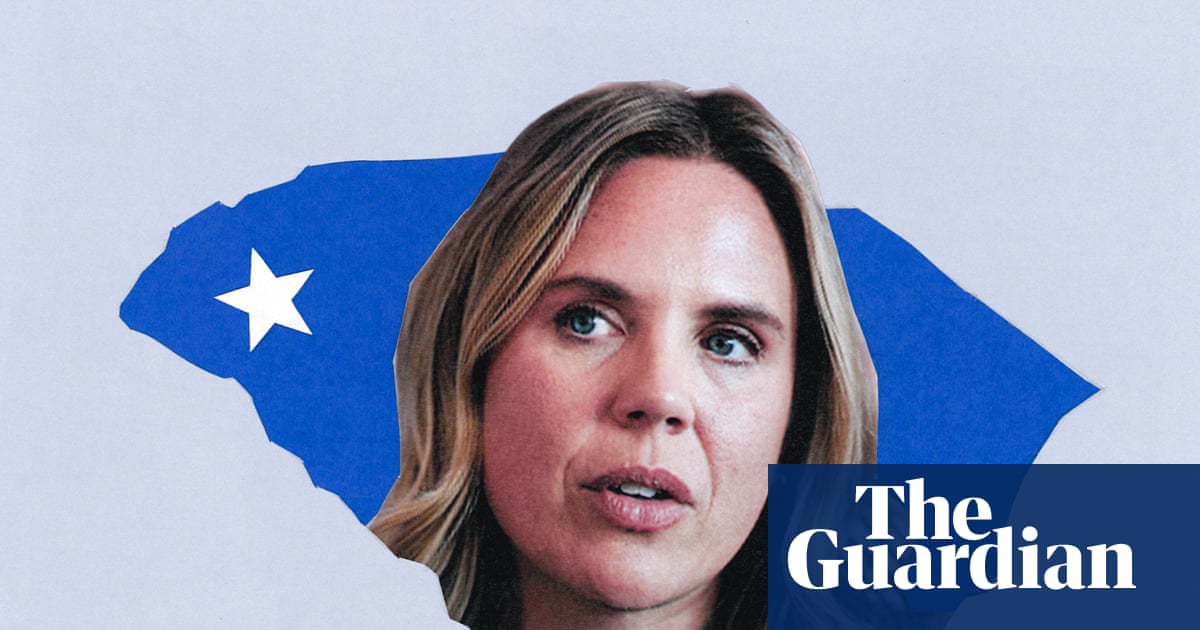
99How to improve your memory: 10 easy, enjoyable expert tips – from reading a book to getting more sleep - The Guardian US
Read on theguardian.com

5000.png?width=1200&height=630&quality=85&auto=format&fit=crop&precrop=40:21,offset-x50,offset-y0&overlay-align=bottom%2Cleft&overlay-width=100p&overlay-base64=L2ltZy9zdGF0aWMvb3ZlcmxheXMvdGctZGVmYXVsdC5wbmc&enable=upscale&s=34c8cf113b309b3d9e593f1435310432


Memory can worsen as we age, but it is often possible to do something about it. Here, memory experts share their advice on how to improve your power of recall.

Retrain your brain

“Memory is a buildable skill. You can train it, just like learning how to ride a bike or drive,” says Sania Alam, the founder of Futuristic Learning, which provides memory-training education. Alam, based in the US, has coached memory athletes who have broken six Guinness World Records. But the times we are living in are not conducive to maintaining a strong memory. “We are in an age where we are bombarded with information,” says Alam. “At the same time, AI has come in, and social media is growing. All of these things are ageing our brains. You see people at a very young age who are beginning to have memory issues.” How can we tackle this? “My suggestion would be to get your hands on any course that teaches you memory techniques, so that you can start using your own brain instead of relying on gadgets, because these days we can’t even memorise our own number, let alone an emergency contact.”

Learn something new

“The best way to improve your memory is to keep your brain active by learning new things and engaging in cognitively stimulating activities,” says Barbara Sahakian, a professor of psychiatry at the University of Cambridge and co-author of Brain Boost: Healthy Habits for a Happier Life. “Find something that you would enjoy, but haven’t tried yet,” she says, suggesting chess, a new language or instrument. In 1995, Sahakian published an article in the British Medical Journal with Martin Orrell, emphasising the need to learn new things to reduce the risk of dementia and Alzheimer’s – in other words “use it or lose it”. “Keeping our brains active through learning and remembering, we drive the neural circuits and keep them functioning better for longer,” she says. “Studies with medical students studying for exams and black-cab taxi drivers learning routes in London have shown that the hippocampus actually increases in volume. So, remember to use your brain through education and other challenging activities, so that you can keep it fit and functioning better for longer.”

Read more

Reassuringly, you don’t have to sign up to a complicated course to improve your memory but can simply open a book instead. “Reading something that interests you, whether it is fiction or nonfiction, has a positive effect on the brain, cognition and mood,” says Sahakian. “Several studies have shown that reading can reduce the risk of cognitive decline and dementia with ageing.”

Avoid distractions

Another way that tech can disrupt memory is through its impact on our ability to focus. “We are rapidly switching our attention from one thing to the next,” says Sahakian. “This makes it difficult for people to then focus their attention and concentrate when they need to accomplish a goal. Experiments have shown that students who have mobile phones in class do not perform as well in tests; even having a mobile phone that was off next to you acts as a distractor of your attention.”

Take your brain on a journey

“We have to use these specific techniques. It’s not magic,” says Katie Kermode, a memory champion from Manchester, who started competing in 2008 and set the world record for remembering names, and numerous other titles since. When trying to memorise something, Kermode advises using the journey technique, which she learned when she was nine to memorise the order of the planets in the solar system. “A thermometer breaks, and the silver Mercury goes everywhere. The goddess Venus clears it all up and puts it into a bag and throws it. It lands on the Earth … It goes on like that, making each planet into an object or a person, and making them into a story, so they link from one to the next,” says Kermode. “In competitions we memorise thousands of digits, which I couldn’t just naturally do by sitting and repeating them to myself. You have to work a little bit, but it really helps you to memorise anything that you want to.”

Similarly, you can create a “memory palace”, which has its roots in the work of the Ancient Greek poet Simonides of Ceos and was more recently popularised by the memory expert Tony Buzan, who died in 2019. “I tend to use ‘memory palace’ when there is a prescribed sequence and ‘journey’,” says Kermode. In everyday life, thinking of a route that you know well and placing things to remember along that route, is really helpful with recalling a shopping list, for example. “You put the first item in your driveway, then the second item could go in your hallway, and you mentally walk through it and try to remember it,” says Kermode. It can be used for remembering a speech or presentation, too. “Each topic of your speech can be in a different location, and if you’ve got sub-points to make within that topic, you can visualise that within the location.”

Never miss a birthday

Kermode is pretty good at recalling dates. “I’ve got techniques for remembering them, where each month has a particular meaning and/or a colour, and then each day of the month has an object,” she says. “But remembering to actually do something on that birthday – that’s a different thing that I struggle with. I would say that is a different part of the brain.”

Kermode uses symbolism to turn abstract concepts into something concrete she can visualise. “If you’ve got something quite abstract to remember,” she says, “like you’re trying to remember a birthday in October, you might turn October into a pumpkin because October is an abstract word but you can use symbolism to make it more real. If you’re trying to remember a number, two looks like a swan, so 2 October could be a swan sitting on a pumpkin.” A lot of people aren’t good at visualising, says Kermode. If this is the case for you, “make it more of a story and involve more people. We even have memory competitors that can’t visualise, and they find ways around it.”

Exam cram

Dr Michael Gruneberg, a former senior lecturer in psychology at Swansea University and founder of Linkword Languages, recommends mnemonics, and specifically acronyms, for revision. “When I was preparing for exams, I would do the reading, so I knew my stuff, then I would pick out about eight points on a topic that I thought might come up and list them, then take the first letter of each to make up a word or a sentence.” A common example is “Richard of York gave battle in vain” for remembering the order of colours in the light spectrum (and the rainbow).

Kermode swears by slides. “For each different subject, like history or geography, have a different slide deck on PowerPoint [or similar], and then each subtopic within that could be its own slide. Choose a background for the slide that represents that topic. It should be related to it, and it should be quite detailed, so you can imagine things happening inside it. For instance, for GCSE biology, one of the topics is platelets. I thought of plates, and I thought of a dinner table. So I had a picture of a dinner table with lots of plates of food, and then all the things that relate to that topic on the slide, including clotted cream as a reminder that platelets clot blood.”

Flashcards can be helpful, says Kermode. “But I think what people miss is using the techniques to help them memorise information in the first place, because flashcards just help you review things at certain intervals. You have to put in the effort to memorise it in the first place.” In a lesson or lecture, Kermode writes down the key points and facts that she wants to remember, and lays them out as a mind map. “So you’re not just writing a list of points, but have your key topic as the central image, and then that branches out to each subtopic.”

Practice makes perfect

Make sure you keep running over whatever it is you want to learn, to ensure it stays in your brain. “If it is a short-term list, then you just need to do it once or twice, and you have probably got it,” says Kermode. “If it is something you want to learn more long-term, then you need to review it regularly because otherwise we naturally forget.” Kermode suggests trying “spaced repetition”, which means practising at increasing intervals. “So the first week, you might go over it a couple of times on the first day, and the same the next day, and then a couple of days later. But then the next week you might be on to once a week, and eventually once a month.”

Take notes and set alarms

Gruneberg, who is 86, says to always make a note of appointment times. “There is something called ‘prospective memory’ that does not improve, to say the least. Remembering to do things, when to see the doctor, all sorts of things like that. It becomes much more necessary to write these things down as you get older.”

“I use alarms all the time,” admits Kermode. “We do become reliant on it. You can try to remember it, but also set the alarm just in case. I think triggering your mind to do something at a certain point, you have to use something that you’re going to do. Say you need to go to the hairdresser straight after lunch – you could associate using scissors to get into the fridge.”

Rest up

Sahakian ensures that she gets at least seven hours’ sleep a night. “You consolidate in your memory what you have learned during the day when you sleep at night. Therefore, it is important to sleep well and not to stay up all night cramming for exams.”

“Sleep is really important for your brain to work in an efficient way, especially if you’re trying to memorise something fast,” agrees Kermode. “If you’re tired, it’s not going to work.” After competing, Kermode often feels exhausted. “There was one competition I won, and I got back home and was trying to get some money out at the ATM, and I couldn’t remember my pin because my brain was frazzled.”

“You face a lot of brain fog when you’ve not slept,” says Alam. “Your mind isn’t working at its top speed, and that is because your body has a circadian rhythm that is designed around sleep. Sleep at the time you need to, so that you can stay sharp.” When trying to commit something to memory, Alam recommends taking regular naps, “so that you can give your brain that time to process the information, put it where it needs to be placed, and then it will be handy when you need it”.

100Everyone is thin and we’re not allowed to say so: the toxic legacy of body positivity - The Guardian US
Read on theguardian.com

4751.jpg?width=1200&height=630&quality=85&auto=format&fit=crop&precrop=40:21,offset-x50,offset-y0&overlay-align=bottom%2Cleft&overlay-width=100p&overlay-base64=L2ltZy9zdGF0aWMvb3ZlcmxheXMvdGctZGVmYXVsdC5wbmc&enable=upscale&s=52dd28755e125399760a8c0b8bfacbbc


Vogue World Milano was held beneath the vaulted glass domes of Italy’s oldest shopping arcade, featuring Gigi Hadid in archival Valentino couture and robots dancing on the catwalk while Miuccia Prada scowled at them. A splashy event staged in the midst of a month of fashion shows in New York, London, Milan and Paris, in which 97.5% of models were a US size four or under, what ticked people off most was the presence of trillion-dollar pharma company Eli Lilly on the list of sponsors.

Eating disorder advocates spoke out against the association between an aspirational fashion show and the manufacturer of the weight-loss drugs Zepbound and Mounjaro.

Fans of doublespeak, however, would have found much to enjoy in the language an Eli Lilly spokesperson used to defend the partnership, saying it collaborates with “cultural platforms like Vogue … because that is where conversations about bodies and health take place. Lilly is working to shift the conversation about weight from aesthetics to health and to challenge the stigma people with obesity face every day.”

So to summarise, Eli Lilly is partnering with Vogue – a byword for fashion, glamour and thinness for more than a century – in order to shift the conversation away from aesthetics.

Eli Lilly is not alone in serving word salad in this bewildering moment.

We are living through a strange time in the language around bodies. Body positivity – a movement that peaked in the late 2010s, and argued that no one body type is morally, sexually or aesthetically superior to any other – has all but vanished within mainstream visual culture. At the same time, much of its social training lingers.

During the body positivity movement’s peak, of the late 2010s, many of us learned to try to think differently about bodies – our own, and other people’s. All bodies are beautiful, we were told, first by activists, then by brands that used those ideas to sell deodorant. At the same time, phrases such as “fat shaming” and “body shaming” went viral as high-profile women revealed the pain wrought by relentless objectification by industry gatekeepers, trolls, fans and the media in the previous decade. We learned, too, that casual body chat could be actively damaging for people suffering from eating disorders. Diet chat became taboo. Self-acceptance, not skinniness, was the prize, we learned – or, at least, we tried to.

We are now in a very different moment, with ideals shaped by a very different set of cultural and economic forces. Self-improvement strategies are pushed at us near-constantly. Social media feeds are thick with thin fitness influencers, GLP-1 before and afters, and injector-influencers advising us how we can jab our way to our best-ever faces. A million GLP-1, Botox and plastic surgery adverts stare down at us from billboards and in doctor’s offices. The dominant narrative suggests we can have near-perfect control over our bodies, if we just have the time, taste and budget. Self-acceptance feels like a relic from the pre-Covid era.

Still, in many circles, it remains socially frowned on to talk about weight loss as an aesthetic goal – even as weight loss could scarcely be more high-profile, with many GLP-1 drug adverts citing average pounds lost, and telehealth companies targeting slim people who want to lose the “last 10lb” on social media.

It remains taboo to overtly venerate thinness – particularly within the sanctioned spaces of media interviews or marketing for large corporations – or even to admit to noticing thinness in other people – yet slimness has never been more culturally rewarded. It’s hard to ignore the reality that so many high-profile people now, from actors playing cops on TV to Instagram chefs to musicians selling us beauty products, appear to be shrinking. What we’re left with is a world in which skinny bodies are lionized in fashion, culture and daily life, but to either admit a desire to conform, or express concern about it, feels socially verboten.

What body positivity was

Body positivity has radical roots, said Tigress Osborn, chair of the National Association to Advance Fat Acceptance (NAAFA). The phrase has been used by eating disorder therapists, and “especially fat liberation and fat activists”, she said, since at least the 1990s. Osborn views the phrase in tandem with other “body liberation” movements, including Health at Every Size, which argues that higher body weight should not be pathologised, and also “bodily autonomy”, not only in terms of sexual freedom or reproduction, but meaning “you own yourself and you get to do what you want” with your body.

Its mainstream adoption began with plus-sized people, who posted pictures, on Tumblr and Instagram, along with captions of self-love and self-acceptance along with the hashtag #BoPo. Gradually, those ideas went viral.

What followed was heralded as a golden age of body inclusivity. In 2015, the model Tess Holliday was billed as “the world’s first size 22 supermodel” on the cover of People magazine. The rise of celebrities who didn’t fit the usual skinny celebrity mould like Meghan Trainor, with her 2014 body positivity anthem All About That Bass, and plus-sized superstar Lizzo, who rapped joyfully about “getting thicker”, became part of a cultural narrative. Mainstream brands soon jumped on board, with campaigns urging body positivity through the purchase of self-tan and leggings. Luxury fashion tentatively followed suit, with US Vogue featuring a plus-sized model, Ashley Graham, on its cover for the first time in 2017, though the composition of the shot – wedged between straight-sized models, so that the contours of her body were not visible – raised immediate questions about the authenticity of this apparent milestone. But, by the time Lizzo covered US Vogue in 2020, as the first Black plus-sized woman to do so, presented in a full-body shot wearing tomato red Valentino chiffon, the movement’s impact on the highest echelons of fashion felt more certain.

The way body positivity was embraced by the fashion industry could sometimes feel hollow. Osborn describes peak body positivity as: “You go, girl!” She said that it was still “radical to declare that you love yourself in a world that is constantly telling you that you should hate yourself” but said the industry’s focus was only on the “personal and individual” and not about trying to “change or dismantle systems”.

Others said it glorified obesity. One plus-sized influencer, Gabriella Lascano, said that the cultural movement ignored health concerns and encouraged her to put her own wellbeing at risk. (The CDC links obesity to an increased risk of many serious diseases and conditions, though fitness is a better indicator of health than BMI and it is a misconception that better health always means a smaller body.)

What most people agreed on was that its adoption by companies wishing to sell products often felt inauthentic.

In mainstream consumer spaces, brands from Dove to Aerie to Lane Bryant were using body positivity slogans, and more diverse models and influencer-ambassadors, to try to sell products.

The more mainstream things got, said former body-positivity activist Matthew Diaz, the more the same beauty standards it was supposedly railing against came into play. Those being “lifted up”, he said, were only “slightly outside what would be considered acceptable by the norm, but by no means representative of the biggest swaths of the community”.

As a consequence, Diaz grew to question the term itself, which, he said, “still focuses a lot on appearances, but just allows for more diversification”. He is now a “body neutrality advocate”, a concept that “decentres your appearance. The issue isn’t that my body isn’t right. The issue is that I am deriving all of my value from it.”

Within luxury fashion, body positivity did have a limited impact. In the late 1990s and 2000s, plus-sized models were virtually nonexistent on luxury catwalks. Extreme catwalk skinniness, on the other hand, was so ubiquitous that it prompted frequent public outcries, and industry initiatives were established to protect models, particularly after two models died from complications of anorexia in 2006.

During the body-positivity era, according to online publication the Fashion Spot, which tracked catwalk diversity from 2015 to 2022, there was a trend towards diversity: only six plus-sized models walked in the fall 2016 season, but there were 50 in fall 2020, and a record 103, or 2.34% of all castings, in fall 2022. Since then, though, according to Vogue Business, which uses slightly different metrics and began tracking shows in 2023, size diversity has decreased. Ninety-five per cent of looks were shown on straight-size models (US sizes 0-4) in 2023 and 2024. That has risen to 97% in the two years since.

Many household name brands didn’t do body positivity at all (one academic study found that Calvin Klein, Versace and Chanel did not use a single plus-sized model from 2013 to 2018.) Even so – from a very low bar – the presence of even a couple of plus-sized models in, say, every third or fourth fashion week show felt like progress.

Behind the scenes, though, inclusivity wasn’t really part of the business model, said Michaela Stark, an artist, model and couturier who worked in fashion at the peak of body positivity. Brands often didn’t actually make clothes in plus sizes, even when they modelled them on plus-sized models (as was the case with Paloma Elsesser’s 2022 I-D cover, on which she later commented: “I am not just going to wear a stretchy dress. I’m wearing the Miu Miu” – when Miu Miu did not make clothes in her size in reality).

For hundreds of years, said Stark, “every single micro level of fashion has catered to creating clothes for an ultra-thin body. Brands would have to invest a whole lot of money and expertise into reinventing that.” That didn’t happen.

She would sometimes help cast diverse models for brands, and the process could be painful. At one shoot for a magazine in Paris, a creative director asked her to cast models as though from a shopping list, she said: “It was like: one Black, one Asian, one old, one fat. You’re not casting these people because of who they are. You’re just trying to tick every box,” she said. She modelled herself and remembers a stylist telling her: “You look like a squished sausage!” Her own artistic work – she creates corsets that accentuate rolls of flesh – was branded as “body positivity”, which did not sit right with her, “not because I don’t strongly believe in the ethos, but because, in the peak, you could feel people doing it for cultural validation”.

The impacts of body positivity, even at its peak, remain contested. Several studies found viewing body positive imagery beneficial for individuals’ mood and body satisfaction in the short term; others claim otherwise. But it was this inauthenticity that put off the next generation of young fashion fans, said Anastasia Vartanian, who writes as @FatAnnaWintour – a name wittily capturing the tension she felt as a curvy, teenage Tumblr fashion obsessive. They found the worthiness “cringy”, she says, and overcorrected. Among young people now, “it’s almost now cool to be problematic”, she says. As the Y2K trend infiltrated young people’s wardrobes, she started noticing “a lot of worship of old 2000s runways” online, featuring pictures of very thin models posted with captions along the lines of: “bring back real models!” and “fashion’s not the same any more!”

Vartanian said what has happened since then “is really wild. It’s unsettling how a lot of people in the public eye are so very thin. And it feels as though we’re living in a twilight zone where you can’t comment on something that’s clearly unhealthy without sounding mean. But some people are using the language of body positivity, even body neutrality, towards what is clearly anorexia, and I’m finding that such a headfuck.”

An unnamable thing called thinness

What body positivity has changed, and profoundly, is language. In the 00s it was commonplace for objectively slender celebrities to be labelled “porky” in the tabloids, acceptable for Victoria Beckham to be weighed on live TV, for Karl Lagerfeld to say “no one wants to see curvy women” or blame “the hole in social security” on “all the diseases caught by people who are too fat”. (Lagerfeld lost 90lb himself in the early 2000s. Perhaps he was hungry.)

It was normalized, too, for Victoria’s Secret models to detail their grueling preshow routines. In 2011, for example, model Adriana Lima said she did not eat solid food for nine days before walking the catwalk in her undies. And who could blame her? Because, during this time, famous women were constantly told they were too fat by producers and impresarios. It was so normalised that when, in 2004, Simon Cowell told a 19-year-old X Factor auditionee she was too overweight to be a pop star, Sharon Osbourne – the good cop in this scenario – invited her to the next round by saying, with a kind smile: “Mrs, go on a diet.”

Much of the pushback against this kind of talk came from high-profile women themselves, who spoke out against the scrutiny they had faced for decades. Ashley Graham, for one, wrote a viral essay declaring: “The cycle of body-shaming needs to end. I’m over it.” Jessica Simpson, Keira Knightley, Hayley Atwell and Jennifer Lawrence all made similar comments. In a receptive, peak #MeToo era, the tide turned.

Then came Ozempic. Even body-positivity icons including Trainor and Lizzo lost weight with semaglutides. Oprah, whose yo-yo diets and weight struggles had been watched like a soap opera for decades by the public, spent most of 2023 talking about her GLP-1 weight loss experiences while promoting a book she co-authored, Enough: Your Weight, Your Health, and What It’s Like to Be Free.

Fans expressed disappointment as these women became icons for something else entirely: the idea that, deep down, we had all wanted to be thin anyway. As ever, individual women were taken to task, and were understandably annoyed about it. As Adele said: “It’s not my job to validate how people feel about their bodies – I feel bad that it’s made people feel horrible about themselves but it’s not my job. I’m trying to sort my own life out.”

The average GLP-1 weight loss is 10-20% within one year, meaning many plus-sized people who take GLP-1s remain plus-sized afterwards, Lizzo included. Yet the narrative about fatness has shifted profoundly.

Now, talking about weight loss for aesthetics remains taboo – but talking about weight and health is a different story. For people in larger bodies, whom others believe would be healthier if slimmer, “it emboldens literally everyone”, said Osborn. “People get to tell themselves that they’re being kind to you by telling you that you should be using it.” This pressure, she feels, is at odds with bodily autonomy: “If you want to lose weight with these drugs, that’s your business. But you shouldn’t be sociopolitically coerced into it.”

Weight goes unsaid

In June 2021, at the same time the first GLP-1, Wegovy, was approved for weight loss, social media was shifting profoundly. TikTok was booming; it became the world’s most-downloaded app in 2022. The workings of its algorithm, though notoriously opaque, were very different from what had come before. It’s For You page apparently served content based on demographics and engagement, rather than prioritizing content from accounts users had chosen to follow.

This seemed to skew thin: studies found that TikTok perpetuated “toxic diet culture” and promoted the misconception that “weight is the most important measure of a person’s health”. Instagram’s feed changed accordingly. The idea that our better selves could “curate our feed” – a frequent refrain in the body positivity era, when campaigners urged us to follow accounts representing a variety of different bodies – no longer felt possible.

Many women reported feeds flooded with GLP-1 content, fitness chat and plastic surgery before-and-afters. Eating disorders had mushroomed during Covid and, for some, this contributed to very serious mental health issues. In 2025, TikTok announced that it had banned a hashtag – #SkinnyTok – which promoted disordered eating. But much worrying content still remains, and is very easily accessed. Amanda Raffoul, a University of Toronto assistant professor, explains that “the particular unique danger of the modern age of social media is the algorithmic funneling”, because content is pushed “to people who might not have been seeking it out in the first place”. The apps are doing better, she said, in banning “blatantly pro-eating disorder” content. But there is so much “grey-area content that platforms are either not succeeding, or maybe don’t care to do a good job, in eliminating, because it reaches larger audiences and is more profit-generating”.

Images of certain celebrities have fuelled week-long churn cycles, as when Ariana Grande appeared looking desperately thin in her Petal music video. The debates about whether it was OK to comment about her appearance fuelled the story for days. And there isn’t a right answer, said Raffoul, adding that even those working to combat eating disorders struggle. If you were worried about a person in your real life circle, she said, the advice would be straightforward: “You ask them about how they’re feeling. But we can’t ask a celebrity: ‘Hey, girl, how you doing?’ And those people have social capital.” Picking apart an individual is counterproductive, but also: “What message are we relaying if we say nothing?”

There is no right answer, so debates abound, which appears to be how the algorithm likes it.

And still, for all of the noise in the comments, in the legitimized spaces of school gates and red carpet interviews and offices, the idea that we might want to be skinny is only ever uttered in a whisper.

Fitness does a lot of heavy lifting. As one nutritionist, Hadlee Garrison, put it in a recently posted video liked by 40,000 people, titled “Girl from 2006 meets girl from 2026”, we have developed a new lexicon. Influencers talk about macros, not calories. Looking snatched or toned, not looking skinny. Our feeds are full of advice on eating more protein, achieving calorie deficits, but never diets.

As 2026 girl explains, she never weighs herself. “The scale is such a flawed metric,” she said. “I do a body-composition scan. It tells your fat percentage, visceral fat, lean mass, water weight, metabolic age.”

This week’s Victoria Secret show demonstrated the shift. Preparation, in 2026, is not about avoiding food, said Rosie Huntington-Whiteley. It’s “a mindset more than anything”; it’s about “feeling strong and fit, as opposed to thinking about a number on the scales or on a measuring tape”. Yes, there is strength training, rest, hydration and protein, lymphatic drainage, cold plunges and facials, but “nothing is off the table for me ever with my diet”.

And so, word salad abounds.

Fashion magazines that would never openly applaud skinniness run galleries titled: “Abs Are the Best Beauty Flex at the 2026 Grammys.” Influencer-injectors claim they would never comment on, for example, Susan Dell’s face – before unpicking “why this look can happen and what you can do if you feel like it’s happening to you”, and asking, amusingly, while pointing at a picture of Dell’s face: “now, what are the key features that stand out that look human?”

Demi Moore, who looks about 25 in her 60s, stars in People magazine’s World’s Most Beautiful People issue, while saying her appearance “doesn’t define my value or who I am”, then promotes Lancome’s Absolue Longevity MD range, which, she says, is “moving away from this idea that we’re fighting something through anti-ageing”. The product’s aim, rather, is to “reverse the skin’s visible biological age at every life stage”, which sounds quite similar.

What we are left with is doublespeak – as the rhetoric popularised in the body positivity era is skewed to fit a very different purpose – or silence, as friends shrink before our eyes and we don’t say a word, or celebrities become stick-thin and it feels unsisterly to notice. In many real-life circles, weight becomes the great unsaid, an issue that is too grave to look at directly. Only in the anonymity of the comment section, are bodies truly discussed – ad nauseam and for hours.

Recently, though, when the Practical Magic 2 star Joey King responded to speculation that she had had a facelift at 26 – after the internet described her as “snatched” on the Met Gala red carpet – she revealed her actual pre-game tactics: a 36-hour fast – “No food, nothing but water … I don’t promote that,” she said – and lymphatic drainage. There was remarkably little pushback or handwringing about that online – rather, it was presented in some headlines using the body-positivity era language of her “shutting down” facelift rumours. Perhaps, finally, there was nothing to argue about. At least she was being honest.

101‘Ferritin face’: are social media claims about iron deficiency fact – or fiction? - The Guardian US
Read on theguardian.com

6686.jpg?width=1200&height=630&quality=85&auto=format&fit=crop&precrop=40:21,offset-x50,offset-y0&overlay-align=bottom%2Cleft&overlay-width=100p&overlay-base64=L2ltZy9zdGF0aWMvb3ZlcmxheXMvdGctZGVmYXVsdC5wbmc&enable=upscale&s=a28d927737cb7ca46cdb2fbd78709122


TikTok is rife with influencers warning of “ferritin face”, a term they use to describe the pallor, dark circles, dry skin, and hair loss claimed to indicate low iron stores. But is this based on fact or fiction, and when is it time to head to the GP?


What is ferritin?

Iron is not made in the body, so typically we consume it in our diet. Ferritin is the protein responsible for storing iron in the body, particularly in the liver, and releasing it in a controlled manner.

By measuring ferritin levels, which can be checked via blood tests, it is possible to get an snapshot of the body’s iron reserves, although experts warn such levels are not always a reliable guide.

Blood ferritin levels of less than 30 micrograms/L indicate an iron deficiency, according to guidelines from the National Institute for Health and Care Excellence.

However “a level below 50 might be a pointer of iron deficiency,” said Sue Pavord, professor of practice in medical haematology at Oxford University hospitals.


Can low ferritin change a person’s appearance?

The symptoms influencers describe, such as dark circles under the eyes, grey skin, cracked lips and hair loss, can be caused by a variety of factors, including genetics, stress and dehydration. But experts say low iron stores can have an effect.

“Iron is needed for every single cell of the body. So if you are iron deficient, you will be very fatigued, have brain fog, your skin will look dull and saggy, you’ll look pale and tired,” said Pavord. “While we can’t diagnose iron deficiency from the face, it might be a suggestion that there is iron deficiency.”

Prof Toby Richards of the University of East London and the Iron Clinic added such changes were particularly pronounced in people with very low iron stores. “They tend to be the really sick patients,” he said.


Why might people have low ferritin?

“Periods and pregnancies are the most common [causes],” said Pavord, but others include not getting enough iron – either from dietary choices or because of poor absorption, as can occur with coeliac disease.

Low ferritin levels can also arise as a result of blood loss linked to gastrointestinal problems, such as gastritis or polyps.

“We also sometimes see it in athletes because of the high demand for iron on their bodies,” she added.


What should people who are worried they might have low ferritin do ?

Richards said those who are at high risk of low ferritin – such as people who have heavy periods, are pregnant or have had children, or are vegetarian or vegan – should ask for a blood test, adding that should include a full blood count, ferritin level check, and test for levels of B12 and folate.

“This is a proper disease, and to put it into perspective, it’s the leading cause of disability in women of reproductive ability,” he said.

Pavord also said those who are concerned about their ferritin levels should ask for a blood test, adding it was important to understand the cause of iron deficiency.

“Older people suspecting iron deficiency would need a proper clinical assessment and investigations to look for a source of bleeding from the bowel,” she said.

Pavord said it is possible to buy iron tablets over the counter at a pharmacy.

“Taking iron tablets without confirming iron deficiency is not really going to do you any harm, particularly if you’re a young woman, because you’re losing a lot of iron with periods,” she said.

But Richards noted many products do not necessarily contain the appropriate dose. “If you are iron deficient, you need to be on a full treatment dose … and then repeat your blood results in three months’ time,” he said. “What’s marketed is normally the lower dose supplements


Pavord was positive about the increase in awareness.

“We need to stop normalising iron deficiency,” she said. “Many women are just exhausted trying to cope with their periods, cope with their pregnancies, cope with their young children and their busy jobs, and we need to stop normalising fatigue.”

Richards agreed. “ Anything that raises the plight of women in this area is a good thing,” he said.

However Dr Asiya Maula, a GP from the private firm The Health Suite, was cautious. “The risk with social media trends is that people may see themselves in a list of symptoms and assume they have a deficiency without checking whether that is actually the cause,” she said.

102Frightfully good get-ups: how celebs celebrated Halloween – in pictures - The Guardian US
Read on theguardian.com

From Heidi Klum as her own severed hand to Lily Allen as a Ticketmaster seating plan, this year the celebrities didn’t disappoint

Continue reading...
103DIY socks, messy collars and cummerbunds: nine wardrobe updates from the catwalks - The Guardian US
Read on theguardian.com

1736.jpg?width=1200&height=630&quality=85&auto=format&fit=crop&precrop=40:21,offset-x50,offset-y0&overlay-align=bottom%2Cleft&overlay-width=100p&overlay-base64=L2ltZy9zdGF0aWMvb3ZlcmxheXMvdGctZGVmYXVsdC5wbmc&enable=upscale&s=29fd71584009ee4c0ffa3a6b019dae7c


Dark mornings, darker evenings and the end of Celebrity Traitors. It’s easy to feel a bit meh at this time of year. However, without sounding too TikTok life coach, just as you are encouraged to winter-proof your morning routine (light a breakfast candle, make your favourite cup of tea) to start your day on a brighter note, the same approach could be applied to your wardrobe. An outfit you look forward to wearing to the office or an accessory update that can make a long-term favourite piece feel new again, can help put some much-needed pep in your step. That’s even when the forecast reads five days of rain in a row.

The autumn/winter 2026 collections shown on the catwalks way back in February (yes time works funny in fashion) have finally hit shop floors, and high-street brands have been quick to pay homage. But there are plenty of styling tips and tricks you can borrow for free. Here are nine to get you started …

***

In-N-Out

In good news for those who struggle to make decisions, this season, collars come half tucked, half untucked this season. See Bottega Veneta (above), where shirt collars popped over knits and coats and Jil Sander where they half emerged over blazers. Yes, it will be annoying when someone tries to tell you your collar is only partly popped.

Sewing skills

Love the Prada floral socks? Nearly fainted when you saw the £860 price tag? You’re not alone. DIY instead with a packet of satin ribbon rose buds and your favourite knee-highs. Haven’t picked up a needle and thread since textiles class? Don’t worry, a crash lesson on YouTube and some sheer determination will get you through it.

Tuck and go

At Chloé, creative director Chemena Kamali tucked everything from jeans to leather trousers into over-the-knee boots in contrasting colours. Over at Celine and Bottega Veneta, tailored trousers were loosely stuffed into ankle boots. It’s one way to worry less about hems and puddles.

Coming up roses

Still have a pile of rosettes from your sports day victories or pony club days? Pin them to a blazer or silky top a la Simone Rocha. For extra impact, try clustering them together. Top tip? Avoid sky blue unless you want to be mistaken for a Tory candidate on the election trail.

Reverse it

We all know how useful a white shirt is, and now, thanks to Givenchy, there’s even more mileage to it. Follow the lead of creative director, Sarah Burton, and style yours backwards. Very useful if you happen to spill tomato soup down the front of it too.

Nighttime necklaces pivot to daywear

A jingly jangly necklace isn’t just for party season. At Celine, oversized versions were styled over formal coats and blazers. For affordable costume jewellery, secondhand sites and charity shops are a good bet.

Don’t skip the gloves

Yes, by day 15 of rain, wind and cold, you will get bored of wearing your winter coat. Slow down this process by adding a pair of colourful gloves to your look. At Polo Ralph Lauren, emerald greens and marigold yellow brightened up charcoal coats and denim jackets, while leather opera gloves in cacao and teal popped up at Balenciaga. It’s similar to the great red sock trend of 2023. Easy yet surprisingly impactful.

Cinch and go

Make your next secondhand search a cummerbund. The menswear black-tie accessory has now been reimagined by fashion brands including Kallmeyer, Dries van Noten and Valentino, the latter whose cinched top and dresses with contrasting coloured waist sashes. We’ve also seen formal cummerbunds wrapped around trench coats and striped ruby shirts which adds an unexpected edge.

Downplay a personality skirt

Unless your daily screen time is a single digit, you will be well aware that a personality skirt is gearing up to be big in fashion. Think a leather midi skirt. An embellished pencil skirt. Or in the case of Tory Burch above, high-shine patent. This all sounds quite scary for real life, but follow Burch’s lead and pair it with something boring on top, such as a cotton sweatshirt or a cashmere jumper. For extra laid-back energy, roll up the sleeves. Main character who?

To read the complete version of this newsletter – complete with this week’s trending topics in The Measure – subscribe to receive Fashion Statement in your inbox every Thursday.

104The shocking rise of rib remodelling: ‘I wanted that hourglass shape’ - The Guardian US
Read on theguardian.com

3839.jpg?width=1200&height=630&quality=85&auto=format&fit=crop&precrop=40:21,offset-x50,offset-y0&overlay-align=bottom%2Cleft&overlay-width=100p&overlay-base64=L2ltZy9zdGF0aWMvb3ZlcmxheXMvdGctZGVmYXVsdC5wbmc&enable=upscale&s=1e511297019e40c095c822e4518332cb


Daniela Cesin was 14 when she began thinking about her looks. “I was a little bit chubby and I started to work out at home and lose weight. I saw the difference in my body: my abs, the muscles in my arms, and I started liking it,” she says. By 31, she had the slim, toned body she had hoped for, but something was still missing. “I wanted to have that guitar hourglass shape.”

In August, Cesin travelled from Miami, where she has lived for the past 15 years, to her native Venezuela for liposuction and a fat transfer to her hips. She met her cosmetic surgeon for the first time the day before the procedure, and he realised she didn’t have enough fat to go ahead with it. Instead, he offered to perform RibXcar: a rib remodelling surgery that would involve fracturing three of her lower ribs on each side and binding them in a corset for three months, to set the ribs in a new position and give her a wasplike waist.

“I was like: ‘No, no, no, I don’t want to do anything with the ribs,’” she says. The idea of breaking the bones around her vital organs sounded a lot more invasive than a breast augmentation, which she had 10 years ago, or a rhinoplasty (nose surgery) and blepharoplasty (eyelid surgery), which she had two years ago. Also, she had never heard of the procedure.

But after the consultation, she decided to trust her surgeon. Cesin had already paid for flights and taken three weeks off from her job as a sales director. The next day she was anaesthetised, and her surgeon used an ultrasound to locate the ribs, made six small incisions in her back, and inserted a vibrating tool to create greenstick fractures – an incomplete bone break – on each rib. When she came to she was wearing a black corset with small knobs on each side that she could tighten to her preferred measurements.

The recovery has been uncomfortable. It was initially hard to stand or lie down without help, and there was soreness from the incisions. The first week, Cesin barely slept. “Your body doesn’t get used to any position, so every hour I would wake up.” But the worst part has been eating while wearing her corset, which must remain on for 23 hours a day; this causes acid reflux. Despite her discomfort, when we speak six weeks after her surgery, she is pleased with the eight centimetres she has shaved off her waist.

Cesin is one of a small but growing number of women choosing to fracture their ribs for an hourglass shape. To achieve this look, women previously underwent riskier rib removal techniques, which reduce the protective bone barrier for the liver and spleen. Kazbek Kudzaev, a plastic surgeon in Russia, realised in 2017 that he could achieve similar aesthetic results when he moved the ribs with a drill until one side fractured, then bound the body in a corset while they healed. Since his discovery, surgeons in countries including Colombia, Korea and France have refined the technique. Today, it takes about an hour and is performed under general anaesthesia as a day-surgery treatment.

It is touted as a noninvasive procedure, but many of the women I interviewed described feeling as if they had been “hit by a bus” after surgery. And there are serious risks. These include standard surgical complications, such as allergic reactions to the anaesthesia, blood clots, wound infections and seromas (pockets of fluid that build up under the skin). But also more specific dangers, including a collapsed lung, known as a pneumothorax; and a haemothorax, where blood collects in the space between the chest wall and the lungs. Both of these are potentially fatal.

Sandip Hindocha, a consultant plastic surgeon at the Private Clinic on Harley Street in London, is sceptical about the procedure. “If a patient came to my clinic and said this is what I want to do, I’d be asking the question: ‘Why do you want to do that? And why do you want to make such a permanent change to your body?’”

He references a paper published in Plastic and Reconstructive Surgery, which states that between 2018 and 2024, out of 2,351 patients who had rib remodelling, there was an overall complication rate of 3.7%. “That’s not a small number,” he says. “If we did a breast augmentation, you wouldn’t expect a complication rate like that.”

The British Association of Aesthetic Plastic Surgeons (BAAPS), doesn’t endorse the procedure. Former president Nora Nugent points out that it is relatively new, “with limited data available on long-term results and it requires advanced body contouring skills as well as the ability to treat any potential complications. It may be something that UK/BAAPS plastic surgeons bring into their practices in due course but it is not available at the moment.”

The procedure isn’t typically offered to cisgender women over the age of 40, because of the increased chance of them having osteoporosis, which can cause the bones to fully break rather than fracture. Another complication for patients is that gaining weight can cause your body to change shape again, so pregnancy can affect the results. The procedure “needs to be done with a surgeon who has a lot of experience in it,” says Hindocha. “Maybe a surgeon that also does chest wall reconstruction.”

In the UK, plastic surgeons are advised to give patients a cooling-off period of at least two weeks to weigh up the risks and potential consequences of having any procedure. But Hindocha worries that patients are sometimes opting for rib remodelling with less time for reflection, despite the permanence of the change. “If you put an implant in and later you don’t want it, you can, worst case scenario, remove it,” Hindocha says. Whereas the ribs are “a structural, rigid part of you that you cannot reverse.”


Throughout history, waistlines have expanded and shrunk. Between the 16th and 19th centuries, corset wearing and tight-lacing became a symbol of beauty for the “leisure class” (the restrictive garments made physical labour impossible). The engineered hourglass shape fell out of fashion in the 1920s, but made a comeback with Marilyn Monroe, before slender, androgynous frames gained popularity from the 60s to the 90s. In the 2010s, the extreme curves of the Kardashians became the defining silhouette.

In recent years, tinier, waif-like frames have become popular on TikTok and Instagram, but a highly defined waist is also considered desirable. This is thanks, among other things, to the multibillion-dollar shapewear industry; global access to Instagram and filters; and easily streamed online workout videos that focus on creating a slim, hourglass silhouette through targeted training. But now there are adverts on social media for permanent surgical options too.

In July, 10 Australian influencers, who have made names for themselves globally on shows including Married at First Sight and Below Deck, prompted headlines with a trip to Bali. They were there for a brand collaboration with a rib recontouring practice called Snatched Waist. The clinic they visited looked more like a spa than a surgeon’s office and, post-surgery, the influencers were soon lounging by the pool, showing off their narrow waists on Instagram.

Not everyone is sunbathing in a bikini after the procedure. When Sophia woke up from her rib remodelling procedure in November 2025, she expected to be transferred to her Beverly Hills hotel room, a little sore but ready for recovery. Instead, she was surrounded by emergency medical technicians, who were putting her on to a stretcher to take her to hospital by ambulance. The next thing she remembers is lying in a hospital bed, hooked up to an electrocardiogram and an intravenous drip.

A CT scan showed Sophia had suffered a pneumothorax: 25% of one of her lungs had collapsed. She was put on oxygen and monitored for six hours before being released. Although she had signed all the consent forms for the procedure, “it was completely shocking to me,” she says.

For at least a month, Sophia had a deep pain in her lung and some shortness of breath. She had to return to the hospital after some fluid build up, but eventually started feeling better. The pain from the surgery itself subsided after about three weeks: coughing and sneezing was no longer agonising. And she was able to return to her office job and hike in her corset at the weekends.

Sophia is transgender and chose the procedure to feminise her body, by narrowing her torso, which she felt was too wide. She began consultations for the procedure in August last year, with the surgeon planning to fracture ribs 10, 11 and 12. But by the time of her surgery in November, the surgeon felt confident he could achieve better results by going even further up the ribcage, ultimately operating on five ribs on each side. Sophia knew this would increase her risk of a pneumothorax, but was willing to take the chance.

“I didn’t start transitioning until I was 47 and I feel as if I’m playing catch up, because I’m so old, and testosterone was running rampant all those decades,” she says. “That’s why gender-affirming procedures are really important to me.” The final results weren’t what she had hoped for though. “It was a bit underwhelming.”

In September this year, she went for a second round of rib remodelling with Leif Rogers, a different surgeon in Pasadena and Beverly Hills, California. Rogers removed cartilage from the anterior side of her ribcage on ribs three to 10. On rib four, he cut sections out and secured them with titanium plates and screws. Sophia had a breast augmentation at the same time, as the inframammary incisions were already open. When she emails to update me a week and a half after her second surgery, although there has been no collapsed lung this time, she says: “Recovery has been significantly more painful, and I am experiencing more shortness of breath.”

Despite the risks, Rogers expects skeletal remodelling to take off: that includes rib remodelling, clavicle shortening and pelvic widening. “Versions of it have existed for quite some time,” he says. “Limb lengthening and shortening has been around for a long time. Of course, we change the bony skeleton of the face all the time, but other than that we haven’t changed the torso very much. The changing of the skeleton of the body is a little bit newer, as for a long time people used to just put their hands up and say: ‘Too bad, this is the way you’re built.’”

So why now? “The techniques have got way better. And there’s marketing for it out there.” In the US, he says, medical insurance often covers the procedure for transgender patients, “because they consider it a medical condition to have gender dysphoria. And I think on top of that, it’s just social media. Social media makes everything explode.”

Rogers says the Kardashians have been highly influential. “I think Kim was part of why we wanted a big butt, and then she lost a lot of weight, so everyone wants to be like Kim, right?” In 2022, Kim Kardashian attended the Met Gala after losing a considerable amount of weight, in a sparkling dress once worn by Monroe. Her slender figure coincided with a growing movement towards thinness, a rejection of the body positivity movement of the 2010s, and the advent of the Ozempic era, when the diabetes drug became popular as a weight-loss treatment. A controversial 2022 New York Post article was headlined: “Bye-bye booty: Heroin chic is back”. On TikTok, people had begun measuring their waists using A4 sheets of paper, phones and Apple headphone wires, showing off their Barbie-like proportions.

“We have always done very demanding things for beauty,” says Heather Widdows, a philosophy professor and author of the 2018 book Perfect Me, who mentions foot binding and extreme corsetry. “But they were always about adornment. I think what’s different with the global ideal now is that increasingly things are becoming normalised and naturalised. We’re seeing things that are purely about adornment being recategorised as health and hygiene, and then they become invisible, and if you don’t do them you start to look abnormal,” she says. “It becomes about standard presentation.”

As we move from a text-based culture to a visual culture, increasingly, “who we are is how we look,” she says, “and that is a form of identity that is a massive and dramatic change, but one that’s snuck up on us, that we don’t talk about enough. So the visual is becoming the dominant way of presenting ourselves, being ourselves and thinking about ourselves.”

Elizabeth Rivera trained in high level gyms alongside American football players, baseball players and Ms Bikini Olympia, to try to reach her beauty ideal. This was the X-frame specific to bodybuilders: broad shoulders, prominent glutes and a small waist. For her, she says: “That looks like health. That’s a visible indication of discipline.” Rivera was “busting ass”, trying to reach this aesthetic ideal, but “it was not working for me. And I was making myself very sick from overtraining.”

Rivera is a 35-year-old licensed masseuse and she has lipedema, a chronic condition that causes abnormal fat deposits, which can be painful and are resistant to diet or exercise. “Once I accepted that my inability to lose fat wasn’t my fault, I said: ‘OK, I can accept that.’ But I still would like to have a smaller abdomen. I still would like to have more of an hourglass. So surgery was the next option.” A friend had recently had her ribs remodelled, and Rivera was impressed with the results.

She stands up halfway through our Zoom call to show off her waist. It’s objectively tiny, and the effect is exaggerated by her breast implants and petite Brazilian butt lift (BBL). “I can go most places in Chicago [where she lives], and there’s no one shaped like me. And I’m not saying that in a bad way. I’m saying that because it looks more extreme with the ribs, it’s noticeable.”

In Miami where Cesin lives, she says she doesn’t feel her shape puts her in the minority. There, cosmetic surgery is widely accepted and expected. “The girls in Miami, all of them look the same, because it’s a lot of fillers, a lot of buttocks, a lot of surgery and BBLs,” she says, adding that it’s easy, as a result, to get carried away. But she doesn’t want to end up like that. “People say rib remodelling was a little bit extra, that I didn’t need to do anything, but it makes me happy, so that’s why I did it. But I’m done. No more surgeries.”

105Jess Cartner-Morley on fashion: to nail this year’s British heritage look, just study Rivals - The Guardian US
Read on theguardian.com

6347.jpg?width=1200&height=630&quality=85&auto=format&fit=crop&precrop=40:21,offset-x50,offset-y0&overlay-align=bottom%2Cleft&overlay-width=100p&overlay-base64=L2ltZy9zdGF0aWMvb3ZlcmxheXMvdGctZGVmYXVsdC5wbmc&enable=upscale&s=8cd81b1d7019b1803ca88fc3d1fbf353


British heritage, in fashion terms, is a country where it is permanently October. A conker-brown and pleasant land, if you will. Brand Britain in the style sense comes into its own in autumn: roaring fires, muddy lanes, damp dogs. Waxed jackets and chunky knits, tartan and tweed, jaunty scarves to banish draughts. Clothes for going on a hearty walk, but with a hip flask in your pocket. Fashion has been mining this seam since long before Brideshead Revisited made battered evening dresses and Oxford bags look romantic, and it keeps returning, because trad British style is satisfyingly utilitarian while also being loaded with enough backstory (class, history, eccentricity) to be intriguing and reinventable.

Also: Rivals. It has taken considerable restraint for me not to mention Rivals in the whole of the first paragraph, because it is now a matter of mere weeks until we get our next Jilly Cooper fix and I, for one, cannot wait. Cannot wait for Cameron stalking the corridors in her foxy power suits, for Taggie in her cute jeans and jumpers, for Valerie in head-to-toe tweed and an aggressive amount of blusher. The success of Rivals has done for old-school British dressing what Emily in Paris did for the beret, only with better jokes and more adultery. Jolly hockey sticks style is the new French girl chic. This fantasy is homegrown, which makes it both more embarrassing and harder to resist. Just as Emily and her friends and frenemies are a camp send-up of fashionable Paris, Rivals is a fond, nostalgic semi-parody of the British wardrobe. The show’s costume designer, Ray Holman, has drawn on original 1980s pieces from Dunhill and Mulberry for inspiration. With Liberty fabrics, nods to polo uniforms and sturdy waxed coats, he has brought the Sloane ranger back into the fashion conversation for the first time in years.

British heritage is a style vibe right now. Barbour and Mulberry joined Burberry in stepping up to the style plate and taking part in London fashion week this season. Kate Moss is in her wellies for Hunter’s latest advertising campaign, while Sienna Miller and Idris Elba star in Barbour’s. Barbour also features a cameo from some sheep, which says something about how countryside-coded the British heritage look is at heart. Fair Isle knits and Argyle diamond-pattern sweaters are worn draped over the shoulders, shown off as trophies. Waxed or tweedy jackets are taking over from urban puffer jackets. The neutral of the season is brown (mud) rather than black (asphalt).

There is plenty of glamour, too. Pearls, silk scarves, jewel-toned velvets. Polka dots, which have broken out of the village fete and are now in their baddie era. The key is to let the fancy stuff rub up against the practical stuff. A waxed jacket over a party dress is a core British look, whether you are going to a rave, a festival or a hunt ball. There is something deeply British in the irreverence of putting a battered coat over a hot dress. A silk scarf is a retro touch that works equally well in a gale and a paparazzi shot. Tweed is surprisingly versatile, because it looks great out of context: with baggy jeans, or over a band T-shirt.

One of the best things about British heritage style is that – unlike the high maintenance of Emily in Paris – it is only improved by looking a little lived-in. A waxed jacket benefits from the creases it develops after a few adventures. Cashmere has more soul when the neckline is a little looser. Wellies are nothing without mud. It’s a style that often looks more appealing when you find it in a charity shop than when it’s box-fresh off the catwalk.

The twist? One element of metropolitan polish. An urban girlie, slicked-back bun and a gold hoop. A pointy shoe, or trousers with a crease down the front. That way it works whether you have a labrador at your heel or a laptop on your knee.

Styling: Melanie Wilkinson. Model: Imogen May at Milk. Hair and makeup: Sophie Higginson using Sam McKnight and Makeup by Mario. Blazer, £65, and trousers £40, both Marks & Spencer. Trench, £269, and top, £75, both Aligne. Shirt, £125, Me+Em. Heels, £99, Dune. Rings, model’s own. Earrings, £34.99, Pilgrim

106Autumn colours and ghostly mist – readers’ best photographs - The Guardian US
Read on theguardian.com

Click here to submit a picture for publication in these online galleries and/or on the Guardian letters page

Continue reading...
107Honouring the departed: All Souls’ Day observed in India and Bangladesh – in pictures - The Guardian US
Read on theguardian.com

6800.jpg?width=1200&height=630&quality=85&auto=format&fit=crop&precrop=40:21,offset-x50,offset-y0&overlay-align=bottom%2Cleft&overlay-width=100p&overlay-base64=L2ltZy9zdGF0aWMvb3ZlcmxheXMvdGctZGVmYXVsdC5wbmc&enable=upscale&s=6ecbb2fb90d5fc8d57ac0f0f522a5252


Devotees gather in Dhaka in Bangladesh and across India to observe All Souls’ Day, dedicated to remembering and honouring the dead. The occasion brings together members of the Christian community to offer prayers for departed loved ones and reflect on life, death and remembrance through faith and tradition

108The pest I’ll never forget: the cats who filled our house with live mice - The Guardian US
Read on theguardian.com

3000.jpg?width=1200&height=630&quality=85&auto=format&fit=crop&precrop=40:21,offset-x50,offset-y0&overlay-align=bottom%2Cleft&overlay-width=100p&overlay-base64=L2ltZy9zdGF0aWMvb3ZlcmxheXMvdGctZGVmYXVsdC5wbmc&enable=upscale&s=61ee49d571e1fea79a3f31ddd456a178


This is a cat-and-mouse story in which the cats are the real pests. My old house, despite being next to rodent-filled woods, was blissfully mouse-free … until, during lockdown, we got two kittens, Mimi and Ruben. As soon as their fine motor skills were sufficiently sharpened, they started hunting. Thankfully, they weren’t into birds, but wood mice became their specialism. I suppose the dearth of mice indoors meant they had to catch them outside. The tabby twins would then bring their prey back to their lair (our house) and release them, still miraculously alive. Perhaps they thought mice would make fun pets.

You would know they had brought in a mouse when they sat guarding sections of ill-fitting skirting or gaps under cupboard doors, uttering odd “prittering” sounds. Cue us humans moving furniture and dashing about, getting down on our hands and knees, reduced to hunting the mice ourselves with upturned Tupperware boxes. If we caught them, we released them in the woods, locking our yowling cats inside so they couldn’t see exactly where. But some mice inevitably escaped into the fabric of the house.

I don’t blame the mice – they didn’t choose to invade us – but it was disgusting when the cupboard under the kitchen sink became smelly with mouse poo and wee, so I caught the culprits in humane traps loaded with peanut butter. I find mice adorable and on one occasion fell for a particularly plucky one who kept getting dragged back in after I’d released it. Rescuing it for the third time, I was so moved by its plight that I held it close on a piece of kitchen towel, in an attempt to bond with it. Instead of thanking me, it bit my finger and I had to get a tetanus booster. Bloody cats.

During what seemed like a nice, quiet time on the hunting front, the fridge began to stink, a faint smell of rotten-eggs gradually growing into a putrid stench. When I moved the fridge out to look behind it, I found the most horrific scene. There is a trough on the back of fridges to catch water that dribbles out, so it can evaporate. This trough had become a toilet for the confused mice, forced by my cats to live indoors. You couldn’t detach the trough, so it took hours to absorb the slimy liquid in endless wads of balled kitchen roll before I could scrub it. Thank God we no longer live next to woods.

109‘It’s far too late for me to go to the gym every 10 minutes’: Jo Brand on ageing, raging, fitness and grief - The Guardian US
Read on theguardian.com

5429.jpg?width=1200&height=630&quality=85&auto=format&fit=crop&precrop=40:21,offset-x50,offset-y0&overlay-align=bottom%2Cleft&overlay-width=100p&overlay-base64=L2ltZy9zdGF0aWMvb3ZlcmxheXMvdGctZGVmYXVsdC5wbmc&enable=upscale&s=101fa047b3284a3f5eb5220ebe7b700c


Had Jo Brand, who turns 70 next year, been spending a long time thinking about getting older? Had it become the subject that consumed her, and the reason why, now, she felt impelled to write a book about the vagaries of ageing? No, she says, laughing. She was simply asked if she’d like to do it.

Still, it encouraged introspection about what she wanted her future to look like. “Now’s the time, if you want things, to get them in place. I think a lot of people say, ‘I really want to do that, but I’ll forget it for now.’ And then they get to a stage where they can’t.” Does she mean bucket-list things? “No, I mean … what do I mean?” Brand pauses. “I mean the ability to perhaps end your own …” She doesn’t go there, but the end to that sentence is obviously: life.

“I know it’s not legal yet, but I think it will be, sooner rather than later.” Her mother had procured drugs to end her own life when she was ill, though she didn’t use them. Two minutes in, and we’re already talking about assisted dying. Off-duty comedians – such a laugh.

I’m being unfair. Of course Brand is fun, but ageing isn’t, sometimes. In her book, Decline and Falling Over, she calls the point past middle age “your shitter second half”. The book is funny, as you’d expect, but also surprisingly sober, covering such cheering topics as the decision to go into a care home and, yes, assisted dying.

Despite thinking about what she wants her future to look like, Brand has not yet come to any solid conclusions. As a teenager, she worked in a residential home (for adults with learning disabilities, rather than older people), and complained after she witnessed some “appalling behaviour” by male staff. It was not investigated; instead, she was sacked. She was left with a fear of care homes. “That was in the 70s. Are they that different now? Who knows?” But, she adds, “I can’t imagine I can persuade any of my family to get interested in looking after me.” (She has two grown-up daughters.)

Are there any benefits of getting older? “Being rude to people.” She laughs. “No, not really. But saying what you think, I suppose. I like the whole ‘grumpy old woman’ sort of thing. I do quite like being grumpy. I’ve never really been a grumpy person. I’ve been a bit friendly, and tried to be pleasant to everyone – not on stage, I accept that, because a lot of people think I’m probably horrible, but in my personal life.” It is, she says, “that whole thing that a lot of women suffer from, which is putting everybody first and themselves last”.

Brand writes several times that she’s a “people pleaser” – which, given her bolshie stage persona and unflinching attitude, surprises me (although she has always seemed thoughtful, and very kind). “It surprises me as well,” she says. We’re in a meeting room at the Guardian offices, Brand glorious in layers of black with dark pink hair, looking queenly but punk. “I have always been one because … well, why? I’ve no idea. My dad was quite hard to please, so maybe I spent quite a lot of time doing that.”

Did the on-stage version of her character not influence the way she was in real life? “I don’t think it really did,” she says. “I think that was because there weren’t many women comics around when I started – you needed a sort of shield.” If she could be more vulgar, more aggressive than the drunk men who heckled her, they’d back off – or at least, she hoped, word would get around that she wasn’t to be messed with. “If you’re heckled, you have to deal with it because audiences lose faith in you if you don’t, so I had a sliding scale of pleasant through to soul-destroying. I never wanted to use soul-destroying, but I occasionally would.”

Growing up in Hastings, where the family ended up after moving from London and Kent, the teenage Brand was rebellious rather than people-pleasing. She had unsuitable boyfriends, stayed out, discovered drugs. “But that was more to do with the circumstances we were in,” she says. “At the time my dad was in a very bad place, and so he was really difficult to live with.” He could be violent. “I mean, not as bad as some poor women have it on a regular basis, but quite a few times. Mainly when I answered back to him, or my little brother did.” Brand, I notice, tends to downplay a lot, but it must have been scary. “It makes you a bit jumpy, hypervigilant. So I was only too delighted to get out of home.”

She moved into a bedsit at 17. It was quite exciting, looking back. “We had the freedom to behave appallingly, if we wanted to.” Was she in danger of going out of control? “I always had a sense of when the brakes should be applied. So I was never in danger of, let’s say, becoming a heroin addict, even though I was around a lot of people that used drugs. I think I would have quite happily drunk a lot more if I could drink.” But she couldn’t hold it. “When I was at university, I was very cheap to get pissed.”


Becoming a comic had been Brand’s ambition since she was a teenager. “I liked making people laugh, but not in any well-formed sense of doing an act.” She became a psychiatric nurse instead, trying standup at 29. “I imposed a pointless line on my life: that you can’t get to 30 and not have tried comedy.” It helped that she was older, she thinks, and that no heckler could ever be as shocking or as aggressive as some of the patients she had dealt with, who suffered with psychosis. “I was a bit hardened.”

Still, how did she not let it get to her, listening to drunk men making personal attacks? “My self-esteem had gone as low as it probably could. It’s hard, because it’s embarrassing if someone says something really gross and awful to you in front of a big group of other people. And the way to deal with it, to me, is to come back with something better. It’s like a battle. If we’d had to fight each other, obviously I wouldn’t have done terribly well.” She smiles. “But I might have done.”

What was it like to be a young woman on the circuit? Was sexual harassment part of her experience? “Not the way I looked,” Brand laughs. Then she reconsiders: “Actually, there were a few comics occasionally trying to get in my room at two o’clock in the morning. I just shouted through the door, told them to fuck off, and they did. So it was nothing that I couldn’t deal with.”

Still, the 80s comedy circuit sounds as if it must have been thrilling. It was, she says. “There was such a variety of people doing such weird things, like melting a block of ice or whatever it was they did,” she says, referring to the performance artist Anthony Irvine, known as the Iceman. “These days, it’s much more uniform. I think there are some really brilliant comics around, but it’s become very stand-uppy.” It’s expected to be more polished now, I venture, less anarchic. “Yes, maybe anarchy needs to come back.”

The birth of alternative comedy in the 80s must also have felt exciting, politically, after decades of old-style comedians with their racist and sexist jokes. For a while it must have felt as if a generation of progressive comics could change, or at least help change, society. But it doesn’t feel like that now. “Yeah, the world is in a mess,” says Brand. “But there are an awful lot of good people, and I just hope the good people win out. I’m not an optimist, but then again, I’m not a terrible pessimist, either.”

By 1993 Brand had her own show, Jo Brand Through the Cakehole. It was a mix of standup and sketches. In one segment – Drudge Squad, her spoof cop show – two female detectives worn down by domesticity try to fight crime amid laundry baskets and useless husbands.

There were men in the tabloids who were unforgivably awful about Brand, especially about the way she looked. But as for the teenage girls (myself among them) who watched her Friday night Channel 4 show, it’s hard to overstate the thrill of seeing Brand, a woman who looked and spoke differently from everyone else: hilariously rude and unapologetic.

Is she envious of female comedians starting now? Does she think they get an easier time? “I’m not, actually. There’s a lot more really good competition these days, and because we were quite unusual – I think there were 15 of us out of, like, 200 male comics – we were a bit of a novelty act, so that was a help. And people didn’t quite know what to make of us, and that was a help, too.”

Until last year, Brand presented the Great British Bake Off after-show, An Extra Slice, and this year she is doing a book tour. She has already won a Bafta for her role as a kind but harassed nurse in Getting On, the BBC comedy she co-wrote with Vicki Pepperdine and Joanna Scanlan, set in an NHS geriatric ward. Over the years, she has – for television – learned to play the organ at the Royal Albert Hall, performed as Britney Spears and, for Comic Relief in 2016, walked 140 miles from Hull to Liverpool.

One aspect of getting older, she says, is that she is less adventurous than she used to be. “I used to do quite a lot of stupid things, like jump off things or learn how to rally drive. I couldn’t imagine being a rally driver now. I love a bit of madness like that, but I’m much less mad than I used to be, physically.”

Brand also doesn’t do as many live shows. She thinks her memory took a hit during the pandemic, which makes remembering long sets a bit harder. But she has been doing some “work-in-progress shows”, which takes the pressure off a polished performance. “I was so delighted that I could use that tag, which basically means: most of this might be rubbish.”

One of the worst things about ageing, she says, particularly as a woman, is that “you get ignored. Putting my job for a moment out of the equation, older men still get much more respect than older women, because we all think older women are just one big blob that looks the same. I think it’s going to take a while longer to cherish older women for the fantastic variety that they are.”

Brand has experienced tragedy in the last 10 years – she lost her parents, both brothers, and two of her three best friends. How has she dealt with it? “I’ve been very good at suppressing my emotions,” she says. “I was always taught not to show any weakness in public, which used to be just a bloke’s thing, didn’t it? So I probably haven’t handled it all very well – I just pretended it wasn’t happening for a long time because I couldn’t believe how awful it was.”

In her book, she writes about being stuck at the “angry stage” of grief for a while. “I like the angry stage,” she says. “I think anger is just as valid as crying – you can be angry about people leaving you. I think being angry is very good for me.” As for denial, another part of the so-called five stages of grief, Brand says she could probably do it for the rest of her life. “So yes, I’m not terribly good at grief, because I’m not terribly good at acceptance, either – I don’t think I’ve done that yet at all.” Sometimes she’ll think she hasn’t heard from one of those best friends for a while. “And then I remember. That weird stuff happens with grief all the time, doesn’t it?”

Has it made her agonise about her own mortality more? “Less! I refuse to think about it. I’m a massive avoider of those sorts of things. I know it’s a bad thing to be, but what’s the point of thinking about it? It’s far too late for me to go down the gym every 10 minutes. At least, I did give up smoking, but now I’m a champion vaper.”

Best just to get on with things. Or at least take a tip on ageing from her great-grandmother, “who just went to bed and ate chocolate all day”. Not that retirement holds any appeal. Brand is lucky, she says, in that her job is not one she has to retire from. “There are still enough people to come and see me at shows, so I can do that if I want to.” Long may she reign.

Decline and Falling Over is published by Penguin (£22). To support the Guardian, order your copy at guardianbookshop.com. Delivery charges may apply.

110Dream of Birds – documentary - The Guardian US
Read on theguardian.com

What happens when a forest loses its birdsong? Following clues hidden in the sounds birds make while asleep, Argentinian physicist Gabriel Mindlin uncovers a hidden extinction – not of species, but of memory – and sets out to revive vanished melodies before they disappear forever. Part detective story, part cutting-edge science, Mindlin’s mission leads him to the dusty 1960s archives of Buenos Aires naturalist, confirming that some songs no longer echo in the biosphere. So he deploys “robot tutors” to see whether young birds can learn and spread the old songs once again.

Read more on this topic: Trill seekers: can scientists use AI and tutors to help birds remember lost songs?

Continue reading...
111‘Our aim is that children are protected’: besieged West Bank school fortifies its defences against settler violence - The Guardian US
Read on theguardian.com

6830.jpg?width=1200&height=630&quality=85&auto=format&fit=crop&precrop=40:21,offset-x50,offset-y0&overlay-align=bottom%2Cleft&overlay-width=100p&overlay-base64=L2ltZy9zdGF0aWMvb3ZlcmxheXMvdGctZGVmYXVsdC5wbmc&enable=upscale&s=30285321de37f76715b9d599c7f65fc6


This year, parents in al-Mughayyir had to be persuaded to send their children back to school. Israeli settlers had killed five teenage students last academic year – one of them at the school gates.

To reassure parents, teachers of the public secondary school gave a tour of the facilities, which they had spent the summer break fortifying. Metal fences now towered over the schoolyard’s walls and the door had been replaced by a sturdy metal gate. A new wall shielded the classrooms from a hilltop where last academic year a settler had shot dead two people, including a student.

Al-Mughayyir, a town of about 3,000 people north-east of Ramallah in the occupied West Bank, is under a siege by Israeli settlers. Armed settlers regularly raid the village, assaulting residents, attacking homes and seizing livestock. Israeli soldiers set up checkpoints that prevent people from entering or leaving for hours at a time.

The school is isolated on the very edge of the village, close to its entrance. Settlers stage their raids around the school, attacking under the watchful eye of the Israeli military.

A single Israeli soldier stands at the entrance of the village, his rifle slung over his shoulder as he paces back and forth idly. It is he who decides who can come and go in the village. The excited shouting of schoolchildren playing can be heard from where he stands; the children’s voices echo across the otherwise quiet village, most shops shuttered despite it being a weekday.

Residents say the violence is part of a wider project to displace Palestinians from their land, one that has already driven smaller communities from their homes. Now, they fear the same tactics are being turned against an entire village in an attempt to make life so intolerable that residents leave.

“When the settlers began their attacks, they began in the Jordan valley area, displacing communities of farmers consisting of 10, 20 people. Now, they are trying to displace entire villages. What’s happening in al-Mughayyir is the beginning of this project,” said Ameen Abu Alia, the 54-year-old mayor of the town.

Abu Alia has watched as the number of settler outposts – small groups of Israeli shepherds who establish outposts near Palestinian communities – has multiplied around the town over the last three years. In 2023, there was just one settler outpost near the town. Now, there are 12.

Settlers now enter the town on a regular basis, shutting down roads, and harassing residents as they graze their sheep on fields next to the school and deeper in the village. Residents say that settlers steal sheep from villagers, provoking fights with residents who depend on livestock for their livelihood. When villagers resist they can be arrested, or killed.

In 2024, settlers attacked a home in al-Mughayyir. Waheed Abu Naim, a 37-year-old schoolteacher, rushed to help defend it, trying to push the settler away. The settler put a pistol to Abu Naim’s breast and squeezed the trigger. Abu Naim closed his eyes, but no explosion followed – the settler had already fired his last bullet.

The settler siege is a tactic seen in the West Bank before. Small settler outposts run by teenagers and a few adults have popped up around small Bedouin communities in the Jordan river valley since 2023 and engaged in a steadily escalating campaign of violence to make life intolerable for the Palestinians living there. In Ras ‘Ein al-‘Auja in the south Jordan valley, settlers drove out the last inhabitants of the community in January after they could no longer endure the constant attacks, in a pattern similar to what is now happening in al-Mughayyir.

Despite settlements being considered illegal under international law, the Israeli government has taken few steps to curtail steadily expanding settler violence, beyond issuing a few condemnations. Extremist ministers in the Netanyahu government have equipped settlers with guns and vehicles and the rate of settlement expansion has soared under the current government.

The settler outposts are not visible from al-Mughayyir but are present just beyond the arid hills that ring the village. Residents drive fast along the winding 1-mile road that leads into the town, wary of how exposed they are to settler attacks along the way.

Local people describe close cooperation between Israeli soldiers and settlers. They often see them talking as settlers enter the town, and soldiers provide protection for settlers, only intervening when they – not Palestinians – are under threat.

In early September two teenagers, Omar al-Nassan, 19, and Khalil Abu Alia, 16, were killed by settlers and Israeli soldiers as the pair tried to stop settlers from taking their sheep, Abu Alia said.

“The last theft was of 60 sheep in the centre of the village. Ten military vehicles came. They came into the centre of the village and laid siege to that area. They stole the sheep and opened fire on people,” said Abu Alia.

The Israeli military said that it entered the village to provide security for an Israeli civilian and police trying to retrieve livestock, and that it fired on “key instigators” when Palestinians threw stones at the soldiers.

The village’s olive groves remain unpicked, despite the arrival of the season’s first rains, which signal the fruit is ripe: villagers are wary of the settler violence they have seen accompany harvests in neighbouring villages. Settlers have carried out more than 170 attacks since the start of the harvest at the end of September, according to Yesh Din, an Israeli rights group.

While settlers attack residents, the Israeli military is placing increasing restrictions on villagers. Olive production is a key industry, but residents have been prohibited from harvesting without prior military approval. The military closes the only entry to the village for several hours a day, several times a week, preventing people from going to work and teachers from reaching the school.

The result has been a slow strangulation of people’s livelihoods. Already, three families have left the village to be closer to their work, fearful of the constant road closures.

“Someone who has no money is now forced to sell part of their flock, and end their involvement in farming and search for other work,” said Abu Alia.

At the secondary school, teachers have developed emergency plans for settler attacks and incorporated lessons on avoiding confrontations into their curriculum, trying to preserve a sense of normality for their students.

“The school’s aim is that when the children enter the school, and when they go home, they are protected,” said Bassam Abu Assaf, the 54-year-old principal of al-Mughayyir secondary school. “The amount of time we spend sitting is almost nonexistent. Our eyes are outside the school. We’re thinking, God forbid, there could be a settler attack against us.”

Despite the precautions, students’ educations have inevitably been disrupted. About 80% of the school staff live outside the village, and they are often prevented from entering the school by the Israeli military checkpoint. School is only in session for three days a week, and ends early so teachers don’t get caught by the road closure, which typically happens in the afternoon. Once, the Israeli army shot teargas near the school and the noxious fumes blew into the classrooms, with teachers powerless to stop it.

“Today there was news that settlers were present outside. Now, the student is sitting in front of you, but they’re not paying attention. He’s thinking about the danger that could come from the army, from the settlers. ‘Where are the settlers? Where is the army?’ That’s what he’s thinking about,” said Abu Naim, the teacher. His own brother was killed last April in a settler attack outside the school.

“You try as much as possible to make the student concentrate with you – but the educational gap becomes very large because of the number of days when the student can’t concentrate,” he said.

Abu Assaf, who attended the school he now heads, remembers a different childhood in the village, when children could roam freely through the surrounding hills.

“We could walk around, coming and going. Everything was open. We’d have fun, we’d barbecue. Now, the kids are stuck in their homes, seeing the world through their phones,” he said.

At noon the bell rang, marking the end of the school day. Students gathered in the yard as teachers peered over the gates to see if any settlers were about. Seeing none, they let the students out.

“There is a plan of displacement. But we will raise another educated generation regardless. Our aim is to confront these attacks through education,” said Abu Naim.

112Farm workers are falling sick in a Kenyan horticultural town. Were they poisoned by pesticides? - The Guardian US
Read on theguardian.com

5040.jpg?width=1200&height=630&quality=85&auto=format&fit=crop&precrop=40:21,offset-x50,offset-y0&overlay-align=bottom%2Cleft&overlay-width=100p&overlay-base64=L2ltZy9zdGF0aWMvb3ZlcmxheXMvdGctZGVmYXVsdC5wbmc&enable=upscale&s=3d22d113631a7e951cf0bd5896ad91e1


When Reuben Muriki fainted while doing a chore in the compound of his home near the horticultural town of Timau in central Kenya several years ago, it marked the start of a series of increasingly serious health episodes.

His joints became swollen, his skin became discoloured and he found breathing difficult. He was in and out of hospital, and was forced to quit his work as a pesticide sprayer at a flower farm. Doctors treated him for suspected tuberculosis in vain.

“He would often fall and completely lose consciousness,” his mother, Margaret Mwanjaro, said in their living room in Mukuri village.

Now 30, Muriki is unable to walk on his own. He speaks incoherently and quickly forgets things.

Mwanjaro, on whom Muriki relies for round-the-clock care, believes her son’s condition is a result of poisoning from the pesticides that he used to spray on the flower farm.

Timau, a small town of about 10,000 people, has for decades hosted horticultural companies that employ thousands of workers from the area. Many have fallen sick over the years, some dying young. Their relatives say pesticides are to blame.

Muriki is now one of 87 people seeking to join a court petition case against the Kenyan government and agrochemical companies challenging the sale of highly hazardous pesticides (HHPs).


Pesticide use has risen to record levels in Kenya, as farmers seek higher yields and improved food quality for local and export markets. In recent years, concerns have grown about the use of chemicals that pose severe risks, including some that are banned in the EU. Two UN agencies – the Food and Agriculture Organization and the World Health Organization – have said HHPs present particularly high levels of acute or chronic hazards to health or the environment.

The petition accuses five agrochemical companies – Monsanto, Syngenta, Bayer, BASF and Nairobi-based Twiga Chemical Industries – of selling pesticides containing lethal active ingredients in Kenya.

It was filed in 2022 by the nonprofit African Centre for Corrective and Preventive Action and environmental and human rights lawyer Kelvin Kubai. Last November, the court allowed the petitioners to publish an advert inviting people allegedly affected by 11 pesticide ingredients to join the case to make it a class-action lawsuit. The court is expected to decide whether to enjoin them early next year.

“These are people our government has neglected, (and that) these companies and producers have neglected right at the point of sale,” said Kubai, who hails from Timau. “The Kenyan farmer – just like the American farmer, just like the European farmer – deserves to be protected.”

Those who responded had histories of symptoms associated with pesticide exposure, including skin, stomach and chest problems, dizziness and Parkinson’s disease, a condition that causes nerve cells in the brain to become damaged over time.

Scientists hired by the petitioners tested the 87 court case applicants for paraquat, a highly toxic chemical that has been used as a herbicide and has been associated with Parkinson’s disease, and glyphosate, a cancer-linked weed killer. Kubai said that in all 87 people, they found levels of both chemicals above permissible levels.

In Muriki’s case, the scientists found nearly 200 times the reference limit for paraquat and 48 times the reference limit for glyphosate in his urine sample.

“We were not able to find any other cause of the conditions [affecting Muriki], except his paraquat and glyphosate levels,” said Prof Zakayo Thaimuta, a pathologist who worked with the petitioners. Thaimuta noted that all 87 people had presented with at least three major medical conditions. The most common were Parkinson’s disease, throat inflammation and pulmonary fibrosis, a lung disease.

Research has pointed to a huge presence and use of HHPs in Kenya. A report released in April by Greenpeace found that nearly half (48) of the 141 active pesticide ingredients registered in the country last year were classified as HHPs.

Like her son, Mwanjaro also worked at a horticultural farm, performing tasks such as weeding and picking roses and other flowers in greenhouses for five years until 2017. She also developed health complications.

She described starting work early in the morning without wearing personal protective equipment, just a few hours after sprayers had applied chemicals on the flowers. “You’d feel the fumes getting into your throat,” she said.

Four years after she began working at a farm, she quit her job after developing blisters on her body and noticing that she was becoming weaker. Today, her other health conditions include worn nails, inflamed skin and constant coughing.

Responding to a request for comment, Bayer, which acquired Monsanto in 2016, said all its products were safe for humans and the environment if applied according to label instructions, and that it applied consistent safety standards worldwide.

A Syngenta spokesperson said all its products sold in Kenya followed the country’s regulatory standards and that it stood fully behind their safety and effectiveness when used according to labelled instructions.

The Pest Control Products Board, which regulates the importation, exportation, manufacture and use of pest control products in Kenya, declined to comment because the matter was in court. BASF and Twiga Chemical Industries did not respond to questions sent to them.


Acres upon acres of lush horticultural farms stretch as far as the eye can see around Timau. The farms, which mainly target the export market, have been an economic lifeline for generations of residents.

But in the town itself and its surrounding settlements, stories abound of farm workers falling seriously ill.

Alice Kagwiria lives in Mukuri’s neighbouring village of Riverside Kieni. One morning in 2013 she was on her way to a bus stop to report for work at a horticulture farm when she felt a sharp pain in her neck and back – as if something heavy had landed on her, she said. Shortly after, her hand went numb.

For 11 years, she said, she had worked without gloves in greenhouses for eight hours a day, five days a week, picking green peas and runner beans that colleagues had sprayed with pesticides.

With her hand impaired, the company assigned her “light duty” for a few months. The following year she was let go. Kagwiria, who now walks with a limp, pulled down a sock to show skin rashes that have emerged in the intervening years. She also has eye and stomach problems.

“Anybody considering a job at a horticulture farm should think twice,” she said outside her house. “You’re better off working somewhere that won’t cause you health problems.”

The impact is felt beyond Timau, in the wider Meru county, from where the horticultural industry attracts labour.

Stephen Muriungi lives in Ndunyu Barikui village, about 25 miles from Timau, and worked as a sprayer on a flower farm in the town for two-and-a-half years. In 2018 he started getting severe headaches that lasted hours. In time his legs weakened and he became unable to walk.

He recalled how, wearing an apron and gloves, he would use a sprayer to pump pesticides stored in a rucksack for hours at a time, the fumes often becoming unbearable.

“Those chemicals were very strong,” the 47-year-old said. “Even after removing clothes, your whole body would smell of chemicals.”

Today he is heavily incapacitated – he moves slowly, has stiff muscles and poor balance and struggles to hold spoons and cups because his hands shake – and relies on his family’s support as caregivers.


The sale and use of HHPs in Kenya has caused intense debate. Campaigners and health experts have called for bans and the use of safer alternatives.

Kubai said there was an “extreme urgency” to address the issue, and lamented that Kenya’s healthcare system lacked the capacity to provide comprehensive care for those affected. “We do not have the luxury of a healthcare system that can wholly rely on curative measures. We can only excel through preventive measures, and that means that our farmers ought to be protected,” he said.

Millicent Kanario, a food safety researcher, said some HHPs took years to break down and be eliminated from the environment, posing a high risk to biodiversity in addition to human health.

Kanairo, who co-authored a paper on agrochemical use in potato farming in central Kenya, said pesticide use is becoming “explosive” in the country and called for user education and strict government regulation. “Where we are headed to as a country, it’s quite dangerous,” she said.

One day this May, the cancer centre at Meru Teaching and Referral hospital was a hive of activity, with some patients waiting on seats to be attended by medics, and others lying on recliners while receiving chemotherapy.

Dr Stephen Chege, the clinical and radiation oncologist who heads the centre, said that in recent years it had received an increasing number of referrals from other hospitals of farmers and horticulture farm workers from the county. Among those referred, he has noticed increasing diagnoses of blood cancers and gastrointestinal cancers.

“The numbers are definitely going up,” he said. “So, the question we ask ourselves is: ‘Is it because of exposure?’”

A study carried out in Peru, whose findings were released in April, found a “robust spatial association” between environmental exposure to pesticides and increased incidence risks for cancer.

Campaigners on pesticides often draw attention to a quirk of the pesticide industry in Kenya: the presence of ingredients that are banned in the EU.

The April Greenpeace report found that nearly half (47%) of the registered pesticide active ingredients in Kenya were banned in the EU because of health and environmental risks.

Data obtained by Unearthed and Public Eye found that in 2024, EU companies sent export notifications – a requirement for companies in the region planning to export a banned pesticide – to the European Chemicals Agency to export 474 tonnes of pesticides to Kenya. This was despite the EU Commission’s commitment in 2020 to end the practice.

France and Belgium have implemented bans on exporting pesticides prohibited for use in the EU.

Eustace Gacanja, chief executive of the Kenya Organic Agriculture Network, which promotes organic agriculture, said the export to Kenya of products produced and banned in the EU was indicative of a “double standard” approach. “Of course, it means Kenya has weaker legislation, weaker laws,” he said. “But then, is it right that if it’s bad for the Europeans, it’s good for the Africans?”

Olof Björnsson, programme officer at Swedwatch, which promotes responsible business practices and together with KOAN conducted research on the exports, said: “Europe has a failed export and pesticide policy, and the Kenyan farmer is paying the cost for that failed policy.”

Harun Warui, project lead of the Route to Food Initiative, which has studied HHP use in Kenya, said PCPB needed to shift from risk-based regulation, which considers the likelihood of a pesticide to cause harm based on exposure levels, to hazard-based regulation, which the EU uses and which focuses on a pesticide’s intrinsic potential to cause harm.

“These are highly hazardous pesticides that should not be sold because of their impact on the environment and health,” he said.

Citing the risk-based and hazard-based systems, Bayer said the authorisation of pesticides in some African countries but not in the EU “does not say anything about its safety”, but instead reflected different regulatory approaches.

It said the assessments of many regulatory agencies around the world reflected the specific agronomic and climatic conditions in each country and the local needs of farmers.

The Syngenta spokesperson said that, when exporting products from Europe, the company respected the importing country’s sovereignty and direction and met all the international regulatory requirements.

The use of HHPs and exports of banned pesticides from the EU to Kenya have had a blowback effect. Horticulture produced in Kenya for export to Europe has faced more interceptions in recent years because some of it has been found to contain active ingredients that are restricted or banned in Europe, or chemicals that exceed limits. Kenya’s earnings from vegetable exports dropped by 68% from 2023 to 2025, largely attributed to EU pesticide regulations.

In Timau, families blighted by health complications are also having to deal with the consequences of economic inactivity.

“I can’t do much work,” said Mwanjaro, who is struggling to take care of herself and her son. “I can’t stand the pain.” She pointed to an empty pack of neurological medications on a table. “For five days now, I’ve lacked money to buy these for him.”

113Five dimensional chess: inside James Talarico’s extraordinary bid to break Texas Democrats’ losing streak - The Guardian US
Read on theguardian.com

3000.jpg?width=1200&height=630&quality=85&auto=format&fit=crop&precrop=40:21,offset-x50,offset-y0&overlay-align=bottom%2Cleft&overlay-width=100p&overlay-base64=L2ltZy9zdGF0aWMvb3ZlcmxheXMvdGctZGVmYXVsdC5wbmc&enable=upscale&s=666ee8508e1aba04df896bd3c6335430


When a young, untested former school teacher stood up to address a modest gathering of local donors in Austin, the state capital of Texas, Wendy Davis felt sorry for him. “Poor kid,” she remembers thinking.

Then James Talarico began speaking. “He was like five or six sentences in and I knew that something was different about him,” recalls Davis, a former Democratic state senator. “He was as articulate and unique then as he is now. From that day, I started calling him ‘Baby Obama’.”

Eight years after that first fundraising event, “Baby Obama” is no longer a precocious candidate for the state house with paper slogans that read “A future as bright as Texas”. Now 37, Talarico will aim to redraw the political map next week by becoming the first Democrat to win a Senate seat in the Lone Star state since 1988.

The threat that he poses to Republicans’ grip on power has become clear in the final stretch of a fraught campaign. Over the past month Donald Trump rallied in Texas and branded him “James Talafreako”; JD Vance implied that Talarico is gay (he has a girlfriend); and rightwing influencers spread a baseless lie that he checked into a mental health clinic in Ohio (he was ill with flu).

Despite the desperate attacks, most opinion polls give Talarico a narrow edge. On Tuesday the voters will have their say on whether the four-term state representative, a Presbyterian seminarian preaching a gospel of hope, can overcome Republican Ken Paxton, a scandal-haunted state attorney general and Trump ally who has financial backing from the tech billionaire Elon Musk.

Facing a barrage of culture war attack ads funded by the world’s wealthiest man, Talarico has responded with an unorthodox blend of economic populism, progressive politics and an unapologetically Christian message that challenges the religious right on its own turf. His campaign raised a record $64m in the third quarter, including donations from a vast number of small-dollar contributors.

Last week Talarico told a crowd of young voters and local activists gathered at his alma mater, the University of Texas at Austin, that Republicans’ billionaire donors were starting to fret.“They are terrified because they see what we see: we are about to win this election,” he said.

An eighth-generation Texan, he was born James Dell Causey in Round Rock, a small town north of Austin, in 1989. His mother, Tamara Causey, was a preacher’s daughter who left home at 19 and met his biological father, whom she has described as an alcoholic prone to violence.

One night the abuse became too much. Tamara drove James and all her belongings in a small Ford Escort to the hotel where she worked as a sales assistant. They lived in an empty room at the hotel until they found an apartment in Austin. Tamara subsequently married a sales manager named Mark Talarico, who adopted James and gave him his surname.

At school, Talarico was a keen debater and actor, with roles including Danny Zuko in the musical Grease. Allegra Hobbs, author of a profile in Texas Monthly magazine, reported: “His high school theater director, Aaron Johnson, joked to me that the young Talarico did not so much inhabit the character as play a version of himself. When the theater department handed out superlatives, ‘Jimmy’ was voted most likely to be president – a running joke among his friends that he would laugh off.”

Talarico studied at the University of Texas at Austin, where Mike Garcia, a 38-year-old lawyer and former legislative staffer, first encountered his political ambitions. In 2009, Garcia presided over the College Republicans while Talarico led the University Democrats. Despite their ideological differences, the pair initially found common ground in non-partisan voter drives and a campaign for tuition relief.

Speaking from Fort Worth, Garcia recalls: “It was a little strange but I was glad that we were putting our differences aside and doing something that would help everybody.”

The goodwill did not last. During student government elections, Talarico’s organisation endorsed establishment candidates who opposed tuition re-regulation, according to Garcia. The move provoked outrage among Democrats who had supported the campaign, some of whom turned up at a College Republicans meeting to protest.

Garcia suspected Talarico had calculated that the endorsement would win him favour with university administrators ahead of a possible run for student body president. “That sounds like exactly something Jimmy would do,” he says.

Years later, when the two crossed paths again at the Texas capitol – Garcia working for Republican legislators and Talarico now an elected representative – Garcia felt he saw a similar gap between political rhetoric and personal charm. Talarico would “routinely just rail against all these people I work for, calling us the worst names ever”, he recalls, before greeting him warmly in the corridor minutes later.

Garcia remains unconvinced by Talarico’s current presentation as a moderate. “He is probably one of the types that is willing to tell you exactly what you want to hear, especially if it helps him politically. Right now he’s running as a moderate and he’s doing a very good job of it,” Garcia says.

But others dispute Garcia’s account. In a statement provided by Talarico’s campaign, Muneezeh Kabir, who was at the University of Texas with him and involved in student government, said: “James has always raised his hand to serve others. Throughout his time in student government at UT, James worked with everyone, even those he disagreed with, to make life on campus better for all of us. He delivered for his classmates at UT, then his community in Austin, and now, he’s ready to step up and serve Texans from every corner of the state.”

After college, and before the state house, Talarico went into education. His first job was teaching sixth-grade language arts at the Rhodes middle school on the west side of San Antonio, a predominantly Latino neighbourhood.

Edward Garcia, 56, who was principal of Rhodes at the time, remembers hiring Talarico during the summer of 2011. In a high-poverty school district where teacher turnover was relentless, Garcia was struck by the young applicant’s poise and purpose. “He knew what his mission statement was in terms of working with students that are in high poverty and high need. He was ready to start the next day,” he says.

Even before the academic year began, Talarico turned up at the school accompanied by his sister, hauling enlarged prints of Rosa Parks, Martin Luther King Jr and Gandhi to create a classroom display devoted to human freedom.

“Teachers are supposed to be universal,” Garcia explains. “There wasn’t an approach in terms of partisan politics. It was just the concept of freedom and what it means for students to truly acquire freedom and leadership in their lives.”

Talarico’s connection with his middle schoolers was immediate. In a profession where novice teachers frequently struggle with classroom management and rely on administrative referrals, Talarico never wrote up a single student or sent one to the principal’s office. “He was an exemplary teacher. Kids were enthralled with his presentation and took a shine to him,” Garcia says. “What you see is what you get: smart, articulate and guided by his heart.”

When Garcia walked into Talarico’s room during his second-year formal observation, he discovered that the young teacher had physically removed his official administrative desk from the room.

“I went in to do his evaluation,” Garcia recalls with a laugh. “I looked around and said, ‘Where’s your desk?’ He goes, ‘Oh, I took it out and turned it into a reading space.’ He put a carpet down right where his desk should be.”

After two years in San Antonio, Talarico returned to the Austin area to lead an education non-profit before making his leap into elective politics in 2018. Winning a state house of representatives seat in a suburban swing district, he quickly established a reputation in the Texas capitol as an authority on public school finance and an exceptionally persuasive orator.

His Republican colleagues in the house began calling him “Baby Gov”, recognising that his ambitions might extend well beyond the state legislature. Talarico focused heavily on public education, prescription drug pricing and property tax relief.

During bitter legislative battles over voting rights and school vouchers – proposals to restrict access to the ballot and use public funds to help families pay for private education – Talarico emerged as a prominent opponent of Republican priorities.

In 2021, he joined fellow Democrats in leaving Texas to block a vote on Republican-backed voting restrictions by denying the state house the minimum number of members needed to conduct business. He later returned to the chamber before the standoff had ended, drawing criticism from some of his own party.

He also repeatedly clashed with conservative committee chairs over LGBTQ+ rights. Talarico used the phrase “God is non-binary” while opposing a bill concerning transgender children in school sports. Republicans have sought to weaponise it against him. Talarico has defended the underlying theological argument while acknowledging that he was being provocative.

While serving in the state legislature, Talarico enrolled at the Austin Presbyterian Theological Seminary, which has a picturesque downtown campus of neat lawns, light-filled buildings and functional classrooms with blackboards and rows of desks. He pursued a master of arts in theological studies, diving into church history, ethics, systematic theology and ancient biblical languages.

The seminary’s president, José Irizarry, says: “We are not an assembly line for dogma. We are a place of faith formation which requires people to think deeply and thoughtfully about their faith practices. What does it mean to take your belief system and actually do the work of justice in the world?”

Irizarry recalls working in his office across from the classroom building during Talarico’s first year. “I had no door when I arrived here – an actual open-door policy. He was studying Hebrew across the hall. I could hear the whole Hebrew class because it was with a rabbi and he started the class singing in Hebrew. I would go out during the breaks and see him interacting with all the students. He was a student like everybody else around here, engaged in ministry.”

When Talarico called Wendy Davis in late 2023 to disclose his intention to surrender his safe house seat and launch a long-shot bid for the US Senate, she tried to stop him. Davis, now executive director of the the Blueprint Texas political action committee, admits: “I tried hard to talk him out of it. I told him that my fear was he’d been so impactful in the legislature and I thought it would be a big loss for him. I told him he was probably going to lose and he was going to regret leaving his office. And now look at him.”

Talarico went on to defeat Jasmine Crockett, another rising star of the party, in a bruising Senate primary election. He has since been working hard to unify the Democratic coalition, including Black voters who supported Crockett.

His theological training has proven not merely a personal spiritual exercise but the construction of a political armour. In a state where conservative evangelicals have long dominated public discourse on religion, Talarico’s fluid command of scripture has allowed him to carry out a counteroffensive.

He attacks Christian nationalism, opposes state-mandated displays of the Ten Commandments in public schools and argues that Jesus’s core commandment – to love one’s neighbour – demands support for healthcare, public education and marginalised communities.

Cal Jillson, a professor of political science at Southern Methodist University in Dallas, says by phone: “Usually the vote that takes religion seriously in Texas is an evangelical conservative Republican vote. There’s a possibility that he has a little more purchase beyond the Democratic base into moderates and independent voters in the middle. With Talarico, there’s more of a Sermon on the Mount vibe as opposed to this ‘I’m an angry God’.”

Talarico demonstrated that approach during a legislative committee hearing on a bill requiring the Ten Commandments to be displayed in Texas classrooms. Rather than offering a standard secular objection, Talarico quizzed the author on the text of the Commandments themselves – showing on camera that the politician could not recite them.


For Democrats, there have been plenty of false dawns in Texas. In 2018 Beto O’Rourke’s charismatic campaign for Senate against Republican Ted Cruz attracted national attention and record-breaking fundraising, but he ultimately lost by 2.6 percentage points.

Bill Minutaglio, a prominent Texas author and political historian whose books include A Single Star and Bloody Knuckles, argues that Talarico’s campaign represents a far more calculated and controlled evolution of Texas Democratic strategy.

“Beto was deemed to be the chosen one who would break the spell and obviously it didn’t happen,” Minutaglio observes. “He was a victim of inflated expectations. He seemed too ambitious and too coated with endorsements that didn’t resonate well inside the borders of Texas. People here don’t take kindly to the sense that a candidate is being shaped and endorsed by places like California or New York.”

Talarico, Minutaglio contends, studied O’Rourke’s missteps to avoid repeating them. “O’Rourke appeared on the cover of Vanity Fair magazine. Talarico has learned his lessons. I don’t mistake his quietude and his seminarian step for him not being a truly shrewd politician. He is that and then some. The ability to walk that fine line is rather amazing to me. I find it almost Obama-like. There’s a calmness about him and a thoughtfulness in public. He’s playing right now five-dimensional chess in Texas,” he says.

Part of that strategy involved building a political identity of his personal narrative and Christian faith. “It’s become that sense of armour – holding up the Bible – and people can’t get around it,” Minutaglio says. “Paxton, of course, is the greatest foil that anybody could pray to have. Talarico has found the cheat code in Texas.”

The contrast between the two candidates could hardly be starker. In 2023, the Republican-controlled Texas house voted overwhelmingly to impeach Paxton on 20 articles alleging misconduct, including bribery, abuse of office and obstruction of justice. The state senate later acquitted him.

A long-running state securities fraud case ended in 2024 with an agreement requiring Paxton to perform community service, pay restitution and complete legal ethics courses in exchange for prosecutors dropping the charges. Paxton has remained bogged down by public revelations regarding his personal life, including an alleged extramarital affair and a high-profile divorce.

Paxton, 63, has also been lethargic on the campaign trail with even Trump poking fun at his dress sense and speaking style. Jon Taylor, a professor of political science at the University of Texas at San Antonio, says: “Paxton is afraid to meet people. He tries to stay in this shell and avoid voters.

“Everywhere Talarico goes, he attracts a substantial crowd. He’s got rock star status. Talarico is charismatic, personable and tells stories that resonate. Meanwhile, his opponent is basically screaming that Talarico believes God is non-binary and that he’s ‘far left’. The message is viewed by voters as shrill and ineffective.”

As the race entered its final lap, national Republicans realised that Paxton’s vulnerability risked forfeiting a seat crucial to maintaining their narrow Senate majority. In response, conservative Super Pacs launched an unprecedented financial bombardment.

Musk, who moved Tesla, SpaceX and his personal residence to Texas, gave $158m to the Senate Leadership Fund in September. The Republican Super Pac subsequently transferred the money to the Texas Pac, which has blanketed the state’s 22 media markets with anti-Talarico advertising. The blitz focused almost entirely on trans culture-war themes, falsely claiming Talarico supported taxpayer-funded gender reassignment surgeries for minors.

At the same time, cracks have emerged in the conservative coalition along the Texas-Mexico border. While Trump made significant inroads among Latino voters in 2024, recent aggressive immigration raids and agricultural disruptions appear to have produced widespread buyer’s remorse.

Cristina Tzintzún Ramirez, a political consultant and former Democratic US Senate candidate, says: “I always say that the portion of Latino voters up for grabs are neither Republicans nor Democrats – they’re poor, and they need candidates who speak to their poverty, their pain and their power.

“Talarico leans more on a moral calling than a political persuasion, and that vision connects to people across a much larger swath of political persuasions than Democrats historically have reached. People are sick of the brazen political corruption and the system not working for ordinary working people.”

Democrats are taking nothing for granted in a state that Trump won by 14 percentage points against Kamala Harris in 2024. Talarico is still careful to characterise himself and his movement as the people-powered underdog against the oligarchy, the David taking on a Goliath that includes the world’s most powerful man and the world’s richest man. For supporters who have spent decades enduring Democratic defeats in Texas, the prospect of a Talarico victory feels less like an ordinary midterm result than a profound turning point.

Minutaglio comments: “If Talarico wins, it will be huge – a sea change in modern Texas history. The reverberation will rocket from the Fortune 500 companies in Dallas to the oil barons in Houston and the hi-tech moguls around Austin. For decades, Texas has been addicted to deregulation and unfettered capitalism. Here’s a quiet seminarian who says, ‘Pump the brakes. Let’s think about oversight.’ It will challenge every perception of what Texas is.”

114Women: was your autoimmune condition misdiagnosed? - The Guardian US
Read on theguardian.com

4333.jpg?width=1200&height=630&quality=85&auto=format&fit=crop&precrop=40:21,offset-x50,offset-y0&overlay-align=bottom%2Cleft&overlay-width=100p&overlay-base64=L2ltZy9zdGF0aWMvb3ZlcmxheXMvdGctZGVmYXVsdC5wbmc&enable=upscale&s=c2f3ebc6a4b348bb79bf2962667cf06c


Hundreds of millions of people – roughly one in 10 globally – are affected by autoimmune conditions, diseases in which the immune system attacks the body instead of defending it. But according to a new study, there is a stark gender divide in how these conditions are diagnosed.

Research from Cambridge University and the University of East Anglia found women are 43% more likely than men to receive a psychiatric misdiagnosis, meaning an autoimmune issue is misdiagnosed as a psychiatric problem, and 74% more likely to receive a psychosomatic misdiagnosis, meaning symptoms are considered psychological or stress-induced rather than physical. Women also reported significantly longer periods between the onset of symptoms and receiving a diagnosis – one to two years, compared with less than three months for men.

We want to hear from women with autoimmune conditions: was your autoimmune condition misdiagnosed?

If you’re having trouble using the form click here. Read terms of service here and privacy policy here.

115Tell us: have you been affected by the Binance hack? - The Guardian US
Read on theguardian.com

4583.jpg?width=1200&height=630&quality=85&auto=format&fit=crop&precrop=40:21,offset-x50,offset-y0&overlay-align=bottom%2Cleft&overlay-width=100p&overlay-base64=L2ltZy9zdGF0aWMvb3ZlcmxheXMvdGctZGVmYXVsdC5wbmc&enable=upscale&s=dac05de6e717a01cc8ba1a72fdc4c6b8


The world’s largest cryptocurrency exchange has been hit by an industry-record $6.3bn (£4.7bn) hack.

Binance has scrambled to freeze the affected assets, with about $3bn located so far. Co-founder Yi He said the company would cover “all hacking losses”. Analysts have attributed the attack to North Korean state backed hackers.

Binance, which allows users to buy, sell and trade digital assets, has 335 million registered users globally.

If you’ve been affected by the Binance hack we’d like to hear from you. How did you hear about the attack? Has your confidence in crypto altered in any way? Do you have concerns?


If you’re having trouble using the form click here. Read terms of service here and privacy policy here.

116Bakers and cake lovers: have you used AI for inspiration? - The Guardian US
Read on theguardian.com

5464.jpg?width=1200&height=630&quality=85&auto=format&fit=crop&precrop=40:21,offset-x50,offset-y0&overlay-align=bottom%2Cleft&overlay-width=100p&overlay-base64=L2ltZy9zdGF0aWMvb3ZlcmxheXMvdGctZGVmYXVsdC5wbmc&enable=upscale&s=dbddf4f67f2a8af6698bd10197759f91


AI tools like Claude and ChatGPT are now widely used – including for creative inspiration. We are keen to hear from people on what happens when AI meets a physical art: baking.

Whether you are a customer who has used AI to show a baker your dream cake, or a baker who has to up their game - or turn down – orders based on AI inspo, we want to hear from you. Has AI led to extraordinary creations, or almighty disasters? Tell us all about it below.

If you’re having trouble using the form click here. Read terms of service here and privacy policy here.

117Tell us: have you found new love after the age of 60? - The Guardian US
Read on theguardian.com

4267.jpg?width=1200&height=630&quality=85&auto=format&fit=crop&precrop=40:21,offset-x50,offset-y0&overlay-align=bottom%2Cleft&overlay-width=100p&overlay-base64=L2ltZy9zdGF0aWMvb3ZlcmxheXMvdGctZGVmYXVsdC5wbmc&enable=upscale&s=76c20f7d417ec1f62ec48e90047ee68d


Getting older doesn’t need to mean the end of romance – and for some, it is just the beginning. Although relationships might look a little different after the age of 60, many people successfully find new love, companionship and connection in their later years.

With this in mind, we want to hear from people whose love life has been renewed after the age of 60. How does love in your sixties and beyond differ from romance in your twenties or thirties? Perhaps you’ve come out later in life, and started dating someone of the same gender? Or maybe you’re in love for the first time, and just discovering all that it has to offer?

Either way, tell us about your experience of finding new love after the age of 60 below.

If you’re having trouble using the form click here. Read terms of service here and privacy policy here.

118Sign up for Stuart Russell’s newsletter - The Guardian US
Read on theguardian.com

3750.jpg?width=1200&height=630&quality=85&auto=format&fit=crop&precrop=40:21,offset-x50,offset-y0&overlay-align=bottom%2Cleft&overlay-width=100p&overlay-base64=L2ltZy9zdGF0aWMvb3ZlcmxheXMvdGctZGVmYXVsdC5wbmc&enable=upscale&s=82c1a437060ec4dfcd7bd97fc29f5896


The Guardian

The Guardian

US Focused

US Focused

Get Stuart Russell’s latest columns delivered straight to your inbox

You'll receive this newsletter when he publishes

Privacy Notice: Newsletters may contain information about charities, online ads, and content funded by outside parties. If you do not have an account, we will create a guest account for you on theguardian.com to send you this newsletter. You can complete full registration at any time. For more information about how we use your data see our Privacy Policy.

119Sign up for the Breaking News US email to get newsletter alerts direct to your inbox - The Guardian US
Read on theguardian.com

3750.jpg?width=1200&height=630&quality=85&auto=format&fit=crop&precrop=40:21,offset-x50,offset-y0&overlay-align=bottom%2Cleft&overlay-width=100p&overlay-base64=L2ltZy9zdGF0aWMvb3ZlcmxheXMvdGctZGVmYXVsdC5wbmc&enable=upscale&s=fd80a84e68a20ca9724da334c6977a4e


The Guardian

The Guardian

US Focused

US Focused

Get the most important news as it breaks

You'll receive this newsletter around 2-3 times a day

Privacy Notice: Newsletters may contain information about charities, online ads, and content funded by outside parties. If you do not have an account, we will create a guest account for you on theguardian.com to send you this newsletter. You can complete full registration at any time. For more information about how we use your data see our Privacy Policy.

120Sign up to the Filter US: our newsletter guide to buying fewer, better products - The Guardian US
Read on theguardian.com

3750.jpg?width=1200&height=630&quality=85&auto=format&fit=crop&precrop=40:21,offset-x50,offset-y0&overlay-align=bottom%2Cleft&overlay-width=100p&overlay-base64=L2ltZy9zdGF0aWMvb3ZlcmxheXMvdGctZGVmYXVsdC5wbmc&enable=upscale&s=1dbec815f278ca1f4b8c0f9e23977471


The Guardian

The Guardian

US Focused

US Focused

Every week, get smart and thoughtful shopping tips from the Filter US team.

You'll receive this newsletter weekly

Privacy Notice: Newsletters may contain information about charities, online ads, and content funded by outside parties. If you do not have an account, we will create a guest account for you on theguardian.com to send you this newsletter. You can complete full registration at any time. For more information about how we use your data see our Privacy Policy.

121Sign up for the Detox Your Kitchen newsletter on avoiding potentially harmful chemicals in your food - The Guardian US
Read on theguardian.com

20250122_The_Guardian_Detox_Your_Kitchen_tile_final_(1).png?width=1200&height=630&quality=85&auto=format&fit=crop&precrop=40:21,offset-x50,offset-y0&overlay-align=bottom%2Cleft&overlay-width=100p&overlay-base64=L2ltZy9zdGF0aWMvb3ZlcmxheXMvdGctZGVmYXVsdC5wbmc&enable=upscale&s=e7f9aa44ae343f054276633cd338bac0


US Focused

This seven-week course will teach you easy steps to avoid potentially harmful chemicals in your food and kitchen - from mercury to PFAS. Created with Consumer Reports, the leading independent consumer organization in the US

You'll receive this newsletter weekly

Privacy Notice: Newsletters may contain information about charities, online ads, and content funded by outside parties. If you do not have an account, we will create a guest account for you on theguardian.com to send you this newsletter. You can complete full registration at any time. For more information about how we use your data see our Privacy Policy.

122Day of the Dead and US midterms: photos of the day – Tuesday - The Guardian US
Read on theguardian.com

The Guardian’s picture editors select photographs from around the world

Continue reading...

Preparing feed…